

Optimizing Switch Configurations in Data Center Fabrics for Scalability
MAY 19, 20269 MIN READ
Generate Your Research Report Instantly with AI Agent
PatSnap Eureka helps you evaluate technical feasibility & market potential.
Data Center Fabric Switch Configuration Background and Objectives
Data center fabrics have evolved from simple hierarchical architectures to complex, high-performance networks that serve as the backbone of modern cloud computing, enterprise applications, and digital services. The exponential growth in data traffic, driven by artificial intelligence workloads, big data analytics, and distributed computing applications, has fundamentally transformed the requirements for data center networking infrastructure. Traditional three-tier architectures with core, aggregation, and access layers have given way to flatter, more scalable designs such as leaf-spine topologies and mesh networks.
The emergence of software-defined networking (SDN) and network function virtualization (NFV) has introduced new paradigms for managing data center fabrics, enabling dynamic configuration and programmable network behavior. However, these advancements have also introduced complexity in switch configuration management, particularly when dealing with large-scale deployments spanning thousands of network devices. The challenge lies in maintaining consistent, optimized configurations across heterogeneous switch platforms while ensuring seamless scalability as network demands grow.
Modern data center operators face increasing pressure to deliver ultra-low latency, high bandwidth, and reliable connectivity while managing operational costs and complexity. The proliferation of east-west traffic patterns, driven by microservices architectures and distributed applications, has shifted the focus from traditional north-south traffic optimization to more sophisticated fabric-wide performance tuning. This shift necessitates intelligent switch configuration strategies that can adapt to varying workload patterns and traffic demands.
The primary objective of optimizing switch configurations in data center fabrics centers on achieving seamless horizontal and vertical scalability without compromising network performance or reliability. This involves developing automated configuration management systems that can intelligently provision switch parameters based on real-time traffic analysis, predictive modeling, and workload characteristics. The goal extends beyond simple parameter tuning to encompass holistic fabric optimization that considers buffer management, quality of service policies, load balancing algorithms, and congestion control mechanisms.
A critical objective involves establishing standardized configuration templates and best practices that can be consistently applied across diverse switch hardware platforms and vendor ecosystems. This standardization effort aims to reduce configuration drift, minimize human errors, and enable rapid deployment of new network segments. Additionally, the optimization framework must support multi-tenancy requirements, enabling isolated network slices with customized performance characteristics while maintaining overall fabric efficiency and resource utilization.
The emergence of software-defined networking (SDN) and network function virtualization (NFV) has introduced new paradigms for managing data center fabrics, enabling dynamic configuration and programmable network behavior. However, these advancements have also introduced complexity in switch configuration management, particularly when dealing with large-scale deployments spanning thousands of network devices. The challenge lies in maintaining consistent, optimized configurations across heterogeneous switch platforms while ensuring seamless scalability as network demands grow.
Modern data center operators face increasing pressure to deliver ultra-low latency, high bandwidth, and reliable connectivity while managing operational costs and complexity. The proliferation of east-west traffic patterns, driven by microservices architectures and distributed applications, has shifted the focus from traditional north-south traffic optimization to more sophisticated fabric-wide performance tuning. This shift necessitates intelligent switch configuration strategies that can adapt to varying workload patterns and traffic demands.
The primary objective of optimizing switch configurations in data center fabrics centers on achieving seamless horizontal and vertical scalability without compromising network performance or reliability. This involves developing automated configuration management systems that can intelligently provision switch parameters based on real-time traffic analysis, predictive modeling, and workload characteristics. The goal extends beyond simple parameter tuning to encompass holistic fabric optimization that considers buffer management, quality of service policies, load balancing algorithms, and congestion control mechanisms.
A critical objective involves establishing standardized configuration templates and best practices that can be consistently applied across diverse switch hardware platforms and vendor ecosystems. This standardization effort aims to reduce configuration drift, minimize human errors, and enable rapid deployment of new network segments. Additionally, the optimization framework must support multi-tenancy requirements, enabling isolated network slices with customized performance characteristics while maintaining overall fabric efficiency and resource utilization.
Market Demand for Scalable Data Center Network Solutions
The global data center market is experiencing unprecedented growth driven by digital transformation initiatives, cloud computing adoption, and the exponential increase in data generation. Organizations across industries are migrating workloads to cloud environments, creating substantial demand for scalable network infrastructure that can accommodate dynamic traffic patterns and rapid capacity expansion.
Enterprise customers increasingly require network solutions that can seamlessly scale from hundreds to thousands of servers without performance degradation. Traditional three-tier network architectures are proving inadequate for modern workloads, particularly those involving artificial intelligence, machine learning, and big data analytics. These applications generate massive east-west traffic flows that demand highly optimized switch configurations and intelligent fabric management.
Cloud service providers represent the largest segment driving demand for scalable data center networks. Major hyperscale operators are continuously expanding their infrastructure to support growing customer bases and emerging services. The shift toward edge computing is further amplifying this demand, as organizations need distributed data center networks that maintain consistent performance and management capabilities across multiple locations.
The financial services sector demonstrates particularly strong demand for scalable network solutions due to high-frequency trading applications and real-time risk management systems. These use cases require ultra-low latency and predictable performance characteristics that can only be achieved through optimized switch configurations and advanced fabric architectures.
Manufacturing and automotive industries are driving additional demand through Industry 4.0 initiatives and autonomous vehicle development. These sectors require data center networks capable of processing massive sensor data streams and supporting real-time decision-making systems with stringent reliability requirements.
The emergence of containerized applications and microservices architectures has created new networking challenges that traditional solutions cannot adequately address. Organizations need network fabrics that can dynamically adapt to changing application topologies while maintaining security isolation and performance guarantees.
Market research indicates strong growth in demand for software-defined networking solutions that enable programmatic switch configuration management. Organizations are seeking platforms that can automatically optimize network parameters based on traffic patterns and application requirements, reducing operational complexity while improving performance outcomes.
Enterprise customers increasingly require network solutions that can seamlessly scale from hundreds to thousands of servers without performance degradation. Traditional three-tier network architectures are proving inadequate for modern workloads, particularly those involving artificial intelligence, machine learning, and big data analytics. These applications generate massive east-west traffic flows that demand highly optimized switch configurations and intelligent fabric management.
Cloud service providers represent the largest segment driving demand for scalable data center networks. Major hyperscale operators are continuously expanding their infrastructure to support growing customer bases and emerging services. The shift toward edge computing is further amplifying this demand, as organizations need distributed data center networks that maintain consistent performance and management capabilities across multiple locations.
The financial services sector demonstrates particularly strong demand for scalable network solutions due to high-frequency trading applications and real-time risk management systems. These use cases require ultra-low latency and predictable performance characteristics that can only be achieved through optimized switch configurations and advanced fabric architectures.
Manufacturing and automotive industries are driving additional demand through Industry 4.0 initiatives and autonomous vehicle development. These sectors require data center networks capable of processing massive sensor data streams and supporting real-time decision-making systems with stringent reliability requirements.
The emergence of containerized applications and microservices architectures has created new networking challenges that traditional solutions cannot adequately address. Organizations need network fabrics that can dynamically adapt to changing application topologies while maintaining security isolation and performance guarantees.
Market research indicates strong growth in demand for software-defined networking solutions that enable programmatic switch configuration management. Organizations are seeking platforms that can automatically optimize network parameters based on traffic patterns and application requirements, reducing operational complexity while improving performance outcomes.
Current State and Challenges of Switch Configuration Optimization
Switch configuration optimization in modern data center fabrics represents a critical intersection of network engineering and distributed systems management. Currently, most data centers rely on traditional configuration management approaches that were designed for smaller-scale, hierarchical network architectures. These legacy methods struggle to address the dynamic requirements of contemporary hyperscale environments where thousands of switches must operate cohesively.
The predominant configuration paradigm involves manual scripting and template-based deployment systems. Network administrators typically utilize configuration management tools such as Ansible, Puppet, or proprietary vendor solutions to push standardized configurations across switch populations. However, these approaches lack the intelligence required for real-time optimization and adaptive scaling responses.
Intent-based networking has emerged as a promising evolution, where administrators define high-level policies rather than low-level device configurations. Leading vendors like Cisco, Juniper, and Arista have developed platforms that translate business intent into specific switch configurations. Despite these advances, significant gaps remain in automated optimization capabilities and cross-vendor interoperability.
Software-defined networking principles have influenced switch configuration strategies, particularly through centralized control plane architectures. OpenFlow and similar protocols enable dynamic configuration updates, but implementation complexity and performance overhead continue to limit widespread adoption in production environments.
The primary challenge facing switch configuration optimization lies in the exponential complexity growth as fabric scale increases. Traditional approaches exhibit poor scalability characteristics, with configuration deployment times and error rates increasing disproportionately with network size. Manual intervention requirements create bottlenecks that contradict the automation objectives of modern data center operations.
Configuration drift represents another persistent challenge, where individual switches gradually deviate from intended configurations due to manual changes, software bugs, or incomplete update procedures. This drift compromises network reliability and complicates troubleshooting efforts, particularly in large-scale deployments where comprehensive configuration auditing becomes practically impossible.
Vendor heterogeneity compounds optimization difficulties, as different switch manufacturers implement varying configuration syntaxes, feature sets, and management interfaces. This fragmentation prevents unified optimization strategies and forces organizations to maintain multiple configuration management systems, increasing operational complexity and reducing efficiency.
Real-time adaptation capabilities remain severely limited in current solutions. Most configuration systems operate on scheduled or triggered batch updates, lacking the responsiveness required for dynamic workload scaling and traffic pattern changes that characterize modern cloud environments.
The predominant configuration paradigm involves manual scripting and template-based deployment systems. Network administrators typically utilize configuration management tools such as Ansible, Puppet, or proprietary vendor solutions to push standardized configurations across switch populations. However, these approaches lack the intelligence required for real-time optimization and adaptive scaling responses.
Intent-based networking has emerged as a promising evolution, where administrators define high-level policies rather than low-level device configurations. Leading vendors like Cisco, Juniper, and Arista have developed platforms that translate business intent into specific switch configurations. Despite these advances, significant gaps remain in automated optimization capabilities and cross-vendor interoperability.
Software-defined networking principles have influenced switch configuration strategies, particularly through centralized control plane architectures. OpenFlow and similar protocols enable dynamic configuration updates, but implementation complexity and performance overhead continue to limit widespread adoption in production environments.
The primary challenge facing switch configuration optimization lies in the exponential complexity growth as fabric scale increases. Traditional approaches exhibit poor scalability characteristics, with configuration deployment times and error rates increasing disproportionately with network size. Manual intervention requirements create bottlenecks that contradict the automation objectives of modern data center operations.
Configuration drift represents another persistent challenge, where individual switches gradually deviate from intended configurations due to manual changes, software bugs, or incomplete update procedures. This drift compromises network reliability and complicates troubleshooting efforts, particularly in large-scale deployments where comprehensive configuration auditing becomes practically impossible.
Vendor heterogeneity compounds optimization difficulties, as different switch manufacturers implement varying configuration syntaxes, feature sets, and management interfaces. This fragmentation prevents unified optimization strategies and forces organizations to maintain multiple configuration management systems, increasing operational complexity and reducing efficiency.
Real-time adaptation capabilities remain severely limited in current solutions. Most configuration systems operate on scheduled or triggered batch updates, lacking the responsiveness required for dynamic workload scaling and traffic pattern changes that characterize modern cloud environments.
Existing Switch Configuration Optimization Solutions
01 Hierarchical switch architecture for scalable configurations
Implementation of hierarchical switching architectures that enable scalable network configurations through multi-layer switching topologies. These architectures support dynamic expansion and contraction of network resources while maintaining performance and reducing complexity in large-scale deployments.- Hierarchical switch architecture for scalability: Implementation of hierarchical switching architectures that enable scalable network configurations through multi-layer switching topologies. These architectures support distributed switching functions and allow for efficient scaling of network capacity by organizing switches in hierarchical structures that can handle increased traffic loads and network expansion requirements.
- Dynamic configuration management systems: Systems and methods for dynamically managing switch configurations to support scalable network operations. These solutions provide automated configuration updates, real-time parameter adjustments, and adaptive configuration changes based on network conditions and traffic patterns to maintain optimal performance as network scale increases.
- Distributed switching protocols and algorithms: Advanced protocols and algorithms designed for distributed switching environments that enhance scalability through efficient resource allocation and load distribution. These approaches enable multiple switches to work cooperatively while maintaining performance and reliability across large-scale network deployments.
- Modular switch design and expansion capabilities: Modular switching architectures that support incremental capacity expansion and flexible configuration options. These designs allow for seamless addition of switching modules, ports, and processing capabilities without disrupting existing network operations, enabling cost-effective scalability solutions.
- Virtual switching and software-defined configurations: Virtual switching technologies and software-defined networking approaches that provide scalable configuration management through abstraction and virtualization. These solutions enable flexible resource allocation, centralized control, and programmable network behavior that can adapt to changing scalability requirements.
02 Dynamic switch configuration management systems
Systems and methods for dynamically managing switch configurations to handle varying network loads and requirements. These solutions provide automated configuration updates, load balancing, and resource allocation to ensure optimal performance as network scale changes.Expand Specific Solutions03 Distributed switching protocols for scalability
Protocols and algorithms designed to distribute switching functions across multiple nodes to achieve better scalability. These approaches reduce bottlenecks and enable horizontal scaling by distributing control plane and data plane operations across the network infrastructure.Expand Specific Solutions04 Virtual switch configuration frameworks
Virtualization-based approaches for creating scalable switch configurations that can adapt to changing network demands. These frameworks enable software-defined networking capabilities and provide flexible resource allocation through virtual switching instances.Expand Specific Solutions05 Hardware optimization for scalable switching
Hardware-level optimizations and architectures specifically designed to support scalable switch configurations. These solutions focus on improving switching capacity, reducing latency, and enhancing throughput through specialized hardware components and interconnect designs.Expand Specific Solutions
Key Players in Data Center Networking and Switch Industry
The data center fabric switch configuration optimization market is experiencing rapid growth driven by increasing cloud adoption and hyperscale data center expansion. The industry is in a mature development stage with established market leaders like Cisco Technology and Juniper Networks dominating traditional enterprise segments, while newer players such as Huawei Technologies and ZTE Corp. are gaining significant traction in global markets. Technology maturity varies across different approaches, with companies like Intel Corp. and Samsung Electronics advancing hardware acceleration solutions, while Ciena Corp. and Ericsson focus on optical integration technologies. The competitive landscape shows a clear bifurcation between established networking giants leveraging proven architectures and emerging vendors like Centec Communications developing software-defined approaches, creating a dynamic environment where traditional switching paradigms are being challenged by more flexible, programmable solutions targeting next-generation scalability requirements.
Cisco Technology, Inc.
Technical Solution: Cisco implements advanced fabric architectures using spine-leaf topologies with their Nexus series switches, featuring Application Centric Infrastructure (ACI) that provides centralized policy management and automated network provisioning. Their solution incorporates intelligent load balancing algorithms, ECMP routing protocols, and dynamic bandwidth allocation to optimize traffic distribution across multiple paths. The system supports horizontal scaling through modular switch designs and uses machine learning-based analytics for predictive capacity planning and automated configuration optimization.
Strengths: Market-leading position with comprehensive ecosystem integration, proven scalability in large enterprise deployments, advanced automation capabilities. Weaknesses: Higher cost compared to competitors, vendor lock-in concerns, complex initial configuration requirements.
Juniper Networks, Inc.
Technical Solution: Juniper's approach focuses on their QFX series switches with Virtual Chassis Fabric (VCF) technology, enabling seamless scaling of data center networks through fabric virtualization. Their solution utilizes EVPN-VXLAN overlay networks combined with optimized underlay protocols like BGP and IS-IS for efficient routing. The platform incorporates Contrail networking for software-defined orchestration, automated ECMP load balancing, and real-time traffic engineering to maximize fabric utilization while maintaining low latency performance across distributed workloads.
Strengths: Strong performance in high-throughput environments, excellent routing protocol optimization, robust software-defined networking capabilities. Weaknesses: Smaller market share limiting ecosystem partnerships, steeper learning curve for configuration, higher complexity in mixed-vendor environments.
Core Innovations in Scalable Fabric Configuration Methods
Flow-control within a high-performance, scalable and drop-free data center switch fabric
PatentActiveEP2928132A3
Innovation
- Implementing host network accelerators (HNAs) with embedded virtual routers and overlay forwarding technologies using low-cost, off-the-shelf packet-based switching components like IP over Ethernet, which provide seamless access to overlay networks, integrating flow control, scheduling, and Quality of Service features to create a high-performance, scalable, and drop-free data center switch fabric.


Defining an optimal topology for a group of logical switches
PatentActiveUS8339994B2
Innovation
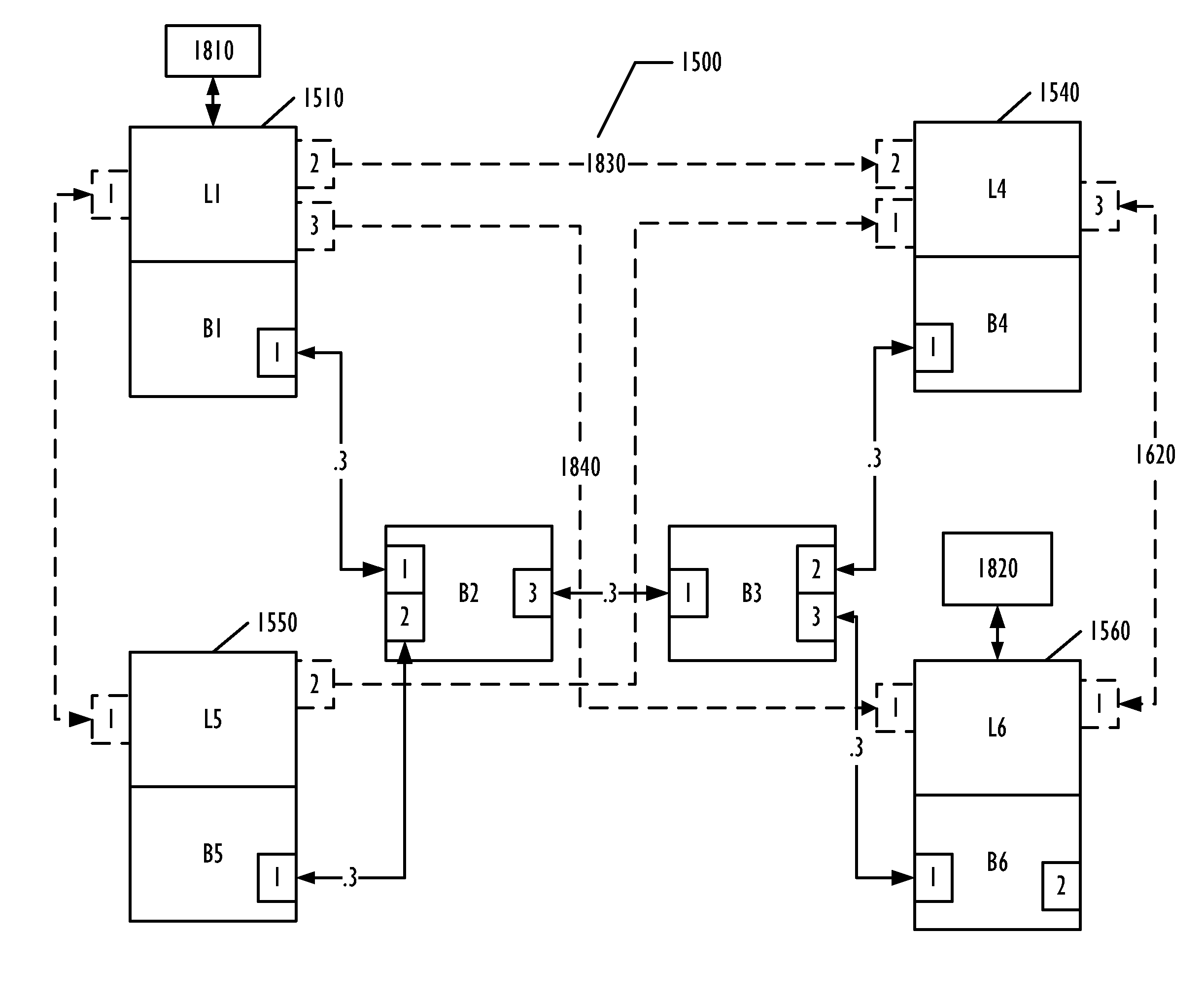
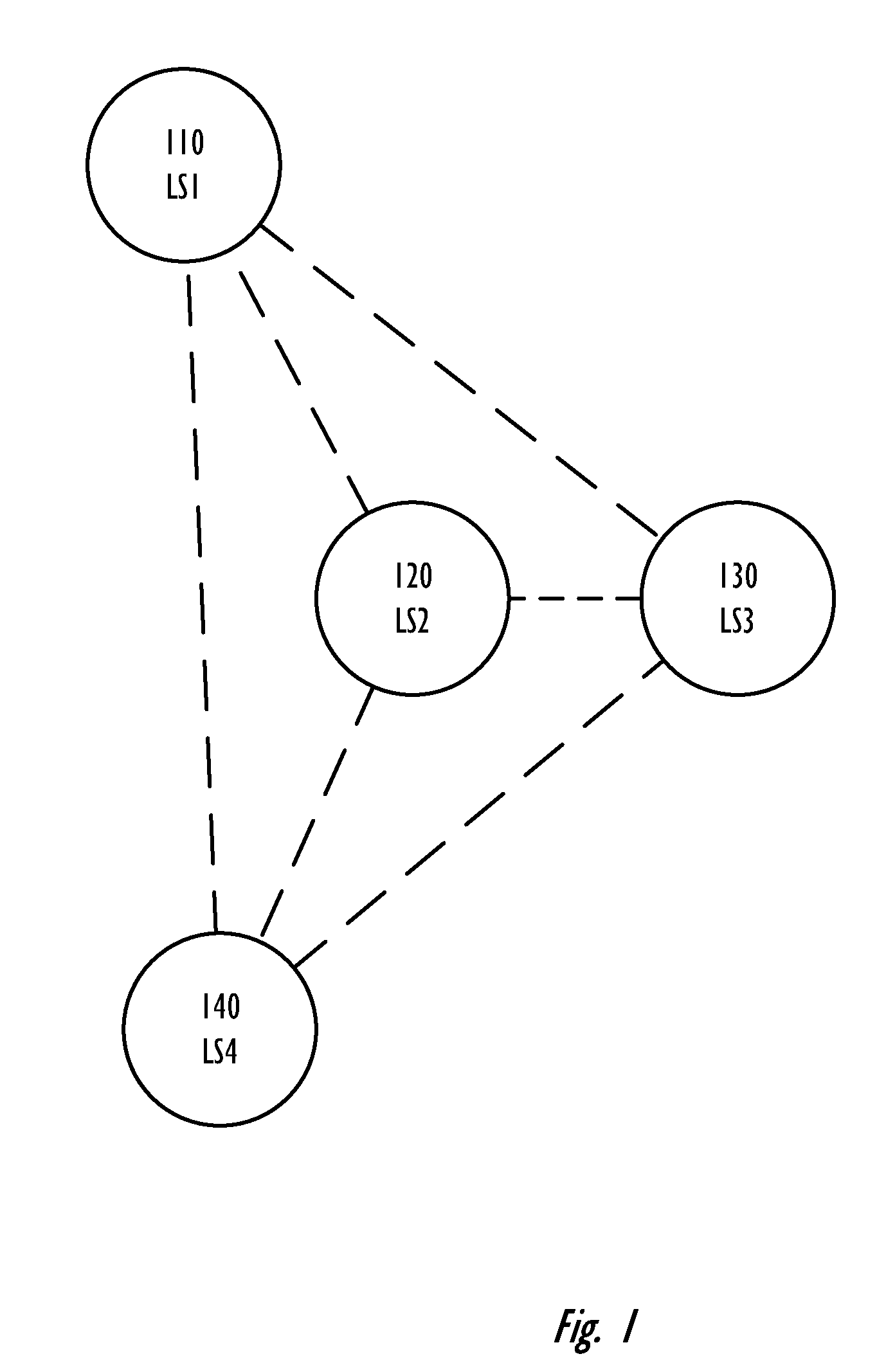
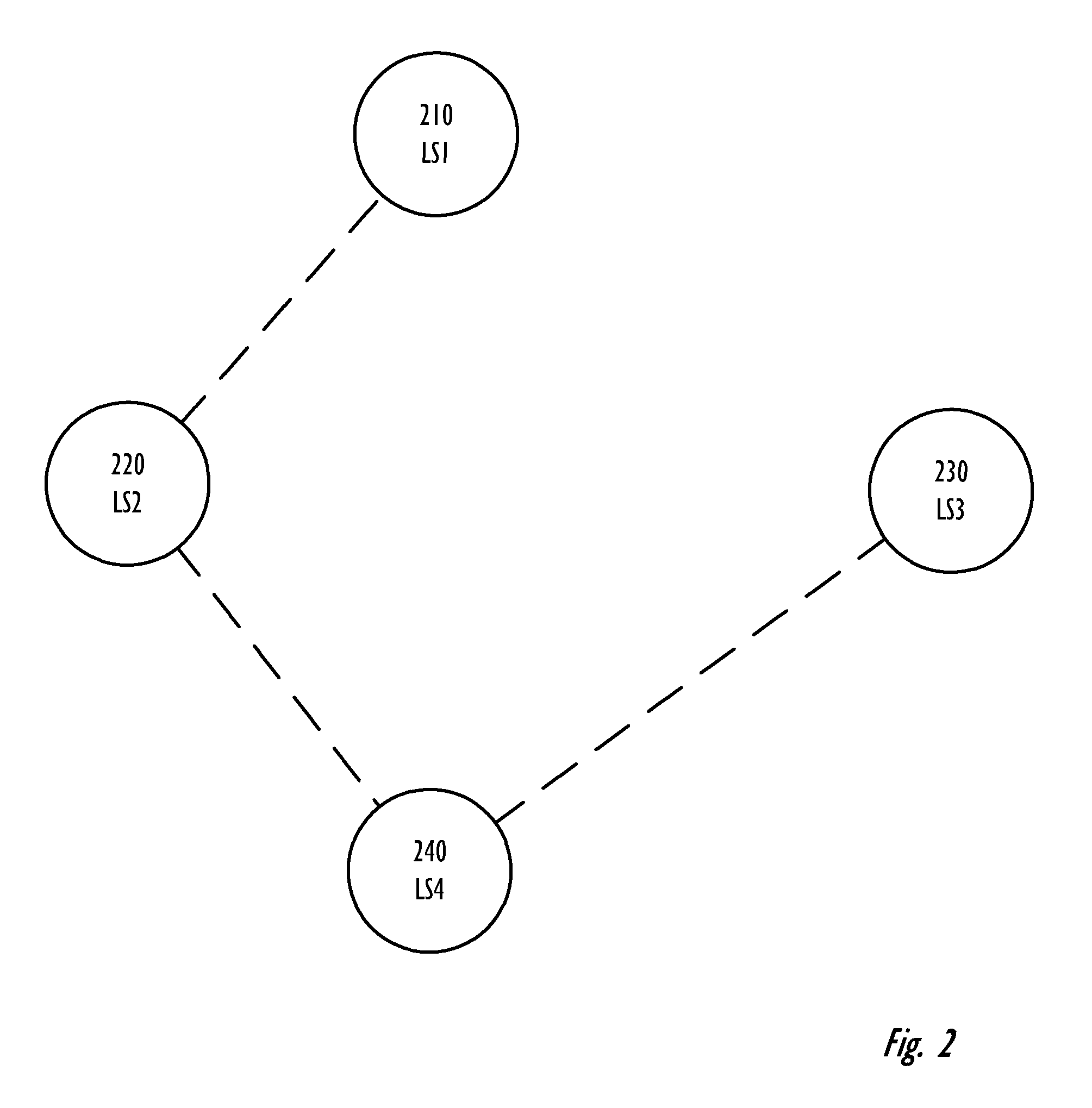
- A method to partition Fibre Channel switch chassis into logical switches with logical inter-switch links, using a topology factor to balance competing metrics, allowing for varying topologies that optimize robustness, scalability, and manageability by determining logical connections based on physical switch configurations and resource management.

Energy Efficiency Standards for Data Center Operations
Energy efficiency has become a critical operational imperative for data centers as they consume approximately 1% of global electricity. The exponential growth in data processing demands, coupled with environmental sustainability pressures, has driven the establishment of comprehensive energy efficiency standards that directly impact switch configuration strategies in scalable data center fabrics.
The Energy Star program for data centers, established by the U.S. Environmental Protection Agency, provides foundational metrics including Power Usage Effectiveness (PUE) targets below 1.5 for new facilities. The European Union's Code of Conduct for Data Centres complements these standards with specific guidelines for network equipment energy consumption, mandating adaptive power management capabilities in switching infrastructure.
IEEE 802.3az Energy Efficient Ethernet (EEE) standards represent the cornerstone of network-level efficiency requirements. These standards mandate Low Power Idle (LPI) functionality, enabling switches to reduce power consumption during periods of low traffic utilization. Modern data center fabrics must implement EEE-compliant switches that can dynamically adjust power states while maintaining sub-microsecond wake-up times to preserve performance characteristics.
The ASHRAE TC 9.9 committee has established thermal management standards that directly influence switch placement and configuration density. Temperature guidelines of 18-27°C for IT equipment zones require strategic switch positioning to optimize both cooling efficiency and network topology. These thermal constraints necessitate careful consideration of switch port density and heat dissipation characteristics when designing scalable fabric architectures.
Green Grid's PUE measurement protocols have evolved to include network equipment efficiency metrics, establishing baseline power consumption targets for switching infrastructure. Current standards require switches to demonstrate power scalability proportional to active port utilization, with idle power consumption not exceeding 30% of maximum rated power draw.
Emerging standards from the Open Compute Project (OCP) focus on disaggregated switch architectures that enable more granular power management. These specifications promote modular switching designs where individual line cards and fabric modules can be independently power-managed based on traffic demands, supporting both scalability requirements and energy efficiency objectives in large-scale data center deployments.
The Energy Star program for data centers, established by the U.S. Environmental Protection Agency, provides foundational metrics including Power Usage Effectiveness (PUE) targets below 1.5 for new facilities. The European Union's Code of Conduct for Data Centres complements these standards with specific guidelines for network equipment energy consumption, mandating adaptive power management capabilities in switching infrastructure.
IEEE 802.3az Energy Efficient Ethernet (EEE) standards represent the cornerstone of network-level efficiency requirements. These standards mandate Low Power Idle (LPI) functionality, enabling switches to reduce power consumption during periods of low traffic utilization. Modern data center fabrics must implement EEE-compliant switches that can dynamically adjust power states while maintaining sub-microsecond wake-up times to preserve performance characteristics.
The ASHRAE TC 9.9 committee has established thermal management standards that directly influence switch placement and configuration density. Temperature guidelines of 18-27°C for IT equipment zones require strategic switch positioning to optimize both cooling efficiency and network topology. These thermal constraints necessitate careful consideration of switch port density and heat dissipation characteristics when designing scalable fabric architectures.
Green Grid's PUE measurement protocols have evolved to include network equipment efficiency metrics, establishing baseline power consumption targets for switching infrastructure. Current standards require switches to demonstrate power scalability proportional to active port utilization, with idle power consumption not exceeding 30% of maximum rated power draw.
Emerging standards from the Open Compute Project (OCP) focus on disaggregated switch architectures that enable more granular power management. These specifications promote modular switching designs where individual line cards and fabric modules can be independently power-managed based on traffic demands, supporting both scalability requirements and energy efficiency objectives in large-scale data center deployments.
Network Security Implications of Switch Configuration
The optimization of switch configurations in data center fabrics introduces significant security considerations that must be carefully evaluated alongside scalability objectives. As network architectures become increasingly complex to accommodate growing traffic demands, the attack surface expands proportionally, creating new vulnerabilities that malicious actors can exploit.
Switch configuration optimization often involves enabling advanced features such as dynamic routing protocols, automated failover mechanisms, and traffic load balancing. While these features enhance scalability, they simultaneously introduce potential security weaknesses. Dynamic routing protocols like BGP and OSPF, when improperly configured, can become vectors for route hijacking attacks or routing table poisoning, potentially redirecting sensitive traffic through compromised paths.
The implementation of software-defined networking (SDN) controllers to manage switch configurations at scale presents both opportunities and risks. Centralized control planes offer enhanced visibility and policy enforcement capabilities, but they also create single points of failure that, if compromised, could grant attackers unprecedented control over the entire network fabric. The communication channels between controllers and switches require robust encryption and authentication mechanisms to prevent man-in-the-middle attacks.
Network segmentation strategies employed for scalability optimization can inadvertently create security blind spots. Micro-segmentation and VLAN configurations, while improving traffic isolation, may introduce misconfigurations that either expose sensitive resources or create overly permissive access paths. The complexity of managing thousands of switch ports and their associated security policies increases the likelihood of human error in configuration management.
Access control mechanisms become increasingly critical as switch configurations grow more sophisticated. Role-based access control (RBAC) systems must be implemented to ensure that only authorized personnel can modify critical network parameters. Additionally, configuration change tracking and audit logging become essential for maintaining security compliance and detecting unauthorized modifications.
The integration of zero-trust security principles into scalable switch configurations requires careful consideration of east-west traffic inspection capabilities. Traditional perimeter-based security models become insufficient in highly scalable data center environments, necessitating the implementation of distributed security enforcement points throughout the fabric architecture.
Switch configuration optimization often involves enabling advanced features such as dynamic routing protocols, automated failover mechanisms, and traffic load balancing. While these features enhance scalability, they simultaneously introduce potential security weaknesses. Dynamic routing protocols like BGP and OSPF, when improperly configured, can become vectors for route hijacking attacks or routing table poisoning, potentially redirecting sensitive traffic through compromised paths.
The implementation of software-defined networking (SDN) controllers to manage switch configurations at scale presents both opportunities and risks. Centralized control planes offer enhanced visibility and policy enforcement capabilities, but they also create single points of failure that, if compromised, could grant attackers unprecedented control over the entire network fabric. The communication channels between controllers and switches require robust encryption and authentication mechanisms to prevent man-in-the-middle attacks.
Network segmentation strategies employed for scalability optimization can inadvertently create security blind spots. Micro-segmentation and VLAN configurations, while improving traffic isolation, may introduce misconfigurations that either expose sensitive resources or create overly permissive access paths. The complexity of managing thousands of switch ports and their associated security policies increases the likelihood of human error in configuration management.
Access control mechanisms become increasingly critical as switch configurations grow more sophisticated. Role-based access control (RBAC) systems must be implemented to ensure that only authorized personnel can modify critical network parameters. Additionally, configuration change tracking and audit logging become essential for maintaining security compliance and detecting unauthorized modifications.
The integration of zero-trust security principles into scalable switch configurations requires careful consideration of east-west traffic inspection capabilities. Traditional perimeter-based security models become insufficient in highly scalable data center environments, necessitating the implementation of distributed security enforcement points throughout the fabric architecture.
Unlock deeper insights with PatSnap Eureka Quick Research — get a full tech report to explore trends and direct your research. Try now!
Generate Your Research Report Instantly with AI Agent
Supercharge your innovation with PatSnap Eureka AI Agent Platform!