
Oscillator Dynamics: Analyzing Nonlinear Behavior in Systems
MAR 13, 20269 MIN READ
Generate Your Research Report Instantly with AI Agent
Patsnap Eureka helps you evaluate technical feasibility & market potential.
Oscillator Dynamics Background and Research Objectives
Oscillator dynamics represents a fundamental area of study in nonlinear systems theory, encompassing the behavior of systems that exhibit periodic, quasi-periodic, or chaotic motion. The field has evolved significantly since the early work of Henri Poincaré and Aleksandr Lyapunov in the late 19th century, progressing through major contributions from researchers like van der Pol, Duffing, and Lorenz. These foundational studies established the mathematical framework for understanding how nonlinear oscillators deviate from simple harmonic motion, leading to complex phenomena such as limit cycles, bifurcations, and strange attractors.
The historical development of oscillator dynamics has been driven by both theoretical curiosity and practical engineering needs. Early investigations focused on mechanical systems like pendulums and spring-mass configurations, but the scope expanded dramatically with the advent of electronic circuits and biological modeling. The discovery of chaotic behavior in deterministic systems during the 1960s and 1970s revolutionized the field, demonstrating that simple nonlinear equations could produce seemingly random yet deterministic behavior.
Modern oscillator dynamics research encompasses diverse applications ranging from neural networks and cardiac rhythms to laser dynamics and climate modeling. The field has witnessed remarkable growth due to advances in computational capabilities, enabling researchers to explore high-dimensional systems and complex parameter spaces that were previously intractable. Contemporary studies increasingly focus on coupled oscillator networks, synchronization phenomena, and the emergence of collective behavior in large-scale systems.
The primary research objectives in oscillator dynamics center on developing comprehensive theoretical frameworks for predicting and controlling nonlinear behavior. Key goals include establishing robust methods for stability analysis, bifurcation detection, and chaos control. Researchers aim to create universal principles that can describe oscillatory behavior across different physical domains, from quantum mechanical systems to macroscopic engineering applications.
Another critical objective involves advancing numerical and analytical techniques for studying high-dimensional oscillator systems. This includes developing efficient algorithms for parameter estimation, phase space reconstruction, and long-term behavior prediction. The integration of machine learning approaches with traditional dynamical systems theory represents a promising frontier for achieving these computational objectives.
Understanding synchronization mechanisms in coupled oscillator networks remains a central research target, with applications spanning from power grid stability to brain function modeling. The ultimate goal is to establish predictive capabilities that enable the design of robust oscillator-based systems and the mitigation of undesired nonlinear effects in critical applications.
The historical development of oscillator dynamics has been driven by both theoretical curiosity and practical engineering needs. Early investigations focused on mechanical systems like pendulums and spring-mass configurations, but the scope expanded dramatically with the advent of electronic circuits and biological modeling. The discovery of chaotic behavior in deterministic systems during the 1960s and 1970s revolutionized the field, demonstrating that simple nonlinear equations could produce seemingly random yet deterministic behavior.
Modern oscillator dynamics research encompasses diverse applications ranging from neural networks and cardiac rhythms to laser dynamics and climate modeling. The field has witnessed remarkable growth due to advances in computational capabilities, enabling researchers to explore high-dimensional systems and complex parameter spaces that were previously intractable. Contemporary studies increasingly focus on coupled oscillator networks, synchronization phenomena, and the emergence of collective behavior in large-scale systems.
The primary research objectives in oscillator dynamics center on developing comprehensive theoretical frameworks for predicting and controlling nonlinear behavior. Key goals include establishing robust methods for stability analysis, bifurcation detection, and chaos control. Researchers aim to create universal principles that can describe oscillatory behavior across different physical domains, from quantum mechanical systems to macroscopic engineering applications.
Another critical objective involves advancing numerical and analytical techniques for studying high-dimensional oscillator systems. This includes developing efficient algorithms for parameter estimation, phase space reconstruction, and long-term behavior prediction. The integration of machine learning approaches with traditional dynamical systems theory represents a promising frontier for achieving these computational objectives.
Understanding synchronization mechanisms in coupled oscillator networks remains a central research target, with applications spanning from power grid stability to brain function modeling. The ultimate goal is to establish predictive capabilities that enable the design of robust oscillator-based systems and the mitigation of undesired nonlinear effects in critical applications.
Market Demand for Nonlinear Oscillator Applications
The market demand for nonlinear oscillator applications spans multiple high-growth sectors, driven by the increasing complexity of modern technological systems and the need for precise control mechanisms. Telecommunications infrastructure represents one of the largest demand drivers, where nonlinear oscillators serve as critical components in frequency synthesis, phase-locked loops, and signal processing systems. The proliferation of 5G networks and emerging 6G technologies has intensified requirements for oscillators capable of handling complex nonlinear dynamics while maintaining stability across varying operational conditions.
Industrial automation and control systems constitute another significant market segment, where nonlinear oscillator analysis enables enhanced performance in robotics, manufacturing equipment, and process control applications. The growing adoption of Industry 4.0 principles has created substantial demand for oscillator systems that can adapt to nonlinear operational environments while providing predictable behavioral patterns. These applications require sophisticated understanding of oscillator dynamics to ensure system reliability and performance optimization.
The automotive sector presents rapidly expanding opportunities, particularly in electric vehicle powertrains and autonomous driving systems. Nonlinear oscillator applications in motor control, battery management systems, and sensor fusion technologies are experiencing accelerated adoption. Advanced driver assistance systems rely heavily on oscillator-based components that must operate reliably under highly variable and nonlinear conditions, creating specialized market demand for robust oscillator solutions.
Emerging applications in renewable energy systems, particularly wind and solar power generation, are driving new market segments. These systems encounter inherently nonlinear operational conditions due to variable environmental factors, requiring oscillator solutions capable of maintaining stability and efficiency across wide dynamic ranges. Grid integration technologies for renewable sources represent a particularly promising growth area.
The medical device industry shows increasing demand for nonlinear oscillator applications in diagnostic equipment, therapeutic devices, and implantable systems. Precision timing and control requirements in medical applications necessitate deep understanding of oscillator nonlinear behavior to ensure patient safety and device efficacy. Wearable health monitoring devices represent an expanding market segment with unique oscillator requirements.
Market growth is further supported by advances in computational capabilities that enable more sophisticated analysis and design of nonlinear oscillator systems. The convergence of artificial intelligence and oscillator design is creating new application possibilities and market opportunities across traditional industry boundaries.
Industrial automation and control systems constitute another significant market segment, where nonlinear oscillator analysis enables enhanced performance in robotics, manufacturing equipment, and process control applications. The growing adoption of Industry 4.0 principles has created substantial demand for oscillator systems that can adapt to nonlinear operational environments while providing predictable behavioral patterns. These applications require sophisticated understanding of oscillator dynamics to ensure system reliability and performance optimization.
The automotive sector presents rapidly expanding opportunities, particularly in electric vehicle powertrains and autonomous driving systems. Nonlinear oscillator applications in motor control, battery management systems, and sensor fusion technologies are experiencing accelerated adoption. Advanced driver assistance systems rely heavily on oscillator-based components that must operate reliably under highly variable and nonlinear conditions, creating specialized market demand for robust oscillator solutions.
Emerging applications in renewable energy systems, particularly wind and solar power generation, are driving new market segments. These systems encounter inherently nonlinear operational conditions due to variable environmental factors, requiring oscillator solutions capable of maintaining stability and efficiency across wide dynamic ranges. Grid integration technologies for renewable sources represent a particularly promising growth area.
The medical device industry shows increasing demand for nonlinear oscillator applications in diagnostic equipment, therapeutic devices, and implantable systems. Precision timing and control requirements in medical applications necessitate deep understanding of oscillator nonlinear behavior to ensure patient safety and device efficacy. Wearable health monitoring devices represent an expanding market segment with unique oscillator requirements.
Market growth is further supported by advances in computational capabilities that enable more sophisticated analysis and design of nonlinear oscillator systems. The convergence of artificial intelligence and oscillator design is creating new application possibilities and market opportunities across traditional industry boundaries.
Current State and Challenges in Nonlinear Oscillator Analysis
The field of nonlinear oscillator analysis has reached a sophisticated level of theoretical understanding, yet significant challenges persist in both computational and experimental domains. Current analytical frameworks primarily rely on perturbation methods, phase plane analysis, and bifurcation theory to characterize system behavior. These approaches have proven effective for weakly nonlinear systems but encounter substantial limitations when dealing with strongly nonlinear dynamics or high-dimensional oscillator networks.
Modern computational tools have expanded the analytical capabilities considerably. Numerical continuation methods enable researchers to trace solution branches and identify bifurcation points with high precision. Advanced software packages like AUTO, MATCONT, and XPP have democratized access to sophisticated bifurcation analysis tools. However, computational complexity scales exponentially with system dimension, creating bottlenecks for analyzing large-scale oscillator networks or systems with multiple time scales.
Experimental validation remains a critical challenge in nonlinear oscillator research. While theoretical predictions can be highly detailed, translating these insights to real-world systems often reveals discrepancies due to noise, parameter uncertainties, and unmodeled dynamics. The gap between idealized mathematical models and physical implementations continues to limit practical applications, particularly in precision timing systems and biological oscillator networks.
The emergence of machine learning approaches has introduced new possibilities for analyzing nonlinear oscillator behavior. Neural networks and deep learning algorithms show promise in identifying complex patterns and predicting system evolution. However, these methods often lack interpretability and struggle with generalization across different parameter regimes or system configurations.
Synchronization phenomena in coupled oscillator systems present another frontier of active research. While the Kuramoto model provides fundamental insights, real-world networks exhibit heterogeneity, time-varying coupling, and complex topologies that challenge existing theoretical frameworks. Understanding collective behavior in such systems requires new mathematical tools and computational approaches.
Current limitations also extend to multiscale analysis, where oscillators operate across vastly different temporal and spatial scales. Traditional separation of scales assumptions often break down, necessitating more sophisticated mathematical techniques. The development of equation-free methods and multiscale modeling approaches represents ongoing efforts to address these challenges, though practical implementation remains computationally intensive and problem-specific.
Modern computational tools have expanded the analytical capabilities considerably. Numerical continuation methods enable researchers to trace solution branches and identify bifurcation points with high precision. Advanced software packages like AUTO, MATCONT, and XPP have democratized access to sophisticated bifurcation analysis tools. However, computational complexity scales exponentially with system dimension, creating bottlenecks for analyzing large-scale oscillator networks or systems with multiple time scales.
Experimental validation remains a critical challenge in nonlinear oscillator research. While theoretical predictions can be highly detailed, translating these insights to real-world systems often reveals discrepancies due to noise, parameter uncertainties, and unmodeled dynamics. The gap between idealized mathematical models and physical implementations continues to limit practical applications, particularly in precision timing systems and biological oscillator networks.
The emergence of machine learning approaches has introduced new possibilities for analyzing nonlinear oscillator behavior. Neural networks and deep learning algorithms show promise in identifying complex patterns and predicting system evolution. However, these methods often lack interpretability and struggle with generalization across different parameter regimes or system configurations.
Synchronization phenomena in coupled oscillator systems present another frontier of active research. While the Kuramoto model provides fundamental insights, real-world networks exhibit heterogeneity, time-varying coupling, and complex topologies that challenge existing theoretical frameworks. Understanding collective behavior in such systems requires new mathematical tools and computational approaches.
Current limitations also extend to multiscale analysis, where oscillators operate across vastly different temporal and spatial scales. Traditional separation of scales assumptions often break down, necessitating more sophisticated mathematical techniques. The development of equation-free methods and multiscale modeling approaches represents ongoing efforts to address these challenges, though practical implementation remains computationally intensive and problem-specific.
Existing Methods for Nonlinear Oscillator Analysis
01 Nonlinear oscillator circuits and systems
Various circuit implementations and system architectures are designed to generate and control nonlinear oscillations. These systems utilize specific circuit topologies, feedback mechanisms, and component configurations to achieve desired nonlinear dynamic behaviors. The circuits can be implemented using analog components, digital elements, or hybrid approaches to produce complex oscillatory patterns with nonlinear characteristics.- Nonlinear oscillator circuits and systems: This category focuses on the design and implementation of nonlinear oscillator circuits that exhibit complex dynamic behaviors. These circuits utilize nonlinear components and feedback mechanisms to generate oscillations with specific characteristics. The nonlinear behavior can be exploited for various applications including signal generation, frequency synthesis, and chaotic systems. Advanced circuit topologies and component configurations are employed to achieve desired nonlinear dynamics and stability properties.
- Analysis and modeling of nonlinear oscillator dynamics: This category encompasses methods and techniques for analyzing and modeling the nonlinear behavior of oscillators. Mathematical models and simulation approaches are developed to predict and characterize the dynamic responses of nonlinear oscillatory systems. These methods include phase space analysis, bifurcation theory, and numerical simulation techniques that help understand complex phenomena such as limit cycles, chaos, and synchronization. The analysis tools enable designers to optimize oscillator performance and predict system behavior under various operating conditions.
- Control and stabilization of nonlinear oscillators: This category addresses techniques for controlling and stabilizing nonlinear oscillator systems to achieve desired dynamic behavior. Control strategies are implemented to manage amplitude, frequency, and phase characteristics while maintaining stability in the presence of nonlinearities. Methods include feedback control, adaptive control, and synchronization techniques that can suppress unwanted oscillations or enhance specific dynamic features. These approaches are essential for applications requiring precise oscillator behavior in nonlinear regimes.
- Coupled nonlinear oscillator networks: This category covers systems consisting of multiple interconnected nonlinear oscillators that exhibit collective dynamic behavior. The coupling between oscillators can lead to emergent phenomena such as synchronization, pattern formation, and wave propagation. Network topologies and coupling strengths are designed to achieve specific collective behaviors for applications in neural networks, communication systems, and distributed sensing. The nonlinear interactions between oscillators create rich dynamics that can be exploited for information processing and signal transmission.
- Applications of nonlinear oscillator dynamics in signal processing: This category focuses on utilizing nonlinear oscillator dynamics for signal processing applications. Nonlinear oscillators can be employed for frequency conversion, signal detection, mixing, and filtering operations that leverage their unique dynamic properties. The nonlinear characteristics enable enhanced performance in certain signal processing tasks compared to linear systems. Applications include communication systems, radar technology, and sensor signal conditioning where nonlinear dynamics provide advantages in terms of sensitivity, selectivity, or bandwidth.
02 Analysis and modeling of nonlinear oscillator dynamics
Mathematical models and analytical methods are developed to characterize and predict the behavior of nonlinear oscillators. These approaches include numerical simulation techniques, stability analysis methods, and computational algorithms for understanding complex dynamic phenomena such as bifurcations, chaos, and limit cycles. The modeling frameworks enable prediction and optimization of oscillator performance under various operating conditions.Expand Specific Solutions03 Control and synchronization of nonlinear oscillators
Control strategies and synchronization techniques are implemented to regulate and coordinate the behavior of nonlinear oscillatory systems. These methods involve feedback control algorithms, adaptive mechanisms, and coupling schemes to achieve desired synchronization states or to suppress unwanted nonlinear effects. Applications include coupled oscillator networks and systems requiring precise phase or frequency relationships.Expand Specific Solutions04 Applications in signal processing and communication systems
Nonlinear oscillator dynamics are exploited in various signal processing and communication applications. These implementations utilize the unique properties of nonlinear oscillations for frequency generation, signal modulation, noise reduction, and information encoding. The nonlinear characteristics enable enhanced performance in specific applications such as frequency synthesis, clock generation, and secure communication systems.Expand Specific Solutions05 Measurement and characterization techniques for nonlinear behavior
Specialized measurement methods and characterization techniques are developed to analyze and quantify nonlinear oscillator behavior. These approaches include time-domain and frequency-domain analysis methods, phase space reconstruction techniques, and diagnostic tools for identifying nonlinear phenomena. The techniques enable accurate assessment of system parameters, stability margins, and performance metrics in nonlinear oscillatory systems.Expand Specific Solutions
Key Players in Oscillator and Nonlinear Systems Industry
The oscillator dynamics field represents a mature research domain experiencing steady growth, with the market expanding across aerospace, automotive, telecommunications, and precision instrumentation sectors. The competitive landscape spans from fundamental research to commercial applications, involving diverse players including aerospace giants like Rolls-Royce and ZF Friedrichshafen, semiconductor leaders such as NXP Semiconductors and Synopsys, and prominent research institutions like MIT, DLR, and CNRS. Technology maturity varies significantly across applications, with established solutions in traditional oscillator circuits contrasting with emerging developments in nonlinear dynamics modeling and quantum oscillators. The field demonstrates strong academic-industry collaboration, particularly evident through partnerships between universities like Beijing Institute of Technology and Technische Universität München with industrial players, driving innovation in advanced control systems and next-generation communication technologies.
Massachusetts Institute of Technology
Technical Solution: MIT conducts cutting-edge research in nonlinear oscillator dynamics through multiple departments including Electrical Engineering and Applied Physics. Their research encompasses theoretical foundations of nonlinear dynamics, chaos theory applications, and novel oscillator architectures. The institute's work includes development of neuromorphic oscillator networks that exhibit complex synchronization patterns and adaptive behaviors. MIT researchers have pioneered techniques for analyzing coupled oscillator systems, investigating phenomena such as phase locking, frequency entrainment, and bifurcation behaviors. Their interdisciplinary approach combines mathematical modeling with experimental validation using advanced measurement techniques and custom-designed oscillator circuits for exploring fundamental nonlinear phenomena.
Strengths: World-class theoretical expertise and access to state-of-the-art research facilities. Weaknesses: Research focus may not always align with immediate commercial applications and longer development timelines.
Honeywell International Technologies Ltd.
Technical Solution: Honeywell specializes in precision oscillator systems for aerospace and industrial applications, with advanced nonlinear analysis capabilities for mission-critical timing systems. Their technology portfolio includes oven-controlled crystal oscillators and atomic frequency standards that incorporate sophisticated nonlinear compensation algorithms. The company's approach focuses on understanding and mitigating temperature-dependent nonlinearities, aging effects, and vibration-induced frequency variations. Their systems utilize advanced mathematical models including Duffing oscillator equations and Van der Pol dynamics to predict and control nonlinear behaviors in harsh operating environments such as aircraft engines and space applications.
Strengths: Exceptional precision and reliability for critical applications with proven aerospace heritage. Weaknesses: High cost and complexity make solutions unsuitable for consumer applications.
Core Innovations in Nonlinear Dynamics Theory
Method and system of nonlinear signal processing
PatentInactiveUS7609759B2
Innovation
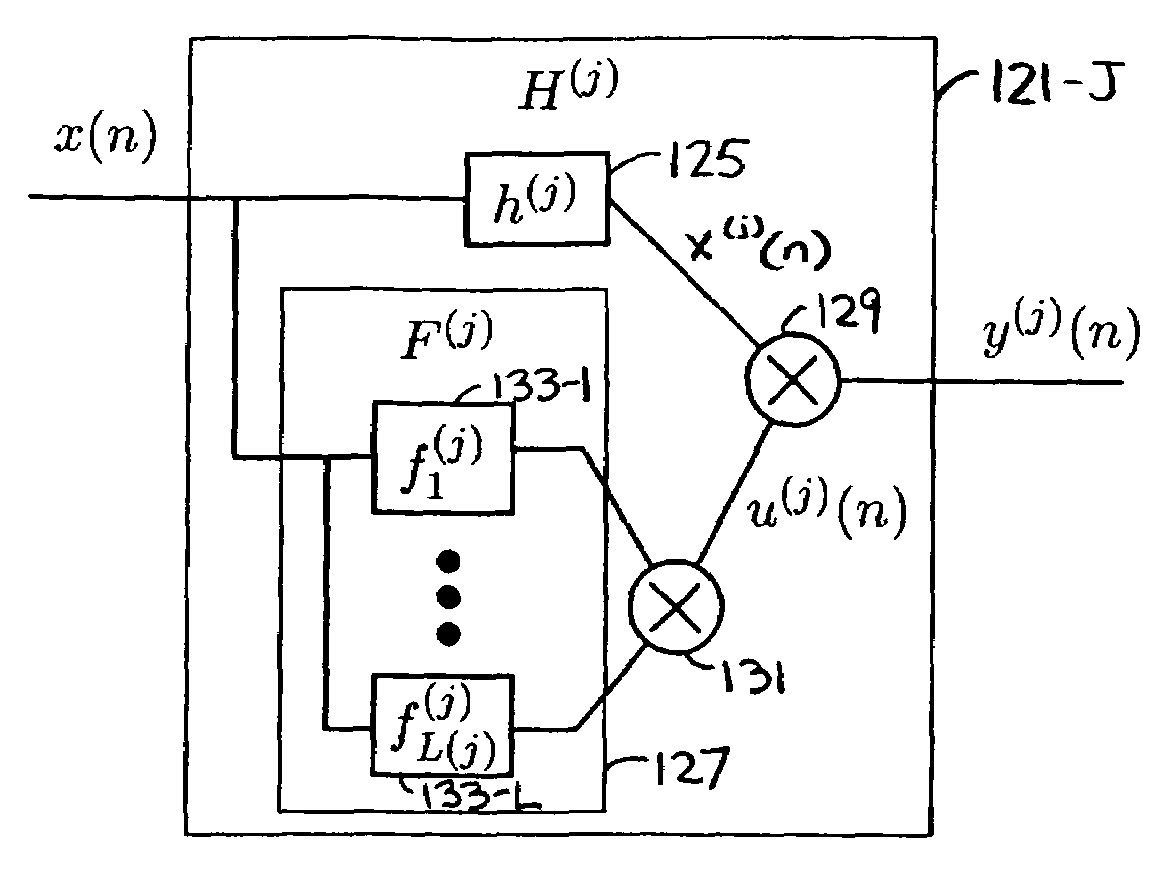
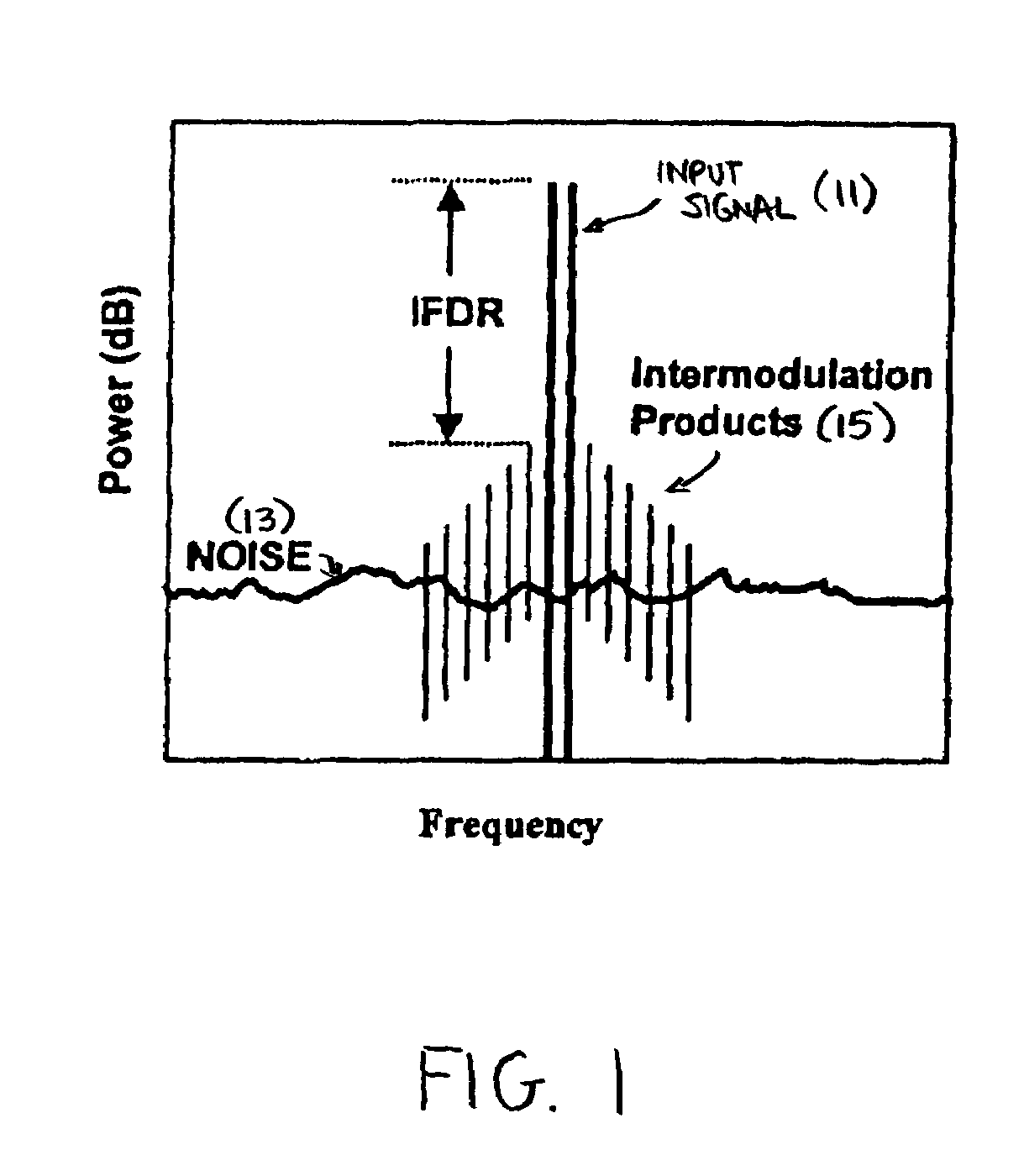
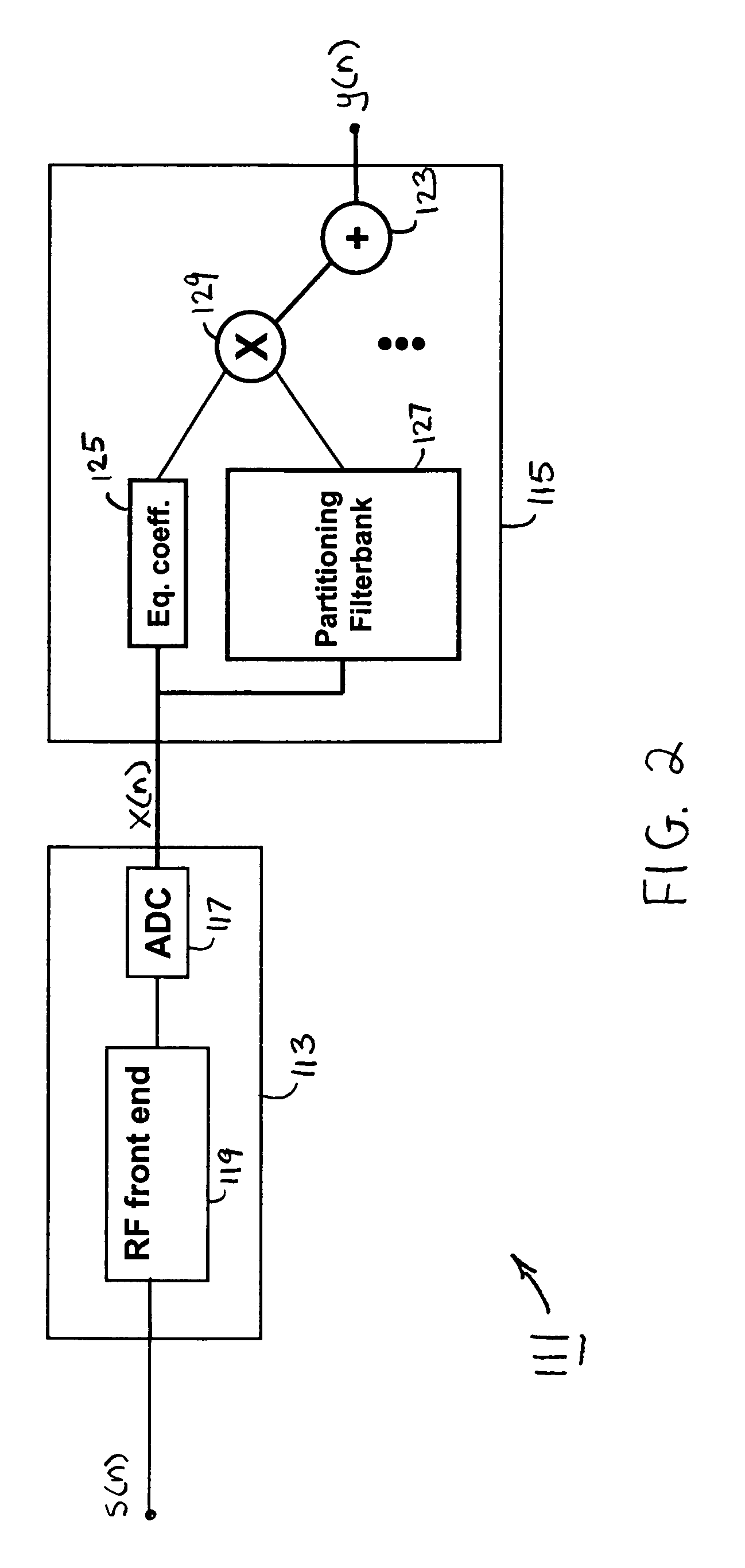
- A nonlinear equalizer system comprising processing units with partitioning filterbanks and summation modules that partition and equalize distorted digital signals using linear filters, allowing for real-time hardware implementation and improved signal processing in wideband systems.

Simulation Tools for Nonlinear System Analysis
The analysis of nonlinear oscillator dynamics requires sophisticated simulation tools capable of handling complex mathematical models and computational challenges. Modern simulation environments have evolved to provide researchers and engineers with comprehensive platforms for investigating nonlinear behavior in oscillatory systems. These tools range from general-purpose mathematical software to specialized packages designed specifically for dynamical systems analysis.
MATLAB and Simulink represent the most widely adopted simulation platforms in this domain. MATLAB's extensive numerical computing capabilities, combined with specialized toolboxes such as the Control System Toolbox and Signal Processing Toolbox, enable detailed analysis of nonlinear oscillators. Simulink provides a graphical environment for modeling and simulating dynamic systems, offering particular advantages for complex multi-domain oscillator networks and real-time simulation requirements.
Python-based simulation tools have gained significant traction due to their open-source nature and extensive scientific computing libraries. SciPy and NumPy form the foundation for numerical computations, while specialized packages like PyDSTool and DynamicalSystems.jl provide dedicated functionality for nonlinear dynamics analysis. These tools excel in bifurcation analysis, phase space reconstruction, and Lyapunov exponent calculations essential for characterizing oscillator behavior.
Specialized software packages offer targeted capabilities for specific aspects of nonlinear analysis. AUTO continues to serve as the gold standard for bifurcation analysis and continuation methods. XPPAUT provides an integrated environment combining numerical simulation with analytical tools for differential equations. More recent developments include modern Julia-based packages that leverage high-performance computing for large-scale oscillator networks.
Hardware-accelerated simulation tools are becoming increasingly important for computationally intensive nonlinear oscillator studies. GPU-accelerated platforms enable parallel simulation of oscillator arrays and real-time parameter sweeps. CUDA-based implementations and OpenCL frameworks allow researchers to explore parameter spaces that were previously computationally prohibitive, particularly relevant for studying synchronization phenomena in large oscillator populations.
The selection of appropriate simulation tools depends on specific research objectives, computational requirements, and the complexity of the oscillator systems under investigation. Integration capabilities with experimental data acquisition systems and real-time control applications often influence tool selection in practical engineering applications.
MATLAB and Simulink represent the most widely adopted simulation platforms in this domain. MATLAB's extensive numerical computing capabilities, combined with specialized toolboxes such as the Control System Toolbox and Signal Processing Toolbox, enable detailed analysis of nonlinear oscillators. Simulink provides a graphical environment for modeling and simulating dynamic systems, offering particular advantages for complex multi-domain oscillator networks and real-time simulation requirements.
Python-based simulation tools have gained significant traction due to their open-source nature and extensive scientific computing libraries. SciPy and NumPy form the foundation for numerical computations, while specialized packages like PyDSTool and DynamicalSystems.jl provide dedicated functionality for nonlinear dynamics analysis. These tools excel in bifurcation analysis, phase space reconstruction, and Lyapunov exponent calculations essential for characterizing oscillator behavior.
Specialized software packages offer targeted capabilities for specific aspects of nonlinear analysis. AUTO continues to serve as the gold standard for bifurcation analysis and continuation methods. XPPAUT provides an integrated environment combining numerical simulation with analytical tools for differential equations. More recent developments include modern Julia-based packages that leverage high-performance computing for large-scale oscillator networks.
Hardware-accelerated simulation tools are becoming increasingly important for computationally intensive nonlinear oscillator studies. GPU-accelerated platforms enable parallel simulation of oscillator arrays and real-time parameter sweeps. CUDA-based implementations and OpenCL frameworks allow researchers to explore parameter spaces that were previously computationally prohibitive, particularly relevant for studying synchronization phenomena in large oscillator populations.
The selection of appropriate simulation tools depends on specific research objectives, computational requirements, and the complexity of the oscillator systems under investigation. Integration capabilities with experimental data acquisition systems and real-time control applications often influence tool selection in practical engineering applications.
Cross-Disciplinary Applications of Oscillator Dynamics
Oscillator dynamics has emerged as a fundamental framework that transcends traditional disciplinary boundaries, offering powerful analytical tools for understanding complex systems across diverse fields. The mathematical principles governing nonlinear oscillatory behavior provide a unifying language that connects seemingly disparate phenomena, from biological rhythms to economic cycles, enabling researchers to apply similar analytical approaches across multiple domains.
In neuroscience, oscillator dynamics plays a crucial role in understanding brain function and neural synchronization. Neural networks exhibit complex oscillatory patterns that govern cognitive processes, memory formation, and consciousness. Researchers utilize nonlinear oscillator models to analyze brainwave patterns, study epileptic seizures, and develop brain-computer interfaces. The application of phase-locked loops and coupled oscillator theory has revolutionized our understanding of neural plasticity and information processing in the brain.
The field of biology extensively leverages oscillator dynamics to model circadian rhythms, cardiac arrhythmias, and population dynamics. Biological systems naturally exhibit oscillatory behavior, from cellular metabolic cycles to ecosystem fluctuations. Mathematical models based on nonlinear oscillators help predict species interactions, optimize drug delivery timing, and understand genetic regulatory networks. These applications have led to breakthrough treatments in chronotherapy and personalized medicine.
Engineering disciplines have adopted oscillator dynamics for designing robust control systems, analyzing structural vibrations, and developing communication technologies. Power grid stability, mechanical resonance analysis, and signal processing all rely heavily on oscillator theory. The integration of nonlinear dynamics principles has enabled the development of adaptive control systems that can handle complex, time-varying environments while maintaining stability and performance.
Economic and social sciences increasingly recognize the value of oscillator dynamics in modeling market fluctuations, social behavior patterns, and policy impacts. Financial markets exhibit oscillatory characteristics that can be analyzed using nonlinear dynamics tools, providing insights into market stability and crisis prediction. Social network dynamics, opinion formation, and collective behavior phenomena are successfully modeled using coupled oscillator frameworks, offering new perspectives on human social systems.
Climate science represents another significant application domain where oscillator dynamics provides essential analytical capabilities. Atmospheric and oceanic circulation patterns, El Niño phenomena, and long-term climate oscillations are studied using nonlinear oscillator models. These applications contribute to improved weather prediction accuracy and climate change impact assessment, demonstrating the practical value of cross-disciplinary oscillator dynamics research.
In neuroscience, oscillator dynamics plays a crucial role in understanding brain function and neural synchronization. Neural networks exhibit complex oscillatory patterns that govern cognitive processes, memory formation, and consciousness. Researchers utilize nonlinear oscillator models to analyze brainwave patterns, study epileptic seizures, and develop brain-computer interfaces. The application of phase-locked loops and coupled oscillator theory has revolutionized our understanding of neural plasticity and information processing in the brain.
The field of biology extensively leverages oscillator dynamics to model circadian rhythms, cardiac arrhythmias, and population dynamics. Biological systems naturally exhibit oscillatory behavior, from cellular metabolic cycles to ecosystem fluctuations. Mathematical models based on nonlinear oscillators help predict species interactions, optimize drug delivery timing, and understand genetic regulatory networks. These applications have led to breakthrough treatments in chronotherapy and personalized medicine.
Engineering disciplines have adopted oscillator dynamics for designing robust control systems, analyzing structural vibrations, and developing communication technologies. Power grid stability, mechanical resonance analysis, and signal processing all rely heavily on oscillator theory. The integration of nonlinear dynamics principles has enabled the development of adaptive control systems that can handle complex, time-varying environments while maintaining stability and performance.
Economic and social sciences increasingly recognize the value of oscillator dynamics in modeling market fluctuations, social behavior patterns, and policy impacts. Financial markets exhibit oscillatory characteristics that can be analyzed using nonlinear dynamics tools, providing insights into market stability and crisis prediction. Social network dynamics, opinion formation, and collective behavior phenomena are successfully modeled using coupled oscillator frameworks, offering new perspectives on human social systems.
Climate science represents another significant application domain where oscillator dynamics provides essential analytical capabilities. Atmospheric and oceanic circulation patterns, El Niño phenomena, and long-term climate oscillations are studied using nonlinear oscillator models. These applications contribute to improved weather prediction accuracy and climate change impact assessment, demonstrating the practical value of cross-disciplinary oscillator dynamics research.
Unlock deeper insights with Patsnap Eureka Quick Research — get a full tech report to explore trends and direct your research. Try now!
Generate Your Research Report Instantly with AI Agent
Supercharge your innovation with Patsnap Eureka AI Agent Platform!