
Oscillator System Integration: Optimizing for Scale-Up
MAR 13, 20269 MIN READ
Generate Your Research Report Instantly with AI Agent
Patsnap Eureka helps you evaluate technical feasibility & market potential.
Oscillator Integration Background and Scale-Up Objectives
Oscillator systems have emerged as fundamental components in modern electronic and communication technologies, serving critical roles in frequency generation, signal processing, and timing applications. The evolution of oscillator technology spans several decades, beginning with simple LC oscillators and progressing through crystal-controlled oscillators to today's sophisticated voltage-controlled oscillators (VCOs) and digitally-controlled oscillators (DCOs). This technological progression has been driven by increasing demands for higher frequency stability, lower phase noise, and enhanced integration capabilities.
The integration of oscillator systems represents a paradigm shift from discrete component implementations to highly integrated solutions that combine multiple oscillator functions within single semiconductor packages. This transition addresses the growing complexity of modern electronic systems, where space constraints, power efficiency, and cost optimization have become paramount considerations. Traditional approaches involving separate oscillator modules are increasingly inadequate for applications requiring miniaturization and high-density integration.
Scale-up challenges in oscillator system integration encompass both technical and manufacturing dimensions. From a technical perspective, maintaining oscillator performance characteristics while increasing integration density presents significant engineering challenges. Phase noise degradation, frequency stability issues, and electromagnetic interference become more pronounced as multiple oscillator circuits are consolidated within confined spaces. Manufacturing scale-up introduces additional complexities related to yield optimization, process variability control, and cost-effective production methodologies.
The primary objective of optimizing oscillator system integration for scale-up centers on achieving seamless transition from laboratory prototypes to high-volume manufacturing while preserving or enhancing performance specifications. This involves developing robust design methodologies that account for process variations, temperature fluctuations, and aging effects across large production volumes. Key performance targets include maintaining phase noise specifications below -120 dBc/Hz at 10 kHz offset, achieving frequency stability better than ±50 ppm over temperature ranges, and ensuring long-term aging characteristics within ±5 ppm annually.
Secondary objectives encompass cost reduction through design optimization, power consumption minimization for battery-powered applications, and form factor reduction to enable integration into space-constrained systems. The scale-up process must also address reliability requirements, targeting mean time between failures exceeding 100,000 hours under operational conditions. These objectives collectively define the framework for successful oscillator system integration that meets both current market demands and future scalability requirements.
The integration of oscillator systems represents a paradigm shift from discrete component implementations to highly integrated solutions that combine multiple oscillator functions within single semiconductor packages. This transition addresses the growing complexity of modern electronic systems, where space constraints, power efficiency, and cost optimization have become paramount considerations. Traditional approaches involving separate oscillator modules are increasingly inadequate for applications requiring miniaturization and high-density integration.
Scale-up challenges in oscillator system integration encompass both technical and manufacturing dimensions. From a technical perspective, maintaining oscillator performance characteristics while increasing integration density presents significant engineering challenges. Phase noise degradation, frequency stability issues, and electromagnetic interference become more pronounced as multiple oscillator circuits are consolidated within confined spaces. Manufacturing scale-up introduces additional complexities related to yield optimization, process variability control, and cost-effective production methodologies.
The primary objective of optimizing oscillator system integration for scale-up centers on achieving seamless transition from laboratory prototypes to high-volume manufacturing while preserving or enhancing performance specifications. This involves developing robust design methodologies that account for process variations, temperature fluctuations, and aging effects across large production volumes. Key performance targets include maintaining phase noise specifications below -120 dBc/Hz at 10 kHz offset, achieving frequency stability better than ±50 ppm over temperature ranges, and ensuring long-term aging characteristics within ±5 ppm annually.
Secondary objectives encompass cost reduction through design optimization, power consumption minimization for battery-powered applications, and form factor reduction to enable integration into space-constrained systems. The scale-up process must also address reliability requirements, targeting mean time between failures exceeding 100,000 hours under operational conditions. These objectives collectively define the framework for successful oscillator system integration that meets both current market demands and future scalability requirements.
Market Demand for Scalable Oscillator Systems
The global demand for scalable oscillator systems has experienced unprecedented growth across multiple industries, driven by the rapid expansion of telecommunications infrastructure, automotive electronics, and industrial automation sectors. Traditional oscillator solutions face significant limitations when deployed at scale, creating substantial market opportunities for integrated systems that can maintain performance consistency while reducing manufacturing complexity and costs.
Telecommunications infrastructure represents the largest demand driver, particularly with the ongoing deployment of 5G networks and the anticipated transition to 6G technologies. Network equipment manufacturers require oscillator systems capable of supporting thousands of base stations while maintaining precise frequency stability across diverse environmental conditions. The shift toward distributed antenna systems and small cell networks has intensified the need for cost-effective, scalable timing solutions that can be rapidly deployed without extensive customization.
The automotive industry presents another critical growth segment, where the integration of advanced driver assistance systems, autonomous driving capabilities, and vehicle-to-everything communication requires robust oscillator systems. Electric vehicle manufacturers specifically demand scalable solutions that can support multiple electronic control units while minimizing power consumption and electromagnetic interference. The transition from traditional automotive architectures to centralized computing platforms has created new requirements for synchronized timing across distributed sensor networks.
Industrial automation and Internet of Things applications have generated substantial demand for oscillator systems that can scale from small sensor networks to large manufacturing facilities. Smart factory implementations require precise timing coordination across thousands of connected devices, creating opportunities for integrated oscillator solutions that can adapt to varying network topologies and communication protocols.
Data center operators increasingly seek scalable oscillator systems to support high-frequency trading, cloud computing, and artificial intelligence workloads that demand ultra-low latency and precise synchronization. The growing complexity of distributed computing architectures has created market demand for timing solutions that can scale horizontally while maintaining nanosecond-level accuracy across geographically distributed facilities.
Consumer electronics manufacturers face mounting pressure to integrate multiple wireless communication standards within compact form factors, driving demand for oscillator systems that can support multiple frequency bands while minimizing board space and power consumption. The proliferation of wearable devices and smart home applications has created new market segments requiring miniaturized, energy-efficient timing solutions.
Telecommunications infrastructure represents the largest demand driver, particularly with the ongoing deployment of 5G networks and the anticipated transition to 6G technologies. Network equipment manufacturers require oscillator systems capable of supporting thousands of base stations while maintaining precise frequency stability across diverse environmental conditions. The shift toward distributed antenna systems and small cell networks has intensified the need for cost-effective, scalable timing solutions that can be rapidly deployed without extensive customization.
The automotive industry presents another critical growth segment, where the integration of advanced driver assistance systems, autonomous driving capabilities, and vehicle-to-everything communication requires robust oscillator systems. Electric vehicle manufacturers specifically demand scalable solutions that can support multiple electronic control units while minimizing power consumption and electromagnetic interference. The transition from traditional automotive architectures to centralized computing platforms has created new requirements for synchronized timing across distributed sensor networks.
Industrial automation and Internet of Things applications have generated substantial demand for oscillator systems that can scale from small sensor networks to large manufacturing facilities. Smart factory implementations require precise timing coordination across thousands of connected devices, creating opportunities for integrated oscillator solutions that can adapt to varying network topologies and communication protocols.
Data center operators increasingly seek scalable oscillator systems to support high-frequency trading, cloud computing, and artificial intelligence workloads that demand ultra-low latency and precise synchronization. The growing complexity of distributed computing architectures has created market demand for timing solutions that can scale horizontally while maintaining nanosecond-level accuracy across geographically distributed facilities.
Consumer electronics manufacturers face mounting pressure to integrate multiple wireless communication standards within compact form factors, driving demand for oscillator systems that can support multiple frequency bands while minimizing board space and power consumption. The proliferation of wearable devices and smart home applications has created new market segments requiring miniaturized, energy-efficient timing solutions.
Current Oscillator Integration Challenges and Limitations
The integration of oscillator systems faces significant thermal management challenges as scale-up operations intensify. Traditional cooling mechanisms become inadequate when multiple oscillator units operate simultaneously, leading to frequency drift and phase noise degradation. Heat dissipation inefficiencies create temperature gradients across integrated circuits, causing oscillator performance variations that compromise system-wide synchronization. Current thermal interface materials and heat sink designs struggle to maintain uniform temperature distribution in densely packed oscillator arrays.
Power distribution networks present another critical bottleneck in large-scale oscillator integration. Conventional power delivery architectures introduce voltage ripples and ground bounce effects that directly impact oscillator stability. The challenge intensifies when attempting to maintain clean power rails across hundreds or thousands of oscillator nodes. Existing power management integrated circuits lack the precision required for maintaining ultra-low noise power supplies at scale, resulting in increased jitter and reduced spectral purity.
Electromagnetic interference and crosstalk issues become exponentially complex in scaled oscillator systems. Traditional shielding techniques prove insufficient when oscillator density increases, leading to unwanted coupling between adjacent circuits. Ground plane design limitations create return current paths that generate magnetic fields, causing frequency pulling effects. Current PCB layout methodologies cannot adequately address the three-dimensional electromagnetic field interactions in multi-layer oscillator integration scenarios.
Synchronization and phase coherence maintenance across large oscillator networks remains a fundamental challenge. Existing clock distribution architectures introduce cumulative phase errors and skew variations that degrade overall system performance. The propagation delay variations in interconnect structures create timing uncertainties that become more pronounced with increased system scale. Current phase-locked loop designs lack the bandwidth and settling time characteristics necessary for maintaining coherence across extensive oscillator arrays.
Manufacturing process variations significantly impact oscillator integration scalability. Component tolerance accumulation across multiple oscillator stages results in frequency dispersion that exceeds acceptable system specifications. Current calibration and trimming techniques are inadequate for addressing the statistical variations encountered in large-scale production. The lack of real-time compensation mechanisms limits the ability to maintain consistent performance across temperature and aging variations in scaled systems.
Power distribution networks present another critical bottleneck in large-scale oscillator integration. Conventional power delivery architectures introduce voltage ripples and ground bounce effects that directly impact oscillator stability. The challenge intensifies when attempting to maintain clean power rails across hundreds or thousands of oscillator nodes. Existing power management integrated circuits lack the precision required for maintaining ultra-low noise power supplies at scale, resulting in increased jitter and reduced spectral purity.
Electromagnetic interference and crosstalk issues become exponentially complex in scaled oscillator systems. Traditional shielding techniques prove insufficient when oscillator density increases, leading to unwanted coupling between adjacent circuits. Ground plane design limitations create return current paths that generate magnetic fields, causing frequency pulling effects. Current PCB layout methodologies cannot adequately address the three-dimensional electromagnetic field interactions in multi-layer oscillator integration scenarios.
Synchronization and phase coherence maintenance across large oscillator networks remains a fundamental challenge. Existing clock distribution architectures introduce cumulative phase errors and skew variations that degrade overall system performance. The propagation delay variations in interconnect structures create timing uncertainties that become more pronounced with increased system scale. Current phase-locked loop designs lack the bandwidth and settling time characteristics necessary for maintaining coherence across extensive oscillator arrays.
Manufacturing process variations significantly impact oscillator integration scalability. Component tolerance accumulation across multiple oscillator stages results in frequency dispersion that exceeds acceptable system specifications. Current calibration and trimming techniques are inadequate for addressing the statistical variations encountered in large-scale production. The lack of real-time compensation mechanisms limits the ability to maintain consistent performance across temperature and aging variations in scaled systems.
Existing Scale-Up Solutions for Oscillator Systems
01 Crystal oscillator circuit configurations
Oscillator systems utilizing crystal-based circuits for generating stable frequency signals. These configurations typically include crystal resonators coupled with amplifier circuits and feedback networks to maintain sustained oscillations. The designs focus on achieving high frequency stability and low phase noise characteristics suitable for timing applications in electronic devices.- Oscillator circuit configurations and topologies: Various oscillator circuit designs and topologies are employed to generate stable oscillating signals. These configurations include different arrangements of active and passive components to achieve desired frequency characteristics and signal stability. The circuits may incorporate feedback mechanisms and resonant elements to maintain consistent oscillation. Different topologies are optimized for specific frequency ranges and applications, providing flexibility in oscillator design.
- Frequency control and stabilization mechanisms: Oscillator systems incorporate mechanisms for controlling and stabilizing the output frequency. These systems utilize various techniques to maintain frequency accuracy and reduce drift over time and temperature variations. Control methods may include voltage-controlled or current-controlled approaches to adjust oscillation parameters. Stabilization techniques ensure consistent performance across different operating conditions and environmental factors.
- Multi-oscillator and coupled oscillator systems: Systems employing multiple oscillators or coupled oscillator arrangements provide enhanced functionality and performance. These configurations allow for frequency synthesis, phase synchronization, and improved signal quality. Coupled oscillators can operate in synchronized or independent modes depending on application requirements. Such systems are particularly useful in applications requiring multiple frequency outputs or enhanced stability through mutual coupling.
- Oscillator power supply and biasing circuits: Proper power supply and biasing arrangements are critical for oscillator performance and stability. These circuits provide appropriate voltage and current levels to active components within the oscillator system. Power management techniques ensure efficient operation while minimizing noise and interference. Biasing circuits are designed to maintain optimal operating points for transistors and other active elements throughout varying conditions.
- Oscillator output signal processing and conditioning: Output signal processing and conditioning circuits enhance the quality and usability of oscillator signals. These circuits may include amplification, filtering, and buffering stages to improve signal characteristics. Signal conditioning ensures compatibility with downstream circuits and reduces unwanted harmonics or noise. Processing stages can also provide impedance matching and isolation between the oscillator core and external loads.
02 Voltage-controlled oscillator designs
Oscillator systems that allow frequency adjustment through voltage control mechanisms. These designs incorporate variable capacitance elements or tuning circuits that respond to control voltages, enabling frequency modulation and tuning capabilities. Applications include communication systems, signal generation, and frequency synthesis where adjustable output frequencies are required.Expand Specific Solutions03 Temperature-compensated oscillator structures
Oscillator systems designed with temperature compensation mechanisms to maintain frequency stability across varying environmental conditions. These structures incorporate temperature-sensing elements and compensation circuits that adjust oscillator parameters to counteract frequency drift caused by temperature changes. Such designs are critical for precision timing applications requiring consistent performance in different operating environments.Expand Specific Solutions04 Multi-phase oscillator architectures
Oscillator systems capable of generating multiple phase-shifted output signals simultaneously. These architectures employ coupled oscillator stages or phase-shifting networks to produce signals with precise phase relationships. Applications include clock distribution systems, quadrature signal generation for communication systems, and timing circuits requiring multiple synchronized signals with specific phase offsets.Expand Specific Solutions05 Low-power oscillator implementations
Oscillator systems optimized for minimal power consumption while maintaining adequate performance characteristics. These implementations utilize efficient circuit topologies, reduced bias currents, and power-saving modes to extend battery life in portable devices. Design techniques include duty-cycle optimization, selective component activation, and adaptive biasing schemes that balance power consumption with oscillation stability and frequency accuracy.Expand Specific Solutions
Key Players in Oscillator and System Integration Industry
The oscillator system integration market for scale-up optimization is experiencing rapid growth driven by increasing demand for precision timing solutions across telecommunications, automotive, and IoT applications. The industry is in a mature expansion phase, with established players like Seiko Epson Corp., Murata Manufacturing, and Taiyo Yuden dominating the crystal oscillator and timing device segments. Technology maturity varies significantly across applications, with companies like Texas Instruments, Analog Devices, and Silicon Laboratories leading in integrated timing solutions and system-level optimization. Asian manufacturers including MediaTek, Renesas Electronics, and Huawei Technologies are driving innovation in high-volume consumer applications, while specialized firms like Esterline Research & Design focus on high-precision environmental testing systems. The competitive landscape shows strong consolidation trends, with major semiconductor companies like Infineon Technologies and STMicroelectronics expanding their timing portfolios through acquisitions and R&D investments to address scalability challenges in next-generation oscillator systems.
Infineon Technologies AG
Technical Solution: Infineon focuses on oscillator system integration for automotive and industrial applications, emphasizing temperature-stable and vibration-resistant timing solutions. Their integration approach combines temperature-compensated crystal oscillators (TCXOs) with intelligent frequency monitoring and adaptive compensation algorithms. The company's oscillator systems feature automotive-qualified components that maintain ±20ppm frequency stability across -40°C to +125°C temperature ranges. Their scalable architecture includes distributed timing networks with CAN-FD and Ethernet synchronization capabilities for multi-ECU systems. For large-scale automotive deployments, Infineon provides integrated timing solutions that support functional safety requirements up to ASIL-D levels, with built-in self-diagnostic capabilities and graceful degradation modes.
Strengths: Automotive-grade reliability, excellent temperature stability, functional safety compliance, robust environmental performance. Weaknesses: Limited to specific market segments, higher qualification costs for new applications.
Texas Instruments Incorporated
Technical Solution: Texas Instruments develops oscillator system integration solutions centered around their advanced clock conditioning and distribution ICs. Their approach emphasizes scalable clock tree architectures using low-power clock buffers and fanout devices that can support system-wide timing distribution. TI's oscillator integration methodology includes adaptive voltage scaling coordination with frequency management, enabling power-optimized scaling across different operational modes. Their solutions feature integrated jitter cleaners and clock multipliers that can handle input frequencies from 10MHz to 2.5GHz while maintaining deterministic latency characteristics. For scale-up applications, TI provides hierarchical timing architectures with built-in redundancy and fault tolerance, supporting mission-critical systems that require continuous operation.
Strengths: Robust clock distribution capabilities, excellent power management integration, high reliability for critical applications. Weaknesses: Complex design requirements for optimal performance, higher power consumption in some configurations.
Core Patents in Oscillator Integration Optimization
All-toall connected oscillator networks for solving combinatorial optimization problems
PatentWO2020205540A1
Innovation
- An all-to-all connected oscillator network using nonlinear electronic oscillators with differential coupling and free-space optical interconnects, where each oscillator communicates with every other, allowing for scalable and efficient solving of combinatorial optimization problems at room temperature.


Method for dynamically tuning the clock frequency of an oscillator and corresponding oscillating system
PatentActiveUS20080042720A1
Innovation
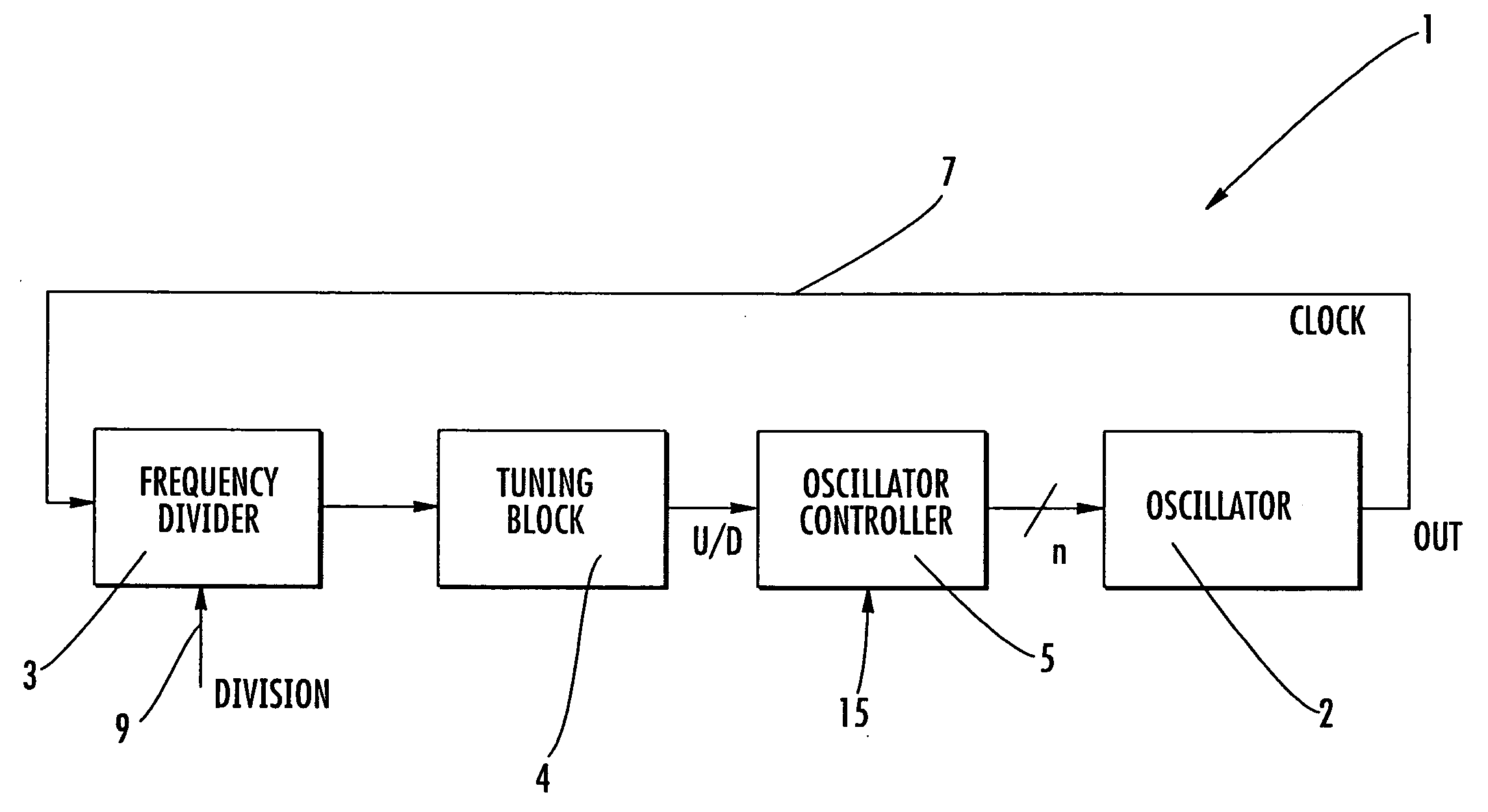
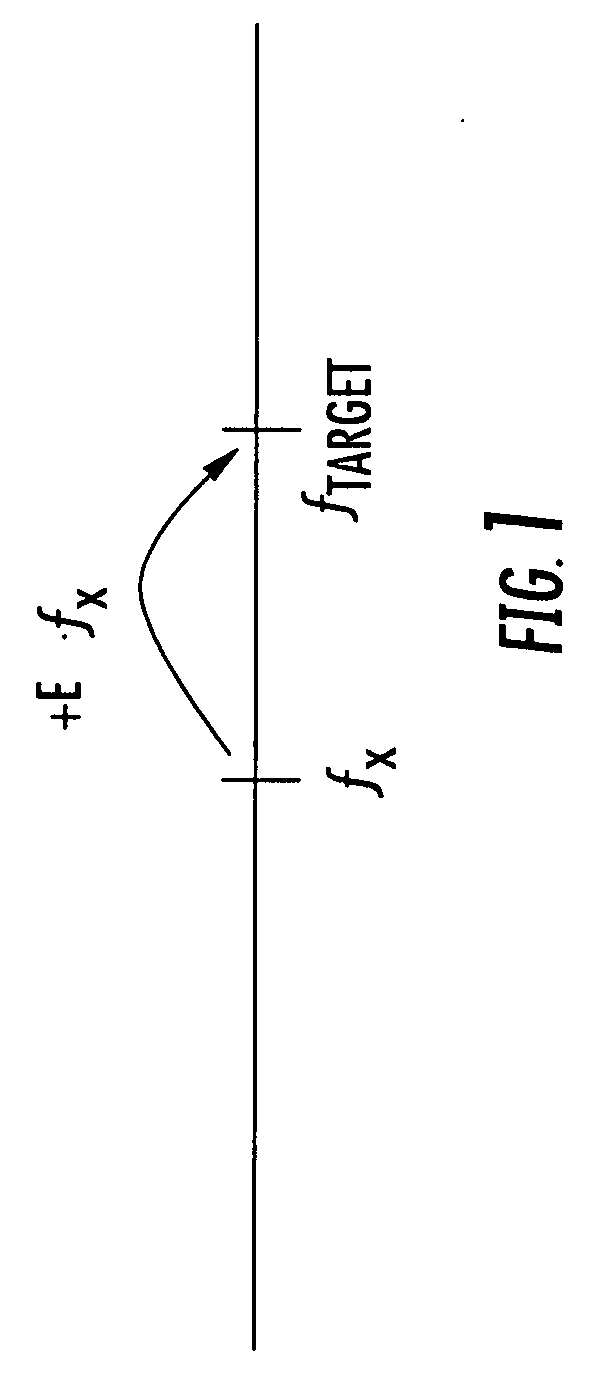
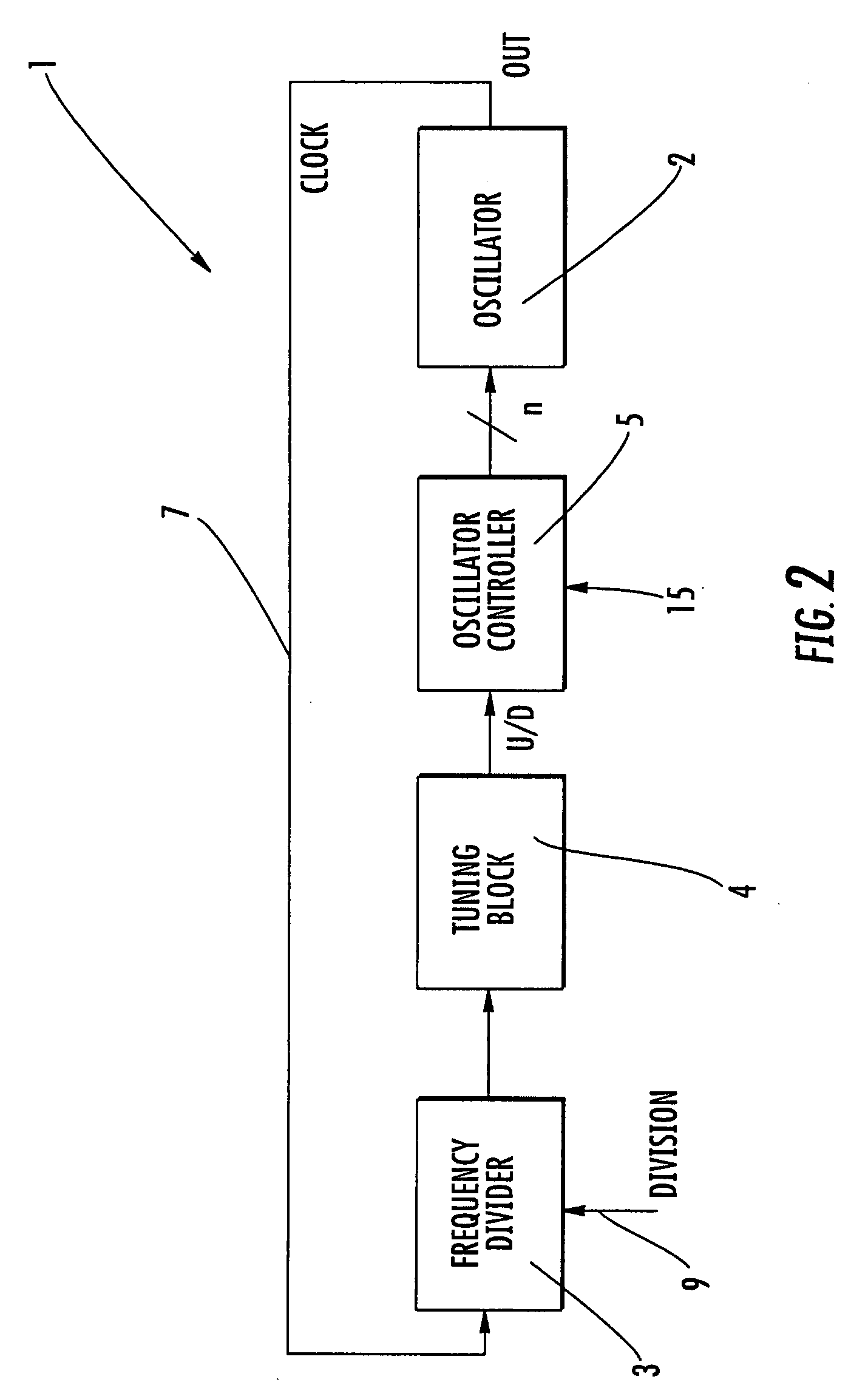
- An oscillator system with a frequency divider, tuning block, and control block that dynamically adjusts the clock frequency by converting the frequency into an electric magnitude signal for comparison with a reference, using an Up/Down counter to regulate the oscillator inputs, thereby minimizing errors from process, temperature, and voltage variations.

Manufacturing Standards for Oscillator Scale-Up
Manufacturing standards for oscillator scale-up represent a critical framework that bridges laboratory prototypes and industrial production capabilities. These standards encompass dimensional tolerances, material specifications, process parameters, and quality control metrics that ensure consistent performance across varying production volumes. The establishment of robust manufacturing standards requires careful consideration of substrate materials, crystal cutting techniques, electrode deposition methods, and packaging technologies that can maintain oscillator stability and frequency accuracy at scale.
Process standardization begins with substrate preparation protocols that define surface roughness parameters, cleanliness requirements, and dimensional specifications. Crystal blank manufacturing must adhere to strict orientation tolerances, typically within ±1 arcminute for high-precision applications. Electrode deposition processes require standardized thickness control, adhesion testing procedures, and resistance measurements to ensure uniform electrical characteristics across production batches.
Quality assurance frameworks incorporate statistical process control methodologies specifically adapted for oscillator manufacturing. These include frequency stability measurements under varying temperature conditions, aging characteristics evaluation, and phase noise specifications that must be maintained throughout scaled production. Automated testing protocols enable high-throughput validation while maintaining measurement accuracy comparable to laboratory conditions.
Environmental control standards define cleanroom classifications, humidity levels, and temperature stability requirements for different manufacturing stages. Contamination control protocols address particle size limitations, chemical purity standards, and handling procedures that prevent performance degradation during mass production. These environmental specifications directly impact yield rates and long-term reliability of scaled oscillator systems.
Traceability requirements establish documentation standards for material sourcing, process parameters, and quality metrics throughout the manufacturing chain. Batch tracking systems enable rapid identification of process variations and facilitate continuous improvement initiatives. Calibration standards for measurement equipment ensure consistency across multiple production facilities and enable reliable performance comparisons between different manufacturing sites.
Process standardization begins with substrate preparation protocols that define surface roughness parameters, cleanliness requirements, and dimensional specifications. Crystal blank manufacturing must adhere to strict orientation tolerances, typically within ±1 arcminute for high-precision applications. Electrode deposition processes require standardized thickness control, adhesion testing procedures, and resistance measurements to ensure uniform electrical characteristics across production batches.
Quality assurance frameworks incorporate statistical process control methodologies specifically adapted for oscillator manufacturing. These include frequency stability measurements under varying temperature conditions, aging characteristics evaluation, and phase noise specifications that must be maintained throughout scaled production. Automated testing protocols enable high-throughput validation while maintaining measurement accuracy comparable to laboratory conditions.
Environmental control standards define cleanroom classifications, humidity levels, and temperature stability requirements for different manufacturing stages. Contamination control protocols address particle size limitations, chemical purity standards, and handling procedures that prevent performance degradation during mass production. These environmental specifications directly impact yield rates and long-term reliability of scaled oscillator systems.
Traceability requirements establish documentation standards for material sourcing, process parameters, and quality metrics throughout the manufacturing chain. Batch tracking systems enable rapid identification of process variations and facilitate continuous improvement initiatives. Calibration standards for measurement equipment ensure consistency across multiple production facilities and enable reliable performance comparisons between different manufacturing sites.
Cost-Performance Trade-offs in Large-Scale Integration
The economic viability of large-scale oscillator system integration hinges on achieving an optimal balance between manufacturing costs and performance requirements. As production volumes increase, the cost structure fundamentally shifts from component-level optimization to system-level efficiency considerations. Initial capital expenditures for advanced fabrication equipment and testing infrastructure represent significant barriers to entry, yet these investments become increasingly justified as economies of scale emerge.
Manufacturing complexity escalates exponentially with integration density, driving up both direct production costs and yield-related losses. Advanced packaging technologies, such as 3D stacking and heterogeneous integration, offer superior performance characteristics but command premium pricing that may not align with volume production economics. The trade-off becomes particularly acute when considering thermal management solutions, where sophisticated cooling systems can double system costs while delivering marginal performance improvements.
Performance scaling presents diminishing returns as integration density approaches physical limits. Power consumption increases non-linearly with frequency and integration complexity, necessitating expensive power delivery networks and thermal dissipation systems. Signal integrity challenges multiply in dense integration scenarios, requiring costly design iterations and specialized materials that significantly impact unit economics.
Supply chain considerations further complicate cost-performance optimization. High-performance components often rely on specialized suppliers with limited capacity, creating bottlenecks that inflate costs during scale-up phases. Conversely, commodity components may offer attractive pricing but compromise system performance, particularly in timing-critical applications where oscillator precision directly impacts overall system functionality.
Testing and validation costs represent an often-underestimated factor in large-scale integration economics. Comprehensive characterization of integrated oscillator systems requires sophisticated test equipment and extended validation periods, with costs scaling proportionally to system complexity. The challenge intensifies when considering field reliability requirements, where over-engineering for robustness conflicts with cost optimization objectives, necessitating careful risk assessment and targeted design margins.
Manufacturing complexity escalates exponentially with integration density, driving up both direct production costs and yield-related losses. Advanced packaging technologies, such as 3D stacking and heterogeneous integration, offer superior performance characteristics but command premium pricing that may not align with volume production economics. The trade-off becomes particularly acute when considering thermal management solutions, where sophisticated cooling systems can double system costs while delivering marginal performance improvements.
Performance scaling presents diminishing returns as integration density approaches physical limits. Power consumption increases non-linearly with frequency and integration complexity, necessitating expensive power delivery networks and thermal dissipation systems. Signal integrity challenges multiply in dense integration scenarios, requiring costly design iterations and specialized materials that significantly impact unit economics.
Supply chain considerations further complicate cost-performance optimization. High-performance components often rely on specialized suppliers with limited capacity, creating bottlenecks that inflate costs during scale-up phases. Conversely, commodity components may offer attractive pricing but compromise system performance, particularly in timing-critical applications where oscillator precision directly impacts overall system functionality.
Testing and validation costs represent an often-underestimated factor in large-scale integration economics. Comprehensive characterization of integrated oscillator systems requires sophisticated test equipment and extended validation periods, with costs scaling proportionally to system complexity. The challenge intensifies when considering field reliability requirements, where over-engineering for robustness conflicts with cost optimization objectives, necessitating careful risk assessment and targeted design margins.
Unlock deeper insights with Patsnap Eureka Quick Research — get a full tech report to explore trends and direct your research. Try now!
Generate Your Research Report Instantly with AI Agent
Supercharge your innovation with Patsnap Eureka AI Agent Platform!