

PCM Reliability vs Temperature Range
MAR 27, 20269 MIN READ
Generate Your Research Report Instantly with AI Agent
PatSnap Eureka helps you evaluate technical feasibility & market potential.
PCM Thermal Reliability Background and Objectives
Phase Change Memory (PCM) technology has emerged as a promising non-volatile memory solution, offering unique advantages in data storage applications. However, the relationship between PCM reliability and temperature range represents one of the most critical challenges limiting its widespread commercial deployment. Understanding this relationship is essential for developing robust memory systems capable of operating across diverse environmental conditions.
PCM devices rely on the reversible phase transition between amorphous and crystalline states of chalcogenide materials, typically based on germanium-antimony-tellurium (GST) alloys. This phase change mechanism is inherently temperature-dependent, making thermal reliability a fundamental concern. The crystallization and amorphization processes that enable data storage and retrieval are directly influenced by ambient temperature variations, affecting both device performance and long-term data retention.
The temperature sensitivity of PCM devices manifests in multiple ways, including threshold voltage drift, resistance state stability, and endurance degradation. At elevated temperatures, spontaneous crystallization can occur in amorphous regions, leading to data corruption and reduced retention times. Conversely, low-temperature operation may result in incomplete phase transitions, affecting write reliability and increasing programming energy requirements.
Current market demands for memory solutions span extreme temperature ranges, from automotive applications requiring operation from -40°C to +125°C, to industrial IoT devices operating in harsh environmental conditions. These applications necessitate PCM devices that maintain consistent performance and reliability across wide temperature ranges while preserving data integrity over extended periods.
The primary objective of investigating PCM thermal reliability is to establish comprehensive understanding of temperature-dependent failure mechanisms and develop mitigation strategies. This includes characterizing the relationship between operating temperature and key reliability metrics such as data retention time, endurance cycles, and read/write error rates. Additionally, the research aims to identify optimal material compositions and device architectures that minimize temperature sensitivity while maintaining the inherent advantages of PCM technology.
Achieving temperature-robust PCM devices requires addressing fundamental materials science challenges, including thermal stability of chalcogenide alloys, interface reliability under thermal stress, and optimization of device geometry for thermal management. The ultimate goal is to enable PCM technology deployment in temperature-critical applications while ensuring long-term reliability and performance consistency across the entire operational temperature spectrum.
PCM devices rely on the reversible phase transition between amorphous and crystalline states of chalcogenide materials, typically based on germanium-antimony-tellurium (GST) alloys. This phase change mechanism is inherently temperature-dependent, making thermal reliability a fundamental concern. The crystallization and amorphization processes that enable data storage and retrieval are directly influenced by ambient temperature variations, affecting both device performance and long-term data retention.
The temperature sensitivity of PCM devices manifests in multiple ways, including threshold voltage drift, resistance state stability, and endurance degradation. At elevated temperatures, spontaneous crystallization can occur in amorphous regions, leading to data corruption and reduced retention times. Conversely, low-temperature operation may result in incomplete phase transitions, affecting write reliability and increasing programming energy requirements.
Current market demands for memory solutions span extreme temperature ranges, from automotive applications requiring operation from -40°C to +125°C, to industrial IoT devices operating in harsh environmental conditions. These applications necessitate PCM devices that maintain consistent performance and reliability across wide temperature ranges while preserving data integrity over extended periods.
The primary objective of investigating PCM thermal reliability is to establish comprehensive understanding of temperature-dependent failure mechanisms and develop mitigation strategies. This includes characterizing the relationship between operating temperature and key reliability metrics such as data retention time, endurance cycles, and read/write error rates. Additionally, the research aims to identify optimal material compositions and device architectures that minimize temperature sensitivity while maintaining the inherent advantages of PCM technology.
Achieving temperature-robust PCM devices requires addressing fundamental materials science challenges, including thermal stability of chalcogenide alloys, interface reliability under thermal stress, and optimization of device geometry for thermal management. The ultimate goal is to enable PCM technology deployment in temperature-critical applications while ensuring long-term reliability and performance consistency across the entire operational temperature spectrum.
Market Demand for Temperature-Stable PCM Solutions
The global demand for temperature-stable PCM solutions has experienced significant growth across multiple industrial sectors, driven by the increasing need for reliable thermal management systems in extreme operating environments. This demand surge reflects the critical importance of maintaining consistent thermal performance across wide temperature ranges, particularly in applications where temperature fluctuations can compromise system reliability and operational efficiency.
Data centers and cloud computing infrastructure represent one of the most substantial market drivers for temperature-stable PCM solutions. The exponential growth in digital services and edge computing has created unprecedented demands for cooling systems that can maintain optimal operating temperatures regardless of ambient conditions. These facilities require PCM materials that demonstrate consistent phase change behavior and thermal properties across seasonal temperature variations and diverse geographical locations.
The automotive industry, particularly the electric vehicle sector, has emerged as another major market segment demanding enhanced temperature stability in PCM applications. Battery thermal management systems must function reliably across extreme temperature ranges, from arctic conditions to desert environments. The growing adoption of electric vehicles globally has intensified the need for PCM solutions that maintain their thermal regulation capabilities without degradation across these challenging temperature spectrums.
Renewable energy storage systems present a rapidly expanding market opportunity for temperature-stable PCM technologies. Solar thermal power plants and grid-scale energy storage facilities operate in diverse climatic conditions and require thermal management solutions that perform consistently regardless of environmental temperature variations. The global transition toward renewable energy sources has amplified demand for PCM materials that can withstand temperature cycling without compromising their thermal storage capacity.
Building and construction markets increasingly seek PCM solutions for passive thermal regulation in both residential and commercial applications. The growing emphasis on energy-efficient building designs and sustainable construction practices has created substantial demand for PCM materials that maintain their thermal regulation properties across seasonal temperature changes and varying climatic zones.
Industrial manufacturing processes, particularly in sectors such as pharmaceuticals, food processing, and chemical production, require precise temperature control systems that function reliably across operational temperature ranges. These industries demand PCM solutions that demonstrate consistent thermal behavior and long-term stability under varying temperature conditions to ensure product quality and process reliability.
Data centers and cloud computing infrastructure represent one of the most substantial market drivers for temperature-stable PCM solutions. The exponential growth in digital services and edge computing has created unprecedented demands for cooling systems that can maintain optimal operating temperatures regardless of ambient conditions. These facilities require PCM materials that demonstrate consistent phase change behavior and thermal properties across seasonal temperature variations and diverse geographical locations.
The automotive industry, particularly the electric vehicle sector, has emerged as another major market segment demanding enhanced temperature stability in PCM applications. Battery thermal management systems must function reliably across extreme temperature ranges, from arctic conditions to desert environments. The growing adoption of electric vehicles globally has intensified the need for PCM solutions that maintain their thermal regulation capabilities without degradation across these challenging temperature spectrums.
Renewable energy storage systems present a rapidly expanding market opportunity for temperature-stable PCM technologies. Solar thermal power plants and grid-scale energy storage facilities operate in diverse climatic conditions and require thermal management solutions that perform consistently regardless of environmental temperature variations. The global transition toward renewable energy sources has amplified demand for PCM materials that can withstand temperature cycling without compromising their thermal storage capacity.
Building and construction markets increasingly seek PCM solutions for passive thermal regulation in both residential and commercial applications. The growing emphasis on energy-efficient building designs and sustainable construction practices has created substantial demand for PCM materials that maintain their thermal regulation properties across seasonal temperature changes and varying climatic zones.
Industrial manufacturing processes, particularly in sectors such as pharmaceuticals, food processing, and chemical production, require precise temperature control systems that function reliably across operational temperature ranges. These industries demand PCM solutions that demonstrate consistent thermal behavior and long-term stability under varying temperature conditions to ensure product quality and process reliability.
Current PCM Temperature Performance Limitations
Phase Change Memory (PCM) technology faces significant temperature-related performance constraints that limit its widespread adoption in various applications. The fundamental challenge stems from the inherent temperature sensitivity of chalcogenide materials, which form the core of PCM devices. These materials exhibit dramatic changes in their electrical and thermal properties across different temperature ranges, directly impacting device reliability and operational stability.
The crystallization temperature threshold represents a critical limitation for PCM devices. Most commercial PCM technologies operate within a narrow temperature window, typically between -40°C and 85°C for consumer applications. Beyond this range, the chalcogenide material experiences uncontrolled phase transitions that can lead to data corruption or permanent device failure. At elevated temperatures above 150°C, spontaneous crystallization occurs, causing unintended switching from the amorphous to crystalline state.
Thermal cycling effects pose another substantial challenge for PCM reliability. Repeated exposure to temperature fluctuations causes mechanical stress within the device structure due to thermal expansion coefficient mismatches between different materials. This stress accumulation leads to interface delamination, void formation, and eventual device degradation. The problem becomes particularly acute in automotive and industrial applications where temperature variations can exceed 200°C.
Data retention capabilities deteriorate significantly as operating temperatures increase. While PCM devices can maintain stored information for over 10 years at room temperature, this retention time drops exponentially with temperature elevation. At 85°C, typical retention periods reduce to approximately 6 months, making PCM unsuitable for high-temperature storage applications without additional thermal management solutions.
Programming window stability represents another temperature-dependent limitation. The resistance contrast between amorphous and crystalline states, which determines the device's ability to distinguish between logic states, decreases substantially at elevated temperatures. This reduction in programming window margin increases read errors and reduces overall system reliability.
Current PCM architectures also struggle with temperature-induced resistance drift phenomena. The amorphous phase exhibits time and temperature-dependent resistance changes that can shift device characteristics beyond acceptable operational parameters. This drift becomes more pronounced at higher temperatures, requiring complex compensation algorithms and frequent recalibration procedures.
These temperature limitations collectively restrict PCM deployment in demanding environments such as aerospace, automotive engine compartments, and industrial process control systems, where extended temperature ranges and high reliability are essential requirements.
The crystallization temperature threshold represents a critical limitation for PCM devices. Most commercial PCM technologies operate within a narrow temperature window, typically between -40°C and 85°C for consumer applications. Beyond this range, the chalcogenide material experiences uncontrolled phase transitions that can lead to data corruption or permanent device failure. At elevated temperatures above 150°C, spontaneous crystallization occurs, causing unintended switching from the amorphous to crystalline state.
Thermal cycling effects pose another substantial challenge for PCM reliability. Repeated exposure to temperature fluctuations causes mechanical stress within the device structure due to thermal expansion coefficient mismatches between different materials. This stress accumulation leads to interface delamination, void formation, and eventual device degradation. The problem becomes particularly acute in automotive and industrial applications where temperature variations can exceed 200°C.
Data retention capabilities deteriorate significantly as operating temperatures increase. While PCM devices can maintain stored information for over 10 years at room temperature, this retention time drops exponentially with temperature elevation. At 85°C, typical retention periods reduce to approximately 6 months, making PCM unsuitable for high-temperature storage applications without additional thermal management solutions.
Programming window stability represents another temperature-dependent limitation. The resistance contrast between amorphous and crystalline states, which determines the device's ability to distinguish between logic states, decreases substantially at elevated temperatures. This reduction in programming window margin increases read errors and reduces overall system reliability.
Current PCM architectures also struggle with temperature-induced resistance drift phenomena. The amorphous phase exhibits time and temperature-dependent resistance changes that can shift device characteristics beyond acceptable operational parameters. This drift becomes more pronounced at higher temperatures, requiring complex compensation algorithms and frequent recalibration procedures.
These temperature limitations collectively restrict PCM deployment in demanding environments such as aerospace, automotive engine compartments, and industrial process control systems, where extended temperature ranges and high reliability are essential requirements.
Existing PCM Temperature Range Enhancement Methods
01 PCM material composition and encapsulation techniques
Phase change materials require specific composition formulations and encapsulation methods to ensure long-term stability and reliability. The encapsulation process protects the PCM core material from environmental factors and prevents leakage during phase transitions. Various encapsulation techniques including microencapsulation, macroencapsulation, and polymer matrix encapsulation are employed to enhance the structural integrity and thermal cycling performance of PCM materials.- PCM material composition and encapsulation techniques: Phase change materials require specific composition formulations and encapsulation methods to ensure long-term stability and reliability. The encapsulation protects the PCM core material from environmental factors and prevents leakage during phase transitions. Various encapsulation techniques including microencapsulation, macroencapsulation, and polymer matrix encapsulation are employed to enhance the structural integrity and thermal cycling performance of PCM materials.
- Thermal cycling stability and degradation prevention: Ensuring PCM reliability requires addressing thermal cycling stability through repeated melting and solidification processes. Materials must maintain consistent phase change temperatures and latent heat capacity over numerous cycles. Degradation prevention methods include the use of nucleating agents, stabilizers, and additives that prevent supercooling, phase separation, and chemical decomposition during extended operational periods.
- Containment and leakage prevention systems: Reliable PCM systems incorporate specialized containment structures and leak prevention mechanisms to maintain material integrity. These systems include sealed containers, barrier layers, and composite structures that prevent PCM migration during phase transitions. Advanced sealing technologies and material compatibility considerations ensure long-term containment without degradation of the container materials.
- Testing and quality control methods: Comprehensive testing protocols and quality control measures are essential for verifying PCM reliability. These include differential scanning calorimetry, thermal cycling tests, accelerated aging studies, and performance monitoring under various environmental conditions. Standardized testing procedures help predict long-term performance and identify potential failure modes before deployment in practical applications.
- Integration and system-level reliability enhancement: System-level integration of PCM materials requires consideration of thermal management, mechanical stability, and compatibility with surrounding components. Reliability enhancement strategies include optimized heat transfer interfaces, structural support systems, and monitoring mechanisms that detect performance degradation. Design approaches focus on minimizing thermal stress, ensuring uniform temperature distribution, and maintaining operational efficiency throughout the system lifecycle.
02 Thermal cycling stability and degradation prevention
Ensuring PCM reliability requires addressing thermal cycling stability through the prevention of material degradation over repeated melting and solidification cycles. Stabilization methods include the addition of nucleating agents, thermal stabilizers, and antioxidants to maintain consistent phase change properties. Testing protocols for evaluating long-term thermal cycling performance are essential for predicting service life and reliability under operational conditions.Expand Specific Solutions03 Leakage prevention and containment systems
Preventing leakage during phase transitions is critical for PCM reliability, requiring robust containment systems and barrier materials. Design strategies include the use of compatible container materials, sealing technologies, and composite structures that maintain integrity across temperature ranges. Advanced containment solutions incorporate porous matrices, polymer networks, and multi-layer barrier systems to eliminate leakage risks.Expand Specific Solutions04 Supercooling mitigation and phase change consistency
Supercooling phenomena can significantly impact PCM reliability by causing inconsistent phase change behavior and reduced heat storage efficiency. Mitigation strategies involve incorporating nucleating agents, surface treatments, and structural modifications to promote consistent crystallization. Ensuring predictable phase change temperatures and minimizing supercooling effects are essential for reliable thermal energy storage performance.Expand Specific Solutions05 Testing and quality control methods for PCM reliability
Comprehensive testing protocols and quality control measures are necessary to verify PCM reliability under various operating conditions. Evaluation methods include differential scanning calorimetry, thermal cycling tests, accelerated aging studies, and long-term performance monitoring. Standardized testing procedures ensure consistent quality assessment and enable comparison of different PCM formulations for reliability characteristics.Expand Specific Solutions
Key Players in PCM and Thermal Management Industry
The PCM reliability versus temperature range technology represents a rapidly evolving market driven by increasing demand for thermal management solutions across automotive, electronics, and cold-chain logistics sectors. The industry is experiencing significant growth with market expansion fueled by sustainability requirements and advanced material science developments. Technology maturity varies considerably among market participants, with established players like Murata Manufacturing, TDK Corp., and Qualcomm demonstrating advanced integration capabilities in electronic applications, while specialized companies such as PureTemp.com and Pelican BioThermal focus on bio-based and pharmaceutical-grade PCM solutions. Research institutions including University of Minho and Huazhong University of Science & Technology are advancing fundamental PCM science, indicating strong innovation pipeline. The competitive landscape shows convergence between traditional electronics manufacturers and emerging thermal management specialists, suggesting technology consolidation and cross-industry collaboration trends that will define future market dynamics.
PureTemp.com
Technical Solution: PureTemp specializes in bio-based phase change materials (PCMs) with enhanced thermal reliability across extended temperature ranges. Their proprietary formulations maintain consistent phase transition properties from -40°C to 200°C, utilizing organic compounds that demonstrate minimal degradation over thermal cycling. The company's PCMs incorporate stabilizing additives that prevent supercooling and maintain crystalline structure integrity during repeated melting-freezing cycles. Their materials show less than 2% enthalpy degradation after 10,000 thermal cycles and maintain phase change temperatures within ±1°C variance across the operational range.
Strengths: Bio-based materials offer environmental sustainability and consistent performance across wide temperature ranges. Weaknesses: Higher cost compared to traditional paraffin-based PCMs and limited high-temperature applications above 200°C.
Murata Manufacturing Co. Ltd.
Technical Solution: Murata integrates PCM technology into electronic thermal management systems, focusing on reliability across semiconductor operating temperatures. Their PCM solutions utilize metallic matrix composites that enhance thermal conductivity while maintaining phase change stability from 0°C to 120°C. The company develops PCM-embedded heat sinks and thermal interface materials that provide consistent thermal regulation for electronic components. Their materials incorporate graphene additives to improve thermal conductivity by 300% while maintaining phase change enthalpy within 95% of initial values after extended thermal cycling in electronic applications.
Strengths: High thermal conductivity enhancement and proven reliability in electronics applications with excellent heat dissipation. Weaknesses: Limited to moderate temperature ranges and higher manufacturing complexity for specialized electronic integration.
Core Innovations in PCM Thermal Reliability Patents
Phase change materials and associated memory devices
PatentActiveUS7875873B2
Innovation
- Doping phase change materials with nitride compounds such as Si3N4, AlxNy, or TixNy, which significantly enhances resistivity and transition temperature, allowing for a crystallization temperature above 250°C and resistivity of at least 0.001 Ohm-cm, while maintaining fast crystallization times, thereby improving the performance and thermal stability of PCM-based memory devices.


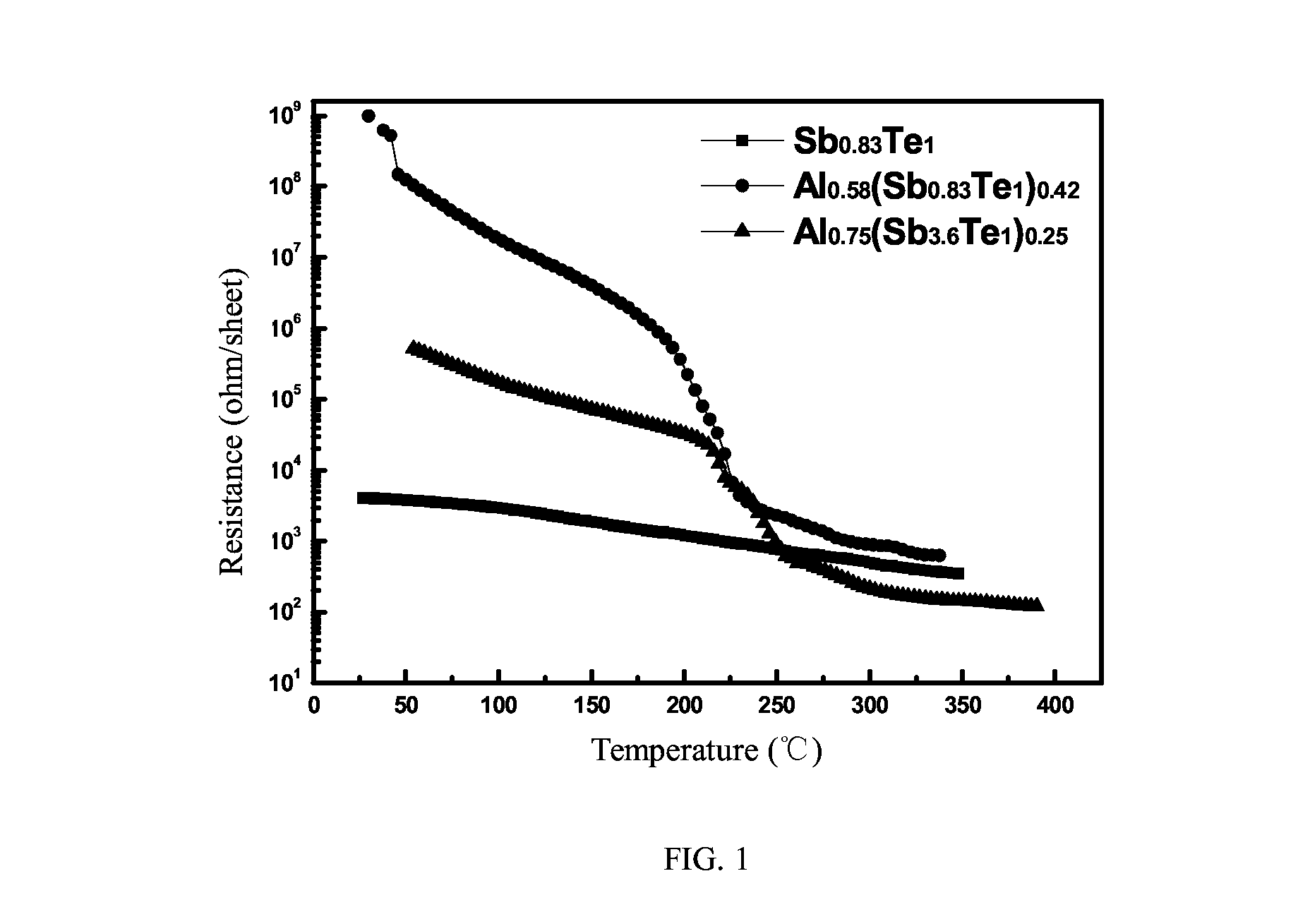
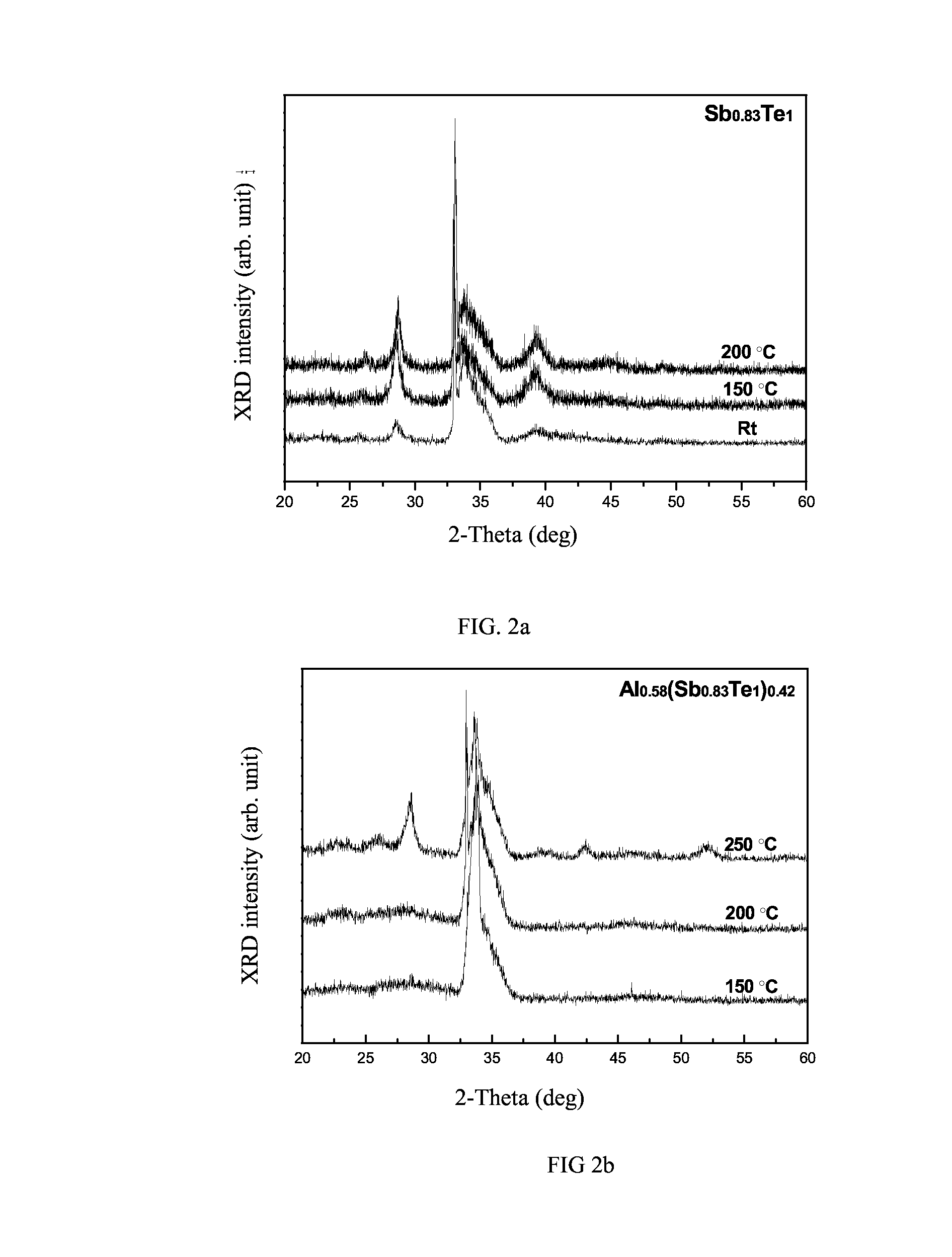
Al-sb-te phase change material used for phase change memory and fabrication method thereof
PatentActiveUS20130334469A1
Innovation
- A phase change material composed of a mixture of aluminum (Al), antimony (Sb), and tellurium (Te) with a general formula Alx(SbyTe1)1-x, which exhibits high crystallization speed, thermal stability, and low power consumption, and is fabricated using magnetron sputtering, allowing for reversible resistivity changes and compatibility with CMOS processes.
Thermal Safety Standards for PCM Applications
Thermal safety standards for PCM applications have evolved significantly as phase change materials become increasingly integrated into energy storage systems, building materials, and thermal management solutions. The establishment of comprehensive safety protocols is critical given the diverse temperature operating ranges and potential failure modes associated with PCM systems across different industrial applications.
International standards organizations, including ASTM International, ISO, and IEC, have developed specific testing protocols for PCM thermal safety evaluation. ASTM D6040 provides standardized methods for measuring thermal stability and decomposition temperatures, while ISO 23993 addresses fire safety requirements for PCM-integrated building materials. These standards establish baseline safety thresholds that manufacturers must meet before commercial deployment.
Temperature-dependent safety considerations form the cornerstone of PCM thermal standards. Most regulations require comprehensive testing across operational temperature ranges, typically spanning from -40°C to 200°C depending on application requirements. Critical safety parameters include thermal runaway prevention, containment integrity under thermal cycling, and emergency response protocols for overheating scenarios.
Fire safety regulations represent a particularly stringent aspect of PCM thermal standards. UL 2703 and similar certifications mandate flame spread testing, smoke generation analysis, and toxic gas emission evaluation during thermal decomposition. These standards are especially critical for building-integrated PCM systems where human safety is paramount.
Encapsulation safety standards address container integrity under extreme temperature conditions. Testing protocols evaluate material compatibility, expansion accommodation, and leak prevention mechanisms. Standards typically require demonstration of containment integrity through thousands of thermal cycles without degradation.
Emerging regulatory frameworks are adapting to address novel PCM formulations and applications. Recent updates to thermal safety standards incorporate nanotechnology-enhanced PCMs, hybrid organic-inorganic systems, and high-temperature industrial applications. These evolving standards reflect the growing complexity of PCM technology while maintaining rigorous safety requirements across all temperature operating ranges.
International standards organizations, including ASTM International, ISO, and IEC, have developed specific testing protocols for PCM thermal safety evaluation. ASTM D6040 provides standardized methods for measuring thermal stability and decomposition temperatures, while ISO 23993 addresses fire safety requirements for PCM-integrated building materials. These standards establish baseline safety thresholds that manufacturers must meet before commercial deployment.
Temperature-dependent safety considerations form the cornerstone of PCM thermal standards. Most regulations require comprehensive testing across operational temperature ranges, typically spanning from -40°C to 200°C depending on application requirements. Critical safety parameters include thermal runaway prevention, containment integrity under thermal cycling, and emergency response protocols for overheating scenarios.
Fire safety regulations represent a particularly stringent aspect of PCM thermal standards. UL 2703 and similar certifications mandate flame spread testing, smoke generation analysis, and toxic gas emission evaluation during thermal decomposition. These standards are especially critical for building-integrated PCM systems where human safety is paramount.
Encapsulation safety standards address container integrity under extreme temperature conditions. Testing protocols evaluate material compatibility, expansion accommodation, and leak prevention mechanisms. Standards typically require demonstration of containment integrity through thousands of thermal cycles without degradation.
Emerging regulatory frameworks are adapting to address novel PCM formulations and applications. Recent updates to thermal safety standards incorporate nanotechnology-enhanced PCMs, hybrid organic-inorganic systems, and high-temperature industrial applications. These evolving standards reflect the growing complexity of PCM technology while maintaining rigorous safety requirements across all temperature operating ranges.
PCM Lifecycle Assessment in Temperature Cycling
Phase Change Materials (PCMs) undergo significant stress during temperature cycling operations, making lifecycle assessment a critical component for evaluating their long-term viability in thermal management applications. The assessment framework encompasses multiple degradation mechanisms that occur throughout repeated thermal transitions, including crystallization-induced volume changes, thermal expansion mismatches, and chemical decomposition processes.
Temperature cycling assessment begins with establishing baseline performance metrics under controlled conditions. Standard testing protocols typically involve subjecting PCM samples to predetermined temperature ranges that simulate real-world operating conditions. These cycles alternate between heating and cooling phases, with specific dwell times at maximum and minimum temperatures to ensure complete phase transitions occur during each cycle.
Material degradation manifests through various pathways during extended cycling operations. Mechanical stress accumulation results from repeated volume expansion and contraction, potentially leading to container deformation or seal failures in encapsulated systems. Chemical stability becomes compromised through oxidation reactions, particularly at elevated temperatures, while subcooling effects may intensify over time, affecting the consistency of solidification temperatures.
Performance degradation tracking requires comprehensive monitoring of key thermal properties throughout the cycling process. Enthalpy measurements reveal changes in latent heat capacity, while differential scanning calorimetry identifies shifts in phase transition temperatures. Thermal conductivity variations and heat transfer coefficient changes provide insights into structural modifications within the PCM matrix.
Accelerated aging methodologies enable rapid assessment of long-term performance characteristics. These approaches utilize elevated temperature ranges and increased cycling frequencies to compress years of operational exposure into manageable testing timeframes. Statistical models correlate accelerated test results with expected field performance, accounting for temperature-dependent reaction kinetics and Arrhenius relationships.
Lifecycle prediction models integrate experimental data with theoretical frameworks to forecast PCM performance over extended operational periods. These models consider cumulative damage effects, accounting for the non-linear relationship between cycling intensity and degradation rates. Reliability engineering principles guide the establishment of confidence intervals and failure probability distributions for different operating scenarios.
Temperature cycling assessment begins with establishing baseline performance metrics under controlled conditions. Standard testing protocols typically involve subjecting PCM samples to predetermined temperature ranges that simulate real-world operating conditions. These cycles alternate between heating and cooling phases, with specific dwell times at maximum and minimum temperatures to ensure complete phase transitions occur during each cycle.
Material degradation manifests through various pathways during extended cycling operations. Mechanical stress accumulation results from repeated volume expansion and contraction, potentially leading to container deformation or seal failures in encapsulated systems. Chemical stability becomes compromised through oxidation reactions, particularly at elevated temperatures, while subcooling effects may intensify over time, affecting the consistency of solidification temperatures.
Performance degradation tracking requires comprehensive monitoring of key thermal properties throughout the cycling process. Enthalpy measurements reveal changes in latent heat capacity, while differential scanning calorimetry identifies shifts in phase transition temperatures. Thermal conductivity variations and heat transfer coefficient changes provide insights into structural modifications within the PCM matrix.
Accelerated aging methodologies enable rapid assessment of long-term performance characteristics. These approaches utilize elevated temperature ranges and increased cycling frequencies to compress years of operational exposure into manageable testing timeframes. Statistical models correlate accelerated test results with expected field performance, accounting for temperature-dependent reaction kinetics and Arrhenius relationships.
Lifecycle prediction models integrate experimental data with theoretical frameworks to forecast PCM performance over extended operational periods. These models consider cumulative damage effects, accounting for the non-linear relationship between cycling intensity and degradation rates. Reliability engineering principles guide the establishment of confidence intervals and failure probability distributions for different operating scenarios.
Unlock deeper insights with PatSnap Eureka Quick Research — get a full tech report to explore trends and direct your research. Try now!
Generate Your Research Report Instantly with AI Agent
Supercharge your innovation with PatSnap Eureka AI Agent Platform!