

Photonic Computing for Ultra-Low Latency AI Inference
MAR 11, 20269 MIN READ
Generate Your Research Report Instantly with AI Agent
PatSnap Eureka helps you evaluate technical feasibility & market potential.
Photonic Computing Background and AI Inference Goals
Photonic computing represents a paradigm shift from traditional electronic computation, leveraging the unique properties of light to perform computational tasks. This technology emerged from the convergence of optical physics, photonics engineering, and computational science, tracing its roots back to early optical analog computers in the 1960s. The fundamental principle relies on photons as information carriers instead of electrons, enabling massively parallel processing capabilities that are inherently suited for matrix operations and neural network computations.
The evolution of photonic computing has been driven by the increasing demand for high-speed, energy-efficient processing solutions. Early developments focused on optical signal processing and telecommunications applications, where light-based systems demonstrated superior bandwidth and reduced electromagnetic interference. As artificial intelligence workloads became more computationally intensive, researchers recognized the potential of photonic systems to address the bottlenecks associated with electronic processors, particularly in terms of speed, power consumption, and heat generation.
Modern photonic computing architectures utilize various optical phenomena including interference, diffraction, and nonlinear optical effects to perform mathematical operations. Silicon photonics platforms have emerged as a leading approach, integrating optical components with complementary metal-oxide-semiconductor (CMOS) technology to create hybrid systems that combine the best of both worlds. These systems can perform matrix-vector multiplications, convolutions, and other fundamental AI operations at the speed of light.
The primary goals for photonic computing in AI inference applications center around achieving unprecedented computational speeds while maintaining energy efficiency. Ultra-low latency requirements, typically targeting sub-microsecond response times, drive the development of specialized photonic neural network accelerators. These systems aim to eliminate the von Neumann bottleneck that plagues electronic computers by performing computations directly in the optical domain without frequent electronic conversions.
Key technical objectives include developing scalable photonic tensor processing units capable of handling large-scale neural networks, implementing efficient optical memory systems for weight storage and retrieval, and creating robust optical-electronic interfaces for seamless integration with existing computing infrastructure. The ultimate vision encompasses real-time AI inference for applications such as autonomous vehicles, high-frequency trading, and edge computing scenarios where millisecond delays can have significant consequences.
The evolution of photonic computing has been driven by the increasing demand for high-speed, energy-efficient processing solutions. Early developments focused on optical signal processing and telecommunications applications, where light-based systems demonstrated superior bandwidth and reduced electromagnetic interference. As artificial intelligence workloads became more computationally intensive, researchers recognized the potential of photonic systems to address the bottlenecks associated with electronic processors, particularly in terms of speed, power consumption, and heat generation.
Modern photonic computing architectures utilize various optical phenomena including interference, diffraction, and nonlinear optical effects to perform mathematical operations. Silicon photonics platforms have emerged as a leading approach, integrating optical components with complementary metal-oxide-semiconductor (CMOS) technology to create hybrid systems that combine the best of both worlds. These systems can perform matrix-vector multiplications, convolutions, and other fundamental AI operations at the speed of light.
The primary goals for photonic computing in AI inference applications center around achieving unprecedented computational speeds while maintaining energy efficiency. Ultra-low latency requirements, typically targeting sub-microsecond response times, drive the development of specialized photonic neural network accelerators. These systems aim to eliminate the von Neumann bottleneck that plagues electronic computers by performing computations directly in the optical domain without frequent electronic conversions.
Key technical objectives include developing scalable photonic tensor processing units capable of handling large-scale neural networks, implementing efficient optical memory systems for weight storage and retrieval, and creating robust optical-electronic interfaces for seamless integration with existing computing infrastructure. The ultimate vision encompasses real-time AI inference for applications such as autonomous vehicles, high-frequency trading, and edge computing scenarios where millisecond delays can have significant consequences.
Market Demand for Ultra-Low Latency AI Applications
The demand for ultra-low latency AI applications has experienced unprecedented growth across multiple industries, driven by the increasing need for real-time decision-making capabilities in mission-critical systems. Financial trading platforms represent one of the most demanding sectors, where microsecond-level latencies can determine the difference between profitable and unprofitable transactions. High-frequency trading algorithms require instantaneous processing of market data, pattern recognition, and execution decisions, creating a substantial market opportunity for photonic computing solutions.
Autonomous vehicle systems constitute another rapidly expanding market segment demanding ultra-low latency AI inference. Advanced driver assistance systems and fully autonomous vehicles must process sensor data from cameras, LiDAR, and radar systems in real-time to make split-second decisions regarding navigation, obstacle avoidance, and emergency responses. The safety-critical nature of these applications makes latency reduction a paramount concern for automotive manufacturers and technology providers.
Industrial automation and robotics applications increasingly require real-time AI processing for quality control, predictive maintenance, and adaptive manufacturing processes. Smart factories implementing Industry 4.0 principles demand instantaneous analysis of production data, defect detection, and process optimization. The growing adoption of collaborative robots and precision manufacturing systems further amplifies the need for ultra-low latency AI inference capabilities.
Telecommunications infrastructure, particularly with the deployment of 5G and emerging 6G networks, presents significant market opportunities for photonic computing solutions. Network function virtualization, edge computing applications, and real-time network optimization require rapid AI-driven decision-making to manage traffic routing, resource allocation, and quality of service parameters.
Gaming and virtual reality applications represent emerging market segments where ultra-low latency AI inference can enhance user experiences through real-time content generation, adaptive gameplay mechanics, and immersive interactive environments. The growing metaverse ecosystem and cloud gaming platforms create additional demand for high-performance, low-latency AI processing capabilities.
Healthcare applications, including real-time medical imaging analysis, surgical robotics, and patient monitoring systems, increasingly require instantaneous AI inference to support critical medical decisions and improve patient outcomes.
Autonomous vehicle systems constitute another rapidly expanding market segment demanding ultra-low latency AI inference. Advanced driver assistance systems and fully autonomous vehicles must process sensor data from cameras, LiDAR, and radar systems in real-time to make split-second decisions regarding navigation, obstacle avoidance, and emergency responses. The safety-critical nature of these applications makes latency reduction a paramount concern for automotive manufacturers and technology providers.
Industrial automation and robotics applications increasingly require real-time AI processing for quality control, predictive maintenance, and adaptive manufacturing processes. Smart factories implementing Industry 4.0 principles demand instantaneous analysis of production data, defect detection, and process optimization. The growing adoption of collaborative robots and precision manufacturing systems further amplifies the need for ultra-low latency AI inference capabilities.
Telecommunications infrastructure, particularly with the deployment of 5G and emerging 6G networks, presents significant market opportunities for photonic computing solutions. Network function virtualization, edge computing applications, and real-time network optimization require rapid AI-driven decision-making to manage traffic routing, resource allocation, and quality of service parameters.
Gaming and virtual reality applications represent emerging market segments where ultra-low latency AI inference can enhance user experiences through real-time content generation, adaptive gameplay mechanics, and immersive interactive environments. The growing metaverse ecosystem and cloud gaming platforms create additional demand for high-performance, low-latency AI processing capabilities.
Healthcare applications, including real-time medical imaging analysis, surgical robotics, and patient monitoring systems, increasingly require instantaneous AI inference to support critical medical decisions and improve patient outcomes.
Current State and Challenges of Photonic AI Computing
Photonic AI computing has emerged as a promising paradigm that leverages light-based processing to overcome the fundamental limitations of electronic systems in artificial intelligence applications. Current photonic computing architectures primarily utilize optical neural networks (ONNs) implemented through various approaches including coherent photonic processors, incoherent optical systems, and hybrid electro-optical platforms. Leading implementations demonstrate matrix-vector multiplication operations using Mach-Zehnder interferometer arrays, microring resonators, and diffractive optical elements.
The technology landscape is dominated by several key approaches. Coherent photonic neural networks achieve high precision through phase-encoded information processing but require sophisticated control systems for phase stability. Incoherent systems offer greater robustness against environmental perturbations while sacrificing some computational precision. Reservoir computing implementations using photonic systems have shown particular promise for temporal data processing, leveraging the natural dynamics of optical systems for computation.
Current photonic AI systems face significant technical challenges that limit widespread adoption. Precision limitations represent a critical bottleneck, as most optical implementations struggle to achieve the numerical precision required for complex AI models. Typical photonic systems operate with 4-8 bit effective precision, substantially lower than the 16-32 bit precision common in electronic systems. This precision constraint directly impacts model accuracy and limits the complexity of implementable neural network architectures.
Scalability presents another fundamental challenge. While photonic systems excel at parallel processing, scaling to large neural networks requires extensive optical component arrays that become increasingly difficult to manufacture and control. Current demonstrations typically handle networks with hundreds to thousands of parameters, far below the millions or billions of parameters in state-of-the-art AI models.
Integration complexity poses additional obstacles. Photonic AI systems require seamless interfaces between optical and electronic components for data input/output, control, and monitoring. The analog nature of optical processing necessitates high-quality analog-to-digital and digital-to-analog converters, which can introduce latency and power consumption that partially offset the benefits of photonic processing.
Manufacturing and cost considerations further constrain commercial viability. Photonic integrated circuits require specialized fabrication processes with tight tolerances for wavelength and phase control. Current manufacturing costs remain significantly higher than electronic alternatives, limiting adoption to specialized high-performance applications.
Despite these challenges, recent advances in silicon photonics, neuromorphic photonic architectures, and novel training algorithms specifically designed for optical systems are gradually addressing these limitations. The field continues to evolve rapidly, with increasing investment from both academic institutions and industry players recognizing the transformative potential of photonic AI computing for ultra-low latency applications.
The technology landscape is dominated by several key approaches. Coherent photonic neural networks achieve high precision through phase-encoded information processing but require sophisticated control systems for phase stability. Incoherent systems offer greater robustness against environmental perturbations while sacrificing some computational precision. Reservoir computing implementations using photonic systems have shown particular promise for temporal data processing, leveraging the natural dynamics of optical systems for computation.
Current photonic AI systems face significant technical challenges that limit widespread adoption. Precision limitations represent a critical bottleneck, as most optical implementations struggle to achieve the numerical precision required for complex AI models. Typical photonic systems operate with 4-8 bit effective precision, substantially lower than the 16-32 bit precision common in electronic systems. This precision constraint directly impacts model accuracy and limits the complexity of implementable neural network architectures.
Scalability presents another fundamental challenge. While photonic systems excel at parallel processing, scaling to large neural networks requires extensive optical component arrays that become increasingly difficult to manufacture and control. Current demonstrations typically handle networks with hundreds to thousands of parameters, far below the millions or billions of parameters in state-of-the-art AI models.
Integration complexity poses additional obstacles. Photonic AI systems require seamless interfaces between optical and electronic components for data input/output, control, and monitoring. The analog nature of optical processing necessitates high-quality analog-to-digital and digital-to-analog converters, which can introduce latency and power consumption that partially offset the benefits of photonic processing.
Manufacturing and cost considerations further constrain commercial viability. Photonic integrated circuits require specialized fabrication processes with tight tolerances for wavelength and phase control. Current manufacturing costs remain significantly higher than electronic alternatives, limiting adoption to specialized high-performance applications.
Despite these challenges, recent advances in silicon photonics, neuromorphic photonic architectures, and novel training algorithms specifically designed for optical systems are gradually addressing these limitations. The field continues to evolve rapidly, with increasing investment from both academic institutions and industry players recognizing the transformative potential of photonic AI computing for ultra-low latency applications.
Existing Photonic AI Inference Solutions
01 Optical interconnect architectures for reducing latency
Photonic computing systems utilize optical interconnect architectures to minimize signal propagation delays between processing elements. These architectures employ waveguides, optical switches, and photonic integrated circuits to enable high-speed data transmission with reduced latency compared to traditional electrical interconnects. The use of silicon photonics and other optical technologies allows for faster communication between computing nodes while maintaining low power consumption.- Optical interconnect architectures for reducing latency: Photonic computing systems utilize optical interconnect architectures to minimize signal propagation delays between processing elements. These architectures employ waveguides, optical switches, and photonic integrated circuits to enable high-speed data transmission with reduced latency compared to traditional electrical interconnects. The use of silicon photonics and other optical technologies allows for faster communication between computing nodes while maintaining low power consumption.
- Wavelength division multiplexing for parallel processing: Wavelength division multiplexing techniques are employed in photonic computing to enable parallel data transmission across multiple optical channels simultaneously. This approach significantly reduces processing latency by allowing multiple computational operations to occur concurrently using different wavelengths of light. The technology enables high-bandwidth communication with minimal interference between channels, improving overall system throughput and reducing computational delays.
- Optical switching mechanisms for low-latency routing: Advanced optical switching mechanisms are implemented to achieve rapid signal routing with minimal latency in photonic computing systems. These mechanisms include micro-ring resonators, Mach-Zehnder interferometers, and other electro-optic modulators that can redirect optical signals at nanosecond or sub-nanosecond timescales. The fast switching capabilities enable dynamic reconfiguration of optical paths and reduce the time required for data to reach its destination.
- Photonic memory integration for reduced access latency: Integration of photonic memory elements within computing architectures reduces memory access latency by enabling optical data storage and retrieval. These systems utilize optical phenomena such as phase change materials, optical resonators, or other photonic structures to store information that can be accessed at the speed of light. The close integration of photonic memory with processing elements minimizes the distance signals must travel, thereby reducing overall system latency.
- Hybrid electro-optical interfaces for latency optimization: Hybrid electro-optical interfaces are designed to optimize the conversion between electrical and optical signals, minimizing latency at the interface boundaries. These interfaces employ high-speed modulators and photodetectors with optimized response times to ensure rapid signal conversion. Advanced circuit designs and materials engineering reduce parasitic capacitances and improve bandwidth, enabling seamless integration between electronic and photonic components with minimal delay.
02 Wavelength division multiplexing for parallel processing
Wavelength division multiplexing techniques are employed in photonic computing to enable parallel data processing and transmission, thereby reducing overall computational latency. By utilizing multiple wavelength channels simultaneously, these systems can process and transmit large amounts of data in parallel, significantly improving throughput and reducing processing time. This approach leverages the inherent parallelism of optical systems to achieve faster computation speeds.Expand Specific Solutions03 Photonic neural network accelerators with low latency
Specialized photonic neural network accelerators are designed to perform matrix operations and neural network computations with minimal latency. These systems exploit the speed of light and optical interference phenomena to execute complex mathematical operations in parallel. The architecture typically includes optical modulators, photodetectors, and integrated photonic circuits optimized for machine learning workloads, enabling real-time inference with reduced computational delays.Expand Specific Solutions04 Time-sensitive optical switching mechanisms
Advanced optical switching mechanisms are implemented to achieve ultra-low latency in photonic computing systems. These mechanisms include fast reconfigurable optical switches, micro-ring resonators, and electro-optic modulators that can redirect optical signals with nanosecond or sub-nanosecond switching times. The rapid switching capability enables dynamic routing of optical signals and reduces waiting times in data processing pipelines.Expand Specific Solutions05 Hybrid photonic-electronic integration for latency optimization
Hybrid integration approaches combine photonic and electronic components to optimize overall system latency in computing applications. These systems strategically partition computational tasks between optical and electrical domains, leveraging the speed advantages of photonics for data transmission and certain processing operations while utilizing electronics for control and complex logic functions. The co-design of photonic and electronic subsystems minimizes conversion overhead and achieves balanced performance with reduced end-to-end latency.Expand Specific Solutions
Key Players in Photonic Computing and AI Hardware
The photonic computing for ultra-low latency AI inference field represents an emerging technology sector in its early commercialization stage, with significant growth potential driven by increasing demand for faster AI processing capabilities. The market remains relatively nascent but shows promising expansion as traditional electronic computing approaches latency limitations. Technology maturity varies considerably across players, with research institutions like MIT, Shanghai Jiao Tong University, and Tsinghua University leading fundamental research breakthroughs, while companies such as Shanghai Xizhi Technology Co., Ltd. have achieved notable milestones by developing functional photonic chip prototypes capable of running neural networks with over 97% accuracy. Established technology giants including Samsung Electronics, Huawei Technologies, and IBM are investing in photonic computing research to integrate these capabilities into their existing AI infrastructure portfolios, indicating strong industry confidence in the technology's commercial viability and transformative potential for next-generation computing applications.
Samsung Electronics Co., Ltd.
Technical Solution: Samsung has invested heavily in photonic computing research, developing hybrid electronic-photonic processors for AI inference applications. Their approach integrates photonic processing units with advanced memory technologies, creating systems capable of ultra-fast data access and processing. Samsung's photonic AI chips utilize silicon photonic waveguides and microring resonators to perform convolution operations optically, significantly reducing latency compared to electronic implementations. The company has demonstrated photonic neural network accelerators that achieve inference speeds of less than 1 nanosecond for image recognition tasks. Their manufacturing capabilities in advanced semiconductor processes enable cost-effective production of integrated photonic-electronic systems.
Strengths: World-class semiconductor manufacturing capabilities, strong memory technology portfolio, significant R&D investment capacity. Weaknesses: Limited photonic computing market experience, competition from specialized photonic companies, integration complexity between photonic and electronic components.
Massachusetts Institute of Technology
Technical Solution: MIT has pioneered fundamental research in photonic computing architectures for AI applications, developing novel optical neural network designs that achieve unprecedented low latency performance. Their research focuses on programmable photonic processors using Mach-Zehnder interferometer arrays that can implement arbitrary linear transformations optically. MIT's photonic computing systems demonstrate the ability to perform matrix multiplications at the speed of light, with inference latencies measured in femtoseconds for certain operations. The institute has developed training algorithms specifically optimized for photonic neural networks, addressing challenges related to optical component variations and noise. Their work includes demonstrations of photonic convolutional neural networks capable of real-time image processing with minimal power consumption.
Strengths: Leading-edge research capabilities, strong theoretical foundations, extensive collaboration networks with industry partners. Weaknesses: Limited commercial manufacturing experience, challenges in technology transfer to industry, focus on research rather than product development.
Core Innovations in Photonic Neural Networks
Photonic neural network accelerator
PatentWO2023140788A2
Innovation
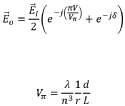
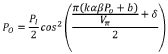
- A photonic neural network accelerator incorporating a Mach-Zehnder Interferometer (MZI) with phase change material, an optical resistance switch (ORS) using Molybdenum disulfide (MoS2) as the active material, and an electrical control unit to modulate light and drive the ORS for nonlinear activation functions, enabling flexible and efficient nonlinear responses.


Embedding a photonic integrated circuit in a semiconductor package for high bandwidth memory and compute
PatentActiveUS20250216632A1
Innovation
- A hybrid electronic-photonic network-on-chip (NoC) is implemented, combining electronic integrated circuits (EICs) with photonic integrated circuits (PICs) to facilitate low-latency, high-speed data transfer through bidirectional photonic channels, reducing power consumption by leveraging photonic channels for long-distance data movement.


Energy Efficiency Standards for Photonic Systems
Energy efficiency standards for photonic computing systems represent a critical framework for ensuring sustainable deployment of ultra-low latency AI inference technologies. Current industry benchmarks primarily focus on traditional electronic systems, creating a significant gap in standardized metrics for photonic architectures. The absence of unified energy efficiency standards poses challenges for system designers, manufacturers, and end-users seeking to evaluate and compare photonic computing solutions effectively.
The development of comprehensive energy efficiency standards must address the unique characteristics of photonic systems, including optical power consumption, thermal management requirements, and conversion losses between optical and electrical domains. Unlike conventional electronic processors that rely solely on electrical power metrics, photonic systems require multi-domain energy accounting that encompasses laser power consumption, optical modulation efficiency, and photodetection overhead.
Emerging standardization efforts are beginning to establish baseline metrics such as operations per joule for photonic matrix multiplication units and energy-per-bit transmission rates for optical interconnects. These metrics must account for the full system energy footprint, including cooling requirements, optical source stability maintenance, and peripheral electronic control circuits that support photonic operations.
International standards organizations are collaborating with industry leaders to define measurement methodologies that accurately capture the energy performance of hybrid photonic-electronic systems. These standards emphasize real-world operating conditions, including temperature variations, optical component aging, and dynamic workload scenarios typical in AI inference applications.
The proposed standards framework incorporates tiered efficiency classifications that enable fair comparison across different photonic computing architectures, from silicon photonic processors to free-space optical systems. This classification system considers both peak efficiency under optimal conditions and sustained efficiency during continuous operation, providing comprehensive performance indicators for system procurement and deployment decisions.
Implementation of these energy efficiency standards will drive innovation toward more sustainable photonic computing solutions while establishing clear performance targets for next-generation ultra-low latency AI inference systems. The standards will serve as essential guidelines for regulatory compliance and environmental impact assessment in large-scale photonic computing deployments.
The development of comprehensive energy efficiency standards must address the unique characteristics of photonic systems, including optical power consumption, thermal management requirements, and conversion losses between optical and electrical domains. Unlike conventional electronic processors that rely solely on electrical power metrics, photonic systems require multi-domain energy accounting that encompasses laser power consumption, optical modulation efficiency, and photodetection overhead.
Emerging standardization efforts are beginning to establish baseline metrics such as operations per joule for photonic matrix multiplication units and energy-per-bit transmission rates for optical interconnects. These metrics must account for the full system energy footprint, including cooling requirements, optical source stability maintenance, and peripheral electronic control circuits that support photonic operations.
International standards organizations are collaborating with industry leaders to define measurement methodologies that accurately capture the energy performance of hybrid photonic-electronic systems. These standards emphasize real-world operating conditions, including temperature variations, optical component aging, and dynamic workload scenarios typical in AI inference applications.
The proposed standards framework incorporates tiered efficiency classifications that enable fair comparison across different photonic computing architectures, from silicon photonic processors to free-space optical systems. This classification system considers both peak efficiency under optimal conditions and sustained efficiency during continuous operation, providing comprehensive performance indicators for system procurement and deployment decisions.
Implementation of these energy efficiency standards will drive innovation toward more sustainable photonic computing solutions while establishing clear performance targets for next-generation ultra-low latency AI inference systems. The standards will serve as essential guidelines for regulatory compliance and environmental impact assessment in large-scale photonic computing deployments.
Integration Challenges with Silicon Photonics
The integration of silicon photonics with electronic systems presents fundamental challenges that significantly impact the deployment of photonic computing for ultra-low latency AI inference. The primary obstacle lies in the inherent mismatch between optical and electronic signal domains, requiring sophisticated conversion mechanisms that can introduce latency bottlenecks and power consumption overhead.
Thermal management emerges as a critical concern in silicon photonic integration. The temperature sensitivity of silicon photonic devices, particularly wavelength-dependent components like ring resonators and Mach-Zehnder interferometers, demands precise thermal control to maintain stable operation. Temperature variations can cause wavelength drift, affecting the accuracy of photonic neural network computations and requiring active thermal compensation systems that add complexity to the overall architecture.
Manufacturing tolerances pose another significant challenge, as silicon photonic devices require nanometer-scale precision for optimal performance. Process variations during fabrication can lead to device-to-device inconsistencies, affecting the uniformity of photonic computing arrays. This variability necessitates post-fabrication trimming techniques or adaptive calibration systems to ensure consistent performance across large-scale photonic processors.
The electrical-optical interface represents a persistent bottleneck in achieving true ultra-low latency performance. High-speed modulators and photodetectors must operate at frequencies matching the computational requirements while maintaining low power consumption. Current silicon photonic modulators face bandwidth limitations and require significant drive voltages, potentially negating the speed advantages of optical processing.
Packaging and interconnect challenges further complicate integration efforts. The need for precise optical alignment, fiber coupling, and protection from environmental factors requires specialized packaging solutions that differ significantly from traditional electronic packaging. These requirements often result in larger form factors and increased costs compared to purely electronic solutions.
Signal integrity issues arise from the coexistence of high-speed electronic and optical signals within the same package. Electromagnetic interference from electronic circuits can affect sensitive photonic components, while optical crosstalk between adjacent waveguides can degrade computational accuracy. Careful design of isolation structures and signal routing becomes essential for maintaining system performance in integrated photonic computing platforms.
Thermal management emerges as a critical concern in silicon photonic integration. The temperature sensitivity of silicon photonic devices, particularly wavelength-dependent components like ring resonators and Mach-Zehnder interferometers, demands precise thermal control to maintain stable operation. Temperature variations can cause wavelength drift, affecting the accuracy of photonic neural network computations and requiring active thermal compensation systems that add complexity to the overall architecture.
Manufacturing tolerances pose another significant challenge, as silicon photonic devices require nanometer-scale precision for optimal performance. Process variations during fabrication can lead to device-to-device inconsistencies, affecting the uniformity of photonic computing arrays. This variability necessitates post-fabrication trimming techniques or adaptive calibration systems to ensure consistent performance across large-scale photonic processors.
The electrical-optical interface represents a persistent bottleneck in achieving true ultra-low latency performance. High-speed modulators and photodetectors must operate at frequencies matching the computational requirements while maintaining low power consumption. Current silicon photonic modulators face bandwidth limitations and require significant drive voltages, potentially negating the speed advantages of optical processing.
Packaging and interconnect challenges further complicate integration efforts. The need for precise optical alignment, fiber coupling, and protection from environmental factors requires specialized packaging solutions that differ significantly from traditional electronic packaging. These requirements often result in larger form factors and increased costs compared to purely electronic solutions.
Signal integrity issues arise from the coexistence of high-speed electronic and optical signals within the same package. Electromagnetic interference from electronic circuits can affect sensitive photonic components, while optical crosstalk between adjacent waveguides can degrade computational accuracy. Careful design of isolation structures and signal routing becomes essential for maintaining system performance in integrated photonic computing platforms.
Unlock deeper insights with PatSnap Eureka Quick Research — get a full tech report to explore trends and direct your research. Try now!
Generate Your Research Report Instantly with AI Agent
Supercharge your innovation with PatSnap Eureka AI Agent Platform!