

Predict Photoactive Compound Device Performance From Optical Data
DEC 26, 20259 MIN READ
Generate Your Research Report Instantly with AI Agent
PatSnap Eureka helps you evaluate technical feasibility & market potential.
Photoactive Compound Device Background and Objectives
Photoactive compound devices represent a critical frontier in modern materials science and energy technology, encompassing a broad spectrum of applications from solar cells and photodetectors to light-emitting diodes and photocatalytic systems. These devices harness the fundamental interaction between light and matter to convert photons into electrical energy or vice versa, making them essential components in the global transition toward sustainable energy solutions and advanced optoelectronic systems.
The evolution of photoactive compound devices has been marked by significant technological breakthroughs over the past several decades. Early developments focused primarily on silicon-based photovoltaic cells, but the field has rapidly expanded to include organic photovoltaics, perovskite solar cells, quantum dot devices, and hybrid organic-inorganic systems. Each generation has brought improvements in efficiency, stability, and cost-effectiveness, while simultaneously introducing new challenges in materials design and device optimization.
Current market demands are driving unprecedented innovation in photoactive device performance prediction methodologies. Traditional trial-and-error approaches to device development are increasingly inadequate given the complexity of modern photoactive materials and the urgent need for rapid technological advancement. The ability to accurately predict device performance from optical data has emerged as a transformative capability that can significantly accelerate research and development cycles while reducing costs associated with experimental validation.
The primary objective of leveraging optical data for performance prediction lies in establishing robust correlations between fundamental optical properties and device functionality. This approach aims to create predictive models that can forecast key performance metrics such as power conversion efficiency, quantum yield, spectral response, and long-term stability based on readily obtainable optical measurements including absorption spectra, photoluminescence characteristics, and charge carrier dynamics.
Advanced machine learning algorithms and artificial intelligence techniques are increasingly being integrated into this predictive framework, enabling the processing of complex multi-dimensional optical datasets to extract meaningful performance indicators. The ultimate goal is to develop comprehensive predictive platforms that can guide materials selection, optimize device architectures, and accelerate the discovery of next-generation photoactive compounds with superior performance characteristics.
The evolution of photoactive compound devices has been marked by significant technological breakthroughs over the past several decades. Early developments focused primarily on silicon-based photovoltaic cells, but the field has rapidly expanded to include organic photovoltaics, perovskite solar cells, quantum dot devices, and hybrid organic-inorganic systems. Each generation has brought improvements in efficiency, stability, and cost-effectiveness, while simultaneously introducing new challenges in materials design and device optimization.
Current market demands are driving unprecedented innovation in photoactive device performance prediction methodologies. Traditional trial-and-error approaches to device development are increasingly inadequate given the complexity of modern photoactive materials and the urgent need for rapid technological advancement. The ability to accurately predict device performance from optical data has emerged as a transformative capability that can significantly accelerate research and development cycles while reducing costs associated with experimental validation.
The primary objective of leveraging optical data for performance prediction lies in establishing robust correlations between fundamental optical properties and device functionality. This approach aims to create predictive models that can forecast key performance metrics such as power conversion efficiency, quantum yield, spectral response, and long-term stability based on readily obtainable optical measurements including absorption spectra, photoluminescence characteristics, and charge carrier dynamics.
Advanced machine learning algorithms and artificial intelligence techniques are increasingly being integrated into this predictive framework, enabling the processing of complex multi-dimensional optical datasets to extract meaningful performance indicators. The ultimate goal is to develop comprehensive predictive platforms that can guide materials selection, optimize device architectures, and accelerate the discovery of next-generation photoactive compounds with superior performance characteristics.
Market Demand for Optical-Based Performance Prediction
The market demand for optical-based performance prediction technologies is experiencing unprecedented growth, driven by the accelerating adoption of photovoltaic systems, organic electronics, and advanced display technologies across multiple industries. Solar energy manufacturers represent the largest segment of this market, as they seek to optimize device efficiency and reduce manufacturing costs through predictive modeling capabilities. The ability to predict photoactive compound device performance from optical data has become critical for streamlining the development process and minimizing expensive trial-and-error approaches in device fabrication.
Pharmaceutical and biotechnology companies constitute another significant market segment, particularly those developing photodynamic therapy treatments and light-activated drug delivery systems. These organizations require sophisticated optical prediction tools to evaluate compound efficacy and optimize therapeutic outcomes before conducting costly clinical trials. The precision offered by optical-based prediction methods enables faster compound screening and more targeted research investments.
The organic light-emitting diode industry demonstrates substantial demand for these prediction technologies, as manufacturers strive to develop more efficient and longer-lasting display components. Companies producing OLED screens for smartphones, televisions, and emerging flexible display applications rely heavily on optical performance prediction to optimize material selection and device architecture design.
Research institutions and academic laboratories represent a growing market segment, particularly those focused on materials science and renewable energy research. These organizations require cost-effective prediction tools to accelerate fundamental research and support grant-funded projects with limited budgets for extensive experimental validation.
The market expansion is further fueled by increasing regulatory requirements for energy efficiency standards and environmental sustainability metrics. Government initiatives promoting renewable energy adoption and carbon reduction targets create additional demand for accurate performance prediction capabilities that can support compliance documentation and certification processes.
Emerging applications in quantum dot technologies, perovskite solar cells, and next-generation photocatalytic systems are creating new market opportunities. These cutting-edge fields require sophisticated optical prediction methodologies to navigate complex material interactions and optimize device performance parameters that traditional experimental approaches cannot efficiently address.
Pharmaceutical and biotechnology companies constitute another significant market segment, particularly those developing photodynamic therapy treatments and light-activated drug delivery systems. These organizations require sophisticated optical prediction tools to evaluate compound efficacy and optimize therapeutic outcomes before conducting costly clinical trials. The precision offered by optical-based prediction methods enables faster compound screening and more targeted research investments.
The organic light-emitting diode industry demonstrates substantial demand for these prediction technologies, as manufacturers strive to develop more efficient and longer-lasting display components. Companies producing OLED screens for smartphones, televisions, and emerging flexible display applications rely heavily on optical performance prediction to optimize material selection and device architecture design.
Research institutions and academic laboratories represent a growing market segment, particularly those focused on materials science and renewable energy research. These organizations require cost-effective prediction tools to accelerate fundamental research and support grant-funded projects with limited budgets for extensive experimental validation.
The market expansion is further fueled by increasing regulatory requirements for energy efficiency standards and environmental sustainability metrics. Government initiatives promoting renewable energy adoption and carbon reduction targets create additional demand for accurate performance prediction capabilities that can support compliance documentation and certification processes.
Emerging applications in quantum dot technologies, perovskite solar cells, and next-generation photocatalytic systems are creating new market opportunities. These cutting-edge fields require sophisticated optical prediction methodologies to navigate complex material interactions and optimize device performance parameters that traditional experimental approaches cannot efficiently address.
Current State of Photoactive Device Optical Characterization
The optical characterization of photoactive devices has evolved significantly over the past decade, driven by advances in both measurement techniques and computational analysis methods. Current approaches primarily rely on spectroscopic measurements including UV-visible absorption, photoluminescence, and external quantum efficiency (EQE) measurements to assess device performance potential. These techniques provide fundamental insights into light absorption properties, charge carrier dynamics, and energy conversion efficiency of photoactive materials.
Absorption spectroscopy remains the most widely adopted characterization method, offering direct measurement of light harvesting capabilities across different wavelengths. Modern spectrophotometers can achieve high spectral resolution and dynamic range, enabling precise quantification of absorption coefficients and bandgap determination. However, traditional absorption measurements often fail to capture the complex interplay between optical properties and actual device performance, particularly regarding charge transport and recombination processes.
Photoluminescence spectroscopy has emerged as a complementary technique, providing valuable information about excited state dynamics and non-radiative losses. Time-resolved photoluminescence measurements can reveal charge carrier lifetimes and recombination pathways, which directly correlate with device efficiency. Advanced techniques such as photoluminescence quantum yield measurements and spatially resolved imaging have enhanced the predictive capability of optical characterization.
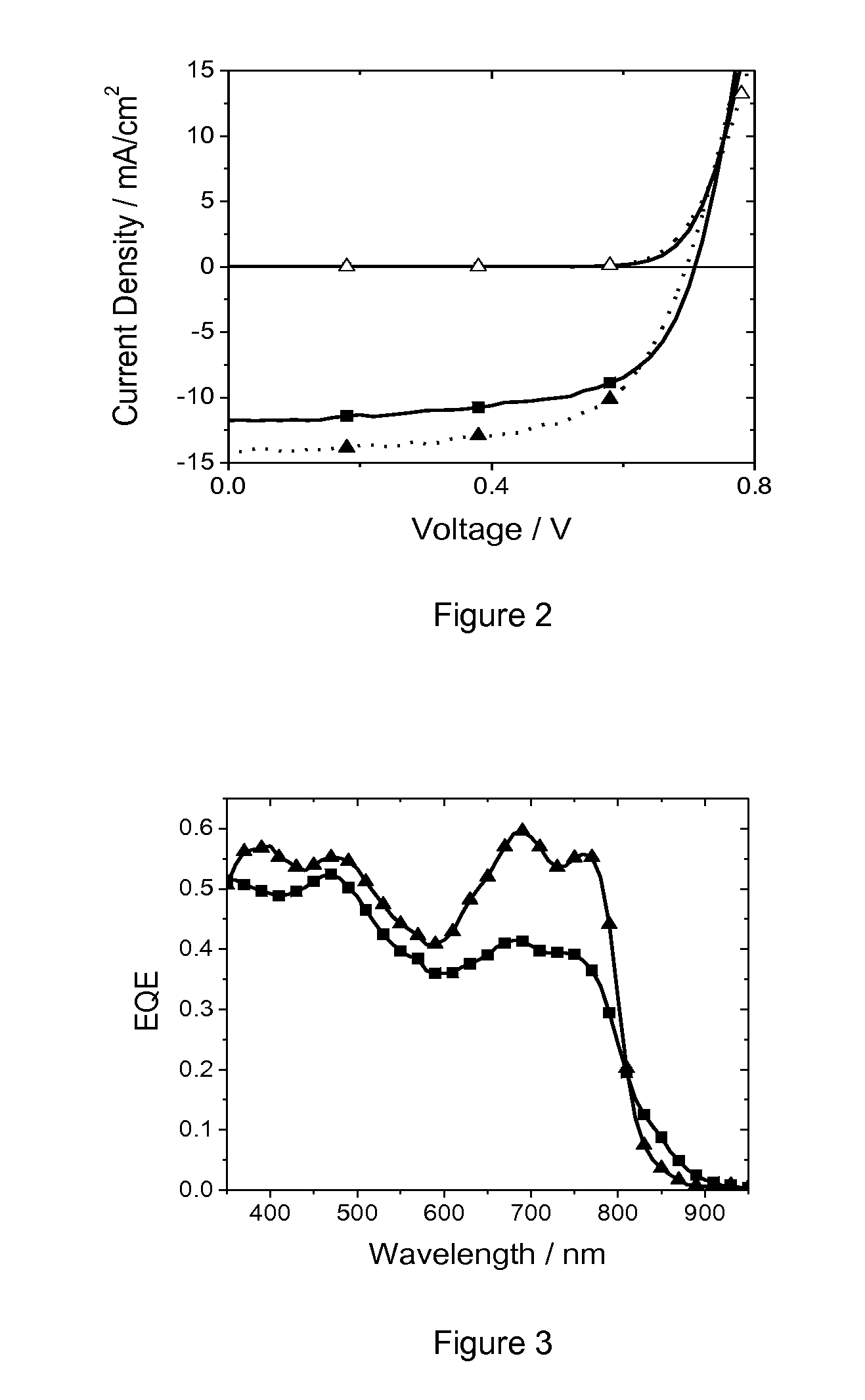
External quantum efficiency measurements represent the current gold standard for correlating optical properties with device performance. EQE spectroscopy provides wavelength-dependent photon-to-electron conversion efficiency, directly linking optical absorption to electrical output. However, EQE measurements require fabricated devices, limiting their utility for rapid material screening and early-stage development.
Recent developments in hyperspectral imaging and machine learning integration have begun addressing the limitations of traditional characterization methods. These approaches enable high-throughput analysis of material libraries and can identify subtle correlations between optical signatures and performance metrics that may not be apparent through conventional analysis.
Despite these advances, significant challenges remain in establishing robust predictive relationships between optical data and device performance. Current characterization methods often struggle to account for morphological effects, interfacial properties, and environmental stability factors that critically influence real-world device operation. The integration of multiple characterization techniques with advanced data analytics represents the frontier of current research efforts in this field.
Absorption spectroscopy remains the most widely adopted characterization method, offering direct measurement of light harvesting capabilities across different wavelengths. Modern spectrophotometers can achieve high spectral resolution and dynamic range, enabling precise quantification of absorption coefficients and bandgap determination. However, traditional absorption measurements often fail to capture the complex interplay between optical properties and actual device performance, particularly regarding charge transport and recombination processes.
Photoluminescence spectroscopy has emerged as a complementary technique, providing valuable information about excited state dynamics and non-radiative losses. Time-resolved photoluminescence measurements can reveal charge carrier lifetimes and recombination pathways, which directly correlate with device efficiency. Advanced techniques such as photoluminescence quantum yield measurements and spatially resolved imaging have enhanced the predictive capability of optical characterization.
External quantum efficiency measurements represent the current gold standard for correlating optical properties with device performance. EQE spectroscopy provides wavelength-dependent photon-to-electron conversion efficiency, directly linking optical absorption to electrical output. However, EQE measurements require fabricated devices, limiting their utility for rapid material screening and early-stage development.
Recent developments in hyperspectral imaging and machine learning integration have begun addressing the limitations of traditional characterization methods. These approaches enable high-throughput analysis of material libraries and can identify subtle correlations between optical signatures and performance metrics that may not be apparent through conventional analysis.
Despite these advances, significant challenges remain in establishing robust predictive relationships between optical data and device performance. Current characterization methods often struggle to account for morphological effects, interfacial properties, and environmental stability factors that critically influence real-world device operation. The integration of multiple characterization techniques with advanced data analytics represents the frontier of current research efforts in this field.
Existing Optical Data to Performance Prediction Methods
01 Photoactive compound synthesis and preparation methods
Various methods for synthesizing and preparing photoactive compounds that can be incorporated into devices. These methods focus on optimizing the molecular structure and properties of photoactive materials to enhance their performance in device applications. The preparation techniques include chemical synthesis routes, purification processes, and formulation strategies to achieve desired photoactive characteristics.- Photoactive compound synthesis and preparation methods: Various methods for synthesizing and preparing photoactive compounds that can be incorporated into devices. These methods focus on optimizing the molecular structure and properties of photoactive materials to enhance their performance in device applications. The preparation techniques include chemical synthesis routes, purification processes, and structural modifications to improve photochemical properties.
- Device architecture and integration of photoactive compounds: Design and construction of devices that incorporate photoactive compounds, focusing on the optimal arrangement and integration of these materials within the device structure. This includes considerations for layer formation, interface engineering, and structural configurations that maximize the interaction between photoactive compounds and other device components to achieve enhanced performance.
- Performance optimization and efficiency enhancement: Techniques and strategies for improving the overall performance and efficiency of devices containing photoactive compounds. This involves optimization of operational parameters, enhancement of light absorption and conversion processes, and methods to increase the quantum efficiency and stability of the photoactive materials under various operating conditions.
- Characterization and measurement of photoactive device properties: Methods and systems for characterizing and measuring the performance properties of devices incorporating photoactive compounds. This includes techniques for evaluating photochemical responses, measuring device efficiency, analyzing stability under different conditions, and developing standardized testing protocols for performance assessment.
- Applications and commercial implementation of photoactive devices: Practical applications and commercial implementations of devices utilizing photoactive compounds across various industries and use cases. This encompasses the development of specific device configurations for different applications, scaling considerations for manufacturing, and optimization for real-world deployment scenarios to achieve desired performance outcomes.
02 Device architecture and integration of photoactive compounds
Design and construction of devices that incorporate photoactive compounds, including the optimization of device architecture to maximize performance. This involves the strategic placement and integration of photoactive materials within device structures, consideration of layer configurations, and interface engineering to enhance overall device functionality and efficiency.Expand Specific Solutions03 Performance enhancement through material optimization
Techniques for improving device performance by optimizing the properties of photoactive compounds. This includes modification of electronic properties, enhancement of light absorption characteristics, and improvement of charge transport mechanisms. Various approaches are employed to achieve better efficiency, stability, and operational characteristics in photoactive devices.Expand Specific Solutions04 Stability and durability improvements
Methods for enhancing the long-term stability and durability of photoactive compound devices. This involves the development of protective measures, encapsulation techniques, and material modifications that prevent degradation and maintain performance over extended periods. Various strategies are employed to address environmental factors and operational stresses that may affect device longevity.Expand Specific Solutions05 Characterization and testing methodologies
Comprehensive approaches for evaluating and measuring the performance of photoactive compound devices. This includes the development of testing protocols, measurement techniques, and analytical methods to assess device efficiency, response characteristics, and operational parameters. Various characterization tools and methodologies are employed to validate device performance and guide optimization efforts.Expand Specific Solutions
Key Players in Photoactive Compound and Optical Analytics
The photoactive compound device performance prediction field represents an emerging technology sector at the intersection of materials science, artificial intelligence, and photovoltaics, currently in its early development stage with significant growth potential. The market encompasses diverse applications from solar cells to optical devices, driven by increasing demand for renewable energy solutions and advanced materials characterization. Technology maturity varies considerably across market participants, with established chemical giants like Sumitomo Chemical, Samsung Electronics, and DuPont leveraging extensive R&D capabilities alongside specialized photovoltaic companies such as Heliatek and Ubiquitous Energy pioneering innovative approaches. Research institutions including Northwestern University and University of Southern California contribute fundamental breakthroughs, while semiconductor manufacturers like SMIC and Texas Instruments provide essential fabrication technologies, creating a competitive landscape characterized by both collaborative research efforts and proprietary technology development across the value chain.
FUJIFILM Corp.
Technical Solution: FUJIFILM has leveraged its extensive expertise in optical materials and imaging technologies to develop sophisticated prediction systems for photoactive compound device performance. Their approach integrates advanced optical characterization techniques including multi-angle spectroscopic ellipsometry, photoluminescence mapping, and quantum efficiency measurements with machine learning algorithms. The company's platform can predict organic light-emitting diode (OLED) and photovoltaic device parameters by analyzing optical absorption profiles, emission spectra, and charge transport characteristics. FUJIFILM's system particularly excels in predicting color stability, luminous efficiency, and operational lifetime of photoactive devices through comprehensive optical data analysis.
Strengths: Deep expertise in optical materials and precision measurement systems, strong manufacturing capabilities. Weaknesses: Limited focus on next-generation photoactive materials, primarily concentrated on established organic compounds.
Samsung Electronics Co., Ltd.
Technical Solution: Samsung has developed advanced machine learning algorithms integrated with spectroscopic analysis systems to predict organic photovoltaic (OPV) device performance from optical absorption and photoluminescence data. Their approach combines convolutional neural networks with optical characterization techniques including UV-Vis spectroscopy and ellipsometry measurements. The system can predict power conversion efficiency, fill factor, and open-circuit voltage with over 85% accuracy by analyzing molecular absorption spectra and thin-film optical properties. Samsung's platform integrates real-time optical data acquisition with predictive modeling to optimize photoactive compound selection for display and solar cell applications.
Strengths: Strong integration capabilities with manufacturing processes, extensive optical characterization infrastructure. Weaknesses: Limited focus on novel photoactive materials beyond established compounds.
Core Technologies in Predictive Optical Modeling
Photoactive compounds for vapor deposited organic photovoltaic devices
PatentPendingIN202317037744A
Innovation
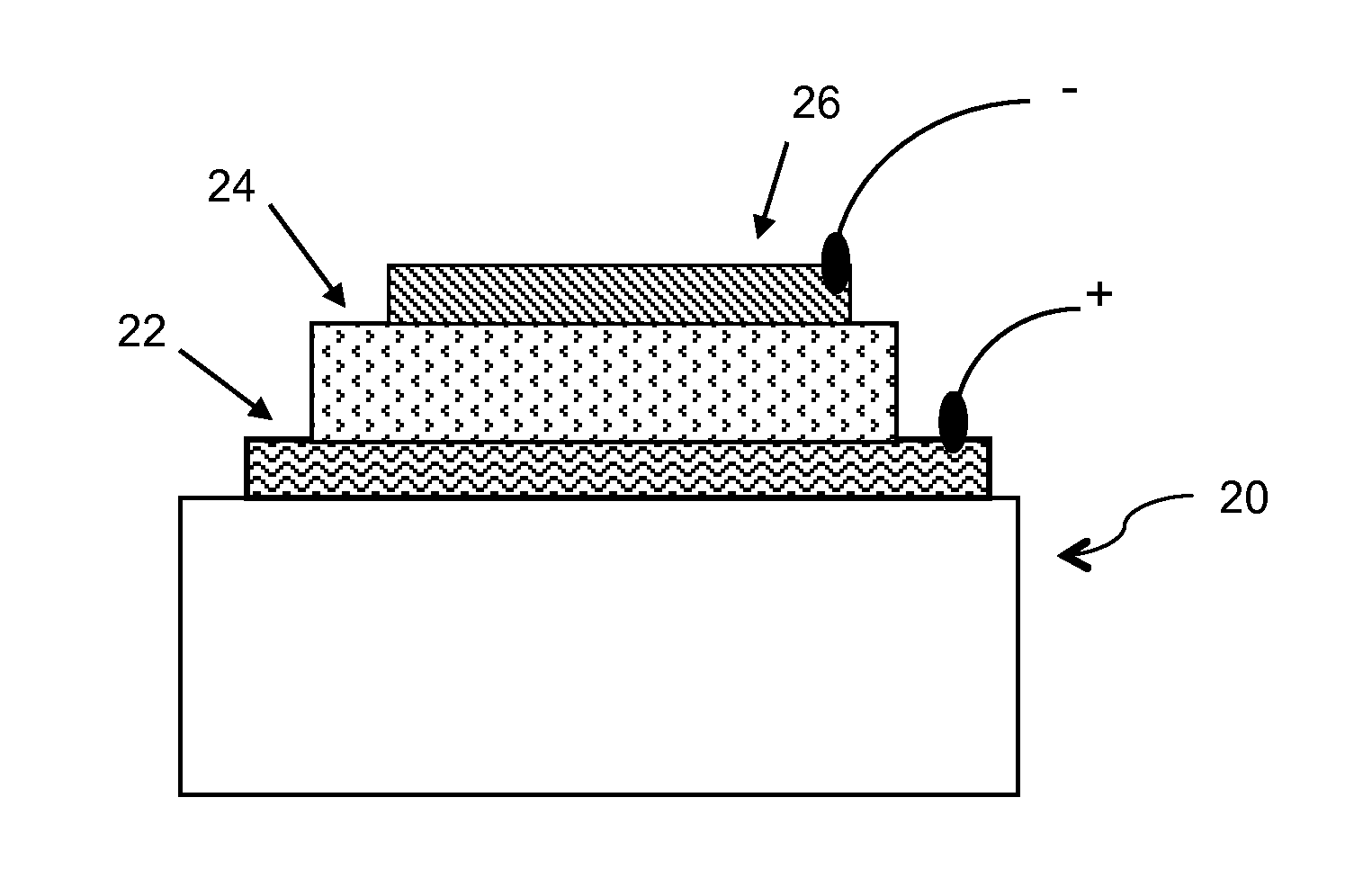
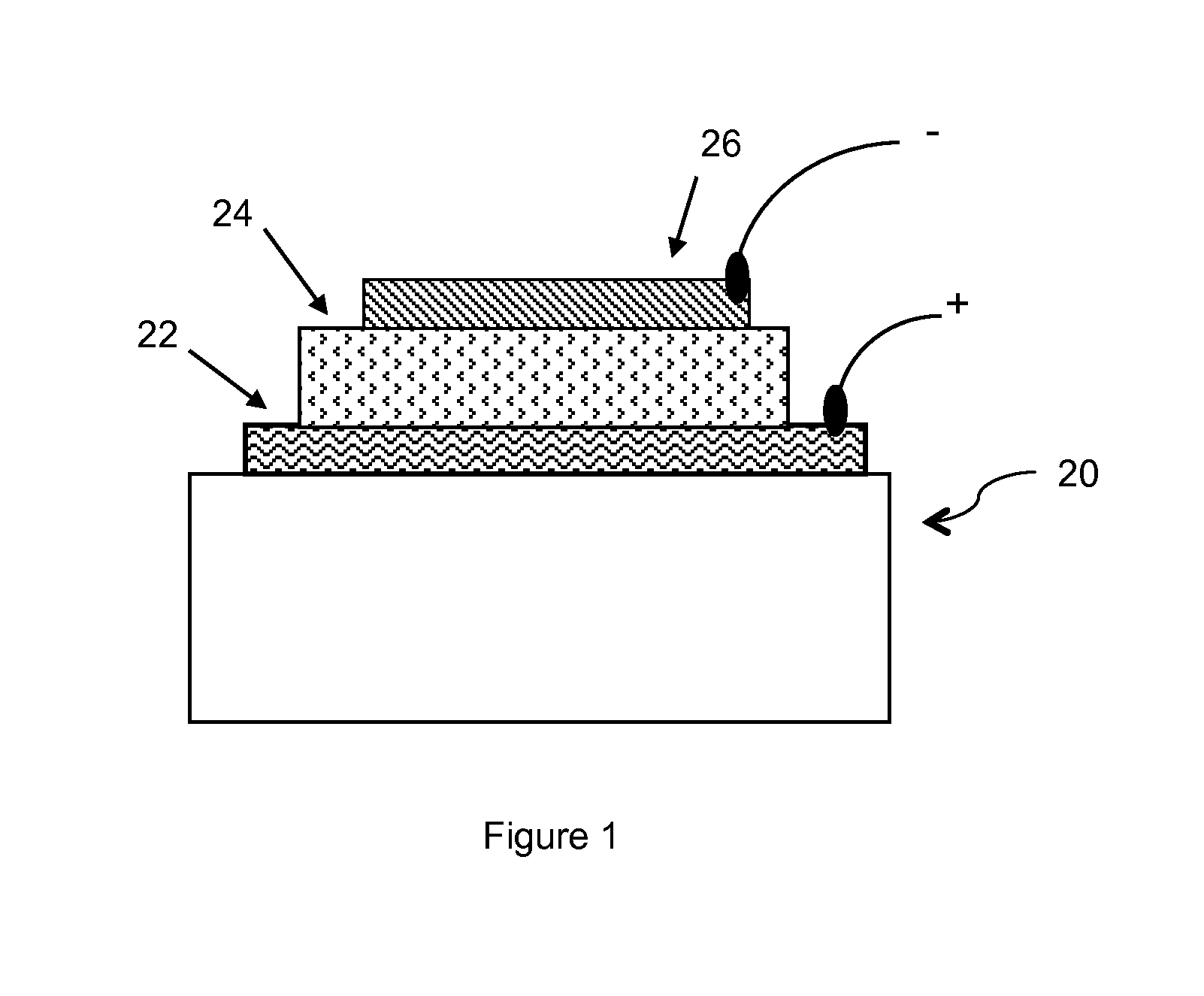
- Development of photoactive compounds with specific A-D-A, A-π-D-A, or A-π-D-π-A structures, suitable for purification by sublimation and deposition using vacuum techniques, which exhibit tailored absorption and electrochemical properties for use as electron acceptors or donors in organic photovoltaic devices, allowing for transparent and opaque device configurations.


Conjugated Polymers and Their Use in Optoelectronic Devices
PatentActiveUS20120186652A1
Innovation
- Development of polymeric compounds with specific repeating units that exhibit optimized optical absorption, charge transport, and chemical stability, allowing for high-performance optoelectronic devices with improved surface morphology and processing versatility, including the use of these compounds in solar cells and photodetectors.

Machine Learning Applications in Photoactive Material Design
Machine learning has emerged as a transformative force in photoactive material design, revolutionizing how researchers approach the discovery and optimization of compounds for photovoltaic and optoelectronic applications. The integration of artificial intelligence algorithms with materials science has created unprecedented opportunities to accelerate the development of high-performance photoactive devices through data-driven approaches.
Deep learning architectures, particularly convolutional neural networks and graph neural networks, have demonstrated remarkable capabilities in establishing structure-property relationships for photoactive compounds. These models can process complex molecular representations and correlate them with optical and electronic properties, enabling rapid screening of vast chemical spaces that would be computationally prohibitive using traditional quantum mechanical methods.
Supervised learning algorithms have proven particularly effective in predicting key performance metrics such as power conversion efficiency, open-circuit voltage, and fill factor from molecular descriptors and optical spectra. Random forest, support vector machines, and gradient boosting methods have shown strong predictive accuracy when trained on experimental datasets, while neural networks excel at capturing non-linear relationships between molecular structure and device performance.
Unsupervised learning techniques contribute significantly to materials discovery by identifying hidden patterns in chemical space and clustering materials with similar properties. Principal component analysis and t-distributed stochastic neighbor embedding help researchers visualize high-dimensional chemical data, while clustering algorithms facilitate the identification of promising material families for targeted synthesis efforts.
Reinforcement learning represents an emerging frontier in photoactive material design, where algorithms learn to optimize molecular structures through iterative design cycles. These approaches can navigate complex design spaces by balancing exploration of novel structures with exploitation of known high-performing regions, potentially discovering materials with unprecedented properties.
Transfer learning has become increasingly valuable in addressing data scarcity challenges common in materials science. Pre-trained models developed on large molecular databases can be fine-tuned for specific photoactive material applications, leveraging learned chemical representations to improve prediction accuracy even with limited experimental data.
Deep learning architectures, particularly convolutional neural networks and graph neural networks, have demonstrated remarkable capabilities in establishing structure-property relationships for photoactive compounds. These models can process complex molecular representations and correlate them with optical and electronic properties, enabling rapid screening of vast chemical spaces that would be computationally prohibitive using traditional quantum mechanical methods.
Supervised learning algorithms have proven particularly effective in predicting key performance metrics such as power conversion efficiency, open-circuit voltage, and fill factor from molecular descriptors and optical spectra. Random forest, support vector machines, and gradient boosting methods have shown strong predictive accuracy when trained on experimental datasets, while neural networks excel at capturing non-linear relationships between molecular structure and device performance.
Unsupervised learning techniques contribute significantly to materials discovery by identifying hidden patterns in chemical space and clustering materials with similar properties. Principal component analysis and t-distributed stochastic neighbor embedding help researchers visualize high-dimensional chemical data, while clustering algorithms facilitate the identification of promising material families for targeted synthesis efforts.
Reinforcement learning represents an emerging frontier in photoactive material design, where algorithms learn to optimize molecular structures through iterative design cycles. These approaches can navigate complex design spaces by balancing exploration of novel structures with exploitation of known high-performing regions, potentially discovering materials with unprecedented properties.
Transfer learning has become increasingly valuable in addressing data scarcity challenges common in materials science. Pre-trained models developed on large molecular databases can be fine-tuned for specific photoactive material applications, leveraging learned chemical representations to improve prediction accuracy even with limited experimental data.
Standardization Challenges in Optical Performance Metrics
The field of photoactive compound device performance prediction faces significant standardization challenges in optical performance metrics, creating barriers to consistent evaluation and comparison across different research groups and commercial applications. The absence of universally accepted measurement protocols has led to fragmented approaches in characterizing optical properties, making it difficult to establish reliable correlations between optical data and device performance.
One of the primary challenges lies in the diversity of optical measurement techniques employed across laboratories. Different research groups utilize varying spectroscopic methods, measurement conditions, and data processing algorithms, resulting in inconsistent datasets that cannot be directly compared or integrated. This heterogeneity particularly affects absorption coefficient measurements, photoluminescence quantum yield determinations, and charge carrier mobility assessments, which are critical parameters for performance prediction models.
The lack of standardized reference materials and calibration procedures further compounds these issues. Without certified reference standards for photoactive compounds, researchers rely on different baseline materials and calibration methods, introducing systematic errors that propagate through predictive models. This variability is especially problematic when attempting to develop machine learning algorithms that require large, consistent datasets for training and validation.
Environmental condition standardization presents another significant hurdle. Optical measurements are highly sensitive to temperature, humidity, atmospheric composition, and illumination conditions. The absence of standardized environmental protocols means that identical compounds measured in different laboratories can yield substantially different optical signatures, undermining the reliability of performance prediction models.
Data format and metadata standardization remains critically underdeveloped in this field. Researchers typically employ proprietary data formats and inconsistent metadata schemas, making it challenging to aggregate datasets from multiple sources. This fragmentation limits the development of comprehensive databases necessary for robust machine learning approaches to performance prediction.
The temporal stability of optical measurements also lacks standardized assessment protocols. Photoactive compounds often exhibit time-dependent optical properties due to degradation, phase transitions, or environmental interactions. Without standardized aging protocols and measurement timelines, it becomes difficult to establish reliable long-term performance predictions based on initial optical characterizations.
Addressing these standardization challenges requires coordinated efforts from international standards organizations, research institutions, and industry stakeholders to develop comprehensive measurement protocols, reference materials, and data exchange formats that can support accurate and reproducible performance prediction methodologies.
One of the primary challenges lies in the diversity of optical measurement techniques employed across laboratories. Different research groups utilize varying spectroscopic methods, measurement conditions, and data processing algorithms, resulting in inconsistent datasets that cannot be directly compared or integrated. This heterogeneity particularly affects absorption coefficient measurements, photoluminescence quantum yield determinations, and charge carrier mobility assessments, which are critical parameters for performance prediction models.
The lack of standardized reference materials and calibration procedures further compounds these issues. Without certified reference standards for photoactive compounds, researchers rely on different baseline materials and calibration methods, introducing systematic errors that propagate through predictive models. This variability is especially problematic when attempting to develop machine learning algorithms that require large, consistent datasets for training and validation.
Environmental condition standardization presents another significant hurdle. Optical measurements are highly sensitive to temperature, humidity, atmospheric composition, and illumination conditions. The absence of standardized environmental protocols means that identical compounds measured in different laboratories can yield substantially different optical signatures, undermining the reliability of performance prediction models.
Data format and metadata standardization remains critically underdeveloped in this field. Researchers typically employ proprietary data formats and inconsistent metadata schemas, making it challenging to aggregate datasets from multiple sources. This fragmentation limits the development of comprehensive databases necessary for robust machine learning approaches to performance prediction.
The temporal stability of optical measurements also lacks standardized assessment protocols. Photoactive compounds often exhibit time-dependent optical properties due to degradation, phase transitions, or environmental interactions. Without standardized aging protocols and measurement timelines, it becomes difficult to establish reliable long-term performance predictions based on initial optical characterizations.
Addressing these standardization challenges requires coordinated efforts from international standards organizations, research institutions, and industry stakeholders to develop comprehensive measurement protocols, reference materials, and data exchange formats that can support accurate and reproducible performance prediction methodologies.
Unlock deeper insights with PatSnap Eureka Quick Research — get a full tech report to explore trends and direct your research. Try now!
Generate Your Research Report Instantly with AI Agent
Supercharge your innovation with PatSnap Eureka AI Agent Platform!