
Propionic Acid: Exploring Next-Gen Commercial Applications
JUL 3, 20259 MIN READ
Generate Your Research Report Instantly with AI Agent
Patsnap Eureka helps you evaluate technical feasibility & market potential.
Propionic Acid Evolution and Objectives
Propionic acid, a versatile organic compound, has undergone significant evolution since its discovery in the mid-19th century. Initially recognized as a byproduct of bacterial fermentation, it has steadily gained importance in various industrial applications. The journey of propionic acid from a mere scientific curiosity to a valuable commercial product reflects the broader trends in chemical engineering and biotechnology.
The early stages of propionic acid's development were marked by efforts to understand its chemical properties and potential uses. As analytical techniques improved, researchers began to explore its role in natural processes, particularly in the digestive systems of ruminants. This led to the realization of its potential as a food preservative, marking the beginning of its commercial applications.
The mid-20th century saw a surge in research focused on the synthesis and large-scale production of propionic acid. Chemical routes, primarily based on the oxidation of propanol or the hydrocarboxylation of ethylene, were developed and optimized. Concurrently, biotechnological approaches using Propionibacterium species gained traction, offering a more sustainable production method.
In recent decades, the objectives for propionic acid research and development have shifted towards enhancing production efficiency, exploring novel applications, and improving sustainability. There is a growing emphasis on developing green synthesis routes, utilizing renewable feedstocks, and optimizing fermentation processes to increase yields and reduce costs.
The current technological landscape surrounding propionic acid is characterized by a dual focus: expanding its application portfolio and refining production methodologies. Researchers are exploring its potential in emerging fields such as bioplastics, pharmaceuticals, and advanced materials. Simultaneously, there are ongoing efforts to integrate propionic acid production into biorefinery concepts, aligning with the broader goals of circular economy and sustainable chemistry.
Looking ahead, the objectives for propionic acid technology are multifaceted. There is a push towards developing high-performance catalysts for chemical synthesis routes, aiming to improve selectivity and reduce energy consumption. In the biotechnology sector, genetic engineering of production strains and the development of novel fermentation strategies are key areas of focus. Additionally, there is growing interest in exploring synergies between propionic acid and other platform chemicals, potentially leading to new value-added products and applications.
The evolution of propionic acid technology exemplifies the dynamic nature of industrial chemistry, where scientific discoveries, market demands, and sustainability concerns continually shape research objectives and commercial strategies. As we move forward, the goals for propionic acid development are likely to align closely with global trends in green chemistry, bioeconomy, and circular manufacturing, promising exciting innovations in this field.
The early stages of propionic acid's development were marked by efforts to understand its chemical properties and potential uses. As analytical techniques improved, researchers began to explore its role in natural processes, particularly in the digestive systems of ruminants. This led to the realization of its potential as a food preservative, marking the beginning of its commercial applications.
The mid-20th century saw a surge in research focused on the synthesis and large-scale production of propionic acid. Chemical routes, primarily based on the oxidation of propanol or the hydrocarboxylation of ethylene, were developed and optimized. Concurrently, biotechnological approaches using Propionibacterium species gained traction, offering a more sustainable production method.
In recent decades, the objectives for propionic acid research and development have shifted towards enhancing production efficiency, exploring novel applications, and improving sustainability. There is a growing emphasis on developing green synthesis routes, utilizing renewable feedstocks, and optimizing fermentation processes to increase yields and reduce costs.
The current technological landscape surrounding propionic acid is characterized by a dual focus: expanding its application portfolio and refining production methodologies. Researchers are exploring its potential in emerging fields such as bioplastics, pharmaceuticals, and advanced materials. Simultaneously, there are ongoing efforts to integrate propionic acid production into biorefinery concepts, aligning with the broader goals of circular economy and sustainable chemistry.
Looking ahead, the objectives for propionic acid technology are multifaceted. There is a push towards developing high-performance catalysts for chemical synthesis routes, aiming to improve selectivity and reduce energy consumption. In the biotechnology sector, genetic engineering of production strains and the development of novel fermentation strategies are key areas of focus. Additionally, there is growing interest in exploring synergies between propionic acid and other platform chemicals, potentially leading to new value-added products and applications.
The evolution of propionic acid technology exemplifies the dynamic nature of industrial chemistry, where scientific discoveries, market demands, and sustainability concerns continually shape research objectives and commercial strategies. As we move forward, the goals for propionic acid development are likely to align closely with global trends in green chemistry, bioeconomy, and circular manufacturing, promising exciting innovations in this field.
Market Demand Analysis
The market demand for propionic acid has been steadily growing, driven by its versatile applications across various industries. In the food and beverage sector, propionic acid serves as a crucial preservative, extending the shelf life of baked goods and preventing mold growth. This application has seen increased demand due to the rising consumer preference for natural preservatives and clean label products.
The animal feed industry represents another significant market for propionic acid. As global meat consumption continues to rise, particularly in developing countries, the demand for animal feed additives has surged. Propionic acid's effectiveness in preventing mold and bacterial growth in animal feed has made it an essential component in livestock nutrition, contributing to improved animal health and productivity.
In the pharmaceutical industry, propionic acid finds applications in the production of various medications and as a precursor for vitamin E synthesis. The growing emphasis on healthcare and the expansion of the pharmaceutical sector in emerging markets have further bolstered the demand for propionic acid in this segment.
The cosmetics and personal care industry has also emerged as a promising market for propionic acid. Its use as a preservative in skincare products and as a pH adjuster in various formulations has gained traction, driven by the increasing consumer focus on personal grooming and hygiene.
The agricultural sector presents another avenue for propionic acid demand growth. Its application as a crop protection agent and soil fumigant has gained attention, particularly in regions facing challenges with crop diseases and soil-borne pathogens.
Market analysts project a compound annual growth rate (CAGR) for the global propionic acid market in the range of 3.5% to 4.5% over the next five years. This growth is attributed to the expanding food and beverage industry, increasing meat consumption, and the rising demand for natural preservatives.
Geographically, Asia-Pacific is expected to witness the highest growth rate in propionic acid demand, driven by rapid industrialization, population growth, and changing dietary habits. North America and Europe continue to be significant markets, with steady demand from established industries and ongoing research into new applications.
The market demand analysis also reveals a growing interest in bio-based propionic acid, aligning with the global shift towards sustainable and eco-friendly products. This trend presents opportunities for innovation in production methods and could potentially reshape the market landscape in the coming years.
The animal feed industry represents another significant market for propionic acid. As global meat consumption continues to rise, particularly in developing countries, the demand for animal feed additives has surged. Propionic acid's effectiveness in preventing mold and bacterial growth in animal feed has made it an essential component in livestock nutrition, contributing to improved animal health and productivity.
In the pharmaceutical industry, propionic acid finds applications in the production of various medications and as a precursor for vitamin E synthesis. The growing emphasis on healthcare and the expansion of the pharmaceutical sector in emerging markets have further bolstered the demand for propionic acid in this segment.
The cosmetics and personal care industry has also emerged as a promising market for propionic acid. Its use as a preservative in skincare products and as a pH adjuster in various formulations has gained traction, driven by the increasing consumer focus on personal grooming and hygiene.
The agricultural sector presents another avenue for propionic acid demand growth. Its application as a crop protection agent and soil fumigant has gained attention, particularly in regions facing challenges with crop diseases and soil-borne pathogens.
Market analysts project a compound annual growth rate (CAGR) for the global propionic acid market in the range of 3.5% to 4.5% over the next five years. This growth is attributed to the expanding food and beverage industry, increasing meat consumption, and the rising demand for natural preservatives.
Geographically, Asia-Pacific is expected to witness the highest growth rate in propionic acid demand, driven by rapid industrialization, population growth, and changing dietary habits. North America and Europe continue to be significant markets, with steady demand from established industries and ongoing research into new applications.
The market demand analysis also reveals a growing interest in bio-based propionic acid, aligning with the global shift towards sustainable and eco-friendly products. This trend presents opportunities for innovation in production methods and could potentially reshape the market landscape in the coming years.
Technical Challenges
The commercial production and application of propionic acid face several technical challenges that need to be addressed for its wider adoption in next-generation applications. One of the primary hurdles is the high production cost associated with traditional fermentation methods. The current processes often suffer from low yields and productivity, making it economically less competitive compared to other alternatives.
Another significant challenge lies in the purification and separation of propionic acid from fermentation broths. The presence of impurities and by-products necessitates complex downstream processing, which adds to the overall production costs and energy consumption. Developing more efficient separation techniques is crucial for improving the economic viability of propionic acid production.
The stability and corrosiveness of propionic acid pose challenges in its handling, storage, and transportation. This necessitates the use of specialized equipment and materials, which can increase operational costs and limit its widespread use in certain applications. Addressing these issues through innovative formulations or packaging solutions is essential for expanding its commercial potential.
Environmental concerns also present a challenge in propionic acid production. Traditional petrochemical-based methods contribute to carbon emissions and rely on non-renewable resources. While bio-based production offers a more sustainable alternative, it still faces challenges in terms of feedstock availability, consistency, and competition with food crops.
Scaling up production to meet growing demand is another technical hurdle. Current fermentation processes often face limitations in terms of reactor design, process control, and microbial strain efficiency. Developing robust and scalable production systems that can maintain high yields and product quality at industrial scales is crucial for meeting market demands.
The limited substrate range for bio-based production of propionic acid is also a challenge. Expanding the range of feedstocks that can be efficiently converted to propionic acid would enhance the flexibility and economic viability of production processes. This includes exploring the use of waste streams and non-food biomass as potential substrates.
Lastly, the development of novel applications for propionic acid is hindered by technical limitations in its chemical properties and reactivity. Enhancing its functionality or developing new derivatives could open up new markets and applications, but requires significant research and development efforts.
Another significant challenge lies in the purification and separation of propionic acid from fermentation broths. The presence of impurities and by-products necessitates complex downstream processing, which adds to the overall production costs and energy consumption. Developing more efficient separation techniques is crucial for improving the economic viability of propionic acid production.
The stability and corrosiveness of propionic acid pose challenges in its handling, storage, and transportation. This necessitates the use of specialized equipment and materials, which can increase operational costs and limit its widespread use in certain applications. Addressing these issues through innovative formulations or packaging solutions is essential for expanding its commercial potential.
Environmental concerns also present a challenge in propionic acid production. Traditional petrochemical-based methods contribute to carbon emissions and rely on non-renewable resources. While bio-based production offers a more sustainable alternative, it still faces challenges in terms of feedstock availability, consistency, and competition with food crops.
Scaling up production to meet growing demand is another technical hurdle. Current fermentation processes often face limitations in terms of reactor design, process control, and microbial strain efficiency. Developing robust and scalable production systems that can maintain high yields and product quality at industrial scales is crucial for meeting market demands.
The limited substrate range for bio-based production of propionic acid is also a challenge. Expanding the range of feedstocks that can be efficiently converted to propionic acid would enhance the flexibility and economic viability of production processes. This includes exploring the use of waste streams and non-food biomass as potential substrates.
Lastly, the development of novel applications for propionic acid is hindered by technical limitations in its chemical properties and reactivity. Enhancing its functionality or developing new derivatives could open up new markets and applications, but requires significant research and development efforts.
Current Production Methods
01 Production methods of propionic acid
Various methods are employed for the production of propionic acid, including fermentation processes, chemical synthesis, and catalytic reactions. These methods often involve the use of specific microorganisms, catalysts, or chemical precursors to efficiently produce propionic acid on an industrial scale.- Production methods of propionic acid: Various methods for producing propionic acid are described, including fermentation processes, chemical synthesis routes, and catalytic reactions. These methods aim to improve yield, efficiency, and purity of propionic acid production for industrial applications.
- Applications of propionic acid in food preservation: Propionic acid and its derivatives are widely used as food preservatives due to their antimicrobial properties. They are effective in preventing mold growth and extending the shelf life of various food products, particularly in bakery items and dairy products.
- Use of propionic acid in pharmaceutical formulations: Propionic acid and its salts are utilized in pharmaceutical compositions for various therapeutic applications. They can be incorporated into drug formulations as active ingredients or excipients, contributing to the stability and efficacy of medicinal products.
- Propionic acid derivatives and their synthesis: Research focuses on developing novel propionic acid derivatives and improving synthesis methods for existing compounds. These derivatives may exhibit enhanced properties or specific functionalities for use in various industries, including agriculture, polymers, and specialty chemicals.
- Environmental and safety considerations in propionic acid handling: Studies and regulations address the environmental impact and safety aspects of propionic acid production, storage, and use. This includes developing eco-friendly production methods, implementing proper handling procedures, and assessing potential health risks associated with exposure to propionic acid.
02 Applications of propionic acid in food preservation
Propionic acid and its salts are widely used as food preservatives due to their antimicrobial properties. They are effective in inhibiting the growth of mold and certain bacteria, extending the shelf life of various food products, particularly in bakery goods and dairy products.Expand Specific Solutions03 Use of propionic acid in pharmaceutical formulations
Propionic acid and its derivatives find applications in the pharmaceutical industry. They are used in the formulation of various medications, including topical treatments for skin conditions and as intermediates in the synthesis of certain drugs.Expand Specific Solutions04 Industrial applications of propionic acid
Propionic acid has diverse industrial applications beyond food and pharmaceuticals. It is used in the production of plastics, herbicides, and as a chemical intermediate in various manufacturing processes. Its versatility makes it a valuable compound in multiple industries.Expand Specific Solutions05 Environmental and safety considerations in propionic acid handling
The handling and use of propionic acid require specific safety measures due to its corrosive nature and potential environmental impact. Proper storage, transportation, and disposal methods are essential to ensure worker safety and environmental protection in industrial settings where propionic acid is used or produced.Expand Specific Solutions
Key Industry Players
The propionic acid market is in a growth phase, driven by increasing demand across various industries. The global market size is expanding, with projections indicating continued growth due to rising applications in food preservation, pharmaceuticals, and agriculture. Technologically, the field is advancing, with companies like Genomatica and Novomer pioneering bio-based production methods. Established chemical giants such as BASF, Dow, and LG Chem are also investing in research and development to improve production efficiency and sustainability. Academic institutions like the University of Queensland and Nanjing Tech University are contributing to technological advancements, indicating a collaborative ecosystem between industry and academia in driving innovation in propionic acid production and applications.
Genomatica, Inc.
Technical Solution: Genomatica has pioneered a bio-based production platform for propionic acid using metabolic engineering and synthetic biology approaches. Their technology employs genetically modified microorganisms designed to efficiently convert sugar feedstocks into propionic acid. The process utilizes Genomatica's proprietary GENO™ technology, which enables precise control of metabolic pathways to maximize yield and productivity[2]. The company has developed robust strains capable of tolerating high product concentrations, reducing downstream processing costs. Genomatica's platform also incorporates continuous fermentation techniques and advanced process control systems to optimize production efficiency. Their approach allows for the integration of propionic acid production with other bio-based chemicals, creating potential for integrated biorefineries[4].
Strengths: Highly engineered and optimized microbial strains, potential for integration with other bio-based chemical production. Weaknesses: May face challenges in scaling up to commercial production, competition from established petrochemical routes.
BASF Corp.
Technical Solution: BASF has developed an innovative process for producing propionic acid through direct fermentation of renewable raw materials. This bio-based method utilizes engineered microorganisms to convert sugars or other biomass-derived feedstocks into propionic acid with high efficiency. The process incorporates advanced fermentation techniques and downstream processing to achieve high yields and product purity. BASF's technology also includes proprietary separation and purification steps to obtain food-grade propionic acid suitable for various commercial applications[1][3]. The company has optimized the fermentation conditions and strain development to improve productivity and reduce production costs, making bio-based propionic acid more competitive with petrochemical routes.
Strengths: Sustainable production from renewable resources, potential for cost competitiveness with traditional methods, high purity product suitable for food applications. Weaknesses: May require significant initial investment for commercial-scale production, dependent on biomass feedstock availability and pricing.
Innovative Applications
Methods for producing propionic acid
PatentWO2024226289A1
Innovation
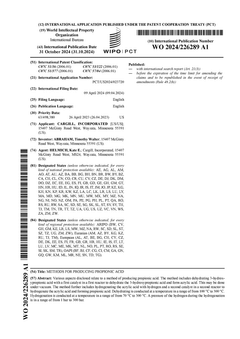
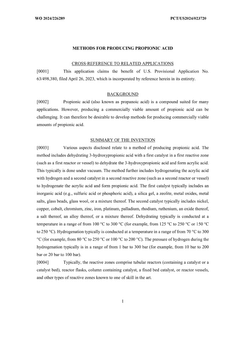
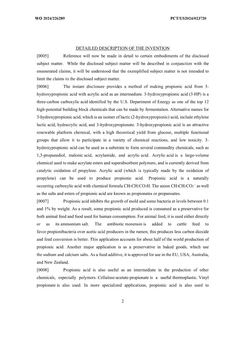
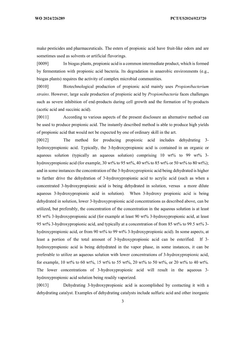
- A method involving the dehydration of 3-hydroxypropionic acid to form acrylic acid using a first catalyst, followed by hydrogenation of acrylic acid to propionic acid using a second catalyst, with specific temperature and pressure conditions, and optionally using a polymerization inhibitor to prevent acrylic acid polymerization.
Bioproduction of Propionic Acid from Levulinic Acid by Utilizing Recombinant Pseudomonas putida
PatentInactiveKR1020240029628A
Innovation
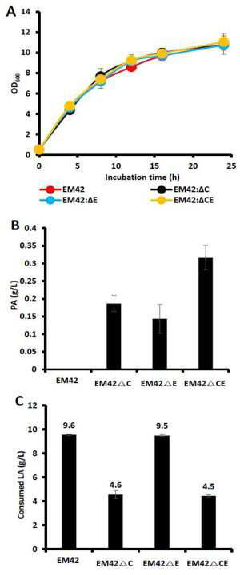
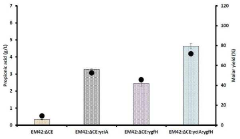
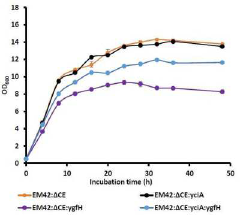
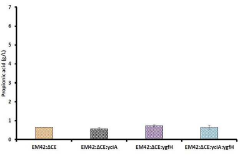
- A transgenic Pseudomonas putida strain is developed by deleting prpC and prpE genes and expressing yciA and ygfH genes, utilizing levulinic acid as a substrate to enhance propionic acid production through a levulinic acid-inducible expression system, optimizing the metabolic pathway to improve titer and yield.
Environmental Impact
Propionic acid, while offering numerous commercial applications, also presents significant environmental considerations that must be addressed. The production and use of propionic acid can have both positive and negative impacts on the environment, necessitating a comprehensive assessment of its lifecycle.
One of the primary environmental benefits of propionic acid lies in its potential to reduce food waste. As a natural preservative, it extends the shelf life of various food products, particularly baked goods and animal feed. This application directly contributes to the reduction of food spoilage and, consequently, the amount of organic waste sent to landfills. The decreased food waste not only conserves resources but also reduces methane emissions from decomposing organic matter in landfills.
However, the production of propionic acid through traditional petrochemical routes raises environmental concerns. The process typically involves the oxidation of propanol or propionaldehyde, which are derived from fossil fuels. This reliance on non-renewable resources contributes to carbon emissions and the depletion of finite petroleum reserves. Additionally, the production process may generate hazardous waste and byproducts that require careful management and disposal.
Water pollution is another potential environmental issue associated with propionic acid production and use. Improper handling or disposal of the acid or its precursors can lead to contamination of water bodies, affecting aquatic ecosystems and potentially entering the food chain. Stringent waste management protocols and water treatment systems are essential to mitigate these risks.
On a positive note, recent advancements in biotechnology have opened up more sustainable production methods for propionic acid. Fermentation processes using renewable biomass feedstocks offer a promising alternative to petrochemical routes. These bio-based production methods have a lower carbon footprint and reduce dependence on fossil fuels. Furthermore, they often utilize agricultural waste products as feedstock, contributing to a circular economy model.
The use of propionic acid in various industries also presents opportunities for environmental improvement. In agriculture, its application as a mold inhibitor in animal feed can lead to improved feed efficiency and reduced methane emissions from livestock. In the plastics industry, propionic acid derivatives are used in the production of cellulose-based plastics, which are biodegradable alternatives to conventional petroleum-based plastics.
As the demand for propionic acid grows, particularly in emerging economies, it becomes crucial to balance its commercial potential with environmental stewardship. This balance can be achieved through continued research into greener production methods, implementation of strict environmental regulations, and the development of closed-loop systems that minimize waste and maximize resource efficiency throughout the propionic acid lifecycle.
One of the primary environmental benefits of propionic acid lies in its potential to reduce food waste. As a natural preservative, it extends the shelf life of various food products, particularly baked goods and animal feed. This application directly contributes to the reduction of food spoilage and, consequently, the amount of organic waste sent to landfills. The decreased food waste not only conserves resources but also reduces methane emissions from decomposing organic matter in landfills.
However, the production of propionic acid through traditional petrochemical routes raises environmental concerns. The process typically involves the oxidation of propanol or propionaldehyde, which are derived from fossil fuels. This reliance on non-renewable resources contributes to carbon emissions and the depletion of finite petroleum reserves. Additionally, the production process may generate hazardous waste and byproducts that require careful management and disposal.
Water pollution is another potential environmental issue associated with propionic acid production and use. Improper handling or disposal of the acid or its precursors can lead to contamination of water bodies, affecting aquatic ecosystems and potentially entering the food chain. Stringent waste management protocols and water treatment systems are essential to mitigate these risks.
On a positive note, recent advancements in biotechnology have opened up more sustainable production methods for propionic acid. Fermentation processes using renewable biomass feedstocks offer a promising alternative to petrochemical routes. These bio-based production methods have a lower carbon footprint and reduce dependence on fossil fuels. Furthermore, they often utilize agricultural waste products as feedstock, contributing to a circular economy model.
The use of propionic acid in various industries also presents opportunities for environmental improvement. In agriculture, its application as a mold inhibitor in animal feed can lead to improved feed efficiency and reduced methane emissions from livestock. In the plastics industry, propionic acid derivatives are used in the production of cellulose-based plastics, which are biodegradable alternatives to conventional petroleum-based plastics.
As the demand for propionic acid grows, particularly in emerging economies, it becomes crucial to balance its commercial potential with environmental stewardship. This balance can be achieved through continued research into greener production methods, implementation of strict environmental regulations, and the development of closed-loop systems that minimize waste and maximize resource efficiency throughout the propionic acid lifecycle.
Regulatory Framework
The regulatory framework surrounding propionic acid plays a crucial role in shaping its commercial applications and market dynamics. As a widely used food preservative and chemical intermediate, propionic acid is subject to various regulations across different regions and industries.
In the food industry, propionic acid is generally recognized as safe (GRAS) by the U.S. Food and Drug Administration (FDA) for use as a preservative in baked goods, cheese, and other food products. The European Food Safety Authority (EFSA) has also approved its use as a food additive (E280) within specified limits. However, regulatory bodies continuously review and update guidelines, necessitating ongoing compliance efforts from manufacturers and users.
The chemical industry faces more complex regulations regarding propionic acid production, handling, and transportation. Environmental protection agencies, such as the U.S. Environmental Protection Agency (EPA), impose strict guidelines on emissions and waste management associated with propionic acid manufacturing. These regulations aim to minimize environmental impact and ensure worker safety.
Occupational safety regulations, enforced by agencies like the Occupational Safety and Health Administration (OSHA) in the United States, mandate specific handling procedures, personal protective equipment, and exposure limits for workers in contact with propionic acid. Similar regulations exist in other countries, with variations in permissible exposure levels and safety protocols.
As propionic acid finds new applications in emerging fields like biofuels and sustainable materials, regulatory frameworks are evolving to address these novel uses. For instance, the use of propionic acid in biofuel production may fall under renewable energy regulations, requiring compliance with sustainability criteria and carbon footprint assessments.
International trade of propionic acid is subject to import/export regulations, tariffs, and quality standards that vary by country. Harmonization efforts, such as the Globally Harmonized System of Classification and Labelling of Chemicals (GHS), aim to standardize safety information and facilitate global trade, but regional differences persist.
The pharmaceutical industry's use of propionic acid as a precursor or excipient is governed by stringent quality and safety regulations. Good Manufacturing Practices (GMP) and pharmacopeia standards must be adhered to, with regulatory bodies like the FDA and European Medicines Agency (EMA) overseeing compliance.
As sustainability becomes a key focus, regulations promoting circular economy principles and bio-based alternatives may influence the propionic acid market. This could lead to incentives for bio-based production methods or recycling initiatives, potentially reshaping the industry landscape.
In the food industry, propionic acid is generally recognized as safe (GRAS) by the U.S. Food and Drug Administration (FDA) for use as a preservative in baked goods, cheese, and other food products. The European Food Safety Authority (EFSA) has also approved its use as a food additive (E280) within specified limits. However, regulatory bodies continuously review and update guidelines, necessitating ongoing compliance efforts from manufacturers and users.
The chemical industry faces more complex regulations regarding propionic acid production, handling, and transportation. Environmental protection agencies, such as the U.S. Environmental Protection Agency (EPA), impose strict guidelines on emissions and waste management associated with propionic acid manufacturing. These regulations aim to minimize environmental impact and ensure worker safety.
Occupational safety regulations, enforced by agencies like the Occupational Safety and Health Administration (OSHA) in the United States, mandate specific handling procedures, personal protective equipment, and exposure limits for workers in contact with propionic acid. Similar regulations exist in other countries, with variations in permissible exposure levels and safety protocols.
As propionic acid finds new applications in emerging fields like biofuels and sustainable materials, regulatory frameworks are evolving to address these novel uses. For instance, the use of propionic acid in biofuel production may fall under renewable energy regulations, requiring compliance with sustainability criteria and carbon footprint assessments.
International trade of propionic acid is subject to import/export regulations, tariffs, and quality standards that vary by country. Harmonization efforts, such as the Globally Harmonized System of Classification and Labelling of Chemicals (GHS), aim to standardize safety information and facilitate global trade, but regional differences persist.
The pharmaceutical industry's use of propionic acid as a precursor or excipient is governed by stringent quality and safety regulations. Good Manufacturing Practices (GMP) and pharmacopeia standards must be adhered to, with regulatory bodies like the FDA and European Medicines Agency (EMA) overseeing compliance.
As sustainability becomes a key focus, regulations promoting circular economy principles and bio-based alternatives may influence the propionic acid market. This could lead to incentives for bio-based production methods or recycling initiatives, potentially reshaping the industry landscape.
Unlock deeper insights with Patsnap Eureka Quick Research — get a full tech report to explore trends and direct your research. Try now!
Generate Your Research Report Instantly with AI Agent
Supercharge your innovation with Patsnap Eureka AI Agent Platform!