

Quantum Network Node Interoperability: Multi-Protocol Integration
APR 21, 20269 MIN READ
Generate Your Research Report Instantly with AI Agent
PatSnap Eureka helps you evaluate technical feasibility & market potential.
Quantum Network Evolution and Interoperability Goals
Quantum networking has emerged from decades of theoretical quantum mechanics research, beginning with foundational work in quantum entanglement and quantum key distribution in the 1980s. The field gained momentum through pioneering experiments in quantum teleportation and the development of practical quantum cryptography systems in the 1990s and early 2000s.
The evolution trajectory shows a clear progression from point-to-point quantum communication links to more complex network architectures. Early implementations focused primarily on quantum key distribution protocols like BB84, establishing secure communication channels between two parties. However, the limitations of bilateral connections became apparent as quantum applications expanded beyond simple cryptographic use cases.
Current quantum network development is transitioning toward multi-node architectures that require sophisticated interoperability frameworks. This evolution reflects the growing recognition that quantum networks must support diverse quantum protocols simultaneously, including quantum key distribution, quantum sensing networks, distributed quantum computing, and quantum internet applications. Each protocol family presents unique requirements for entanglement distribution, error correction, and network resource allocation.
The primary technical objective driving quantum network node interoperability centers on creating unified network infrastructure capable of seamlessly handling multiple quantum communication protocols. This involves developing standardized interfaces that can accommodate different quantum states, varying fidelity requirements, and diverse timing constraints across protocols. The goal extends beyond simple protocol translation to encompass dynamic resource management and adaptive network optimization.
Interoperability goals also encompass the integration of classical and quantum network layers, ensuring that quantum network nodes can effectively coordinate with existing telecommunications infrastructure. This hybrid approach aims to leverage classical network reliability and scalability while incorporating quantum advantages for specific applications requiring enhanced security or computational capabilities.
Long-term objectives include establishing quantum network standards that enable global-scale quantum internet deployment. This vision requires developing protocols that maintain quantum coherence across extended distances while supporting heterogeneous quantum technologies from different manufacturers. The ultimate goal involves creating a quantum network ecosystem where various quantum applications can coexist and share network resources efficiently, similar to how different internet protocols operate over shared classical network infrastructure today.
The evolution trajectory shows a clear progression from point-to-point quantum communication links to more complex network architectures. Early implementations focused primarily on quantum key distribution protocols like BB84, establishing secure communication channels between two parties. However, the limitations of bilateral connections became apparent as quantum applications expanded beyond simple cryptographic use cases.
Current quantum network development is transitioning toward multi-node architectures that require sophisticated interoperability frameworks. This evolution reflects the growing recognition that quantum networks must support diverse quantum protocols simultaneously, including quantum key distribution, quantum sensing networks, distributed quantum computing, and quantum internet applications. Each protocol family presents unique requirements for entanglement distribution, error correction, and network resource allocation.
The primary technical objective driving quantum network node interoperability centers on creating unified network infrastructure capable of seamlessly handling multiple quantum communication protocols. This involves developing standardized interfaces that can accommodate different quantum states, varying fidelity requirements, and diverse timing constraints across protocols. The goal extends beyond simple protocol translation to encompass dynamic resource management and adaptive network optimization.
Interoperability goals also encompass the integration of classical and quantum network layers, ensuring that quantum network nodes can effectively coordinate with existing telecommunications infrastructure. This hybrid approach aims to leverage classical network reliability and scalability while incorporating quantum advantages for specific applications requiring enhanced security or computational capabilities.
Long-term objectives include establishing quantum network standards that enable global-scale quantum internet deployment. This vision requires developing protocols that maintain quantum coherence across extended distances while supporting heterogeneous quantum technologies from different manufacturers. The ultimate goal involves creating a quantum network ecosystem where various quantum applications can coexist and share network resources efficiently, similar to how different internet protocols operate over shared classical network infrastructure today.
Market Demand for Quantum Network Infrastructure
The quantum network infrastructure market is experiencing unprecedented growth driven by escalating demands for ultra-secure communications across multiple sectors. Government agencies and defense organizations represent the primary early adopters, seeking quantum key distribution networks to protect classified information and critical communications infrastructure. Financial institutions are increasingly recognizing quantum networks as essential for securing high-value transactions and protecting against future quantum computing threats to current cryptographic systems.
Enterprise demand is emerging from industries handling sensitive data, including healthcare organizations managing patient records, pharmaceutical companies protecting intellectual property, and energy companies securing critical infrastructure communications. The telecommunications sector views quantum networks as the next evolutionary step in secure communications infrastructure, with major carriers exploring quantum backbone networks to offer premium security services.
Research institutions and universities constitute another significant demand driver, requiring quantum networks for collaborative research projects and secure academic communications. The growing emphasis on quantum research funding globally has accelerated institutional investments in quantum networking capabilities, creating a substantial market for interoperable quantum network solutions.
Geographic demand patterns show concentrated interest in regions with advanced quantum research programs. North America leads in government and defense applications, while Europe demonstrates strong demand from financial services and telecommunications sectors. Asia-Pacific markets, particularly in countries with significant quantum computing investments, are rapidly developing quantum network requirements for both commercial and governmental applications.
The market demand is particularly acute for multi-protocol integration solutions that can bridge different quantum networking standards and protocols. Organizations require systems capable of interfacing with various quantum key distribution protocols, classical network infrastructures, and emerging quantum internet standards. This interoperability requirement stems from the heterogeneous nature of existing quantum technologies and the need for gradual migration from classical to quantum networks.
Current market constraints include high implementation costs and limited technical expertise, but growing awareness of quantum computing threats to classical cryptography is accelerating adoption timelines. The demand trajectory indicates substantial market expansion as quantum network technologies mature and standardization efforts progress.
Enterprise demand is emerging from industries handling sensitive data, including healthcare organizations managing patient records, pharmaceutical companies protecting intellectual property, and energy companies securing critical infrastructure communications. The telecommunications sector views quantum networks as the next evolutionary step in secure communications infrastructure, with major carriers exploring quantum backbone networks to offer premium security services.
Research institutions and universities constitute another significant demand driver, requiring quantum networks for collaborative research projects and secure academic communications. The growing emphasis on quantum research funding globally has accelerated institutional investments in quantum networking capabilities, creating a substantial market for interoperable quantum network solutions.
Geographic demand patterns show concentrated interest in regions with advanced quantum research programs. North America leads in government and defense applications, while Europe demonstrates strong demand from financial services and telecommunications sectors. Asia-Pacific markets, particularly in countries with significant quantum computing investments, are rapidly developing quantum network requirements for both commercial and governmental applications.
The market demand is particularly acute for multi-protocol integration solutions that can bridge different quantum networking standards and protocols. Organizations require systems capable of interfacing with various quantum key distribution protocols, classical network infrastructures, and emerging quantum internet standards. This interoperability requirement stems from the heterogeneous nature of existing quantum technologies and the need for gradual migration from classical to quantum networks.
Current market constraints include high implementation costs and limited technical expertise, but growing awareness of quantum computing threats to classical cryptography is accelerating adoption timelines. The demand trajectory indicates substantial market expansion as quantum network technologies mature and standardization efforts progress.
Current Quantum Protocol Fragmentation Challenges
The quantum networking landscape currently faces significant fragmentation challenges that impede the development of truly interoperable quantum communication systems. Multiple quantum key distribution protocols have emerged independently, each optimized for specific hardware platforms and operational environments, creating isolated quantum network islands that cannot effectively communicate with one another.
The BB84 protocol family, including its variants such as SARG04 and decoy-state protocols, dominates point-to-point quantum communication implementations. However, these protocols exhibit fundamental incompatibilities in their photon encoding schemes, measurement bases, and error correction mechanisms. While BB84 utilizes polarization or phase encoding with specific basis rotations, other protocols like continuous-variable quantum key distribution employ entirely different mathematical frameworks based on coherent states and homodyne detection.
Network-layer fragmentation presents equally challenging obstacles. The quantum internet protocol stack lacks standardized interfaces between physical quantum channels and higher-level network functions. Current implementations typically employ proprietary middleware solutions that cannot interface with quantum nodes from different manufacturers or research institutions. This creates vendor lock-in scenarios that severely limit network scalability and cross-platform collaboration.
Authentication and trust establishment mechanisms vary dramatically across quantum network implementations. Some systems rely on classical pre-shared keys for initial authentication, while others attempt to bootstrap trust through quantum protocols alone. These divergent approaches create fundamental incompatibilities when attempting to establish secure quantum channels between nodes operating under different trust models.
Timing synchronization represents another critical fragmentation challenge. Quantum protocols require precise temporal coordination for photon detection windows, basis reconciliation, and error correction procedures. Different quantum network implementations employ varying synchronization standards, from GPS-based timing to local oscillator references, making cross-network communication extremely difficult to achieve reliably.
The absence of standardized quantum network management protocols further exacerbates interoperability issues. Network discovery, routing table maintenance, and quality-of-service management operate through incompatible frameworks across different quantum networking platforms. This fragmentation prevents the emergence of large-scale quantum networks that could support distributed quantum computing applications and global quantum communication services.
The BB84 protocol family, including its variants such as SARG04 and decoy-state protocols, dominates point-to-point quantum communication implementations. However, these protocols exhibit fundamental incompatibilities in their photon encoding schemes, measurement bases, and error correction mechanisms. While BB84 utilizes polarization or phase encoding with specific basis rotations, other protocols like continuous-variable quantum key distribution employ entirely different mathematical frameworks based on coherent states and homodyne detection.
Network-layer fragmentation presents equally challenging obstacles. The quantum internet protocol stack lacks standardized interfaces between physical quantum channels and higher-level network functions. Current implementations typically employ proprietary middleware solutions that cannot interface with quantum nodes from different manufacturers or research institutions. This creates vendor lock-in scenarios that severely limit network scalability and cross-platform collaboration.
Authentication and trust establishment mechanisms vary dramatically across quantum network implementations. Some systems rely on classical pre-shared keys for initial authentication, while others attempt to bootstrap trust through quantum protocols alone. These divergent approaches create fundamental incompatibilities when attempting to establish secure quantum channels between nodes operating under different trust models.
Timing synchronization represents another critical fragmentation challenge. Quantum protocols require precise temporal coordination for photon detection windows, basis reconciliation, and error correction procedures. Different quantum network implementations employ varying synchronization standards, from GPS-based timing to local oscillator references, making cross-network communication extremely difficult to achieve reliably.
The absence of standardized quantum network management protocols further exacerbates interoperability issues. Network discovery, routing table maintenance, and quality-of-service management operate through incompatible frameworks across different quantum networking platforms. This fragmentation prevents the emergence of large-scale quantum networks that could support distributed quantum computing applications and global quantum communication services.
Existing Multi-Protocol Integration Solutions
01 Quantum key distribution protocols for secure node communication
Implementation of quantum key distribution (QKD) protocols enables secure communication between quantum network nodes by leveraging quantum mechanical properties. These protocols establish cryptographic keys through quantum channels, ensuring information-theoretic security. The systems incorporate photon-based transmission methods and error correction mechanisms to maintain secure key exchange across network nodes with different hardware configurations.- Quantum key distribution protocols for secure node communication: Implementation of quantum key distribution (QKD) protocols enables secure communication between quantum network nodes by leveraging quantum mechanical properties. These protocols establish cryptographic keys through quantum channels, ensuring information-theoretic security. The systems incorporate photon-based transmission methods and error correction mechanisms to maintain secure key exchange across network nodes with different hardware configurations.
- Standardized quantum communication interfaces and protocols: Development of standardized interfaces and communication protocols facilitates interoperability between heterogeneous quantum network nodes. These standards define common data formats, control signals, and handshaking procedures that enable different quantum systems to exchange information reliably. The approach includes middleware layers and protocol stacks that abstract hardware-specific implementations while maintaining quantum state fidelity.
- Quantum state conversion and format adaptation: Techniques for converting and adapting quantum states between different physical implementations enable nodes with varying qubit technologies to communicate effectively. These methods include quantum transduction, wavelength conversion, and state mapping algorithms that preserve quantum information while translating between different quantum platforms. The conversion processes maintain entanglement and coherence properties necessary for quantum network operations.
- Network topology management and routing for quantum networks: Management systems for quantum network topology enable dynamic routing and resource allocation across interconnected quantum nodes. These systems implement routing algorithms that account for quantum-specific constraints such as decoherence times, entanglement distribution requirements, and node capabilities. The architecture supports scalable network expansion while maintaining quantum communication quality across diverse node types.
- Authentication and verification mechanisms for quantum nodes: Security frameworks for authenticating and verifying quantum network nodes ensure trusted communication in heterogeneous quantum networks. These mechanisms employ quantum-resistant cryptographic methods, node certification protocols, and continuous verification procedures to prevent unauthorized access and man-in-the-middle attacks. The systems validate node capabilities and maintain trust relationships across different quantum hardware platforms.
02 Standardized quantum communication interfaces and protocols
Development of standardized interfaces and communication protocols facilitates interoperability between heterogeneous quantum network nodes. These standards define common data formats, control signals, and handshaking procedures that enable different quantum systems to exchange information reliably. The approach includes middleware layers and protocol converters that bridge compatibility gaps between various quantum hardware platforms.Expand Specific Solutions03 Quantum entanglement distribution and management across network nodes
Systems for distributing and managing quantum entanglement between multiple network nodes enable quantum teleportation and distributed quantum computing applications. These implementations include entanglement generation sources, quantum memory systems, and synchronization mechanisms that coordinate entangled state sharing across diverse node architectures. The technology supports both point-to-point and multi-node entanglement configurations.Expand Specific Solutions04 Hybrid classical-quantum network integration architectures
Integration frameworks combine classical networking infrastructure with quantum communication capabilities to create hybrid systems supporting interoperability. These architectures employ classical control channels for coordination while maintaining quantum data channels for secure transmission. The designs include gateway devices and translation layers that enable quantum nodes to interface with existing network infrastructure and protocols.Expand Specific Solutions05 Error correction and synchronization mechanisms for quantum networks
Advanced error correction and synchronization techniques ensure reliable operation across quantum network nodes with varying performance characteristics. These methods include quantum error correction codes, timing synchronization protocols, and adaptive compensation algorithms that account for differences in node hardware and environmental conditions. The systems maintain coherence and fidelity of quantum states during inter-node transmission.Expand Specific Solutions
Leading Quantum Network Technology Companies
The quantum network node interoperability market is in its nascent stage, characterized by significant fragmentation and early-stage technology development. Market size remains limited as the field transitions from research to commercial applications. Technology maturity varies considerably across players, with established telecommunications giants like NTT, Ericsson, and ZTE leveraging existing network infrastructure expertise, while specialized quantum companies such as CAS Quantum Network and Guangdong Guoteng Quantum Technology focus on pure quantum solutions. Academic institutions including University of Maryland, Delft University of Technology, and University of Tokyo drive fundamental research, while technology leaders like Intel, IBM, and Toshiba advance hardware integration. The competitive landscape reflects a convergence of traditional networking, quantum physics, and cybersecurity domains, with multi-protocol integration challenges requiring collaborative approaches between telecommunications providers, quantum specialists, and research institutions to achieve standardized interoperability solutions.
Toshiba Corp.
Technical Solution: Toshiba has developed quantum network nodes with native support for multiple quantum key distribution protocols, including their proprietary differential phase shift keying alongside standard protocols like BB84 and decoy state methods. Their solution implements protocol-aware quantum channel management with automatic protocol detection and negotiation capabilities. The system features adaptive error correction mechanisms that optimize performance based on the active protocol and channel conditions. Toshiba's nodes include integrated classical communication channels for protocol coordination and provide seamless handover between different quantum protocols during network operations. Their approach emphasizes practical deployment considerations with field-tested interoperability across diverse quantum network infrastructures.
Strengths: Proven field deployment experience with robust protocol detection and excellent practical reliability in real-world conditions. Weaknesses: Primarily focused on QKD applications with limited support for emerging quantum networking protocols beyond key distribution.
Intel Corp.
Technical Solution: Intel's quantum network node solution focuses on hardware-accelerated protocol processing using specialized quantum network interface cards. Their approach implements protocol-agnostic quantum state processing units that can handle multiple quantum communication standards simultaneously. The architecture features dedicated cryptographic co-processors for real-time key management across different protocols, with hardware-level security isolation between protocol domains. Intel's solution provides high-throughput quantum channel multiplexing, enabling concurrent operation of multiple quantum protocols on shared physical infrastructure. Their network nodes support dynamic protocol reconfiguration and include built-in performance monitoring for multi-protocol quantum networks.
Strengths: Hardware-accelerated performance with excellent scalability and concurrent multi-protocol support. Weaknesses: Limited to Intel hardware ecosystem and requires specialized quantum network interface cards, increasing deployment costs.
Core Patents in Quantum Node Interoperability
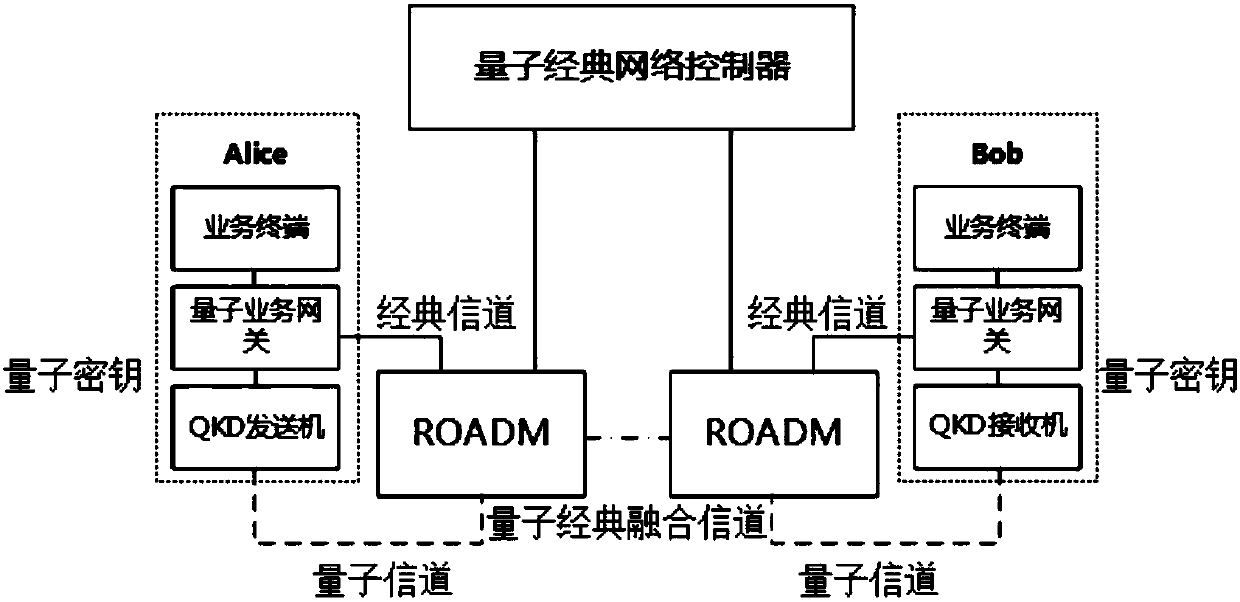
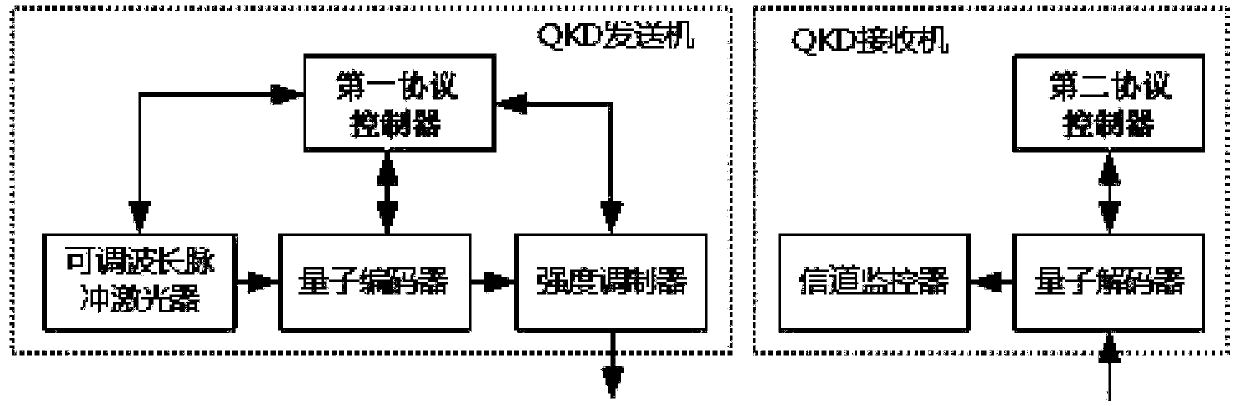
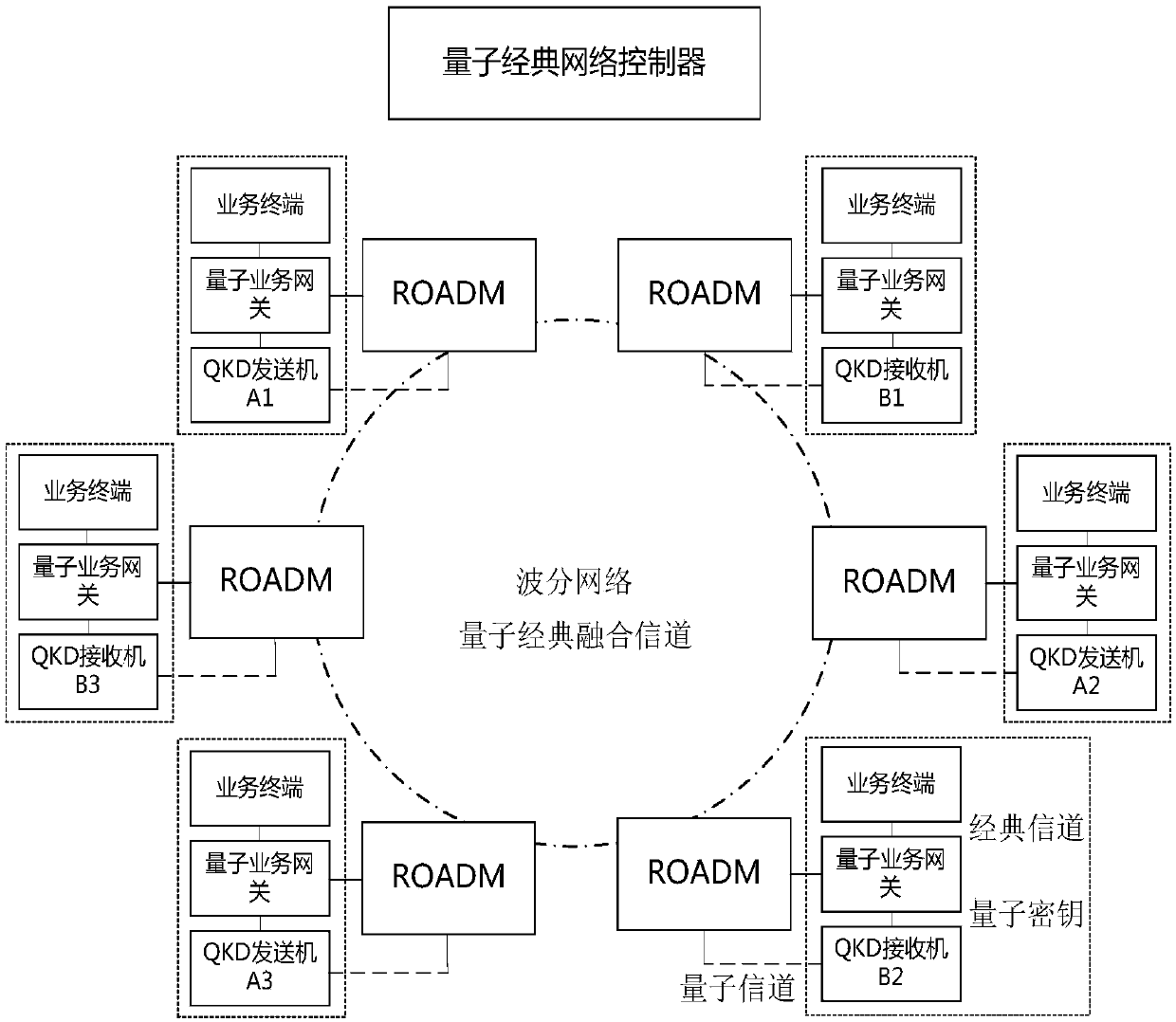
Multi-type quantum terminal compatible fusion network access system and method
PatentActiveCN108111305A
Innovation
- Design a quantum classical network access controller with multiple quantum terminals and a reconfigurable optical split multiplexer (ROADM) to achieve seamless connection between quantum signals and classical signals, dynamic access to the classical network, and support for multiple types of quantum terminals compatibility.

Coordinating operation of quantum network nodes in a quantum network
PatentPendingUS20250053840A1
Innovation
- The development of novel scheduling methods and systems that encode quantum repeater protocols into schedules distributed across the network, using fixed-duration time slots to manage operations, ensuring fidelity requirements are met while achieving desired throughput and jitter levels.


Quantum Communication Security Standards
The establishment of comprehensive quantum communication security standards represents a critical foundation for enabling multi-protocol integration across quantum network nodes. Current standardization efforts focus on creating unified frameworks that can accommodate diverse quantum key distribution protocols while maintaining consistent security guarantees across heterogeneous network architectures.
International standardization bodies, including ITU-T and ETSI, have initiated collaborative frameworks to define security parameters for quantum networks. These standards address fundamental security metrics such as quantum bit error rates, key generation rates, and authentication mechanisms that must be maintained regardless of the underlying protocol implementation. The standardization process emphasizes backward compatibility and forward scalability to support emerging quantum technologies.
Security standard frameworks encompass multiple layers of protection, from physical layer quantum state preparation and measurement to network layer protocol authentication. Key management standards define how quantum keys are generated, distributed, and synchronized across nodes operating different protocols. These standards ensure that security properties remain intact during protocol translation and routing decisions within multi-protocol environments.
Cryptographic agility standards enable quantum networks to adapt to evolving security threats and protocol improvements. These frameworks define how nodes can negotiate security parameters, upgrade cryptographic algorithms, and maintain secure communications during protocol transitions. The standards also specify minimum security requirements for cross-protocol communications and define fallback mechanisms when protocol incompatibilities arise.
Certification and compliance frameworks establish testing methodologies for validating quantum network security implementations. These standards define security evaluation criteria, vulnerability assessment procedures, and continuous monitoring requirements for multi-protocol quantum networks. Compliance frameworks ensure that different vendor implementations can interoperate securely while meeting established security benchmarks.
The evolution toward post-quantum cryptography integration within quantum communication standards addresses hybrid security models where classical and quantum cryptographic methods coexist. These standards define how quantum networks can maintain security during the transition period and establish protocols for secure classical-quantum cryptographic handoffs in multi-protocol environments.
International standardization bodies, including ITU-T and ETSI, have initiated collaborative frameworks to define security parameters for quantum networks. These standards address fundamental security metrics such as quantum bit error rates, key generation rates, and authentication mechanisms that must be maintained regardless of the underlying protocol implementation. The standardization process emphasizes backward compatibility and forward scalability to support emerging quantum technologies.
Security standard frameworks encompass multiple layers of protection, from physical layer quantum state preparation and measurement to network layer protocol authentication. Key management standards define how quantum keys are generated, distributed, and synchronized across nodes operating different protocols. These standards ensure that security properties remain intact during protocol translation and routing decisions within multi-protocol environments.
Cryptographic agility standards enable quantum networks to adapt to evolving security threats and protocol improvements. These frameworks define how nodes can negotiate security parameters, upgrade cryptographic algorithms, and maintain secure communications during protocol transitions. The standards also specify minimum security requirements for cross-protocol communications and define fallback mechanisms when protocol incompatibilities arise.
Certification and compliance frameworks establish testing methodologies for validating quantum network security implementations. These standards define security evaluation criteria, vulnerability assessment procedures, and continuous monitoring requirements for multi-protocol quantum networks. Compliance frameworks ensure that different vendor implementations can interoperate securely while meeting established security benchmarks.
The evolution toward post-quantum cryptography integration within quantum communication standards addresses hybrid security models where classical and quantum cryptographic methods coexist. These standards define how quantum networks can maintain security during the transition period and establish protocols for secure classical-quantum cryptographic handoffs in multi-protocol environments.
International Quantum Network Governance Framework
The establishment of an international quantum network governance framework represents a critical imperative for ensuring seamless multi-protocol integration across quantum communication infrastructures. As quantum networks evolve from experimental testbeds to operational systems, the absence of standardized governance mechanisms poses significant risks to interoperability, security, and scalability of quantum node communications.
Current quantum network deployments operate under fragmented regulatory environments, with different nations and regions developing distinct technical standards and operational protocols. This fragmentation creates substantial barriers to achieving true quantum network node interoperability, as varying authentication mechanisms, key distribution protocols, and network management systems struggle to communicate effectively across jurisdictional boundaries.
The European Quantum Communication Infrastructure initiative and China's quantum communication networks exemplify this challenge, operating under different technical specifications and governance models. Without harmonized international standards, multi-protocol integration becomes increasingly complex, requiring extensive translation layers and compatibility protocols that introduce potential security vulnerabilities and performance degradation.
A comprehensive international governance framework must address several critical dimensions of quantum network interoperability. Technical standardization represents the foundational layer, requiring consensus on quantum key distribution protocols, node authentication mechanisms, and network topology management. Security governance forms another essential component, establishing unified criteria for quantum cryptographic implementations and threat mitigation strategies across different national systems.
Regulatory harmonization emerges as equally important, necessitating coordinated approaches to quantum network licensing, cross-border data transmission protocols, and incident response procedures. The framework must also incorporate adaptive mechanisms to accommodate rapid technological evolution while maintaining backward compatibility with existing quantum infrastructure investments.
International organizations including the International Telecommunication Union and emerging quantum-specific bodies are beginning to address these governance challenges. However, the complexity of quantum network technologies and varying national security considerations create substantial diplomatic and technical obstacles to achieving comprehensive international coordination.
The successful implementation of such a governance framework will ultimately determine whether quantum networks can achieve their full potential as a globally interconnected infrastructure, enabling secure multi-protocol communication across diverse quantum node architectures and national boundaries.
Current quantum network deployments operate under fragmented regulatory environments, with different nations and regions developing distinct technical standards and operational protocols. This fragmentation creates substantial barriers to achieving true quantum network node interoperability, as varying authentication mechanisms, key distribution protocols, and network management systems struggle to communicate effectively across jurisdictional boundaries.
The European Quantum Communication Infrastructure initiative and China's quantum communication networks exemplify this challenge, operating under different technical specifications and governance models. Without harmonized international standards, multi-protocol integration becomes increasingly complex, requiring extensive translation layers and compatibility protocols that introduce potential security vulnerabilities and performance degradation.
A comprehensive international governance framework must address several critical dimensions of quantum network interoperability. Technical standardization represents the foundational layer, requiring consensus on quantum key distribution protocols, node authentication mechanisms, and network topology management. Security governance forms another essential component, establishing unified criteria for quantum cryptographic implementations and threat mitigation strategies across different national systems.
Regulatory harmonization emerges as equally important, necessitating coordinated approaches to quantum network licensing, cross-border data transmission protocols, and incident response procedures. The framework must also incorporate adaptive mechanisms to accommodate rapid technological evolution while maintaining backward compatibility with existing quantum infrastructure investments.
International organizations including the International Telecommunication Union and emerging quantum-specific bodies are beginning to address these governance challenges. However, the complexity of quantum network technologies and varying national security considerations create substantial diplomatic and technical obstacles to achieving comprehensive international coordination.
The successful implementation of such a governance framework will ultimately determine whether quantum networks can achieve their full potential as a globally interconnected infrastructure, enabling secure multi-protocol communication across diverse quantum node architectures and national boundaries.
Unlock deeper insights with PatSnap Eureka Quick Research — get a full tech report to explore trends and direct your research. Try now!
Generate Your Research Report Instantly with AI Agent
Supercharge your innovation with PatSnap Eureka AI Agent Platform!