Quasicrystal: Optimizing Uses in Advanced Robotics
Quasicrystal Evolution and Robotics Integration Goals
Quasicrystals, discovered in 1982 by Dan Shechtman, have revolutionized our understanding of crystalline structures. These unique materials exhibit long-range order but lack periodicity, resulting in exceptional properties that have captured the attention of researchers across various fields. In the context of advanced robotics, quasicrystals present a promising frontier for innovation and performance enhancement.
The evolution of quasicrystal research has been marked by significant milestones, from initial skepticism to widespread acceptance and exploration of practical applications. Early studies focused on understanding the fundamental structure and formation mechanisms of quasicrystals. As research progressed, scientists began to uncover their unique mechanical, electrical, and thermal properties, opening doors to potential applications in diverse industries.
In recent years, the integration of quasicrystals into robotics has emerged as a particularly exciting area of development. The goal is to leverage the distinctive characteristics of quasicrystals to address key challenges in advanced robotics, such as improving structural integrity, enhancing energy efficiency, and developing novel sensing capabilities.
One primary objective is to utilize the high hardness and low friction coefficients of quasicrystalline materials to create more durable and efficient robotic components. This could lead to the development of wear-resistant joints and gears, significantly extending the operational lifespan of robotic systems and reducing maintenance requirements.
Another crucial aim is to exploit the unique electronic properties of quasicrystals to design advanced sensors and actuators. The potential for creating highly sensitive and responsive robotic interfaces could revolutionize human-robot interaction and enable more precise control in complex environments.
Researchers are also exploring the thermal management capabilities of quasicrystals, with the goal of developing more efficient cooling systems for high-performance robotic applications. This could allow for the creation of robots capable of operating in extreme temperature conditions or handling high-intensity tasks without overheating.
The integration of quasicrystals into advanced robotics also aims to push the boundaries of material design. By combining quasicrystalline structures with other advanced materials, scientists hope to create hybrid composites that offer unprecedented combinations of strength, flexibility, and functionality.
As we look to the future, the ultimate goal is to establish quasicrystals as a cornerstone material in the next generation of robotic systems. This involves not only advancing the fundamental understanding of quasicrystal properties but also developing scalable manufacturing processes to enable widespread adoption in the robotics industry.
Market Demand for Advanced Robotic Materials
The market demand for advanced robotic materials, particularly quasicrystals, is experiencing significant growth driven by the increasing sophistication of robotic systems across various industries. As robots become more complex and are required to perform intricate tasks in challenging environments, the need for materials with exceptional properties has intensified. Quasicrystals, with their unique atomic structure and remarkable characteristics, are emerging as a promising solution to meet these evolving demands.
In the automotive and aerospace sectors, there is a growing interest in lightweight yet durable materials that can enhance the performance and efficiency of robotic systems. Quasicrystals offer an attractive combination of low friction, high hardness, and thermal stability, making them ideal for components in advanced robotic applications. The demand for these materials is particularly strong in the development of robotic arms, joints, and actuators that require precision movement and resistance to wear.
The healthcare industry is another significant driver of market demand for quasicrystal-based robotic materials. As surgical robots become more prevalent and sophisticated, there is an increasing need for materials that can withstand sterilization processes while maintaining their structural integrity and performance. Quasicrystals' resistance to corrosion and their biocompatibility make them well-suited for use in medical robotics, particularly in minimally invasive surgical instruments and prosthetic devices.
In the field of industrial automation, the demand for advanced robotic materials is being fueled by the push towards Industry 4.0 and smart manufacturing. Robots operating in harsh industrial environments require materials that can withstand extreme temperatures, chemical exposure, and constant wear. Quasicrystals' unique properties position them as a potential game-changer in this sector, offering improved durability and performance for robotic systems in manufacturing plants, warehouses, and other industrial settings.
The consumer electronics industry is also contributing to the market demand for quasicrystal-based materials in robotics. As personal and household robots become more sophisticated, there is a growing need for materials that can provide enhanced functionality while meeting aesthetic requirements. Quasicrystals' ability to create unique surface patterns and their potential for improved energy efficiency in electronic components make them attractive for use in consumer-facing robotic products.
Environmental concerns and the push for sustainability are further driving the demand for advanced robotic materials. Quasicrystals' potential to reduce friction and improve energy efficiency aligns well with the global trend towards more environmentally friendly technologies. This aspect is particularly relevant in the development of robotic systems for renewable energy applications, such as solar panel cleaning robots and wind turbine maintenance drones.
Current Quasicrystal Applications and Challenges
Quasicrystals, discovered in the 1980s, have found limited but promising applications in advanced robotics. Their unique atomic structure, characterized by long-range order without periodicity, offers intriguing properties that could potentially revolutionize robotic systems. However, the current applications of quasicrystals in robotics face several challenges that need to be addressed for wider adoption.
One of the primary applications of quasicrystals in robotics is in the development of advanced sensors. The peculiar electronic properties of quasicrystals, such as their high electrical resistivity and low thermal conductivity, make them ideal candidates for sensitive and stable sensor materials. These sensors can be used in robotic systems for precise environmental monitoring and feedback control. However, the challenge lies in optimizing the manufacturing processes to produce quasicrystal-based sensors at scale while maintaining their unique properties.
Another promising application is in the field of actuators and motors for robotic systems. Quasicrystals exhibit low friction and wear resistance, which could lead to more efficient and durable mechanical components. This property is particularly valuable in micro-robotics, where minimizing friction is crucial for energy efficiency and longevity. The main challenge in this area is developing reliable methods to integrate quasicrystals into existing actuator designs without compromising their performance or increasing production costs significantly.
Quasicrystals also show potential in enhancing the structural properties of robotic components. Their unique atomic arrangement contributes to high strength-to-weight ratios and excellent mechanical stability. This could lead to the development of lighter yet stronger robotic structures, particularly beneficial for aerial and space robotics. However, the challenge lies in developing cost-effective manufacturing techniques to produce large-scale quasicrystal-based structural components with consistent properties.
In the realm of energy storage and conversion for robotics, quasicrystals present interesting possibilities. Their thermoelectric properties could be harnessed to develop more efficient power systems for robots, potentially extending operational times and enabling new functionalities. The challenge here is to improve the thermoelectric efficiency of quasicrystal-based materials to make them competitive with current technologies.
Despite these promising applications, several overarching challenges hinder the widespread adoption of quasicrystals in advanced robotics. The most significant is the complexity and cost of manufacturing quasicrystals with consistent properties at scale. Current production methods are often labor-intensive and yield small quantities, making them impractical for mass production of robotic components.
Additionally, there is a lack of comprehensive understanding of how quasicrystals behave under various conditions relevant to robotics applications. This knowledge gap makes it difficult to predict long-term performance and reliability, crucial factors in robotics design. Overcoming these challenges requires interdisciplinary collaboration between materials scientists, robotics engineers, and manufacturing experts to develop innovative solutions and unlock the full potential of quasicrystals in advanced robotics.
Existing Quasicrystal Integration in Robotics
01 Quasicrystal structure and composition
Quasicrystals are unique materials with aperiodic atomic structures that exhibit long-range order but lack translational symmetry. They often contain aluminum and transition metals, forming complex arrangements with unusual symmetries such as five-fold or ten-fold rotational symmetry. These structures result in unique properties that differ from traditional crystalline and amorphous materials.- Quasicrystal structure and composition: Quasicrystals are unique materials with aperiodic atomic structures that exhibit long-range order but lack translational symmetry. They are typically composed of metallic alloys and possess unusual physical properties. The structure and composition of quasicrystals are crucial for their formation and stability.
- Manufacturing methods for quasicrystals: Various techniques are employed to produce quasicrystals, including rapid solidification, melt spinning, and vapor deposition. These methods often involve precise control of cooling rates and composition to achieve the desired quasicrystalline structure. Advanced manufacturing processes can enhance the quality and yield of quasicrystals.
- Applications of quasicrystals: Quasicrystals find applications in diverse fields due to their unique properties. They are used in non-stick coatings, thermal barriers, and wear-resistant materials. Their low friction and high hardness make them suitable for mechanical components. Quasicrystals also show promise in electronic and optical applications.
- Characterization and analysis of quasicrystals: Advanced analytical techniques are essential for studying quasicrystals. These include electron microscopy, X-ray diffraction, and neutron scattering. Computational methods and modeling are also employed to understand the complex structure and properties of quasicrystals. Accurate characterization is crucial for optimizing their performance in various applications.
- Novel quasicrystal compositions and alloys: Research continues to explore new compositions and alloys that can form quasicrystals. This includes investigating multi-component systems and rare earth elements to create quasicrystals with enhanced properties. The development of novel quasicrystalline materials aims to expand their potential applications and improve their performance in existing uses.
02 Manufacturing methods for quasicrystals
Various techniques are employed to produce quasicrystals, including rapid solidification, physical vapor deposition, and melt spinning. These methods often involve precise control of cooling rates and composition to achieve the desired quasicrystalline structure. Some processes use specialized equipment or additives to promote quasicrystal formation and stability.Expand Specific Solutions03 Applications of quasicrystals
Quasicrystals find applications in various fields due to their unique properties. They are used in non-stick coatings, thermal barrier coatings, and wear-resistant surfaces. In the automotive and aerospace industries, quasicrystals are employed for their low friction and high hardness. They also show promise in electronic applications and as reinforcement in composite materials.Expand Specific Solutions04 Quasicrystal-based alloys and composites
Researchers have developed various alloys and composites incorporating quasicrystalline phases. These materials often combine the unique properties of quasicrystals with those of traditional materials, resulting in enhanced mechanical, thermal, or electrical characteristics. Some composites use quasicrystals as reinforcement particles or as a matrix phase to create materials with improved performance in specific applications.Expand Specific Solutions05 Characterization and analysis of quasicrystals
Specialized techniques are used to characterize and analyze quasicrystalline structures. These include advanced electron microscopy methods, X-ray diffraction, and computational modeling. Researchers employ these tools to study the atomic arrangements, phase transitions, and physical properties of quasicrystals, contributing to a deeper understanding of their unique structure-property relationships.Expand Specific Solutions
Key Players in Quasicrystal and Robotics Research
The field of quasicrystal applications in advanced robotics is in its early developmental stage, with a growing market potential as robotics technology advances. The market size is expanding, driven by increasing demand for innovative materials in high-performance robotics. Technologically, it's still evolving, with varying levels of maturity among key players. Companies like YASKAWA Electric Corp., Boston Dynamics, Inc., and Kawasaki Heavy Industries Ltd. are at the forefront, leveraging their robotics expertise. Research institutions such as Harbin Institute of Technology and Central South University are contributing to fundamental advancements. Materials-focused entities like Applied Materials, Inc. and Praxair S.T. Technology, Inc. are exploring quasicrystal applications, while tech giants like General Electric Technology GmbH and Siemens Corp. are integrating these innovations into broader technological ecosystems.
YASKAWA Electric Corp.
Boston Dynamics, Inc.
Core Innovations in Quasicrystal-Enhanced Robotics
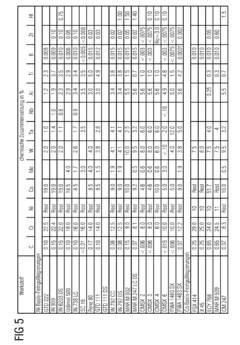
- Incorporating quasi-crystal particles into metal alloys, which have tunable properties between metals and ceramics, minimizing thermal stresses and enhancing mechanical strength, abrasion resistance, and providing thermal insulation through controlled surface concentration gradients.
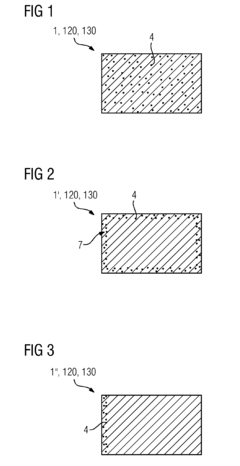
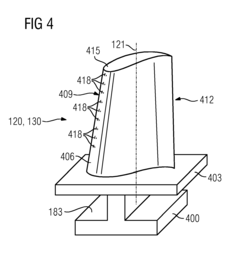
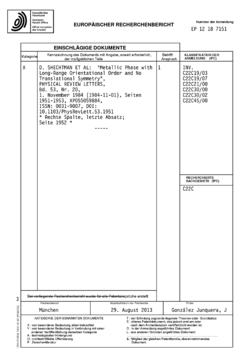
- A thermally sprayed coating with a quasicrystal-containing alloy composition of 10-45 Cu, 7-22 Fe, 0-30 Cr, 0-30 Co, 0-20 Ni, 0-7.5 W, and balance aluminum, with less than 30% ψ phase and at least 65% δ phase, applied subsonically to achieve reduced macrohardness and enhanced bond strength, incorporating chromium or cobalt for corrosion resistance.
Manufacturing Processes for Quasicrystal Components
The manufacturing processes for quasicrystal components in advanced robotics present unique challenges and opportunities. Quasicrystals, with their aperiodic atomic structure and exceptional properties, require specialized techniques to produce high-quality components suitable for robotic applications.
One of the primary manufacturing methods for quasicrystal components is rapid solidification. This process involves quickly cooling molten alloys to form quasicrystalline structures. Techniques such as melt spinning and gas atomization are commonly employed to achieve the necessary cooling rates. These methods produce quasicrystal powders or ribbons, which serve as the starting materials for further processing.
Powder metallurgy techniques play a crucial role in shaping quasicrystal components. Hot isostatic pressing (HIP) is particularly effective in consolidating quasicrystal powders into bulk forms while maintaining their unique structure. This process involves applying high pressure and temperature simultaneously to achieve near-full density and optimal mechanical properties.
For more complex geometries, additive manufacturing techniques are being explored. Selective laser melting (SLM) and electron beam melting (EBM) show promise in producing quasicrystal components with intricate designs. However, these processes require careful control of parameters to ensure the preservation of the quasicrystalline structure during layer-by-layer fabrication.
Surface treatment and coating processes are essential for enhancing the performance of quasicrystal components in robotic applications. Techniques such as physical vapor deposition (PVD) and plasma spraying can be used to apply thin quasicrystalline coatings on conventional materials, combining the unique properties of quasicrystals with the structural integrity of traditional engineering materials.
Precision machining of quasicrystal components presents significant challenges due to their high hardness and brittleness. Advanced techniques like electrical discharge machining (EDM) and ultrasonic machining are often employed for shaping and finishing quasicrystal parts with high accuracy.
Quality control in quasicrystal manufacturing is critical and relies heavily on advanced characterization techniques. X-ray diffraction (XRD) and transmission electron microscopy (TEM) are indispensable for verifying the quasicrystalline structure and assessing the quality of manufactured components.
As research in quasicrystal manufacturing progresses, new techniques are emerging. These include severe plastic deformation methods for producing bulk quasicrystalline materials and novel composite manufacturing processes that incorporate quasicrystal particles into polymer or metal matrices, offering tailored properties for specific robotic applications.
Environmental Impact of Quasicrystal Production
The production of quasicrystals for advanced robotics applications has significant environmental implications that must be carefully considered. The manufacturing process of quasicrystals typically involves high-temperature synthesis methods, which can be energy-intensive and contribute to greenhouse gas emissions. The use of rare earth elements and other exotic materials in quasicrystal production may also lead to resource depletion and potential environmental contamination if not properly managed.
One of the primary environmental concerns is the extraction and processing of raw materials required for quasicrystal synthesis. Mining operations for elements such as aluminum, copper, and manganese can result in habitat destruction, soil erosion, and water pollution. Additionally, the refining processes often involve hazardous chemicals and generate toxic waste products that require specialized disposal methods to prevent environmental contamination.
The energy consumption associated with quasicrystal production is another significant environmental factor. The high temperatures required for synthesis, often exceeding 1000°C, demand substantial energy inputs, typically derived from fossil fuel sources. This contributes to carbon dioxide emissions and exacerbates climate change concerns. However, advancements in renewable energy technologies and more efficient production methods may help mitigate these impacts in the future.
Water usage is also a critical environmental consideration in quasicrystal manufacturing. The production process often requires large volumes of water for cooling and cleaning purposes, potentially straining local water resources in areas where production facilities are located. Proper water management and recycling systems are essential to minimize the environmental footprint of quasicrystal production.
On the positive side, the unique properties of quasicrystals, such as their low friction and high wear resistance, may lead to more durable and energy-efficient robotic components. This could potentially offset some of the environmental impacts of production by reducing the need for frequent replacements and improving overall system efficiency in advanced robotics applications.
The disposal and recycling of quasicrystal-containing products at the end of their lifecycle present additional environmental challenges. Due to their complex composition, quasicrystals may be difficult to separate and recycle effectively, potentially leading to increased electronic waste. Developing efficient recycling technologies and implementing proper disposal protocols will be crucial to minimizing the long-term environmental impact of quasicrystal use in robotics.
As research in quasicrystal applications for advanced robotics progresses, it is imperative to prioritize environmentally friendly production methods and sustainable material sourcing. This may include exploring alternative synthesis techniques that require lower temperatures, utilizing renewable energy sources for production, and investigating bio-inspired quasicrystal structures that could be produced with less environmental impact.