Quasicrystal's Role in Electromagnetic Interference Reduction
Quasicrystal EMI Background
Quasicrystals, discovered in 1982 by Dan Shechtman, represent a unique class of materials that exhibit long-range order but lack periodicity. This distinctive structural characteristic has sparked significant interest in their potential applications, particularly in the field of electromagnetic interference (EMI) reduction. The emergence of quasicrystals as a potential solution for EMI challenges stems from their unusual electronic and electromagnetic properties, which differ markedly from those of conventional crystalline and amorphous materials.
The increasing prevalence of electronic devices and wireless communication systems has led to a growing concern over electromagnetic interference, which can disrupt the performance of sensitive equipment and compromise the integrity of data transmission. Traditional methods of EMI reduction, such as metallic shielding and absorbing materials, have limitations in terms of weight, cost, and effectiveness across broad frequency ranges. This has driven the search for innovative materials that can provide superior EMI shielding and absorption capabilities.
Quasicrystals have attracted attention in this context due to their unique electronic structure, which results in a high density of states near the Fermi level and the presence of pseudogaps. These features contribute to their distinctive electromagnetic response, including enhanced absorption and reduced reflection of electromagnetic waves across a wide frequency spectrum. The aperiodic nature of quasicrystals also leads to the formation of localized electronic states, which can further influence their interaction with electromagnetic radiation.
Initial research into the EMI reduction properties of quasicrystals focused primarily on aluminum-based alloys, such as Al-Cu-Fe and Al-Pd-Mn systems. These studies demonstrated promising results in terms of shielding effectiveness and absorption capabilities, particularly in the microwave frequency range. The potential advantages of quasicrystalline materials for EMI applications include their relatively low density, high thermal stability, and the ability to tailor their properties through composition and processing techniques.
As the field has evolved, researchers have expanded their investigations to include a broader range of quasicrystalline compositions and structures, including icosahedral, decagonal, and dodecagonal quasicrystals. The exploration of quasicrystal-polymer composites has also gained traction, offering the potential to combine the unique electromagnetic properties of quasicrystals with the processability and flexibility of polymeric materials.
The growing interest in quasicrystals for EMI reduction has been driven by the increasing demand for lightweight, efficient, and broadband EMI shielding solutions in various industries, including aerospace, telecommunications, and consumer electronics. As electronic devices continue to miniaturize and operate at higher frequencies, the need for advanced EMI mitigation strategies becomes more critical, positioning quasicrystals as a promising avenue for future research and development in this field.
EMI Reduction Market Needs
The market for electromagnetic interference (EMI) reduction solutions has been experiencing significant growth due to the increasing complexity and density of electronic systems across various industries. As electronic devices become more compact and powerful, the need for effective EMI shielding and reduction techniques has become paramount. This demand is particularly evident in sectors such as telecommunications, automotive, aerospace, and consumer electronics.
In the telecommunications industry, the rollout of 5G networks has created a surge in demand for EMI reduction solutions. The higher frequencies used in 5G technology are more susceptible to interference, necessitating advanced shielding materials and techniques. Similarly, the automotive sector's shift towards electric and autonomous vehicles has intensified the need for EMI reduction. These vehicles rely heavily on sensitive electronic systems that must operate reliably in close proximity to high-power components.
The aerospace industry continues to be a significant driver of EMI reduction market growth. Modern aircraft incorporate numerous electronic systems for navigation, communication, and passenger entertainment, all of which require protection from electromagnetic interference. Additionally, the increasing use of composite materials in aircraft construction has reduced the natural shielding provided by metal fuselages, further emphasizing the need for dedicated EMI reduction solutions.
Consumer electronics represent another major market segment for EMI reduction technologies. As smartphones, tablets, and wearable devices pack more functionality into smaller form factors, the potential for internal interference increases. Manufacturers are constantly seeking innovative ways to mitigate EMI without compromising device performance or aesthetics.
The global EMI shielding market size was valued at USD 6.8 billion in 2020 and is projected to reach USD 9.2 billion by 2026, growing at a CAGR of 5.2% during the forecast period. This growth is driven by the increasing adoption of EMI shielding materials in various end-use industries and the rising demand for consumer electronics.
As the market for EMI reduction solutions continues to expand, there is a growing interest in novel materials and techniques that can offer superior performance. This is where quasicrystals have emerged as a promising candidate. Their unique structural properties, which combine long-range order with non-periodic symmetry, offer potential advantages in EMI reduction that traditional crystalline materials cannot match.
Quasicrystal EMI Tech Status
The current state of quasicrystal technology in electromagnetic interference (EMI) reduction is characterized by significant advancements and promising potential. Quasicrystals, discovered in the 1980s, have unique structural properties that make them particularly effective in mitigating electromagnetic interference across a wide frequency range.
Recent research has demonstrated that quasicrystalline materials can effectively absorb and scatter electromagnetic waves, making them valuable for EMI shielding applications. Their aperiodic structure, which lacks translational symmetry but maintains long-range order, contributes to their exceptional electromagnetic properties. This unique structure allows quasicrystals to interact with electromagnetic waves in ways that traditional crystalline materials cannot.
One of the primary challenges in the field is the scalable production of quasicrystalline materials suitable for large-scale EMI shielding applications. While laboratory-scale production has shown promising results, translating these findings into industrial-scale manufacturing processes remains a significant hurdle. Researchers are actively working on developing cost-effective and reliable methods for synthesizing quasicrystalline materials with consistent properties.
Another area of focus is the integration of quasicrystalline materials into existing EMI shielding solutions. Current efforts are directed towards developing composite materials that incorporate quasicrystals into polymer matrices or metallic alloys. These composites aim to combine the unique electromagnetic properties of quasicrystals with the mechanical and processing advantages of traditional materials.
The geographical distribution of quasicrystal EMI technology research is primarily concentrated in advanced research institutions and universities in North America, Europe, and East Asia. Notable centers of excellence include institutions in the United States, Germany, Japan, and China, where significant investments have been made in both fundamental research and applied technology development.
In terms of practical applications, quasicrystal-based EMI shielding materials are being explored for use in various high-tech industries, including aerospace, telecommunications, and medical devices. The ability of quasicrystals to provide effective shielding across a broad spectrum of frequencies makes them particularly attractive for applications in 5G and future 6G communications technologies, where EMI issues are becoming increasingly complex.
Despite the progress, several technical challenges remain. These include optimizing the composition and structure of quasicrystalline materials for specific frequency ranges, improving their mechanical properties for durability in real-world applications, and developing cost-effective manufacturing processes that can maintain the precise structural characteristics required for optimal EMI shielding performance.
Current Quasicrystal EMI Solutions
01 Quasicrystalline materials for electromagnetic shielding
Quasicrystalline materials are used in electromagnetic shielding applications due to their unique structural properties. These materials can effectively absorb and reflect electromagnetic waves, making them suitable for reducing electromagnetic interference in various electronic devices and systems.- Quasicrystalline materials for electromagnetic shielding: Quasicrystalline materials are used in electromagnetic shielding applications due to their unique atomic structure and properties. These materials can effectively absorb and reflect electromagnetic waves, making them suitable for reducing electromagnetic interference in various electronic devices and systems.
- Composite materials incorporating quasicrystals for EMI shielding: Composite materials that incorporate quasicrystalline particles or structures are developed to enhance electromagnetic interference shielding. These composites combine the unique properties of quasicrystals with other materials to create effective EMI shielding solutions for various applications.
- Quasicrystal-based coatings for EMI protection: Coatings containing quasicrystalline materials are applied to surfaces to provide electromagnetic interference protection. These coatings can be used on electronic enclosures, circuit boards, and other components to reduce electromagnetic emissions and improve device performance.
- Quasicrystal structures in antenna design for EMI reduction: Quasicrystalline structures are incorporated into antenna designs to reduce electromagnetic interference. These structures can help improve antenna performance by minimizing unwanted electromagnetic interactions and enhancing signal quality in communication systems.
- Modeling and simulation of quasicrystal EMI properties: Advanced modeling and simulation techniques are used to study and predict the electromagnetic interference properties of quasicrystalline materials. These computational methods help in designing and optimizing quasicrystal-based EMI shielding solutions for various applications.
02 Composite materials incorporating quasicrystals for EMI protection
Composite materials that incorporate quasicrystalline particles or coatings are developed to enhance electromagnetic interference (EMI) protection. These composites combine the shielding properties of quasicrystals with the mechanical and processing advantages of traditional materials, resulting in improved EMI shielding effectiveness.Expand Specific Solutions03 Quasicrystal-based coatings for electronic devices
Coatings containing quasicrystalline materials are applied to electronic devices and components to provide electromagnetic shielding. These coatings can be tailored to specific frequency ranges and offer advantages such as thin-film application and compatibility with various substrate materials.Expand Specific Solutions04 Quasicrystal structures for antenna design and signal processing
Quasicrystalline structures are utilized in antenna design and signal processing applications to manipulate electromagnetic waves. These structures can enhance signal reception, reduce interference, and improve overall performance in communication systems.Expand Specific Solutions05 Manufacturing methods for quasicrystal-based EMI shielding materials
Various manufacturing methods are developed to produce quasicrystal-based materials and components for electromagnetic interference shielding. These methods include powder metallurgy, rapid solidification, and thin-film deposition techniques, enabling the production of quasicrystalline materials with optimized EMI shielding properties.Expand Specific Solutions
Key EMI Reduction Players
The field of quasicrystals in electromagnetic interference reduction is in its early development stage, with growing market potential as electromagnetic compatibility becomes increasingly crucial in various industries. The market size is expanding, driven by the demand for advanced EMI shielding solutions in electronics, telecommunications, and automotive sectors. Technologically, it's still evolving, with companies like Murata Manufacturing Co. Ltd., TDK Corp., and NXP Semiconductors leading research efforts. Other key players such as Mitsubishi Electric Corp., Toshiba Corp., and Panasonic Holdings Corp. are also contributing to advancements in this area. The technology's maturity is progressing, with ongoing research focusing on optimizing quasicrystal structures for enhanced EMI reduction performance.
Murata Manufacturing Co. Ltd.
Advanced Industrial Science & Technology
Core Quasicrystal EMI Innovations
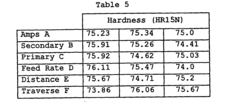
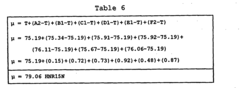
- A thermally sprayed coating composed of an Al-Cu-Fe alloy with a specific weight percentage of Cu, Fe, Cr, Co, Ni, Mo, and W, containing at least 50% ψ phase, is developed to achieve high hardness, density, and surface smoothness, utilizing rapid thermal spraying to avoid detrimental δ phase formation and optimize phase equilibria through controlled cooling rates and plasma spraying parameters.
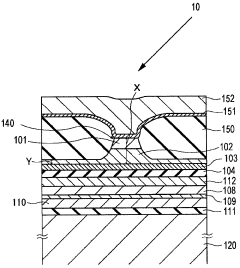
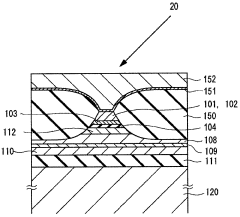
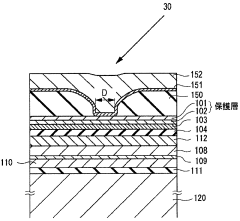
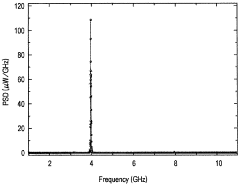
- The oscillation element incorporates a magnetization free layer and a fixed layer with a tunnel barrier layer and a protective layer, where the interface area between the magnetization free layer and the tunnel barrier layer is larger than the point contact area, and the protective layer's thickness varies to minimize lateral current flow, ensuring a high Q value and oscillation output.
EMI Standards and Regulations
Electromagnetic Interference (EMI) standards and regulations play a crucial role in ensuring the compatibility and safety of electronic devices in various environments. These standards are established by international organizations and national regulatory bodies to set limits on electromagnetic emissions and susceptibility levels for different types of equipment.
The International Electrotechnical Commission (IEC) is a key player in developing global EMI standards. Their CISPR (Comité International Spécial des Perturbations Radioélectriques) series of standards are widely adopted and form the basis for many national regulations. CISPR 11, for instance, focuses on industrial, scientific, and medical equipment, while CISPR 22 addresses information technology equipment.
In the United States, the Federal Communications Commission (FCC) enforces EMI regulations. Part 15 of the FCC rules sets limits for unintentional radiators, such as digital devices, and intentional radiators like wireless transmitters. These regulations are mandatory for products sold in the US market and require compliance testing and certification.
The European Union has its own set of EMI standards under the Electromagnetic Compatibility (EMC) Directive. This directive mandates that all electronic equipment sold in the EU must meet specific EMI requirements. The harmonized standards, such as EN 55022 for emissions and EN 55024 for immunity, provide presumption of conformity with the EMC Directive.
Military and aerospace applications often require more stringent EMI standards. The MIL-STD-461 in the United States and DEF STAN 59-411 in the UK are examples of military EMI standards that address the unique electromagnetic environments encountered in defense systems.
As technology advances, EMI standards continue to evolve. The increasing use of wireless communications and higher-frequency electronic systems has led to the development of new standards and the revision of existing ones. For instance, the emergence of 5G technology has prompted updates to EMI regulations to address potential interference issues in higher frequency bands.
Compliance with EMI standards and regulations is not only a legal requirement but also a critical factor in product design and development. Manufacturers must consider these standards from the early stages of product conception to ensure their devices can pass EMI testing and certification processes. This often involves implementing various EMI reduction techniques, including shielding, filtering, and proper circuit design.
The role of quasicrystals in EMI reduction must be evaluated within the context of these standards and regulations. Any potential application of quasicrystal-based EMI shielding or absorption materials would need to demonstrate compliance with the relevant EMI standards for the intended product category and market. This includes meeting both emission and immunity requirements across the specified frequency ranges.
Quasicrystal Manufacturing Challenges
The manufacturing of quasicrystals presents several significant challenges that have hindered their widespread application in electromagnetic interference (EMI) reduction. One of the primary difficulties lies in the precise control of atomic arrangements during the formation process. Unlike conventional crystals with periodic structures, quasicrystals exhibit long-range order without periodicity, making their synthesis highly complex and sensitive to processing conditions.
The production of high-quality quasicrystalline materials often requires rapid solidification techniques, such as melt spinning or gas atomization. These methods demand precise control over cooling rates and composition, as even slight deviations can lead to the formation of unwanted crystalline phases or defects. The narrow compositional range in which quasicrystals form further complicates the manufacturing process, necessitating stringent control over raw material purity and stoichiometry.
Another significant challenge is the scalability of quasicrystal production. While laboratory-scale synthesis has been successful, scaling up to industrial quantities while maintaining consistent quality and properties remains a formidable task. This is particularly crucial for EMI reduction applications, where large surface areas or volumes of quasicrystalline materials may be required for effective shielding.
The inherent brittleness of many quasicrystalline materials poses challenges in their processing and integration into practical EMI reduction solutions. Conventional forming and shaping techniques often prove inadequate, necessitating the development of specialized processing methods. This limitation has led researchers to explore composite materials that incorporate quasicrystalline particles or coatings, balancing the unique electromagnetic properties of quasicrystals with improved mechanical characteristics.
Surface engineering of quasicrystals for optimal EMI reduction performance introduces additional manufacturing complexities. Achieving the desired surface roughness, porosity, or specific orientations of quasicrystalline domains requires advanced processing techniques and careful control of surface treatments. These factors significantly influence the interaction between electromagnetic waves and the quasicrystalline material, directly impacting its effectiveness in EMI reduction.
The characterization and quality control of quasicrystalline materials present further challenges in the manufacturing process. Traditional crystallographic techniques are often insufficient for analyzing the complex structures of quasicrystals, necessitating advanced analytical methods such as high-resolution transmission electron microscopy (HRTEM) and sophisticated diffraction analysis. Ensuring consistent EMI reduction properties across batches requires the development of reliable and efficient quality control protocols tailored to the unique nature of quasicrystalline materials.