Reciprocating Compressors in HVAC: Performance Comparison
MAR 20, 20269 MIN READ
Generate Your Research Report Instantly with AI Agent
Patsnap Eureka helps you evaluate technical feasibility & market potential.
HVAC Reciprocating Compressor Technology Background and Objectives
Reciprocating compressors have served as the cornerstone of HVAC systems for over a century, evolving from simple mechanical devices to sophisticated, electronically controlled units. These positive displacement machines operate through the fundamental principle of reducing gas volume to increase pressure, utilizing pistons moving within cylinders to compress refrigerant. The technology emerged in the early 1900s alongside the development of mechanical refrigeration systems and has continuously adapted to meet changing efficiency standards, environmental regulations, and performance requirements.
The historical development of reciprocating compressor technology reflects broader trends in HVAC evolution. Early systems prioritized basic cooling functionality, while modern iterations focus on energy efficiency, environmental sustainability, and precise temperature control. The transition from natural refrigerants to synthetic alternatives, and subsequently toward low-global-warming-potential refrigerants, has driven significant technological advancement in compressor design and materials engineering.
Contemporary HVAC applications demand reciprocating compressors that deliver superior performance across multiple metrics. Energy efficiency remains paramount, with regulatory frameworks like SEER ratings and Energy Star certifications establishing minimum performance thresholds. The technology must accommodate variable load conditions, maintain consistent operation across diverse ambient temperatures, and integrate seamlessly with smart building management systems.
Performance comparison objectives encompass several critical dimensions. Coefficient of Performance optimization seeks to maximize cooling output relative to electrical input, directly impacting operational costs and environmental footprint. Reliability metrics focus on mean time between failures, maintenance intervals, and component longevity under varying operational stresses. Noise reduction targets address acoustic comfort requirements in residential and commercial environments.
Advanced reciprocating compressor development aims to achieve variable capacity operation through innovative mechanisms such as digital scroll technology, cylinder unloading systems, and variable speed drives. These technologies enable precise capacity modulation, reducing energy consumption during partial load conditions while maintaining optimal system performance.
Environmental compliance objectives drive research toward refrigerants with minimal ozone depletion potential and reduced global warming impact. This transition necessitates compressor redesign to accommodate different thermodynamic properties, pressure ratios, and material compatibility requirements. The technology roadmap emphasizes developing compressors capable of operating efficiently with natural refrigerants like CO2 and ammonia, as well as next-generation synthetic alternatives.
Integration capabilities represent another crucial objective, as modern HVAC systems require compressors that communicate effectively with building automation systems, provide real-time performance data, and support predictive maintenance protocols. This connectivity enables optimized system operation and reduces total cost of ownership through proactive maintenance scheduling.
The historical development of reciprocating compressor technology reflects broader trends in HVAC evolution. Early systems prioritized basic cooling functionality, while modern iterations focus on energy efficiency, environmental sustainability, and precise temperature control. The transition from natural refrigerants to synthetic alternatives, and subsequently toward low-global-warming-potential refrigerants, has driven significant technological advancement in compressor design and materials engineering.
Contemporary HVAC applications demand reciprocating compressors that deliver superior performance across multiple metrics. Energy efficiency remains paramount, with regulatory frameworks like SEER ratings and Energy Star certifications establishing minimum performance thresholds. The technology must accommodate variable load conditions, maintain consistent operation across diverse ambient temperatures, and integrate seamlessly with smart building management systems.
Performance comparison objectives encompass several critical dimensions. Coefficient of Performance optimization seeks to maximize cooling output relative to electrical input, directly impacting operational costs and environmental footprint. Reliability metrics focus on mean time between failures, maintenance intervals, and component longevity under varying operational stresses. Noise reduction targets address acoustic comfort requirements in residential and commercial environments.
Advanced reciprocating compressor development aims to achieve variable capacity operation through innovative mechanisms such as digital scroll technology, cylinder unloading systems, and variable speed drives. These technologies enable precise capacity modulation, reducing energy consumption during partial load conditions while maintaining optimal system performance.
Environmental compliance objectives drive research toward refrigerants with minimal ozone depletion potential and reduced global warming impact. This transition necessitates compressor redesign to accommodate different thermodynamic properties, pressure ratios, and material compatibility requirements. The technology roadmap emphasizes developing compressors capable of operating efficiently with natural refrigerants like CO2 and ammonia, as well as next-generation synthetic alternatives.
Integration capabilities represent another crucial objective, as modern HVAC systems require compressors that communicate effectively with building automation systems, provide real-time performance data, and support predictive maintenance protocols. This connectivity enables optimized system operation and reduces total cost of ownership through proactive maintenance scheduling.
Market Demand Analysis for HVAC Compressor Performance
The global HVAC market continues to experience robust growth driven by increasing urbanization, rising living standards, and stringent energy efficiency regulations. Commercial and residential construction activities worldwide are creating substantial demand for reliable and efficient cooling systems, with reciprocating compressors serving as critical components in numerous HVAC applications.
Energy efficiency has emerged as the primary driver of market demand for high-performance HVAC compressors. Government regulations such as SEER standards in North America and similar efficiency mandates in Europe and Asia are pushing manufacturers to develop compressors that deliver superior performance while minimizing energy consumption. This regulatory environment creates significant market opportunities for advanced reciprocating compressor technologies that can meet or exceed these stringent requirements.
The commercial HVAC sector represents a particularly lucrative market segment for reciprocating compressors, especially in medium-capacity applications ranging from small office buildings to retail establishments. These applications demand compressors that can provide consistent performance across varying load conditions while maintaining operational reliability. The ability to modulate capacity effectively and handle diverse refrigerants positions reciprocating compressors favorably in this growing market segment.
Residential air conditioning markets in emerging economies are experiencing unprecedented growth, creating substantial demand for cost-effective yet efficient compressor solutions. Countries across Southeast Asia, Latin America, and parts of Africa are witnessing rapid adoption of air conditioning systems, driving demand for reciprocating compressors that balance performance with affordability. This market segment particularly values compressors that demonstrate durability under challenging operating conditions.
The refrigeration industry continues to represent a stable demand source for reciprocating compressors, particularly in commercial refrigeration applications such as supermarkets, cold storage facilities, and food processing operations. These applications require compressors capable of maintaining precise temperature control while operating continuously under demanding conditions.
Market demand is increasingly influenced by environmental considerations, with customers seeking compressors compatible with low-GWP refrigerants and those demonstrating reduced environmental impact throughout their operational lifecycle. This trend is creating opportunities for reciprocating compressor manufacturers who can demonstrate superior performance with next-generation refrigerants while maintaining system efficiency and reliability standards.
Energy efficiency has emerged as the primary driver of market demand for high-performance HVAC compressors. Government regulations such as SEER standards in North America and similar efficiency mandates in Europe and Asia are pushing manufacturers to develop compressors that deliver superior performance while minimizing energy consumption. This regulatory environment creates significant market opportunities for advanced reciprocating compressor technologies that can meet or exceed these stringent requirements.
The commercial HVAC sector represents a particularly lucrative market segment for reciprocating compressors, especially in medium-capacity applications ranging from small office buildings to retail establishments. These applications demand compressors that can provide consistent performance across varying load conditions while maintaining operational reliability. The ability to modulate capacity effectively and handle diverse refrigerants positions reciprocating compressors favorably in this growing market segment.
Residential air conditioning markets in emerging economies are experiencing unprecedented growth, creating substantial demand for cost-effective yet efficient compressor solutions. Countries across Southeast Asia, Latin America, and parts of Africa are witnessing rapid adoption of air conditioning systems, driving demand for reciprocating compressors that balance performance with affordability. This market segment particularly values compressors that demonstrate durability under challenging operating conditions.
The refrigeration industry continues to represent a stable demand source for reciprocating compressors, particularly in commercial refrigeration applications such as supermarkets, cold storage facilities, and food processing operations. These applications require compressors capable of maintaining precise temperature control while operating continuously under demanding conditions.
Market demand is increasingly influenced by environmental considerations, with customers seeking compressors compatible with low-GWP refrigerants and those demonstrating reduced environmental impact throughout their operational lifecycle. This trend is creating opportunities for reciprocating compressor manufacturers who can demonstrate superior performance with next-generation refrigerants while maintaining system efficiency and reliability standards.
Current Status and Challenges in Reciprocating Compressor Tech
Reciprocating compressors currently dominate the residential and light commercial HVAC market, accounting for approximately 70% of all compressor installations globally. These positive displacement machines operate through piston-cylinder mechanisms that compress refrigerant vapor through mechanical motion. Modern reciprocating compressors typically achieve energy efficiency ratios (EER) ranging from 10 to 14 BTU/Wh, with seasonal energy efficiency ratios (SEER) reaching up to 21 in premium residential units.
The technology has evolved significantly from single-stage fixed-speed designs to sophisticated variable-speed systems with multiple compression stages. Contemporary reciprocating compressors incorporate advanced materials such as aluminum alloy pistons, synthetic lubricants, and precision-engineered valve systems that enhance durability and performance. Digital scroll technology and inverter-driven motors have further improved operational efficiency and reduced noise levels to below 55 decibels in many applications.
Despite technological advances, reciprocating compressors face substantial performance limitations that constrain their market expansion. Mechanical wear remains a critical issue, with piston rings, connecting rods, and crankshafts experiencing degradation over operational cycles, typically requiring major maintenance after 15,000 to 20,000 operating hours. The inherent pulsating discharge creates vibration and noise challenges that necessitate complex dampening systems, increasing manufacturing costs and system complexity.
Energy efficiency represents another significant challenge, particularly under varying load conditions. Traditional reciprocating compressors demonstrate poor part-load performance, with efficiency dropping by 20-30% when operating below 50% capacity. This limitation becomes increasingly problematic as building automation systems demand more precise temperature control and energy optimization.
Refrigerant compatibility issues have emerged as environmental regulations phase out high global warming potential refrigerants. Many existing reciprocating compressor designs require substantial modifications to accommodate next-generation refrigerants like R-32 and R-454B, which operate at different pressure ratios and exhibit varying thermodynamic properties.
The geographic distribution of reciprocating compressor technology shows concentrated development in North America, Europe, and East Asia, with leading manufacturers investing heavily in research facilities focused on addressing these fundamental challenges through advanced materials science and precision manufacturing techniques.
The technology has evolved significantly from single-stage fixed-speed designs to sophisticated variable-speed systems with multiple compression stages. Contemporary reciprocating compressors incorporate advanced materials such as aluminum alloy pistons, synthetic lubricants, and precision-engineered valve systems that enhance durability and performance. Digital scroll technology and inverter-driven motors have further improved operational efficiency and reduced noise levels to below 55 decibels in many applications.
Despite technological advances, reciprocating compressors face substantial performance limitations that constrain their market expansion. Mechanical wear remains a critical issue, with piston rings, connecting rods, and crankshafts experiencing degradation over operational cycles, typically requiring major maintenance after 15,000 to 20,000 operating hours. The inherent pulsating discharge creates vibration and noise challenges that necessitate complex dampening systems, increasing manufacturing costs and system complexity.
Energy efficiency represents another significant challenge, particularly under varying load conditions. Traditional reciprocating compressors demonstrate poor part-load performance, with efficiency dropping by 20-30% when operating below 50% capacity. This limitation becomes increasingly problematic as building automation systems demand more precise temperature control and energy optimization.
Refrigerant compatibility issues have emerged as environmental regulations phase out high global warming potential refrigerants. Many existing reciprocating compressor designs require substantial modifications to accommodate next-generation refrigerants like R-32 and R-454B, which operate at different pressure ratios and exhibit varying thermodynamic properties.
The geographic distribution of reciprocating compressor technology shows concentrated development in North America, Europe, and East Asia, with leading manufacturers investing heavily in research facilities focused on addressing these fundamental challenges through advanced materials science and precision manufacturing techniques.
Current Technical Solutions for Compressor Performance
01 Valve system optimization for performance enhancement
Improvements in valve design and configuration can significantly enhance reciprocating compressor performance. This includes optimized valve plate designs, improved sealing mechanisms, and advanced valve materials that reduce pressure losses and increase volumetric efficiency. Enhanced valve systems minimize flow restrictions and reduce energy consumption while extending component lifespan through reduced wear and fatigue.- Valve system optimization for performance enhancement: Improvements in valve design and configuration can significantly enhance reciprocating compressor performance. This includes optimizing valve plate geometry, spring characteristics, and valve timing to reduce pressure losses and improve volumetric efficiency. Advanced valve systems with reduced dead volume and improved sealing capabilities contribute to better compression efficiency and reduced energy consumption.
- Piston and cylinder design improvements: Enhanced piston and cylinder configurations play a crucial role in improving compressor performance. This includes optimized piston ring designs, improved cylinder bore finishes, and advanced materials that reduce friction and wear. Innovations in piston geometry and clearance volume optimization help achieve higher compression ratios and better thermal management, leading to improved overall efficiency.
- Lubrication system enhancements: Advanced lubrication systems are essential for maintaining optimal performance in reciprocating compressors. Improved oil distribution mechanisms, enhanced filtration systems, and optimized lubricant delivery to critical components reduce friction and wear. These systems help maintain consistent performance over extended operating periods while minimizing maintenance requirements and extending component life.
- Capacity control and variable speed operation: Implementation of capacity control mechanisms and variable speed drive systems enables reciprocating compressors to operate efficiently across varying load conditions. These systems allow for precise matching of compressor output to demand, reducing energy consumption during partial load operation. Technologies include cylinder unloading mechanisms, clearance pocket controls, and frequency converter integration for optimal performance modulation.
- Vibration reduction and noise control: Advanced vibration damping and noise reduction technologies improve compressor performance and reliability. This includes optimized foundation designs, balanced reciprocating components, and acoustic enclosures. Vibration isolation systems and dynamic balancing techniques minimize mechanical stress on components, reduce noise emissions, and enhance operational stability, contributing to longer service life and improved working conditions.
02 Piston and cylinder assembly improvements
Advanced piston and cylinder designs contribute to improved compressor performance through enhanced sealing, reduced friction, and optimized clearance volumes. Innovations include specialized piston ring configurations, improved cylinder liner materials, and precision-machined surfaces that minimize gas leakage and mechanical losses. These improvements result in higher compression efficiency and reduced maintenance requirements.Expand Specific Solutions03 Lubrication system enhancements
Optimized lubrication systems play a crucial role in maintaining reciprocating compressor performance by reducing friction, preventing wear, and ensuring proper sealing. Advanced lubrication methods include forced-feed systems, oil injection techniques, and specialized lubricant formulations designed for specific operating conditions. Effective lubrication extends component life and maintains efficiency over extended operating periods.Expand Specific Solutions04 Capacity control and variable speed operation
Performance optimization through capacity control mechanisms allows reciprocating compressors to operate efficiently across varying load conditions. This includes variable speed drives, cylinder unloading systems, and clearance pocket controls that adjust compression capacity to match demand. These technologies improve part-load efficiency, reduce energy consumption, and provide flexible operation while maintaining optimal performance characteristics.Expand Specific Solutions05 Monitoring and diagnostic systems
Advanced monitoring and diagnostic technologies enable real-time performance assessment and predictive maintenance of reciprocating compressors. These systems utilize sensors, data acquisition methods, and analytical algorithms to track operating parameters, detect anomalies, and optimize performance. Implementation of such systems reduces unplanned downtime, improves reliability, and ensures sustained operational efficiency through condition-based maintenance strategies.Expand Specific Solutions
Major Players in HVAC Reciprocating Compressor Market
The reciprocating compressor HVAC market represents a mature yet evolving industry experiencing steady growth driven by increasing global demand for energy-efficient cooling solutions. The market demonstrates significant scale with established players spanning multiple regions, indicating robust commercial viability. Technology maturity varies considerably across market participants, with industry leaders like LG Electronics, Copeland LP, and Carrier Japan Corp. showcasing advanced compression technologies and smart control systems, while specialized manufacturers such as Officine Mario Dorin SpA and Sanden Corp. focus on niche applications including commercial refrigeration and automotive systems. Emerging players like Gree Green Refrigeration Technology Center and Anhui Mezhi Precision Manufacturing represent the growing Asian manufacturing capabilities, while research institutions like Industrial Technology Research Institute drive innovation in next-generation compressor designs. The competitive landscape reflects a transition toward digitalization and sustainability, with established companies investing heavily in IoT integration and environmentally-friendly refrigerants to maintain market leadership.
LG Electronics, Inc.
Technical Solution: LG Electronics implements dual rotary and reciprocating compressor technologies in their HVAC systems, focusing on inverter-driven variable speed control for enhanced performance optimization. Their reciprocating compressors feature advanced scroll wrap geometry and vapor injection technology that improves heating capacity by up to 15% in low ambient conditions. The company's DUAL Inverter technology allows compressors to operate at frequencies ranging from 10Hz to 120Hz, providing precise temperature control while reducing energy consumption by approximately 30% compared to fixed-speed alternatives. LG's compressors incorporate noise reduction technologies including sound dampening chambers and vibration isolation systems, achieving operational noise levels below 19dB in residential applications.
Strengths: Strong inverter technology integration, excellent noise reduction capabilities, competitive pricing in consumer markets. Weaknesses: Limited presence in large commercial HVAC applications, dependency on electronic components increasing complexity.
Robert Bosch GmbH
Technical Solution: Robert Bosch GmbH develops reciprocating compressor solutions primarily for automotive HVAC applications, featuring lightweight aluminum construction and variable displacement technology. Their compressors utilize swash plate mechanisms with electronic control valves that enable displacement variation from 5% to 100% based on cooling demand, improving fuel efficiency by up to 10% in automotive applications. Bosch's reciprocating compressors incorporate advanced sealing technologies and low-friction coatings that extend operational life beyond 200,000 cycles while maintaining consistent performance. The company's systems feature integrated thermal management with coolant circulation systems and smart clutch engagement mechanisms that optimize compressor operation based on engine load conditions and cabin temperature requirements.
Strengths: Excellent automotive integration capabilities, superior lightweight design, advanced variable displacement technology. Weaknesses: Limited applicability outside automotive sector, higher complexity requiring specialized automotive service expertise.
Key Innovations in Reciprocating Compressor Design
Apparatus and method for controlling operation of reciprocating compressor
PatentInactiveUS20060251523A1
Innovation
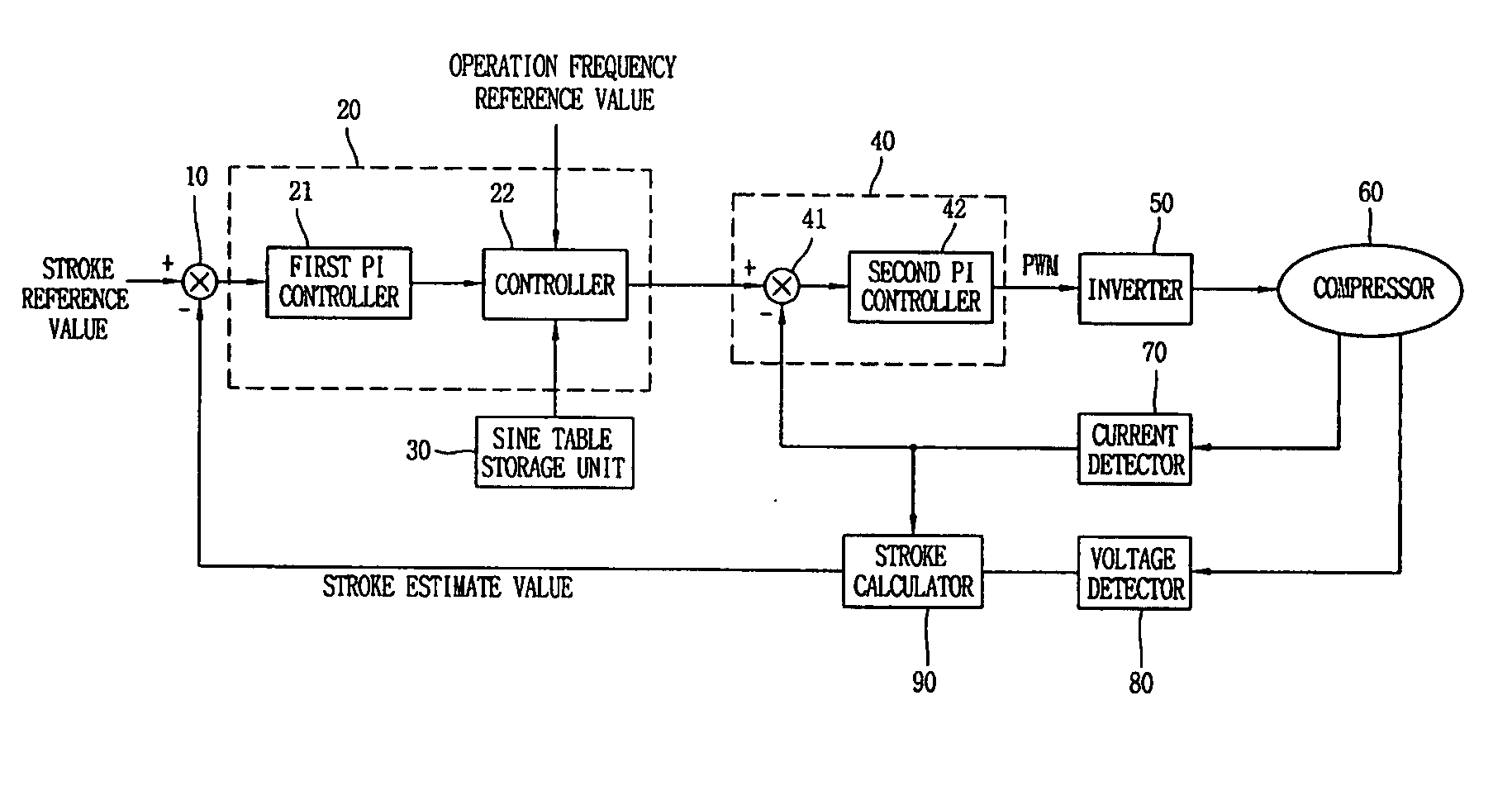
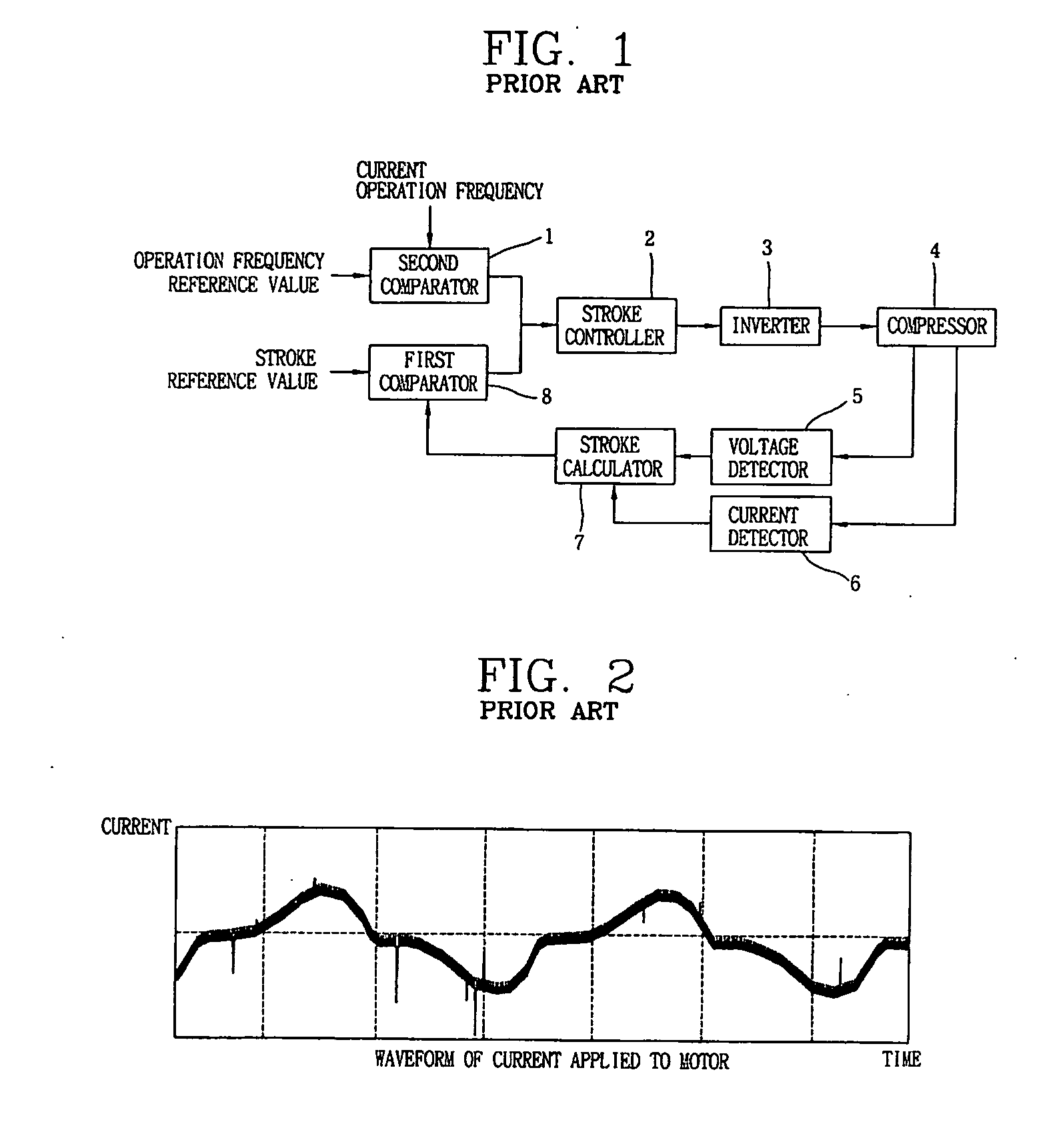
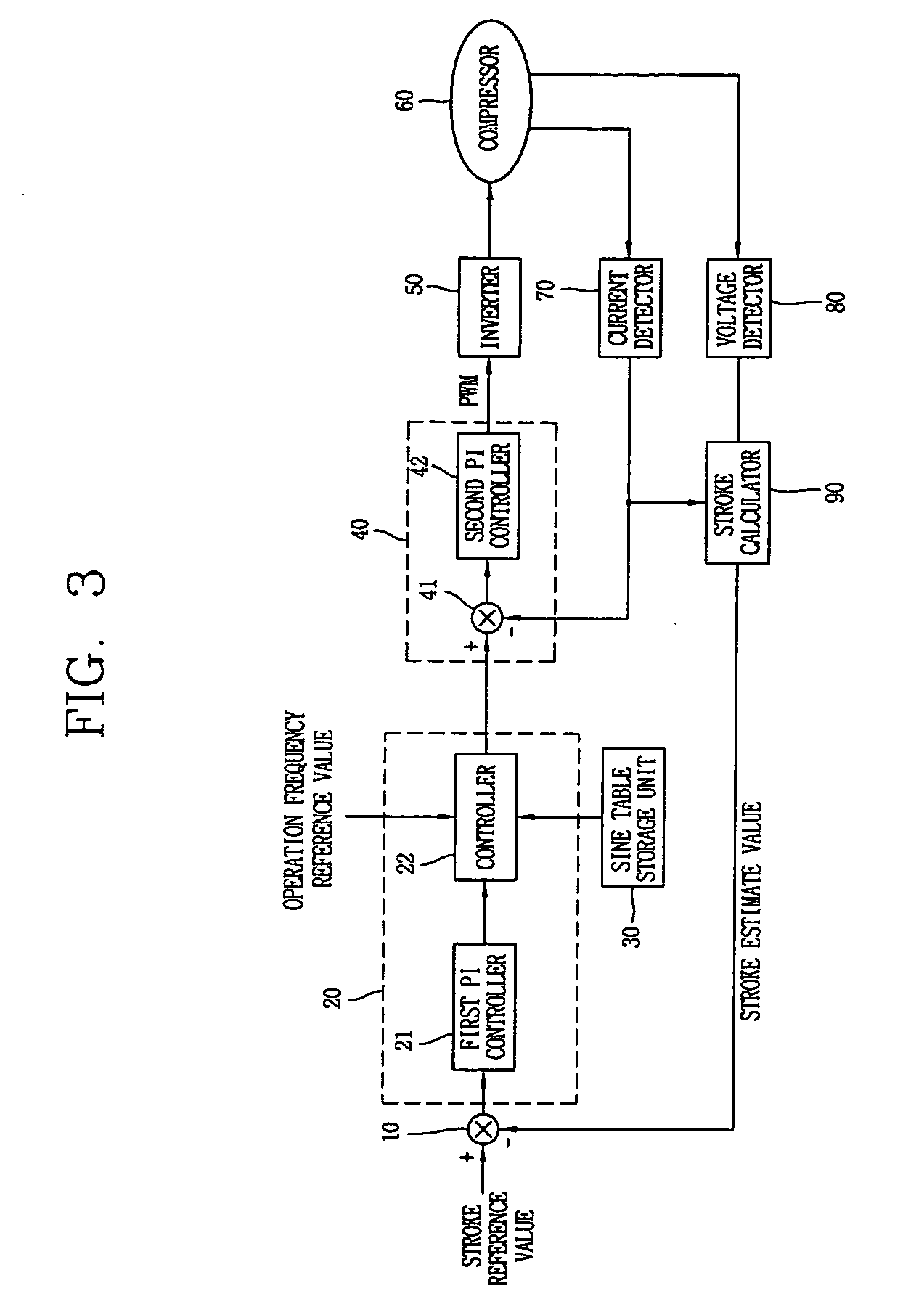
- An apparatus and method that generate a current amplitude value to compensate for differences between stroke reference and estimate values, outputting this value in a sine wave form to prevent distortion, using a current amplitude value generator, PI controllers, and an inverter for pulse width modulation to synchronize the current waveform with the operation frequency.

Compressor and crankshaft-connecting rod assembly
PatentInactiveIN3882MUM2015A
Innovation
- Incorporating an insert with high lubricity, such as a polymeric material or unleaded bearing alloy, into the recess of the bushing contacting the crankshaft, providing initial lubrication and reducing wear at high-loading areas, thus preventing immediate binding or seizure.
Energy Efficiency Standards and HVAC Regulations
Energy efficiency standards and HVAC regulations form the regulatory backbone that drives innovation and performance improvements in reciprocating compressor technology. The landscape is dominated by several key frameworks that establish minimum efficiency requirements and operational parameters for HVAC systems incorporating reciprocating compressors.
The Energy Star program sets voluntary efficiency standards that significantly exceed federal minimum requirements, with reciprocating compressor-based systems needing to achieve Seasonal Energy Efficiency Ratio (SEER) ratings of at least 15.0 for central air conditioners and Energy Efficiency Ratio (EER) ratings above 12.0. These standards directly influence compressor design parameters, forcing manufacturers to optimize compression ratios, reduce friction losses, and improve heat transfer characteristics.
Federal regulations under the Department of Energy establish mandatory minimum efficiency standards through the Code of Federal Regulations Title 10, Part 430. These regulations specify testing procedures using standardized conditions that reciprocating compressors must meet, including performance at various ambient temperatures and humidity levels. The standards are periodically updated, with recent revisions requiring efficiency improvements of 10-15% over previous generations.
International standards such as ISO 13253 and AHRI 540 provide testing methodologies and performance classification systems specifically for positive displacement compressors, including reciprocating types. These standards ensure consistent performance evaluation across different manufacturers and enable meaningful comparison of compressor efficiency metrics.
Regional regulations add additional complexity, with California's Title 24 energy code imposing stricter requirements than federal standards, mandating higher SEER ratings and specific refrigerant management protocols. European Union regulations under the F-Gas Regulation influence refrigerant selection for reciprocating compressors, driving adoption of lower Global Warming Potential refrigerants that may affect compressor performance characteristics.
Emerging regulations focus on lifecycle efficiency assessments and smart grid integration capabilities, requiring reciprocating compressor systems to demonstrate demand response functionality and real-time efficiency monitoring. These evolving standards are reshaping compressor control systems and necessitating integration of advanced sensors and communication protocols.
The Energy Star program sets voluntary efficiency standards that significantly exceed federal minimum requirements, with reciprocating compressor-based systems needing to achieve Seasonal Energy Efficiency Ratio (SEER) ratings of at least 15.0 for central air conditioners and Energy Efficiency Ratio (EER) ratings above 12.0. These standards directly influence compressor design parameters, forcing manufacturers to optimize compression ratios, reduce friction losses, and improve heat transfer characteristics.
Federal regulations under the Department of Energy establish mandatory minimum efficiency standards through the Code of Federal Regulations Title 10, Part 430. These regulations specify testing procedures using standardized conditions that reciprocating compressors must meet, including performance at various ambient temperatures and humidity levels. The standards are periodically updated, with recent revisions requiring efficiency improvements of 10-15% over previous generations.
International standards such as ISO 13253 and AHRI 540 provide testing methodologies and performance classification systems specifically for positive displacement compressors, including reciprocating types. These standards ensure consistent performance evaluation across different manufacturers and enable meaningful comparison of compressor efficiency metrics.
Regional regulations add additional complexity, with California's Title 24 energy code imposing stricter requirements than federal standards, mandating higher SEER ratings and specific refrigerant management protocols. European Union regulations under the F-Gas Regulation influence refrigerant selection for reciprocating compressors, driving adoption of lower Global Warming Potential refrigerants that may affect compressor performance characteristics.
Emerging regulations focus on lifecycle efficiency assessments and smart grid integration capabilities, requiring reciprocating compressor systems to demonstrate demand response functionality and real-time efficiency monitoring. These evolving standards are reshaping compressor control systems and necessitating integration of advanced sensors and communication protocols.
Environmental Impact Assessment of Refrigerant Systems
The environmental impact assessment of refrigerant systems in reciprocating compressors represents a critical evaluation framework that encompasses multiple ecological dimensions. These systems directly influence atmospheric conditions through refrigerant emissions, energy consumption patterns, and lifecycle environmental costs. The assessment methodology must consider both direct and indirect environmental effects, including global warming potential, ozone depletion potential, and overall carbon footprint throughout the operational lifecycle.
Refrigerant selection constitutes the primary environmental consideration in reciprocating compressor systems. Traditional refrigerants such as R-22 and R-134a have demonstrated significant global warming potentials, with GWP values ranging from 1,430 to 4,750. Modern alternatives including R-410A, R-32, and natural refrigerants like ammonia and carbon dioxide present varying environmental profiles. R-32 exhibits a GWP of 675, representing a substantial improvement over conventional options, while natural refrigerants approach near-zero direct warming potential.
Energy efficiency directly correlates with environmental impact through reduced power consumption and associated emissions from electricity generation. Reciprocating compressors operating with environmentally preferred refrigerants often require system modifications that can affect overall efficiency. The trade-off between refrigerant environmental impact and system energy performance necessitates comprehensive lifecycle analysis to determine optimal environmental outcomes.
Leakage rates significantly influence the environmental assessment of refrigerant systems. Reciprocating compressors typically experience annual leakage rates between 5-15% depending on system design, maintenance practices, and operating conditions. Higher leakage rates amplify the direct environmental impact of high-GWP refrigerants, making leak prevention and detection critical components of environmental impact mitigation strategies.
End-of-life refrigerant management presents substantial environmental implications for reciprocating compressor systems. Proper refrigerant recovery, recycling, and disposal protocols can prevent atmospheric emissions equivalent to thousands of tons of CO2. The environmental assessment must incorporate projected system lifespan, refrigerant charge quantities, and regional disposal infrastructure capabilities to accurately quantify long-term environmental impacts and establish appropriate mitigation measures.
Refrigerant selection constitutes the primary environmental consideration in reciprocating compressor systems. Traditional refrigerants such as R-22 and R-134a have demonstrated significant global warming potentials, with GWP values ranging from 1,430 to 4,750. Modern alternatives including R-410A, R-32, and natural refrigerants like ammonia and carbon dioxide present varying environmental profiles. R-32 exhibits a GWP of 675, representing a substantial improvement over conventional options, while natural refrigerants approach near-zero direct warming potential.
Energy efficiency directly correlates with environmental impact through reduced power consumption and associated emissions from electricity generation. Reciprocating compressors operating with environmentally preferred refrigerants often require system modifications that can affect overall efficiency. The trade-off between refrigerant environmental impact and system energy performance necessitates comprehensive lifecycle analysis to determine optimal environmental outcomes.
Leakage rates significantly influence the environmental assessment of refrigerant systems. Reciprocating compressors typically experience annual leakage rates between 5-15% depending on system design, maintenance practices, and operating conditions. Higher leakage rates amplify the direct environmental impact of high-GWP refrigerants, making leak prevention and detection critical components of environmental impact mitigation strategies.
End-of-life refrigerant management presents substantial environmental implications for reciprocating compressor systems. Proper refrigerant recovery, recycling, and disposal protocols can prevent atmospheric emissions equivalent to thousands of tons of CO2. The environmental assessment must incorporate projected system lifespan, refrigerant charge quantities, and regional disposal infrastructure capabilities to accurately quantify long-term environmental impacts and establish appropriate mitigation measures.
Unlock deeper insights with Patsnap Eureka Quick Research — get a full tech report to explore trends and direct your research. Try now!
Generate Your Research Report Instantly with AI Agent
Supercharge your innovation with Patsnap Eureka AI Agent Platform!