

Reduce Optical Backplane Deployment Costs While Maintaining Performance
MAY 20, 20269 MIN READ
Generate Your Research Report Instantly with AI Agent
PatSnap Eureka helps you evaluate technical feasibility & market potential.
Optical Backplane Cost Reduction Background and Objectives
Optical backplanes have emerged as critical infrastructure components in high-performance computing systems, data centers, and telecommunications networks over the past two decades. The evolution from traditional electrical backplanes to optical solutions was driven by the fundamental limitations of copper-based interconnects, including signal degradation, electromagnetic interference, and power consumption constraints at high data rates. Early optical backplane implementations in the 2000s demonstrated superior bandwidth capabilities and reduced latency, establishing the foundation for modern high-speed data transmission architectures.
The technological progression of optical backplanes has been marked by significant milestones in photonic integration, connector miniaturization, and manufacturing process optimization. Initial deployments faced substantial cost barriers due to expensive optical components, complex assembly processes, and limited manufacturing scale. However, advancing silicon photonics technology, improved fiber optic manufacturing techniques, and standardization efforts have gradually reduced component costs while enhancing performance metrics.
Current market dynamics reveal a growing tension between performance requirements and deployment economics. Enterprise customers demand increasingly higher bandwidth capabilities to support artificial intelligence workloads, cloud computing expansion, and 5G network infrastructure. Simultaneously, competitive pressures necessitate cost-effective solutions that maintain reliability and scalability. This economic pressure has intensified as optical backplane adoption expands beyond premium applications into mainstream computing environments.
The primary objective of cost reduction initiatives focuses on achieving optimal price-performance ratios without compromising system reliability or future scalability. Key targets include reducing manufacturing complexity, minimizing component count, improving yield rates, and leveraging economies of scale in production processes. Performance maintenance objectives encompass preserving signal integrity, maintaining low bit error rates, ensuring thermal stability, and supporting modular expansion capabilities.
Strategic cost reduction efforts aim to democratize optical backplane technology access across broader market segments while establishing sustainable competitive advantages. The ultimate goal involves creating deployment models that deliver superior total cost of ownership compared to alternative interconnect solutions, thereby accelerating market adoption and driving industry-wide transformation toward optical networking infrastructure.
The technological progression of optical backplanes has been marked by significant milestones in photonic integration, connector miniaturization, and manufacturing process optimization. Initial deployments faced substantial cost barriers due to expensive optical components, complex assembly processes, and limited manufacturing scale. However, advancing silicon photonics technology, improved fiber optic manufacturing techniques, and standardization efforts have gradually reduced component costs while enhancing performance metrics.
Current market dynamics reveal a growing tension between performance requirements and deployment economics. Enterprise customers demand increasingly higher bandwidth capabilities to support artificial intelligence workloads, cloud computing expansion, and 5G network infrastructure. Simultaneously, competitive pressures necessitate cost-effective solutions that maintain reliability and scalability. This economic pressure has intensified as optical backplane adoption expands beyond premium applications into mainstream computing environments.
The primary objective of cost reduction initiatives focuses on achieving optimal price-performance ratios without compromising system reliability or future scalability. Key targets include reducing manufacturing complexity, minimizing component count, improving yield rates, and leveraging economies of scale in production processes. Performance maintenance objectives encompass preserving signal integrity, maintaining low bit error rates, ensuring thermal stability, and supporting modular expansion capabilities.
Strategic cost reduction efforts aim to democratize optical backplane technology access across broader market segments while establishing sustainable competitive advantages. The ultimate goal involves creating deployment models that deliver superior total cost of ownership compared to alternative interconnect solutions, thereby accelerating market adoption and driving industry-wide transformation toward optical networking infrastructure.
Market Demand for Cost-Effective Optical Backplane Solutions
The global optical backplane market is experiencing unprecedented growth driven by the exponential increase in data traffic and the proliferation of high-performance computing applications. Data centers worldwide are facing mounting pressure to enhance bandwidth capacity while simultaneously reducing operational expenditures, creating a substantial demand for cost-effective optical backplane solutions that do not compromise performance standards.
Enterprise customers across telecommunications, cloud computing, and high-frequency trading sectors are actively seeking optical backplane technologies that can deliver superior performance metrics at competitive price points. The traditional copper-based backplane systems are increasingly inadequate for meeting the bandwidth requirements of modern applications, particularly those demanding multi-terabit data transmission capabilities. This technological gap has created a significant market opportunity for innovative optical solutions that can bridge performance needs with budget constraints.
The hyperscale data center segment represents the largest demand driver, with operators requiring scalable optical backplane architectures that can support rapid capacity expansion without proportional increases in deployment costs. These facilities prioritize solutions offering high port density, low power consumption, and simplified installation procedures to minimize total cost of ownership. The growing adoption of artificial intelligence and machine learning workloads further amplifies the need for high-bandwidth, low-latency interconnect solutions.
Financial services organizations, particularly those engaged in algorithmic trading, constitute another critical market segment demanding cost-effective optical backplanes. These applications require ultra-low latency performance while operating under strict budget parameters, driving demand for optimized solutions that eliminate unnecessary features while maintaining essential performance characteristics.
The telecommunications infrastructure modernization wave, particularly the deployment of fifth-generation networks, is generating substantial demand for optical backplane solutions in base station and core network equipment. Service providers are seeking technologies that enable rapid network upgrades without extensive infrastructure overhauls, emphasizing solutions that offer backward compatibility and incremental deployment capabilities.
Emerging markets present significant growth opportunities as developing economies invest in digital infrastructure. These regions often prioritize cost-effectiveness over cutting-edge performance, creating demand for simplified optical backplane solutions that deliver substantial improvements over legacy systems while remaining financially accessible.
The market demand is further intensified by regulatory pressures for energy efficiency and environmental sustainability, pushing organizations toward optical solutions that reduce power consumption and carbon footprint compared to traditional alternatives.
Enterprise customers across telecommunications, cloud computing, and high-frequency trading sectors are actively seeking optical backplane technologies that can deliver superior performance metrics at competitive price points. The traditional copper-based backplane systems are increasingly inadequate for meeting the bandwidth requirements of modern applications, particularly those demanding multi-terabit data transmission capabilities. This technological gap has created a significant market opportunity for innovative optical solutions that can bridge performance needs with budget constraints.
The hyperscale data center segment represents the largest demand driver, with operators requiring scalable optical backplane architectures that can support rapid capacity expansion without proportional increases in deployment costs. These facilities prioritize solutions offering high port density, low power consumption, and simplified installation procedures to minimize total cost of ownership. The growing adoption of artificial intelligence and machine learning workloads further amplifies the need for high-bandwidth, low-latency interconnect solutions.
Financial services organizations, particularly those engaged in algorithmic trading, constitute another critical market segment demanding cost-effective optical backplanes. These applications require ultra-low latency performance while operating under strict budget parameters, driving demand for optimized solutions that eliminate unnecessary features while maintaining essential performance characteristics.
The telecommunications infrastructure modernization wave, particularly the deployment of fifth-generation networks, is generating substantial demand for optical backplane solutions in base station and core network equipment. Service providers are seeking technologies that enable rapid network upgrades without extensive infrastructure overhauls, emphasizing solutions that offer backward compatibility and incremental deployment capabilities.
Emerging markets present significant growth opportunities as developing economies invest in digital infrastructure. These regions often prioritize cost-effectiveness over cutting-edge performance, creating demand for simplified optical backplane solutions that deliver substantial improvements over legacy systems while remaining financially accessible.
The market demand is further intensified by regulatory pressures for energy efficiency and environmental sustainability, pushing organizations toward optical solutions that reduce power consumption and carbon footprint compared to traditional alternatives.
Current Optical Backplane Cost Structure and Performance Challenges
Optical backplane deployment faces significant cost pressures across multiple dimensions, creating substantial barriers to widespread adoption in data center and telecommunications infrastructure. The primary cost drivers stem from component manufacturing, system integration complexity, and ongoing operational requirements that collectively impact total cost of ownership.
Component costs represent the largest portion of optical backplane expenses, with optical transceivers accounting for 40-50% of total system costs. High-performance optical engines, including vertical-cavity surface-emitting lasers (VCSELs) and photodetectors, require precision manufacturing processes that drive up unit costs. Additionally, optical connectors and fiber assemblies contribute another 20-25% to overall expenses, particularly when supporting high-density configurations with hundreds of optical channels.
Manufacturing complexity introduces additional cost layers through specialized fabrication requirements. Optical backplanes demand precise alignment tolerances, typically within micrometers, necessitating advanced assembly equipment and skilled technicians. The integration of optical and electrical components on hybrid backplanes further complicates production processes, requiring specialized bonding techniques and multi-step testing procedures that increase manufacturing time and reject rates.
Performance challenges create a complex optimization landscape where cost reduction efforts often conflict with technical requirements. Signal integrity maintenance across multiple optical channels requires sophisticated crosstalk mitigation techniques, including advanced shielding and channel spacing optimization. These performance-preserving measures typically involve premium materials and additional manufacturing steps that increase costs.
Thermal management presents another critical challenge, as optical components exhibit temperature-sensitive performance characteristics. Maintaining stable operating conditions requires active cooling systems and thermal interface materials that add both initial costs and ongoing power consumption expenses. The need for precise temperature control becomes more pronounced in high-density configurations where heat dissipation becomes increasingly difficult.
Scalability constraints further complicate cost-performance optimization efforts. Current optical backplane architectures often require complete system replacement when expanding capacity, rather than supporting modular upgrades. This limitation forces organizations to over-provision initial deployments or accept frequent infrastructure refresh cycles, both of which negatively impact long-term cost effectiveness while potentially compromising performance consistency during transition periods.
Component costs represent the largest portion of optical backplane expenses, with optical transceivers accounting for 40-50% of total system costs. High-performance optical engines, including vertical-cavity surface-emitting lasers (VCSELs) and photodetectors, require precision manufacturing processes that drive up unit costs. Additionally, optical connectors and fiber assemblies contribute another 20-25% to overall expenses, particularly when supporting high-density configurations with hundreds of optical channels.
Manufacturing complexity introduces additional cost layers through specialized fabrication requirements. Optical backplanes demand precise alignment tolerances, typically within micrometers, necessitating advanced assembly equipment and skilled technicians. The integration of optical and electrical components on hybrid backplanes further complicates production processes, requiring specialized bonding techniques and multi-step testing procedures that increase manufacturing time and reject rates.
Performance challenges create a complex optimization landscape where cost reduction efforts often conflict with technical requirements. Signal integrity maintenance across multiple optical channels requires sophisticated crosstalk mitigation techniques, including advanced shielding and channel spacing optimization. These performance-preserving measures typically involve premium materials and additional manufacturing steps that increase costs.
Thermal management presents another critical challenge, as optical components exhibit temperature-sensitive performance characteristics. Maintaining stable operating conditions requires active cooling systems and thermal interface materials that add both initial costs and ongoing power consumption expenses. The need for precise temperature control becomes more pronounced in high-density configurations where heat dissipation becomes increasingly difficult.
Scalability constraints further complicate cost-performance optimization efforts. Current optical backplane architectures often require complete system replacement when expanding capacity, rather than supporting modular upgrades. This limitation forces organizations to over-provision initial deployments or accept frequent infrastructure refresh cycles, both of which negatively impact long-term cost effectiveness while potentially compromising performance consistency during transition periods.
Existing Cost Reduction Solutions for Optical Backplane Systems
01 Cost-effective optical interconnect architectures
Development of optical backplane architectures that optimize the balance between performance and deployment costs through innovative interconnect designs. These architectures focus on reducing the number of required optical components while maintaining high-speed data transmission capabilities. The designs incorporate efficient routing mechanisms and simplified connection schemes to minimize manufacturing and installation expenses.- Cost-effective optical backplane architectures and designs: Various architectural approaches and design methodologies have been developed to reduce the overall deployment costs of optical backplane systems. These include optimized layouts, simplified connection schemes, and standardized interfaces that minimize manufacturing complexity and material usage while maintaining performance requirements.
- Manufacturing process optimization for optical backplanes: Advanced manufacturing techniques and process optimizations have been developed to reduce production costs of optical backplane components. These methods focus on streamlining fabrication processes, reducing material waste, and improving yield rates through better quality control and automated assembly procedures.
- Modular and scalable optical backplane solutions: Modular design approaches enable cost-effective deployment by allowing incremental system expansion and component reuse. These solutions provide flexibility in configuration and reduce initial capital expenditure while supporting future growth requirements through standardized interfaces and interchangeable modules.
- Integration and packaging cost reduction methods: Innovative integration techniques and packaging solutions have been developed to minimize the cost of optical backplane deployment. These approaches focus on reducing the number of discrete components, simplifying assembly processes, and improving packaging density to achieve better cost-performance ratios.
- Testing and maintenance cost optimization: Comprehensive testing methodologies and maintenance strategies have been developed to reduce the total cost of ownership for optical backplane systems. These include built-in diagnostic capabilities, predictive maintenance features, and simplified troubleshooting procedures that minimize operational expenses and system downtime.
02 Modular optical backplane systems
Implementation of modular designs that allow for scalable deployment and reduced initial investment costs. These systems enable incremental expansion based on actual needs rather than requiring full-scale deployment from the start. The modular approach facilitates easier maintenance and upgrades, contributing to lower total cost of ownership over the system lifecycle.Expand Specific Solutions03 Manufacturing cost reduction techniques
Methods and processes designed to reduce the manufacturing costs of optical backplane components through improved fabrication techniques and material optimization. These approaches focus on streamlining production processes, reducing material waste, and implementing cost-effective assembly methods that maintain quality while lowering per-unit costs.Expand Specific Solutions04 Integration and packaging optimization
Advanced packaging and integration strategies that minimize the overall system footprint and reduce deployment costs through efficient space utilization. These solutions focus on high-density integration of optical components and simplified packaging designs that reduce material costs and assembly complexity while ensuring reliable performance.Expand Specific Solutions05 Power efficiency and operational cost management
Technologies focused on reducing operational costs through improved power efficiency and thermal management in optical backplane systems. These innovations address long-term deployment costs by minimizing power consumption, reducing cooling requirements, and extending component lifespan, thereby lowering the total cost of ownership.Expand Specific Solutions
Key Players in Optical Backplane and Photonic Integration Industry
The optical backplane deployment cost reduction market represents a mature yet evolving sector within the telecommunications infrastructure industry. The market has reached significant scale, driven by increasing data center demands and 5G network expansion, with established players demonstrating varying levels of technological sophistication. Leading telecommunications equipment manufacturers like Huawei Technologies, ZTE Corp., NEC Corp., and Telefonaktiebolaget LM Ericsson have achieved high technology maturity through extensive R&D investments and comprehensive optical networking portfolios. Display technology companies including TCL China Star Optoelectronics, Innolux Corp., and Hisense Visual Technology contribute specialized optical components expertise. Semiconductor foundries like GLOBALFOUNDRIES provide essential manufacturing capabilities, while infrastructure giants such as State Grid Corp. of China represent major deployment customers. The competitive landscape shows consolidation around companies with integrated capabilities spanning optical components, system integration, and manufacturing scale, indicating the industry's transition from pure cost competition to value-driven performance optimization solutions.
NEC Corp.
Technical Solution: NEC has pioneered optical backplane technologies through their photonic integration platform, focusing on reducing deployment costs via standardized optical modules and simplified installation procedures. Their solution employs advanced optical switching matrices that eliminate the need for complex electrical-to-optical conversions at each connection point. The company's approach includes automated alignment systems and plug-and-play optical connectors that reduce installation time by up to 60% compared to traditional methods. NEC's optical backplane design incorporates redundancy features and hot-swappable components to maintain high availability while minimizing maintenance costs.
Strengths: Proven track record in telecommunications, innovative automation technologies, strong system integration capabilities. Weaknesses: Higher initial investment costs, limited presence in emerging markets.
Nokia Solutions & Networks Oy
Technical Solution: Nokia has developed next-generation optical backplane solutions that leverage their expertise in network infrastructure to deliver cost-optimized high-performance systems. Their technology focuses on photonic integrated circuits (PICs) that combine multiple optical functions on a single chip, dramatically reducing component count and assembly complexity. The solution incorporates advanced error correction algorithms and adaptive power management to maintain performance while reducing operational expenses. Nokia's modular design approach allows for incremental capacity upgrades without requiring complete system replacement, providing a clear migration path that protects existing investments.
Strengths: Extensive network infrastructure experience, modular scalable designs, strong global support network. Weaknesses: Focus primarily on telecom applications, limited customization options for specialized use cases.
Core Innovations in Low-Cost High-Performance Optical Backplanes
Optical backplane interconnection system.
PatentActiveBR112020014597A2
Innovation
- An optical backplane interconnection system comprising an optical backplane, optical line card, and optical switch board connected through an electrical backplane, with floating optical adapters and connectors, and guide mechanisms for easy insertion and removal, forming an optical path through the electrical backplane.


Integrated functionality in optical backplane
PatentInactiveUS7587115B1
Innovation
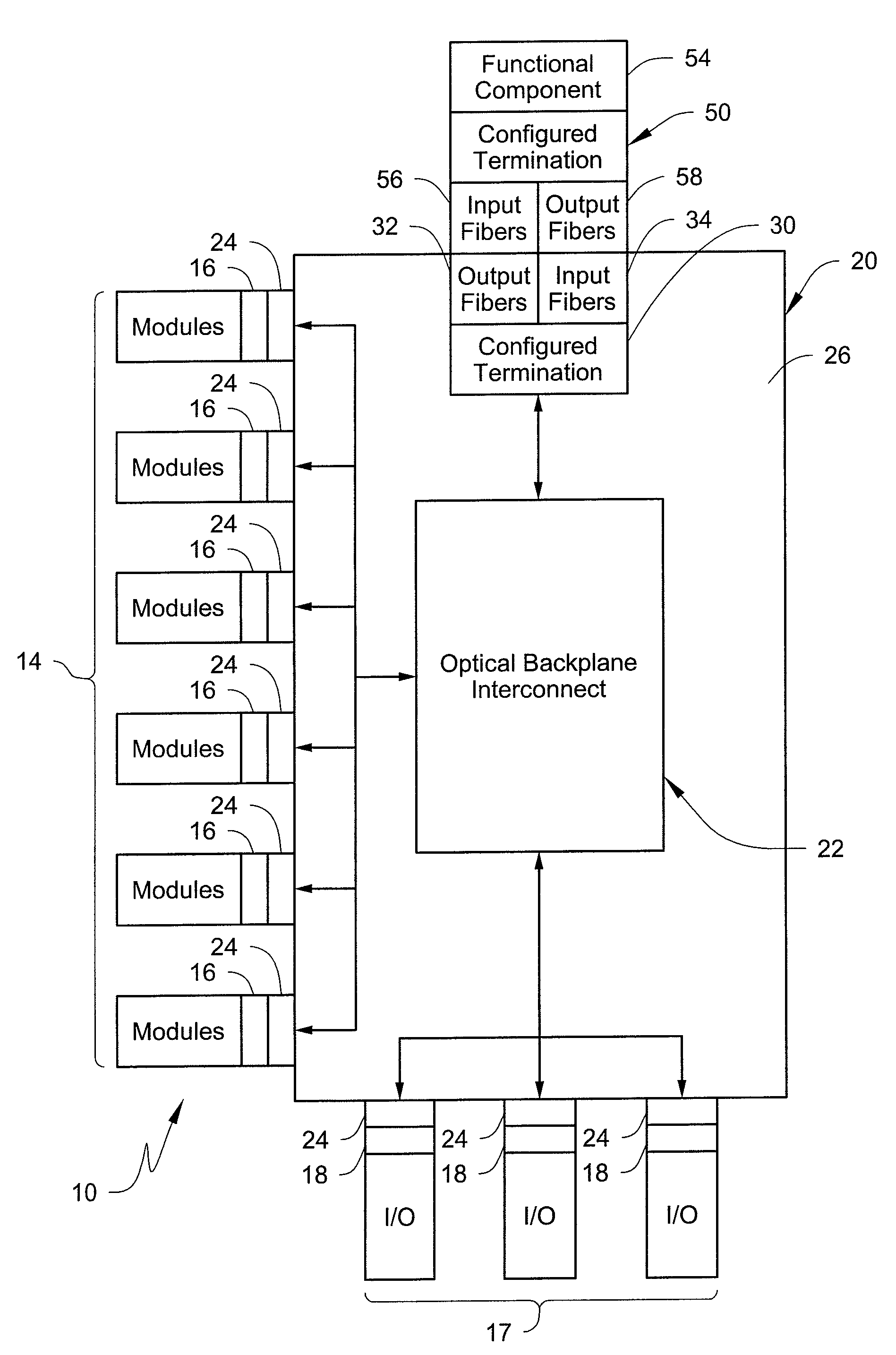
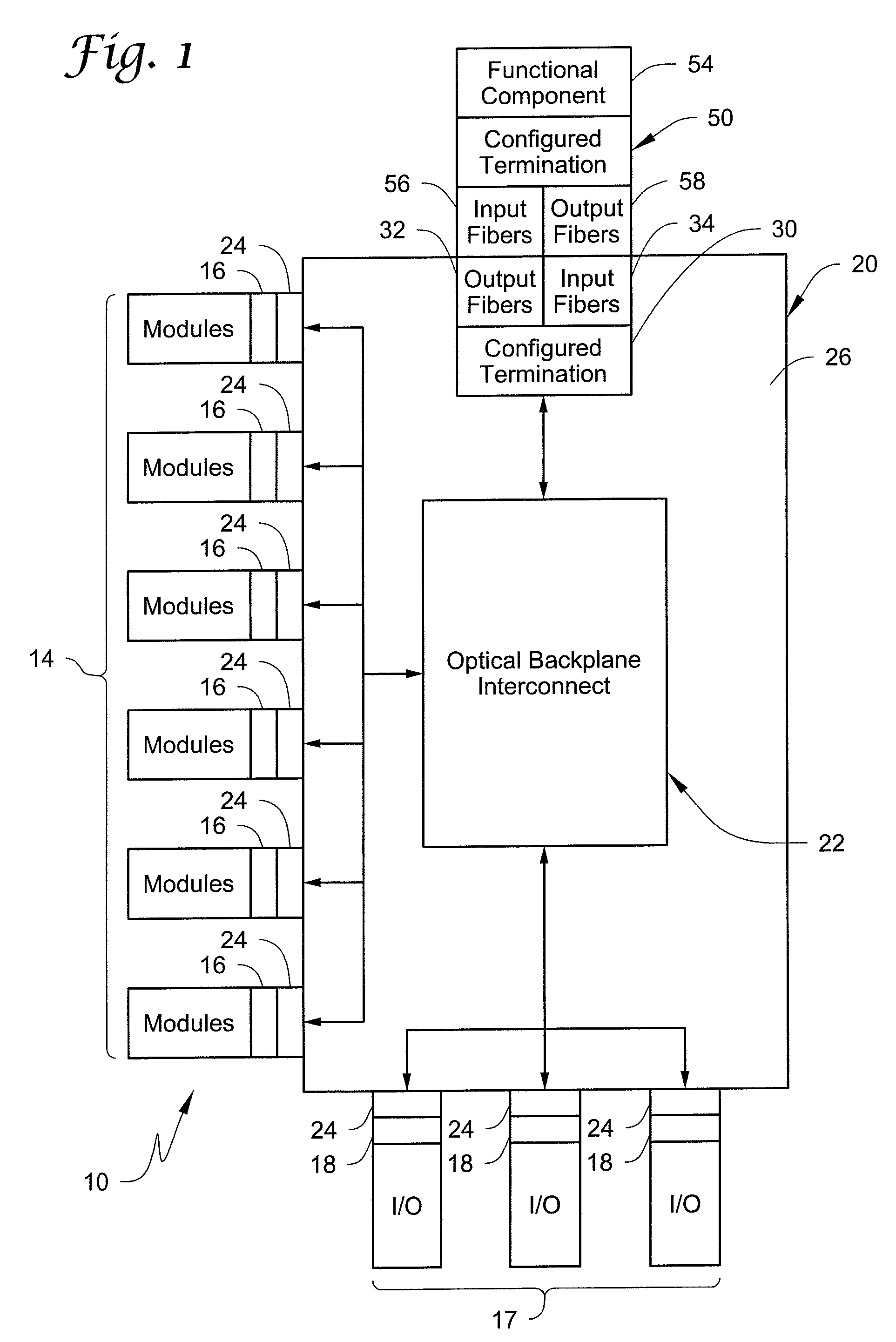
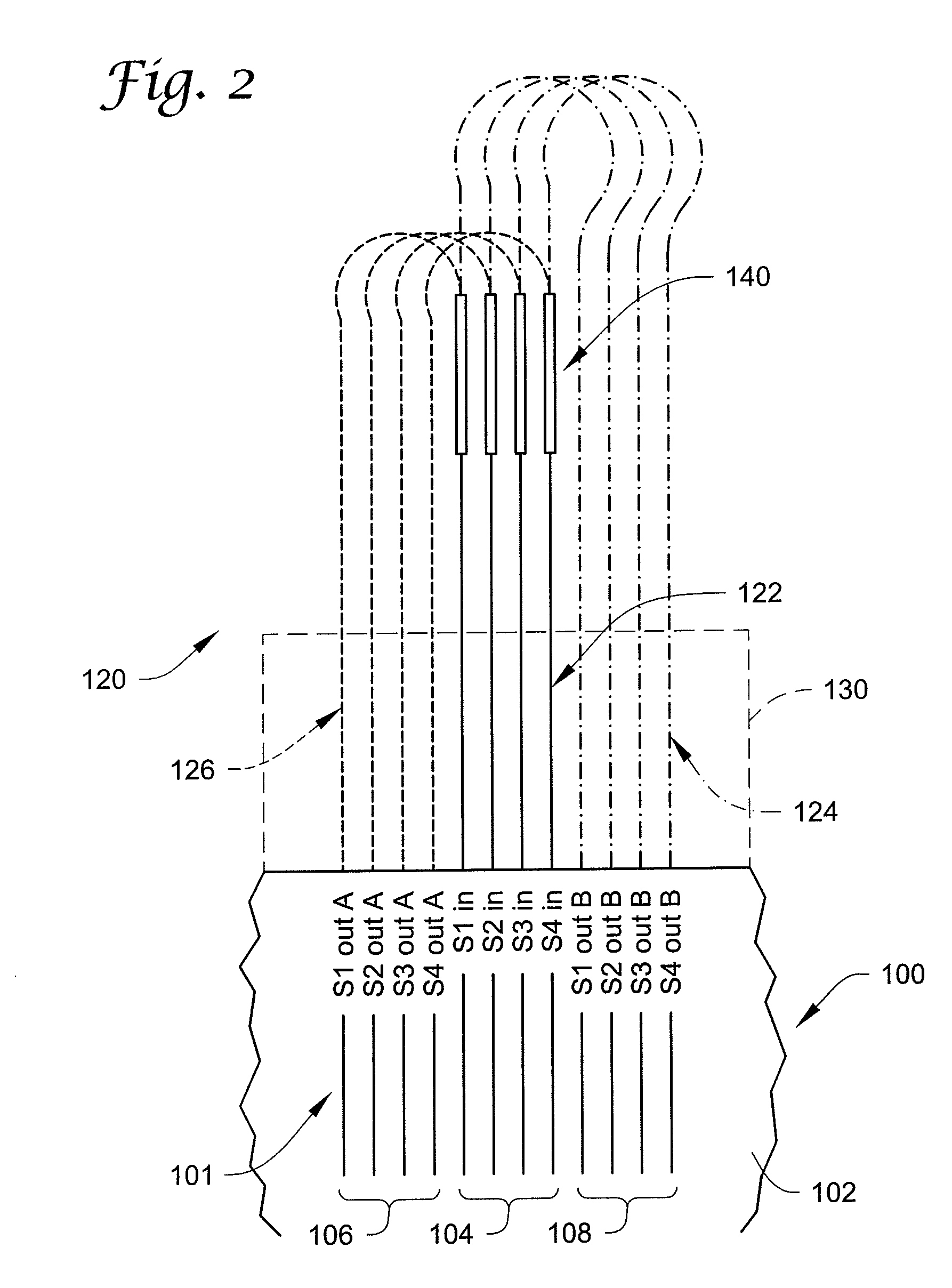
- The integration of functional optical devices with a fixed configuration of input and output fibers, fusion spliced into the optical backplane interconnect, allowing for passive or active components like splitters, attenuators, or switches to be seamlessly integrated, reducing manufacturing costs and optical loss.

Manufacturing Standards and Quality Requirements for Optical Systems
Manufacturing standards for optical backplane systems have evolved significantly to address the dual challenge of cost reduction and performance maintenance. The industry has established comprehensive quality frameworks that encompass component-level specifications, assembly processes, and system-level validation protocols. These standards primarily focus on ensuring consistent optical performance while enabling scalable manufacturing processes that can drive down per-unit costs through improved yield rates and reduced rework requirements.
Component-level quality requirements center on critical optical parameters including insertion loss, return loss, and crosstalk specifications. Modern standards mandate insertion loss values below 0.5 dB for single-mode connections and less than 0.3 dB for multimode applications within backplane environments. Return loss specifications typically require values exceeding 50 dB to minimize signal reflections that could degrade system performance. These stringent requirements necessitate precise manufacturing tolerances and advanced quality control measures throughout the production process.
Assembly process standards emphasize automated manufacturing techniques to reduce labor costs while maintaining consistent quality outcomes. Key requirements include controlled environment specifications with particulate contamination levels below Class 1000 cleanroom standards, temperature stability within ±2°C during assembly operations, and humidity control between 45-55% relative humidity. These environmental controls are essential for maintaining optical component integrity and ensuring reliable interconnection performance during high-volume manufacturing.
Quality assurance protocols mandate comprehensive testing at multiple manufacturing stages, including incoming component inspection, in-process monitoring, and final system validation. Automated optical testing equipment must demonstrate measurement repeatability within 0.02 dB and accuracy traceable to national standards. Statistical process control requirements include real-time monitoring of critical parameters with immediate feedback mechanisms to prevent quality deviations that could impact cost-effectiveness.
Reliability standards specify accelerated aging tests, thermal cycling protocols, and mechanical stress evaluations to ensure long-term performance stability. These requirements include 1000-hour burn-in testing at elevated temperatures, vibration testing per Telcordia GR-63-CORE specifications, and humidity exposure testing to validate component durability. Meeting these reliability benchmarks reduces total cost of ownership by minimizing field failures and maintenance requirements while ensuring consistent optical performance throughout the system lifecycle.
Component-level quality requirements center on critical optical parameters including insertion loss, return loss, and crosstalk specifications. Modern standards mandate insertion loss values below 0.5 dB for single-mode connections and less than 0.3 dB for multimode applications within backplane environments. Return loss specifications typically require values exceeding 50 dB to minimize signal reflections that could degrade system performance. These stringent requirements necessitate precise manufacturing tolerances and advanced quality control measures throughout the production process.
Assembly process standards emphasize automated manufacturing techniques to reduce labor costs while maintaining consistent quality outcomes. Key requirements include controlled environment specifications with particulate contamination levels below Class 1000 cleanroom standards, temperature stability within ±2°C during assembly operations, and humidity control between 45-55% relative humidity. These environmental controls are essential for maintaining optical component integrity and ensuring reliable interconnection performance during high-volume manufacturing.
Quality assurance protocols mandate comprehensive testing at multiple manufacturing stages, including incoming component inspection, in-process monitoring, and final system validation. Automated optical testing equipment must demonstrate measurement repeatability within 0.02 dB and accuracy traceable to national standards. Statistical process control requirements include real-time monitoring of critical parameters with immediate feedback mechanisms to prevent quality deviations that could impact cost-effectiveness.
Reliability standards specify accelerated aging tests, thermal cycling protocols, and mechanical stress evaluations to ensure long-term performance stability. These requirements include 1000-hour burn-in testing at elevated temperatures, vibration testing per Telcordia GR-63-CORE specifications, and humidity exposure testing to validate component durability. Meeting these reliability benchmarks reduces total cost of ownership by minimizing field failures and maintenance requirements while ensuring consistent optical performance throughout the system lifecycle.
Supply Chain Optimization Strategies for Optical Component Sourcing
Effective supply chain optimization for optical component sourcing represents a critical pathway to reducing optical backplane deployment costs while preserving system performance standards. The complexity of optical backplane systems necessitates a multi-tiered approach that addresses component procurement, vendor relationships, and inventory management strategies.
Strategic vendor diversification emerges as a fundamental principle in cost reduction initiatives. Organizations can mitigate supply chain risks and negotiate favorable pricing structures by establishing relationships with multiple component suppliers across different geographical regions. This approach prevents over-dependence on single-source suppliers while creating competitive pressure that naturally drives down procurement costs. Tier-one optical component manufacturers often provide premium quality at higher price points, while tier-two suppliers can offer comparable performance specifications at reduced costs for non-critical applications.
Volume consolidation strategies enable significant cost advantages through economies of scale. By aggregating optical component requirements across multiple projects and departments, organizations can qualify for bulk pricing tiers that substantially reduce per-unit costs. This consolidation approach requires careful demand forecasting and inventory planning to balance cost savings against carrying costs and obsolescence risks.
Long-term partnership agreements with key suppliers facilitate cost predictability and preferential pricing arrangements. These strategic alliances often include volume commitments, technology roadmap alignment, and collaborative development initiatives that benefit both parties. Suppliers gain revenue stability and market insights, while buyers secure favorable pricing and priority allocation during supply constraints.
Component standardization across optical backplane designs significantly reduces procurement complexity and costs. By limiting the variety of optical transceivers, connectors, and passive components to a standardized portfolio, organizations can leverage higher volumes for individual components while simplifying inventory management and reducing qualification costs.
Just-in-time delivery models, when properly implemented with reliable suppliers, minimize inventory carrying costs while maintaining production schedules. This approach requires robust supplier performance monitoring and backup sourcing strategies to prevent production disruptions. Advanced supply chain visibility tools enable real-time tracking of component availability and delivery schedules.
Alternative sourcing channels, including component brokers and secondary markets, provide cost-effective options for non-critical applications or legacy system maintenance. These channels require enhanced quality assurance processes but can deliver substantial cost savings for appropriate use cases.
Strategic vendor diversification emerges as a fundamental principle in cost reduction initiatives. Organizations can mitigate supply chain risks and negotiate favorable pricing structures by establishing relationships with multiple component suppliers across different geographical regions. This approach prevents over-dependence on single-source suppliers while creating competitive pressure that naturally drives down procurement costs. Tier-one optical component manufacturers often provide premium quality at higher price points, while tier-two suppliers can offer comparable performance specifications at reduced costs for non-critical applications.
Volume consolidation strategies enable significant cost advantages through economies of scale. By aggregating optical component requirements across multiple projects and departments, organizations can qualify for bulk pricing tiers that substantially reduce per-unit costs. This consolidation approach requires careful demand forecasting and inventory planning to balance cost savings against carrying costs and obsolescence risks.
Long-term partnership agreements with key suppliers facilitate cost predictability and preferential pricing arrangements. These strategic alliances often include volume commitments, technology roadmap alignment, and collaborative development initiatives that benefit both parties. Suppliers gain revenue stability and market insights, while buyers secure favorable pricing and priority allocation during supply constraints.
Component standardization across optical backplane designs significantly reduces procurement complexity and costs. By limiting the variety of optical transceivers, connectors, and passive components to a standardized portfolio, organizations can leverage higher volumes for individual components while simplifying inventory management and reducing qualification costs.
Just-in-time delivery models, when properly implemented with reliable suppliers, minimize inventory carrying costs while maintaining production schedules. This approach requires robust supplier performance monitoring and backup sourcing strategies to prevent production disruptions. Advanced supply chain visibility tools enable real-time tracking of component availability and delivery schedules.
Alternative sourcing channels, including component brokers and secondary markets, provide cost-effective options for non-critical applications or legacy system maintenance. These channels require enhanced quality assurance processes but can deliver substantial cost savings for appropriate use cases.
Unlock deeper insights with PatSnap Eureka Quick Research — get a full tech report to explore trends and direct your research. Try now!
Generate Your Research Report Instantly with AI Agent
Supercharge your innovation with PatSnap Eureka AI Agent Platform!