

Reduce Overpotential Loss in Prussian Blue Cathodes
MAY 15, 20269 MIN READ
Generate Your Research Report Instantly with AI Agent
Patsnap Eureka helps you evaluate technical feasibility & market potential.
Prussian Blue Cathode Development Background and Objectives
Prussian blue (PB) cathodes have emerged as a promising alternative for next-generation battery technologies, particularly in sodium-ion and potassium-ion batteries, due to their unique three-dimensional framework structure and abundant availability of raw materials. The development of PB cathodes traces back to early research on metal hexacyanides, where scientists recognized their potential for electrochemical energy storage applications. The crystal structure of Prussian blue, characterized by its open framework with large interstitial sites, enables facile ion intercalation and deintercalation processes.
The evolution of PB cathode technology has been driven by the growing demand for sustainable and cost-effective energy storage solutions. As lithium resources become increasingly scarce and expensive, researchers have intensified efforts to develop alternative battery chemistries. Prussian blue cathodes offer several advantages including low cost, environmental friendliness, and compatibility with abundant alkali metal ions such as sodium and potassium.
However, one of the most significant challenges limiting the widespread adoption of PB cathodes is the substantial overpotential loss during charge-discharge cycles. This overpotential manifests as voltage hysteresis between charging and discharging processes, leading to reduced energy efficiency and compromised battery performance. The overpotential loss in PB cathodes stems from various factors including structural defects, water content, crystal imperfections, and sluggish ion transport kinetics.
The primary objective of current research efforts focuses on minimizing overpotential losses to enhance the overall electrochemical performance of PB cathodes. This involves developing strategies to optimize the crystal structure, reduce defect density, control water content, and improve ion diffusion pathways. Advanced synthesis methods, surface modifications, and compositional engineering approaches are being explored to achieve these goals.
The ultimate technical target is to reduce overpotential losses to below 100 mV while maintaining high capacity retention and cycling stability. Achieving this objective would significantly improve the energy efficiency of PB-based batteries, making them more competitive with conventional lithium-ion technologies and accelerating their commercial viability in large-scale energy storage applications.
The evolution of PB cathode technology has been driven by the growing demand for sustainable and cost-effective energy storage solutions. As lithium resources become increasingly scarce and expensive, researchers have intensified efforts to develop alternative battery chemistries. Prussian blue cathodes offer several advantages including low cost, environmental friendliness, and compatibility with abundant alkali metal ions such as sodium and potassium.
However, one of the most significant challenges limiting the widespread adoption of PB cathodes is the substantial overpotential loss during charge-discharge cycles. This overpotential manifests as voltage hysteresis between charging and discharging processes, leading to reduced energy efficiency and compromised battery performance. The overpotential loss in PB cathodes stems from various factors including structural defects, water content, crystal imperfections, and sluggish ion transport kinetics.
The primary objective of current research efforts focuses on minimizing overpotential losses to enhance the overall electrochemical performance of PB cathodes. This involves developing strategies to optimize the crystal structure, reduce defect density, control water content, and improve ion diffusion pathways. Advanced synthesis methods, surface modifications, and compositional engineering approaches are being explored to achieve these goals.
The ultimate technical target is to reduce overpotential losses to below 100 mV while maintaining high capacity retention and cycling stability. Achieving this objective would significantly improve the energy efficiency of PB-based batteries, making them more competitive with conventional lithium-ion technologies and accelerating their commercial viability in large-scale energy storage applications.
Market Demand for High-Performance Prussian Blue Batteries
The global energy storage market is experiencing unprecedented growth driven by the urgent need for sustainable energy solutions and grid stabilization technologies. Prussian blue batteries have emerged as a promising alternative to conventional lithium-ion systems, particularly in applications requiring high safety standards, environmental compatibility, and cost-effectiveness. The unique crystal structure of Prussian blue compounds enables rapid ion intercalation and deintercalation, making them attractive for both stationary energy storage and portable electronics applications.
Market demand for high-performance Prussian blue batteries is primarily concentrated in three key sectors: grid-scale energy storage systems, electric vehicle applications, and consumer electronics. Grid operators worldwide are increasingly seeking battery technologies that can provide reliable, long-duration energy storage while maintaining operational safety under extreme conditions. Prussian blue batteries offer inherent thermal stability and non-toxicity advantages that address critical safety concerns in large-scale installations.
The electric vehicle market represents another significant opportunity, particularly for applications where safety and environmental impact take precedence over energy density. Commercial vehicle fleets, public transportation systems, and stationary charging infrastructure are showing growing interest in Prussian blue technology due to its superior cycle life and reduced fire risk compared to traditional lithium-ion batteries.
However, current market adoption faces substantial challenges related to overpotential losses that limit battery efficiency and performance. These losses directly impact the commercial viability of Prussian blue batteries by reducing energy efficiency, extending charging times, and limiting power output capabilities. Industrial stakeholders consistently identify overpotential reduction as the primary technical barrier preventing widespread market penetration.
The demand for solutions addressing overpotential losses is intensifying as manufacturers seek to bridge the performance gap between Prussian blue and established battery technologies. Market research indicates that achieving significant overpotential reduction could unlock substantial market opportunities, particularly in applications where the inherent advantages of Prussian blue chemistry can be fully realized without compromising on electrochemical performance.
Emerging markets in developing countries are also driving demand for cost-effective, environmentally friendly energy storage solutions. Prussian blue batteries, with their abundant raw materials and simplified manufacturing processes, are well-positioned to serve these markets once performance limitations are adequately addressed through overpotential optimization strategies.
Market demand for high-performance Prussian blue batteries is primarily concentrated in three key sectors: grid-scale energy storage systems, electric vehicle applications, and consumer electronics. Grid operators worldwide are increasingly seeking battery technologies that can provide reliable, long-duration energy storage while maintaining operational safety under extreme conditions. Prussian blue batteries offer inherent thermal stability and non-toxicity advantages that address critical safety concerns in large-scale installations.
The electric vehicle market represents another significant opportunity, particularly for applications where safety and environmental impact take precedence over energy density. Commercial vehicle fleets, public transportation systems, and stationary charging infrastructure are showing growing interest in Prussian blue technology due to its superior cycle life and reduced fire risk compared to traditional lithium-ion batteries.
However, current market adoption faces substantial challenges related to overpotential losses that limit battery efficiency and performance. These losses directly impact the commercial viability of Prussian blue batteries by reducing energy efficiency, extending charging times, and limiting power output capabilities. Industrial stakeholders consistently identify overpotential reduction as the primary technical barrier preventing widespread market penetration.
The demand for solutions addressing overpotential losses is intensifying as manufacturers seek to bridge the performance gap between Prussian blue and established battery technologies. Market research indicates that achieving significant overpotential reduction could unlock substantial market opportunities, particularly in applications where the inherent advantages of Prussian blue chemistry can be fully realized without compromising on electrochemical performance.
Emerging markets in developing countries are also driving demand for cost-effective, environmentally friendly energy storage solutions. Prussian blue batteries, with their abundant raw materials and simplified manufacturing processes, are well-positioned to serve these markets once performance limitations are adequately addressed through overpotential optimization strategies.
Current Overpotential Challenges in Prussian Blue Cathodes
Prussian Blue cathodes face significant overpotential challenges that substantially limit their electrochemical performance and commercial viability in energy storage applications. The primary overpotential losses stem from sluggish ion transport kinetics within the crystal lattice structure, where the narrow channels and defect sites create substantial resistance to alkali metal ion migration during charge-discharge cycles.
The crystalline framework of Prussian Blue analogs inherently contains structural water molecules and vacancies that disrupt uniform ion pathways. These defects create localized electric field variations, forcing migrating ions to navigate tortuous routes that increase activation energy barriers. Consequently, the cathode exhibits elevated polarization losses, particularly at higher current densities where rapid ion flux demands exceed the material's transport capabilities.
Interfacial resistance between the active material and electrolyte represents another critical overpotential source. The surface chemistry of Prussian Blue particles often features incomplete coordination sites and surface-bound water molecules that impede efficient charge transfer reactions. This interfacial impedance becomes more pronounced during extended cycling, as surface degradation and electrolyte decomposition products accumulate at the electrode-electrolyte boundary.
Electronic conductivity limitations further exacerbate overpotential losses in Prussian Blue cathodes. The material's inherently low electronic conductivity, typically ranging from 10^-6 to 10^-4 S/cm, creates substantial ohmic resistance throughout the electrode matrix. This poor conductivity necessitates high carbon additive loadings, which reduce active material density and complicate electrode processing while still failing to eliminate electronic transport bottlenecks.
Phase transition-induced overpotentials emerge during deep charge-discharge cycles when Prussian Blue undergoes structural rearrangements. These transitions involve coordination environment changes around metal centers, creating temporary high-resistance states that manifest as voltage hysteresis and reduced energy efficiency. The magnitude of these losses correlates directly with the extent of structural reorganization required to accommodate varying ion concentrations.
Temperature-dependent overpotential variations present additional challenges for practical applications. At low temperatures, ion mobility decreases exponentially, while elevated temperatures accelerate degradation mechanisms that increase long-term resistance. This temperature sensitivity limits the operational window and requires sophisticated thermal management systems to maintain acceptable performance levels across diverse operating conditions.
The crystalline framework of Prussian Blue analogs inherently contains structural water molecules and vacancies that disrupt uniform ion pathways. These defects create localized electric field variations, forcing migrating ions to navigate tortuous routes that increase activation energy barriers. Consequently, the cathode exhibits elevated polarization losses, particularly at higher current densities where rapid ion flux demands exceed the material's transport capabilities.
Interfacial resistance between the active material and electrolyte represents another critical overpotential source. The surface chemistry of Prussian Blue particles often features incomplete coordination sites and surface-bound water molecules that impede efficient charge transfer reactions. This interfacial impedance becomes more pronounced during extended cycling, as surface degradation and electrolyte decomposition products accumulate at the electrode-electrolyte boundary.
Electronic conductivity limitations further exacerbate overpotential losses in Prussian Blue cathodes. The material's inherently low electronic conductivity, typically ranging from 10^-6 to 10^-4 S/cm, creates substantial ohmic resistance throughout the electrode matrix. This poor conductivity necessitates high carbon additive loadings, which reduce active material density and complicate electrode processing while still failing to eliminate electronic transport bottlenecks.
Phase transition-induced overpotentials emerge during deep charge-discharge cycles when Prussian Blue undergoes structural rearrangements. These transitions involve coordination environment changes around metal centers, creating temporary high-resistance states that manifest as voltage hysteresis and reduced energy efficiency. The magnitude of these losses correlates directly with the extent of structural reorganization required to accommodate varying ion concentrations.
Temperature-dependent overpotential variations present additional challenges for practical applications. At low temperatures, ion mobility decreases exponentially, while elevated temperatures accelerate degradation mechanisms that increase long-term resistance. This temperature sensitivity limits the operational window and requires sophisticated thermal management systems to maintain acceptable performance levels across diverse operating conditions.
Existing Solutions for Overpotential Reduction
01 Structural modification and doping strategies for Prussian blue cathodes
Various structural modifications and doping approaches can be employed to reduce overpotential loss in Prussian blue cathodes. These methods include introducing heteroatoms, creating defect sites, and optimizing the crystal structure to enhance electron transport and reduce energy barriers during electrochemical reactions. The modifications help improve the intrinsic conductivity and reduce resistance within the cathode material.- Structural modification and doping strategies for Prussian blue cathodes: Various structural modifications and doping approaches can be employed to reduce overpotential loss in Prussian blue cathodes. These include introducing heteroatoms, creating defect sites, and optimizing the crystal structure to enhance electron transfer kinetics and reduce energy barriers during electrochemical processes.
- Surface coating and interface engineering techniques: Surface modification through coating layers and interface engineering can significantly minimize overpotential losses. These techniques involve applying protective layers, creating favorable interfaces, and optimizing surface properties to improve charge transfer efficiency and reduce resistance at the electrode-electrolyte interface.
- Electrolyte optimization and additive incorporation: The selection and optimization of electrolyte systems, including the use of specific additives and ionic conductors, can effectively reduce overpotential losses. This approach focuses on improving ionic conductivity, reducing interfacial resistance, and enhancing the overall electrochemical performance of the cathode system.
- Nanostructure design and morphology control: Engineering the nanostructure and controlling the morphology of Prussian blue cathodes can lead to reduced overpotential losses. This includes creating specific particle sizes, shapes, and architectures that facilitate better ion diffusion pathways and electron transport, ultimately improving the electrochemical kinetics.
- Composite formation and hybrid material development: The development of composite materials and hybrid structures incorporating Prussian blue with other active materials can help mitigate overpotential losses. These approaches combine the advantages of different materials to create synergistic effects that enhance conductivity, stability, and overall electrochemical performance.
02 Electrolyte optimization and interface engineering
The selection and optimization of electrolyte compositions play a crucial role in minimizing overpotential losses. Interface engineering between the Prussian blue cathode and electrolyte can reduce charge transfer resistance and improve ion transport kinetics. This includes the use of specific additives, pH adjustments, and surface treatments to create more favorable electrochemical interfaces.Expand Specific Solutions03 Nanostructuring and morphology control
Controlling the morphology and nanostructure of Prussian blue cathodes can significantly reduce overpotential losses by increasing the active surface area and shortening ion diffusion paths. Techniques include creating nanoparticles, hollow structures, and hierarchical architectures that facilitate faster charge transport and reduce polarization effects during battery operation.Expand Specific Solutions04 Composite formation and conductive additives
Incorporating conductive additives and forming composite materials with Prussian blue can enhance overall conductivity and reduce overpotential losses. This approach involves combining Prussian blue with carbon materials, conductive polymers, or other electroactive compounds to create hybrid structures with improved electron transport properties and reduced internal resistance.Expand Specific Solutions05 Crystal defect engineering and vacancy management
Managing crystal defects and controlling vacancy concentrations in Prussian blue structures can help minimize overpotential losses. This involves optimizing synthesis conditions to reduce unwanted defects while introducing beneficial structural features that enhance ion mobility and electron transport. Proper vacancy management can improve the overall electrochemical performance and stability of the cathode material.Expand Specific Solutions
Key Players in Prussian Blue Battery Industry
The Prussian blue cathode overpotential reduction technology represents an emerging field within the broader sodium-ion battery market, which is experiencing rapid growth as an alternative to lithium-ion systems. The industry is in its early commercialization stage, with market size projected to reach billions as companies like CATL and Samsung SDI drive adoption. Technology maturity varies significantly across players - established battery manufacturers such as Contemporary Amperex Technology and Samsung SDI possess advanced R&D capabilities, while specialized companies like Zhejiang Sodium Innovation Energy focus specifically on sodium-ion innovations. Research institutions including Northwestern University and Advanced Industrial Science & Technology contribute fundamental breakthroughs, though practical implementation remains challenging. The competitive landscape shows a mix of traditional battery giants leveraging existing infrastructure and emerging specialists developing novel approaches to address overpotential losses in Prussian blue cathodes.
Contemporary Amperex Technology Co., Ltd.
Technical Solution: CATL has developed advanced Prussian blue cathode materials with optimized crystal structure and surface modification techniques to reduce overpotential loss. Their approach focuses on controlling the synthesis conditions to minimize defects and water content in the crystal lattice, which are primary sources of overpotential. The company employs co-precipitation methods combined with controlled annealing processes to achieve uniform particle size distribution and enhanced electronic conductivity. Additionally, they utilize carbon coating and conductive polymer integration to improve charge transfer kinetics and reduce interfacial resistance, resulting in significantly lower overpotential during charge-discharge cycles.
Strengths: Leading battery manufacturer with extensive R&D capabilities and industrial-scale production experience. Weaknesses: High manufacturing costs and complex quality control requirements for large-scale production.
Sony Group Corp.
Technical Solution: Sony has developed innovative approaches to address overpotential loss in Prussian blue cathodes through advanced surface engineering and nanostructure optimization. Their research focuses on creating hierarchical nanostructures that provide enhanced ion diffusion pathways and reduced charge transfer resistance. The company utilizes atomic layer deposition techniques to apply ultra-thin protective coatings that prevent side reactions while maintaining high ionic conductivity. Sony's approach includes the development of novel binder systems and conductive additives specifically optimized for Prussian blue cathodes, which help maintain structural integrity during cycling and reduce overpotential buildup. Their technology also incorporates advanced electrolyte additives that form stable solid electrolyte interphase layers, minimizing interfacial resistance.
Strengths: Pioneering experience in battery technology development and strong research capabilities in materials science. Weaknesses: Limited current focus on large-scale battery manufacturing compared to consumer electronics applications.
Core Innovations in Prussian Blue Overpotential Mitigation
Stabilization of battery electrodes using polymer coatings
PatentActiveUS9853318B2
Innovation
- A conformal coating of Prussian Blue analogues or mixed conducting polymers, like polypyrrole, is applied to the electrodes to prevent dissolution into the electrolyte, extending their calendar life by forming a protective barrier that allows ion conduction while preventing material loss.


Prussian Blue Analogue Anodes for Aqueous Electrolyte Batteries
PatentInactiveUS20140220392A1
Innovation
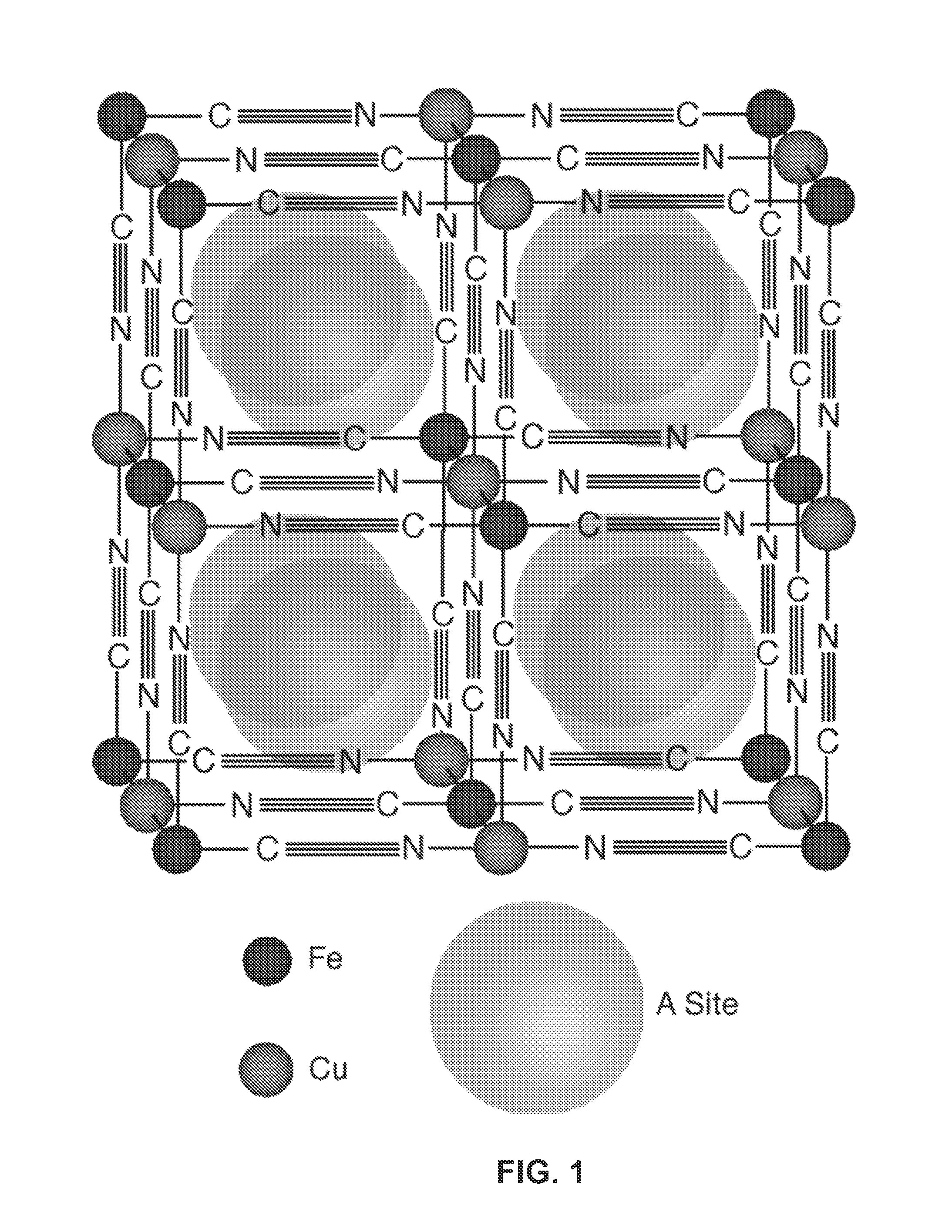
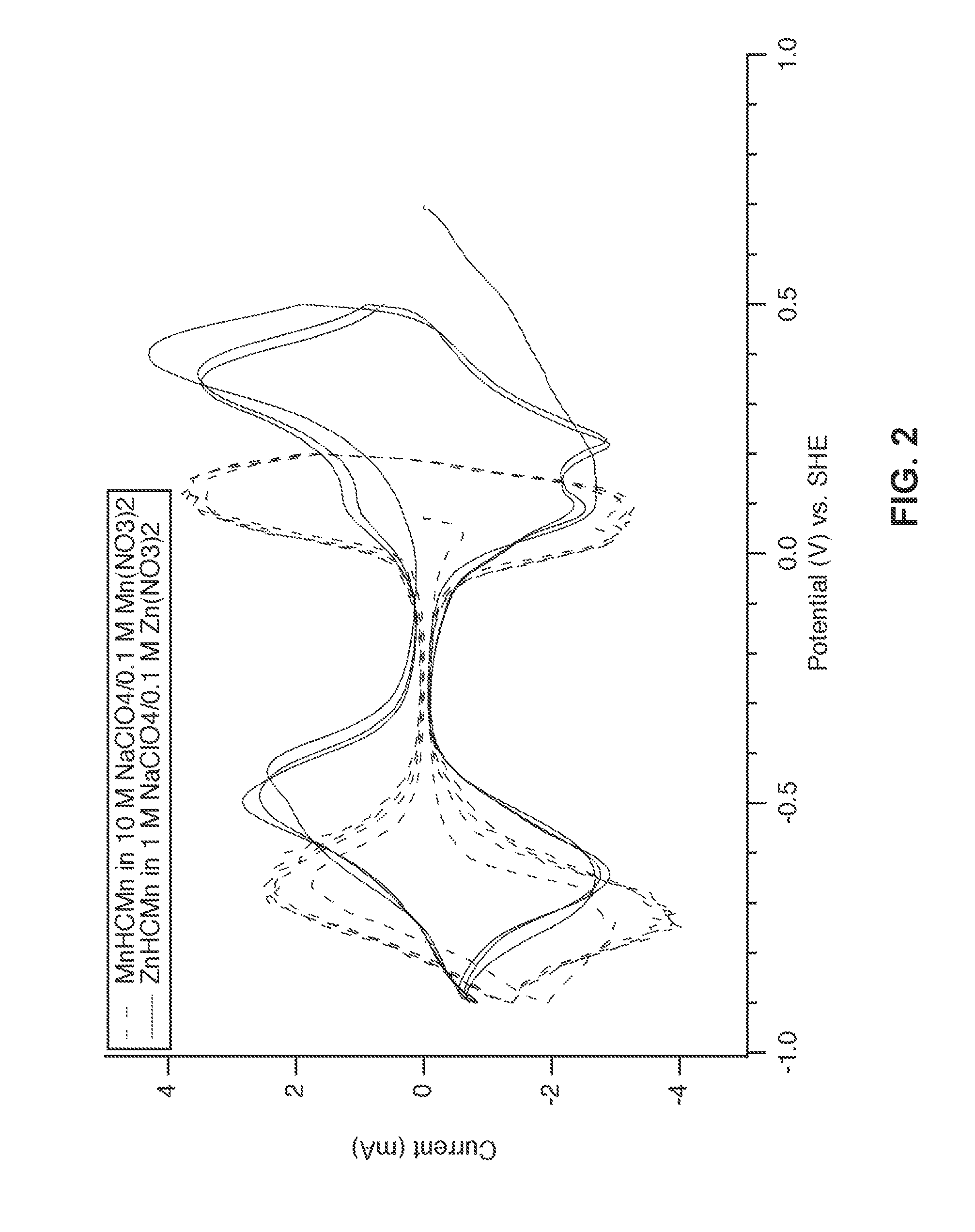
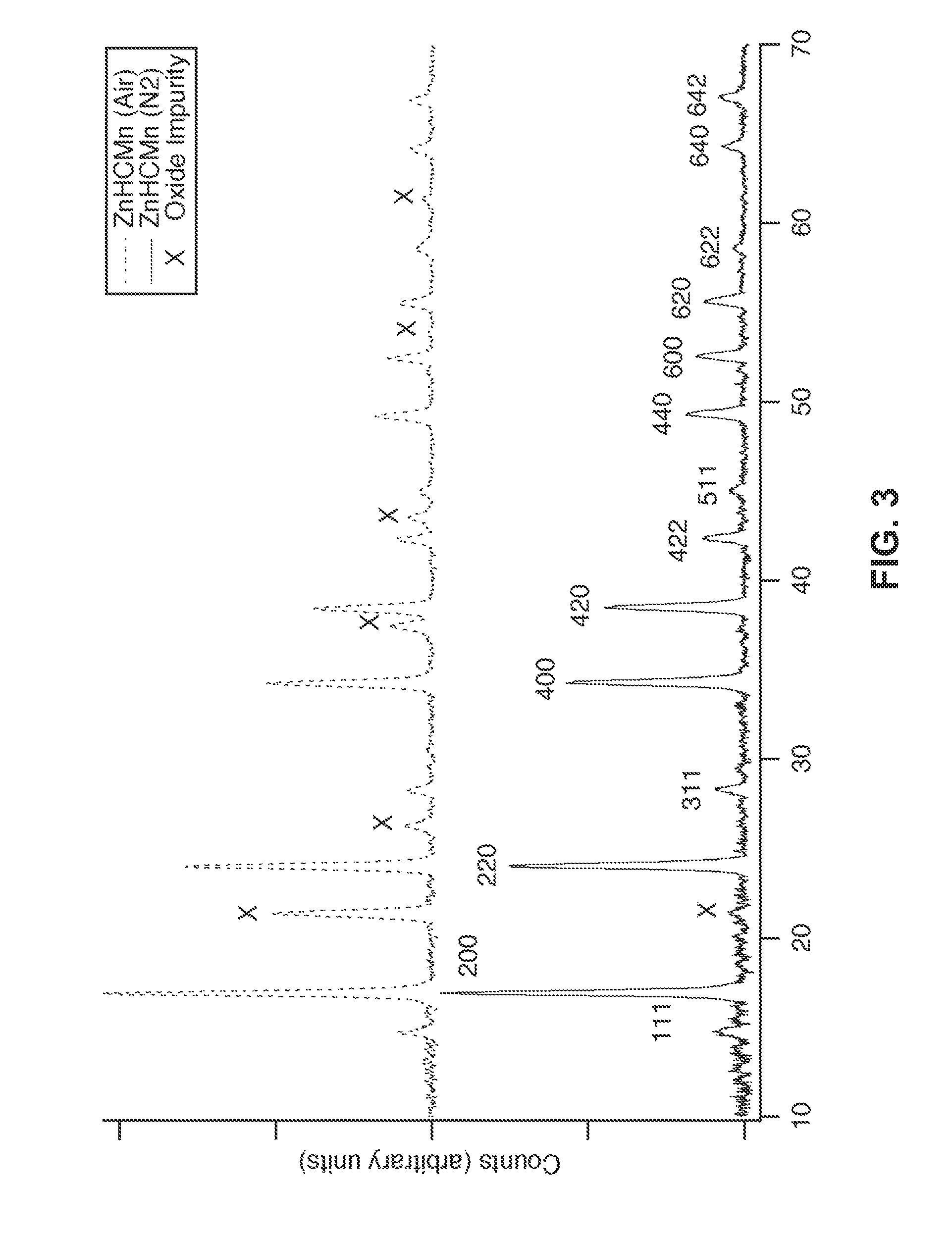
- Development of Prussian Blue analogue anodes with electrochemically active species having lower reaction potentials, allowing for the construction of symmetric batteries with tuned reaction potentials and the use of hexacyanomanganate-based materials in aqueous electrolytes, enabling longer cycle life and higher rate capability by utilizing both the upper and lower electrochemical reactions.

Environmental Impact of Prussian Blue Battery Production
The environmental implications of Prussian blue battery production present a complex landscape of both opportunities and challenges that directly influence efforts to reduce overpotential losses in cathode materials. Manufacturing processes for Prussian blue cathodes involve several chemical synthesis routes, each carrying distinct environmental footprints that must be carefully evaluated against performance optimization goals.
Traditional synthesis methods for Prussian blue compounds typically employ ferric and ferrous salts in aqueous solutions, generating significant wastewater streams containing residual metal ions and organic solvents. The precipitation-based production processes, while cost-effective, often require extensive washing cycles to remove impurities that could contribute to overpotential losses, thereby increasing water consumption and chemical waste generation.
Advanced synthesis techniques aimed at reducing overpotential losses, such as controlled crystallization and surface modification processes, introduce additional environmental considerations. These methods frequently utilize specialized organic ligands, surfactants, and high-temperature treatments that can increase energy consumption and generate volatile organic compounds. The trade-off between achieving optimal electrochemical performance and minimizing environmental impact becomes particularly pronounced when implementing defect engineering strategies to enhance ionic conductivity.
Raw material extraction for Prussian blue production raises sustainability concerns, particularly regarding iron ore mining and cyanide-based precursors. The sourcing of high-purity iron compounds necessary for low-overpotential cathodes often involves energy-intensive refining processes with associated carbon emissions. Alternative synthesis routes using bio-derived precursors or recycled materials are emerging as potential solutions, though their impact on electrochemical performance requires careful evaluation.
End-of-life considerations for Prussian blue batteries reveal both environmental benefits and challenges. While these batteries offer superior recyclability compared to lithium-ion alternatives, the recovery processes for maintaining cathode material quality sufficient for low-overpotential applications may require additional chemical treatments. The development of closed-loop recycling systems that preserve the structural integrity necessary for optimal electrochemical performance represents a critical intersection between environmental sustainability and technical advancement in overpotential reduction strategies.
Traditional synthesis methods for Prussian blue compounds typically employ ferric and ferrous salts in aqueous solutions, generating significant wastewater streams containing residual metal ions and organic solvents. The precipitation-based production processes, while cost-effective, often require extensive washing cycles to remove impurities that could contribute to overpotential losses, thereby increasing water consumption and chemical waste generation.
Advanced synthesis techniques aimed at reducing overpotential losses, such as controlled crystallization and surface modification processes, introduce additional environmental considerations. These methods frequently utilize specialized organic ligands, surfactants, and high-temperature treatments that can increase energy consumption and generate volatile organic compounds. The trade-off between achieving optimal electrochemical performance and minimizing environmental impact becomes particularly pronounced when implementing defect engineering strategies to enhance ionic conductivity.
Raw material extraction for Prussian blue production raises sustainability concerns, particularly regarding iron ore mining and cyanide-based precursors. The sourcing of high-purity iron compounds necessary for low-overpotential cathodes often involves energy-intensive refining processes with associated carbon emissions. Alternative synthesis routes using bio-derived precursors or recycled materials are emerging as potential solutions, though their impact on electrochemical performance requires careful evaluation.
End-of-life considerations for Prussian blue batteries reveal both environmental benefits and challenges. While these batteries offer superior recyclability compared to lithium-ion alternatives, the recovery processes for maintaining cathode material quality sufficient for low-overpotential applications may require additional chemical treatments. The development of closed-loop recycling systems that preserve the structural integrity necessary for optimal electrochemical performance represents a critical intersection between environmental sustainability and technical advancement in overpotential reduction strategies.
Cost-Performance Analysis of Overpotential Solutions
The economic viability of overpotential reduction solutions in Prussian Blue cathodes requires comprehensive evaluation across multiple cost dimensions. Initial capital expenditure varies significantly among different approaches, with surface modification techniques typically requiring lower upfront investments compared to advanced electrolyte formulations or sophisticated electrode architectures. Material costs constitute a substantial portion of overall expenses, particularly for solutions involving precious metal dopants or specialized conductive additives.
Manufacturing scalability presents critical cost considerations for commercial implementation. Simple surface treatments and electrolyte optimization strategies demonstrate favorable scaling economics due to their compatibility with existing production infrastructure. Conversely, complex nanostructuring approaches or multi-layer electrode designs may incur substantial manufacturing overhead, potentially offsetting their performance benefits in cost-sensitive applications.
Performance metrics reveal varying returns on investment across different overpotential reduction strategies. Electrolyte engineering solutions typically deliver moderate performance improvements at relatively low costs, achieving cost-effectiveness ratios of 2-4x compared to baseline systems. Advanced surface modification techniques can achieve superior performance gains but at higher implementation costs, resulting in cost-effectiveness ratios of 1.5-2.5x.
Long-term operational economics favor solutions with enhanced cycle stability and reduced maintenance requirements. While initial costs may be higher for robust overpotential reduction approaches, their extended operational lifespans and reduced replacement frequencies contribute to favorable total cost of ownership profiles. Energy efficiency improvements from reduced overpotential losses translate directly to operational cost savings, particularly in large-scale energy storage applications.
Market adoption patterns indicate strong preference for solutions offering balanced cost-performance profiles rather than maximum performance at premium costs. Mid-tier solutions demonstrating 60-80% of maximum performance benefits while maintaining cost premiums below 30% show highest commercial traction. This trend suggests that incremental improvements with reasonable cost structures may achieve broader market penetration than breakthrough technologies with prohibitive implementation costs.
Manufacturing scalability presents critical cost considerations for commercial implementation. Simple surface treatments and electrolyte optimization strategies demonstrate favorable scaling economics due to their compatibility with existing production infrastructure. Conversely, complex nanostructuring approaches or multi-layer electrode designs may incur substantial manufacturing overhead, potentially offsetting their performance benefits in cost-sensitive applications.
Performance metrics reveal varying returns on investment across different overpotential reduction strategies. Electrolyte engineering solutions typically deliver moderate performance improvements at relatively low costs, achieving cost-effectiveness ratios of 2-4x compared to baseline systems. Advanced surface modification techniques can achieve superior performance gains but at higher implementation costs, resulting in cost-effectiveness ratios of 1.5-2.5x.
Long-term operational economics favor solutions with enhanced cycle stability and reduced maintenance requirements. While initial costs may be higher for robust overpotential reduction approaches, their extended operational lifespans and reduced replacement frequencies contribute to favorable total cost of ownership profiles. Energy efficiency improvements from reduced overpotential losses translate directly to operational cost savings, particularly in large-scale energy storage applications.
Market adoption patterns indicate strong preference for solutions offering balanced cost-performance profiles rather than maximum performance at premium costs. Mid-tier solutions demonstrating 60-80% of maximum performance benefits while maintaining cost premiums below 30% show highest commercial traction. This trend suggests that incremental improvements with reasonable cost structures may achieve broader market penetration than breakthrough technologies with prohibitive implementation costs.
Unlock deeper insights with Patsnap Eureka Quick Research — get a full tech report to explore trends and direct your research. Try now!
Generate Your Research Report Instantly with AI Agent
Supercharge your innovation with Patsnap Eureka AI Agent Platform!