

Remote Terminal Unit Antenna Height: Range vs Obstruction Avoidance
MAR 16, 20269 MIN READ
Generate Your Research Report Instantly with AI Agent
PatSnap Eureka helps you evaluate technical feasibility & market potential.
RTU Antenna Height Technology Background and Objectives
Remote Terminal Units (RTUs) have evolved as critical components in industrial automation and monitoring systems since their introduction in the 1960s. Initially developed for supervisory control and data acquisition (SCADA) systems, RTUs serve as intermediary devices that collect data from field sensors and transmit information to central control stations. The antenna system represents one of the most crucial elements determining RTU performance, as it directly impacts communication reliability, range, and data integrity.
The fundamental challenge in RTU antenna deployment centers on the trade-off between communication range and obstruction avoidance. Higher antenna placement typically yields extended transmission range due to improved line-of-sight conditions and reduced ground-level interference. However, elevated installations face increased risks from physical obstructions, weather conditions, and maintenance accessibility issues. This dichotomy has driven continuous technological advancement in antenna design, positioning systems, and adaptive communication protocols.
Historical development of RTU antenna technology has progressed through several distinct phases. Early systems relied on fixed omnidirectional antennas with limited height adjustment capabilities. The 1980s introduced directional antenna arrays and basic height adjustment mechanisms. The 1990s saw the integration of automated positioning systems, while the 2000s brought smart antenna technologies with dynamic beam steering capabilities. Recent developments focus on adaptive height adjustment systems that respond to environmental conditions and communication requirements in real-time.
Current technological objectives emphasize achieving optimal balance between maximum communication range and reliable obstruction avoidance through intelligent antenna height management. Primary goals include developing automated height adjustment systems that can dynamically respond to changing environmental conditions, implementing predictive algorithms that anticipate potential obstructions, and creating robust communication protocols that maintain connectivity across varying antenna positions.
Advanced objectives target the integration of artificial intelligence and machine learning algorithms to optimize antenna positioning based on historical performance data, weather patterns, and network traffic demands. The industry seeks to establish standardized protocols for adaptive antenna height systems while ensuring compatibility with existing SCADA infrastructure and maintaining cost-effectiveness for widespread deployment across diverse industrial applications.
The fundamental challenge in RTU antenna deployment centers on the trade-off between communication range and obstruction avoidance. Higher antenna placement typically yields extended transmission range due to improved line-of-sight conditions and reduced ground-level interference. However, elevated installations face increased risks from physical obstructions, weather conditions, and maintenance accessibility issues. This dichotomy has driven continuous technological advancement in antenna design, positioning systems, and adaptive communication protocols.
Historical development of RTU antenna technology has progressed through several distinct phases. Early systems relied on fixed omnidirectional antennas with limited height adjustment capabilities. The 1980s introduced directional antenna arrays and basic height adjustment mechanisms. The 1990s saw the integration of automated positioning systems, while the 2000s brought smart antenna technologies with dynamic beam steering capabilities. Recent developments focus on adaptive height adjustment systems that respond to environmental conditions and communication requirements in real-time.
Current technological objectives emphasize achieving optimal balance between maximum communication range and reliable obstruction avoidance through intelligent antenna height management. Primary goals include developing automated height adjustment systems that can dynamically respond to changing environmental conditions, implementing predictive algorithms that anticipate potential obstructions, and creating robust communication protocols that maintain connectivity across varying antenna positions.
Advanced objectives target the integration of artificial intelligence and machine learning algorithms to optimize antenna positioning based on historical performance data, weather patterns, and network traffic demands. The industry seeks to establish standardized protocols for adaptive antenna height systems while ensuring compatibility with existing SCADA infrastructure and maintaining cost-effectiveness for widespread deployment across diverse industrial applications.
Market Demand for Optimal RTU Communication Systems
The telecommunications infrastructure market is experiencing unprecedented demand for reliable and efficient Remote Terminal Unit (RTU) communication systems, driven by the rapid expansion of smart grid networks, industrial automation, and critical infrastructure monitoring applications. Utilities and industrial operators are increasingly recognizing that optimal antenna positioning represents a fundamental determinant of system performance, directly impacting operational reliability and cost-effectiveness.
Market drivers for enhanced RTU communication solutions stem from the growing complexity of distributed monitoring networks across diverse geographical terrains. Power utilities managing transmission lines through mountainous regions, urban environments with dense building structures, and remote industrial facilities face persistent challenges in maintaining consistent communication links. The economic impact of communication failures in these systems can result in significant operational disruptions and regulatory compliance issues.
The industrial Internet of Things expansion has amplified demand for RTU systems capable of maintaining robust communication across varying environmental conditions. Manufacturing facilities, oil and gas installations, and water treatment plants require communication systems that can adapt to physical obstructions while maintaining optimal signal range. This market segment demonstrates particularly strong growth in regions with challenging topographical conditions.
Regulatory frameworks governing critical infrastructure reliability are driving investment in advanced RTU communication technologies. Grid modernization initiatives worldwide mandate improved communication system performance standards, creating substantial market opportunities for solutions that optimize antenna height configurations to balance range extension with obstruction mitigation.
The competitive landscape reveals increasing focus on intelligent antenna positioning systems that can dynamically adapt to environmental changes. Market demand is shifting toward integrated solutions that combine advanced signal processing capabilities with adaptive antenna height management, reflecting the industry's evolution toward more sophisticated communication infrastructure.
Emerging applications in renewable energy integration and distributed energy resources management are creating new market segments requiring specialized RTU communication solutions. These applications often involve installations in geographically challenging locations where traditional fixed-height antenna configurations prove inadequate, driving demand for innovative approaches to antenna positioning optimization.
Market drivers for enhanced RTU communication solutions stem from the growing complexity of distributed monitoring networks across diverse geographical terrains. Power utilities managing transmission lines through mountainous regions, urban environments with dense building structures, and remote industrial facilities face persistent challenges in maintaining consistent communication links. The economic impact of communication failures in these systems can result in significant operational disruptions and regulatory compliance issues.
The industrial Internet of Things expansion has amplified demand for RTU systems capable of maintaining robust communication across varying environmental conditions. Manufacturing facilities, oil and gas installations, and water treatment plants require communication systems that can adapt to physical obstructions while maintaining optimal signal range. This market segment demonstrates particularly strong growth in regions with challenging topographical conditions.
Regulatory frameworks governing critical infrastructure reliability are driving investment in advanced RTU communication technologies. Grid modernization initiatives worldwide mandate improved communication system performance standards, creating substantial market opportunities for solutions that optimize antenna height configurations to balance range extension with obstruction mitigation.
The competitive landscape reveals increasing focus on intelligent antenna positioning systems that can dynamically adapt to environmental changes. Market demand is shifting toward integrated solutions that combine advanced signal processing capabilities with adaptive antenna height management, reflecting the industry's evolution toward more sophisticated communication infrastructure.
Emerging applications in renewable energy integration and distributed energy resources management are creating new market segments requiring specialized RTU communication solutions. These applications often involve installations in geographically challenging locations where traditional fixed-height antenna configurations prove inadequate, driving demand for innovative approaches to antenna positioning optimization.
Current RTU Antenna Deployment Challenges and Limitations
Remote Terminal Unit antenna deployment faces significant challenges in balancing communication range requirements with physical obstruction constraints. Traditional RTU installations often struggle with suboptimal antenna positioning due to site-specific limitations, resulting in compromised signal quality and reduced operational reliability. These deployment challenges have become increasingly critical as industrial automation systems demand higher data throughput and more reliable wireless communications.
Height restrictions represent one of the most prevalent deployment limitations in RTU antenna systems. Many industrial facilities operate under strict height regulations imposed by aviation authorities, local zoning laws, or facility safety protocols. These constraints typically limit antenna installations to heights well below optimal transmission levels, forcing engineers to accept reduced coverage areas and increased susceptibility to ground-level interference sources.
Physical obstructions within industrial environments create complex propagation challenges that significantly impact RTU performance. Manufacturing facilities, storage tanks, conveyor systems, and heavy machinery create dynamic interference patterns that vary with operational conditions. These obstructions not only block direct signal paths but also generate multipath reflections that can cause signal degradation, timing errors, and intermittent connectivity issues.
Site accessibility constraints further complicate RTU antenna deployment strategies. Many optimal antenna locations are positioned in hazardous areas, confined spaces, or locations requiring specialized access equipment. Maintenance accessibility becomes a critical factor, as antennas installed in difficult-to-reach locations may experience prolonged downtime during routine servicing or emergency repairs, directly impacting system availability and operational continuity.
Power delivery limitations significantly restrict antenna placement flexibility in RTU deployments. Remote antenna locations often lack adequate power infrastructure, requiring costly cable runs or alternative power solutions such as solar panels or battery systems. These power constraints become particularly challenging when implementing active antenna systems or signal amplification equipment necessary to overcome range limitations.
Environmental factors impose additional deployment constraints that affect both antenna performance and longevity. Industrial environments expose antennas to extreme temperatures, corrosive chemicals, electromagnetic interference from heavy machinery, and physical vibrations. These harsh conditions necessitate specialized antenna designs and protective enclosures, which can alter radiation patterns and introduce additional deployment complexity.
Existing RTU systems frequently exhibit inadequate scalability for evolving communication requirements. Legacy antenna installations may lack the bandwidth capacity or frequency flexibility needed to support expanding sensor networks or upgraded communication protocols. Retrofitting these systems often requires complete antenna replacement rather than incremental upgrades, resulting in significant operational disruption and capital expenditure.
Height restrictions represent one of the most prevalent deployment limitations in RTU antenna systems. Many industrial facilities operate under strict height regulations imposed by aviation authorities, local zoning laws, or facility safety protocols. These constraints typically limit antenna installations to heights well below optimal transmission levels, forcing engineers to accept reduced coverage areas and increased susceptibility to ground-level interference sources.
Physical obstructions within industrial environments create complex propagation challenges that significantly impact RTU performance. Manufacturing facilities, storage tanks, conveyor systems, and heavy machinery create dynamic interference patterns that vary with operational conditions. These obstructions not only block direct signal paths but also generate multipath reflections that can cause signal degradation, timing errors, and intermittent connectivity issues.
Site accessibility constraints further complicate RTU antenna deployment strategies. Many optimal antenna locations are positioned in hazardous areas, confined spaces, or locations requiring specialized access equipment. Maintenance accessibility becomes a critical factor, as antennas installed in difficult-to-reach locations may experience prolonged downtime during routine servicing or emergency repairs, directly impacting system availability and operational continuity.
Power delivery limitations significantly restrict antenna placement flexibility in RTU deployments. Remote antenna locations often lack adequate power infrastructure, requiring costly cable runs or alternative power solutions such as solar panels or battery systems. These power constraints become particularly challenging when implementing active antenna systems or signal amplification equipment necessary to overcome range limitations.
Environmental factors impose additional deployment constraints that affect both antenna performance and longevity. Industrial environments expose antennas to extreme temperatures, corrosive chemicals, electromagnetic interference from heavy machinery, and physical vibrations. These harsh conditions necessitate specialized antenna designs and protective enclosures, which can alter radiation patterns and introduce additional deployment complexity.
Existing RTU systems frequently exhibit inadequate scalability for evolving communication requirements. Legacy antenna installations may lack the bandwidth capacity or frequency flexibility needed to support expanding sensor networks or upgraded communication protocols. Retrofitting these systems often requires complete antenna replacement rather than incremental upgrades, resulting in significant operational disruption and capital expenditure.
Existing RTU Antenna Height Calculation Solutions
01 Adjustable antenna mounting structures for remote terminal units
Remote terminal units can be equipped with adjustable antenna mounting mechanisms that allow for height modification based on installation requirements. These structures typically include telescoping poles, sliding brackets, or extendable masts that enable field technicians to optimize antenna positioning for improved signal reception. The adjustable design accommodates various terrain conditions and communication requirements while maintaining structural stability.- Adjustable antenna height mechanisms for remote terminal units: Remote terminal units can be equipped with adjustable antenna height mechanisms that allow for optimization of signal reception and transmission. These mechanisms may include telescoping structures, extendable masts, or height-adjustable mounting systems that enable operators to modify the antenna position based on terrain, obstacles, and communication requirements. The adjustability feature helps overcome line-of-sight limitations and improves overall system performance in various deployment scenarios.
- Optimal antenna placement and elevation for signal coverage: The positioning and elevation of antennas in remote terminal units significantly impacts signal coverage and communication range. Strategic placement considerations include mounting height relative to ground level, clearance from surrounding structures, and elevation angles to maximize coverage area. Design approaches focus on achieving optimal height-to-distance ratios for effective communication with base stations and other network elements while minimizing interference and signal degradation.
- Compact and integrated antenna designs for space-constrained installations: Remote terminal units may incorporate compact antenna designs that minimize vertical space requirements while maintaining performance. These solutions include low-profile antennas, integrated antenna assemblies, and multi-band configurations that reduce overall height footprint. Such designs are particularly beneficial for installations with height restrictions, aesthetic considerations, or limited mounting space, enabling deployment in urban environments and confined locations.
- Height optimization for multi-antenna and MIMO systems: Advanced remote terminal units utilizing multiple antennas or MIMO technology require careful height optimization to ensure proper spatial diversity and signal quality. The vertical spacing and arrangement of antenna elements affects system capacity and reliability. Design considerations include maintaining appropriate separation distances between antennas, accounting for polarization diversity, and optimizing the overall antenna array height to achieve desired performance characteristics in wireless communication systems.
- Environmental and structural considerations for antenna mounting height: The selection of antenna height for remote terminal units must account for environmental factors and structural constraints. Considerations include wind loading, structural stability, weatherproofing requirements, and compliance with regulatory height limitations. Mounting solutions may incorporate reinforced structures, guy-wire support systems, or specialized brackets designed to maintain antenna stability at various heights while withstanding environmental stresses such as wind, ice, and temperature variations.
02 Integrated antenna systems with optimized height configurations
Remote terminal units incorporate integrated antenna designs where the antenna height is predetermined based on optimal communication performance parameters. These systems feature antennas built into or mounted on the terminal housing at specific heights calculated to maximize signal strength and minimize interference. The integration considers factors such as frequency bands, coverage area requirements, and environmental conditions to establish the most effective antenna elevation.Expand Specific Solutions03 Elevated antenna platforms for enhanced line-of-sight communication
Remote terminal units utilize elevated platform structures to position antennas at increased heights for improved line-of-sight communication capabilities. These platforms may include tower-mounted configurations, rooftop installations, or dedicated support structures that raise the antenna above ground-level obstructions. The elevated positioning enhances signal propagation, extends communication range, and reduces multipath interference in challenging deployment environments.Expand Specific Solutions04 Compact low-profile antenna designs for space-constrained installations
Remote terminal units feature compact antenna configurations designed for installations where height restrictions apply or space is limited. These low-profile designs minimize vertical dimensions while maintaining acceptable communication performance through advanced antenna engineering, including phased array technology, planar antenna elements, or optimized radiation patterns. Such designs are particularly suitable for indoor deployments, urban environments, or applications with aesthetic or regulatory height constraints.Expand Specific Solutions05 Multi-antenna array configurations with variable height positioning
Remote terminal units employ multiple antenna elements positioned at different heights to achieve diversity reception, beam steering, or multi-band operation. These configurations utilize vertical spacing between antenna elements to optimize performance characteristics such as gain, directivity, and interference rejection. The variable height arrangement allows for adaptive communication strategies and improved reliability across different operating conditions and frequency ranges.Expand Specific Solutions
Key Players in RTU and Wireless Communication Industry
The remote terminal unit antenna height optimization market represents a mature yet evolving sector within industrial IoT and telecommunications infrastructure. The industry is experiencing steady growth driven by increasing automation demands across utilities, oil & gas, and smart grid deployments. Market leaders like Huawei, Ericsson, and Qualcomm demonstrate high technological maturity through advanced RF solutions and adaptive antenna systems. Companies such as ZTE, Nokia, and Rohde & Schwarz contribute sophisticated signal processing capabilities for obstruction mitigation. The competitive landscape shows established players like Toshiba, Panasonic, and Murata providing component-level innovations, while specialized firms like Japan Radio and Saab focus on mission-critical applications. Technology maturity varies from highly developed core RF components to emerging AI-driven adaptive positioning systems, indicating a market transitioning toward intelligent, self-optimizing antenna solutions.
Huawei Technologies Co., Ltd.
Technical Solution: Huawei has developed advanced Remote Terminal Unit (RTU) antenna systems with adaptive height optimization technology. Their solution incorporates intelligent beam steering and dynamic height adjustment mechanisms to balance communication range and obstruction avoidance. The system utilizes multi-band antenna arrays with elevation control capabilities, allowing real-time adjustment of antenna height based on terrain analysis and signal propagation modeling. Their RTU systems feature integrated obstacle detection using radar and LiDAR sensors, enabling automatic height optimization to maintain optimal signal coverage while avoiding physical obstructions. The technology includes predictive algorithms that analyze environmental factors and adjust antenna positioning proactively.
Strengths: Comprehensive integration of AI-driven optimization algorithms and robust multi-sensor obstacle detection capabilities. Weaknesses: High complexity and power consumption requirements may limit deployment in resource-constrained environments.
Telefonaktiebolaget LM Ericsson
Technical Solution: Ericsson's RTU antenna height management solution focuses on network-centric optimization for telecommunications infrastructure. Their approach combines centralized network planning tools with distributed antenna height control systems. The technology employs advanced propagation modeling algorithms that calculate optimal antenna heights based on coverage requirements, interference patterns, and physical obstruction maps. Their system integrates with existing network management platforms to provide real-time height adjustments for RTU antennas, utilizing motorized mast systems and tilt control mechanisms. The solution includes machine learning algorithms that continuously optimize antenna positioning based on traffic patterns and signal quality metrics.
Strengths: Excellent integration with existing telecom infrastructure and proven scalability for large network deployments. Weaknesses: Primarily designed for telecom applications, may require significant customization for other industrial RTU applications.
Core Patents in Range-Obstruction Balance Technologies
Microwave antenna height prediction
PatentInactiveUS4346385A
Innovation
- A method that uses a climatological model based on weighted Gaussian probability density functions for daytime and nighttime regimes to determine antenna heights, incorporating refractivity gradients and obstruction fading formulas to optimize microwave antenna placement, thereby minimizing tower heights and achieving specified reliability levels.


Controlling a telescopic antenna mast
PatentInactiveUS20050093766A1
Innovation
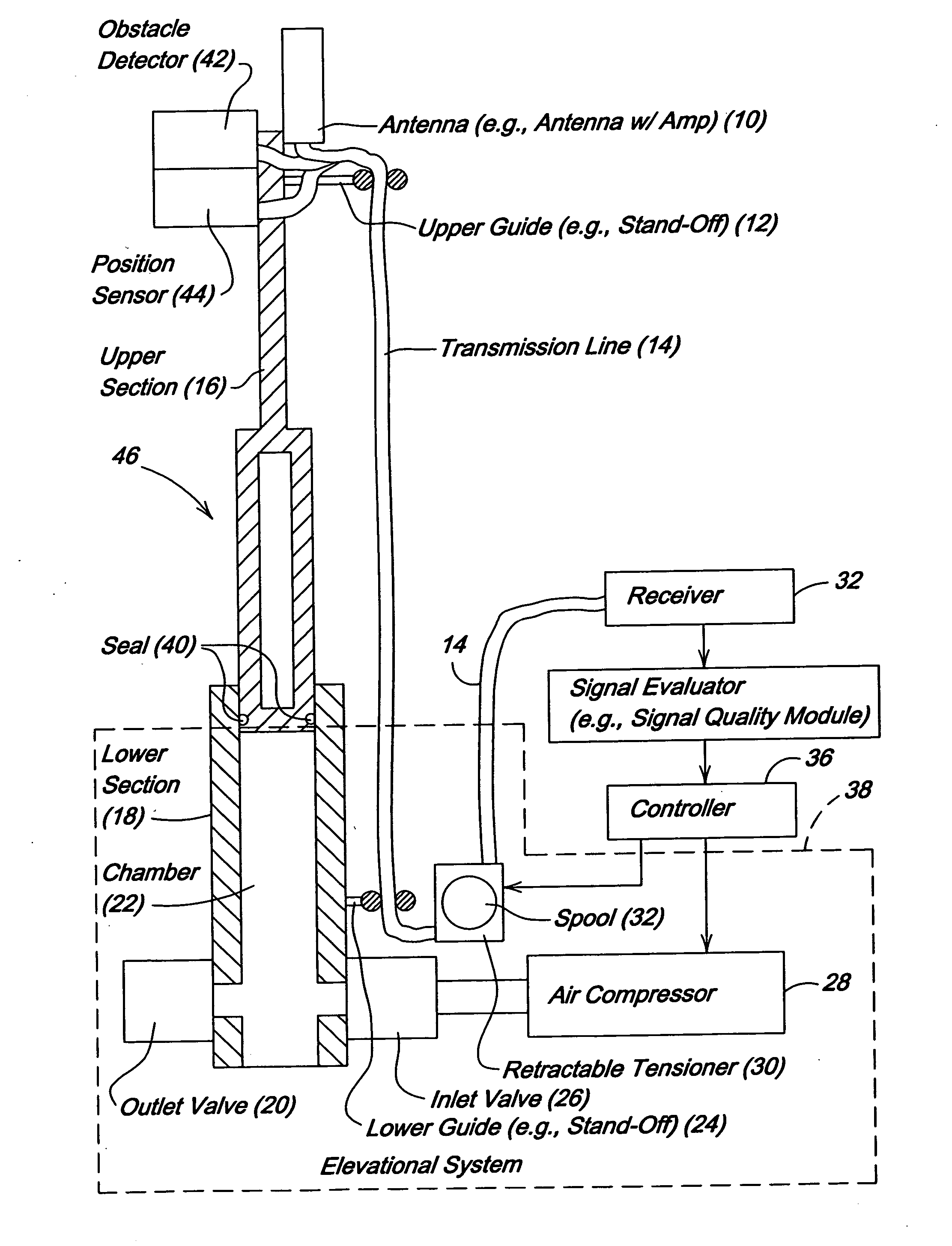
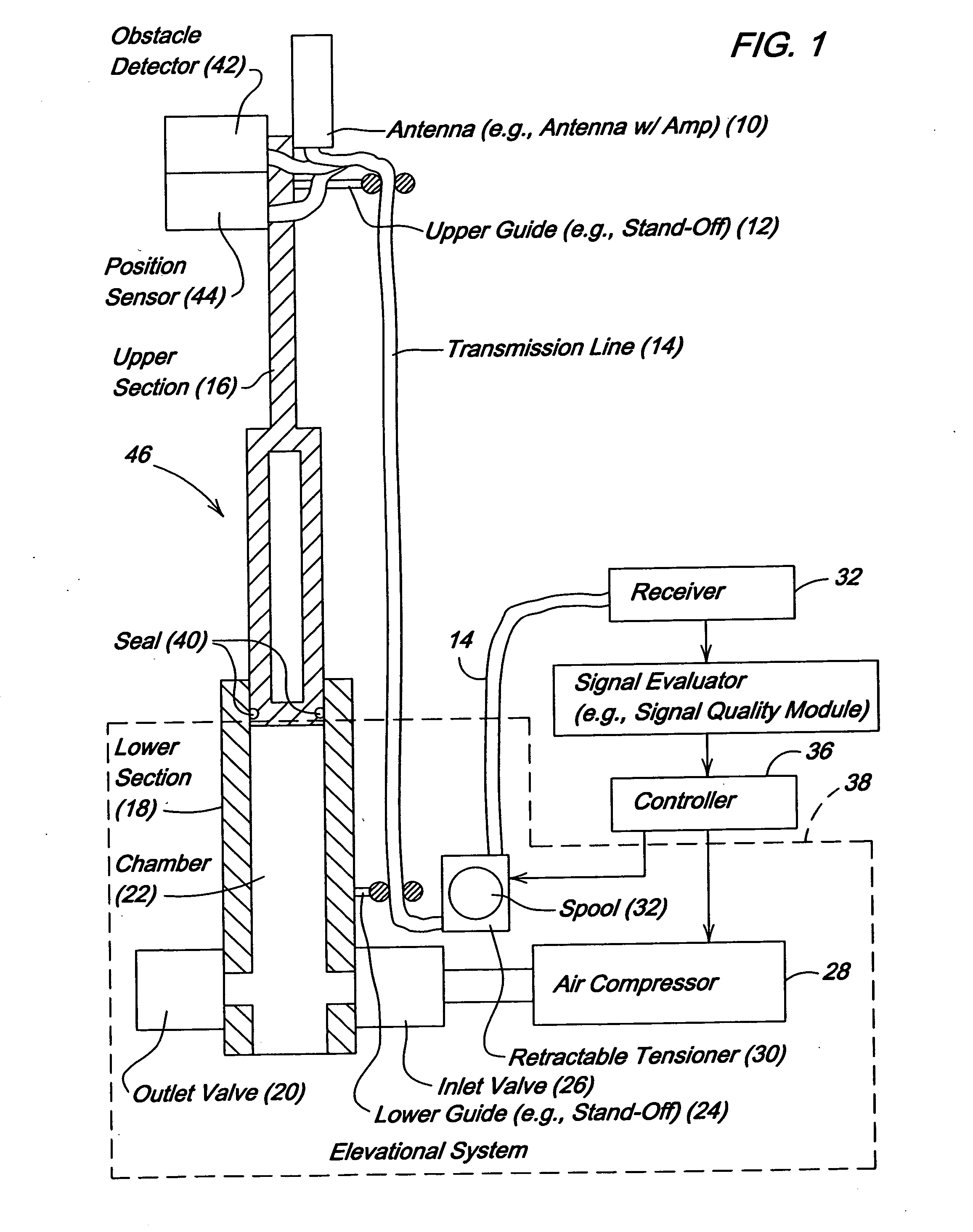
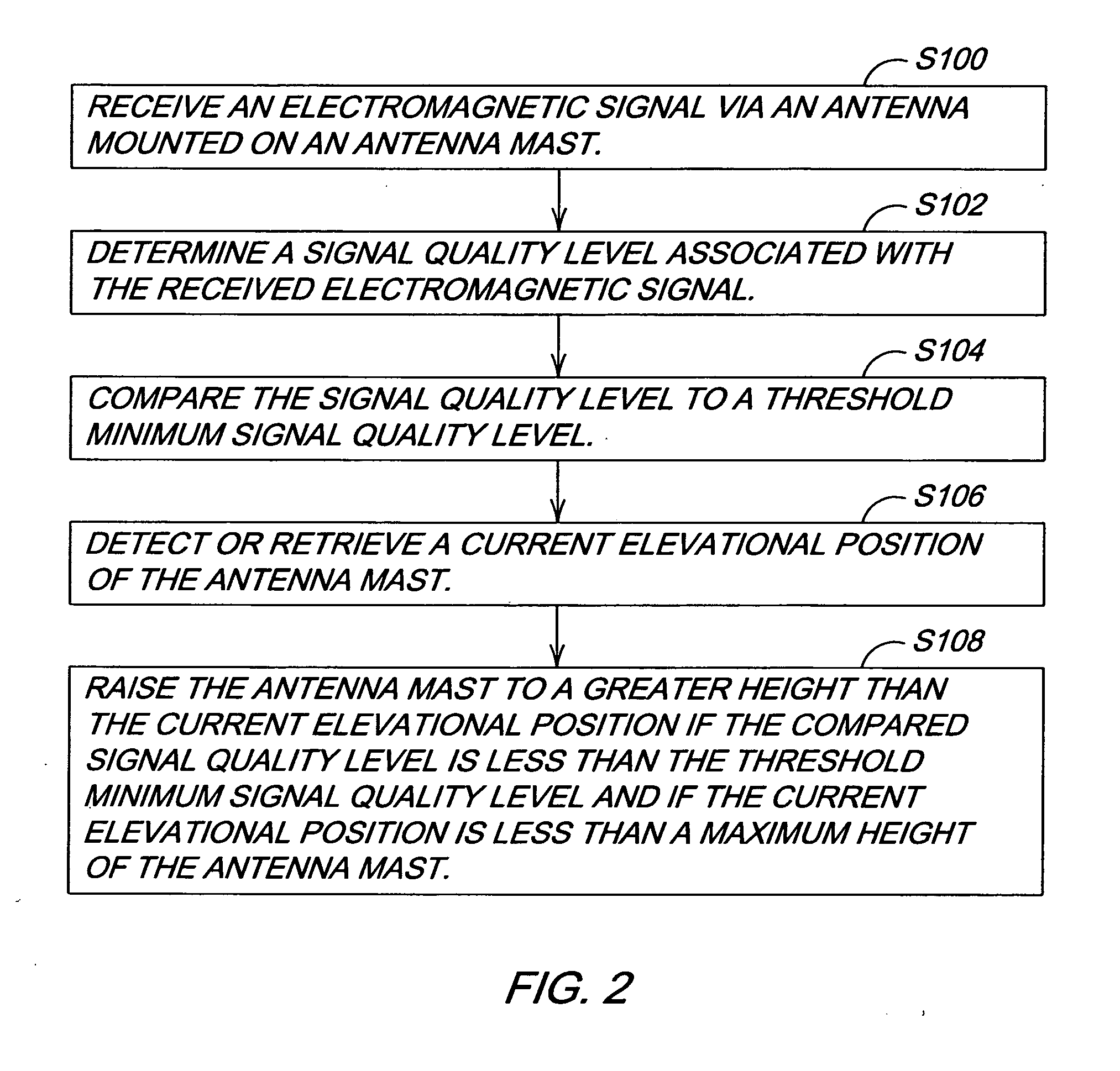
- A system that includes a receiver, signal evaluator, position sensor, and elevational system to automatically adjust the antenna mast's height based on signal quality and obstacle detection, using pneumatic or hydraulic mechanisms to extend the mast beyond its current position if signal quality is below a threshold and safe from obstructions.

Regulatory Standards for RTU Antenna Installation
The regulatory landscape for RTU antenna installation encompasses a complex framework of national and international standards that directly impact antenna height decisions and obstruction management strategies. These regulations serve as the foundational guidelines that telecommunications operators and industrial facilities must navigate when deploying remote terminal units across various operational environments.
Federal Communications Commission regulations in the United States establish comprehensive requirements for antenna installations, particularly focusing on radiofrequency exposure limits and structural safety standards. The FCC Part 1 and Part 90 regulations specify minimum separation distances from populated areas and mandate compliance with Maximum Permissible Exposure limits, which directly influence optimal antenna height calculations for RTU deployments.
International Telecommunication Union recommendations provide global harmonization standards that address antenna installation practices across different frequency bands commonly used by RTU systems. ITU-R recommendations specifically outline technical parameters for antenna height optimization while maintaining interference mitigation protocols, establishing baseline requirements that national regulatory bodies often adopt or modify for local implementation.
Industry-specific regulatory frameworks add additional layers of complexity to RTU antenna installation standards. The American National Standards Institute and Institute of Electrical and Electronics Engineers have developed comprehensive guidelines addressing structural integrity requirements, grounding protocols, and electromagnetic compatibility standards that must be considered alongside height optimization objectives.
Environmental and safety regulations significantly impact antenna installation practices, particularly in sensitive ecological areas or near aviation corridors. Federal Aviation Administration regulations mandate specific height restrictions and lighting requirements for structures exceeding designated thresholds, while Environmental Protection Agency guidelines address potential environmental impact assessments for certain installation scenarios.
Local zoning ordinances and municipal building codes represent critical regulatory considerations that vary significantly across jurisdictions. These local regulations often impose additional height restrictions, setback requirements, and aesthetic considerations that can substantially influence RTU antenna deployment strategies and require careful coordination with range optimization objectives.
Compliance documentation and certification requirements establish mandatory processes for regulatory approval, including structural engineering assessments, radiofrequency emission studies, and environmental impact evaluations. These regulatory processes directly influence project timelines and implementation costs while ensuring adherence to established safety and performance standards.
Federal Communications Commission regulations in the United States establish comprehensive requirements for antenna installations, particularly focusing on radiofrequency exposure limits and structural safety standards. The FCC Part 1 and Part 90 regulations specify minimum separation distances from populated areas and mandate compliance with Maximum Permissible Exposure limits, which directly influence optimal antenna height calculations for RTU deployments.
International Telecommunication Union recommendations provide global harmonization standards that address antenna installation practices across different frequency bands commonly used by RTU systems. ITU-R recommendations specifically outline technical parameters for antenna height optimization while maintaining interference mitigation protocols, establishing baseline requirements that national regulatory bodies often adopt or modify for local implementation.
Industry-specific regulatory frameworks add additional layers of complexity to RTU antenna installation standards. The American National Standards Institute and Institute of Electrical and Electronics Engineers have developed comprehensive guidelines addressing structural integrity requirements, grounding protocols, and electromagnetic compatibility standards that must be considered alongside height optimization objectives.
Environmental and safety regulations significantly impact antenna installation practices, particularly in sensitive ecological areas or near aviation corridors. Federal Aviation Administration regulations mandate specific height restrictions and lighting requirements for structures exceeding designated thresholds, while Environmental Protection Agency guidelines address potential environmental impact assessments for certain installation scenarios.
Local zoning ordinances and municipal building codes represent critical regulatory considerations that vary significantly across jurisdictions. These local regulations often impose additional height restrictions, setback requirements, and aesthetic considerations that can substantially influence RTU antenna deployment strategies and require careful coordination with range optimization objectives.
Compliance documentation and certification requirements establish mandatory processes for regulatory approval, including structural engineering assessments, radiofrequency emission studies, and environmental impact evaluations. These regulatory processes directly influence project timelines and implementation costs while ensuring adherence to established safety and performance standards.
Environmental Impact Assessment for RTU Deployments
The deployment of Remote Terminal Units with varying antenna heights presents significant environmental considerations that must be carefully evaluated to ensure sustainable and responsible implementation. Environmental impact assessments for RTU deployments encompass multiple ecological dimensions, ranging from immediate physical disruption to long-term ecosystem effects.
Habitat disruption represents a primary environmental concern during RTU installation processes. Ground-based equipment placement and foundation construction can disturb local soil composition, affecting underground ecosystems and root systems of nearby vegetation. The extent of this disruption correlates directly with antenna height requirements, as taller installations typically demand more substantial foundation systems and broader equipment footprints.
Wildlife interaction patterns constitute another critical assessment factor. Elevated antenna structures can interfere with bird migration routes and nesting behaviors, particularly when installations exceed certain height thresholds. Research indicates that antenna heights between 15-30 meters pose moderate risks to avian populations, while structures above 30 meters require comprehensive wildlife impact studies and potential mitigation measures.
Electromagnetic field exposure levels must be evaluated for both human and environmental safety. RTU antenna systems generate radiofrequency emissions that can affect sensitive ecological areas, particularly wetlands and protected habitats. Environmental monitoring protocols should establish baseline measurements before deployment and implement continuous monitoring systems to track any ecological changes.
Visual and aesthetic impacts on natural landscapes require consideration, especially in protected areas or regions with scenic value. Taller antenna installations create more pronounced visual intrusions, potentially affecting local tourism and recreational activities. Strategic placement and camouflage techniques can minimize these impacts while maintaining operational effectiveness.
Soil and water resource protection measures become increasingly important with larger RTU installations. Construction activities associated with higher antenna structures may require deeper excavations and more extensive site preparation, potentially affecting local drainage patterns and groundwater systems. Proper environmental safeguards must be implemented to prevent contamination and erosion.
Long-term maintenance activities also contribute to environmental impact considerations. Regular equipment servicing, vegetation management around installations, and eventual decommissioning procedures all require environmental planning to minimize ecological disruption throughout the RTU system lifecycle.
Habitat disruption represents a primary environmental concern during RTU installation processes. Ground-based equipment placement and foundation construction can disturb local soil composition, affecting underground ecosystems and root systems of nearby vegetation. The extent of this disruption correlates directly with antenna height requirements, as taller installations typically demand more substantial foundation systems and broader equipment footprints.
Wildlife interaction patterns constitute another critical assessment factor. Elevated antenna structures can interfere with bird migration routes and nesting behaviors, particularly when installations exceed certain height thresholds. Research indicates that antenna heights between 15-30 meters pose moderate risks to avian populations, while structures above 30 meters require comprehensive wildlife impact studies and potential mitigation measures.
Electromagnetic field exposure levels must be evaluated for both human and environmental safety. RTU antenna systems generate radiofrequency emissions that can affect sensitive ecological areas, particularly wetlands and protected habitats. Environmental monitoring protocols should establish baseline measurements before deployment and implement continuous monitoring systems to track any ecological changes.
Visual and aesthetic impacts on natural landscapes require consideration, especially in protected areas or regions with scenic value. Taller antenna installations create more pronounced visual intrusions, potentially affecting local tourism and recreational activities. Strategic placement and camouflage techniques can minimize these impacts while maintaining operational effectiveness.
Soil and water resource protection measures become increasingly important with larger RTU installations. Construction activities associated with higher antenna structures may require deeper excavations and more extensive site preparation, potentially affecting local drainage patterns and groundwater systems. Proper environmental safeguards must be implemented to prevent contamination and erosion.
Long-term maintenance activities also contribute to environmental impact considerations. Regular equipment servicing, vegetation management around installations, and eventual decommissioning procedures all require environmental planning to minimize ecological disruption throughout the RTU system lifecycle.
Unlock deeper insights with PatSnap Eureka Quick Research — get a full tech report to explore trends and direct your research. Try now!
Generate Your Research Report Instantly with AI Agent
Supercharge your innovation with PatSnap Eureka AI Agent Platform!