Carrier-Independent Scramjet Launch Program Execution
AUG 13, 20259 MIN READ
Generate Your Research Report Instantly with AI Agent
PatSnap Eureka helps you evaluate technical feasibility & market potential.
Scramjet Launch Program Background and Objectives
The Scramjet Launch Program represents a significant leap forward in aerospace technology, aiming to revolutionize space access through the development of carrier-independent hypersonic propulsion systems. This ambitious initiative builds upon decades of research in supersonic combustion ramjet (scramjet) technology, which has shown promise for achieving sustained hypersonic flight within the atmosphere.
The primary objective of this program is to create a reliable, reusable, and cost-effective launch system that can operate independently of traditional rocket carriers. By leveraging scramjet technology, the program seeks to overcome the limitations of conventional rocket propulsion, potentially reducing launch costs and increasing payload capacity for orbital and suborbital missions.
Historically, scramjet development can be traced back to the 1950s, with significant advancements made during the Cold War era. However, practical implementation has remained elusive due to the extreme technical challenges involved in achieving stable combustion at hypersonic speeds. Recent breakthroughs in materials science, computational fluid dynamics, and propulsion system design have reinvigorated interest in scramjet technology, paving the way for this ambitious launch program.
The program's goals extend beyond mere technological demonstration. It aims to establish a new paradigm in space access, enabling more frequent and flexible launch capabilities for both government and commercial applications. This includes potential uses in rapid global transportation, responsive space access for defense purposes, and economical satellite deployment for telecommunications and Earth observation.
Key technical objectives of the Scramjet Launch Program include achieving sustained hypersonic flight at Mach 5 and above, developing efficient fuel injection and combustion systems capable of operating in extreme conditions, and creating adaptive control systems for stable flight across a wide range of atmospheric conditions. Additionally, the program seeks to address challenges related to thermal management, structural integrity, and integration with existing space infrastructure.
From a broader perspective, the Scramjet Launch Program aligns with global trends towards more sustainable and efficient space exploration. By reducing reliance on traditional rocket propellants and potentially lowering the environmental impact of space launches, the program contributes to the ongoing efforts to make space access more environmentally friendly and economically viable for a wider range of applications.
As research progresses, the program is expected to yield significant advancements in hypersonic technology with potential spillover benefits in fields such as advanced materials, high-temperature electronics, and aerodynamics. These developments could have far-reaching implications for both civilian and military aerospace applications, potentially reshaping the future of air and space travel.
The primary objective of this program is to create a reliable, reusable, and cost-effective launch system that can operate independently of traditional rocket carriers. By leveraging scramjet technology, the program seeks to overcome the limitations of conventional rocket propulsion, potentially reducing launch costs and increasing payload capacity for orbital and suborbital missions.
Historically, scramjet development can be traced back to the 1950s, with significant advancements made during the Cold War era. However, practical implementation has remained elusive due to the extreme technical challenges involved in achieving stable combustion at hypersonic speeds. Recent breakthroughs in materials science, computational fluid dynamics, and propulsion system design have reinvigorated interest in scramjet technology, paving the way for this ambitious launch program.
The program's goals extend beyond mere technological demonstration. It aims to establish a new paradigm in space access, enabling more frequent and flexible launch capabilities for both government and commercial applications. This includes potential uses in rapid global transportation, responsive space access for defense purposes, and economical satellite deployment for telecommunications and Earth observation.
Key technical objectives of the Scramjet Launch Program include achieving sustained hypersonic flight at Mach 5 and above, developing efficient fuel injection and combustion systems capable of operating in extreme conditions, and creating adaptive control systems for stable flight across a wide range of atmospheric conditions. Additionally, the program seeks to address challenges related to thermal management, structural integrity, and integration with existing space infrastructure.
From a broader perspective, the Scramjet Launch Program aligns with global trends towards more sustainable and efficient space exploration. By reducing reliance on traditional rocket propellants and potentially lowering the environmental impact of space launches, the program contributes to the ongoing efforts to make space access more environmentally friendly and economically viable for a wider range of applications.
As research progresses, the program is expected to yield significant advancements in hypersonic technology with potential spillover benefits in fields such as advanced materials, high-temperature electronics, and aerodynamics. These developments could have far-reaching implications for both civilian and military aerospace applications, potentially reshaping the future of air and space travel.
Market Analysis for Carrier-Independent Scramjet Systems
The market for carrier-independent scramjet systems is experiencing significant growth, driven by increasing demand for hypersonic capabilities in both military and commercial sectors. This emerging technology offers substantial advantages over traditional rocket-based systems, including higher speed, improved fuel efficiency, and greater operational flexibility.
In the defense sector, carrier-independent scramjet systems are attracting considerable attention for their potential to enhance strategic deterrence and rapid response capabilities. Major military powers are investing heavily in hypersonic weapons and defense systems, creating a robust market for scramjet technology. The United States, China, and Russia are leading this race, with other nations like India, Japan, and European countries also showing interest in developing similar capabilities.
The commercial space industry is another key driver of market growth for carrier-independent scramjet systems. As the cost of space access continues to decrease, there is growing interest in using scramjet technology for satellite launches, space tourism, and point-to-point transportation. Companies like SpaceX, Blue Origin, and Virgin Galactic are exploring the potential of scramjet-powered vehicles to revolutionize space travel and high-speed global transportation.
The market for carrier-independent scramjet systems is also benefiting from advancements in materials science and manufacturing technologies. These developments are enabling the production of more durable and cost-effective components capable of withstanding the extreme conditions associated with hypersonic flight. As a result, the overall system costs are expected to decrease, making scramjet technology more accessible to a wider range of customers.
However, the market faces several challenges that could impact its growth trajectory. Technical hurdles, such as managing extreme temperatures and achieving stable combustion at hypersonic speeds, continue to pose significant obstacles. Additionally, regulatory frameworks for hypersonic vehicles are still evolving, which could create uncertainty for market players and potential customers.
Despite these challenges, the long-term outlook for the carrier-independent scramjet systems market remains positive. As technology matures and costs decrease, new applications are likely to emerge, further expanding the market potential. The integration of artificial intelligence and advanced control systems is expected to enhance the performance and reliability of scramjet-powered vehicles, opening up new possibilities for both military and civilian use.
In the defense sector, carrier-independent scramjet systems are attracting considerable attention for their potential to enhance strategic deterrence and rapid response capabilities. Major military powers are investing heavily in hypersonic weapons and defense systems, creating a robust market for scramjet technology. The United States, China, and Russia are leading this race, with other nations like India, Japan, and European countries also showing interest in developing similar capabilities.
The commercial space industry is another key driver of market growth for carrier-independent scramjet systems. As the cost of space access continues to decrease, there is growing interest in using scramjet technology for satellite launches, space tourism, and point-to-point transportation. Companies like SpaceX, Blue Origin, and Virgin Galactic are exploring the potential of scramjet-powered vehicles to revolutionize space travel and high-speed global transportation.
The market for carrier-independent scramjet systems is also benefiting from advancements in materials science and manufacturing technologies. These developments are enabling the production of more durable and cost-effective components capable of withstanding the extreme conditions associated with hypersonic flight. As a result, the overall system costs are expected to decrease, making scramjet technology more accessible to a wider range of customers.
However, the market faces several challenges that could impact its growth trajectory. Technical hurdles, such as managing extreme temperatures and achieving stable combustion at hypersonic speeds, continue to pose significant obstacles. Additionally, regulatory frameworks for hypersonic vehicles are still evolving, which could create uncertainty for market players and potential customers.
Despite these challenges, the long-term outlook for the carrier-independent scramjet systems market remains positive. As technology matures and costs decrease, new applications are likely to emerge, further expanding the market potential. The integration of artificial intelligence and advanced control systems is expected to enhance the performance and reliability of scramjet-powered vehicles, opening up new possibilities for both military and civilian use.
Current Challenges in Carrier-Independent Scramjet Technology
Carrier-independent scramjet technology faces several significant challenges that hinder its widespread adoption and operational effectiveness. One of the primary obstacles is the complexity of achieving stable combustion at hypersonic speeds. The extremely short residence time of air in the combustion chamber, typically measured in milliseconds, makes it difficult to achieve complete fuel mixing and combustion.
Another major challenge lies in the thermal management of the scramjet engine. The intense heat generated during hypersonic flight can cause material degradation and structural failure. Current materials and cooling systems struggle to withstand the extreme temperatures, limiting the operational duration and reusability of scramjet engines.
The development of efficient fuel injection and mixing systems presents another hurdle. Achieving optimal fuel distribution and mixing in the supersonic airflow is crucial for combustion efficiency but remains a complex engineering problem. Innovative injection techniques and advanced computational fluid dynamics are needed to address this issue.
Control and stability of the scramjet engine across a wide range of flight conditions pose significant challenges. The engine must operate effectively from the initial acceleration phase to cruise conditions, requiring sophisticated control systems and adaptive algorithms to maintain performance and prevent unstart conditions.
Integrating the scramjet engine with a suitable airframe design is another area of concern. The engine-airframe integration must minimize drag while maximizing thrust, a delicate balance that requires advanced aerodynamic modeling and innovative structural designs.
The lack of ground-based testing facilities that can accurately simulate hypersonic flight conditions hampers the development and validation of scramjet technologies. This limitation necessitates a heavy reliance on computational modeling and expensive flight tests, slowing down the iterative design process.
Lastly, the development of robust and lightweight materials capable of withstanding the extreme conditions of hypersonic flight remains a critical challenge. Advanced composites and ceramic materials show promise but require further research and development to meet the stringent requirements of scramjet applications.
Another major challenge lies in the thermal management of the scramjet engine. The intense heat generated during hypersonic flight can cause material degradation and structural failure. Current materials and cooling systems struggle to withstand the extreme temperatures, limiting the operational duration and reusability of scramjet engines.
The development of efficient fuel injection and mixing systems presents another hurdle. Achieving optimal fuel distribution and mixing in the supersonic airflow is crucial for combustion efficiency but remains a complex engineering problem. Innovative injection techniques and advanced computational fluid dynamics are needed to address this issue.
Control and stability of the scramjet engine across a wide range of flight conditions pose significant challenges. The engine must operate effectively from the initial acceleration phase to cruise conditions, requiring sophisticated control systems and adaptive algorithms to maintain performance and prevent unstart conditions.
Integrating the scramjet engine with a suitable airframe design is another area of concern. The engine-airframe integration must minimize drag while maximizing thrust, a delicate balance that requires advanced aerodynamic modeling and innovative structural designs.
The lack of ground-based testing facilities that can accurately simulate hypersonic flight conditions hampers the development and validation of scramjet technologies. This limitation necessitates a heavy reliance on computational modeling and expensive flight tests, slowing down the iterative design process.
Lastly, the development of robust and lightweight materials capable of withstanding the extreme conditions of hypersonic flight remains a critical challenge. Advanced composites and ceramic materials show promise but require further research and development to meet the stringent requirements of scramjet applications.
Existing Carrier-Independent Scramjet Launch Solutions
01 Scramjet engine design and configuration
Scramjet engines are designed for hypersonic flight, utilizing supersonic airflow for combustion. Key aspects include inlet design, combustion chamber configuration, and nozzle optimization to achieve efficient propulsion at high Mach numbers. Advanced materials and cooling systems are crucial for managing extreme temperatures.- Scramjet engine design and configuration: Scramjet engines are designed for hypersonic flight, utilizing supersonic airflow for combustion. Key aspects include inlet design, combustion chamber configuration, and nozzle optimization to achieve efficient propulsion at high speeds. Advanced materials and cooling systems are employed to withstand extreme temperatures and pressures.
- Fuel injection and mixing in scramjets: Efficient fuel injection and mixing are crucial for scramjet performance. Various techniques are employed, such as wall-injection, strut-based injection, and cavity-aided mixing. These methods aim to enhance fuel-air mixing and combustion efficiency in the supersonic airflow, optimizing thrust generation and reducing fuel consumption.
- Thermal management and cooling systems: Scramjets operate at extremely high temperatures, necessitating advanced thermal management solutions. Cooling systems may include regenerative cooling, film cooling, and transpiration cooling. These techniques help protect engine components from thermal damage and maintain structural integrity during hypersonic flight.
- Integration of scramjets with aircraft and spacecraft: Integrating scramjet engines into aircraft and spacecraft designs presents unique challenges. Considerations include aerodynamic shaping, propulsion-airframe integration, and transition between different propulsion modes. Advanced control systems and materials are employed to optimize performance across a wide range of flight conditions.
- Scramjet testing and simulation: Development and optimization of scramjet engines rely heavily on testing and simulation. This includes wind tunnel testing, computational fluid dynamics (CFD) simulations, and flight testing of prototype vehicles. Advanced sensors and data acquisition systems are used to gather critical performance data and validate theoretical models.
02 Fuel injection and mixing in scramjets
Efficient fuel injection and mixing are critical for scramjet performance. Techniques include advanced injector designs, fuel staging, and innovative mixing strategies to ensure rapid and complete combustion in the supersonic airflow. Computational fluid dynamics and experimental testing are used to optimize these systems.Expand Specific Solutions03 Thermal management and cooling systems
Managing extreme temperatures in scramjet engines is crucial for sustained operation. Advanced cooling techniques, including regenerative cooling, film cooling, and the use of thermal protection systems, are employed to protect engine components and maintain structural integrity during hypersonic flight.Expand Specific Solutions04 Integration of scramjets with aircraft and spacecraft
Integrating scramjet engines into aircraft and spacecraft designs presents unique challenges. This includes considerations for aerodynamics, weight distribution, and overall vehicle configuration to achieve optimal performance across a wide range of flight conditions, from takeoff to hypersonic cruise.Expand Specific Solutions05 Control systems and flight management for scramjet-powered vehicles
Developing robust control systems for scramjet-powered vehicles is essential for stable and efficient operation. This includes advanced sensors, real-time data processing, and adaptive control algorithms to manage engine performance, vehicle attitude, and trajectory across various flight regimes.Expand Specific Solutions
Key Players in Scramjet and Hypersonic Research
The research on carrier-independent scramjet launch program execution is in an early developmental stage, with significant potential for growth. The market size is expanding as governments and aerospace companies invest in hypersonic technologies. The technical maturity is still evolving, with key players like China Academy of Aerospace Aerodynamics, Nanjing University of Aeronautics & Astronautics, and Harbin Institute of Technology leading research efforts. Companies such as AVIC Shenyang Liming Aero-Engine and Boeing are also contributing to advancements. The competitive landscape is characterized by a mix of academic institutions, government agencies, and private corporations, each bringing unique expertise to this complex field.
China Academy of Aerospace Aerodynamics
Technical Solution: The China Academy of Aerospace Aerodynamics (CAAA) has been at the forefront of scramjet research for carrier-independent launch programs. Their approach focuses on developing a dual-mode scramjet engine capable of operating efficiently across a wide range of Mach numbers. The engine design incorporates advanced fuel injection and mixing techniques to optimize combustion efficiency at hypersonic speeds. CAAA has successfully conducted ground tests of their scramjet engine, demonstrating sustained combustion at Mach 5-7 [1]. Their research also includes the development of novel thermal protection systems to withstand the extreme temperatures encountered during hypersonic flight. The academy has made significant progress in computational fluid dynamics (CFD) simulations to predict and optimize scramjet performance under various flight conditions [3].
Strengths: Extensive experience in hypersonic technology, strong government support, and advanced testing facilities. Weaknesses: Potential limitations in international collaboration and technology transfer due to strategic nature of the research.
Nanjing University of Aeronautics & Astronautics
Technical Solution: Nanjing University of Aeronautics & Astronautics (NUAA) has been actively researching carrier-independent scramjet launch programs, focusing on innovative propulsion systems and aerodynamic designs. Their approach involves developing a multi-stage scramjet engine with variable geometry inlets to optimize performance across different flight regimes. NUAA has made significant advancements in fuel injection strategies, utilizing supercritical kerosene as a high-energy-density fuel for scramjet propulsion [2]. The university's research team has also developed advanced numerical simulation tools to model complex hypersonic flows and combustion processes within scramjet engines. Their work includes experimental studies on plasma-assisted combustion to enhance flame stability and combustion efficiency at high Mach numbers [4]. NUAA has successfully conducted small-scale wind tunnel tests of their scramjet designs, demonstrating promising results in terms of thrust generation and fuel efficiency.
Strengths: Strong focus on innovative propulsion technologies and advanced numerical modeling capabilities. Weaknesses: Limited experience in full-scale flight testing and potential challenges in scaling up laboratory results to operational systems.
Core Innovations in Scramjet Propulsion Technology
Apparatus for supersonic combustion in a restricted length
PatentInactiveUS5253474A
Innovation
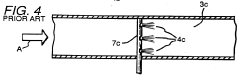
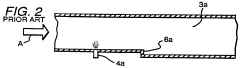
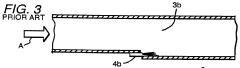
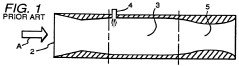
- A supersonic combustor design featuring a backward-facing step with a forward-facing ramp and axial or normal fuel injection, where the ramp converges into the combustion cavity to ensure fuel penetration and mixing, and optionally spanwise channels to enhance shear mixing, allowing for rapid combustion within a distance of one foot or less.
International Regulations on Hypersonic Technology Development
The development of hypersonic technology, particularly in the context of carrier-independent scramjet launch programs, is subject to a complex web of international regulations. These regulations aim to balance technological advancement with global security concerns and arms control measures. The Missile Technology Control Regime (MTCR), established in 1987, plays a crucial role in regulating the export of technologies related to missile systems capable of delivering weapons of mass destruction. While not specifically targeting hypersonic systems, the MTCR's guidelines significantly impact the development and transfer of scramjet technologies.
In addition to the MTCR, the Wassenaar Arrangement on Export Controls for Conventional Arms and Dual-Use Goods and Technologies provides another layer of international oversight. This arrangement, which includes 42 participating states, seeks to promote transparency and responsibility in transfers of conventional arms and dual-use goods and technologies. Hypersonic technologies, including those related to scramjet engines, often fall under the purview of this arrangement due to their potential dual-use applications.
The United Nations Office for Disarmament Affairs (UNODA) also plays a role in shaping the regulatory landscape for hypersonic technology development. Through various resolutions and treaties, the UN aims to prevent the proliferation of advanced weapons technologies that could destabilize global security. While there is no specific treaty addressing hypersonic weapons, existing frameworks such as the Treaty on the Non-Proliferation of Nuclear Weapons (NPT) indirectly influence the development and deployment of hypersonic delivery systems.
National regulations also contribute to the international regulatory environment. Countries with advanced hypersonic research programs, such as the United States, Russia, and China, have implemented their own export control regimes and technology safeguards. These national regulations often exceed the requirements of international agreements, creating additional barriers to the transfer of scramjet and hypersonic technologies.
The evolving nature of hypersonic technology presents ongoing challenges for international regulatory bodies. As the capabilities of scramjet-powered vehicles advance, there is growing pressure to update existing frameworks or develop new agreements specifically addressing hypersonic systems. Discussions within forums such as the Conference on Disarmament have begun to explore potential arms control measures for hypersonic weapons, which could have implications for research and development activities in the field of carrier-independent scramjet launch programs.
In addition to the MTCR, the Wassenaar Arrangement on Export Controls for Conventional Arms and Dual-Use Goods and Technologies provides another layer of international oversight. This arrangement, which includes 42 participating states, seeks to promote transparency and responsibility in transfers of conventional arms and dual-use goods and technologies. Hypersonic technologies, including those related to scramjet engines, often fall under the purview of this arrangement due to their potential dual-use applications.
The United Nations Office for Disarmament Affairs (UNODA) also plays a role in shaping the regulatory landscape for hypersonic technology development. Through various resolutions and treaties, the UN aims to prevent the proliferation of advanced weapons technologies that could destabilize global security. While there is no specific treaty addressing hypersonic weapons, existing frameworks such as the Treaty on the Non-Proliferation of Nuclear Weapons (NPT) indirectly influence the development and deployment of hypersonic delivery systems.
National regulations also contribute to the international regulatory environment. Countries with advanced hypersonic research programs, such as the United States, Russia, and China, have implemented their own export control regimes and technology safeguards. These national regulations often exceed the requirements of international agreements, creating additional barriers to the transfer of scramjet and hypersonic technologies.
The evolving nature of hypersonic technology presents ongoing challenges for international regulatory bodies. As the capabilities of scramjet-powered vehicles advance, there is growing pressure to update existing frameworks or develop new agreements specifically addressing hypersonic systems. Discussions within forums such as the Conference on Disarmament have begun to explore potential arms control measures for hypersonic weapons, which could have implications for research and development activities in the field of carrier-independent scramjet launch programs.
Environmental Impact of Scramjet Launch Systems
The environmental impact of scramjet launch systems is a critical consideration in the development and implementation of carrier-independent scramjet launch programs. These advanced propulsion systems offer potential advantages in terms of efficiency and performance, but they also present unique environmental challenges that must be carefully assessed and mitigated.
One of the primary environmental concerns associated with scramjet launch systems is their emissions profile. Unlike traditional rocket engines, scramjets utilize atmospheric oxygen for combustion, which can lead to different exhaust compositions. The high-speed, high-temperature combustion process in scramjets may result in the formation of nitrogen oxides (NOx) and other pollutants. These emissions can contribute to air quality issues and potentially impact the upper atmosphere, including the ozone layer.
Noise pollution is another significant environmental factor to consider. Scramjet engines operate at hypersonic speeds, generating intense acoustic waves that can propagate over long distances. This noise pollution may have adverse effects on wildlife habitats and human populations in the vicinity of launch sites. Careful site selection and the implementation of noise reduction technologies will be crucial in minimizing these impacts.
The thermal footprint of scramjet launch systems is also a concern. The extreme temperatures generated during operation can lead to localized heating of the surrounding atmosphere and potentially contribute to climate change effects if launches become frequent. Additionally, the heat generated may impact local ecosystems and weather patterns in the immediate launch area.
Water resource management is an important aspect of environmental stewardship for scramjet launch programs. The high-temperature operation of these engines may require significant cooling systems, potentially placing strain on local water supplies. Developing efficient water recycling and conservation methods will be essential to minimize the environmental footprint of these launch systems.
Debris management is another critical environmental consideration. While scramjet-powered vehicles may produce less debris than traditional multi-stage rockets, there is still potential for environmental impact from discarded components or failed launches. Implementing robust debris tracking and recovery systems will be necessary to mitigate these risks and protect both terrestrial and marine ecosystems.
As carrier-independent scramjet launch programs advance, it will be crucial to conduct comprehensive environmental impact assessments and develop mitigation strategies. This may include the use of cleaner propellants, advanced emission control technologies, and innovative launch site designs that minimize ecological disruption. Ongoing monitoring and research will be essential to understand the long-term environmental effects of these systems and to inform future improvements in their design and operation.
One of the primary environmental concerns associated with scramjet launch systems is their emissions profile. Unlike traditional rocket engines, scramjets utilize atmospheric oxygen for combustion, which can lead to different exhaust compositions. The high-speed, high-temperature combustion process in scramjets may result in the formation of nitrogen oxides (NOx) and other pollutants. These emissions can contribute to air quality issues and potentially impact the upper atmosphere, including the ozone layer.
Noise pollution is another significant environmental factor to consider. Scramjet engines operate at hypersonic speeds, generating intense acoustic waves that can propagate over long distances. This noise pollution may have adverse effects on wildlife habitats and human populations in the vicinity of launch sites. Careful site selection and the implementation of noise reduction technologies will be crucial in minimizing these impacts.
The thermal footprint of scramjet launch systems is also a concern. The extreme temperatures generated during operation can lead to localized heating of the surrounding atmosphere and potentially contribute to climate change effects if launches become frequent. Additionally, the heat generated may impact local ecosystems and weather patterns in the immediate launch area.
Water resource management is an important aspect of environmental stewardship for scramjet launch programs. The high-temperature operation of these engines may require significant cooling systems, potentially placing strain on local water supplies. Developing efficient water recycling and conservation methods will be essential to minimize the environmental footprint of these launch systems.
Debris management is another critical environmental consideration. While scramjet-powered vehicles may produce less debris than traditional multi-stage rockets, there is still potential for environmental impact from discarded components or failed launches. Implementing robust debris tracking and recovery systems will be necessary to mitigate these risks and protect both terrestrial and marine ecosystems.
As carrier-independent scramjet launch programs advance, it will be crucial to conduct comprehensive environmental impact assessments and develop mitigation strategies. This may include the use of cleaner propellants, advanced emission control technologies, and innovative launch site designs that minimize ecological disruption. Ongoing monitoring and research will be essential to understand the long-term environmental effects of these systems and to inform future improvements in their design and operation.
Unlock deeper insights with PatSnap Eureka Quick Research — get a full tech report to explore trends and direct your research. Try now!
Generate Your Research Report Instantly with AI Agent
Supercharge your innovation with PatSnap Eureka AI Agent Platform!