

Iron Oxide’s Functionality in Dynamic Conditions
FEB 12, 20269 MIN READ
Generate Your Research Report Instantly with AI Agent
Patsnap Eureka helps you evaluate technical feasibility & market potential.
Iron Oxide Dynamic Functionality Background and Objectives
Iron oxide materials have emerged as critical functional components across diverse industrial and scientific applications, ranging from catalysis and energy storage to biomedical engineering and environmental remediation. Historically, research on iron oxides primarily focused on their static properties, such as crystal structure, magnetic characteristics, and surface chemistry under equilibrium conditions. However, real-world applications increasingly demand materials that maintain or enhance their functionality under dynamic operational environments, including fluctuating temperatures, varying pressure conditions, mechanical stress, and electrochemical cycling.
The transition from static to dynamic characterization represents a paradigm shift in materials science research. Traditional analytical approaches often fail to capture the transient behaviors, structural transformations, and performance degradation mechanisms that occur during actual operation. This gap between laboratory characterization and practical performance has motivated the scientific community to develop advanced in-situ and operando techniques capable of monitoring iron oxide materials under realistic working conditions.
The primary objective of this research direction is to establish comprehensive understanding of how iron oxide materials respond to dynamic stimuli and operational stresses. This encompasses investigating phase transitions during thermal cycling, tracking structural evolution under electrochemical conditions, monitoring catalytic active site transformations during reactions, and understanding mechanical property changes under stress. Such knowledge is essential for designing robust iron oxide-based systems with predictable long-term performance.
Furthermore, this research aims to bridge the gap between fundamental materials science and engineering applications by developing predictive models that correlate dynamic structural changes with functional performance metrics. By elucidating the relationship between operational conditions and material behavior, researchers can establish design principles for next-generation iron oxide materials with enhanced stability, efficiency, and durability. This approach ultimately enables the optimization of iron oxide functionality across applications including batteries, fuel cells, catalytic converters, magnetic devices, and drug delivery systems, where dynamic operational conditions are inherent to their function.
The transition from static to dynamic characterization represents a paradigm shift in materials science research. Traditional analytical approaches often fail to capture the transient behaviors, structural transformations, and performance degradation mechanisms that occur during actual operation. This gap between laboratory characterization and practical performance has motivated the scientific community to develop advanced in-situ and operando techniques capable of monitoring iron oxide materials under realistic working conditions.
The primary objective of this research direction is to establish comprehensive understanding of how iron oxide materials respond to dynamic stimuli and operational stresses. This encompasses investigating phase transitions during thermal cycling, tracking structural evolution under electrochemical conditions, monitoring catalytic active site transformations during reactions, and understanding mechanical property changes under stress. Such knowledge is essential for designing robust iron oxide-based systems with predictable long-term performance.
Furthermore, this research aims to bridge the gap between fundamental materials science and engineering applications by developing predictive models that correlate dynamic structural changes with functional performance metrics. By elucidating the relationship between operational conditions and material behavior, researchers can establish design principles for next-generation iron oxide materials with enhanced stability, efficiency, and durability. This approach ultimately enables the optimization of iron oxide functionality across applications including batteries, fuel cells, catalytic converters, magnetic devices, and drug delivery systems, where dynamic operational conditions are inherent to their function.
Market Demand for Dynamic Iron Oxide Applications
The market demand for dynamic iron oxide applications is experiencing significant growth across multiple industrial sectors, driven by the material's unique responsive properties under varying environmental conditions. Industries are increasingly seeking materials that can adapt to changing operational parameters, and iron oxide's ability to modify its magnetic, catalytic, and structural characteristics in real-time positions it as a critical functional material for next-generation applications.
In the energy storage sector, dynamic iron oxide materials are gaining traction as electrode components in advanced battery systems and supercapacitors. The material's capacity to undergo reversible phase transitions during charge-discharge cycles addresses the industry's pressing need for higher energy density and longer cycle life. Manufacturing facilities are actively exploring iron oxide nanostructures that can accommodate volume expansion during electrochemical reactions, reducing mechanical degradation and extending device longevity.
The environmental remediation market represents another substantial demand driver. Water treatment facilities and industrial pollution control systems require materials capable of responding to fluctuating contaminant concentrations and pH levels. Dynamic iron oxide systems offer adaptive adsorption and catalytic degradation capabilities, automatically adjusting their surface chemistry based on pollutant profiles. This responsiveness reduces operational costs and improves treatment efficiency compared to static filtration materials.
Biomedical applications constitute a rapidly expanding market segment. Pharmaceutical companies and medical device manufacturers are investing in iron oxide nanoparticles for targeted drug delivery and magnetic hyperthermia treatments. The demand centers on materials that can respond to external magnetic fields or physiological conditions, enabling precise control over therapeutic agent release and localized heating for cancer treatment. Regulatory approval pathways for these applications are becoming clearer, accelerating commercial development.
The catalysis industry shows increasing interest in dynamic iron oxide systems for chemical synthesis and automotive emission control. Catalysts that can adjust their active sites based on reaction conditions or temperature fluctuations offer superior selectivity and efficiency. Automotive manufacturers particularly seek materials that maintain catalytic performance across wide temperature ranges encountered in real-world driving conditions, addressing stricter emission standards globally.
Smart materials and sensor applications represent emerging demand areas. Electronics manufacturers require responsive materials for adaptive devices, while infrastructure monitoring systems need sensors capable of detecting environmental changes. Iron oxide's tunable properties under dynamic conditions make it suitable for developing intelligent coatings, self-healing materials, and environmental sensors that can operate autonomously without external power sources.
In the energy storage sector, dynamic iron oxide materials are gaining traction as electrode components in advanced battery systems and supercapacitors. The material's capacity to undergo reversible phase transitions during charge-discharge cycles addresses the industry's pressing need for higher energy density and longer cycle life. Manufacturing facilities are actively exploring iron oxide nanostructures that can accommodate volume expansion during electrochemical reactions, reducing mechanical degradation and extending device longevity.
The environmental remediation market represents another substantial demand driver. Water treatment facilities and industrial pollution control systems require materials capable of responding to fluctuating contaminant concentrations and pH levels. Dynamic iron oxide systems offer adaptive adsorption and catalytic degradation capabilities, automatically adjusting their surface chemistry based on pollutant profiles. This responsiveness reduces operational costs and improves treatment efficiency compared to static filtration materials.
Biomedical applications constitute a rapidly expanding market segment. Pharmaceutical companies and medical device manufacturers are investing in iron oxide nanoparticles for targeted drug delivery and magnetic hyperthermia treatments. The demand centers on materials that can respond to external magnetic fields or physiological conditions, enabling precise control over therapeutic agent release and localized heating for cancer treatment. Regulatory approval pathways for these applications are becoming clearer, accelerating commercial development.
The catalysis industry shows increasing interest in dynamic iron oxide systems for chemical synthesis and automotive emission control. Catalysts that can adjust their active sites based on reaction conditions or temperature fluctuations offer superior selectivity and efficiency. Automotive manufacturers particularly seek materials that maintain catalytic performance across wide temperature ranges encountered in real-world driving conditions, addressing stricter emission standards globally.
Smart materials and sensor applications represent emerging demand areas. Electronics manufacturers require responsive materials for adaptive devices, while infrastructure monitoring systems need sensors capable of detecting environmental changes. Iron oxide's tunable properties under dynamic conditions make it suitable for developing intelligent coatings, self-healing materials, and environmental sensors that can operate autonomously without external power sources.
Current Status and Challenges in Dynamic Iron Oxide Research
Iron oxide materials have garnered substantial attention in recent years due to their unique physicochemical properties and versatile applications across catalysis, energy storage, environmental remediation, and biomedical fields. However, understanding and controlling iron oxide functionality under dynamic conditions remains a significant challenge that limits their practical deployment in real-world applications.
Current research predominantly focuses on static or quasi-static characterization methods, which fail to capture the transient structural and electronic transformations that iron oxides undergo during operational conditions. Advanced in-situ and operando techniques such as synchrotron-based X-ray absorption spectroscopy, environmental transmission electron microscopy, and time-resolved spectroscopy are being developed but remain limited by temporal resolution, spatial constraints, and the complexity of data interpretation under realistic dynamic environments.
A major technical bottleneck lies in the phase transformation behavior of iron oxides under fluctuating temperature, pressure, and chemical environments. The interconversion between different polymorphs such as magnetite, maghemite, hematite, and wüstite occurs rapidly under dynamic conditions, yet the kinetics and mechanisms governing these transitions are poorly understood. This knowledge gap hinders the rational design of iron oxide materials with predictable performance stability.
The challenge is further compounded by surface reconstruction phenomena. Under dynamic redox conditions, iron oxide surfaces undergo continuous restructuring, leading to variations in active site distribution, coordination environments, and electronic properties. Existing characterization tools struggle to track these nanoscale surface changes in real-time, creating a disconnect between observed macroscopic performance and underlying atomic-level processes.
Geographically, leading research efforts are concentrated in North America, Europe, and East Asia, particularly in institutions with access to large-scale synchrotron facilities and advanced microscopy infrastructure. However, the high cost and limited accessibility of these facilities create barriers for widespread investigation. Additionally, computational modeling approaches, while promising, face challenges in accurately simulating dynamic conditions due to the complexity of multi-scale phenomena and the computational expense of ab initio molecular dynamics simulations over relevant timescales.
Current research predominantly focuses on static or quasi-static characterization methods, which fail to capture the transient structural and electronic transformations that iron oxides undergo during operational conditions. Advanced in-situ and operando techniques such as synchrotron-based X-ray absorption spectroscopy, environmental transmission electron microscopy, and time-resolved spectroscopy are being developed but remain limited by temporal resolution, spatial constraints, and the complexity of data interpretation under realistic dynamic environments.
A major technical bottleneck lies in the phase transformation behavior of iron oxides under fluctuating temperature, pressure, and chemical environments. The interconversion between different polymorphs such as magnetite, maghemite, hematite, and wüstite occurs rapidly under dynamic conditions, yet the kinetics and mechanisms governing these transitions are poorly understood. This knowledge gap hinders the rational design of iron oxide materials with predictable performance stability.
The challenge is further compounded by surface reconstruction phenomena. Under dynamic redox conditions, iron oxide surfaces undergo continuous restructuring, leading to variations in active site distribution, coordination environments, and electronic properties. Existing characterization tools struggle to track these nanoscale surface changes in real-time, creating a disconnect between observed macroscopic performance and underlying atomic-level processes.
Geographically, leading research efforts are concentrated in North America, Europe, and East Asia, particularly in institutions with access to large-scale synchrotron facilities and advanced microscopy infrastructure. However, the high cost and limited accessibility of these facilities create barriers for widespread investigation. Additionally, computational modeling approaches, while promising, face challenges in accurately simulating dynamic conditions due to the complexity of multi-scale phenomena and the computational expense of ab initio molecular dynamics simulations over relevant timescales.
Existing Dynamic Condition Testing Solutions
01 Iron oxide as UV protection agent in cosmetic formulations
Iron oxides function as physical sunscreen agents that provide broad-spectrum UV protection by reflecting and scattering ultraviolet radiation. These inorganic pigments are particularly effective in cosmetic and sunscreen formulations due to their photostability and ability to protect skin from both UVA and UVB rays. Iron oxides can be incorporated in various particle sizes to optimize sun protection factor while maintaining desirable aesthetic properties.- Iron oxide as UV protection agent in cosmetic formulations: Iron oxides function as physical sunscreen agents that provide broad-spectrum UV protection by reflecting and scattering ultraviolet radiation. These inorganic pigments are particularly effective in cosmetic and sunscreen formulations due to their photostability and ability to protect skin from both UVA and UVB rays. Iron oxides can be incorporated in various particle sizes to optimize sun protection factor while maintaining desirable aesthetic properties.
- Iron oxide as colorant and pigment in cosmetic products: Iron oxides serve as safe and stable colorants in cosmetic formulations, providing a range of colors from yellow to red to black depending on their oxidation state and particle characteristics. These pigments offer excellent color stability, are non-toxic, and are widely used in makeup products including foundations, eye shadows, and lip products. The color properties can be controlled through particle size modification and surface treatment.
- Surface-modified iron oxide for enhanced dispersion and stability: Surface modification of iron oxide particles improves their dispersion characteristics, stability, and compatibility with various cosmetic bases and formulations. Treatment methods include coating with silicones, polymers, or other surface-active agents to prevent agglomeration and enhance uniform distribution throughout the product matrix. These modifications also improve water resistance and wear properties in final formulations.
- Iron oxide in pharmaceutical and therapeutic applications: Iron oxides function as active or auxiliary components in pharmaceutical formulations, including use as contrast agents, drug delivery carriers, and therapeutic agents. The biocompatibility and magnetic properties of certain iron oxide forms enable their application in targeted drug delivery systems and diagnostic imaging. Particle size and surface characteristics are critical factors in determining bioavailability and therapeutic efficacy.
- Iron oxide as functional additive in industrial formulations: Iron oxides serve multiple functional roles in industrial applications including use as catalysts, absorbents, and performance-enhancing additives. These materials exhibit properties such as magnetic responsiveness, catalytic activity, and absorption capabilities that make them valuable in various manufacturing processes. Particle morphology, surface area, and purity levels are optimized based on specific industrial requirements.
02 Iron oxide as colorant and pigment in cosmetic products
Iron oxides serve as safe and stable colorants in cosmetic formulations, providing a range of colors from yellow to red to black depending on their oxidation state and particle characteristics. These pigments offer excellent color stability, are non-toxic, and are widely used in makeup products including foundations, eye shadows, and lip products. The color properties can be controlled through particle size modification and surface treatment.Expand Specific Solutions03 Surface-modified iron oxide for enhanced dispersion and stability
Surface modification of iron oxide particles improves their dispersion characteristics, stability, and compatibility with various cosmetic bases and formulations. Treatment methods include coating with silicones, polymers, or other surface-active agents to prevent agglomeration and enhance uniform distribution throughout the product matrix. These modifications also improve water resistance and wear properties in final formulations.Expand Specific Solutions04 Iron oxide in pharmaceutical and therapeutic applications
Iron oxides function as active or auxiliary components in pharmaceutical formulations, including use as contrast agents, drug delivery carriers, and therapeutic agents. The biocompatibility and magnetic properties of certain iron oxide forms enable their application in targeted drug delivery systems and diagnostic imaging. Particle size and surface characteristics are critical factors in determining bioavailability and therapeutic efficacy.Expand Specific Solutions05 Iron oxide as functional additive in industrial formulations
Iron oxides serve multiple functional roles in industrial applications including catalytic activity, magnetic properties, and as reinforcing agents. These materials can be incorporated into coatings, plastics, and other materials to impart specific properties such as enhanced durability, conductivity, or magnetic responsiveness. The crystalline structure and particle morphology significantly influence the functional performance in various industrial applications.Expand Specific Solutions
Key Players in Iron Oxide Research and Industry
The research on iron oxide's functionality in dynamic conditions represents a maturing field within materials science and catalysis, currently in an advanced development stage with growing industrial applications. The market demonstrates substantial expansion driven by demands in energy storage, environmental remediation, and advanced manufacturing sectors. Technology maturity varies significantly across the competitive landscape: leading research institutions including Max Planck Gesellschaft, University of California, and Huazhong University of Science & Technology are advancing fundamental understanding, while industrial players like ExxonMobil Chemical Patents, JFE Steel Corp., and Sumitomo Chemical are translating discoveries into commercial applications. Academic powerhouses such as Technical University of Denmark, KAIST, and Tianjin University contribute breakthrough innovations in dynamic characterization methods. The sector exhibits strong academia-industry collaboration, with entities like UT-Battelle and Battelle Memorial Institute bridging research and commercialization, positioning iron oxide technologies for widespread adoption across multiple industries.
Max Planck Gesellschaft zur Förderung der Wissenschaften eV
Technical Solution: The Max Planck Society has pioneered fundamental research on iron oxide surface chemistry and reactivity under dynamic environmental conditions, particularly examining the atomic-scale mechanisms governing iron oxide behavior during transient redox processes. Their research employs advanced in-situ spectroscopic techniques including ambient-pressure XPS and environmental TEM to observe real-time surface reconstruction, oxygen vacancy formation, and electronic structure changes in iron oxides exposed to oscillating oxidizing and reducing atmospheres. Studies demonstrate that iron oxide surfaces undergo reversible structural transformations within milliseconds to seconds depending on particle size and crystallographic orientation, with (001) facets showing 40% faster response than (111) facets. Their work elucidates the role of surface hydroxyl groups and adsorbed water in mediating iron oxide reactivity under humidity-variable conditions, providing fundamental insights critical for catalytic and environmental applications operating under non-steady-state conditions.
Strengths: World-leading fundamental research capabilities; cutting-edge characterization techniques for dynamic processes; deep mechanistic understanding at atomic scale; strong publication record and scientific credibility. Weaknesses: Focus primarily on fundamental science rather than applied technology development; limited direct industrial partnerships; technology transfer challenges from laboratory discoveries to commercial applications.
Huazhong University of Science & Technology
Technical Solution: Huazhong University has conducted extensive research on iron oxide nanomaterials' functionality under dynamic electrochemical and photocatalytic conditions. Their work focuses on iron oxide nanostructures (including α-Fe2O3, Fe3O4, and γ-Fe2O3) exhibiting enhanced performance under cyclic voltage, variable light intensity, and fluctuating pH environments. The research demonstrates that hierarchical iron oxide nanoarchitectures maintain 90% of initial activity after 1000 charge-discharge cycles in energy storage applications, with dynamic response times under 2 seconds to external stimuli changes. Their studies reveal that controlled defect engineering and surface modification with carbon or noble metal co-catalysts significantly improve electron transfer kinetics during transient operational states, achieving 3-5 times higher reaction rates compared to bulk iron oxide materials under dynamic conditions.
Strengths: Advanced nanoscale engineering capabilities; excellent fundamental understanding of dynamic electrochemical and photochemical processes; high cycling stability in energy applications. Weaknesses: Primarily laboratory-scale research with limited industrial implementation; scalability challenges for nanomaterial synthesis; higher production costs compared to conventional iron oxide materials.
Core Technologies in Dynamic Iron Oxide Behavior
Method for reducing nitrogenous phenols
PatentActiveUS12090469B2
Innovation
- A solvothermal method involving heating a composition of ferric halide and an alkali metal salt of a carboxylic acid in a solvent at 150-300°C in a sealed container, without ethylene glycol or polyethylene glycol, to produce ferric oxide nano/microparticles with controlled morphology, such as porous hollow spheres, microspheres, or octahedrons, which are used for catalyzing the decomposition of ammonium salts and reduction of nitro compounds.


Low sulfur red iron oxide useful as a catalyst or catalyst component and a process for making low sulfur red iron oxide
PatentInactiveUS20070014716A1
Innovation
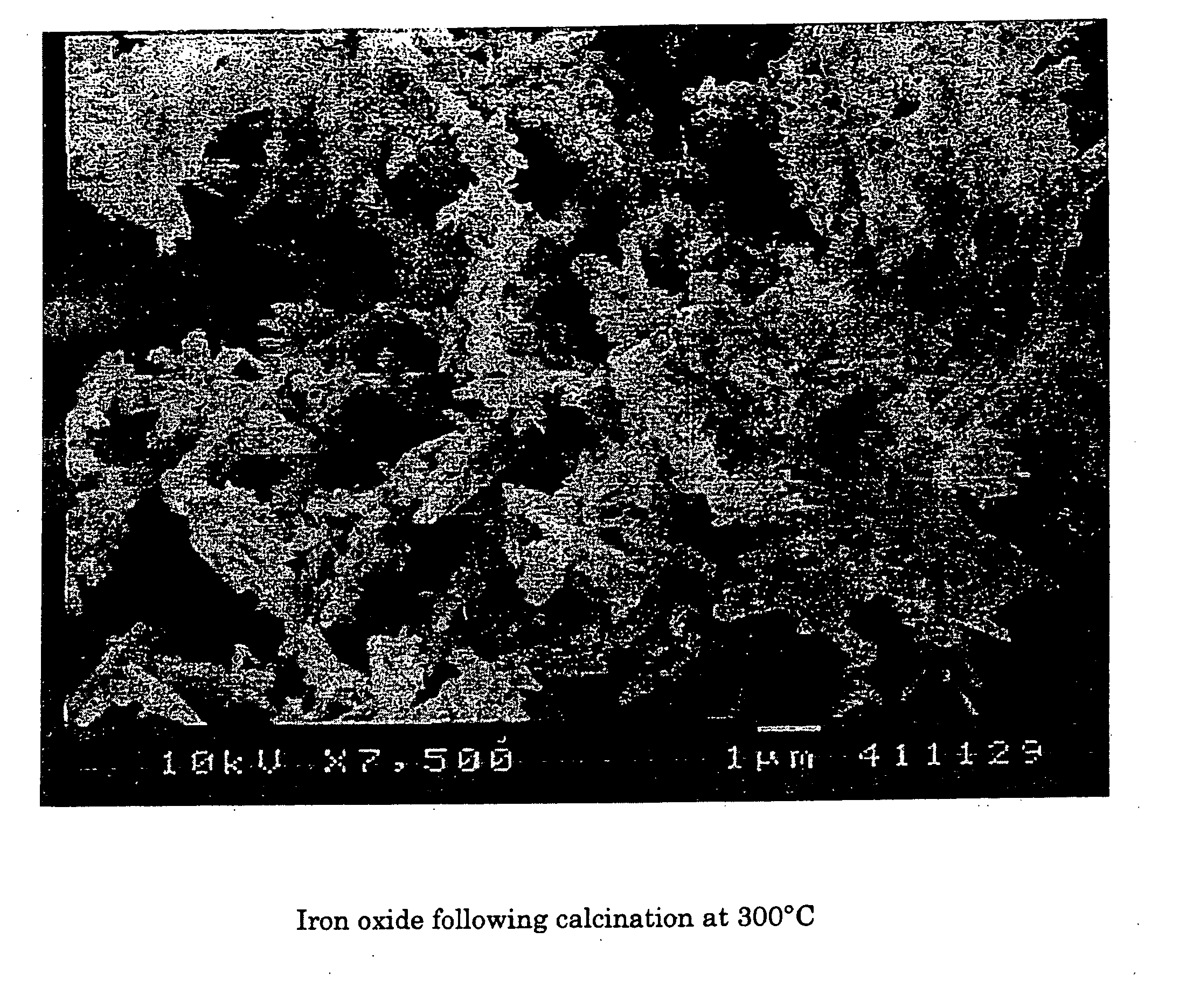
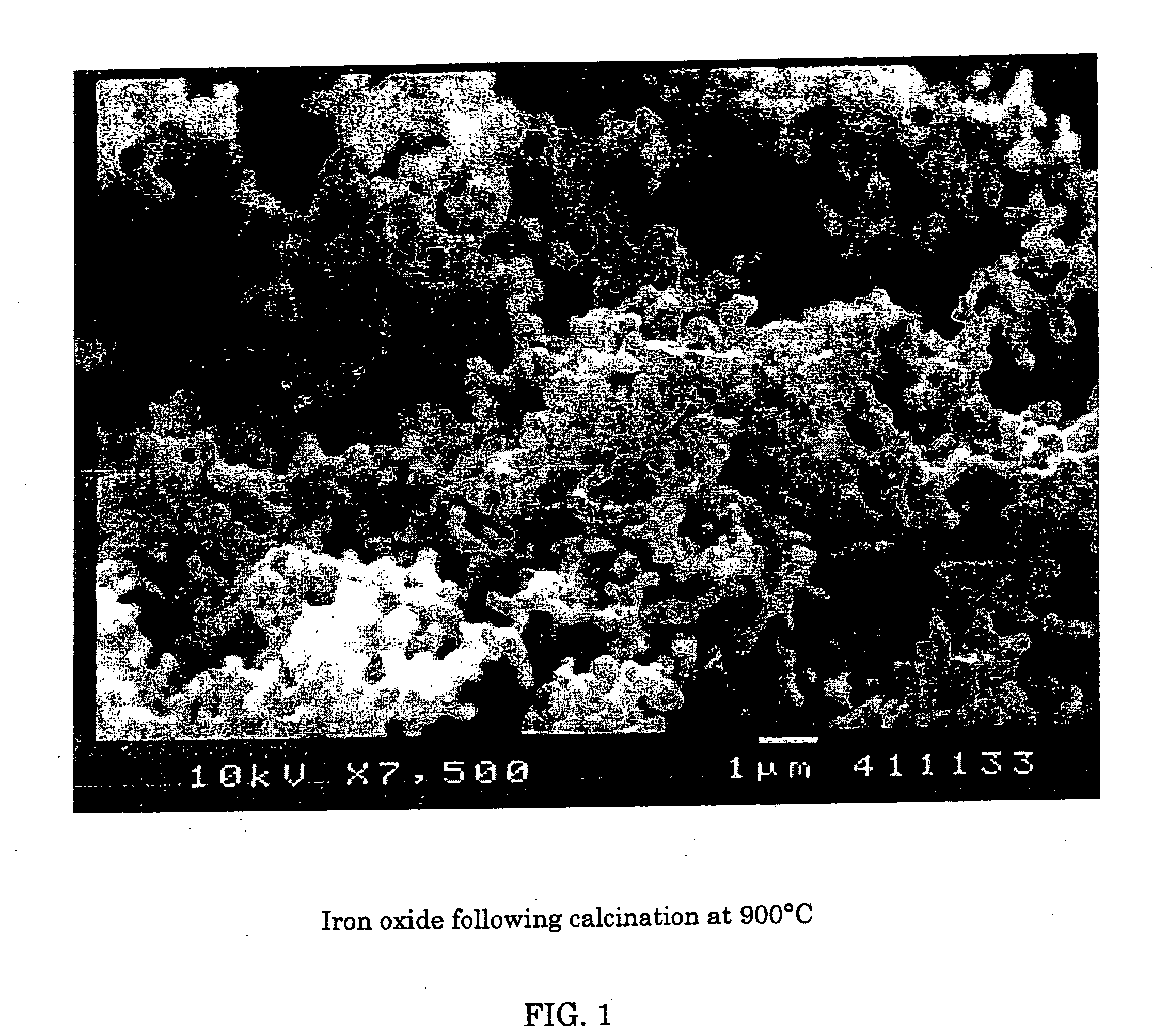
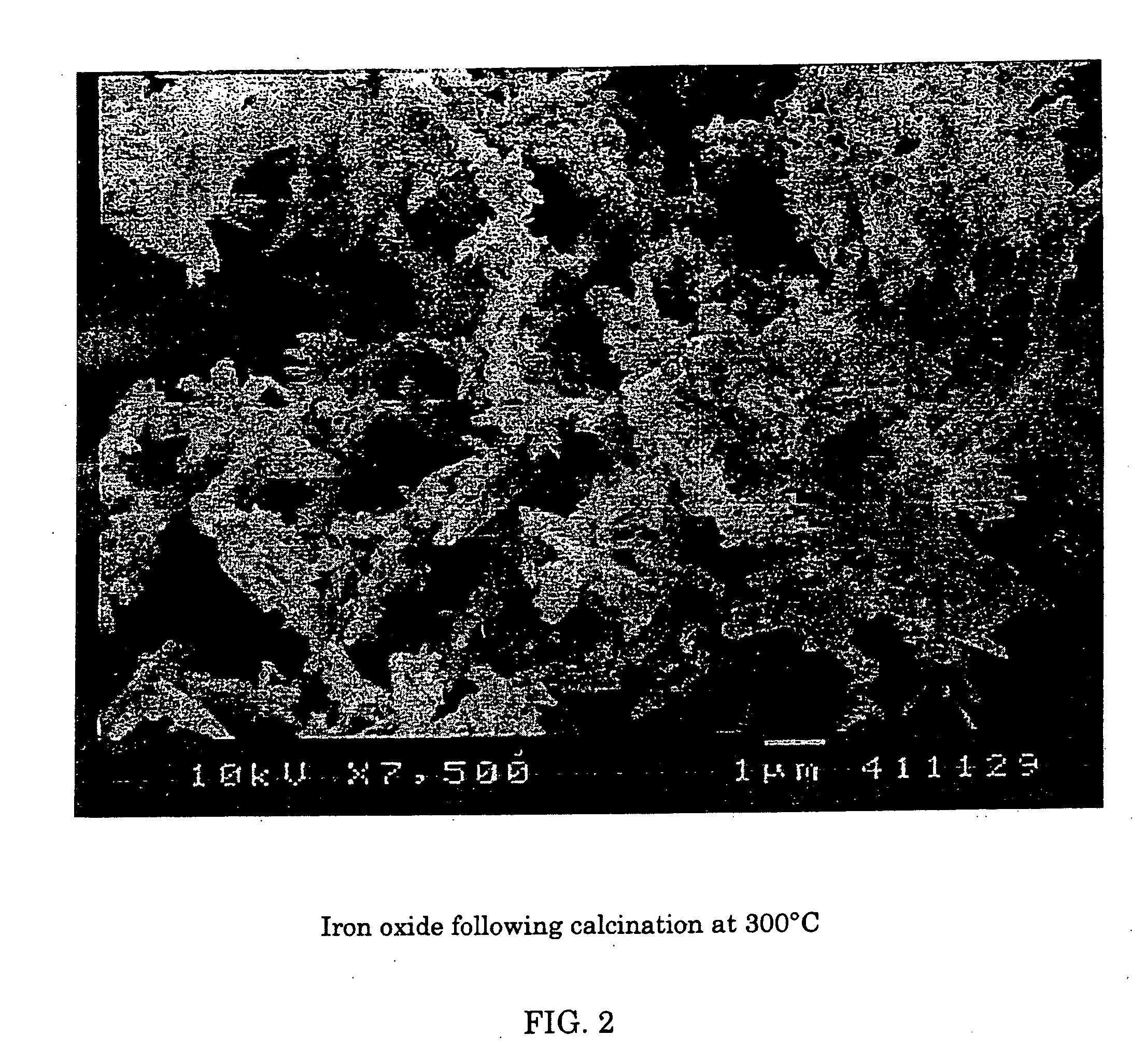
- A process involving careful washing and low-temperature calcination of yellow iron oxide to reduce sulfur content below 0.15% without deforming the iron oxide, allowing for the preservation of acicular shape and enhanced catalyst properties.

Environmental Impact of Iron Oxide Applications
The environmental implications of iron oxide applications span multiple dimensions, from production processes to end-of-life disposal, requiring comprehensive assessment of their ecological footprint. Manufacturing iron oxides through traditional methods often involves high-temperature calcination and chemical synthesis, generating substantial carbon emissions and consuming significant energy resources. However, emerging green synthesis routes utilizing biological organisms or waste materials demonstrate potential for reducing environmental burdens while maintaining functional performance in dynamic applications.
When deployed in environmental remediation scenarios, iron oxide nanoparticles present a paradoxical situation. While effectively removing contaminants such as heavy metals and organic pollutants from water and soil systems, concerns arise regarding their own persistence and potential toxicity in ecosystems. Studies indicate that nanoparticle aggregation behavior, surface coating stability, and transformation under varying pH and redox conditions significantly influence their environmental fate and bioavailability.
The application of iron oxides in catalytic processes for pollution control, particularly in automotive exhaust treatment and industrial emission reduction, contributes positively to air quality improvement. Their role in facilitating oxidation reactions under dynamic temperature and gas composition conditions enables efficient conversion of harmful substances. Nevertheless, catalyst deactivation and disposal procedures require careful management to prevent secondary pollution.
In agricultural applications, iron oxide-based fertilizers and soil amendments offer controlled nutrient release under dynamic soil conditions. Their biodegradability and low toxicity profiles generally support sustainable farming practices, though long-term accumulation effects warrant continued monitoring. The balance between functional benefits and environmental safety remains critical as application scales expand.
Life cycle assessments reveal that optimizing synthesis methods, enhancing material recyclability, and developing biodegradable formulations represent key pathways toward minimizing environmental impacts. Regulatory frameworks increasingly demand comprehensive environmental risk evaluations before large-scale deployment, particularly for nanoscale iron oxide materials in dynamic environmental systems.
When deployed in environmental remediation scenarios, iron oxide nanoparticles present a paradoxical situation. While effectively removing contaminants such as heavy metals and organic pollutants from water and soil systems, concerns arise regarding their own persistence and potential toxicity in ecosystems. Studies indicate that nanoparticle aggregation behavior, surface coating stability, and transformation under varying pH and redox conditions significantly influence their environmental fate and bioavailability.
The application of iron oxides in catalytic processes for pollution control, particularly in automotive exhaust treatment and industrial emission reduction, contributes positively to air quality improvement. Their role in facilitating oxidation reactions under dynamic temperature and gas composition conditions enables efficient conversion of harmful substances. Nevertheless, catalyst deactivation and disposal procedures require careful management to prevent secondary pollution.
In agricultural applications, iron oxide-based fertilizers and soil amendments offer controlled nutrient release under dynamic soil conditions. Their biodegradability and low toxicity profiles generally support sustainable farming practices, though long-term accumulation effects warrant continued monitoring. The balance between functional benefits and environmental safety remains critical as application scales expand.
Life cycle assessments reveal that optimizing synthesis methods, enhancing material recyclability, and developing biodegradable formulations represent key pathways toward minimizing environmental impacts. Regulatory frameworks increasingly demand comprehensive environmental risk evaluations before large-scale deployment, particularly for nanoscale iron oxide materials in dynamic environmental systems.
Stability and Durability Under Dynamic Conditions
The stability and durability of iron oxide materials under dynamic conditions represent critical performance parameters that determine their practical applicability across various industrial sectors. Dynamic conditions encompass fluctuating temperatures, varying pressure environments, cyclic mechanical stress, and alternating chemical atmospheres. Under such circumstances, iron oxide materials must maintain their structural integrity, functional properties, and operational efficiency over extended periods. The challenge lies in the inherent susceptibility of iron oxide to phase transformations, surface degradation, and performance deterioration when subjected to continuous environmental variations.
Thermal cycling poses significant challenges to iron oxide stability, as repeated heating and cooling can induce lattice strain, microcracking, and phase transitions between different iron oxide polymorphs. The transformation between magnetite, maghemite, and hematite phases under temperature fluctuations can lead to volume changes and structural defects that compromise material performance. Research indicates that the rate of thermal cycling and the temperature range significantly influence the degradation mechanisms, with rapid thermal transitions causing more severe structural damage than gradual temperature changes.
Mechanical durability under dynamic loading conditions is another crucial consideration, particularly for iron oxide materials employed in catalytic converters, sensors, and energy storage devices. Cyclic mechanical stress can accelerate particle agglomeration, surface area reduction, and active site deactivation. The mechanical stability is closely related to the synthesis method, particle size distribution, and the presence of structural dopants or support matrices that can enhance mechanical resilience.
Chemical stability in fluctuating reactive environments determines the long-term functionality of iron oxide materials. Exposure to alternating oxidizing and reducing atmospheres, varying humidity levels, and corrosive species can trigger surface reconstruction, compositional changes, and catalytic deactivation. The development of protective surface coatings, core-shell structures, and compositionally graded materials has emerged as effective strategies to enhance chemical durability. Additionally, the incorporation of stabilizing elements such as aluminum, silicon, or rare earth metals can significantly improve resistance to chemical degradation under dynamic operational conditions.
Thermal cycling poses significant challenges to iron oxide stability, as repeated heating and cooling can induce lattice strain, microcracking, and phase transitions between different iron oxide polymorphs. The transformation between magnetite, maghemite, and hematite phases under temperature fluctuations can lead to volume changes and structural defects that compromise material performance. Research indicates that the rate of thermal cycling and the temperature range significantly influence the degradation mechanisms, with rapid thermal transitions causing more severe structural damage than gradual temperature changes.
Mechanical durability under dynamic loading conditions is another crucial consideration, particularly for iron oxide materials employed in catalytic converters, sensors, and energy storage devices. Cyclic mechanical stress can accelerate particle agglomeration, surface area reduction, and active site deactivation. The mechanical stability is closely related to the synthesis method, particle size distribution, and the presence of structural dopants or support matrices that can enhance mechanical resilience.
Chemical stability in fluctuating reactive environments determines the long-term functionality of iron oxide materials. Exposure to alternating oxidizing and reducing atmospheres, varying humidity levels, and corrosive species can trigger surface reconstruction, compositional changes, and catalytic deactivation. The development of protective surface coatings, core-shell structures, and compositionally graded materials has emerged as effective strategies to enhance chemical durability. Additionally, the incorporation of stabilizing elements such as aluminum, silicon, or rare earth metals can significantly improve resistance to chemical degradation under dynamic operational conditions.
Unlock deeper insights with Patsnap Eureka Quick Research — get a full tech report to explore trends and direct your research. Try now!
Generate Your Research Report Instantly with AI Agent
Supercharge your innovation with Patsnap Eureka AI Agent Platform!