

Multiphysics Simulation vs Design Trade-offs
MAR 26, 20269 MIN READ
Generate Your Research Report Instantly with AI Agent
PatSnap Eureka helps you evaluate technical feasibility & market potential.
Multiphysics Simulation Background and Design Objectives
Multiphysics simulation has emerged as a critical computational methodology in modern engineering design, representing the convergence of multiple physical phenomena within a unified analytical framework. This approach addresses the inherent complexity of real-world systems where thermal, mechanical, electromagnetic, fluid dynamic, and chemical processes interact simultaneously. The evolution of multiphysics simulation traces back to the 1960s when early finite element methods began incorporating coupled field problems, primarily driven by aerospace and nuclear engineering requirements.
The technological progression has been marked by several pivotal developments. The 1980s witnessed the integration of computational fluid dynamics with heat transfer analysis, while the 1990s brought forth coupled electromagnetic-thermal simulations for electronic device design. The advent of high-performance computing in the 2000s enabled comprehensive multiphysics modeling across industries, from automotive crashworthiness analysis incorporating thermal effects to biomedical device simulations combining fluid flow, heat transfer, and structural mechanics.
Contemporary multiphysics simulation encompasses diverse coupling mechanisms, including sequential, iterative, and fully coupled approaches. Sequential coupling addresses weakly coupled problems where physical phenomena can be solved independently with data exchange. Iterative coupling handles moderate interactions through repeated solution cycles until convergence. Fully coupled methods simultaneously solve all governing equations, essential for strongly coupled systems where physical phenomena exhibit significant interdependence.
The primary objective of multiphysics simulation research centers on achieving optimal design solutions while managing inherent trade-offs between computational accuracy, efficiency, and practical implementation constraints. Engineers must balance simulation fidelity against computational resources, time-to-market pressures, and design optimization requirements. This necessitates sophisticated algorithms capable of adaptive mesh refinement, efficient solver technologies, and intelligent coupling strategies.
Current technological goals focus on developing robust multiphysics frameworks that can seamlessly integrate disparate physical models while maintaining numerical stability and computational efficiency. Advanced objectives include real-time multiphysics simulation capabilities for digital twin applications, uncertainty quantification in coupled systems, and machine learning-enhanced multiphysics modeling for accelerated design cycles.
The strategic importance of multiphysics simulation lies in its ability to predict complex system behaviors that single-physics approaches cannot capture, ultimately enabling more innovative, reliable, and optimized engineering solutions across diverse industrial applications.
The technological progression has been marked by several pivotal developments. The 1980s witnessed the integration of computational fluid dynamics with heat transfer analysis, while the 1990s brought forth coupled electromagnetic-thermal simulations for electronic device design. The advent of high-performance computing in the 2000s enabled comprehensive multiphysics modeling across industries, from automotive crashworthiness analysis incorporating thermal effects to biomedical device simulations combining fluid flow, heat transfer, and structural mechanics.
Contemporary multiphysics simulation encompasses diverse coupling mechanisms, including sequential, iterative, and fully coupled approaches. Sequential coupling addresses weakly coupled problems where physical phenomena can be solved independently with data exchange. Iterative coupling handles moderate interactions through repeated solution cycles until convergence. Fully coupled methods simultaneously solve all governing equations, essential for strongly coupled systems where physical phenomena exhibit significant interdependence.
The primary objective of multiphysics simulation research centers on achieving optimal design solutions while managing inherent trade-offs between computational accuracy, efficiency, and practical implementation constraints. Engineers must balance simulation fidelity against computational resources, time-to-market pressures, and design optimization requirements. This necessitates sophisticated algorithms capable of adaptive mesh refinement, efficient solver technologies, and intelligent coupling strategies.
Current technological goals focus on developing robust multiphysics frameworks that can seamlessly integrate disparate physical models while maintaining numerical stability and computational efficiency. Advanced objectives include real-time multiphysics simulation capabilities for digital twin applications, uncertainty quantification in coupled systems, and machine learning-enhanced multiphysics modeling for accelerated design cycles.
The strategic importance of multiphysics simulation lies in its ability to predict complex system behaviors that single-physics approaches cannot capture, ultimately enabling more innovative, reliable, and optimized engineering solutions across diverse industrial applications.
Market Demand for Advanced Simulation-Driven Design
The global engineering simulation market has experienced unprecedented growth driven by increasing complexity in product development across multiple industries. Manufacturing sectors including aerospace, automotive, electronics, and energy systems are demanding sophisticated simulation capabilities that can accurately predict multiphysics interactions during early design phases. This demand stems from the critical need to reduce physical prototyping costs, accelerate time-to-market, and ensure product reliability in increasingly complex operating environments.
Aerospace and defense industries represent the largest consumer segment for advanced simulation-driven design solutions. These sectors require comprehensive analysis of fluid-structure interactions, thermal management, electromagnetic compatibility, and structural dynamics within single integrated platforms. The growing emphasis on electric aircraft, hypersonic vehicles, and space exploration missions has intensified requirements for coupled multiphysics simulations that can handle extreme operating conditions and novel material behaviors.
The automotive industry's transition toward electrification and autonomous systems has created substantial demand for integrated simulation environments. Electric vehicle development necessitates simultaneous consideration of thermal management, electromagnetic fields, structural mechanics, and battery chemistry interactions. Traditional sequential design approaches prove inadequate for optimizing battery pack cooling, motor efficiency, and electromagnetic interference mitigation, driving adoption of comprehensive multiphysics platforms.
Electronics and semiconductor manufacturers face mounting pressure to deliver higher performance products within increasingly constrained form factors. Advanced packaging technologies, 5G communications systems, and high-power electronics require simulation tools capable of analyzing thermal, electrical, and mechanical phenomena simultaneously. The industry's shift toward system-level integration demands simulation platforms that can bridge multiple physics domains while maintaining computational efficiency.
Energy sector transformation toward renewable sources and smart grid technologies has generated significant demand for multiphysics simulation capabilities. Wind turbine design requires coupled aerodynamic-structural analysis, while solar panel optimization involves thermal-electrical-mechanical interactions. Grid modernization efforts necessitate electromagnetic-thermal simulations for power electronics and energy storage systems.
Market growth is further accelerated by digital transformation initiatives across manufacturing industries. Companies are establishing digital twin frameworks that rely heavily on high-fidelity multiphysics simulations for real-time monitoring, predictive maintenance, and operational optimization. This trend extends simulation requirements beyond traditional design phases into operational lifecycle management.
The increasing adoption of additive manufacturing technologies has created new simulation requirements for process optimization and part qualification. These applications demand coupled thermal-mechanical-metallurgical simulations that can predict material properties, residual stresses, and geometric distortions during manufacturing processes.
Aerospace and defense industries represent the largest consumer segment for advanced simulation-driven design solutions. These sectors require comprehensive analysis of fluid-structure interactions, thermal management, electromagnetic compatibility, and structural dynamics within single integrated platforms. The growing emphasis on electric aircraft, hypersonic vehicles, and space exploration missions has intensified requirements for coupled multiphysics simulations that can handle extreme operating conditions and novel material behaviors.
The automotive industry's transition toward electrification and autonomous systems has created substantial demand for integrated simulation environments. Electric vehicle development necessitates simultaneous consideration of thermal management, electromagnetic fields, structural mechanics, and battery chemistry interactions. Traditional sequential design approaches prove inadequate for optimizing battery pack cooling, motor efficiency, and electromagnetic interference mitigation, driving adoption of comprehensive multiphysics platforms.
Electronics and semiconductor manufacturers face mounting pressure to deliver higher performance products within increasingly constrained form factors. Advanced packaging technologies, 5G communications systems, and high-power electronics require simulation tools capable of analyzing thermal, electrical, and mechanical phenomena simultaneously. The industry's shift toward system-level integration demands simulation platforms that can bridge multiple physics domains while maintaining computational efficiency.
Energy sector transformation toward renewable sources and smart grid technologies has generated significant demand for multiphysics simulation capabilities. Wind turbine design requires coupled aerodynamic-structural analysis, while solar panel optimization involves thermal-electrical-mechanical interactions. Grid modernization efforts necessitate electromagnetic-thermal simulations for power electronics and energy storage systems.
Market growth is further accelerated by digital transformation initiatives across manufacturing industries. Companies are establishing digital twin frameworks that rely heavily on high-fidelity multiphysics simulations for real-time monitoring, predictive maintenance, and operational optimization. This trend extends simulation requirements beyond traditional design phases into operational lifecycle management.
The increasing adoption of additive manufacturing technologies has created new simulation requirements for process optimization and part qualification. These applications demand coupled thermal-mechanical-metallurgical simulations that can predict material properties, residual stresses, and geometric distortions during manufacturing processes.
Current Multiphysics Simulation Capabilities and Limitations
Contemporary multiphysics simulation platforms have achieved significant maturity in addressing coupled physical phenomena across diverse engineering domains. Leading commercial software packages such as ANSYS Multiphysics, COMSOL Multiphysics, and Abaqus demonstrate robust capabilities in solving fluid-structure interaction, thermal-mechanical coupling, and electromagnetic-thermal problems. These platforms integrate multiple physics solvers through sophisticated coupling algorithms, enabling engineers to analyze complex interactions between different physical domains within unified computational frameworks.
Current simulation capabilities excel in handling well-established physics combinations with proven mathematical formulations. Thermal-structural analysis has reached industrial-grade reliability for applications ranging from electronic cooling to aerospace thermal protection systems. Fluid-structure interaction simulations successfully predict dynamic responses in turbomachinery, biomedical devices, and civil engineering structures. Electromagnetic-thermal coupling enables accurate prediction of heating effects in electrical machines and power electronics systems.
However, significant limitations persist in computational efficiency and scalability. Multiphysics simulations typically require substantially longer computation times compared to single-physics analyses, often increasing by orders of magnitude. Memory requirements scale dramatically with problem complexity, limiting the feasibility of high-fidelity simulations for large-scale systems. The computational burden becomes particularly pronounced when dealing with transient multiphysics problems requiring fine temporal resolution across multiple time scales.
Coupling algorithm stability represents another critical limitation. Partitioned coupling approaches, while flexible, often suffer from convergence issues when dealing with strong coupling scenarios. Monolithic approaches offer better stability but sacrifice modularity and computational efficiency. The choice between explicit and implicit coupling schemes involves fundamental trade-offs between computational speed and numerical stability, with no universal optimal solution.
Model validation and verification present ongoing challenges due to the complexity of experimental validation for coupled physics phenomena. Uncertainties propagate through multiple physics domains, making it difficult to isolate sources of discrepancies between simulation predictions and experimental observations. Limited availability of high-quality experimental data for complex multiphysics scenarios further constrains validation efforts.
Current platforms also struggle with adaptive meshing and solution refinement across multiple physics domains. Mesh requirements often differ significantly between coupled physics, leading to compromises in solution accuracy or computational efficiency. Automatic mesh adaptation algorithms for multiphysics problems remain less mature compared to single-physics counterparts, requiring significant user expertise for optimal implementation.
Current simulation capabilities excel in handling well-established physics combinations with proven mathematical formulations. Thermal-structural analysis has reached industrial-grade reliability for applications ranging from electronic cooling to aerospace thermal protection systems. Fluid-structure interaction simulations successfully predict dynamic responses in turbomachinery, biomedical devices, and civil engineering structures. Electromagnetic-thermal coupling enables accurate prediction of heating effects in electrical machines and power electronics systems.
However, significant limitations persist in computational efficiency and scalability. Multiphysics simulations typically require substantially longer computation times compared to single-physics analyses, often increasing by orders of magnitude. Memory requirements scale dramatically with problem complexity, limiting the feasibility of high-fidelity simulations for large-scale systems. The computational burden becomes particularly pronounced when dealing with transient multiphysics problems requiring fine temporal resolution across multiple time scales.
Coupling algorithm stability represents another critical limitation. Partitioned coupling approaches, while flexible, often suffer from convergence issues when dealing with strong coupling scenarios. Monolithic approaches offer better stability but sacrifice modularity and computational efficiency. The choice between explicit and implicit coupling schemes involves fundamental trade-offs between computational speed and numerical stability, with no universal optimal solution.
Model validation and verification present ongoing challenges due to the complexity of experimental validation for coupled physics phenomena. Uncertainties propagate through multiple physics domains, making it difficult to isolate sources of discrepancies between simulation predictions and experimental observations. Limited availability of high-quality experimental data for complex multiphysics scenarios further constrains validation efforts.
Current platforms also struggle with adaptive meshing and solution refinement across multiple physics domains. Mesh requirements often differ significantly between coupled physics, leading to compromises in solution accuracy or computational efficiency. Automatic mesh adaptation algorithms for multiphysics problems remain less mature compared to single-physics counterparts, requiring significant user expertise for optimal implementation.
Existing Multiphysics-Design Integration Solutions
01 Multi-domain coupling simulation methods
Techniques for coupling multiple physical domains in simulation environments, enabling simultaneous analysis of different physical phenomena such as electromagnetic, thermal, and structural interactions. These methods allow engineers to evaluate how different physical effects influence each other and optimize designs accordingly. The coupling approaches include co-simulation frameworks and unified solver architectures that handle multiple physics simultaneously.- Multi-domain physics coupling simulation methods: Methods for coupling multiple physical domains in simulation environments to analyze complex interactions between different physical phenomena. These approaches enable simultaneous consideration of thermal, mechanical, electromagnetic, and fluid dynamics effects in a unified simulation framework. The coupling techniques allow for accurate prediction of system behavior under various operating conditions by accounting for interdependencies between different physics domains.
- Optimization algorithms for design parameter trade-offs: Computational methods and algorithms for optimizing design parameters when multiple conflicting objectives exist in multiphysics simulations. These techniques employ various optimization strategies to balance trade-offs between performance metrics such as efficiency, cost, weight, and reliability. The methods enable automated exploration of design spaces to identify optimal or near-optimal solutions that satisfy multiple constraints simultaneously.
- Reduced-order modeling for computational efficiency: Techniques for creating simplified models that maintain accuracy while significantly reducing computational requirements in multiphysics simulations. These methods extract essential system behaviors and create lower-dimensional representations that enable faster design iterations and trade-off studies. The approaches facilitate real-time or near-real-time simulation capabilities for complex multiphysics problems.
- Sensitivity analysis and uncertainty quantification: Methods for evaluating how variations in input parameters affect simulation outcomes and for quantifying uncertainties in multiphysics design processes. These techniques help identify critical design parameters and assess the robustness of designs under uncertain operating conditions. The approaches enable informed decision-making by providing statistical measures of confidence in simulation predictions and design performance.
- Integrated simulation platforms and workflow management: Software frameworks and platforms that integrate multiple simulation tools and manage complex workflows for multiphysics design studies. These systems provide unified interfaces for setting up, executing, and post-processing simulations across different physics domains. The platforms facilitate collaboration, data management, and automated execution of parametric studies to explore design trade-offs systematically.
02 Design optimization algorithms for multiphysics systems
Optimization algorithms specifically developed for multiphysics simulation scenarios that balance competing design objectives across different physical domains. These algorithms employ techniques such as genetic algorithms, gradient-based methods, and machine learning approaches to navigate complex design spaces. They enable automated exploration of trade-offs between performance metrics like efficiency, cost, weight, and reliability.Expand Specific Solutions03 Computational efficiency and model reduction techniques
Methods for reducing computational complexity in multiphysics simulations while maintaining accuracy, including mesh adaptation, reduced-order modeling, and parallel computing strategies. These techniques address the challenge of balancing simulation fidelity with computational resources and time constraints. They enable faster design iterations and real-time analysis capabilities for complex multiphysics problems.Expand Specific Solutions04 Parameter sensitivity analysis and uncertainty quantification
Approaches for analyzing how design parameters affect multiphysics system performance and quantifying uncertainties in simulation results. These methods help identify critical design variables and assess the robustness of designs under varying conditions. They incorporate statistical techniques and probabilistic methods to evaluate design trade-offs in the presence of uncertainties.Expand Specific Solutions05 Interactive visualization and decision support tools
Software tools and interfaces that facilitate visualization of multiphysics simulation results and support decision-making in design trade-off scenarios. These tools provide intuitive representations of complex multi-dimensional data and enable designers to explore Pareto frontiers and constraint boundaries. They integrate data analytics and interactive graphics to help engineers understand relationships between design choices and performance outcomes.Expand Specific Solutions
Key Players in Multiphysics Simulation Software Industry
The multiphysics simulation versus design trade-offs field represents a mature and rapidly expanding market, driven by increasing complexity in electronic systems and automotive applications. The industry has evolved from early-stage research to widespread commercial adoption, with market leaders like ANSYS, Synopsys, Cadence Design Systems, and Siemens Industry Software establishing dominant positions through comprehensive simulation platforms. Technology maturity varies significantly across segments, with established players like Intel, Samsung Electronics, and ASML Netherlands demonstrating advanced integration capabilities, while emerging companies such as Shenzhen Union Semiconductor represent newer market entrants. Academic institutions including MIT, Huazhong University of Science & Technology, and Xi'an Jiaotong University continue driving fundamental research innovations. The competitive landscape shows consolidation around major EDA providers, with specialized solutions from companies like Keysight Technologies and Bentley Systems addressing specific industry verticals including aerospace (Boeing), automotive (Renault), and semiconductor manufacturing.
Cadence Design Systems, Inc.
Technical Solution: Cadence specializes in multiphysics simulation for electronic systems through their Celsius and Clarity tools, focusing on thermal, electromagnetic, and signal integrity analysis. Their approach integrates IC design with system-level multiphysics simulation, enabling early identification of thermal hotspots, power delivery issues, and electromagnetic interference. The Virtuoso platform combines circuit simulation with physical effects modeling, while their machine learning-enhanced optimization algorithms automatically explore design trade-offs between performance, power consumption, and thermal management. Cadence's cloud-native simulation infrastructure supports massive parallel processing for complex semiconductor and electronic system designs.
Strengths: Leading expertise in electronic system multiphysics and AI-driven optimization. Weaknesses: Primarily focused on electronics domain, limited mechanical simulation capabilities.
Siemens Corp.
Technical Solution: Siemens offers multiphysics simulation through Simcenter portfolio, integrating CFD, FEA, and system simulation tools within a unified platform. Their approach emphasizes digital twin technology, connecting simulation models with real-world operational data to optimize design trade-offs throughout product lifecycle. Simcenter STAR-CCM+ provides advanced multiphysics coupling for thermal-fluid-structure interactions, while NX CAE enables seamless integration between design and simulation workflows. The platform supports automated design exploration and optimization algorithms that systematically evaluate trade-offs between performance, cost, and manufacturability. Siemens' cloud-based simulation services enable scalable computing resources for complex multiphysics problems.
Strengths: Strong integration with PLM systems and digital twin capabilities. Weaknesses: Complex licensing structure and requires significant IT infrastructure investment.
Core Innovations in Simulation-Design Trade-off Methods
A system and method for three-dimensional schematic capture and result visualization of multi-physics system models
PatentWO2009105138A2
Innovation
- A 3-D design environment that allows for the creation of parameterized MEMS device models using behavioral models, enabling direct export to a system modeling environment for circuit simulations without preliminary meshing, and facilitating co-simulation with IC designs through a unified 3-D schematic capture and visualization approach.


Method and apparatus for AMS simulation of integrated circuit design
PatentActiveUS20120198405A1
Innovation
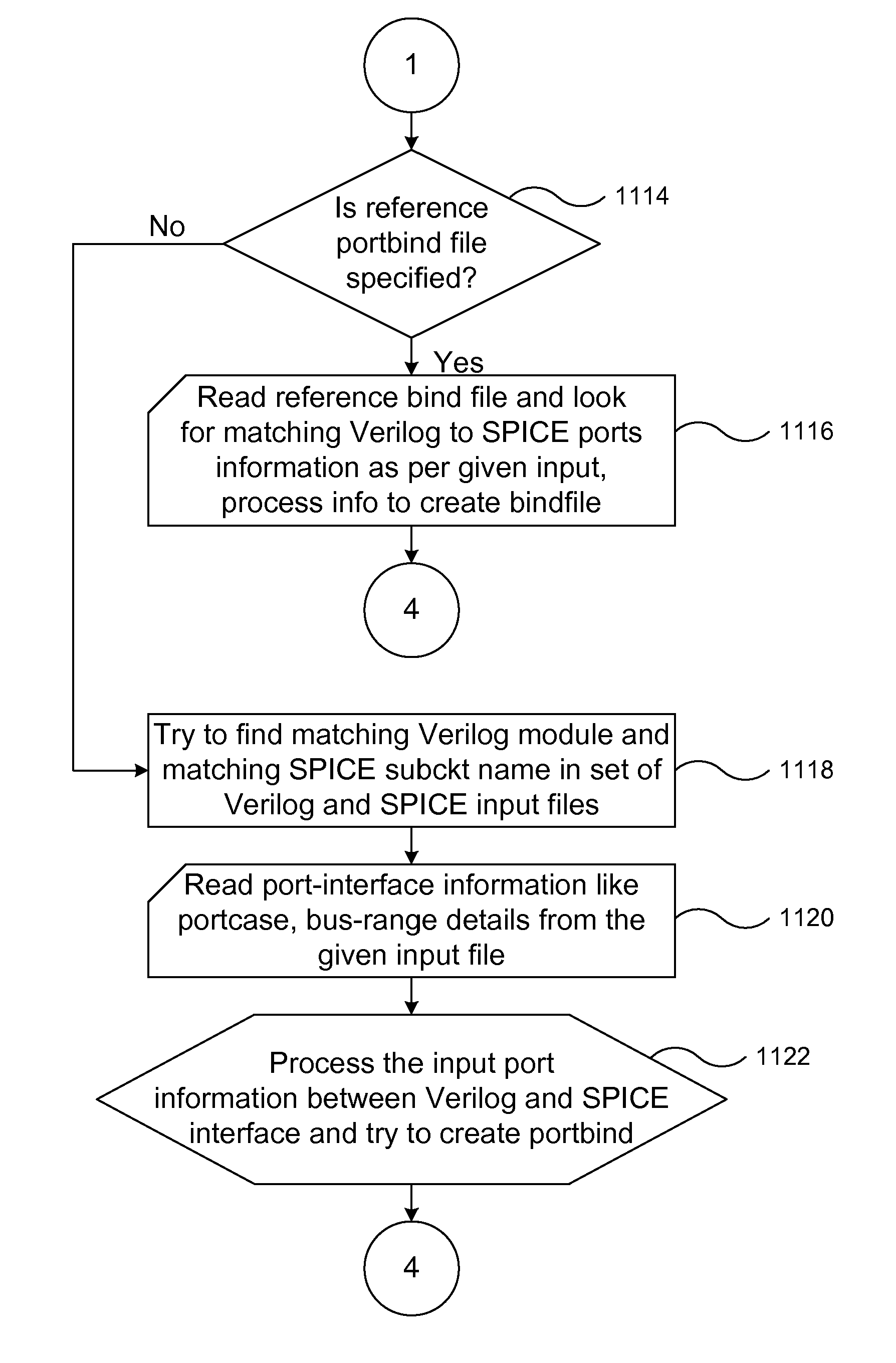
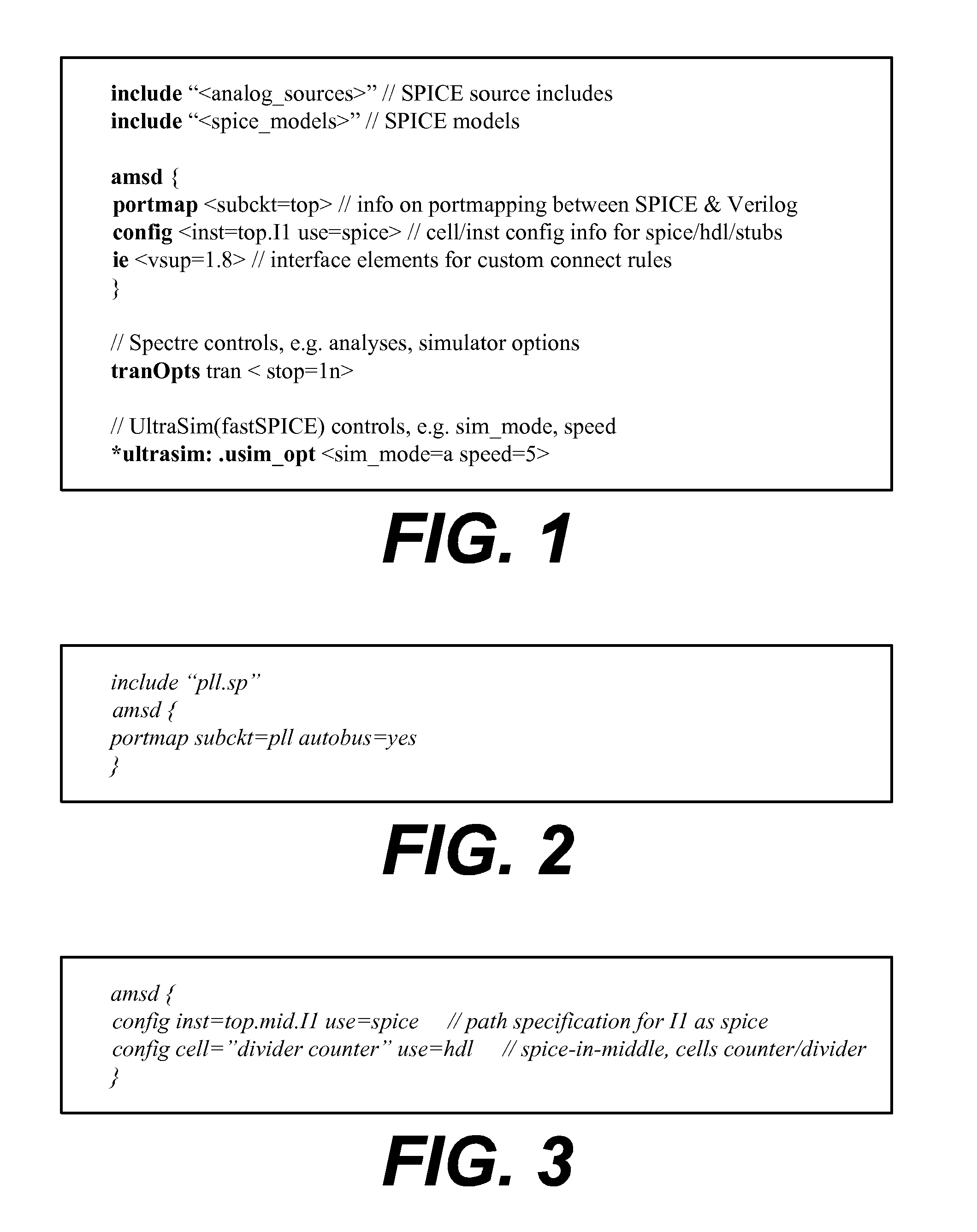
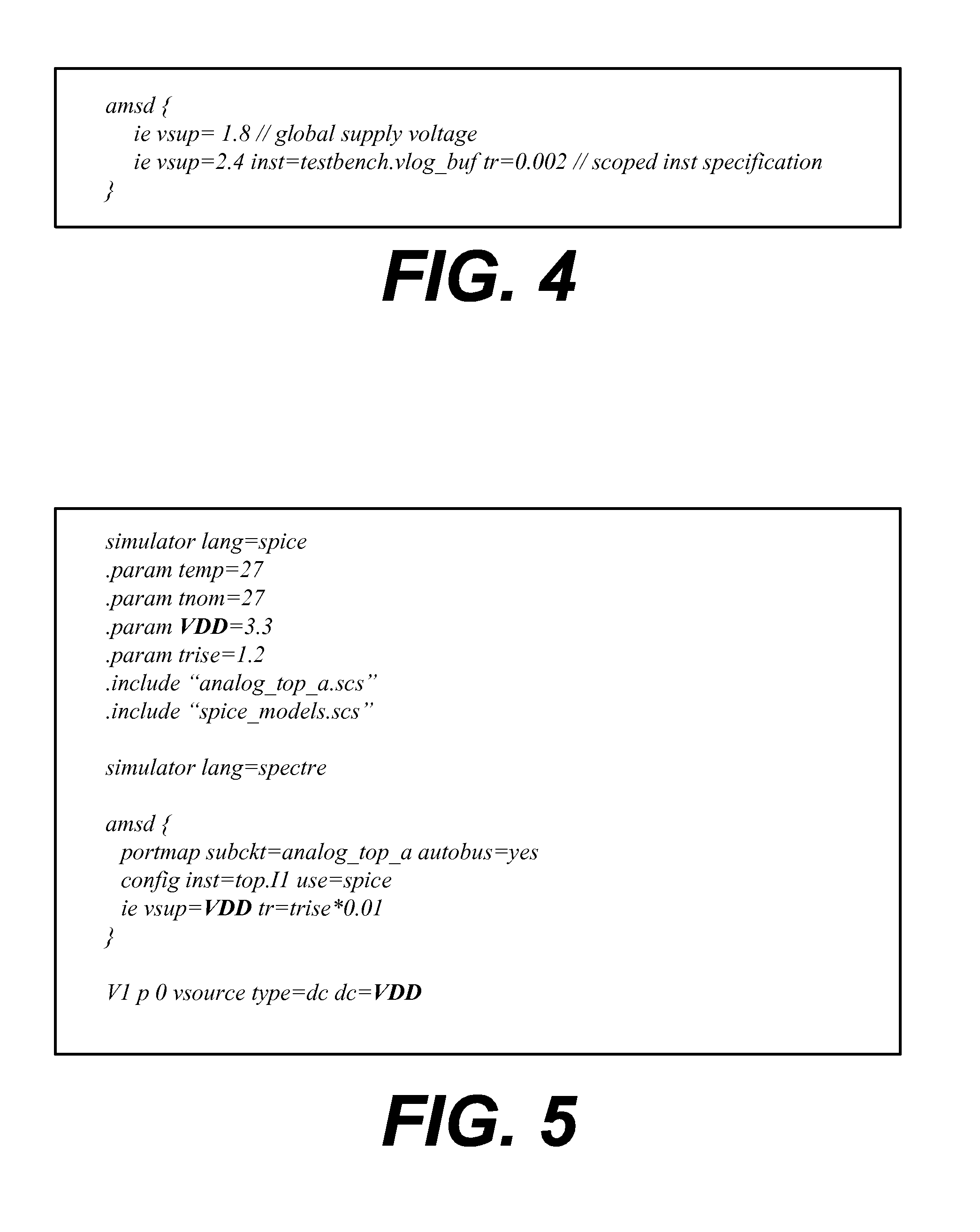
- A computer system that allows users to input parameter information to bind analog and digital circuit blocks, configure circuit design components, and specify variable parameters for converting signals between domains, using a control block to abstract HDL complexity and automatically generate connect rules and interface elements, enabling seamless simulation across analog and digital domains.

Computational Resource Requirements and Constraints
Multiphysics simulation applications face significant computational resource challenges that directly impact design optimization capabilities. High-fidelity simulations involving coupled physics phenomena such as fluid-structure interaction, thermal-mechanical coupling, or electromagnetic-thermal effects require substantial computational power. Modern multiphysics problems typically demand memory allocations ranging from several gigabytes to terabytes, depending on model complexity and mesh resolution requirements.
Processing power constraints represent a critical bottleneck in multiphysics simulation workflows. Complex coupled simulations often require parallel computing architectures with hundreds to thousands of CPU cores or specialized GPU acceleration. The computational intensity increases exponentially with model fidelity, creating a fundamental trade-off between simulation accuracy and computational feasibility. Time-to-solution becomes a decisive factor in design iteration cycles, where high-fidelity simulations may require days or weeks to complete.
Memory bandwidth limitations significantly affect simulation performance, particularly for large-scale problems involving extensive data transfer between different physics solvers. The iterative nature of coupled simulations amplifies these constraints, as multiple physics domains must exchange boundary conditions and field variables repeatedly throughout the solution process. Storage requirements for result data and checkpoint files can reach petabyte scales for comprehensive design studies.
Cloud computing resources offer scalable solutions but introduce cost considerations and data security concerns. On-premises high-performance computing clusters provide better control but require substantial capital investment and maintenance overhead. Hybrid approaches combining local and cloud resources are emerging as viable alternatives for managing peak computational demands.
Resource allocation strategies must balance simulation fidelity against design exploration breadth. Reduced-order modeling techniques and surrogate models help mitigate computational constraints by enabling rapid design space exploration. However, these approaches introduce additional uncertainties that must be carefully managed in the design process.
The emergence of machine learning-accelerated simulations and quantum computing technologies promises to reshape computational resource landscapes, potentially enabling previously intractable multiphysics problems to become computationally feasible within practical design timelines.
Processing power constraints represent a critical bottleneck in multiphysics simulation workflows. Complex coupled simulations often require parallel computing architectures with hundreds to thousands of CPU cores or specialized GPU acceleration. The computational intensity increases exponentially with model fidelity, creating a fundamental trade-off between simulation accuracy and computational feasibility. Time-to-solution becomes a decisive factor in design iteration cycles, where high-fidelity simulations may require days or weeks to complete.
Memory bandwidth limitations significantly affect simulation performance, particularly for large-scale problems involving extensive data transfer between different physics solvers. The iterative nature of coupled simulations amplifies these constraints, as multiple physics domains must exchange boundary conditions and field variables repeatedly throughout the solution process. Storage requirements for result data and checkpoint files can reach petabyte scales for comprehensive design studies.
Cloud computing resources offer scalable solutions but introduce cost considerations and data security concerns. On-premises high-performance computing clusters provide better control but require substantial capital investment and maintenance overhead. Hybrid approaches combining local and cloud resources are emerging as viable alternatives for managing peak computational demands.
Resource allocation strategies must balance simulation fidelity against design exploration breadth. Reduced-order modeling techniques and surrogate models help mitigate computational constraints by enabling rapid design space exploration. However, these approaches introduce additional uncertainties that must be carefully managed in the design process.
The emergence of machine learning-accelerated simulations and quantum computing technologies promises to reshape computational resource landscapes, potentially enabling previously intractable multiphysics problems to become computationally feasible within practical design timelines.
Industry Standards for Simulation-Based Design Validation
The establishment of robust industry standards for simulation-based design validation has become increasingly critical as multiphysics simulation technologies mature and gain widespread adoption across engineering disciplines. These standards serve as the foundation for ensuring reliability, repeatability, and regulatory compliance in simulation-driven design processes, particularly when balancing computational accuracy against practical design constraints.
Current industry standards are primarily governed by organizations such as ASME, IEEE, ISO, and AIAA, each addressing specific aspects of simulation validation within their respective domains. ASME V&V 10 provides comprehensive guidelines for computational solid mechanics, while IEEE standards focus on electromagnetic simulation validation. ISO 16750 series addresses automotive electronic component testing through simulation, and AIAA standards cover aerospace computational fluid dynamics validation protocols.
The verification and validation framework forms the cornerstone of these standards, distinguishing between code verification, calculation verification, and model validation. Code verification ensures mathematical accuracy of numerical algorithms, while calculation verification confirms proper implementation of computational models. Model validation establishes the degree to which simulation results accurately represent real-world physical phenomena within specified accuracy requirements.
Regulatory compliance requirements vary significantly across industries, with aerospace and automotive sectors maintaining the most stringent validation protocols. FDA guidelines for medical device simulation require extensive validation documentation, while nuclear industry standards demand rigorous uncertainty quantification methodologies. These regulatory frameworks directly influence the trade-off decisions between simulation fidelity and computational efficiency.
Documentation and traceability standards mandate comprehensive record-keeping throughout the simulation validation process. This includes mesh convergence studies, sensitivity analyses, and uncertainty propagation assessments. The documentation must demonstrate that simulation results meet specified accuracy thresholds while acknowledging computational limitations and assumptions.
Emerging standards are beginning to address artificial intelligence integration in simulation workflows, digital twin validation protocols, and cloud-based simulation verification procedures. These evolving standards will significantly impact future multiphysics simulation trade-off strategies, requiring new approaches to balance computational resources against validation requirements while maintaining regulatory compliance across diverse engineering applications.
Current industry standards are primarily governed by organizations such as ASME, IEEE, ISO, and AIAA, each addressing specific aspects of simulation validation within their respective domains. ASME V&V 10 provides comprehensive guidelines for computational solid mechanics, while IEEE standards focus on electromagnetic simulation validation. ISO 16750 series addresses automotive electronic component testing through simulation, and AIAA standards cover aerospace computational fluid dynamics validation protocols.
The verification and validation framework forms the cornerstone of these standards, distinguishing between code verification, calculation verification, and model validation. Code verification ensures mathematical accuracy of numerical algorithms, while calculation verification confirms proper implementation of computational models. Model validation establishes the degree to which simulation results accurately represent real-world physical phenomena within specified accuracy requirements.
Regulatory compliance requirements vary significantly across industries, with aerospace and automotive sectors maintaining the most stringent validation protocols. FDA guidelines for medical device simulation require extensive validation documentation, while nuclear industry standards demand rigorous uncertainty quantification methodologies. These regulatory frameworks directly influence the trade-off decisions between simulation fidelity and computational efficiency.
Documentation and traceability standards mandate comprehensive record-keeping throughout the simulation validation process. This includes mesh convergence studies, sensitivity analyses, and uncertainty propagation assessments. The documentation must demonstrate that simulation results meet specified accuracy thresholds while acknowledging computational limitations and assumptions.
Emerging standards are beginning to address artificial intelligence integration in simulation workflows, digital twin validation protocols, and cloud-based simulation verification procedures. These evolving standards will significantly impact future multiphysics simulation trade-off strategies, requiring new approaches to balance computational resources against validation requirements while maintaining regulatory compliance across diverse engineering applications.
Unlock deeper insights with PatSnap Eureka Quick Research — get a full tech report to explore trends and direct your research. Try now!
Generate Your Research Report Instantly with AI Agent
Supercharge your innovation with PatSnap Eureka AI Agent Platform!