

Reciprocating Compressor Capacity Modulation: Best Practices
MAR 20, 20269 MIN READ
Generate Your Research Report Instantly with AI Agent
PatSnap Eureka helps you evaluate technical feasibility & market potential.
Reciprocating Compressor Modulation Background and Objectives
Reciprocating compressors have served as fundamental components in industrial refrigeration, air conditioning, and gas processing applications for over a century. These positive displacement machines operate through the cyclical motion of pistons within cylinders, creating pressure differentials that enable gas compression and circulation. The evolution of reciprocating compressor technology has been driven by increasing demands for energy efficiency, operational flexibility, and precise capacity control across diverse industrial sectors.
The historical development of capacity modulation techniques emerged from the necessity to match compressor output with varying system demands. Early implementations relied on simple on-off cycling, which proved inefficient and caused significant mechanical stress. The progression toward more sophisticated modulation methods began in the mid-20th century, incorporating cylinder unloading mechanisms, variable speed drives, and clearance volume control systems.
Contemporary industrial applications require compressors to operate efficiently across wide capacity ranges while maintaining stable performance characteristics. Modern reciprocating compressors must accommodate fluctuating cooling loads in HVAC systems, variable production demands in chemical processing, and seasonal variations in natural gas compression. This operational flexibility has become increasingly critical as industries prioritize energy conservation and operational cost reduction.
The primary objective of advancing reciprocating compressor capacity modulation centers on achieving optimal energy efficiency across the entire operating range. Traditional fixed-speed compressors operating at partial loads exhibit significantly reduced efficiency, leading to increased energy consumption and operational costs. Developing best practices for capacity modulation aims to minimize these efficiency penalties while maintaining reliable operation.
Secondary objectives include extending equipment lifespan through reduced mechanical stress, improving system stability during load variations, and enhancing overall system controllability. Advanced modulation techniques seek to eliminate the frequent start-stop cycles that contribute to component wear and system instability. Additionally, precise capacity control enables better integration with automated control systems and supports predictive maintenance strategies.
The technological evolution toward intelligent modulation systems represents a convergence of mechanical engineering, control theory, and digital technologies. Modern objectives encompass the integration of real-time monitoring, predictive algorithms, and adaptive control strategies that optimize performance based on operating conditions and historical data patterns.
The historical development of capacity modulation techniques emerged from the necessity to match compressor output with varying system demands. Early implementations relied on simple on-off cycling, which proved inefficient and caused significant mechanical stress. The progression toward more sophisticated modulation methods began in the mid-20th century, incorporating cylinder unloading mechanisms, variable speed drives, and clearance volume control systems.
Contemporary industrial applications require compressors to operate efficiently across wide capacity ranges while maintaining stable performance characteristics. Modern reciprocating compressors must accommodate fluctuating cooling loads in HVAC systems, variable production demands in chemical processing, and seasonal variations in natural gas compression. This operational flexibility has become increasingly critical as industries prioritize energy conservation and operational cost reduction.
The primary objective of advancing reciprocating compressor capacity modulation centers on achieving optimal energy efficiency across the entire operating range. Traditional fixed-speed compressors operating at partial loads exhibit significantly reduced efficiency, leading to increased energy consumption and operational costs. Developing best practices for capacity modulation aims to minimize these efficiency penalties while maintaining reliable operation.
Secondary objectives include extending equipment lifespan through reduced mechanical stress, improving system stability during load variations, and enhancing overall system controllability. Advanced modulation techniques seek to eliminate the frequent start-stop cycles that contribute to component wear and system instability. Additionally, precise capacity control enables better integration with automated control systems and supports predictive maintenance strategies.
The technological evolution toward intelligent modulation systems represents a convergence of mechanical engineering, control theory, and digital technologies. Modern objectives encompass the integration of real-time monitoring, predictive algorithms, and adaptive control strategies that optimize performance based on operating conditions and historical data patterns.
Market Demand for Efficient Compressor Capacity Control
The global market for efficient compressor capacity control systems is experiencing unprecedented growth driven by stringent energy efficiency regulations and rising operational cost pressures across industrial sectors. Manufacturing facilities, particularly in petrochemical, pharmaceutical, and food processing industries, are increasingly prioritizing variable capacity solutions to optimize energy consumption and reduce carbon footprints. This shift represents a fundamental change from traditional fixed-capacity systems toward intelligent, adaptive compression technologies.
Industrial refrigeration applications constitute the largest market segment for reciprocating compressor capacity modulation systems. Cold storage facilities, supermarket chains, and food processing plants require precise temperature control while minimizing energy waste during varying load conditions. The demand is particularly acute in emerging markets where rapid urbanization and growing middle-class populations drive expansion of cold chain infrastructure.
Process industries demonstrate strong adoption patterns for advanced capacity control technologies. Chemical manufacturing plants require consistent pressure maintenance across fluctuating production cycles, making efficient modulation systems essential for operational stability. Oil and gas facilities similarly demand reliable capacity adjustment capabilities to handle variable throughput requirements while maintaining system efficiency.
Energy cost volatility serves as a primary market driver, with industrial operators seeking solutions that deliver measurable reductions in power consumption. Facilities operating multiple compressor units report significant interest in coordinated capacity control systems that optimize overall plant efficiency rather than individual unit performance. This trend indicates growing sophistication in market requirements beyond basic modulation capabilities.
Regulatory frameworks worldwide increasingly mandate energy efficiency improvements in industrial equipment. European Union directives, North American efficiency standards, and emerging Asian regulations create compliance-driven demand for advanced capacity control technologies. These requirements often specify minimum efficiency thresholds that traditional on-off cycling systems cannot achieve.
Market research indicates strong preference for retrofit-compatible solutions that integrate with existing compressor installations. End users prioritize technologies offering rapid payback periods through energy savings while minimizing capital expenditure and operational disruption. This preference shapes product development priorities toward modular, easily implementable capacity control systems.
The market exhibits growing demand for intelligent control systems incorporating predictive analytics and remote monitoring capabilities. Industrial operators increasingly value solutions that provide real-time performance optimization and predictive maintenance insights alongside basic capacity modulation functionality.
Industrial refrigeration applications constitute the largest market segment for reciprocating compressor capacity modulation systems. Cold storage facilities, supermarket chains, and food processing plants require precise temperature control while minimizing energy waste during varying load conditions. The demand is particularly acute in emerging markets where rapid urbanization and growing middle-class populations drive expansion of cold chain infrastructure.
Process industries demonstrate strong adoption patterns for advanced capacity control technologies. Chemical manufacturing plants require consistent pressure maintenance across fluctuating production cycles, making efficient modulation systems essential for operational stability. Oil and gas facilities similarly demand reliable capacity adjustment capabilities to handle variable throughput requirements while maintaining system efficiency.
Energy cost volatility serves as a primary market driver, with industrial operators seeking solutions that deliver measurable reductions in power consumption. Facilities operating multiple compressor units report significant interest in coordinated capacity control systems that optimize overall plant efficiency rather than individual unit performance. This trend indicates growing sophistication in market requirements beyond basic modulation capabilities.
Regulatory frameworks worldwide increasingly mandate energy efficiency improvements in industrial equipment. European Union directives, North American efficiency standards, and emerging Asian regulations create compliance-driven demand for advanced capacity control technologies. These requirements often specify minimum efficiency thresholds that traditional on-off cycling systems cannot achieve.
Market research indicates strong preference for retrofit-compatible solutions that integrate with existing compressor installations. End users prioritize technologies offering rapid payback periods through energy savings while minimizing capital expenditure and operational disruption. This preference shapes product development priorities toward modular, easily implementable capacity control systems.
The market exhibits growing demand for intelligent control systems incorporating predictive analytics and remote monitoring capabilities. Industrial operators increasingly value solutions that provide real-time performance optimization and predictive maintenance insights alongside basic capacity modulation functionality.
Current Modulation Technologies and Technical Barriers
Reciprocating compressor capacity modulation encompasses several established technologies, each with distinct operational principles and performance characteristics. The primary modulation methods include clearance volume control, suction valve unloading, bypass control, and variable speed drives. These technologies have evolved to address varying load requirements while maintaining system efficiency and reliability.
Clearance volume control represents one of the most widely adopted modulation techniques, utilizing additional clearance pockets that can be opened or closed to adjust compression ratio and capacity. This method typically achieves capacity reduction of 10-50% through hydraulic or pneumatic actuators. The technology offers smooth operation and good efficiency at partial loads, making it suitable for applications requiring frequent capacity adjustments.
Suction valve unloading technology operates by holding suction valves open during compression strokes, effectively reducing volumetric efficiency and compressor capacity. This approach can achieve capacity reductions of 25-100% per cylinder and provides rapid response times. Modern implementations utilize sophisticated control systems to manage valve timing and optimize performance across varying operating conditions.
Variable speed drive systems have gained significant traction in recent years, offering continuous capacity modulation through motor speed control. Advanced frequency converters enable precise speed regulation, typically ranging from 30-100% of rated capacity. This technology provides excellent energy efficiency at partial loads and reduces mechanical stress on compressor components.
Despite technological advances, several technical barriers continue to challenge optimal capacity modulation implementation. Efficiency degradation at partial loads remains a persistent issue, particularly for mechanical modulation methods. The complex interaction between modulation systems and compressor thermodynamics often results in reduced coefficient of performance, especially at low capacity ratios.
Control system complexity presents another significant barrier, as modern modulation systems require sophisticated algorithms to coordinate multiple variables including suction pressure, discharge pressure, temperature, and load demand. The integration of multiple modulation methods within single compressor systems compounds this complexity, requiring advanced control strategies to optimize performance.
Mechanical reliability concerns arise from the increased number of moving parts and control components in modulated systems. Valve unloading mechanisms, clearance pocket actuators, and associated control hardware introduce additional failure modes that can impact system availability. The cyclic loading associated with frequent capacity changes also contributes to component fatigue and maintenance requirements.
Economic barriers include higher initial capital costs for modulation equipment and increased maintenance complexity. The cost-benefit analysis becomes particularly challenging for applications with infrequent load variations, where the investment in modulation technology may not justify the operational benefits.
Clearance volume control represents one of the most widely adopted modulation techniques, utilizing additional clearance pockets that can be opened or closed to adjust compression ratio and capacity. This method typically achieves capacity reduction of 10-50% through hydraulic or pneumatic actuators. The technology offers smooth operation and good efficiency at partial loads, making it suitable for applications requiring frequent capacity adjustments.
Suction valve unloading technology operates by holding suction valves open during compression strokes, effectively reducing volumetric efficiency and compressor capacity. This approach can achieve capacity reductions of 25-100% per cylinder and provides rapid response times. Modern implementations utilize sophisticated control systems to manage valve timing and optimize performance across varying operating conditions.
Variable speed drive systems have gained significant traction in recent years, offering continuous capacity modulation through motor speed control. Advanced frequency converters enable precise speed regulation, typically ranging from 30-100% of rated capacity. This technology provides excellent energy efficiency at partial loads and reduces mechanical stress on compressor components.
Despite technological advances, several technical barriers continue to challenge optimal capacity modulation implementation. Efficiency degradation at partial loads remains a persistent issue, particularly for mechanical modulation methods. The complex interaction between modulation systems and compressor thermodynamics often results in reduced coefficient of performance, especially at low capacity ratios.
Control system complexity presents another significant barrier, as modern modulation systems require sophisticated algorithms to coordinate multiple variables including suction pressure, discharge pressure, temperature, and load demand. The integration of multiple modulation methods within single compressor systems compounds this complexity, requiring advanced control strategies to optimize performance.
Mechanical reliability concerns arise from the increased number of moving parts and control components in modulated systems. Valve unloading mechanisms, clearance pocket actuators, and associated control hardware introduce additional failure modes that can impact system availability. The cyclic loading associated with frequent capacity changes also contributes to component fatigue and maintenance requirements.
Economic barriers include higher initial capital costs for modulation equipment and increased maintenance complexity. The cost-benefit analysis becomes particularly challenging for applications with infrequent load variations, where the investment in modulation technology may not justify the operational benefits.
Mainstream Capacity Modulation Solutions Overview
01 Variable clearance volume control mechanisms
Capacity modulation can be achieved by adjusting the clearance volume in the compressor cylinder through movable plugs, pistons, or valve mechanisms. These devices alter the effective compression space, allowing the compressor to operate at reduced capacity without complete cylinder unloading. The clearance volume control provides stepless or multi-step capacity adjustment by mechanically changing the dead space at the end of the compression stroke.- Variable clearance volume control mechanisms: Capacity modulation can be achieved by adjusting the clearance volume in the compressor cylinder through movable plugs, pistons, or valve mechanisms. These devices alter the effective compression space, allowing the compressor to operate at different capacity levels without changing the motor speed. The clearance volume control can be actuated hydraulically, pneumatically, or electrically to provide stepless or stepped capacity adjustment.
- Suction valve unloading systems: Capacity modulation is accomplished by selectively holding open or deactivating suction valves during compression cycles. When suction valves are held open, the gas is not compressed but returns to the suction side, effectively reducing the compressor capacity. This method can be applied to individual cylinders or groups of cylinders, providing multi-step capacity control. The unloading mechanism typically uses hydraulic or pneumatic actuators controlled by pressure or temperature sensors.
- Variable speed drive control: Capacity modulation is achieved by varying the rotational speed of the compressor motor using variable frequency drives or other speed control technologies. By adjusting the motor speed, the compressor displacement and capacity can be continuously varied to match the system demand. This method provides smooth and efficient capacity control across a wide operating range and can be integrated with electronic control systems for optimal performance.
- Cylinder bypass and port unloading: Capacity reduction is accomplished by creating bypass passages or ports that allow compressed gas to return to the suction side or be vented during the compression stroke. These bypass mechanisms can be controlled by valves or sliding components that open communication between the compression chamber and low-pressure regions. This approach enables individual cylinder unloading or partial stroke unloading, providing flexible capacity modulation options.
- Digital scroll and pulsed modulation: Capacity modulation is achieved through rapid cycling or pulsed operation of the compressor between loaded and unloaded states. In digital scroll compressors, an axial compliance mechanism allows the scrolls to separate periodically, interrupting compression. The duty cycle of loading and unloading periods determines the average capacity. This method provides precise capacity control through electronic timing control and can respond quickly to changing load demands.
02 Suction valve unloading systems
This method involves mechanisms that hold suction valves open during part of the compression cycle, preventing gas from being compressed and effectively reducing compressor capacity. The unloading can be applied to individual cylinders or cylinder ends, allowing for stepped capacity control. Actuation systems may include hydraulic, pneumatic, or electromagnetic mechanisms that control valve lifters or fingers to maintain valves in open positions during selected portions of the compression cycle.Expand Specific Solutions03 Variable speed drive control
Capacity modulation is accomplished by varying the rotational speed of the compressor through variable frequency drives or other speed control mechanisms. By adjusting the compressor speed, the volumetric flow rate and thus the capacity can be continuously varied to match system demand. This approach provides smooth, stepless capacity control and can improve overall system efficiency by eliminating cycling losses and maintaining optimal operating conditions across a wide range of load requirements.Expand Specific Solutions04 Cylinder bypass and port unloading
This technique uses bypass passages or ports that can be opened to redirect compressed gas back to the suction side, effectively reducing the amount of gas delivered. Control valves or sliding mechanisms regulate the opening and closing of these bypass paths. Some implementations include internal passages within the compressor body that connect discharge and suction regions, with electronically or mechanically actuated valves controlling the flow through these passages to achieve desired capacity levels.Expand Specific Solutions05 Multi-cylinder selective activation
In multi-cylinder reciprocating compressors, capacity can be modulated by selectively activating or deactivating individual cylinders or groups of cylinders. This provides stepped capacity control proportional to the number of active cylinders. The deactivation may be achieved through various means including suction valve unloading specific to those cylinders, mechanical disconnection of cylinder operation, or blocking of suction and discharge ports. Control systems coordinate the activation patterns to achieve desired capacity levels while maintaining balanced operation.Expand Specific Solutions
Leading Compressor Manufacturers and Market Analysis
The reciprocating compressor capacity modulation technology market represents a mature industrial sector experiencing steady evolution driven by energy efficiency demands and environmental regulations. The industry has progressed from basic mechanical modulation methods to sophisticated electronic control systems, with market growth fueled by HVAC, refrigeration, and industrial applications. Leading players demonstrate varying technological maturity levels, with established manufacturers like Copeland LP, Danfoss A/S, and Emerson Climate Technologies representing advanced commercial solutions, while companies such as LG Electronics, Samsung Electronics, and Bristol Compressors focus on application-specific implementations. Research institutions including Beijing University of Chemical Technology, Zhejiang University, and Xi'an Jiaotong University contribute fundamental research, while specialized firms like BOCK GmbH and STASSKOL GmbH provide niche component solutions. The competitive landscape shows consolidation trends, evidenced by recent acquisitions, with technology advancement centered on digital control integration, variable speed drives, and smart monitoring systems for enhanced operational efficiency.
Copeland LP
Technical Solution: Copeland LP implements advanced digital scroll compressor technology with variable speed drive systems for precise capacity modulation. Their approach utilizes electronic expansion valves combined with inverter-driven compressors to achieve stepless capacity control from 10% to 100% of rated capacity. The system incorporates real-time load sensing algorithms that automatically adjust compressor speed and refrigerant flow rates based on cooling demand. Their patented scroll technology allows for smooth modulation without the mechanical stress associated with traditional cylinder unloading methods. The integration of IoT connectivity enables remote monitoring and predictive maintenance capabilities, optimizing system performance and reducing operational costs.
Strengths: Excellent energy efficiency with smooth stepless control, reduced mechanical wear, advanced digital integration. Weaknesses: Higher initial investment costs, requires specialized maintenance expertise for electronic components.
Emerson Climate Technologies, Inc.
Technical Solution: Emerson Climate Technologies develops comprehensive capacity modulation solutions through their Copeland compressor portfolio, featuring both mechanical and electronic modulation techniques. Their reciprocating compressors utilize cylinder unloading mechanisms with solenoid-operated suction valves that can deactivate individual cylinders based on load requirements. The system incorporates variable frequency drives (VFDs) for continuous capacity adjustment, combined with hot gas bypass for fine-tuning. Their CoreSense diagnostics platform provides real-time monitoring of compressor performance parameters, enabling predictive maintenance and optimal capacity management. The modulation system can achieve capacity ranges from 25% to 100% while maintaining high coefficient of performance (COP) across the operating range.
Strengths: Proven reliability in industrial applications, comprehensive diagnostic capabilities, wide capacity modulation range. Weaknesses: Mechanical unloading systems may experience wear over time, hot gas bypass reduces overall system efficiency.
Key Patents in Advanced Modulation Technologies
Compressor capacity modulation
PatentInactiveUSRE44636E1
Innovation
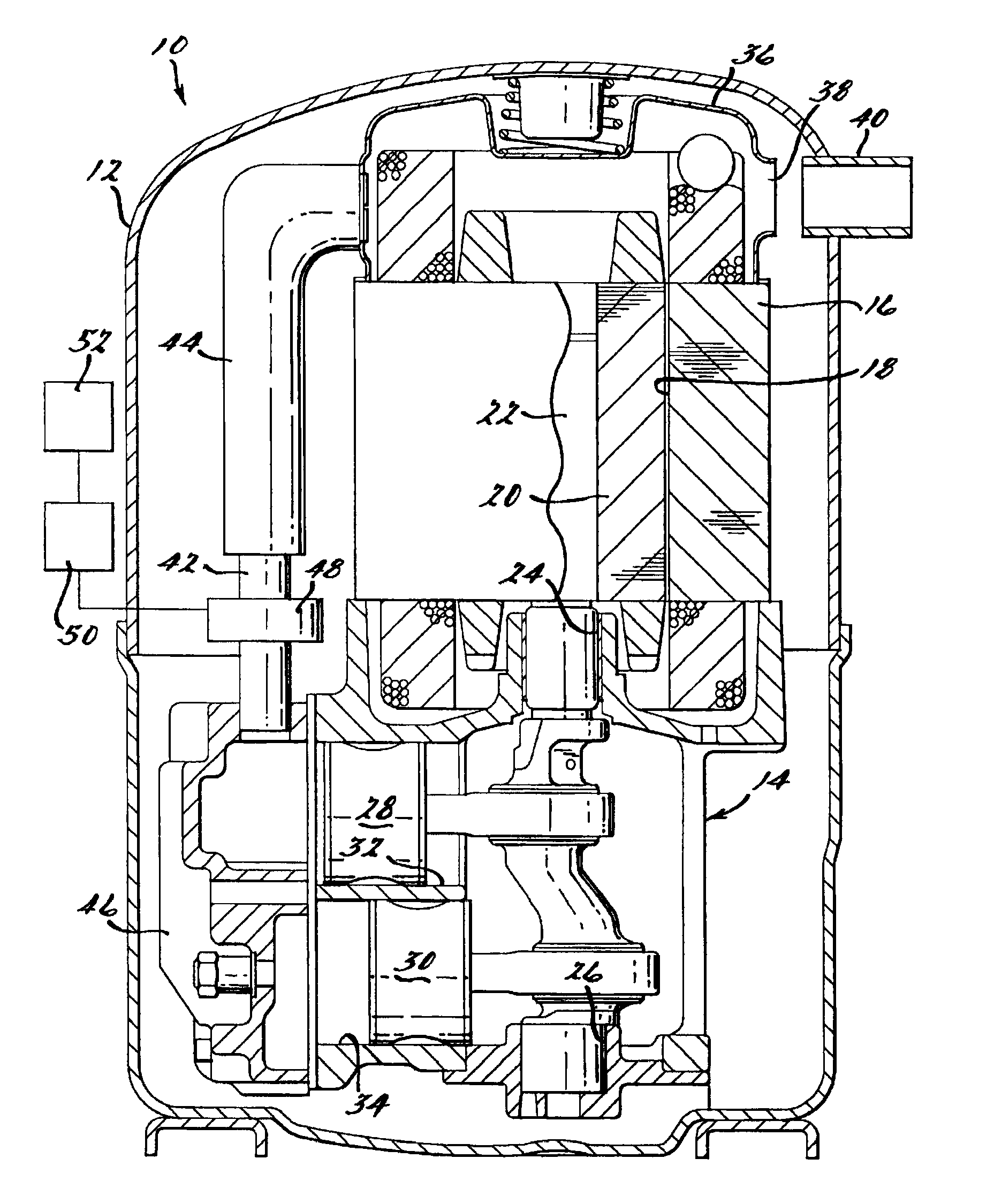
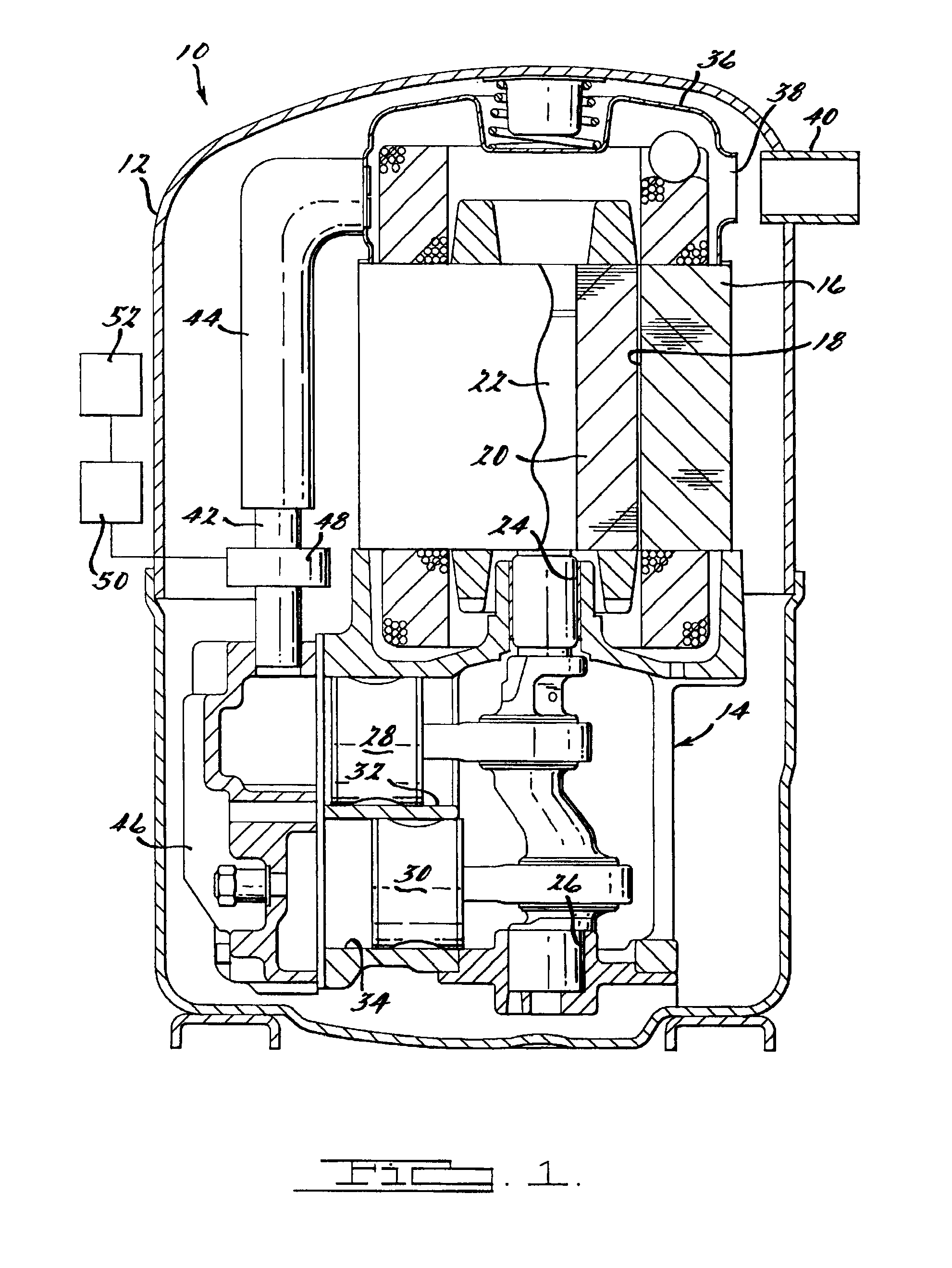
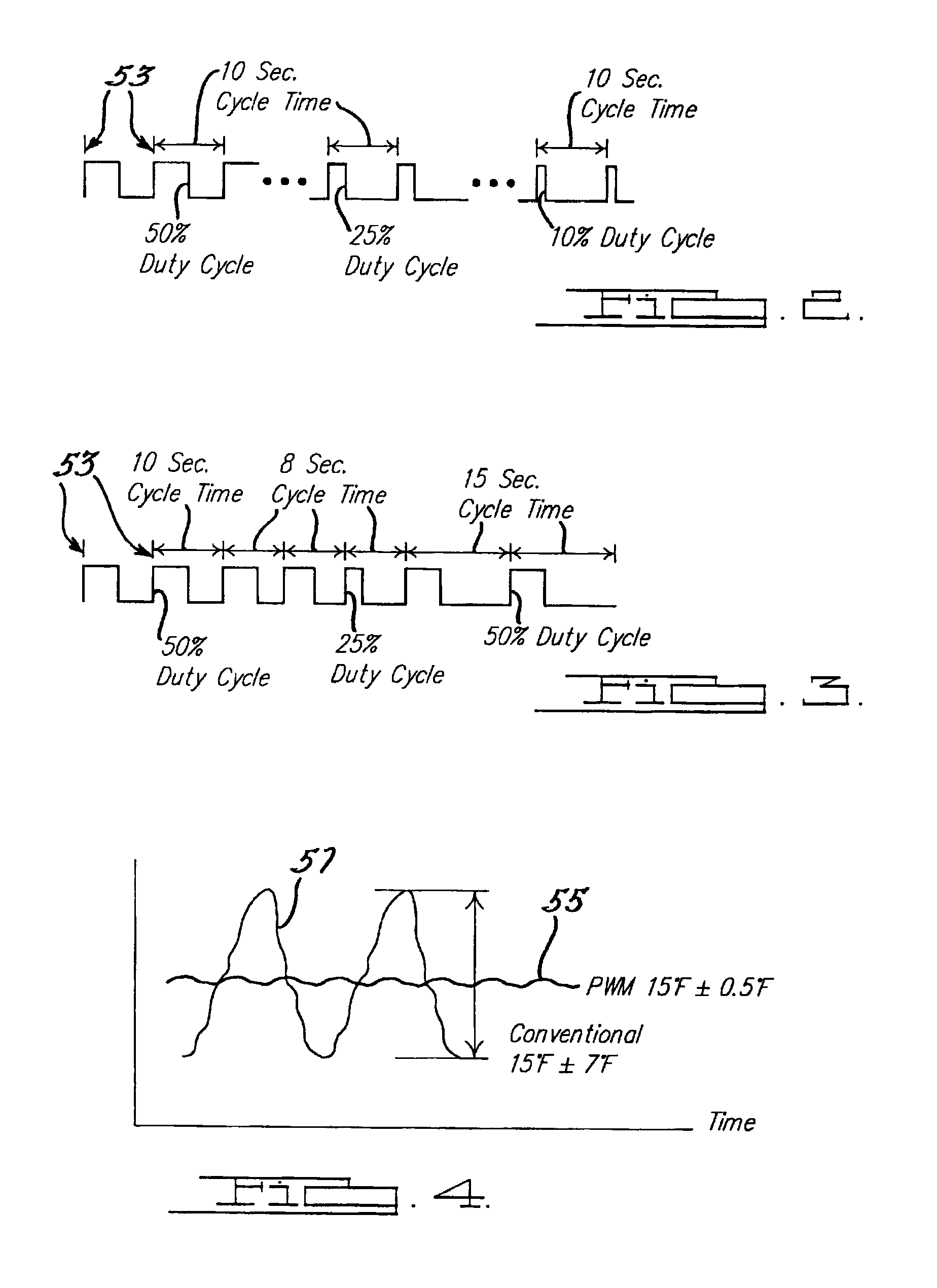
- A pulse width modulation system that controls suction gas flow to each cylinder of a compressor, allowing for continuous modulation of capacity from 0% to 100% by varying the duty cycle and frequency of the control signal, ensuring exact matching of capacity to system loading conditions while minimizing pressure fluctuations and maintaining balanced operation.

Compressor capacity modulation
PatentInactiveEP1515047A2
Innovation
- A pulse width modulation system that controls suction gas flow to each cylinder of a compressor, allowing for continuous modulation of capacity from 0% to 100%, using a variable duty cycle control signal based on measured system load, which also regulates frequency to minimize pressure fluctuations.


Energy Efficiency Standards and Regulatory Framework
The regulatory landscape for reciprocating compressor capacity modulation is primarily shaped by international and national energy efficiency standards that directly impact equipment design and operational practices. The International Electrotechnical Commission (IEC) 60034 series and ISO 12900 standards establish fundamental efficiency requirements for compressor systems, while regional frameworks such as the European Union's Ecodesign Directive and the United States Department of Energy (DOE) efficiency standards mandate specific performance thresholds for industrial compressors.
Energy efficiency regulations have evolved significantly over the past decade, with increasing emphasis on variable capacity systems that can adapt to fluctuating demand conditions. The European Commission's Motor Regulation (EU) 2019/1781 specifically addresses variable speed drive applications in compressor systems, requiring manufacturers to demonstrate energy savings through advanced capacity modulation techniques. Similarly, the U.S. Energy Policy Act amendments have introduced tiered efficiency standards that favor systems with sophisticated load management capabilities.
Compliance frameworks typically require comprehensive testing protocols that evaluate compressor performance across multiple operating points, rather than single-point efficiency measurements. The Air-Conditioning, Heating, and Refrigeration Institute (AHRI) Standard 540 provides detailed testing procedures for capacity modulation systems, establishing benchmarks for part-load efficiency ratios and seasonal energy efficiency metrics.
Emerging regulatory trends indicate a shift toward lifecycle energy assessment and carbon footprint considerations. The California Energy Commission's Title 24 regulations now incorporate demand response capabilities as mandatory features for large-scale compressor installations, incentivizing the adoption of advanced capacity modulation technologies that can participate in grid stabilization programs.
International harmonization efforts through organizations like the International Energy Agency (IEA) are driving convergence toward unified efficiency metrics and testing standards. These developments create both opportunities and challenges for manufacturers seeking to optimize capacity modulation strategies while ensuring global regulatory compliance across diverse market jurisdictions.
Energy efficiency regulations have evolved significantly over the past decade, with increasing emphasis on variable capacity systems that can adapt to fluctuating demand conditions. The European Commission's Motor Regulation (EU) 2019/1781 specifically addresses variable speed drive applications in compressor systems, requiring manufacturers to demonstrate energy savings through advanced capacity modulation techniques. Similarly, the U.S. Energy Policy Act amendments have introduced tiered efficiency standards that favor systems with sophisticated load management capabilities.
Compliance frameworks typically require comprehensive testing protocols that evaluate compressor performance across multiple operating points, rather than single-point efficiency measurements. The Air-Conditioning, Heating, and Refrigeration Institute (AHRI) Standard 540 provides detailed testing procedures for capacity modulation systems, establishing benchmarks for part-load efficiency ratios and seasonal energy efficiency metrics.
Emerging regulatory trends indicate a shift toward lifecycle energy assessment and carbon footprint considerations. The California Energy Commission's Title 24 regulations now incorporate demand response capabilities as mandatory features for large-scale compressor installations, incentivizing the adoption of advanced capacity modulation technologies that can participate in grid stabilization programs.
International harmonization efforts through organizations like the International Energy Agency (IEA) are driving convergence toward unified efficiency metrics and testing standards. These developments create both opportunities and challenges for manufacturers seeking to optimize capacity modulation strategies while ensuring global regulatory compliance across diverse market jurisdictions.
Environmental Impact Assessment of Modulation Systems
The environmental implications of reciprocating compressor capacity modulation systems have become increasingly critical as industries face mounting pressure to reduce their carbon footprint and comply with stringent environmental regulations. Traditional fixed-capacity compressors often operate inefficiently during partial load conditions, leading to excessive energy consumption and elevated greenhouse gas emissions. Modern modulation technologies present significant opportunities to minimize these environmental impacts while maintaining operational effectiveness.
Energy consumption represents the most substantial environmental factor in compressor operations, directly correlating with carbon dioxide emissions from power generation. Variable capacity modulation systems, including clearance volume control, suction valve unloading, and variable speed drives, demonstrate remarkable potential for reducing energy waste. Studies indicate that properly implemented modulation systems can achieve energy savings of 15-30% compared to conventional on-off cycling methods, translating to proportional reductions in CO2 emissions.
The manufacturing and material lifecycle impacts of modulation systems require careful consideration. Advanced modulation technologies often incorporate sophisticated control systems, electronic components, and precision-engineered mechanical parts that increase the initial environmental burden during production. However, lifecycle assessments consistently demonstrate that operational energy savings significantly outweigh manufacturing impacts within 2-3 years of operation, establishing a favorable long-term environmental profile.
Refrigerant leakage prevention emerges as another crucial environmental consideration, particularly in refrigeration and air conditioning applications. Modulation systems that reduce compressor cycling frequency inherently minimize seal wear and thermal stress, thereby reducing the likelihood of refrigerant leaks. This benefit becomes especially significant when considering high global warming potential refrigerants, where even minor leakage reductions yield substantial environmental benefits.
Noise pollution reduction represents an often-overlooked environmental advantage of capacity modulation systems. Smooth capacity adjustment eliminates the acoustic disturbances associated with frequent start-stop cycles, contributing to improved environmental quality in industrial and commercial settings. Additionally, reduced mechanical stress from modulated operation extends equipment lifespan, decreasing the frequency of equipment replacement and associated material consumption, further enhancing the overall environmental sustainability profile of these advanced compressor systems.
Energy consumption represents the most substantial environmental factor in compressor operations, directly correlating with carbon dioxide emissions from power generation. Variable capacity modulation systems, including clearance volume control, suction valve unloading, and variable speed drives, demonstrate remarkable potential for reducing energy waste. Studies indicate that properly implemented modulation systems can achieve energy savings of 15-30% compared to conventional on-off cycling methods, translating to proportional reductions in CO2 emissions.
The manufacturing and material lifecycle impacts of modulation systems require careful consideration. Advanced modulation technologies often incorporate sophisticated control systems, electronic components, and precision-engineered mechanical parts that increase the initial environmental burden during production. However, lifecycle assessments consistently demonstrate that operational energy savings significantly outweigh manufacturing impacts within 2-3 years of operation, establishing a favorable long-term environmental profile.
Refrigerant leakage prevention emerges as another crucial environmental consideration, particularly in refrigeration and air conditioning applications. Modulation systems that reduce compressor cycling frequency inherently minimize seal wear and thermal stress, thereby reducing the likelihood of refrigerant leaks. This benefit becomes especially significant when considering high global warming potential refrigerants, where even minor leakage reductions yield substantial environmental benefits.
Noise pollution reduction represents an often-overlooked environmental advantage of capacity modulation systems. Smooth capacity adjustment eliminates the acoustic disturbances associated with frequent start-stop cycles, contributing to improved environmental quality in industrial and commercial settings. Additionally, reduced mechanical stress from modulated operation extends equipment lifespan, decreasing the frequency of equipment replacement and associated material consumption, further enhancing the overall environmental sustainability profile of these advanced compressor systems.
Unlock deeper insights with PatSnap Eureka Quick Research — get a full tech report to explore trends and direct your research. Try now!
Generate Your Research Report Instantly with AI Agent
Supercharge your innovation with PatSnap Eureka AI Agent Platform!