

Solid-State Circuit Breakers: Impact On Renewable System Stability
MAY 14, 20269 MIN READ
Generate Your Research Report Instantly with AI Agent
PatSnap Eureka helps you evaluate technical feasibility & market potential.
Solid-State Breaker Technology Background and Objectives
Solid-state circuit breakers represent a paradigm shift from traditional electromechanical circuit protection devices, emerging as a critical technology for modern power systems. Unlike conventional mechanical breakers that rely on physical contacts and arc extinction chambers, solid-state breakers utilize semiconductor devices such as IGBTs, MOSFETs, or thyristors to interrupt current flow electronically. This fundamental difference enables microsecond-level response times compared to the millisecond or cycle-level response of mechanical counterparts.
The evolution of solid-state breaker technology traces back to the 1970s when early semiconductor switching devices began demonstrating potential for power interruption applications. Initial developments focused on low-voltage DC applications, gradually expanding to medium-voltage AC systems as semiconductor technology matured. The integration of wide bandgap semiconductors like silicon carbide and gallium nitride has significantly enhanced voltage blocking capabilities and switching speeds, making solid-state breakers viable for high-power applications.
Contemporary renewable energy systems present unique challenges that traditional protection schemes struggle to address effectively. The intermittent nature of renewable sources creates dynamic power flow patterns, while distributed generation architectures introduce bidirectional power flows and reduced system inertia. These characteristics demand protection devices capable of rapid fault detection and isolation to maintain grid stability and prevent cascading failures.
The primary objective of solid-state breaker technology in renewable systems centers on enhancing system stability through ultra-fast fault clearing capabilities. By reducing fault clearing times from cycles to microseconds, these devices can prevent voltage sags and frequency deviations that commonly destabilize renewable-heavy grids. Additionally, their ability to provide precise current limiting and controlled reconnection sequences supports seamless integration of variable renewable sources.
Advanced solid-state breakers incorporate intelligent monitoring and communication capabilities, enabling real-time system optimization and predictive maintenance strategies. These features align with smart grid initiatives and support the transition toward fully automated power system operations, ultimately facilitating higher renewable energy penetration levels while maintaining reliability standards.
The evolution of solid-state breaker technology traces back to the 1970s when early semiconductor switching devices began demonstrating potential for power interruption applications. Initial developments focused on low-voltage DC applications, gradually expanding to medium-voltage AC systems as semiconductor technology matured. The integration of wide bandgap semiconductors like silicon carbide and gallium nitride has significantly enhanced voltage blocking capabilities and switching speeds, making solid-state breakers viable for high-power applications.
Contemporary renewable energy systems present unique challenges that traditional protection schemes struggle to address effectively. The intermittent nature of renewable sources creates dynamic power flow patterns, while distributed generation architectures introduce bidirectional power flows and reduced system inertia. These characteristics demand protection devices capable of rapid fault detection and isolation to maintain grid stability and prevent cascading failures.
The primary objective of solid-state breaker technology in renewable systems centers on enhancing system stability through ultra-fast fault clearing capabilities. By reducing fault clearing times from cycles to microseconds, these devices can prevent voltage sags and frequency deviations that commonly destabilize renewable-heavy grids. Additionally, their ability to provide precise current limiting and controlled reconnection sequences supports seamless integration of variable renewable sources.
Advanced solid-state breakers incorporate intelligent monitoring and communication capabilities, enabling real-time system optimization and predictive maintenance strategies. These features align with smart grid initiatives and support the transition toward fully automated power system operations, ultimately facilitating higher renewable energy penetration levels while maintaining reliability standards.
Market Demand for Advanced Grid Protection in Renewables
The global renewable energy sector is experiencing unprecedented growth, driving substantial demand for advanced grid protection technologies. As wind and solar installations continue to expand rapidly across developed and emerging markets, traditional grid infrastructure faces mounting challenges in maintaining stability and reliability. This transformation has created a critical market opportunity for solid-state circuit breakers and other advanced protection systems.
Renewable energy systems introduce unique operational complexities that conventional protection equipment struggles to address effectively. The intermittent nature of solar and wind generation creates frequent voltage fluctuations and power quality issues that require faster, more precise protective responses. Grid operators are increasingly recognizing that legacy mechanical circuit breakers lack the speed and controllability necessary to manage these dynamic conditions, particularly during fault scenarios involving distributed energy resources.
The integration of large-scale renewable installations has fundamentally altered grid fault characteristics and protection requirements. Modern renewable systems often exhibit low fault current contributions and complex impedance behaviors that challenge traditional protection schemes. This technical reality has generated strong market demand for intelligent protection solutions capable of adaptive operation and real-time response to changing grid conditions.
Utility companies worldwide are actively seeking protection technologies that can enhance grid resilience while accommodating higher renewable penetration levels. The market demand extends beyond basic fault interruption capabilities to encompass advanced features such as fault current limiting, power quality enhancement, and seamless integration with smart grid control systems. These requirements align closely with the capabilities offered by solid-state circuit breaker technologies.
Investment in grid modernization programs across major economies has created substantial funding streams for advanced protection equipment procurement. Regulatory frameworks increasingly mandate improved grid reliability standards and renewable integration capabilities, further driving market demand for innovative protection solutions. The convergence of technical necessity, regulatory pressure, and available funding has established a robust market foundation for next-generation circuit breaker technologies.
The economic value proposition for advanced grid protection has strengthened considerably as renewable deployment costs continue declining while grid stability challenges intensify. Utilities are recognizing that investing in sophisticated protection systems represents a cost-effective approach to maximizing renewable energy utilization while maintaining system reliability and avoiding costly outages or equipment damage.
Renewable energy systems introduce unique operational complexities that conventional protection equipment struggles to address effectively. The intermittent nature of solar and wind generation creates frequent voltage fluctuations and power quality issues that require faster, more precise protective responses. Grid operators are increasingly recognizing that legacy mechanical circuit breakers lack the speed and controllability necessary to manage these dynamic conditions, particularly during fault scenarios involving distributed energy resources.
The integration of large-scale renewable installations has fundamentally altered grid fault characteristics and protection requirements. Modern renewable systems often exhibit low fault current contributions and complex impedance behaviors that challenge traditional protection schemes. This technical reality has generated strong market demand for intelligent protection solutions capable of adaptive operation and real-time response to changing grid conditions.
Utility companies worldwide are actively seeking protection technologies that can enhance grid resilience while accommodating higher renewable penetration levels. The market demand extends beyond basic fault interruption capabilities to encompass advanced features such as fault current limiting, power quality enhancement, and seamless integration with smart grid control systems. These requirements align closely with the capabilities offered by solid-state circuit breaker technologies.
Investment in grid modernization programs across major economies has created substantial funding streams for advanced protection equipment procurement. Regulatory frameworks increasingly mandate improved grid reliability standards and renewable integration capabilities, further driving market demand for innovative protection solutions. The convergence of technical necessity, regulatory pressure, and available funding has established a robust market foundation for next-generation circuit breaker technologies.
The economic value proposition for advanced grid protection has strengthened considerably as renewable deployment costs continue declining while grid stability challenges intensify. Utilities are recognizing that investing in sophisticated protection systems represents a cost-effective approach to maximizing renewable energy utilization while maintaining system reliability and avoiding costly outages or equipment damage.
Current SSCB Status and Renewable Integration Challenges
Solid-State Circuit Breakers represent a paradigm shift from traditional mechanical circuit protection devices, utilizing semiconductor-based switching technologies to provide faster, more precise electrical fault interruption capabilities. Current SSCB implementations primarily employ wide bandgap semiconductors such as silicon carbide (SiC) and gallium nitride (GaN), which offer superior switching speeds and thermal performance compared to conventional silicon-based devices. These technologies enable fault clearing times in the microsecond range, significantly faster than the millisecond response times of mechanical breakers.
The integration of renewable energy sources into modern power grids has created unprecedented challenges for traditional protection systems. Wind and solar installations exhibit highly variable power output characteristics, creating dynamic loading conditions that stress conventional grid infrastructure. These renewable sources often operate through power electronic interfaces, introducing harmonic distortions and transient behaviors that complicate fault detection and isolation processes.
Current SSCB deployment faces several technical limitations that impact their effectiveness in renewable-integrated systems. Thermal management remains a critical challenge, as semiconductor devices generate substantial heat during switching operations, particularly under high current fault conditions. The cost-performance ratio of SSCB systems continues to exceed that of mechanical alternatives by significant margins, limiting widespread adoption in utility-scale applications.
Renewable energy integration introduces specific operational challenges that current SSCB technologies struggle to address comprehensively. The bidirectional power flow characteristics of distributed renewable systems require protection devices capable of detecting and interrupting faults in both directions, a capability that many existing SSCB designs have not fully optimized. Additionally, the low inertia characteristics of renewable sources reduce system stability margins, demanding faster and more coordinated protection responses.
Grid stability concerns arise from the interaction between SSCB switching characteristics and renewable energy converter control systems. High-frequency switching operations can create electromagnetic interference that affects sensitive power electronic equipment, potentially triggering cascading protection events. The coordination between SSCB protection algorithms and renewable energy management systems requires sophisticated communication protocols that are still under development.
Manufacturing scalability represents another significant challenge for SSCB technology advancement. Current production volumes remain insufficient to achieve the cost reductions necessary for widespread grid deployment. The specialized semiconductor fabrication processes required for high-voltage, high-current SSCB devices demand substantial capital investments that few manufacturers have committed to making without guaranteed market demand.
The integration of renewable energy sources into modern power grids has created unprecedented challenges for traditional protection systems. Wind and solar installations exhibit highly variable power output characteristics, creating dynamic loading conditions that stress conventional grid infrastructure. These renewable sources often operate through power electronic interfaces, introducing harmonic distortions and transient behaviors that complicate fault detection and isolation processes.
Current SSCB deployment faces several technical limitations that impact their effectiveness in renewable-integrated systems. Thermal management remains a critical challenge, as semiconductor devices generate substantial heat during switching operations, particularly under high current fault conditions. The cost-performance ratio of SSCB systems continues to exceed that of mechanical alternatives by significant margins, limiting widespread adoption in utility-scale applications.
Renewable energy integration introduces specific operational challenges that current SSCB technologies struggle to address comprehensively. The bidirectional power flow characteristics of distributed renewable systems require protection devices capable of detecting and interrupting faults in both directions, a capability that many existing SSCB designs have not fully optimized. Additionally, the low inertia characteristics of renewable sources reduce system stability margins, demanding faster and more coordinated protection responses.
Grid stability concerns arise from the interaction between SSCB switching characteristics and renewable energy converter control systems. High-frequency switching operations can create electromagnetic interference that affects sensitive power electronic equipment, potentially triggering cascading protection events. The coordination between SSCB protection algorithms and renewable energy management systems requires sophisticated communication protocols that are still under development.
Manufacturing scalability represents another significant challenge for SSCB technology advancement. Current production volumes remain insufficient to achieve the cost reductions necessary for widespread grid deployment. The specialized semiconductor fabrication processes required for high-voltage, high-current SSCB devices demand substantial capital investments that few manufacturers have committed to making without guaranteed market demand.
Existing SSCB Solutions for Renewable System Protection
01 Control algorithms and switching strategies for solid-state circuit breakers
Advanced control algorithms are essential for managing the switching operations of solid-state circuit breakers to maintain system stability. These algorithms optimize the timing and coordination of switching events, ensuring smooth transitions and preventing oscillations or instability during fault conditions. The control strategies include feedback mechanisms, predictive control methods, and adaptive algorithms that respond to changing system conditions.- Control algorithms and switching strategies for solid-state circuit breakers: Advanced control algorithms are essential for managing the switching operations of solid-state circuit breakers to maintain system stability. These algorithms optimize the timing and coordination of switching events, ensuring smooth transitions during fault conditions and normal operations. The control strategies include predictive control methods, adaptive switching techniques, and real-time monitoring systems that enhance the overall stability and reliability of the circuit breaker system.
- Fault detection and protection mechanisms: Sophisticated fault detection systems are integrated into solid-state circuit breakers to identify abnormal conditions and trigger protective actions. These mechanisms include current and voltage monitoring, arc detection, overcurrent protection, and short-circuit identification. The protection systems are designed to respond rapidly to fault conditions while maintaining system stability and preventing cascading failures in the electrical network.
- Power semiconductor device optimization and thermal management: The stability of solid-state circuit breakers heavily depends on the proper selection and optimization of power semiconductor devices such as IGBTs, MOSFETs, and thyristors. Thermal management systems are crucial for maintaining device performance and preventing thermal runaway. Advanced cooling techniques, heat dissipation methods, and temperature monitoring ensure reliable operation under various load conditions and contribute to overall system stability.
- Grid integration and power quality enhancement: Solid-state circuit breakers play a critical role in maintaining power quality and ensuring seamless integration with electrical grids. These systems incorporate features for voltage regulation, harmonic filtering, and reactive power compensation. The integration mechanisms help stabilize grid operations, reduce power disturbances, and maintain voltage and frequency within acceptable limits during switching operations and fault conditions.
- Communication protocols and smart grid compatibility: Modern solid-state circuit breakers incorporate advanced communication capabilities to enable remote monitoring, control, and coordination with smart grid infrastructure. These systems support various communication protocols and standards that facilitate real-time data exchange, status reporting, and coordinated control actions. The communication features enhance system stability through improved situational awareness and enable predictive maintenance strategies.
02 Protection coordination and fault detection mechanisms
Effective protection coordination is crucial for solid-state circuit breaker systems to maintain stability during fault conditions. This involves sophisticated fault detection algorithms that can rapidly identify and classify different types of faults, enabling appropriate protective actions. The coordination mechanisms ensure that multiple circuit breakers work together harmoniously without causing unnecessary trips or system instability.Expand Specific Solutions03 Power electronic device integration and thermal management
The integration of power electronic devices such as semiconductors and their thermal management systems plays a vital role in maintaining system stability. Proper thermal design prevents device failures that could lead to system instability, while optimized device integration ensures reliable operation under various load conditions. Advanced cooling techniques and thermal monitoring systems are employed to maintain optimal operating temperatures.Expand Specific Solutions04 Grid synchronization and power quality enhancement
Solid-state circuit breakers must maintain proper synchronization with the electrical grid to ensure system stability. This includes managing power quality issues such as harmonics, voltage fluctuations, and frequency variations. Advanced synchronization techniques and power conditioning capabilities help maintain grid stability while allowing for seamless integration of renewable energy sources and distributed generation systems.Expand Specific Solutions05 Communication protocols and system monitoring for stability assessment
Modern solid-state circuit breaker systems incorporate advanced communication protocols and monitoring capabilities to continuously assess system stability. Real-time data collection and analysis enable predictive maintenance and early detection of potential stability issues. These systems provide comprehensive monitoring of electrical parameters, device health, and system performance to ensure optimal stability under all operating conditions.Expand Specific Solutions
Key Players in SSCB and Renewable Grid Solutions
The solid-state circuit breaker market for renewable energy systems is in a growth phase, driven by increasing renewable integration demands and grid stability requirements. The market demonstrates significant expansion potential as utilities and industrial operators seek advanced protection solutions for variable renewable sources. Technology maturity varies considerably across market participants, with established electrical giants like Schneider Electric, Siemens AG, and ABB Ltd. leveraging decades of traditional circuit breaker expertise to develop solid-state variants. These companies possess mature manufacturing capabilities and extensive distribution networks. Emerging specialists like Atom Power and Resilient Power Systems represent cutting-edge innovation, focusing specifically on solid-state technologies with advanced digital control features. Chinese entities including State Grid Corp. and research institutions like China Electric Power Research Institute contribute substantial R&D investments, particularly for large-scale grid applications. The competitive landscape shows a bifurcation between traditional manufacturers adapting existing technologies and innovative startups developing purpose-built solid-state solutions, indicating a market transitioning from experimental to commercial deployment phases.
Siemens AG
Technical Solution: Siemens has developed comprehensive solid-state circuit breaker solutions leveraging their expertise in power electronics and grid automation. Their SSCB technology utilizes advanced IGBT and SiC-based switching devices capable of interrupting fault currents within 2-3 milliseconds. The system incorporates Siemens' SICAM grid automation platform for seamless integration with renewable energy sources, providing real-time monitoring and control capabilities. Their SSCBs feature adaptive protection algorithms that can distinguish between normal operational transients and actual fault conditions in renewable systems, reducing unnecessary trips. The technology includes advanced current limiting functions and supports multiple protection zones, enabling selective fault isolation while maintaining system stability during renewable energy fluctuations.
Strengths: Strong integration with existing grid infrastructure, comprehensive protection algorithms, excellent system reliability. Weaknesses: Complex installation requirements, dependency on proprietary control systems, higher maintenance complexity.
ABB Ltd.
Technical Solution: ABB has developed advanced solid-state circuit breaker technology utilizing wide bandgap semiconductors like silicon carbide (SiC) and gallium nitride (GaN) devices. Their SSCB solutions feature ultra-fast switching capabilities with interruption times under 1 millisecond, significantly faster than traditional mechanical breakers. The technology incorporates intelligent control algorithms that can detect fault conditions within microseconds and provide precise current limiting functionality. ABB's SSCBs are designed specifically for renewable energy applications, offering bidirectional power flow control essential for grid-tied solar and wind systems. Their solutions include integrated protection coordination with renewable energy management systems, enabling enhanced grid stability through rapid fault isolation and system reconfiguration capabilities.
Strengths: Ultra-fast switching speed, excellent integration with renewable systems, proven reliability in industrial applications. Weaknesses: Higher initial cost compared to mechanical breakers, heat dissipation challenges in high-power applications.
Core Innovations in Fast-Acting Semiconductor Breakers
Solid-state circuit breaker and breaking method for solid-state circuit breaker
PatentActiveUS20210257832A1
Innovation
- A control unit in the SSCB calculates the equivalent circuit inductance and sets a second current fault threshold when it exceeds the estimated value, triggering the semiconductor switch to close and manage energy dissipation through an energy absorber, such as a transient voltage suppression diode, to prevent damage.


Solid-state DC circuit breaker
PatentInactiveUS6952335B2
Innovation
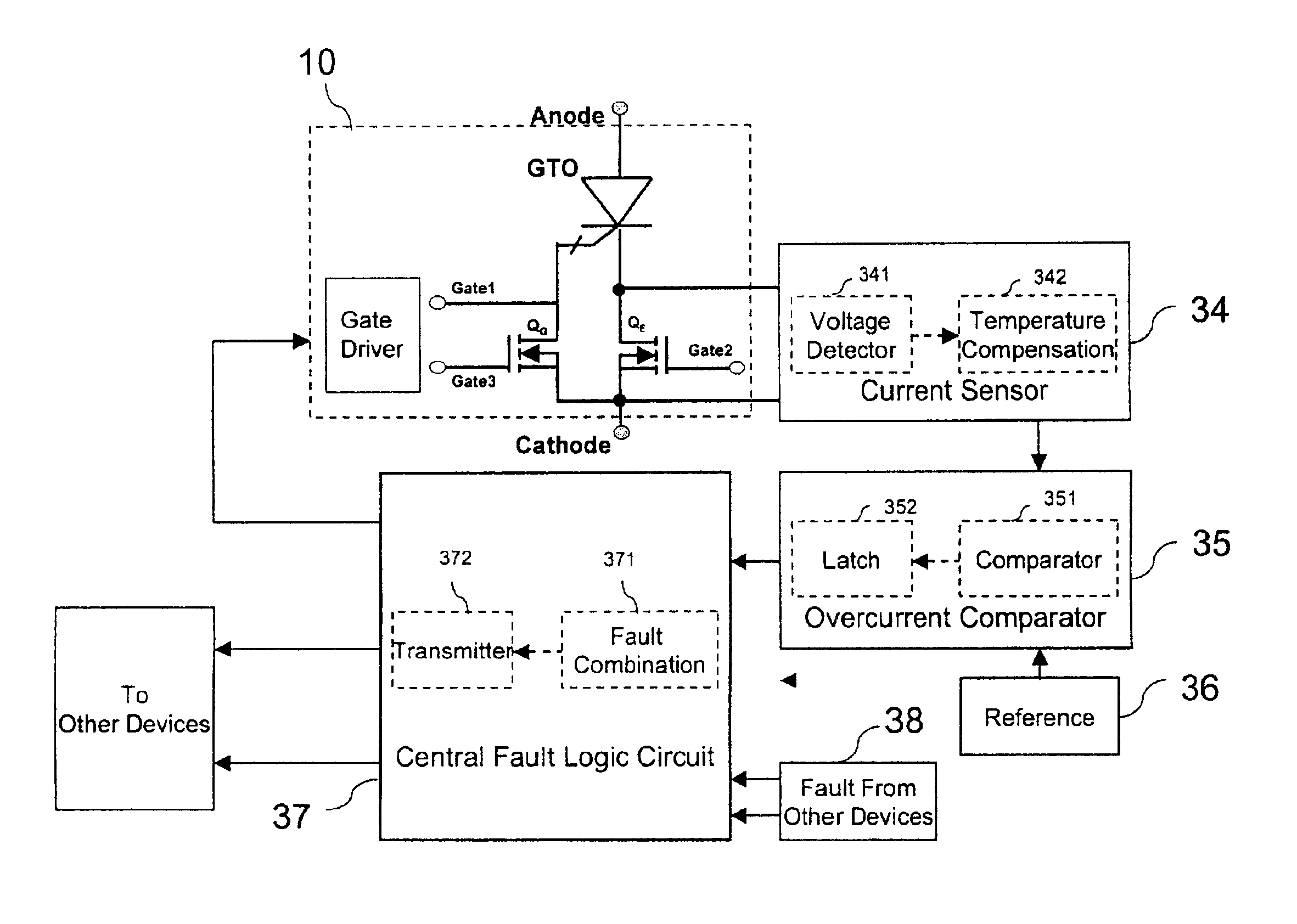
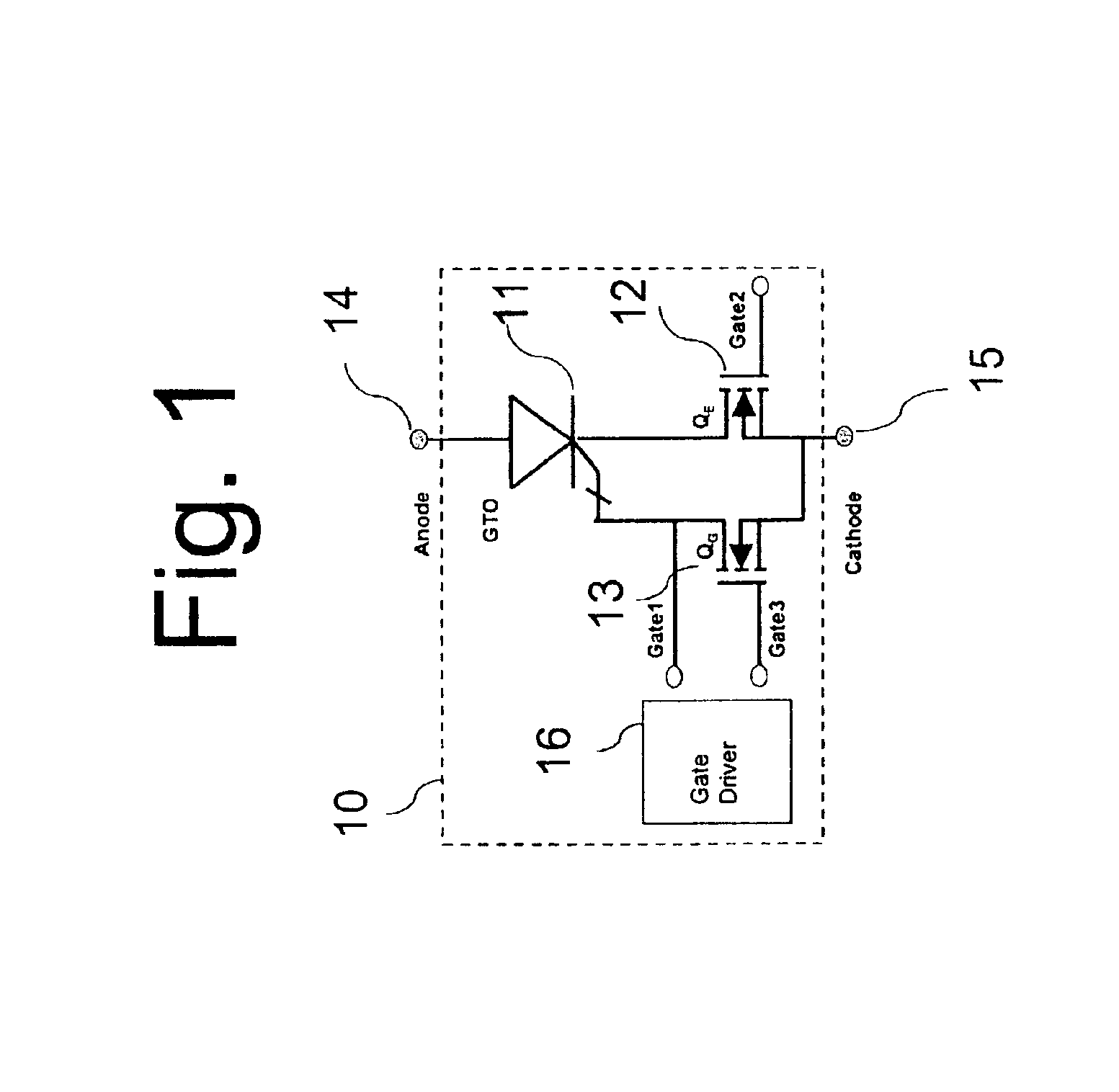
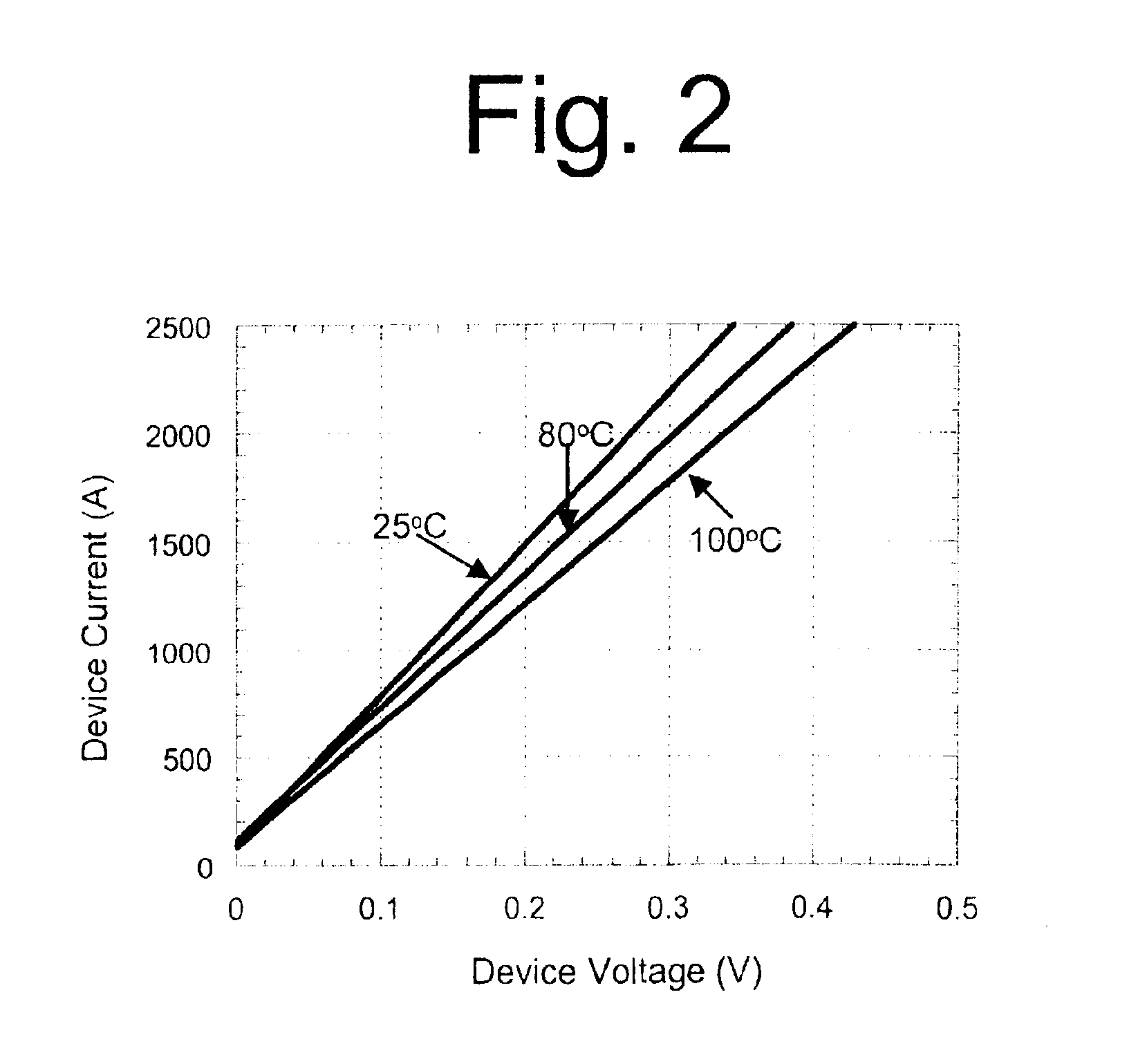
- A high-speed, solid-state DC circuit breaker utilizing emitter turn-off (ETO) thyristors with built-in current sensing and control, capable of interrupting 5 kA in 4 μs without arc generation, featuring both solid-state switch and tripping units for precise protection.

Grid Code Standards for Renewable Energy Integration
Grid code standards serve as the fundamental regulatory framework governing the integration of renewable energy systems into electrical grids, establishing critical technical requirements that directly influence the deployment and operation of solid-state circuit breakers in renewable installations. These standards define mandatory performance criteria, operational parameters, and safety protocols that renewable energy systems must meet to ensure grid stability and reliability.
The International Electrotechnical Commission (IEC) 61400 series and IEEE 1547 standards represent cornerstone regulations for wind and distributed energy resources respectively, establishing voltage and frequency ride-through requirements that significantly impact SSCB design specifications. These standards mandate that renewable systems maintain connectivity during grid disturbances within specified voltage and frequency ranges, necessitating advanced protection coordination between SSCBs and renewable generation units.
Regional grid codes vary substantially in their technical requirements, with European Network Codes (EU 2016/631) emphasizing fault ride-through capabilities and reactive power support, while North American standards focus on anti-islanding protection and voltage regulation. These variations create diverse operational environments for SSCB deployment, requiring adaptive protection schemes and configurable response characteristics to meet jurisdiction-specific compliance requirements.
Emerging grid code revisions increasingly address high-penetration renewable scenarios, introducing new requirements for inertial response, frequency support, and grid-forming capabilities. The Australian Energy Market Operator's recent amendments and California's Rule 21 updates exemplify this trend, establishing performance standards that leverage SSCB fast switching capabilities to enhance system stability during renewable output fluctuations.
Compliance verification procedures outlined in grid codes require extensive testing and certification processes, including power quality assessments, protection coordination studies, and dynamic performance validation. These requirements drive SSCB manufacturers to develop standardized testing protocols and certification frameworks, ensuring interoperability across diverse renewable energy installations while maintaining grid code compliance throughout operational lifecycles.
The International Electrotechnical Commission (IEC) 61400 series and IEEE 1547 standards represent cornerstone regulations for wind and distributed energy resources respectively, establishing voltage and frequency ride-through requirements that significantly impact SSCB design specifications. These standards mandate that renewable systems maintain connectivity during grid disturbances within specified voltage and frequency ranges, necessitating advanced protection coordination between SSCBs and renewable generation units.
Regional grid codes vary substantially in their technical requirements, with European Network Codes (EU 2016/631) emphasizing fault ride-through capabilities and reactive power support, while North American standards focus on anti-islanding protection and voltage regulation. These variations create diverse operational environments for SSCB deployment, requiring adaptive protection schemes and configurable response characteristics to meet jurisdiction-specific compliance requirements.
Emerging grid code revisions increasingly address high-penetration renewable scenarios, introducing new requirements for inertial response, frequency support, and grid-forming capabilities. The Australian Energy Market Operator's recent amendments and California's Rule 21 updates exemplify this trend, establishing performance standards that leverage SSCB fast switching capabilities to enhance system stability during renewable output fluctuations.
Compliance verification procedures outlined in grid codes require extensive testing and certification processes, including power quality assessments, protection coordination studies, and dynamic performance validation. These requirements drive SSCB manufacturers to develop standardized testing protocols and certification frameworks, ensuring interoperability across diverse renewable energy installations while maintaining grid code compliance throughout operational lifecycles.
Environmental Impact of SSCB in Clean Energy Systems
The deployment of Solid-State Circuit Breakers in clean energy systems represents a significant advancement in environmental sustainability compared to traditional mechanical circuit breakers. SSCBs eliminate the need for sulfur hexafluoride (SF6) gas, which has a global warming potential approximately 23,500 times greater than carbon dioxide. This elimination directly reduces greenhouse gas emissions from electrical infrastructure, contributing to the overall carbon footprint reduction of renewable energy installations.
The manufacturing process of SSCBs demonstrates superior environmental performance through reduced material consumption and simplified production workflows. Unlike conventional breakers that require complex mechanical assemblies and environmentally hazardous insulating gases, SSCBs utilize semiconductor-based switching elements that can be produced using established silicon fabrication processes. This approach minimizes the use of rare earth materials and reduces the environmental impact associated with mining and processing specialized metals required for traditional breaker contacts.
Operational efficiency improvements provided by SSCBs contribute significantly to environmental benefits in clean energy systems. The faster switching capabilities and reduced power losses during normal operation translate to improved overall system efficiency, maximizing the environmental benefits of renewable energy generation. The elimination of mechanical wear components reduces maintenance requirements, decreasing the frequency of component replacement and associated transportation emissions for maintenance activities.
End-of-life considerations further enhance the environmental profile of SSCBs in renewable systems. The semiconductor-based design enables more effective recycling processes, as silicon components can be processed through established electronic waste streams. The absence of SF6 gas eliminates complex and costly gas recovery procedures required during decommissioning of traditional breakers, reducing both environmental risks and disposal costs.
The integration of SSCBs supports the development of more environmentally conscious grid architectures by enabling higher renewable energy penetration rates. Enhanced system stability provided by rapid fault clearing capabilities allows for increased integration of variable renewable sources without compromising grid reliability, ultimately accelerating the transition away from fossil fuel-based generation and amplifying the positive environmental impact of clean energy investments.
The manufacturing process of SSCBs demonstrates superior environmental performance through reduced material consumption and simplified production workflows. Unlike conventional breakers that require complex mechanical assemblies and environmentally hazardous insulating gases, SSCBs utilize semiconductor-based switching elements that can be produced using established silicon fabrication processes. This approach minimizes the use of rare earth materials and reduces the environmental impact associated with mining and processing specialized metals required for traditional breaker contacts.
Operational efficiency improvements provided by SSCBs contribute significantly to environmental benefits in clean energy systems. The faster switching capabilities and reduced power losses during normal operation translate to improved overall system efficiency, maximizing the environmental benefits of renewable energy generation. The elimination of mechanical wear components reduces maintenance requirements, decreasing the frequency of component replacement and associated transportation emissions for maintenance activities.
End-of-life considerations further enhance the environmental profile of SSCBs in renewable systems. The semiconductor-based design enables more effective recycling processes, as silicon components can be processed through established electronic waste streams. The absence of SF6 gas eliminates complex and costly gas recovery procedures required during decommissioning of traditional breakers, reducing both environmental risks and disposal costs.
The integration of SSCBs supports the development of more environmentally conscious grid architectures by enabling higher renewable energy penetration rates. Enhanced system stability provided by rapid fault clearing capabilities allows for increased integration of variable renewable sources without compromising grid reliability, ultimately accelerating the transition away from fossil fuel-based generation and amplifying the positive environmental impact of clean energy investments.
Unlock deeper insights with PatSnap Eureka Quick Research — get a full tech report to explore trends and direct your research. Try now!
Generate Your Research Report Instantly with AI Agent
Supercharge your innovation with PatSnap Eureka AI Agent Platform!