

Solid-State Circuit Breakers Vs Magnetic Circuit Breakers: Current Handling
MAY 14, 20268 MIN READ
Generate Your Research Report Instantly with AI Agent
PatSnap Eureka helps you evaluate technical feasibility & market potential.
Solid-State vs Magnetic Circuit Breaker Technology Background
Circuit breaker technology has undergone significant evolution since the early 20th century, fundamentally driven by the increasing demands of electrical power systems and the need for enhanced safety, reliability, and performance. The development trajectory of circuit protection devices reflects the broader advancement of electrical engineering and materials science.
Traditional magnetic circuit breakers emerged in the 1920s and became the dominant technology for electrical protection systems throughout most of the 20th century. These devices utilize electromagnetic principles to detect overcurrent conditions and mechanical mechanisms to physically separate electrical contacts, interrupting current flow. The technology matured through decades of refinement, incorporating arc extinguishing chambers, improved contact materials, and sophisticated trip mechanisms.
The advent of solid-state circuit breakers represents a paradigm shift that began gaining momentum in the 1980s with advances in semiconductor technology. Unlike their magnetic counterparts, solid-state breakers employ semiconductor devices such as thyristors, MOSFETs, or IGBTs to control current flow without mechanical contact separation. This fundamental difference enables faster response times, typically in microseconds compared to milliseconds for magnetic breakers.
Current handling capabilities have become a critical differentiator between these technologies. Magnetic circuit breakers excel in high-current applications, routinely handling thousands of amperes in industrial and utility applications. Their robust mechanical construction and proven arc interruption techniques make them suitable for extreme fault conditions where massive short-circuit currents must be safely interrupted.
Solid-state technology faces inherent challenges in high-current scenarios due to semiconductor limitations and thermal management requirements. However, recent advances in wide-bandgap semiconductors like silicon carbide and gallium nitride are expanding current handling capabilities while maintaining the precision control advantages of electronic switching.
The evolution continues as hybrid approaches emerge, combining the high-current capability of magnetic systems with the precision and speed of solid-state control. This technological convergence aims to address the growing complexity of modern electrical systems while meeting stringent performance requirements across diverse applications.
Traditional magnetic circuit breakers emerged in the 1920s and became the dominant technology for electrical protection systems throughout most of the 20th century. These devices utilize electromagnetic principles to detect overcurrent conditions and mechanical mechanisms to physically separate electrical contacts, interrupting current flow. The technology matured through decades of refinement, incorporating arc extinguishing chambers, improved contact materials, and sophisticated trip mechanisms.
The advent of solid-state circuit breakers represents a paradigm shift that began gaining momentum in the 1980s with advances in semiconductor technology. Unlike their magnetic counterparts, solid-state breakers employ semiconductor devices such as thyristors, MOSFETs, or IGBTs to control current flow without mechanical contact separation. This fundamental difference enables faster response times, typically in microseconds compared to milliseconds for magnetic breakers.
Current handling capabilities have become a critical differentiator between these technologies. Magnetic circuit breakers excel in high-current applications, routinely handling thousands of amperes in industrial and utility applications. Their robust mechanical construction and proven arc interruption techniques make them suitable for extreme fault conditions where massive short-circuit currents must be safely interrupted.
Solid-state technology faces inherent challenges in high-current scenarios due to semiconductor limitations and thermal management requirements. However, recent advances in wide-bandgap semiconductors like silicon carbide and gallium nitride are expanding current handling capabilities while maintaining the precision control advantages of electronic switching.
The evolution continues as hybrid approaches emerge, combining the high-current capability of magnetic systems with the precision and speed of solid-state control. This technological convergence aims to address the growing complexity of modern electrical systems while meeting stringent performance requirements across diverse applications.
Market Demand for Advanced Current Handling Solutions
The global electrical infrastructure is experiencing unprecedented transformation driven by increasing power demands, renewable energy integration, and digitalization requirements. Traditional magnetic circuit breakers, while reliable, face significant limitations in meeting modern current handling demands across industrial, commercial, and residential applications. The surge in data centers, electric vehicle charging infrastructure, and smart grid deployments has created urgent needs for more sophisticated current protection solutions.
Industrial sectors are particularly driving demand for advanced current handling capabilities. Manufacturing facilities require circuit protection systems that can handle higher fault currents while maintaining operational continuity. The semiconductor industry, with its sensitive equipment and precise power requirements, demands circuit breakers capable of ultra-fast response times and minimal arc formation. Similarly, renewable energy installations need protection devices that can manage bidirectional power flows and variable current patterns inherent in solar and wind systems.
The data center market represents one of the most significant growth drivers for advanced current handling solutions. Modern data centers operate at higher power densities and require protection systems that can respond to fault conditions within microseconds to prevent equipment damage and service interruptions. Traditional magnetic circuit breakers often lack the speed and precision needed for these critical applications, creating substantial market opportunities for solid-state alternatives.
Electric vehicle infrastructure development is accelerating demand for high-performance current handling solutions. EV charging stations require circuit protection that can manage rapid current fluctuations during fast-charging cycles while ensuring safety and reliability. The automotive industry's shift toward electrification is creating new requirements for compact, lightweight circuit protection devices that can operate effectively in harsh environmental conditions.
Smart grid modernization initiatives worldwide are generating substantial demand for intelligent current handling solutions. Utilities require circuit breakers that can communicate with grid management systems, provide real-time monitoring capabilities, and enable remote operation. These applications demand protection devices that combine traditional current interruption capabilities with advanced digital features and enhanced current handling performance.
The marine and aerospace sectors present specialized market segments requiring circuit breakers with superior current handling characteristics in weight-sensitive and space-constrained applications. These industries prioritize solutions that offer high current density, reduced maintenance requirements, and enhanced reliability under extreme operating conditions.
Industrial sectors are particularly driving demand for advanced current handling capabilities. Manufacturing facilities require circuit protection systems that can handle higher fault currents while maintaining operational continuity. The semiconductor industry, with its sensitive equipment and precise power requirements, demands circuit breakers capable of ultra-fast response times and minimal arc formation. Similarly, renewable energy installations need protection devices that can manage bidirectional power flows and variable current patterns inherent in solar and wind systems.
The data center market represents one of the most significant growth drivers for advanced current handling solutions. Modern data centers operate at higher power densities and require protection systems that can respond to fault conditions within microseconds to prevent equipment damage and service interruptions. Traditional magnetic circuit breakers often lack the speed and precision needed for these critical applications, creating substantial market opportunities for solid-state alternatives.
Electric vehicle infrastructure development is accelerating demand for high-performance current handling solutions. EV charging stations require circuit protection that can manage rapid current fluctuations during fast-charging cycles while ensuring safety and reliability. The automotive industry's shift toward electrification is creating new requirements for compact, lightweight circuit protection devices that can operate effectively in harsh environmental conditions.
Smart grid modernization initiatives worldwide are generating substantial demand for intelligent current handling solutions. Utilities require circuit breakers that can communicate with grid management systems, provide real-time monitoring capabilities, and enable remote operation. These applications demand protection devices that combine traditional current interruption capabilities with advanced digital features and enhanced current handling performance.
The marine and aerospace sectors present specialized market segments requiring circuit breakers with superior current handling characteristics in weight-sensitive and space-constrained applications. These industries prioritize solutions that offer high current density, reduced maintenance requirements, and enhanced reliability under extreme operating conditions.
Current State and Challenges in Circuit Breaker Technologies
Circuit breaker technology currently exists in a state of significant transformation, driven by evolving power system requirements and emerging technological capabilities. Traditional magnetic circuit breakers have dominated the market for decades, utilizing electromagnetic principles to detect overcurrent conditions and mechanically interrupt electrical circuits. These devices rely on bimetallic strips, solenoids, and arc extinction chambers to provide protection across various voltage and current ranges.
The emergence of solid-state circuit breakers represents a paradigm shift in protection technology. These devices employ semiconductor switches such as MOSFETs, IGBTs, or silicon carbide components to achieve ultra-fast switching capabilities without mechanical contacts. Current solid-state solutions can interrupt fault currents within microseconds, compared to the millisecond response times of conventional magnetic breakers.
However, significant challenges persist in both technologies regarding current handling capabilities. Magnetic circuit breakers face limitations in arc extinction at higher voltages and currents, requiring complex mechanical systems and maintenance-intensive components. The physical wear of contacts and the need for periodic replacement create reliability concerns in critical applications.
Solid-state circuit breakers encounter different but equally challenging obstacles. Power semiconductor devices exhibit higher conduction losses compared to mechanical contacts, leading to thermal management issues and reduced efficiency. The current carrying capacity of solid-state devices remains limited by semiconductor physics, making them less suitable for high-current applications without parallel configurations.
Geographic distribution of technological advancement shows distinct patterns. European manufacturers lead in medium-voltage solid-state solutions, while Asian companies dominate cost-effective magnetic breaker production. North American firms focus on hybrid approaches combining both technologies.
The integration of smart grid requirements adds complexity to current handling challenges. Modern circuit breakers must not only protect against overcurrent conditions but also provide real-time monitoring, communication capabilities, and adaptive protection settings. This evolution demands sophisticated control systems that can manage current handling while maintaining system stability and providing detailed operational data for predictive maintenance strategies.
The emergence of solid-state circuit breakers represents a paradigm shift in protection technology. These devices employ semiconductor switches such as MOSFETs, IGBTs, or silicon carbide components to achieve ultra-fast switching capabilities without mechanical contacts. Current solid-state solutions can interrupt fault currents within microseconds, compared to the millisecond response times of conventional magnetic breakers.
However, significant challenges persist in both technologies regarding current handling capabilities. Magnetic circuit breakers face limitations in arc extinction at higher voltages and currents, requiring complex mechanical systems and maintenance-intensive components. The physical wear of contacts and the need for periodic replacement create reliability concerns in critical applications.
Solid-state circuit breakers encounter different but equally challenging obstacles. Power semiconductor devices exhibit higher conduction losses compared to mechanical contacts, leading to thermal management issues and reduced efficiency. The current carrying capacity of solid-state devices remains limited by semiconductor physics, making them less suitable for high-current applications without parallel configurations.
Geographic distribution of technological advancement shows distinct patterns. European manufacturers lead in medium-voltage solid-state solutions, while Asian companies dominate cost-effective magnetic breaker production. North American firms focus on hybrid approaches combining both technologies.
The integration of smart grid requirements adds complexity to current handling challenges. Modern circuit breakers must not only protect against overcurrent conditions but also provide real-time monitoring, communication capabilities, and adaptive protection settings. This evolution demands sophisticated control systems that can manage current handling while maintaining system stability and providing detailed operational data for predictive maintenance strategies.
Existing Current Handling Solutions Comparison
01 Arc interruption and current breaking mechanisms
Circuit breakers employ various arc interruption techniques to safely break electrical current flow. These mechanisms include gas-filled chambers, vacuum interrupters, and magnetic blow-out systems that extinguish the arc formed when contacts separate under load conditions. The design focuses on rapid arc extinction to prevent damage and ensure reliable current interruption across different voltage and current ratings.- Arc interruption and current breaking mechanisms: Circuit breakers utilize various arc interruption techniques to safely break electrical current flow. These mechanisms include gas-filled chambers, vacuum interrupters, and magnetic blow-out systems that extinguish the arc formed when contacts separate under load conditions. The design focuses on rapid arc extinction to prevent damage and ensure reliable current interruption across different voltage and current ratings.
- Contact design and materials for high current applications: The contact system in circuit breakers is engineered to handle high current loads through specialized materials and configurations. Contact designs incorporate silver alloys, copper compositions, and other conductive materials that resist welding and erosion. The mechanical arrangement ensures proper contact pressure and alignment to minimize resistance and heat generation during normal operation and fault conditions.
- Current sensing and protection coordination: Modern circuit breakers integrate current sensing technologies to detect overcurrent conditions and coordinate protection schemes. These systems employ current transformers, electronic trip units, and microprocessor-based controls to monitor electrical parameters and initiate protective actions. The sensing mechanisms provide selective coordination with other protective devices in the electrical system.
- Thermal and magnetic trip mechanisms: Circuit breakers employ thermal and magnetic trip mechanisms to respond to different types of overcurrent conditions. Thermal elements respond to sustained overloads by utilizing bimetallic strips or other temperature-sensitive components, while magnetic elements provide instantaneous response to short-circuit currents through electromagnetic forces. These complementary systems ensure comprehensive current handling protection.
- Insulation and dielectric strength enhancement: Circuit breaker designs incorporate advanced insulation systems to maintain dielectric strength and prevent flashover during current interruption. These systems utilize gas insulation, solid dielectric materials, and optimized electrode geometries to withstand the electrical stresses encountered during fault clearing operations. The insulation design ensures reliable performance across various environmental conditions and aging factors.
02 Contact design and materials for high current applications
The contact system in circuit breakers is engineered to handle high current loads through specialized materials and configurations. Contact designs incorporate silver alloys, copper compositions, and other conductive materials that resist welding and erosion. The mechanical arrangement ensures proper contact pressure and alignment to minimize resistance and heat generation during normal operation and fault conditions.Expand Specific Solutions03 Current sensing and protection coordination
Modern circuit breakers integrate current sensing technologies to detect overcurrent conditions and coordinate protection schemes. These systems utilize current transformers, electronic trip units, and microprocessor-based controls to monitor electrical parameters and initiate protective actions. The sensing mechanisms provide selective coordination with other protective devices in the electrical system.Expand Specific Solutions04 Thermal and magnetic trip mechanisms
Circuit breakers employ thermal and magnetic trip mechanisms to respond to different types of overcurrent conditions. Thermal elements respond to sustained overloads by using bimetallic strips or other temperature-sensitive components, while magnetic elements provide instantaneous response to short-circuit currents. These complementary systems ensure comprehensive protection across the full range of fault conditions.Expand Specific Solutions05 Insulation and dielectric strength enhancement
Circuit breaker designs incorporate advanced insulation systems to maintain dielectric strength and prevent flashover between current-carrying parts and ground. These systems utilize solid insulation materials, gas insulation, and vacuum technology to ensure reliable operation at rated voltages. The insulation coordination considers both normal operating conditions and transient overvoltage scenarios.Expand Specific Solutions
Key Players in Circuit Breaker Manufacturing Industry
The solid-state versus magnetic circuit breaker competition represents a transitional market phase where traditional magnetic technologies dominate current handling applications, while solid-state solutions emerge as next-generation alternatives. The market exhibits substantial scale driven by global electrical infrastructure demands, with established players like Siemens AG, ABB Ltd., Schneider Electric, and Eaton commanding significant market shares through mature magnetic circuit breaker technologies. However, technology maturity varies considerably across the competitive landscape. While companies such as Mitsubishi Electric and Hitachi Energy have perfected conventional magnetic systems over decades, innovative firms like Atom Power are pioneering solid-state circuit breaker technologies that promise superior performance in current handling, faster switching speeds, and enhanced digital integration capabilities, indicating an industry inflection point toward semiconductor-based solutions.
Eaton Intelligent Power Ltd.
Technical Solution: Eaton has developed advanced solid-state circuit breaker technology using wide bandgap semiconductors for superior current handling performance. Their solid-state breakers can manage currents up to 2500A with fault clearing times under 100 microseconds, significantly faster than traditional magnetic breakers. The technology incorporates intelligent current monitoring and predictive maintenance capabilities. Eaton's magnetic circuit breakers utilize electronic trip units with precise current sensing and offer reliable protection for currents ranging from 15A to 4000A, providing cost-effective solutions for standard industrial applications with proven mechanical durability.
Strengths: Fast fault clearing, predictive maintenance features, wide current range, proven magnetic reliability. Weaknesses: Higher solid-state implementation costs, thermal management complexity, limited high-power solid-state options.
ABB Ltd.
Technical Solution: ABB offers comprehensive circuit breaker solutions spanning both solid-state and magnetic technologies for current handling applications. Their solid-state breakers utilize silicon carbide (SiC) semiconductors enabling current ratings up to 4000A with sub-millisecond interruption times. The magnetic circuit breakers feature advanced trip units with electronic protection functions handling currents from 15A to 6300A. ABB's solid-state technology provides precise current limiting and fault location capabilities, while their magnetic breakers offer robust performance in extreme environmental conditions with mechanical reliability proven over decades of industrial deployment.
Strengths: Wide technology portfolio, SiC semiconductor expertise, robust magnetic designs, comprehensive protection features. Weaknesses: Complex system integration, higher solid-state costs, potential semiconductor aging issues.
Core Technologies in Solid-State Current Interruption
Solid-state DC circuit breaker
PatentInactiveUS6952335B2
Innovation
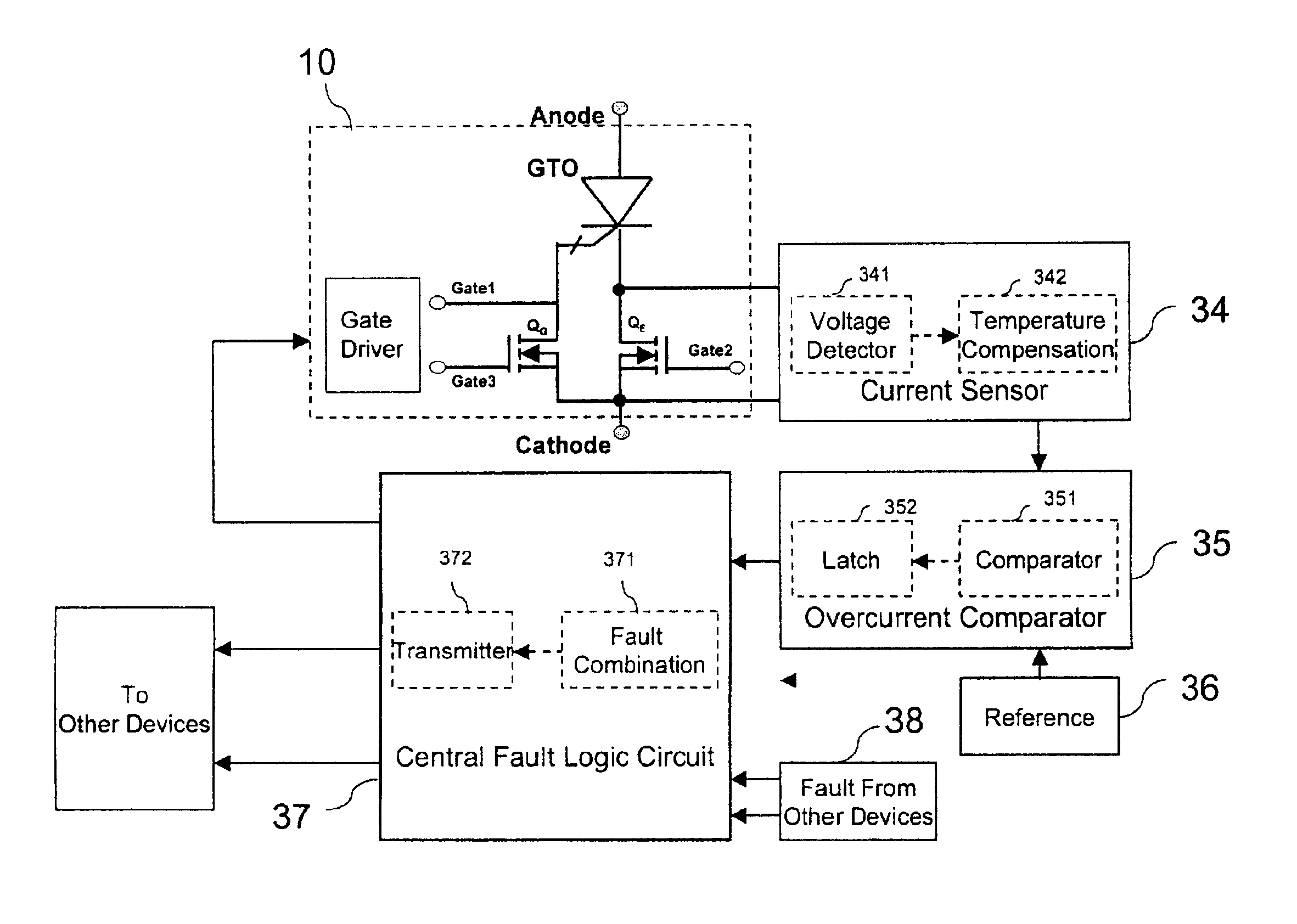
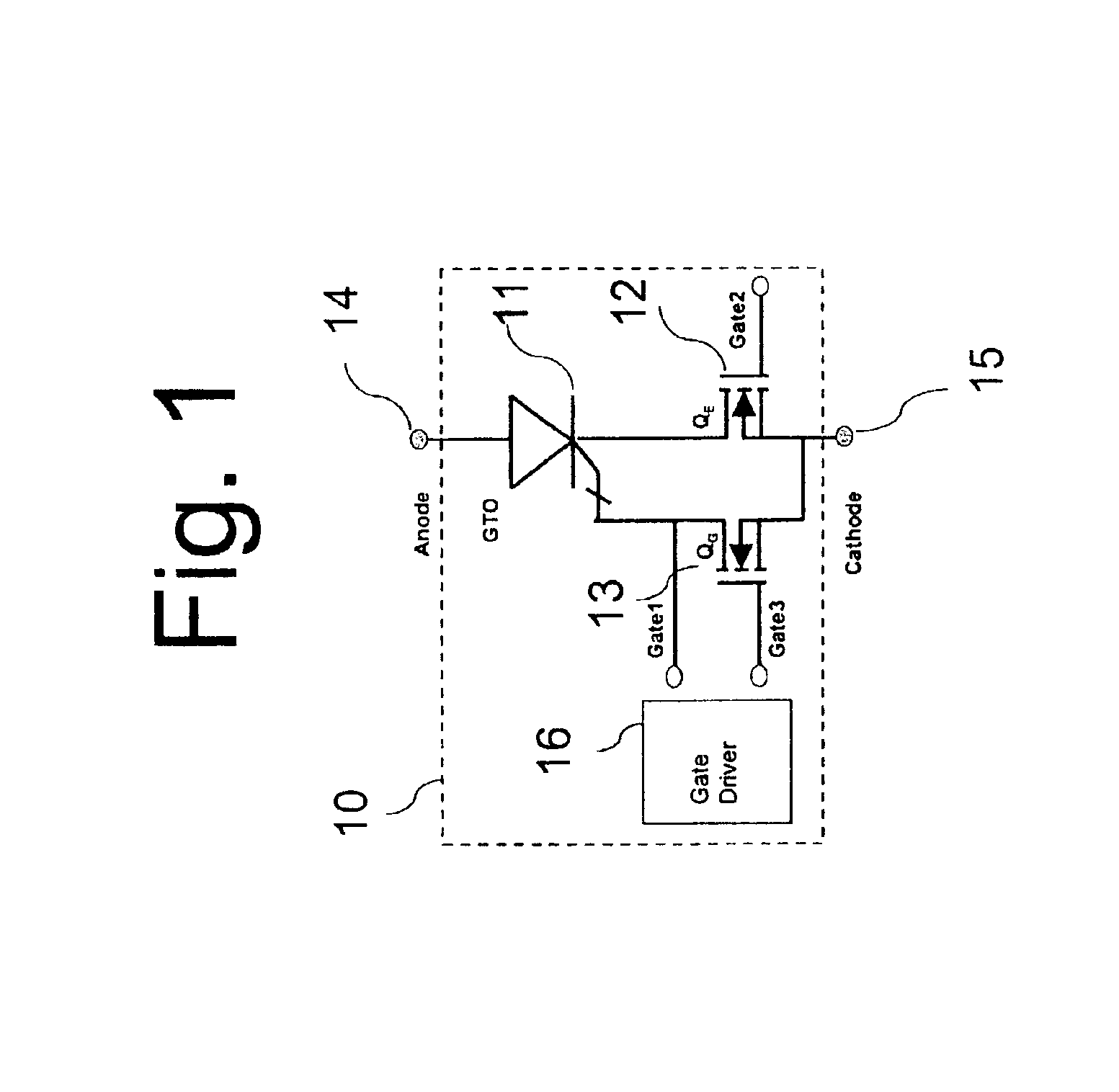
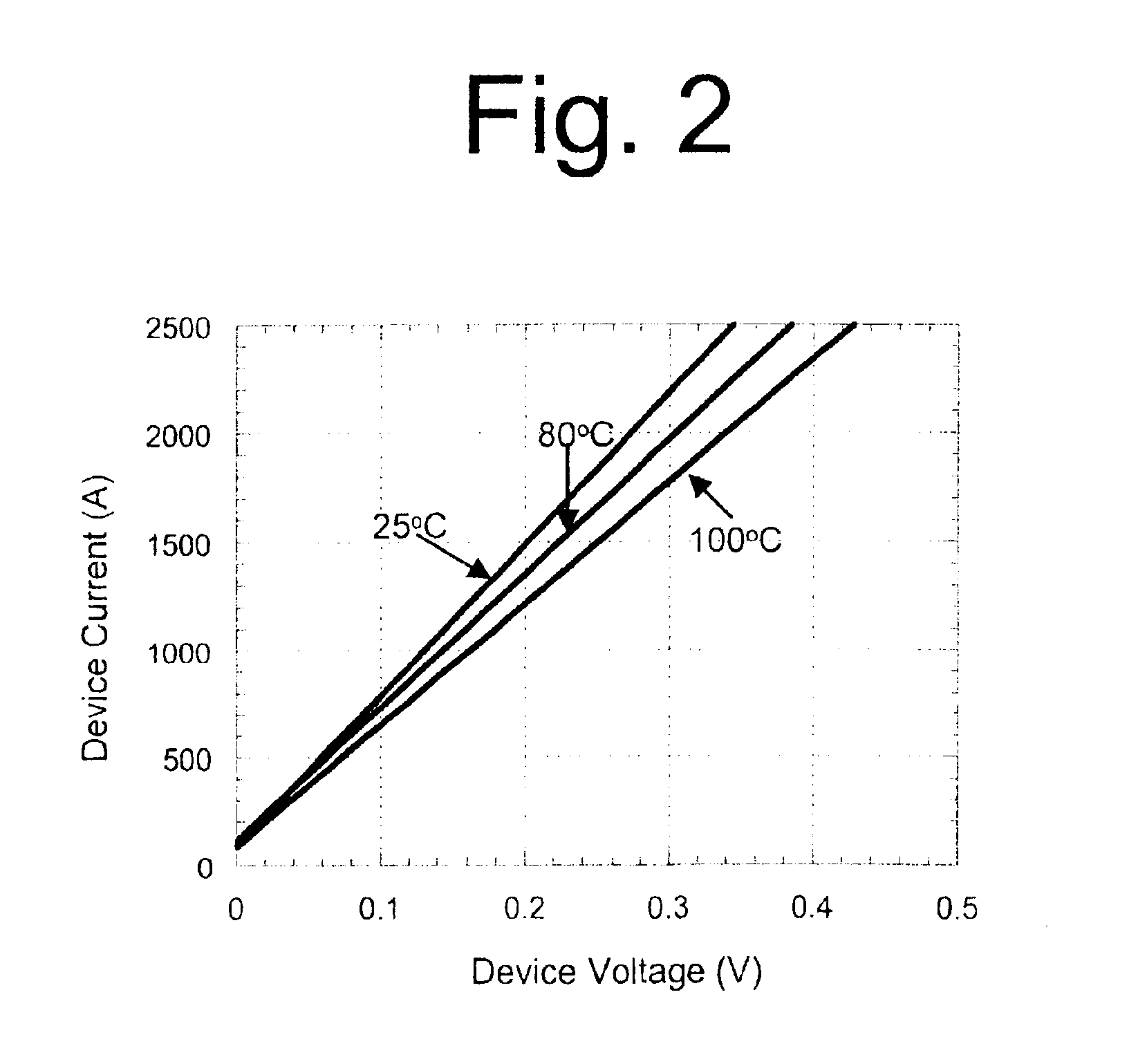
- A high-speed, solid-state DC circuit breaker utilizing emitter turn-off (ETO) thyristors with built-in current sensing and control, capable of interrupting 5 kA in 4 μs without arc generation, featuring both solid-state switch and tripping units for precise protection.

Method and apparatus for controlling a current for solid-state circuit breakers
PatentPendingUS20250062608A1
Innovation
- The proposed solution involves using energy absorption components, such as TVS diodes, in conjunction with GaN HEMT switches to enhance current limiting capability in series-connected SSCB switching cells. This approach utilizes the high pulse power capability of TVS diodes to absorb a major part of the energy, allowing the GaN HEMTs to control the limited current level by operating in saturation mode and alternating between switches to distribute energy absorption effectively.


Safety Standards and Regulations for Circuit Breakers
Circuit breaker safety standards and regulations form a comprehensive framework that governs both solid-state and magnetic circuit breakers, with particular emphasis on current handling capabilities and protection mechanisms. The International Electrotechnical Commission (IEC) 60947-2 standard serves as the primary global reference for low-voltage switchgear and controlgear circuit breakers, establishing fundamental requirements for current interruption, short-circuit protection, and operational safety parameters.
The Institute of Electrical and Electronics Engineers (IEEE) C37 series provides detailed specifications for circuit breaker performance, including C37.13 for low-voltage AC power circuit breakers and C37.14 for low-voltage DC power circuit breakers. These standards define critical current handling parameters such as continuous current rating, short-circuit breaking capacity, and making capacity, which directly impact the comparative performance of solid-state versus magnetic technologies.
Underwriters Laboratories (UL) 489 standard specifically addresses molded-case circuit breakers and circuit breaker enclosures, establishing rigorous testing protocols for current interruption capabilities under various fault conditions. This standard requires extensive validation of thermal and magnetic trip characteristics, arc extinction performance, and endurance testing under rated current conditions, factors that significantly influence the design approaches between solid-state and traditional magnetic circuit breakers.
European standards EN 60898 and EN 61009 govern miniature circuit breakers and residual current operated circuit breakers respectively, emphasizing current discrimination, selectivity, and coordination requirements. These regulations mandate specific current-time characteristics and establish clear boundaries for overcurrent protection performance, directly affecting how solid-state and magnetic technologies must be engineered to meet compliance requirements.
National electrical codes, including the National Electrical Code (NEC) in the United States and similar regulations worldwide, establish installation requirements and application guidelines that influence circuit breaker selection based on current handling capabilities. These codes specify conductor protection requirements, coordination studies, and selective coordination mandates that impact the practical deployment of different circuit breaker technologies in electrical distribution systems.
The Institute of Electrical and Electronics Engineers (IEEE) C37 series provides detailed specifications for circuit breaker performance, including C37.13 for low-voltage AC power circuit breakers and C37.14 for low-voltage DC power circuit breakers. These standards define critical current handling parameters such as continuous current rating, short-circuit breaking capacity, and making capacity, which directly impact the comparative performance of solid-state versus magnetic technologies.
Underwriters Laboratories (UL) 489 standard specifically addresses molded-case circuit breakers and circuit breaker enclosures, establishing rigorous testing protocols for current interruption capabilities under various fault conditions. This standard requires extensive validation of thermal and magnetic trip characteristics, arc extinction performance, and endurance testing under rated current conditions, factors that significantly influence the design approaches between solid-state and traditional magnetic circuit breakers.
European standards EN 60898 and EN 61009 govern miniature circuit breakers and residual current operated circuit breakers respectively, emphasizing current discrimination, selectivity, and coordination requirements. These regulations mandate specific current-time characteristics and establish clear boundaries for overcurrent protection performance, directly affecting how solid-state and magnetic technologies must be engineered to meet compliance requirements.
National electrical codes, including the National Electrical Code (NEC) in the United States and similar regulations worldwide, establish installation requirements and application guidelines that influence circuit breaker selection based on current handling capabilities. These codes specify conductor protection requirements, coordination studies, and selective coordination mandates that impact the practical deployment of different circuit breaker technologies in electrical distribution systems.
Environmental Impact of Circuit Breaker Technologies
The environmental implications of circuit breaker technologies represent a critical consideration in modern electrical infrastructure development, particularly when comparing solid-state circuit breakers (SSCBs) and magnetic circuit breakers (MCBs). The manufacturing phase of these technologies presents distinct environmental footprints, with SSCBs requiring semiconductor materials such as silicon carbide and gallium nitride, which involve energy-intensive production processes and specialized rare earth elements. Conversely, MCBs primarily utilize conventional materials including copper, steel, and various insulating materials, resulting in more established recycling pathways but higher material volumes.
Energy consumption patterns during operation reveal significant differences between the two technologies. SSCBs demonstrate superior energy efficiency due to minimal resistive losses in their semiconductor switching elements, typically achieving efficiency rates exceeding 99%. This translates to reduced operational carbon emissions over the device lifetime. MCBs, while mechanically robust, exhibit higher steady-state losses through contact resistance and magnetic core losses, contributing to increased energy consumption in large-scale deployments.
The lifecycle assessment of both technologies highlights contrasting sustainability profiles. SSCBs offer extended operational lifespans with minimal degradation, potentially exceeding 30 years of service life, thereby reducing replacement frequency and associated manufacturing emissions. Their solid-state nature eliminates the need for mechanical wear components and arc-quenching gases, reducing maintenance-related environmental impacts.
End-of-life considerations present unique challenges for each technology. MCBs benefit from well-established metal recycling infrastructure, enabling efficient recovery of copper and steel components. However, SSCBs require specialized electronic waste processing facilities capable of handling semiconductor materials, though their compact form factor results in significantly reduced material volumes requiring disposal.
Carbon footprint analysis indicates that while SSCBs may have higher initial manufacturing emissions, their operational efficiency and longevity typically result in lower total lifecycle emissions, particularly in high-utilization applications where energy savings compound over time.
Energy consumption patterns during operation reveal significant differences between the two technologies. SSCBs demonstrate superior energy efficiency due to minimal resistive losses in their semiconductor switching elements, typically achieving efficiency rates exceeding 99%. This translates to reduced operational carbon emissions over the device lifetime. MCBs, while mechanically robust, exhibit higher steady-state losses through contact resistance and magnetic core losses, contributing to increased energy consumption in large-scale deployments.
The lifecycle assessment of both technologies highlights contrasting sustainability profiles. SSCBs offer extended operational lifespans with minimal degradation, potentially exceeding 30 years of service life, thereby reducing replacement frequency and associated manufacturing emissions. Their solid-state nature eliminates the need for mechanical wear components and arc-quenching gases, reducing maintenance-related environmental impacts.
End-of-life considerations present unique challenges for each technology. MCBs benefit from well-established metal recycling infrastructure, enabling efficient recovery of copper and steel components. However, SSCBs require specialized electronic waste processing facilities capable of handling semiconductor materials, though their compact form factor results in significantly reduced material volumes requiring disposal.
Carbon footprint analysis indicates that while SSCBs may have higher initial manufacturing emissions, their operational efficiency and longevity typically result in lower total lifecycle emissions, particularly in high-utilization applications where energy savings compound over time.
Unlock deeper insights with PatSnap Eureka Quick Research — get a full tech report to explore trends and direct your research. Try now!
Generate Your Research Report Instantly with AI Agent
Supercharge your innovation with PatSnap Eureka AI Agent Platform!