

Solid-State Circuit Breakers Vs Mechanical Relays: Switching Speed
MAY 14, 20269 MIN READ
Generate Your Research Report Instantly with AI Agent
PatSnap Eureka helps you evaluate technical feasibility & market potential.
Solid-State vs Mechanical Switching Technology Background
The evolution of switching technologies has been fundamentally shaped by the ongoing tension between performance requirements and reliability constraints across electrical systems. Traditional mechanical switching devices emerged in the early 20th century as the primary solution for electrical circuit protection and control, establishing a foundation that dominated industrial applications for decades. These electromechanical systems relied on physical contact separation to interrupt current flow, a principle that remained largely unchanged despite continuous refinements in materials and design methodologies.
The semiconductor revolution of the 1960s and 1970s introduced entirely new possibilities for electrical switching through solid-state technologies. Power semiconductors, particularly thyristors and later MOSFETs and IGBTs, enabled switching operations without mechanical movement, fundamentally altering the landscape of circuit protection and control systems. This technological shift represented more than incremental improvement; it constituted a paradigmatic change in how electrical switching could be conceptualized and implemented.
Switching speed emerged as a critical differentiating factor between these two technological approaches during the 1980s and 1990s, as industrial automation and power electronics applications demanded increasingly rapid response times. Mechanical relays, constrained by physical inertia and contact bounce phenomena, typically exhibited switching times measured in milliseconds. In contrast, solid-state devices demonstrated switching capabilities in microsecond ranges, offering orders of magnitude improvement in response speed.
The technological objectives driving this comparison center on optimizing system protection capabilities while maintaining operational reliability. Modern electrical systems require switching devices that can respond to fault conditions within microseconds to prevent equipment damage and ensure personnel safety. Simultaneously, these devices must demonstrate long-term reliability under varying environmental conditions and electrical stress levels.
Contemporary applications in renewable energy systems, electric vehicle charging infrastructure, and smart grid technologies have intensified the focus on switching speed performance. These emerging applications demand rapid fault detection and isolation capabilities that challenge traditional mechanical switching approaches while highlighting the advantages of solid-state alternatives in time-critical protection scenarios.
The semiconductor revolution of the 1960s and 1970s introduced entirely new possibilities for electrical switching through solid-state technologies. Power semiconductors, particularly thyristors and later MOSFETs and IGBTs, enabled switching operations without mechanical movement, fundamentally altering the landscape of circuit protection and control systems. This technological shift represented more than incremental improvement; it constituted a paradigmatic change in how electrical switching could be conceptualized and implemented.
Switching speed emerged as a critical differentiating factor between these two technological approaches during the 1980s and 1990s, as industrial automation and power electronics applications demanded increasingly rapid response times. Mechanical relays, constrained by physical inertia and contact bounce phenomena, typically exhibited switching times measured in milliseconds. In contrast, solid-state devices demonstrated switching capabilities in microsecond ranges, offering orders of magnitude improvement in response speed.
The technological objectives driving this comparison center on optimizing system protection capabilities while maintaining operational reliability. Modern electrical systems require switching devices that can respond to fault conditions within microseconds to prevent equipment damage and ensure personnel safety. Simultaneously, these devices must demonstrate long-term reliability under varying environmental conditions and electrical stress levels.
Contemporary applications in renewable energy systems, electric vehicle charging infrastructure, and smart grid technologies have intensified the focus on switching speed performance. These emerging applications demand rapid fault detection and isolation capabilities that challenge traditional mechanical switching approaches while highlighting the advantages of solid-state alternatives in time-critical protection scenarios.
Market Demand for High-Speed Circuit Protection Solutions
The global circuit protection market is experiencing unprecedented growth driven by the increasing demand for faster, more reliable switching solutions across multiple industries. Traditional mechanical relays, while historically dominant, are facing significant challenges in meeting the stringent speed requirements of modern electrical systems. This gap has created substantial market opportunities for solid-state circuit breakers, which offer microsecond-level switching capabilities compared to the millisecond response times of mechanical alternatives.
Data centers represent one of the most critical market segments driving demand for high-speed circuit protection. The exponential growth of cloud computing, artificial intelligence, and edge computing infrastructure requires protection systems capable of responding to fault conditions within microseconds to prevent cascading failures. Modern server farms cannot tolerate the switching delays inherent in mechanical relay systems, particularly when protecting sensitive semiconductor-based equipment that can be damaged within nanoseconds of fault occurrence.
The renewable energy sector has emerged as another significant demand driver, particularly in solar photovoltaic and wind power installations. These systems require rapid disconnection capabilities to ensure safety during maintenance operations and fault conditions. Grid-tie inverters and energy storage systems demand protection devices that can isolate DC circuits faster than mechanical contactors can achieve, creating substantial market pull for solid-state solutions.
Electric vehicle charging infrastructure presents a rapidly expanding market opportunity where switching speed directly impacts both safety and user experience. Fast-charging stations operating at high power levels require protection systems capable of interrupting fault currents within microseconds to prevent equipment damage and ensure operator safety. The automotive industry's transition toward electrification is driving unprecedented demand for high-speed protection solutions.
Industrial automation and robotics applications increasingly require protection systems that can respond faster than human reaction times or mechanical systems can provide. Manufacturing processes involving precision machinery, semiconductor fabrication, and automated assembly lines demand protection devices capable of preventing equipment damage through rapid fault isolation.
The telecommunications and 5G infrastructure rollout has created additional market demand for high-speed protection solutions. Base stations, fiber optic networks, and edge computing nodes require protection systems that can maintain service continuity while providing rapid fault clearing capabilities.
Market research indicates that end-users are increasingly willing to accept higher initial costs for solid-state protection solutions when the total cost of ownership, including reduced downtime, improved reliability, and extended equipment life, demonstrates clear economic advantages over traditional mechanical relay systems.
Data centers represent one of the most critical market segments driving demand for high-speed circuit protection. The exponential growth of cloud computing, artificial intelligence, and edge computing infrastructure requires protection systems capable of responding to fault conditions within microseconds to prevent cascading failures. Modern server farms cannot tolerate the switching delays inherent in mechanical relay systems, particularly when protecting sensitive semiconductor-based equipment that can be damaged within nanoseconds of fault occurrence.
The renewable energy sector has emerged as another significant demand driver, particularly in solar photovoltaic and wind power installations. These systems require rapid disconnection capabilities to ensure safety during maintenance operations and fault conditions. Grid-tie inverters and energy storage systems demand protection devices that can isolate DC circuits faster than mechanical contactors can achieve, creating substantial market pull for solid-state solutions.
Electric vehicle charging infrastructure presents a rapidly expanding market opportunity where switching speed directly impacts both safety and user experience. Fast-charging stations operating at high power levels require protection systems capable of interrupting fault currents within microseconds to prevent equipment damage and ensure operator safety. The automotive industry's transition toward electrification is driving unprecedented demand for high-speed protection solutions.
Industrial automation and robotics applications increasingly require protection systems that can respond faster than human reaction times or mechanical systems can provide. Manufacturing processes involving precision machinery, semiconductor fabrication, and automated assembly lines demand protection devices capable of preventing equipment damage through rapid fault isolation.
The telecommunications and 5G infrastructure rollout has created additional market demand for high-speed protection solutions. Base stations, fiber optic networks, and edge computing nodes require protection systems that can maintain service continuity while providing rapid fault clearing capabilities.
Market research indicates that end-users are increasingly willing to accept higher initial costs for solid-state protection solutions when the total cost of ownership, including reduced downtime, improved reliability, and extended equipment life, demonstrates clear economic advantages over traditional mechanical relay systems.
Current Switching Speed Limitations in Circuit Breakers
Traditional mechanical circuit breakers face fundamental physical limitations that constrain their switching speeds to relatively slow response times. Conventional electromagnetic relays typically require 5-15 milliseconds to complete a switching operation, with some high-speed variants achieving 1-3 milliseconds under optimal conditions. This inherent delay stems from the mechanical inertia of moving contacts and the electromagnetic coil activation time required to generate sufficient magnetic force for contact separation.
The mechanical switching process involves multiple sequential steps that collectively contribute to response delays. Initially, the electromagnetic coil must energize and build sufficient magnetic field strength to overcome spring tension and contact pressure forces. Subsequently, the armature must physically move through its travel distance, which typically ranges from 0.5 to 2 millimeters depending on the relay design. Finally, the contacts must achieve complete separation with adequate air gap to prevent arcing and ensure reliable isolation.
Arc extinction represents another critical limitation in mechanical switching systems. When contacts separate under load conditions, an electrical arc forms between the separating surfaces, requiring additional time for complete extinguishment. Traditional arc suppression methods, including magnetic blowout coils and SF6 gas chambers, add complexity and further extend the total switching duration. This arc management process can extend switching times by several additional milliseconds, particularly under high current conditions.
Contact bounce phenomena introduce additional timing uncertainties in mechanical systems. Upon closure, mechanical contacts typically exhibit multiple brief separations before achieving stable connection, creating unpredictable switching characteristics. This bouncing effect can persist for 100-500 microseconds, making precise timing control challenging for applications requiring deterministic switching behavior.
Temperature variations significantly impact mechanical switching performance, with contact resistance and spring characteristics changing across operating temperature ranges. Cold temperatures increase mechanical stiffness and electromagnetic coil resistance, while elevated temperatures reduce magnetic field strength and alter material properties. These thermal effects can cause switching time variations of 20-30% across typical industrial operating ranges.
Wear and aging mechanisms progressively degrade mechanical switching performance over operational lifetime. Contact erosion from repetitive arcing reduces contact pressure and increases resistance, while spring fatigue affects actuation force consistency. Accumulated contamination on contact surfaces further degrades switching reliability and speed, requiring periodic maintenance to maintain specified performance levels.
Modern power system protection requirements increasingly demand sub-millisecond response times that exceed mechanical circuit breaker capabilities. Grid stability applications, motor protection systems, and renewable energy integration scenarios require switching speeds approaching 100-500 microseconds to prevent equipment damage and maintain system stability during fault conditions.
The mechanical switching process involves multiple sequential steps that collectively contribute to response delays. Initially, the electromagnetic coil must energize and build sufficient magnetic field strength to overcome spring tension and contact pressure forces. Subsequently, the armature must physically move through its travel distance, which typically ranges from 0.5 to 2 millimeters depending on the relay design. Finally, the contacts must achieve complete separation with adequate air gap to prevent arcing and ensure reliable isolation.
Arc extinction represents another critical limitation in mechanical switching systems. When contacts separate under load conditions, an electrical arc forms between the separating surfaces, requiring additional time for complete extinguishment. Traditional arc suppression methods, including magnetic blowout coils and SF6 gas chambers, add complexity and further extend the total switching duration. This arc management process can extend switching times by several additional milliseconds, particularly under high current conditions.
Contact bounce phenomena introduce additional timing uncertainties in mechanical systems. Upon closure, mechanical contacts typically exhibit multiple brief separations before achieving stable connection, creating unpredictable switching characteristics. This bouncing effect can persist for 100-500 microseconds, making precise timing control challenging for applications requiring deterministic switching behavior.
Temperature variations significantly impact mechanical switching performance, with contact resistance and spring characteristics changing across operating temperature ranges. Cold temperatures increase mechanical stiffness and electromagnetic coil resistance, while elevated temperatures reduce magnetic field strength and alter material properties. These thermal effects can cause switching time variations of 20-30% across typical industrial operating ranges.
Wear and aging mechanisms progressively degrade mechanical switching performance over operational lifetime. Contact erosion from repetitive arcing reduces contact pressure and increases resistance, while spring fatigue affects actuation force consistency. Accumulated contamination on contact surfaces further degrades switching reliability and speed, requiring periodic maintenance to maintain specified performance levels.
Modern power system protection requirements increasingly demand sub-millisecond response times that exceed mechanical circuit breaker capabilities. Grid stability applications, motor protection systems, and renewable energy integration scenarios require switching speeds approaching 100-500 microseconds to prevent equipment damage and maintain system stability during fault conditions.
Existing High-Speed Switching Solutions
01 Solid-state switching mechanisms for high-speed circuit interruption
Advanced solid-state circuit breakers utilize semiconductor-based switching elements such as thyristors, MOSFETs, and IGBTs to achieve extremely fast switching speeds. These devices can interrupt electrical circuits within microseconds compared to mechanical systems that require milliseconds. The solid-state approach eliminates mechanical contact wear and provides precise control over switching timing through electronic control circuits.- Solid-state switching mechanisms for high-speed circuit interruption: Solid-state circuit breakers utilize semiconductor devices such as thyristors, MOSFETs, or IGBTs to achieve rapid switching operations without mechanical contacts. These devices can interrupt current flow within microseconds, significantly faster than traditional mechanical systems. The switching speed is enhanced through electronic control circuits that can detect fault conditions and trigger interruption almost instantaneously.
- Mechanical relay contact dynamics and switching optimization: Mechanical relays rely on physical contact movement to complete or interrupt electrical circuits. The switching speed is influenced by factors such as contact material, spring tension, electromagnetic coil design, and contact gap distance. Advanced mechanical designs incorporate optimized actuator mechanisms and contact materials to minimize switching time while maintaining reliability and durability.
- Hybrid switching systems combining solid-state and mechanical elements: Hybrid circuit breakers integrate both solid-state and mechanical switching technologies to leverage the advantages of each approach. The solid-state components provide ultra-fast initial interruption capabilities, while mechanical contacts handle steady-state current carrying and provide galvanic isolation. This combination optimizes both switching speed and long-term reliability.
- Control circuits and timing optimization for switching operations: Advanced control systems manage the timing and coordination of switching operations in both solid-state and mechanical devices. These systems incorporate precise timing circuits, feedback mechanisms, and predictive algorithms to minimize switching delays. The control circuits can pre-position mechanical elements or pre-charge solid-state devices to reduce overall response time.
- Arc suppression and contact protection techniques: Both solid-state and mechanical switching systems require protection against electrical arcing during switching operations. Various techniques including magnetic blowout, SF6 gas insulation, vacuum chambers, and electronic arc suppression circuits are employed to minimize arc formation and duration. These protection methods directly impact switching speed by enabling faster and more reliable interruption of electrical circuits.
02 Mechanical relay contact systems and switching optimization
Traditional mechanical relays employ physical contact mechanisms with spring-loaded armatures and electromagnetic coils to control switching operations. These systems focus on optimizing contact materials, spring tension, and magnetic field strength to minimize switching time while maintaining reliable electrical contact. Contact bounce suppression and arc extinction techniques are critical for improving switching performance.Expand Specific Solutions03 Hybrid switching systems combining solid-state and mechanical elements
Hybrid circuit breakers integrate both solid-state and mechanical switching components to leverage the advantages of each technology. The solid-state elements provide rapid initial switching response, while mechanical contacts handle steady-state current carrying and provide galvanic isolation. This combination optimizes both switching speed and power handling capabilities.Expand Specific Solutions04 Arc suppression and contact protection in high-speed switching
Advanced arc suppression techniques are essential for maintaining switching speed and contact integrity in both solid-state and mechanical systems. Methods include magnetic arc extinction, SF6 gas insulation, vacuum interrupters, and electronic arc detection circuits. These technologies prevent contact welding and reduce switching time by quickly extinguishing electrical arcs during circuit interruption.Expand Specific Solutions05 Control circuits and timing optimization for switching systems
Sophisticated control circuits manage the timing and sequencing of switching operations to maximize speed and reliability. These systems incorporate feedback sensors, predictive algorithms, and real-time monitoring to optimize switching performance. Advanced control methods include zero-crossing detection, pre-charging circuits, and adaptive timing algorithms that adjust switching parameters based on load conditions.Expand Specific Solutions
Key Players in Solid-State and Mechanical Relay Industry
The solid-state circuit breakers versus mechanical relays switching speed technology represents a rapidly evolving sector within the power electronics industry, currently in a transitional phase from traditional mechanical solutions to advanced semiconductor-based alternatives. The market demonstrates significant growth potential, driven by increasing demands for faster switching capabilities and enhanced reliability in power distribution systems. Technology maturity varies considerably across market players, with established giants like ABB Ltd., Schneider Electric, and TE Connectivity leading traditional relay technologies, while companies such as Huawei Digital Power Technologies and Vertiv Corp. are advancing solid-state solutions. Academic institutions including Xi'an Jiaotong University and Virginia Tech are contributing fundamental research, while specialized firms like Triune Systems and QM Power focus on innovative switching technologies. The competitive landscape shows a clear bifurcation between legacy mechanical relay manufacturers and emerging solid-state technology developers, with switching speed becoming the critical differentiator driving market transformation.
State Grid Corp. of China
Technical Solution: State Grid has been developing solid-state circuit breaker technology for high-voltage transmission applications, focusing on DC grid protection where mechanical breakers face significant challenges. Their research emphasizes switching speeds in the sub-millisecond range to protect against fault currents that can rise extremely rapidly in DC systems. The technology incorporates thyristor-based switching with forced commutation circuits, achieving fault clearing times of 2-5 milliseconds compared to mechanical DC breakers which may require 20-50 milliseconds or may not be feasible for certain voltage levels.
Strengths: Suitable for high-voltage DC applications, fast fault clearing capability, enables DC grid development. Weaknesses: High development costs, complex control requirements, limited commercial deployment.
TE Connectivity Corp.
Technical Solution: TE Connectivity specializes in high-performance solid-state relay solutions with switching speeds ranging from 10-100 microseconds depending on the application requirements. Their technology focuses on automotive and industrial applications where rapid switching is critical for safety systems. The company's SSCBs utilize advanced semiconductor materials and proprietary gate drive circuits to minimize switching losses while achieving response times that are 50-100 times faster than equivalent mechanical relays, particularly in DC applications where arc suppression is challenging for mechanical systems.
Strengths: Specialized in high-frequency applications, excellent for DC systems, compact design. Weaknesses: Limited power handling capacity, temperature sensitivity, higher per-unit cost.
Core Patents in Fast Circuit Breaking Technologies
Solid-state DC circuit breaker
PatentInactiveUS6952335B2
Innovation
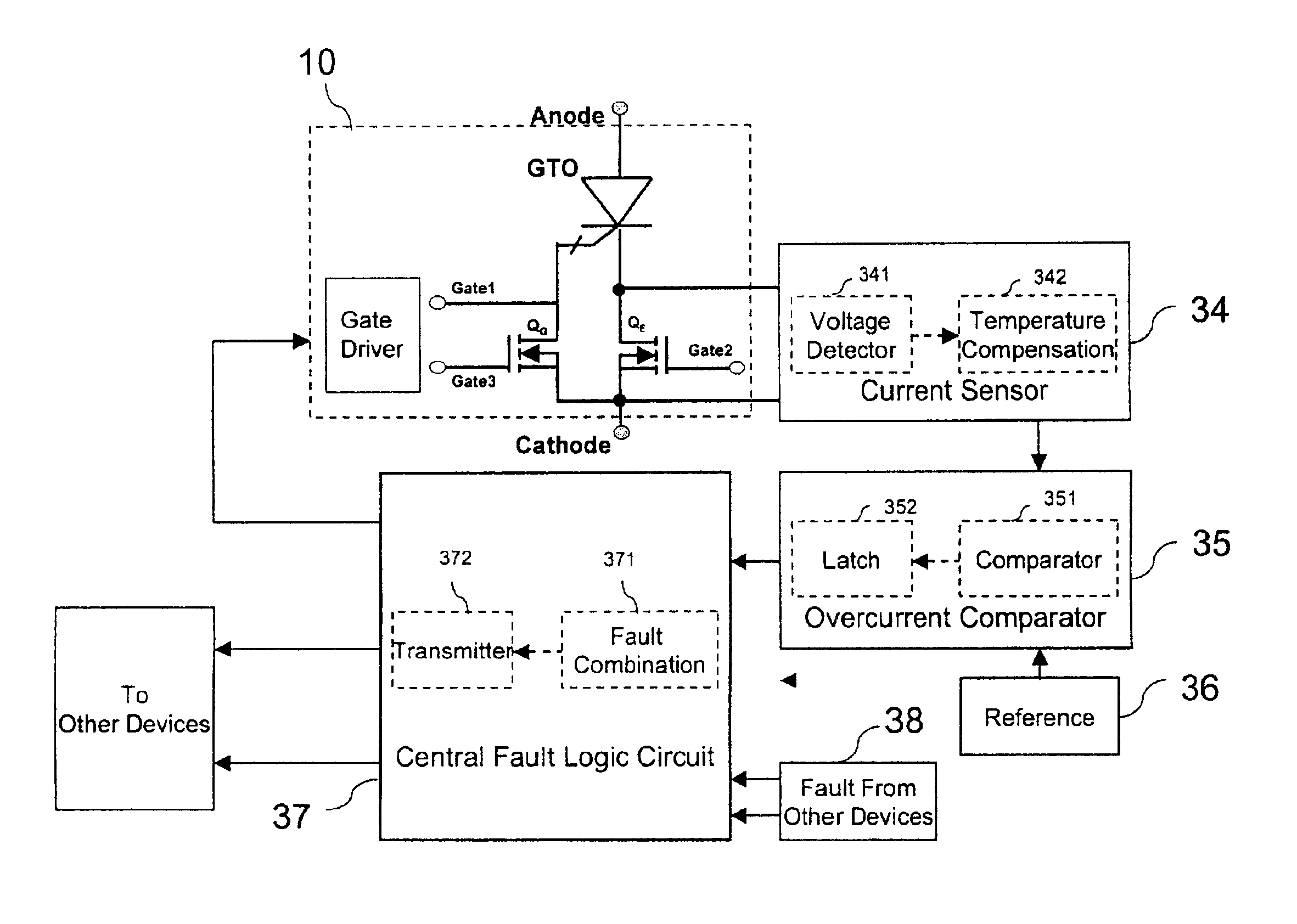
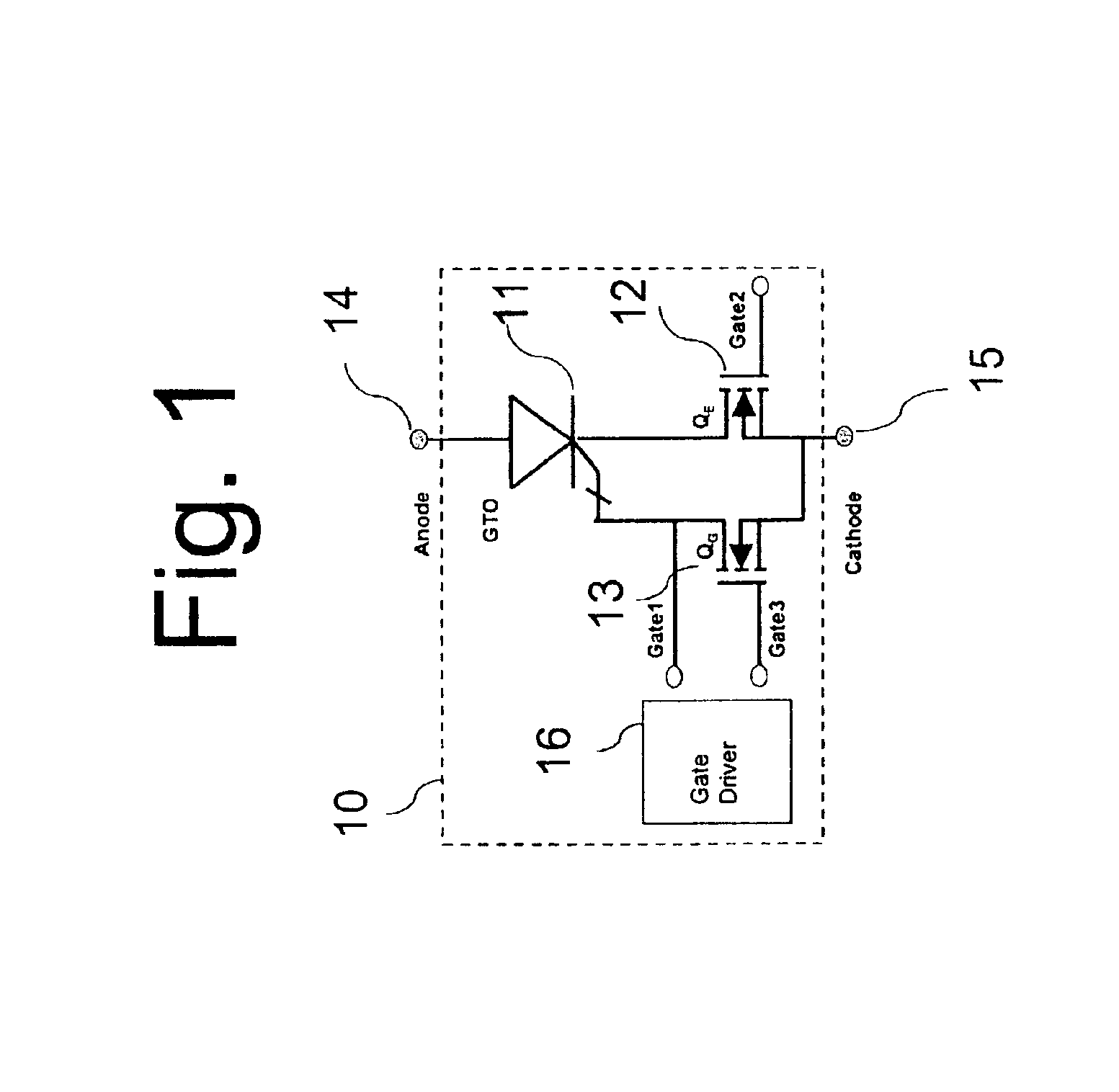
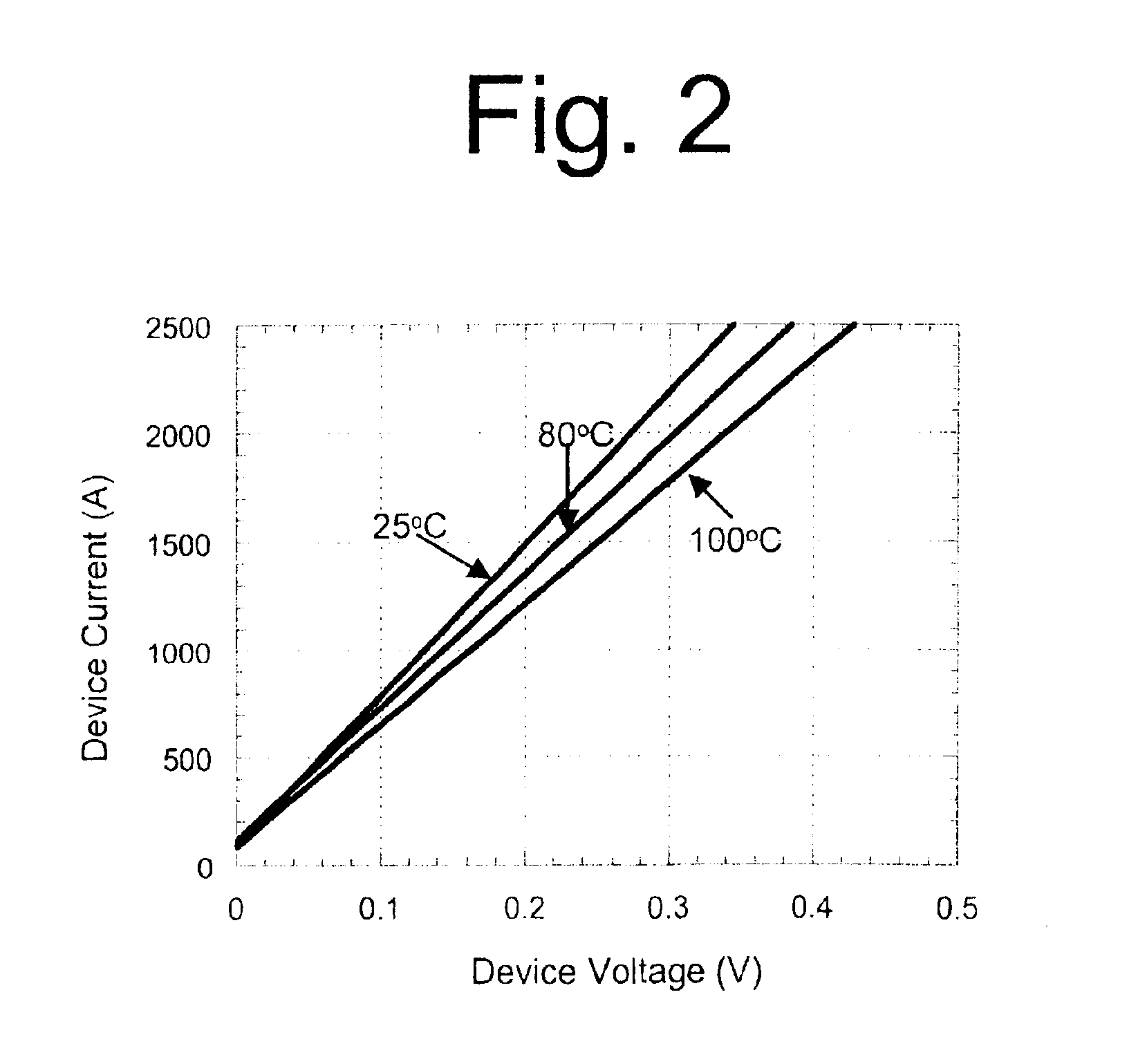
- A high-speed, solid-state DC circuit breaker utilizing emitter turn-off (ETO) thyristors with built-in current sensing and control, capable of interrupting 5 kA in 4 μs without arc generation, featuring both solid-state switch and tripping units for precise protection.

Solid-state multi-switch device
PatentActiveUS20230361771A1
Innovation
- An electronic solid-state switch assembly featuring a base plate with a heat exchanger, insulating layer, power transistors, gate drivers, a communication interface, current sensor, snubber circuit, and controller, arranged to manage high currents and temperatures, with scalable current ratings and fast switching speeds, using Si IGBT, SiC JFET, Si/SiC MOSFET, or GaN FET transistors, and a liquid-cooled heat sink for thermal management.


Safety Standards for High-Speed Circuit Breakers
The development of high-speed circuit breakers, particularly solid-state circuit breakers (SSCBs) with microsecond-level switching capabilities, has necessitated the establishment of comprehensive safety standards to address unique operational characteristics and potential failure modes. Current international safety frameworks, including IEC 62271 series and IEEE C37 standards, primarily focus on conventional mechanical circuit breakers and require significant adaptations to accommodate the rapid switching speeds of modern solid-state technologies.
The fundamental safety challenge in high-speed circuit breaking lies in the management of extremely fast fault current interruption, where switching times can be reduced from milliseconds to microseconds. This dramatic speed increase introduces new safety considerations related to electromagnetic interference (EMI), voltage transients, and thermal management that are not adequately addressed in existing standards. The rapid di/dt and dv/dt rates associated with high-speed switching can generate significant electromagnetic disturbances that may affect nearby equipment and personnel safety systems.
Emerging safety standards specifically targeting high-speed circuit breakers emphasize enhanced insulation coordination requirements and stricter limits on transient overvoltages. The IEC 62895 standard, currently under development, addresses safety aspects of power electronic switching devices in high-voltage applications, establishing new test procedures for evaluating insulation performance under rapid voltage transitions. These standards mandate comprehensive electromagnetic compatibility (EMC) testing to ensure that high-speed switching operations do not compromise the safety of adjacent electrical systems.
Personnel safety protocols for high-speed circuit breaker installations require specialized training programs and modified maintenance procedures. The instantaneous nature of solid-state switching eliminates traditional arc-related hazards but introduces new risks associated with high-frequency electromagnetic fields and potential semiconductor device failures. Safety standards now incorporate requirements for enhanced personal protective equipment (PPE) and specialized detection systems capable of monitoring microsecond-level electrical events.
Functional safety requirements for high-speed circuit breakers align with IEC 61508 standards, demanding higher Safety Integrity Levels (SIL) due to the critical nature of ultra-fast protection systems. The integration of advanced diagnostic capabilities and predictive maintenance algorithms becomes mandatory to ensure reliable operation and early detection of potential failure modes that could compromise system safety in high-speed switching applications.
The fundamental safety challenge in high-speed circuit breaking lies in the management of extremely fast fault current interruption, where switching times can be reduced from milliseconds to microseconds. This dramatic speed increase introduces new safety considerations related to electromagnetic interference (EMI), voltage transients, and thermal management that are not adequately addressed in existing standards. The rapid di/dt and dv/dt rates associated with high-speed switching can generate significant electromagnetic disturbances that may affect nearby equipment and personnel safety systems.
Emerging safety standards specifically targeting high-speed circuit breakers emphasize enhanced insulation coordination requirements and stricter limits on transient overvoltages. The IEC 62895 standard, currently under development, addresses safety aspects of power electronic switching devices in high-voltage applications, establishing new test procedures for evaluating insulation performance under rapid voltage transitions. These standards mandate comprehensive electromagnetic compatibility (EMC) testing to ensure that high-speed switching operations do not compromise the safety of adjacent electrical systems.
Personnel safety protocols for high-speed circuit breaker installations require specialized training programs and modified maintenance procedures. The instantaneous nature of solid-state switching eliminates traditional arc-related hazards but introduces new risks associated with high-frequency electromagnetic fields and potential semiconductor device failures. Safety standards now incorporate requirements for enhanced personal protective equipment (PPE) and specialized detection systems capable of monitoring microsecond-level electrical events.
Functional safety requirements for high-speed circuit breakers align with IEC 61508 standards, demanding higher Safety Integrity Levels (SIL) due to the critical nature of ultra-fast protection systems. The integration of advanced diagnostic capabilities and predictive maintenance algorithms becomes mandatory to ensure reliable operation and early detection of potential failure modes that could compromise system safety in high-speed switching applications.
Thermal Management in Fast-Switching Applications
Thermal management represents one of the most critical engineering challenges in fast-switching applications, particularly when comparing solid-state circuit breakers (SSCBs) to mechanical relays. The fundamental difference in switching mechanisms creates distinct thermal profiles that significantly impact system performance, reliability, and operational lifespan.
Solid-state circuit breakers generate substantial heat during switching operations due to their semiconductor-based architecture. Power MOSFETs and IGBTs, commonly used in SSCBs, exhibit switching losses that increase proportionally with switching frequency. During high-speed switching events, these devices experience both conduction losses and dynamic switching losses, creating localized hot spots that can reach temperatures exceeding 150°C within microseconds.
The thermal time constants in semiconductor devices are significantly shorter than those in mechanical systems. Junction temperatures can rise rapidly during fast switching sequences, potentially leading to thermal runaway if adequate heat dissipation mechanisms are not implemented. This phenomenon becomes particularly pronounced in applications requiring repetitive high-frequency switching, where cumulative thermal effects can compromise device integrity.
Mechanical relays present a contrasting thermal profile characterized by different heat generation mechanisms. The primary thermal concerns arise from contact resistance heating and coil power dissipation rather than switching losses. During mechanical switching operations, arcing at contact interfaces generates localized heating, but the thermal mass of mechanical components provides inherent thermal buffering that semiconductor devices lack.
Advanced thermal management strategies for fast-switching SSCBs include sophisticated heat sink designs, thermal interface materials with enhanced conductivity, and active cooling systems. Copper-based heat spreaders and diamond-like carbon thermal interface materials are increasingly employed to manage peak thermal transients. Additionally, thermal monitoring circuits with real-time feedback control enable dynamic switching frequency adjustment to prevent thermal overload conditions.
The integration of thermal management considerations into switching control algorithms represents an emerging approach to optimize performance while maintaining thermal stability. Predictive thermal modeling enables proactive switching pattern adjustments that balance switching speed requirements with thermal constraints, ensuring reliable operation across varying environmental conditions and load profiles.
Solid-state circuit breakers generate substantial heat during switching operations due to their semiconductor-based architecture. Power MOSFETs and IGBTs, commonly used in SSCBs, exhibit switching losses that increase proportionally with switching frequency. During high-speed switching events, these devices experience both conduction losses and dynamic switching losses, creating localized hot spots that can reach temperatures exceeding 150°C within microseconds.
The thermal time constants in semiconductor devices are significantly shorter than those in mechanical systems. Junction temperatures can rise rapidly during fast switching sequences, potentially leading to thermal runaway if adequate heat dissipation mechanisms are not implemented. This phenomenon becomes particularly pronounced in applications requiring repetitive high-frequency switching, where cumulative thermal effects can compromise device integrity.
Mechanical relays present a contrasting thermal profile characterized by different heat generation mechanisms. The primary thermal concerns arise from contact resistance heating and coil power dissipation rather than switching losses. During mechanical switching operations, arcing at contact interfaces generates localized heating, but the thermal mass of mechanical components provides inherent thermal buffering that semiconductor devices lack.
Advanced thermal management strategies for fast-switching SSCBs include sophisticated heat sink designs, thermal interface materials with enhanced conductivity, and active cooling systems. Copper-based heat spreaders and diamond-like carbon thermal interface materials are increasingly employed to manage peak thermal transients. Additionally, thermal monitoring circuits with real-time feedback control enable dynamic switching frequency adjustment to prevent thermal overload conditions.
The integration of thermal management considerations into switching control algorithms represents an emerging approach to optimize performance while maintaining thermal stability. Predictive thermal modeling enables proactive switching pattern adjustments that balance switching speed requirements with thermal constraints, ensuring reliable operation across varying environmental conditions and load profiles.
Unlock deeper insights with PatSnap Eureka Quick Research — get a full tech report to explore trends and direct your research. Try now!
Generate Your Research Report Instantly with AI Agent
Supercharge your innovation with PatSnap Eureka AI Agent Platform!