

Solid-State Circuit Breakers Vs Triacs: Efficiency At High Currents
MAY 14, 20269 MIN READ
Generate Your Research Report Instantly with AI Agent
PatSnap Eureka helps you evaluate technical feasibility & market potential.
Solid-State Circuit Breaker Technology Background and Objectives
Solid-state circuit breakers represent a revolutionary advancement in electrical protection technology, emerging from the limitations of traditional mechanical circuit breakers and the need for faster, more reliable switching solutions. The evolution of this technology traces back to the 1960s when semiconductor devices began replacing mechanical contacts in various electrical applications. Early developments focused on thyristor-based switching, which laid the groundwork for modern solid-state protection systems.
The fundamental principle behind solid-state circuit breakers involves using semiconductor devices such as MOSFETs, IGBTs, or specialized power semiconductors to interrupt electrical current flow without mechanical movement. This approach eliminates the arc formation and contact wear associated with conventional breakers, enabling significantly faster response times and improved reliability. The technology has evolved through several generations, incorporating advanced control algorithms and enhanced semiconductor materials.
Current technological objectives center on achieving superior performance in high-current applications where efficiency becomes paramount. The primary goal involves minimizing conduction losses while maintaining rapid fault detection and interruption capabilities. Modern solid-state circuit breakers target switching speeds in the microsecond range, compared to milliseconds required by mechanical alternatives. This rapid response capability is crucial for protecting sensitive electronic equipment and preventing cascading failures in complex electrical systems.
Efficiency optimization at high currents presents unique challenges due to the inherent voltage drop across semiconductor devices. Unlike triacs, which are primarily designed for AC switching applications, solid-state circuit breakers must handle both AC and DC currents while maintaining low on-state resistance. The technology aims to achieve conduction losses below 1% of the protected circuit's power rating, even at currents exceeding 1000 amperes.
Advanced thermal management represents another critical objective, as high-current operation generates substantial heat that must be effectively dissipated. Modern designs incorporate sophisticated cooling systems and thermal monitoring to ensure reliable operation across wide temperature ranges. The integration of intelligent control systems enables predictive maintenance and real-time performance optimization.
The ultimate technological vision encompasses fully integrated protection systems that combine circuit breaking, monitoring, and communication capabilities in a single solid-state device, revolutionizing electrical distribution and protection paradigms.
The fundamental principle behind solid-state circuit breakers involves using semiconductor devices such as MOSFETs, IGBTs, or specialized power semiconductors to interrupt electrical current flow without mechanical movement. This approach eliminates the arc formation and contact wear associated with conventional breakers, enabling significantly faster response times and improved reliability. The technology has evolved through several generations, incorporating advanced control algorithms and enhanced semiconductor materials.
Current technological objectives center on achieving superior performance in high-current applications where efficiency becomes paramount. The primary goal involves minimizing conduction losses while maintaining rapid fault detection and interruption capabilities. Modern solid-state circuit breakers target switching speeds in the microsecond range, compared to milliseconds required by mechanical alternatives. This rapid response capability is crucial for protecting sensitive electronic equipment and preventing cascading failures in complex electrical systems.
Efficiency optimization at high currents presents unique challenges due to the inherent voltage drop across semiconductor devices. Unlike triacs, which are primarily designed for AC switching applications, solid-state circuit breakers must handle both AC and DC currents while maintaining low on-state resistance. The technology aims to achieve conduction losses below 1% of the protected circuit's power rating, even at currents exceeding 1000 amperes.
Advanced thermal management represents another critical objective, as high-current operation generates substantial heat that must be effectively dissipated. Modern designs incorporate sophisticated cooling systems and thermal monitoring to ensure reliable operation across wide temperature ranges. The integration of intelligent control systems enables predictive maintenance and real-time performance optimization.
The ultimate technological vision encompasses fully integrated protection systems that combine circuit breaking, monitoring, and communication capabilities in a single solid-state device, revolutionizing electrical distribution and protection paradigms.
Market Demand for High-Current Switching Solutions
The global market for high-current switching solutions is experiencing unprecedented growth driven by the rapid expansion of renewable energy infrastructure, electric vehicle adoption, and industrial automation systems. Traditional mechanical circuit breakers and electromechanical switching devices are increasingly inadequate for modern applications requiring faster response times, higher reliability, and enhanced controllability. This technological gap has created substantial demand for advanced semiconductor-based switching solutions capable of handling high current loads efficiently.
Industrial sectors represent the largest demand segment for high-current switching technologies. Manufacturing facilities, data centers, and power distribution networks require switching solutions that can manage currents ranging from hundreds to thousands of amperes while maintaining operational efficiency and safety standards. The growing emphasis on smart grid implementations has further amplified the need for intelligent switching devices that can provide real-time monitoring, fault detection, and remote control capabilities.
Electric vehicle charging infrastructure constitutes another rapidly expanding market segment. Fast-charging stations and ultra-rapid charging networks demand switching solutions capable of handling extremely high currents while ensuring user safety and equipment protection. The transition from AC to DC charging systems has created specific requirements for switching devices that can efficiently manage direct current flows without the zero-crossing advantages available in AC applications.
Renewable energy integration presents unique challenges that drive demand for sophisticated switching solutions. Solar photovoltaic installations and wind power systems require DC switching capabilities for string-level and array-level protection, while grid-tie applications demand AC switching for synchronization and isolation functions. The intermittent nature of renewable energy sources necessitates frequent switching operations, emphasizing the importance of device longevity and reliability.
The semiconductor industry's advancement in wide-bandgap materials, particularly silicon carbide and gallium nitride, has enabled the development of more efficient high-current switching solutions. These technological improvements have reduced switching losses, increased operating frequencies, and enhanced thermal performance, making solid-state solutions increasingly competitive with traditional technologies in high-current applications.
Market demand is also influenced by regulatory requirements for improved safety standards and energy efficiency. International standards organizations are establishing more stringent requirements for electrical protection devices, driving adoption of advanced switching technologies that can provide enhanced fault detection, arc suppression, and system monitoring capabilities compared to conventional solutions.
Industrial sectors represent the largest demand segment for high-current switching technologies. Manufacturing facilities, data centers, and power distribution networks require switching solutions that can manage currents ranging from hundreds to thousands of amperes while maintaining operational efficiency and safety standards. The growing emphasis on smart grid implementations has further amplified the need for intelligent switching devices that can provide real-time monitoring, fault detection, and remote control capabilities.
Electric vehicle charging infrastructure constitutes another rapidly expanding market segment. Fast-charging stations and ultra-rapid charging networks demand switching solutions capable of handling extremely high currents while ensuring user safety and equipment protection. The transition from AC to DC charging systems has created specific requirements for switching devices that can efficiently manage direct current flows without the zero-crossing advantages available in AC applications.
Renewable energy integration presents unique challenges that drive demand for sophisticated switching solutions. Solar photovoltaic installations and wind power systems require DC switching capabilities for string-level and array-level protection, while grid-tie applications demand AC switching for synchronization and isolation functions. The intermittent nature of renewable energy sources necessitates frequent switching operations, emphasizing the importance of device longevity and reliability.
The semiconductor industry's advancement in wide-bandgap materials, particularly silicon carbide and gallium nitride, has enabled the development of more efficient high-current switching solutions. These technological improvements have reduced switching losses, increased operating frequencies, and enhanced thermal performance, making solid-state solutions increasingly competitive with traditional technologies in high-current applications.
Market demand is also influenced by regulatory requirements for improved safety standards and energy efficiency. International standards organizations are establishing more stringent requirements for electrical protection devices, driving adoption of advanced switching technologies that can provide enhanced fault detection, arc suppression, and system monitoring capabilities compared to conventional solutions.
Current State and Challenges of SSCB vs Triac Technologies
Solid-State Circuit Breakers (SSCBs) represent a significant advancement in power protection technology, utilizing semiconductor devices such as MOSFETs, IGBTs, or silicon carbide (SiC) components to achieve rapid switching capabilities and precise current control. Current SSCB implementations demonstrate switching speeds in the microsecond range, substantially faster than traditional mechanical breakers. However, at high current applications exceeding 1000A, SSCBs face considerable challenges including thermal management complexities, higher conduction losses, and increased manufacturing costs due to the need for parallel semiconductor arrangements.
Triac technology, established for decades in power control applications, continues to dominate medium to high current switching scenarios due to its inherent simplicity and cost-effectiveness. Modern triacs can handle currents up to several hundred amperes in single packages, with well-understood thermal characteristics and proven reliability records. The primary limitation lies in their inability to interrupt fault currents independently, requiring external protection mechanisms and exhibiting slower response times compared to semiconductor alternatives.
The efficiency gap between these technologies becomes particularly pronounced at high current levels. SSCBs suffer from increased conduction losses as current rises, primarily due to the on-resistance characteristics of semiconductor switches and the complexity of parallel device coordination. Thermal management becomes critical, often requiring sophisticated cooling systems that impact overall system efficiency. Conversely, triacs maintain relatively stable efficiency characteristics across their operating range but lack the precision control and fast switching capabilities essential for modern grid applications.
Current technological challenges include developing cost-effective SSCB solutions for high-current applications while maintaining competitive efficiency levels. The semiconductor industry is addressing these limitations through advanced packaging techniques, improved semiconductor materials like gallium nitride (GaN) and silicon carbide (SiC), and innovative circuit topologies. Meanwhile, triac technology faces pressure to integrate smart control features and improve switching speeds to remain relevant in evolving power system architectures.
The geographical distribution of technological advancement shows concentrated development in regions with strong semiconductor industries, particularly in Asia-Pacific and North America, where major manufacturers are investing heavily in next-generation power semiconductor technologies to bridge the efficiency and cost gaps in high-current applications.
Triac technology, established for decades in power control applications, continues to dominate medium to high current switching scenarios due to its inherent simplicity and cost-effectiveness. Modern triacs can handle currents up to several hundred amperes in single packages, with well-understood thermal characteristics and proven reliability records. The primary limitation lies in their inability to interrupt fault currents independently, requiring external protection mechanisms and exhibiting slower response times compared to semiconductor alternatives.
The efficiency gap between these technologies becomes particularly pronounced at high current levels. SSCBs suffer from increased conduction losses as current rises, primarily due to the on-resistance characteristics of semiconductor switches and the complexity of parallel device coordination. Thermal management becomes critical, often requiring sophisticated cooling systems that impact overall system efficiency. Conversely, triacs maintain relatively stable efficiency characteristics across their operating range but lack the precision control and fast switching capabilities essential for modern grid applications.
Current technological challenges include developing cost-effective SSCB solutions for high-current applications while maintaining competitive efficiency levels. The semiconductor industry is addressing these limitations through advanced packaging techniques, improved semiconductor materials like gallium nitride (GaN) and silicon carbide (SiC), and innovative circuit topologies. Meanwhile, triac technology faces pressure to integrate smart control features and improve switching speeds to remain relevant in evolving power system architectures.
The geographical distribution of technological advancement shows concentrated development in regions with strong semiconductor industries, particularly in Asia-Pacific and North America, where major manufacturers are investing heavily in next-generation power semiconductor technologies to bridge the efficiency and cost gaps in high-current applications.
Existing High-Current Switching Solutions Comparison
01 Solid-state circuit breaker design and control mechanisms
Advanced control systems and design methodologies for solid-state circuit breakers that enhance switching performance and operational reliability. These systems incorporate sophisticated control algorithms and circuit topologies to optimize the breaking and making operations while maintaining high efficiency levels.- Solid-state circuit breaker control and switching mechanisms: Advanced control systems and switching mechanisms for solid-state circuit breakers that enable precise operation and improved reliability. These systems incorporate sophisticated algorithms and control circuits to manage the switching operations, ensuring optimal performance in various electrical conditions and load scenarios.
- Triac-based switching efficiency optimization: Methods and circuits for optimizing the efficiency of triac-based switching systems through improved gate control, timing mechanisms, and power management techniques. These approaches focus on reducing switching losses and enhancing the overall performance of triac circuits in power control applications.
- Power semiconductor device thermal management: Thermal management solutions for power semiconductor devices including heat dissipation techniques, thermal protection circuits, and temperature monitoring systems. These technologies ensure reliable operation under high power conditions and prevent thermal damage to critical components.
- Fault detection and protection systems: Comprehensive fault detection and protection mechanisms for solid-state switching devices that monitor electrical parameters and provide rapid response to abnormal conditions. These systems incorporate current sensing, voltage monitoring, and protective shutdown capabilities to prevent damage and ensure safe operation.
- High-frequency switching and power conversion: Technologies for high-frequency switching applications and power conversion systems that utilize advanced semiconductor devices to achieve improved efficiency and reduced electromagnetic interference. These solutions focus on optimizing switching speeds while maintaining low power losses and stable operation.
02 Triac-based switching efficiency optimization
Methods and circuits for improving the efficiency of triac-based switching systems through optimized gate control, thermal management, and switching timing. These approaches focus on reducing power losses during conduction and switching states while maintaining reliable operation across various load conditions.Expand Specific Solutions03 Power loss reduction techniques in solid-state devices
Innovative approaches to minimize power losses in solid-state switching devices through improved semiconductor materials, circuit configurations, and thermal management systems. These techniques address both conduction losses and switching losses to achieve higher overall system efficiency.Expand Specific Solutions04 Protection and fault detection systems
Comprehensive protection schemes and fault detection mechanisms specifically designed for solid-state circuit breakers and triac-based systems. These systems provide rapid fault identification, overcurrent protection, and system isolation capabilities while maintaining high operational efficiency.Expand Specific Solutions05 Hybrid and integrated circuit breaker architectures
Advanced architectures that combine solid-state switching elements with traditional mechanical components or integrate multiple switching technologies to achieve optimal performance. These designs balance the advantages of different switching methods to maximize efficiency and reliability.Expand Specific Solutions
Key Players in SSCB and Triac Manufacturing Industry
The solid-state circuit breaker versus triac efficiency comparison at high currents represents a rapidly evolving market segment within the broader power electronics industry. The sector is experiencing significant growth driven by increasing demand for intelligent electrical infrastructure and energy efficiency solutions. Major industrial players including ABB Ltd., Schneider Electric, Siemens AG, and Huawei Digital Power Technologies are leading technological advancement alongside specialized companies like Atom Power, which focuses specifically on intelligent solid-state circuit protection. The technology maturity varies significantly, with traditional companies leveraging decades of power systems expertise while newer entrants like Atom Power pioneer next-generation solid-state solutions. Research institutions including Illinois Institute of Technology, Drexel University, and various Chinese universities are contributing fundamental research on high-current switching efficiency. The competitive landscape indicates a transitional phase where conventional electromechanical solutions compete with emerging solid-state technologies, particularly in applications requiring precise control and monitoring capabilities at elevated current levels.
ABB Ltd.
Technical Solution: ABB has developed advanced solid-state circuit breaker technology utilizing wide bandgap semiconductors like SiC MOSFETs for high-current applications. Their SSCB solutions feature fast switching capabilities with interruption times under 1ms, significantly faster than traditional mechanical breakers. The technology incorporates intelligent protection algorithms and can handle fault currents up to 63kA while maintaining high efficiency at rated currents. ABB's SSCBs are designed for medium voltage applications and offer bidirectional current flow capability, making them suitable for renewable energy integration and smart grid applications.
Strengths: Ultra-fast fault detection and interruption, high reliability, bidirectional capability. Weaknesses: Higher initial cost compared to traditional breakers, heat dissipation challenges at very high currents.
Schneider Electric (China) Co. Ltd.
Technical Solution: Schneider Electric has developed solid-state switching solutions that combine the benefits of SSCBs with traditional protection devices. Their technology utilizes silicon carbide (SiC) power devices for high-efficiency switching at elevated currents up to 630A. The system features intelligent electronic protection with programmable trip characteristics and communication capabilities for smart grid integration. Schneider's approach emphasizes energy efficiency optimization, with conduction losses minimized through advanced thermal management and optimized semiconductor selection for specific current ranges.
Strengths: Intelligent protection features, good thermal management, smart grid integration capabilities. Weaknesses: Higher complexity in protection coordination, cost premium over conventional solutions.
Core Efficiency Innovations in SSCB and Triac Design
Solid-state DC circuit breaker
PatentInactiveUS6952335B2
Innovation
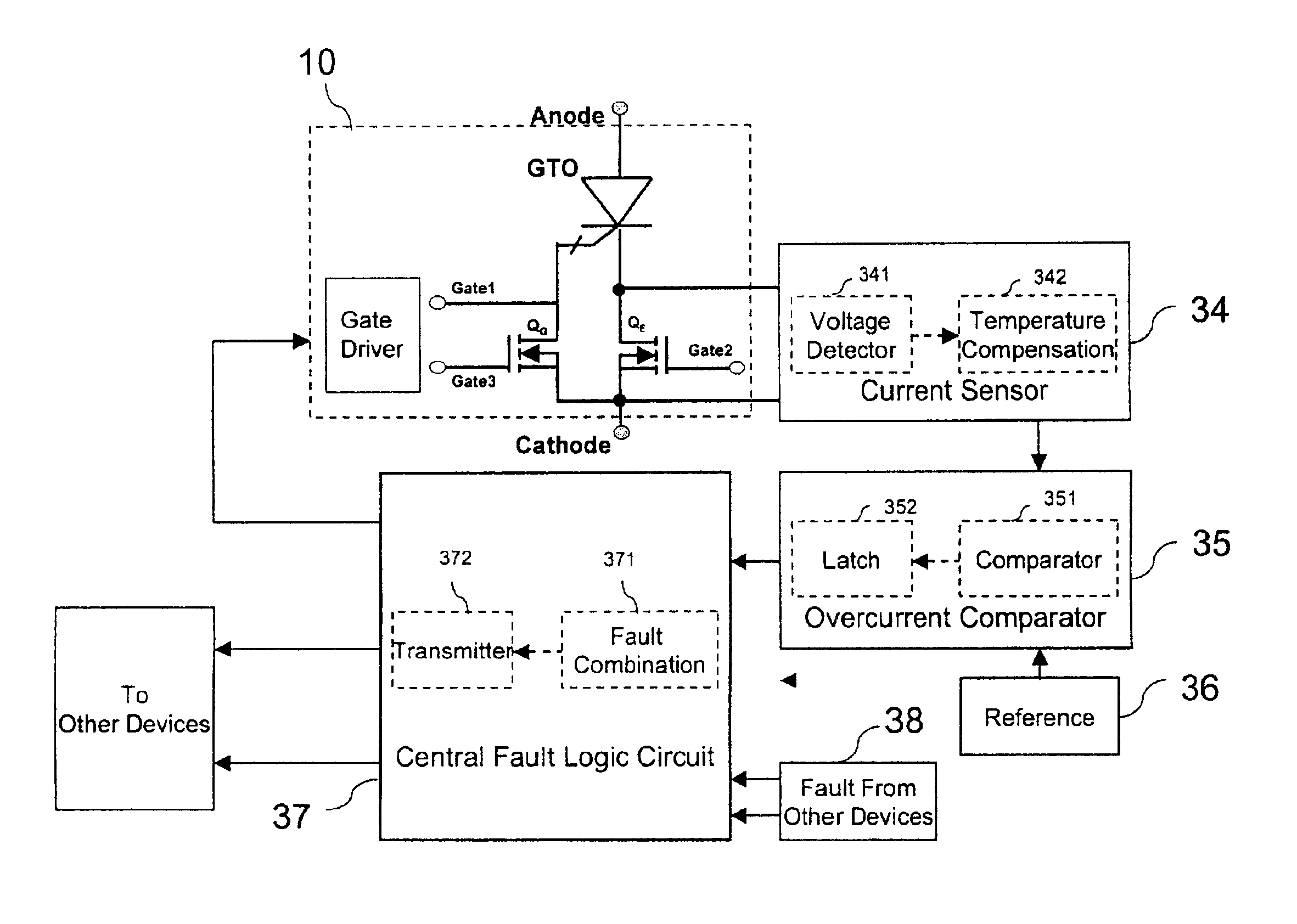
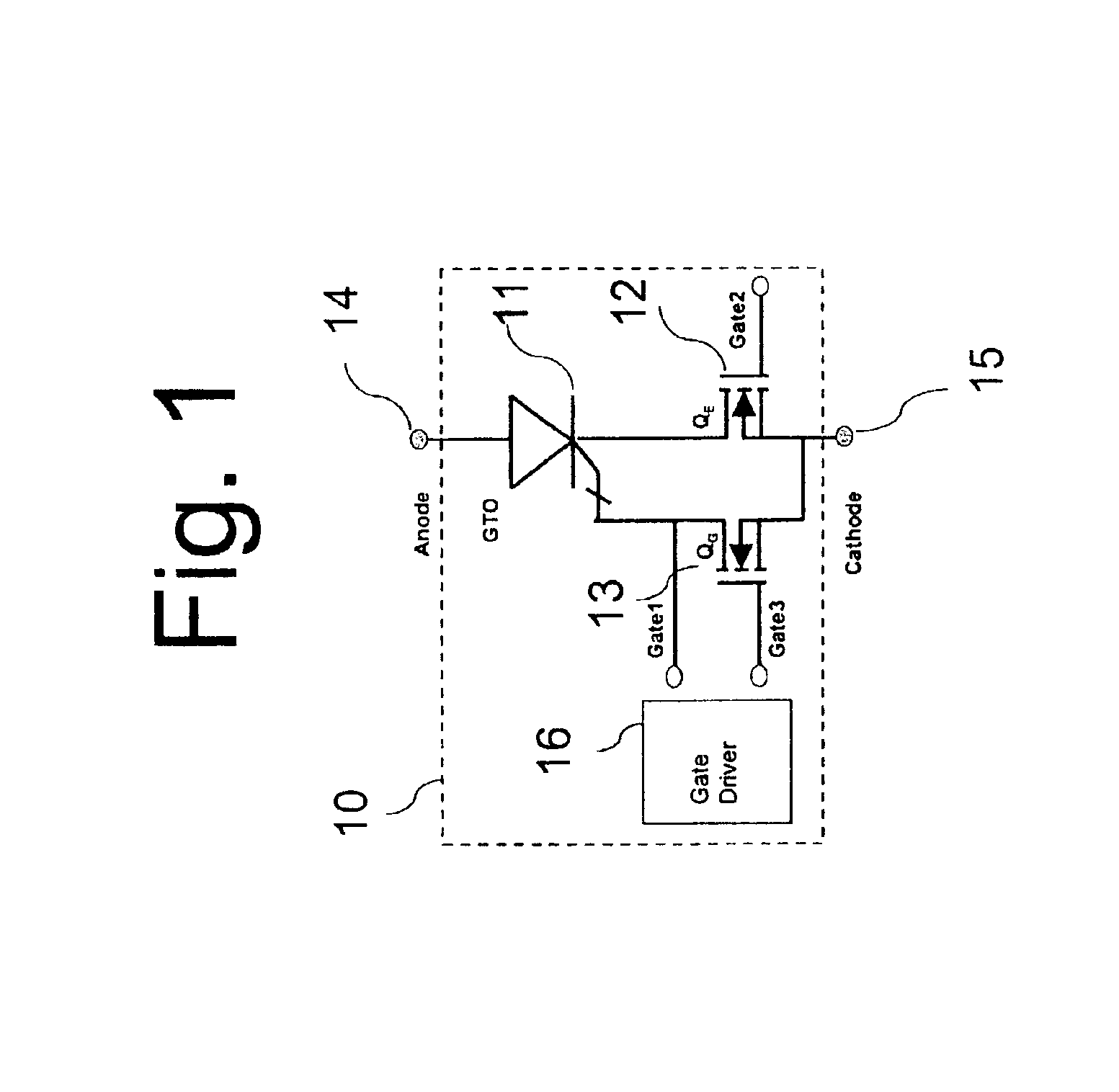
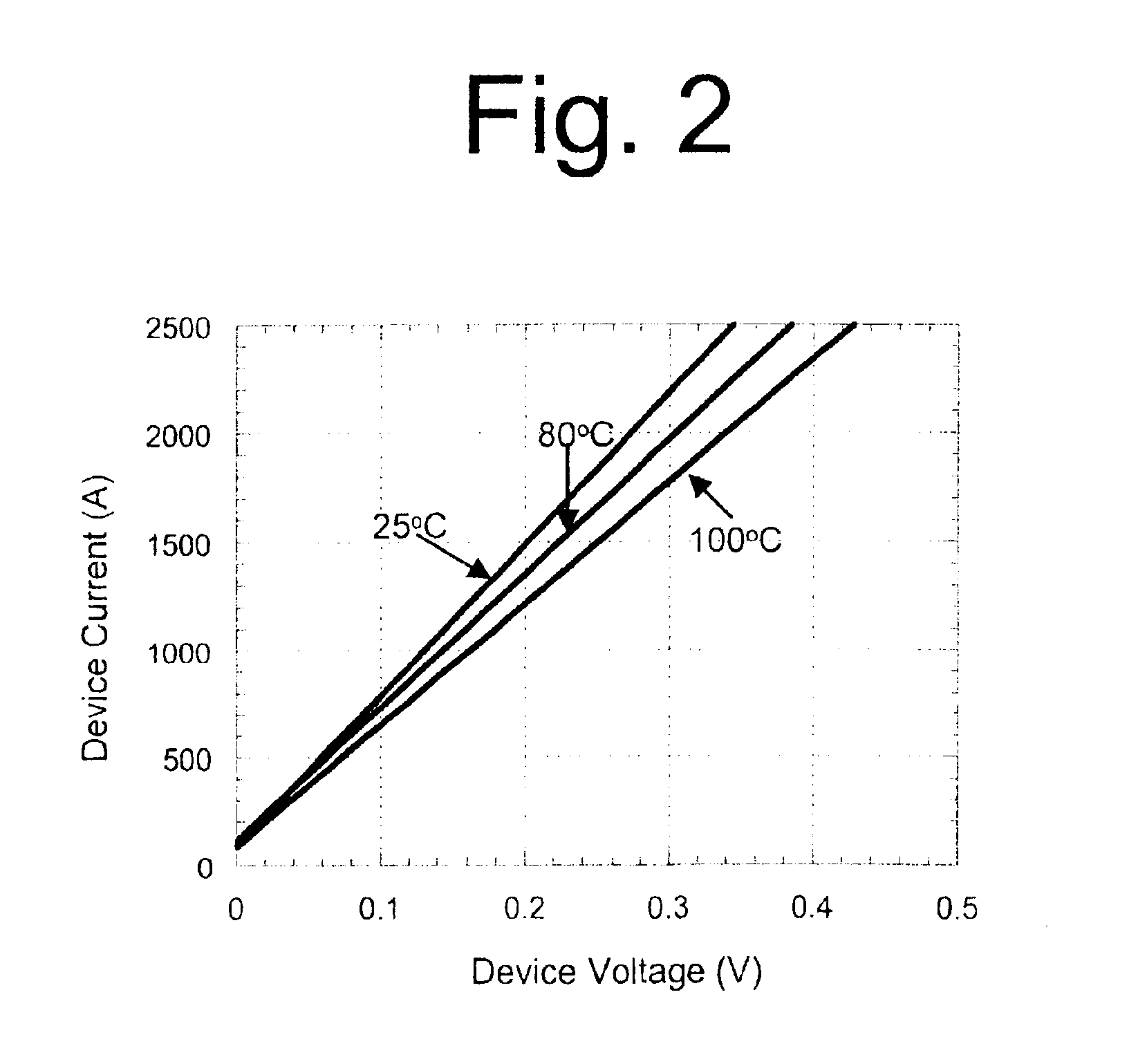
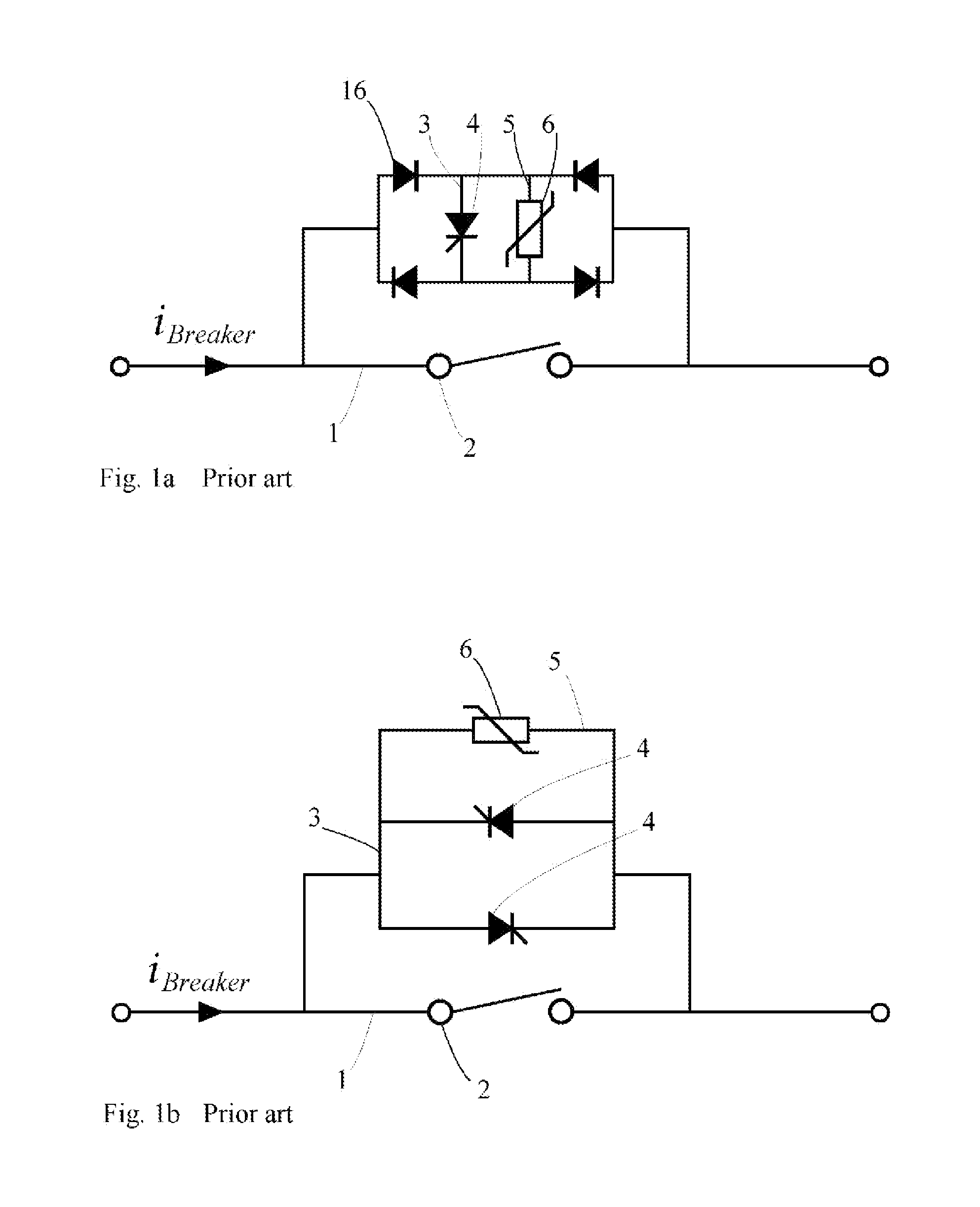
- A high-speed, solid-state DC circuit breaker utilizing emitter turn-off (ETO) thyristors with built-in current sensing and control, capable of interrupting 5 kA in 4 μs without arc generation, featuring both solid-state switch and tripping units for precise protection.

Hybrid Circuit Breaker
PatentActiveUS20120218676A1
Innovation
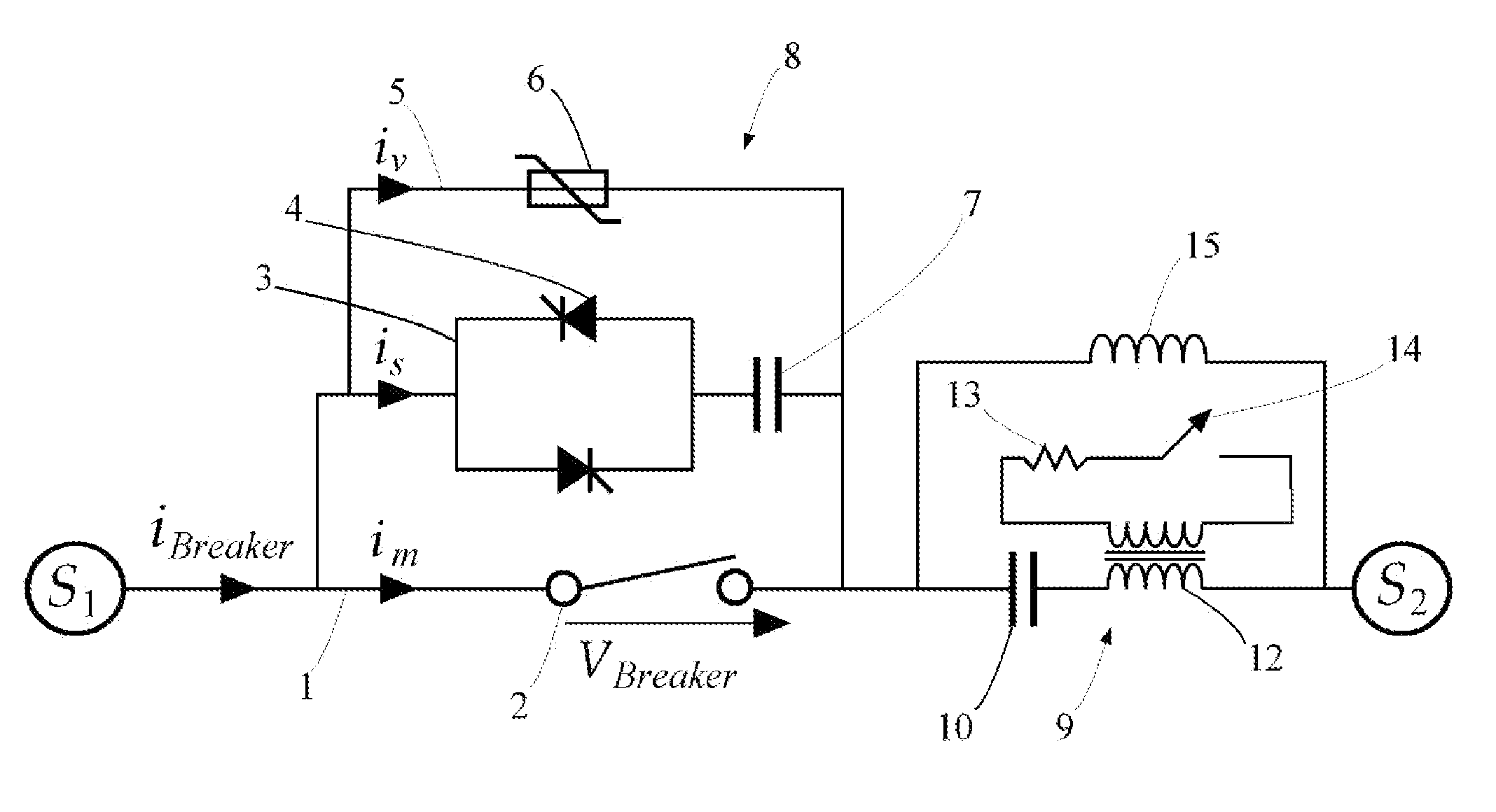
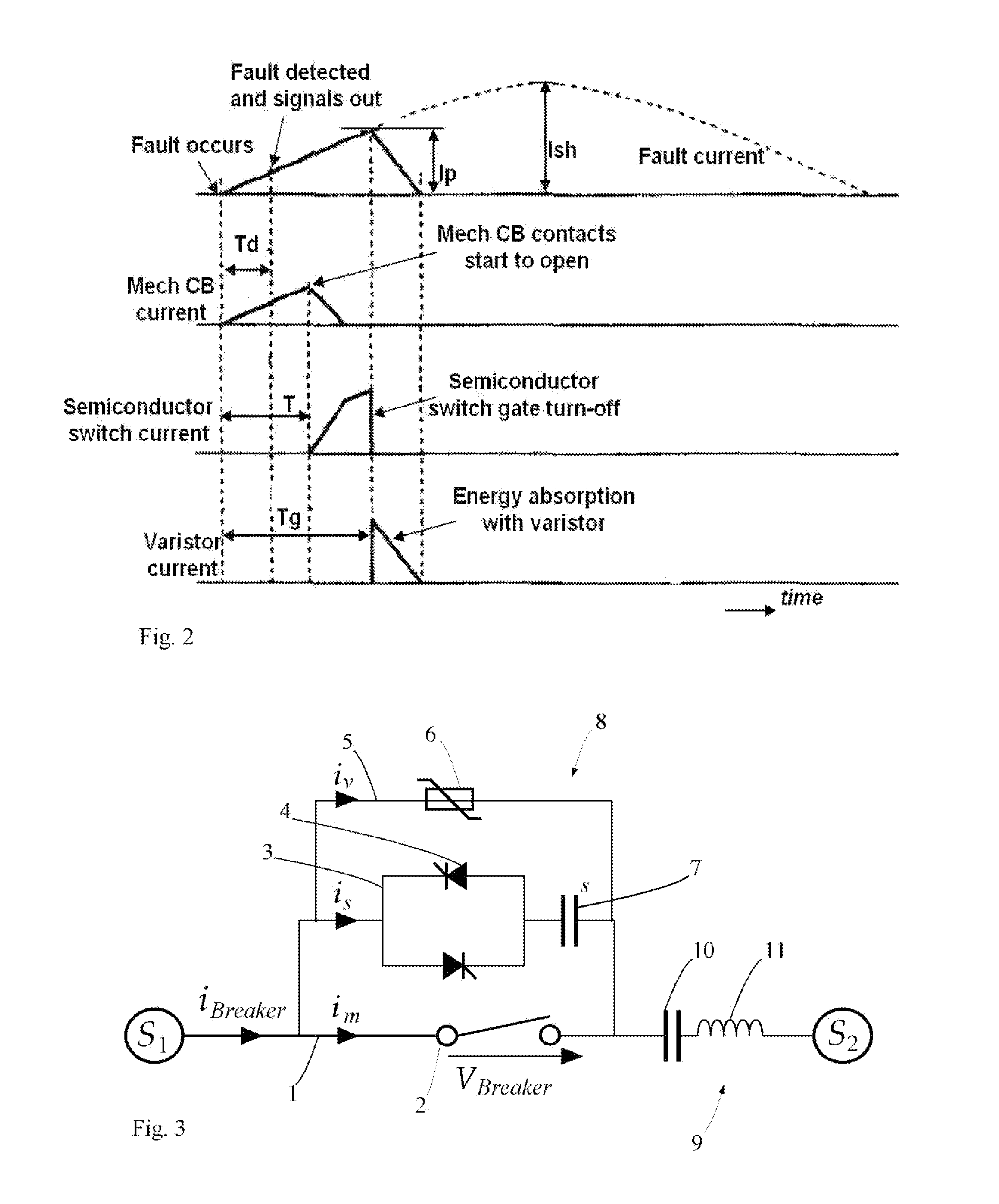
- A hybrid circuit breaker design incorporating a mechanical switch element and a controllable semiconductor switch in parallel, with a capacitor in series with the semiconductor switch to maintain low voltage across the mechanical switch and prevent arcing, and an inductance-generating element forming a series resonant circuit to manage fault currents effectively.

Power Electronics Safety Standards and Regulations
The regulatory landscape for power electronics incorporating solid-state circuit breakers and triacs is governed by multiple international and regional standards that ensure safe operation at high current levels. The International Electrotechnical Commission (IEC) provides foundational standards through IEC 60947 series for low-voltage switchgear and controlgear, which directly applies to solid-state circuit breakers. Additionally, IEC 61000 series addresses electromagnetic compatibility requirements that become critical when comparing switching technologies at elevated current levels.
Safety certification requirements differ significantly between solid-state circuit breakers and triac-based systems, particularly regarding thermal management and fault protection mechanisms. UL 489 and UL 1077 standards in North America establish specific testing protocols for circuit protection devices, including requirements for short-circuit current ratings and thermal cycling performance. European EN 60947 standards mandate similar performance criteria but with additional emphasis on environmental operating conditions and insulation coordination.
Electromagnetic interference regulations present distinct challenges for each technology. Solid-state circuit breakers typically generate less electromagnetic noise during switching operations compared to triacs, making compliance with CISPR 11 and FCC Part 15 regulations more straightforward. However, both technologies must meet stringent conducted and radiated emission limits when operating at high currents, requiring careful design consideration of filtering and shielding techniques.
Functional safety standards such as IEC 61508 and its application-specific derivatives impose additional requirements on power electronics systems used in safety-critical applications. The failure modes of solid-state circuit breakers versus triacs differ substantially, affecting the overall safety integrity level calculations and redundancy requirements. Solid-state devices often provide more predictable failure characteristics and faster response times, which can simplify compliance with functional safety requirements.
Regional variations in safety standards create additional complexity for manufacturers developing high-current power electronics solutions. While harmonization efforts continue through organizations like the International Electrotechnical Commission, significant differences remain in testing methodologies, certification processes, and marking requirements across different markets, necessitating careful consideration during technology selection and product development phases.
Safety certification requirements differ significantly between solid-state circuit breakers and triac-based systems, particularly regarding thermal management and fault protection mechanisms. UL 489 and UL 1077 standards in North America establish specific testing protocols for circuit protection devices, including requirements for short-circuit current ratings and thermal cycling performance. European EN 60947 standards mandate similar performance criteria but with additional emphasis on environmental operating conditions and insulation coordination.
Electromagnetic interference regulations present distinct challenges for each technology. Solid-state circuit breakers typically generate less electromagnetic noise during switching operations compared to triacs, making compliance with CISPR 11 and FCC Part 15 regulations more straightforward. However, both technologies must meet stringent conducted and radiated emission limits when operating at high currents, requiring careful design consideration of filtering and shielding techniques.
Functional safety standards such as IEC 61508 and its application-specific derivatives impose additional requirements on power electronics systems used in safety-critical applications. The failure modes of solid-state circuit breakers versus triacs differ substantially, affecting the overall safety integrity level calculations and redundancy requirements. Solid-state devices often provide more predictable failure characteristics and faster response times, which can simplify compliance with functional safety requirements.
Regional variations in safety standards create additional complexity for manufacturers developing high-current power electronics solutions. While harmonization efforts continue through organizations like the International Electrotechnical Commission, significant differences remain in testing methodologies, certification processes, and marking requirements across different markets, necessitating careful consideration during technology selection and product development phases.
Thermal Management Solutions for High-Current Applications
Thermal management represents a critical engineering challenge in high-current applications where solid-state circuit breakers and triacs operate. As current levels increase, both technologies generate substantial heat that must be effectively dissipated to maintain operational efficiency and prevent thermal failure. The fundamental difference in their thermal characteristics stems from their distinct switching mechanisms and conduction properties.
Solid-state circuit breakers typically employ advanced semiconductor materials such as silicon carbide or gallium nitride, which exhibit superior thermal conductivity compared to traditional silicon-based triacs. These wide-bandgap semiconductors can operate at higher junction temperatures, often exceeding 200°C, while maintaining stable performance characteristics. However, their thermal management requirements become increasingly complex due to the need for precise temperature control during switching operations.
Heat sink design plays a pivotal role in both technologies, with solid-state circuit breakers often requiring more sophisticated cooling solutions due to their higher power densities. Advanced heat sink configurations include liquid cooling systems, vapor chambers, and micro-channel cooling structures that can handle heat fluxes exceeding 100 W/cm². The thermal interface materials used between the semiconductor devices and heat sinks significantly impact overall thermal resistance, with modern thermal interface materials achieving thermal conductivities above 5 W/mK.
Active thermal management systems have emerged as essential components for high-current applications. These systems incorporate temperature sensors, variable-speed fans, and intelligent control algorithms that dynamically adjust cooling capacity based on real-time thermal conditions. For solid-state circuit breakers, thermal management systems must respond rapidly to temperature transients during fault conditions, while triac-based systems require steady-state thermal control for continuous operation.
Package-level thermal innovations include advanced die attach materials, copper lead frames, and enhanced molding compounds that improve heat dissipation paths. Multi-chip modules and power modules integrate multiple semiconductor devices with optimized thermal layouts, reducing thermal crosstalk and improving overall system reliability. These packaging advances enable both solid-state circuit breakers and triacs to handle higher current densities while maintaining acceptable junction temperatures.
Solid-state circuit breakers typically employ advanced semiconductor materials such as silicon carbide or gallium nitride, which exhibit superior thermal conductivity compared to traditional silicon-based triacs. These wide-bandgap semiconductors can operate at higher junction temperatures, often exceeding 200°C, while maintaining stable performance characteristics. However, their thermal management requirements become increasingly complex due to the need for precise temperature control during switching operations.
Heat sink design plays a pivotal role in both technologies, with solid-state circuit breakers often requiring more sophisticated cooling solutions due to their higher power densities. Advanced heat sink configurations include liquid cooling systems, vapor chambers, and micro-channel cooling structures that can handle heat fluxes exceeding 100 W/cm². The thermal interface materials used between the semiconductor devices and heat sinks significantly impact overall thermal resistance, with modern thermal interface materials achieving thermal conductivities above 5 W/mK.
Active thermal management systems have emerged as essential components for high-current applications. These systems incorporate temperature sensors, variable-speed fans, and intelligent control algorithms that dynamically adjust cooling capacity based on real-time thermal conditions. For solid-state circuit breakers, thermal management systems must respond rapidly to temperature transients during fault conditions, while triac-based systems require steady-state thermal control for continuous operation.
Package-level thermal innovations include advanced die attach materials, copper lead frames, and enhanced molding compounds that improve heat dissipation paths. Multi-chip modules and power modules integrate multiple semiconductor devices with optimized thermal layouts, reducing thermal crosstalk and improving overall system reliability. These packaging advances enable both solid-state circuit breakers and triacs to handle higher current densities while maintaining acceptable junction temperatures.
Unlock deeper insights with PatSnap Eureka Quick Research — get a full tech report to explore trends and direct your research. Try now!
Generate Your Research Report Instantly with AI Agent
Supercharge your innovation with PatSnap Eureka AI Agent Platform!