Strengthening Infrastructure Reliability with Notch Filters
MAR 17, 20269 MIN READ
Generate Your Research Report Instantly with AI Agent
PatSnap Eureka helps you evaluate technical feasibility & market potential.
Infrastructure Reliability Enhancement Background and Objectives
Infrastructure systems worldwide face unprecedented challenges in maintaining operational reliability due to increasing complexity, aging components, and growing demand for uninterrupted services. Critical infrastructure sectors including power grids, telecommunications networks, transportation systems, and industrial facilities experience frequent disruptions caused by electromagnetic interference, harmonic distortions, and resonance phenomena. These disturbances not only compromise system performance but also lead to cascading failures that can affect entire regions and economic sectors.
The proliferation of electronic devices and power electronics in modern infrastructure has introduced new sources of electrical noise and frequency-specific interference. Traditional filtering approaches often prove inadequate when dealing with narrow-band interference that occurs at specific frequencies, creating a pressing need for more sophisticated filtering solutions. Notch filters, with their ability to selectively attenuate signals at predetermined frequencies while preserving the integrity of other frequency components, have emerged as a promising technology for addressing these challenges.
The primary objective of implementing notch filters in infrastructure reliability enhancement is to achieve selective frequency suppression that eliminates harmful interference without affecting normal system operations. This targeted approach allows infrastructure operators to maintain signal quality and system stability while minimizing the risk of equipment damage or performance degradation. The technology aims to provide real-time protection against frequency-specific disturbances that conventional broadband filtering methods cannot effectively address.
Secondary objectives include improving overall system resilience through adaptive filtering capabilities that can respond to changing interference patterns. Modern notch filter implementations seek to incorporate intelligent control mechanisms that automatically adjust filter parameters based on detected interference characteristics. This adaptive functionality enables infrastructure systems to maintain optimal performance across varying operational conditions and emerging threat scenarios.
The strategic goal encompasses developing cost-effective, scalable solutions that can be integrated into existing infrastructure without requiring extensive system modifications. Implementation objectives focus on achieving high selectivity, minimal insertion loss, and robust performance across wide temperature and environmental ranges. These technical targets ensure that notch filter solutions can deliver reliable protection while maintaining the economic viability necessary for widespread adoption across diverse infrastructure applications.
The proliferation of electronic devices and power electronics in modern infrastructure has introduced new sources of electrical noise and frequency-specific interference. Traditional filtering approaches often prove inadequate when dealing with narrow-band interference that occurs at specific frequencies, creating a pressing need for more sophisticated filtering solutions. Notch filters, with their ability to selectively attenuate signals at predetermined frequencies while preserving the integrity of other frequency components, have emerged as a promising technology for addressing these challenges.
The primary objective of implementing notch filters in infrastructure reliability enhancement is to achieve selective frequency suppression that eliminates harmful interference without affecting normal system operations. This targeted approach allows infrastructure operators to maintain signal quality and system stability while minimizing the risk of equipment damage or performance degradation. The technology aims to provide real-time protection against frequency-specific disturbances that conventional broadband filtering methods cannot effectively address.
Secondary objectives include improving overall system resilience through adaptive filtering capabilities that can respond to changing interference patterns. Modern notch filter implementations seek to incorporate intelligent control mechanisms that automatically adjust filter parameters based on detected interference characteristics. This adaptive functionality enables infrastructure systems to maintain optimal performance across varying operational conditions and emerging threat scenarios.
The strategic goal encompasses developing cost-effective, scalable solutions that can be integrated into existing infrastructure without requiring extensive system modifications. Implementation objectives focus on achieving high selectivity, minimal insertion loss, and robust performance across wide temperature and environmental ranges. These technical targets ensure that notch filter solutions can deliver reliable protection while maintaining the economic viability necessary for widespread adoption across diverse infrastructure applications.
Market Demand for Robust Infrastructure Filtering Solutions
The global infrastructure sector faces mounting pressure to enhance system reliability and operational continuity as critical facilities become increasingly interconnected and dependent on stable power and signal transmission. Modern infrastructure networks, spanning telecommunications, power grids, transportation systems, and industrial facilities, require sophisticated filtering solutions to mitigate electromagnetic interference, harmonic distortion, and frequency-specific noise that can compromise system performance and safety.
Power quality issues represent a significant driver for robust filtering solutions, particularly as renewable energy integration and smart grid technologies introduce new sources of harmonic distortion and voltage fluctuations. Utility companies and industrial operators are actively seeking advanced filtering technologies to maintain power quality standards while ensuring compliance with increasingly stringent regulatory requirements for electromagnetic compatibility and grid stability.
The telecommunications infrastructure segment demonstrates substantial demand for precision filtering solutions as 5G networks and edge computing facilities require exceptional signal integrity and minimal interference. Data centers and communication hubs are investing heavily in filtering technologies to protect sensitive equipment from power anomalies and ensure uninterrupted service delivery to end users.
Industrial automation and manufacturing sectors are driving demand for filtering solutions that can handle harsh operating environments while maintaining precise frequency response characteristics. The proliferation of variable frequency drives, servo motors, and automated control systems has created complex electromagnetic environments requiring sophisticated filtering approaches to prevent equipment malfunction and production disruptions.
Transportation infrastructure, including rail systems, airports, and smart traffic management networks, increasingly relies on filtering technologies to ensure reliable operation of critical safety systems and communication networks. The integration of electric vehicle charging infrastructure and autonomous vehicle support systems further amplifies the need for robust filtering solutions capable of handling diverse frequency ranges and power levels.
Emerging markets in developing regions present significant growth opportunities as infrastructure modernization projects prioritize reliability and efficiency. Government initiatives focused on smart city development and infrastructure resilience are creating substantial demand for advanced filtering technologies that can support long-term operational objectives while minimizing maintenance requirements and lifecycle costs.
Power quality issues represent a significant driver for robust filtering solutions, particularly as renewable energy integration and smart grid technologies introduce new sources of harmonic distortion and voltage fluctuations. Utility companies and industrial operators are actively seeking advanced filtering technologies to maintain power quality standards while ensuring compliance with increasingly stringent regulatory requirements for electromagnetic compatibility and grid stability.
The telecommunications infrastructure segment demonstrates substantial demand for precision filtering solutions as 5G networks and edge computing facilities require exceptional signal integrity and minimal interference. Data centers and communication hubs are investing heavily in filtering technologies to protect sensitive equipment from power anomalies and ensure uninterrupted service delivery to end users.
Industrial automation and manufacturing sectors are driving demand for filtering solutions that can handle harsh operating environments while maintaining precise frequency response characteristics. The proliferation of variable frequency drives, servo motors, and automated control systems has created complex electromagnetic environments requiring sophisticated filtering approaches to prevent equipment malfunction and production disruptions.
Transportation infrastructure, including rail systems, airports, and smart traffic management networks, increasingly relies on filtering technologies to ensure reliable operation of critical safety systems and communication networks. The integration of electric vehicle charging infrastructure and autonomous vehicle support systems further amplifies the need for robust filtering solutions capable of handling diverse frequency ranges and power levels.
Emerging markets in developing regions present significant growth opportunities as infrastructure modernization projects prioritize reliability and efficiency. Government initiatives focused on smart city development and infrastructure resilience are creating substantial demand for advanced filtering technologies that can support long-term operational objectives while minimizing maintenance requirements and lifecycle costs.
Current Notch Filter Implementation Challenges in Infrastructure
The implementation of notch filters in critical infrastructure systems faces significant technical and operational challenges that limit their effectiveness in enhancing system reliability. Traditional analog notch filter designs suffer from component aging and temperature drift, leading to frequency response variations that can compromise their ability to suppress specific interference frequencies over extended operational periods.
Digital notch filter implementations, while offering greater precision and stability, encounter computational latency issues that become critical in real-time infrastructure control systems. The processing delays introduced by digital signal processing algorithms can destabilize feedback control loops in power grid management systems, water treatment facilities, and transportation networks where millisecond-level response times are essential.
Adaptive notch filtering presents another layer of complexity, as these systems require sophisticated algorithms to automatically adjust filter parameters based on changing interference patterns. The convergence time of adaptive algorithms often proves inadequate for rapidly varying interference scenarios common in modern electromagnetic environments, particularly in urban infrastructure settings with high RF noise levels.
Integration challenges arise when retrofitting existing infrastructure with notch filter solutions. Legacy systems often lack the necessary interface compatibility, requiring extensive modifications to control architectures. The heterogeneous nature of infrastructure components from different manufacturers creates interoperability issues, making standardized notch filter deployment difficult across diverse system configurations.
Power consumption constraints significantly impact notch filter implementation in remote infrastructure nodes where energy efficiency is paramount. High-performance active filters require substantial power resources, while passive alternatives may not provide sufficient attenuation characteristics for modern interference mitigation requirements.
Maintenance and calibration procedures for deployed notch filters present ongoing operational challenges. Field technicians often lack specialized training for filter parameter adjustment, leading to suboptimal performance or system instability. The absence of remote monitoring capabilities in many implementations prevents proactive maintenance scheduling and performance optimization.
Environmental factors including electromagnetic interference from adjacent systems, mechanical vibrations, and extreme weather conditions affect filter performance consistency. These external influences can shift filter characteristics beyond acceptable tolerances, requiring robust design approaches that balance performance with environmental resilience in critical infrastructure applications.
Digital notch filter implementations, while offering greater precision and stability, encounter computational latency issues that become critical in real-time infrastructure control systems. The processing delays introduced by digital signal processing algorithms can destabilize feedback control loops in power grid management systems, water treatment facilities, and transportation networks where millisecond-level response times are essential.
Adaptive notch filtering presents another layer of complexity, as these systems require sophisticated algorithms to automatically adjust filter parameters based on changing interference patterns. The convergence time of adaptive algorithms often proves inadequate for rapidly varying interference scenarios common in modern electromagnetic environments, particularly in urban infrastructure settings with high RF noise levels.
Integration challenges arise when retrofitting existing infrastructure with notch filter solutions. Legacy systems often lack the necessary interface compatibility, requiring extensive modifications to control architectures. The heterogeneous nature of infrastructure components from different manufacturers creates interoperability issues, making standardized notch filter deployment difficult across diverse system configurations.
Power consumption constraints significantly impact notch filter implementation in remote infrastructure nodes where energy efficiency is paramount. High-performance active filters require substantial power resources, while passive alternatives may not provide sufficient attenuation characteristics for modern interference mitigation requirements.
Maintenance and calibration procedures for deployed notch filters present ongoing operational challenges. Field technicians often lack specialized training for filter parameter adjustment, leading to suboptimal performance or system instability. The absence of remote monitoring capabilities in many implementations prevents proactive maintenance scheduling and performance optimization.
Environmental factors including electromagnetic interference from adjacent systems, mechanical vibrations, and extreme weather conditions affect filter performance consistency. These external influences can shift filter characteristics beyond acceptable tolerances, requiring robust design approaches that balance performance with environmental resilience in critical infrastructure applications.
Existing Notch Filter Solutions for Infrastructure Applications
01 Notch filter circuit design and implementation
Notch filters can be designed using various circuit topologies to achieve reliable frequency rejection. The design focuses on optimizing component selection, circuit configuration, and impedance matching to ensure stable performance. Advanced circuit architectures incorporate feedback mechanisms and compensation techniques to maintain consistent notch characteristics across operating conditions. Proper circuit design enhances reliability by minimizing component stress and ensuring predictable frequency response.- Notch filter circuit design and implementation: Notch filters can be designed using various circuit topologies to achieve reliable frequency rejection. The design focuses on optimizing component selection, circuit configuration, and impedance matching to ensure stable performance. Advanced circuit architectures incorporate feedback mechanisms and compensation techniques to maintain consistent notch characteristics across operating conditions. Proper circuit design minimizes component tolerances and temperature effects that could degrade filter reliability.
- Digital notch filter algorithms and signal processing: Digital implementation of notch filters provides enhanced reliability through software-based adaptive algorithms. These filters utilize digital signal processing techniques to achieve precise frequency rejection with minimal drift. Adaptive algorithms can automatically adjust filter parameters to compensate for signal variations and maintain optimal performance. Digital approaches offer advantages in terms of repeatability, stability, and the ability to implement complex filtering functions without physical component degradation.
- Tunable and adjustable notch filter structures: Tunable notch filters incorporate mechanisms for adjusting the center frequency and bandwidth to maintain reliability across different operating conditions. These structures employ variable components or control systems that allow real-time adjustment of filter characteristics. The tunability feature enhances reliability by enabling compensation for component aging, environmental changes, and application-specific requirements. Advanced designs integrate automatic tuning circuits that continuously monitor and optimize filter performance.
- Notch filter testing and quality assurance methods: Reliability of notch filters is ensured through comprehensive testing methodologies and quality control procedures. Testing protocols evaluate filter performance parameters including insertion loss, rejection depth, bandwidth stability, and temperature characteristics. Automated test systems measure filter responses across frequency ranges and environmental conditions to verify compliance with specifications. Quality assurance processes incorporate statistical analysis and reliability prediction models to identify potential failure modes and ensure long-term performance.
- Integrated notch filter systems with redundancy: System-level approaches to notch filter reliability incorporate redundancy and fault-tolerant architectures. Multiple filter stages or parallel filter paths provide backup capability in case of component failure. Integrated systems include monitoring circuits that detect performance degradation and automatically switch to redundant filter elements. These architectures are particularly important in critical applications where continuous operation is essential. System designs also incorporate self-diagnostic features and health monitoring to predict and prevent filter failures.
02 Temperature compensation and stability enhancement
Temperature variations can significantly affect notch filter performance and reliability. Compensation techniques include using temperature-stable components, implementing active compensation circuits, and employing materials with matched temperature coefficients. These methods ensure that the notch frequency and attenuation characteristics remain stable across the operating temperature range. Enhanced thermal management and component selection improve long-term reliability and reduce performance drift.Expand Specific Solutions03 Adaptive and tunable notch filter systems
Adaptive notch filters incorporate tuning mechanisms to maintain optimal performance under varying conditions. These systems use feedback control, digital signal processing, or variable components to automatically adjust the notch frequency and bandwidth. Adaptive approaches enhance reliability by compensating for component aging, environmental changes, and signal variations. The implementation includes monitoring circuits and control algorithms that ensure consistent filtering performance throughout the operational lifetime.Expand Specific Solutions04 Quality factor optimization and bandwidth control
The quality factor and bandwidth of notch filters directly impact their reliability and effectiveness. Optimization techniques focus on balancing sharp frequency rejection with stability and tolerance to component variations. Methods include careful component selection, cascaded filter stages, and active Q-enhancement circuits. Proper bandwidth control ensures that the filter maintains adequate rejection while remaining insensitive to manufacturing tolerances and environmental factors.Expand Specific Solutions05 Noise reduction and signal integrity preservation
Reliable notch filters must maintain signal integrity while rejecting unwanted frequencies. Design considerations include minimizing insertion loss, reducing noise contribution, and preventing signal distortion. Techniques involve optimized grounding schemes, shielding methods, and low-noise component selection. Advanced implementations incorporate differential signaling and balanced circuit topologies to enhance noise immunity. These approaches ensure that the notch filter operates reliably without degrading the desired signal quality.Expand Specific Solutions
Key Players in Infrastructure Filtering and Power Quality Industry
The notch filter technology market for infrastructure reliability is experiencing steady growth driven by increasing demands for signal integrity in telecommunications and RF applications. The industry is in a mature development stage with established players like Murata Manufacturing and Texas Instruments leading through advanced ceramic and semiconductor-based solutions. Market expansion is fueled by 5G deployment and IoT infrastructure needs. Technology maturity varies significantly across segments - companies like KMW Inc. and pSemi Corp demonstrate high RF expertise, while Huawei and NXP Semiconductors bring systems integration capabilities. Academic institutions including University of Electronic Science & Technology of China and Nanjing University of Aeronautics & Astronautics contribute fundamental research. The competitive landscape shows consolidation around specialized manufacturers with strong IP portfolios, while emerging players like Anhui Anuki Technologies focus on cost-effective solutions for specific applications.
Murata Manufacturing Co. Ltd.
Technical Solution: Murata develops advanced ceramic-based notch filters utilizing their proprietary multilayer ceramic capacitor (MLCC) technology for infrastructure applications. Their notch filters incorporate temperature-compensated dielectric materials that maintain stable frequency response across wide temperature ranges (-40°C to +125°C). The company's surface acoustic wave (SAW) and bulk acoustic wave (BAW) filter technologies provide precise frequency selectivity with rejection ratios exceeding 40dB at target frequencies. These filters are specifically designed for power grid monitoring systems, telecommunications infrastructure, and industrial control networks where electromagnetic interference suppression is critical for maintaining system reliability and preventing cascading failures.
Strengths: Industry-leading ceramic technology expertise, excellent temperature stability, high volume manufacturing capability. Weaknesses: Higher cost compared to passive alternatives, limited customization for specialized frequency ranges.
Huawei Technologies Co., Ltd.
Technical Solution: Huawei develops comprehensive notch filter solutions for telecommunications infrastructure reliability, focusing on 5G base station applications and optical network equipment. Their approach combines RF cavity filters with digital signal processing algorithms to create hybrid filtering systems that can suppress both conducted and radiated interference. The solution incorporates machine learning algorithms that continuously monitor network performance and automatically adjust filter parameters to maintain optimal signal quality. Huawei's notch filters are designed to handle high power levels (up to 500W) while maintaining low insertion loss (<0.5dB) and providing deep notch suppression (>60dB) at interference frequencies. The system includes redundant filtering paths and self-diagnostic capabilities to ensure continuous operation even during component failures.
Strengths: Advanced AI-driven adaptive filtering, high power handling capability, comprehensive system integration. Weaknesses: Complex implementation requiring specialized expertise, potential supply chain and geopolitical constraints in some markets.
Core Innovations in Advanced Notch Filter Design
Switched capacitor notch filter circuits
PatentWO2008112828A2
Innovation
- The implementation of a switched capacitor notch filter circuit that reduces frequency location errors by sampling and filtering stages, reduces circuit size, minimizes power consumption through accurate timing, and isolates output noise using clock-controlled switches and capacitors, allowing for high-frequency notching without excessive noise performance.


Wideband monolithic tunable high-Q notch filter for image rejection in RF application
PatentInactiveUS6990327B2
Innovation
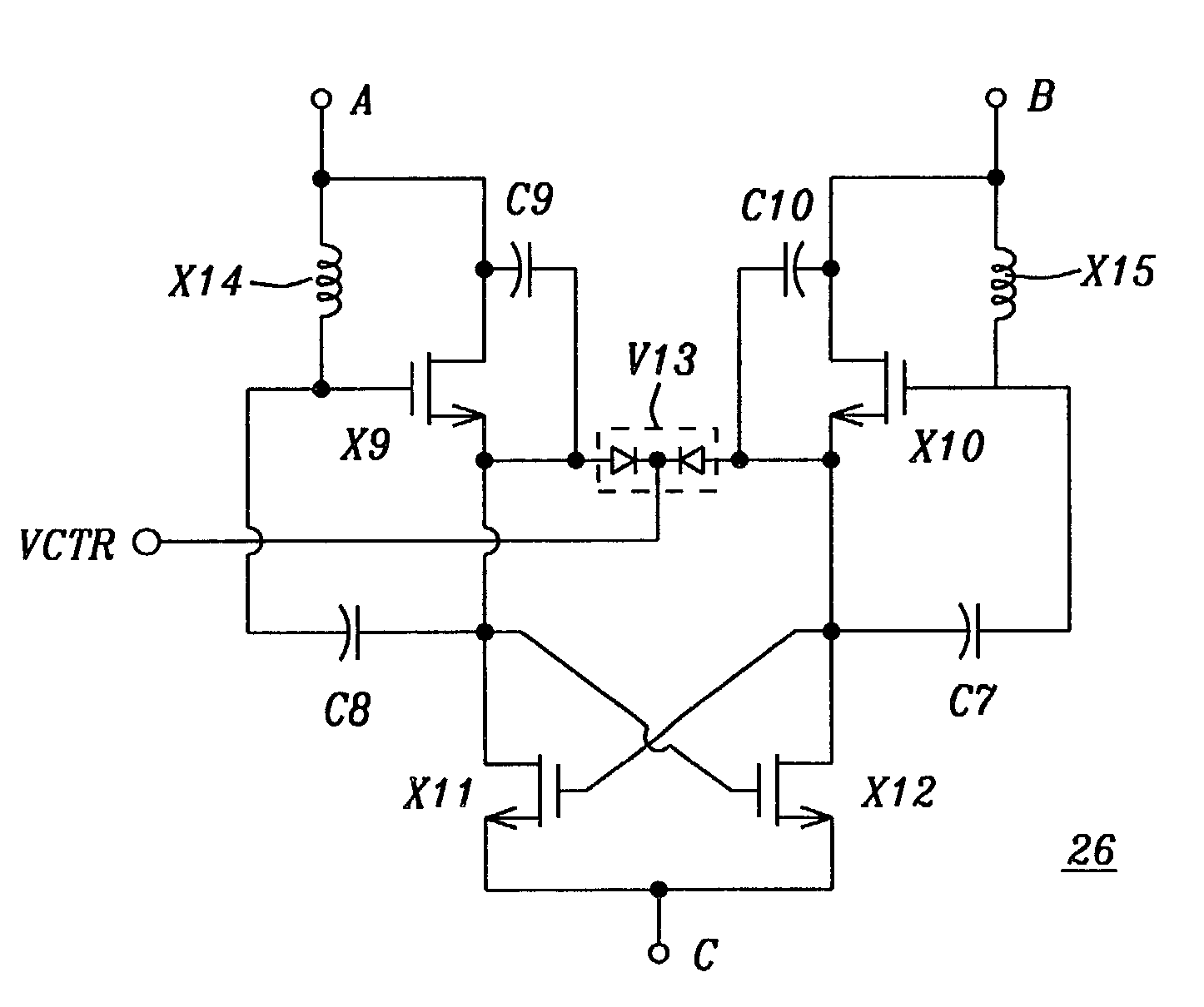
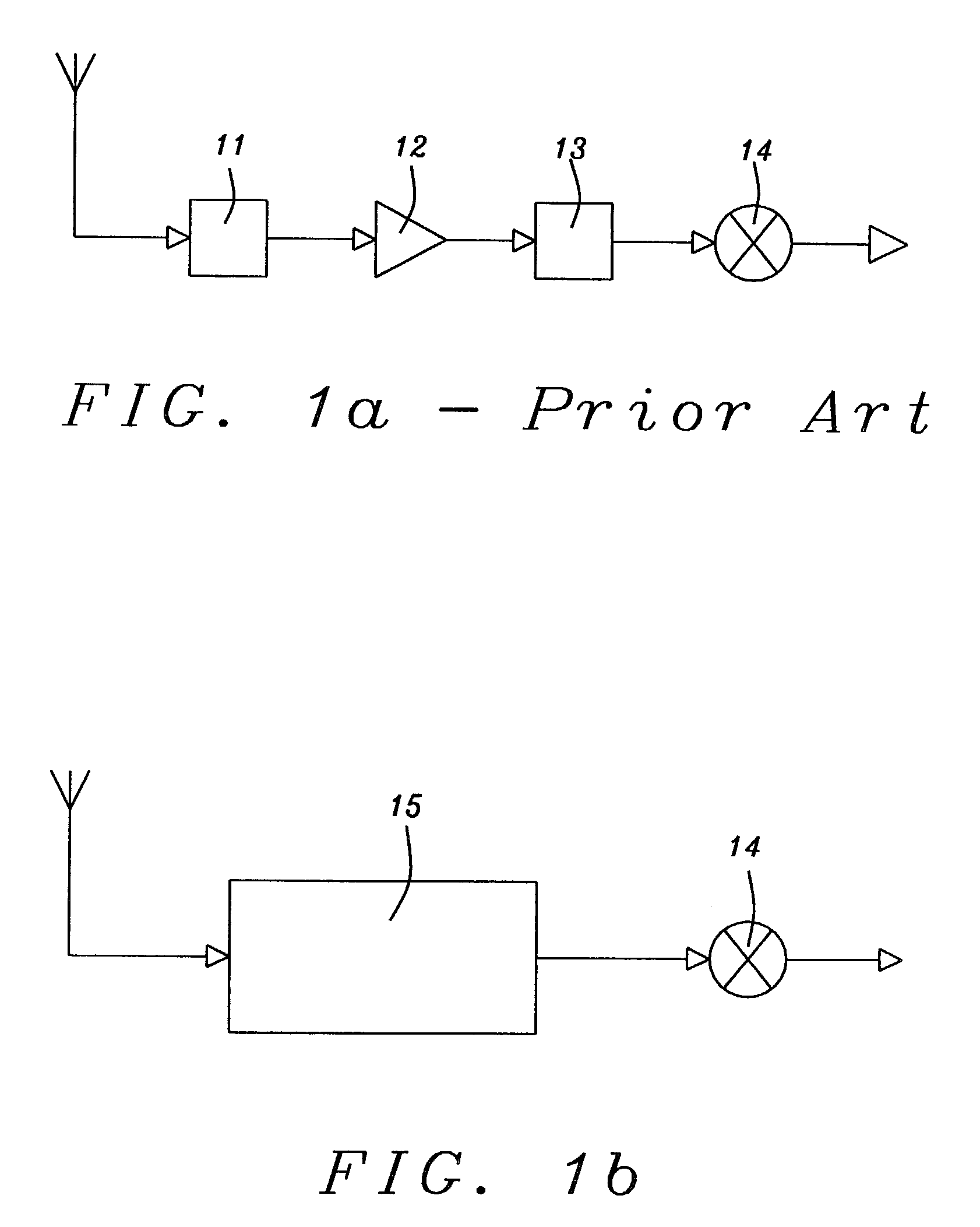
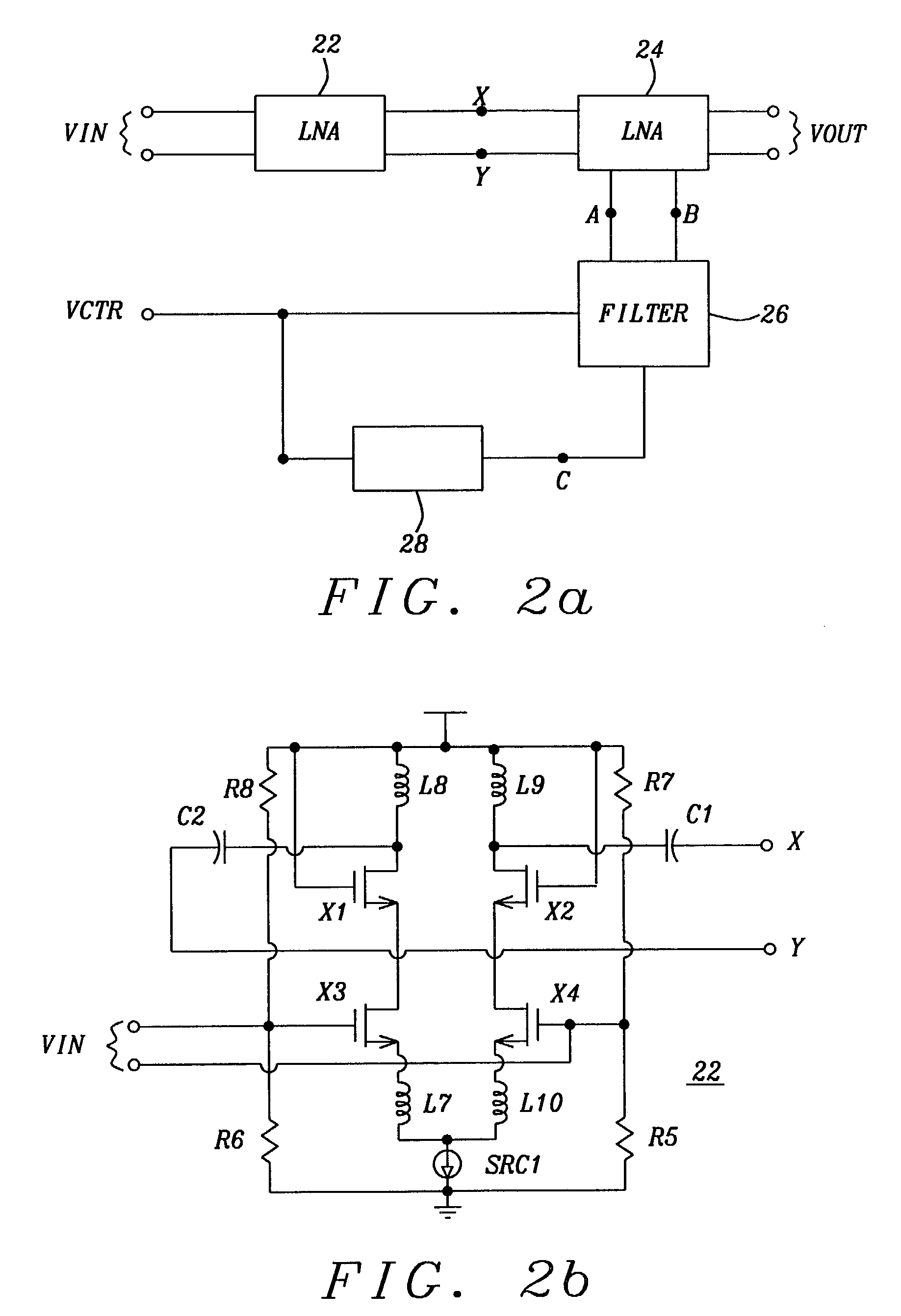
- A fully integrated on-chip bandstop and bandpass filter unit is proposed, incorporating an LC tank in the output matching network of an LNA and utilizing a Q-enhancement circuit for improved filter performance, along with automatic current tuning for varactors to achieve deep notch responses across a wide frequency band with low power consumption.

Standards and Compliance for Infrastructure Power Quality
Infrastructure power quality standards have evolved significantly to address the growing complexity of electrical systems and the increasing sensitivity of modern equipment to power disturbances. The IEEE 519 standard serves as the primary framework for harmonic control in electrical power systems, establishing limits for harmonic distortion at the point of common coupling. This standard specifically addresses total harmonic distortion (THD) limits and individual harmonic limits, which directly relate to notch filter implementation requirements.
The International Electrotechnical Commission (IEC) 61000 series provides comprehensive electromagnetic compatibility standards that complement IEEE 519. IEC 61000-4-7 defines measurement and interpretation techniques for supply voltage variations, while IEC 61000-3-6 establishes assessment methods for harmonic emissions in medium and high voltage networks. These standards create the regulatory foundation for notch filter deployment in critical infrastructure applications.
Compliance requirements vary significantly across different infrastructure sectors. Utility-scale applications must adhere to NERC reliability standards, particularly CIP-014 for physical security and transmission system planning standards. Industrial facilities typically follow IEEE 1547 for distributed energy resource interconnection, which includes specific power quality requirements that notch filters help achieve. Data centers and telecommunications infrastructure must comply with ANSI/TIA-942 standards, emphasizing continuous power availability and quality.
Regional regulatory frameworks add additional complexity to compliance landscapes. European EN 50160 standards define voltage characteristics for public electricity supply networks, establishing stricter harmonic limits than many other regions. North American utilities follow ANSI C84.1 voltage standards, while emerging markets often adopt hybrid approaches combining international standards with local requirements.
Certification processes for notch filter systems require extensive testing and documentation. UL 1741 certification ensures safety and performance standards for power conversion equipment, while IEEE C62.41 testing validates surge withstand capabilities. Third-party testing laboratories conduct electromagnetic interference assessments according to FCC Part 15 regulations, ensuring notch filter installations do not create additional compliance issues.
Documentation requirements encompass comprehensive power quality monitoring data, harmonic analysis reports, and system performance validation studies. Utilities increasingly demand real-time compliance monitoring capabilities, driving integration of advanced metering infrastructure with notch filter control systems. This trend toward continuous compliance verification represents a significant shift from traditional periodic assessment approaches.
The International Electrotechnical Commission (IEC) 61000 series provides comprehensive electromagnetic compatibility standards that complement IEEE 519. IEC 61000-4-7 defines measurement and interpretation techniques for supply voltage variations, while IEC 61000-3-6 establishes assessment methods for harmonic emissions in medium and high voltage networks. These standards create the regulatory foundation for notch filter deployment in critical infrastructure applications.
Compliance requirements vary significantly across different infrastructure sectors. Utility-scale applications must adhere to NERC reliability standards, particularly CIP-014 for physical security and transmission system planning standards. Industrial facilities typically follow IEEE 1547 for distributed energy resource interconnection, which includes specific power quality requirements that notch filters help achieve. Data centers and telecommunications infrastructure must comply with ANSI/TIA-942 standards, emphasizing continuous power availability and quality.
Regional regulatory frameworks add additional complexity to compliance landscapes. European EN 50160 standards define voltage characteristics for public electricity supply networks, establishing stricter harmonic limits than many other regions. North American utilities follow ANSI C84.1 voltage standards, while emerging markets often adopt hybrid approaches combining international standards with local requirements.
Certification processes for notch filter systems require extensive testing and documentation. UL 1741 certification ensures safety and performance standards for power conversion equipment, while IEEE C62.41 testing validates surge withstand capabilities. Third-party testing laboratories conduct electromagnetic interference assessments according to FCC Part 15 regulations, ensuring notch filter installations do not create additional compliance issues.
Documentation requirements encompass comprehensive power quality monitoring data, harmonic analysis reports, and system performance validation studies. Utilities increasingly demand real-time compliance monitoring capabilities, driving integration of advanced metering infrastructure with notch filter control systems. This trend toward continuous compliance verification represents a significant shift from traditional periodic assessment approaches.
Economic Impact Assessment of Infrastructure Filter Deployment
The deployment of notch filters in critical infrastructure systems presents significant economic implications that extend beyond initial capital expenditure considerations. Infrastructure operators must evaluate comprehensive cost-benefit analyses that encompass both direct implementation costs and long-term operational savings. Initial deployment expenses typically include hardware procurement, installation labor, system integration, and staff training programs. However, these upfront investments are often offset by substantial reductions in maintenance costs, extended equipment lifespan, and decreased downtime incidents.
Economic benefits manifest primarily through enhanced system reliability and reduced failure rates. Notch filters effectively eliminate specific frequency components that cause resonance and equipment degradation, resulting in measurable improvements in mean time between failures. This reliability enhancement translates directly into reduced maintenance schedules, lower replacement part costs, and decreased emergency repair expenses. Infrastructure operators report typical maintenance cost reductions ranging from 15-30% following comprehensive filter deployment.
The prevention of catastrophic system failures represents the most significant economic advantage of notch filter implementation. Single infrastructure failures can result in millions of dollars in direct costs, including equipment replacement, emergency response, and business interruption. Additionally, indirect costs such as regulatory penalties, reputation damage, and customer compensation claims often exceed direct repair expenses. Notch filters serve as cost-effective insurance against these high-impact, low-probability events.
Return on investment calculations demonstrate favorable payback periods, typically ranging from 18-36 months depending on system criticality and failure history. Critical infrastructure sectors such as power generation, telecommunications, and transportation systems show the most compelling economic cases due to their high failure costs and stringent reliability requirements. The economic value proposition becomes increasingly attractive as infrastructure ages and maintenance costs escalate.
Long-term economic benefits include extended asset lifecycles, improved operational efficiency, and enhanced regulatory compliance. These factors contribute to improved asset valuations and reduced total cost of ownership, making notch filter deployment an economically sound infrastructure investment strategy.
Economic benefits manifest primarily through enhanced system reliability and reduced failure rates. Notch filters effectively eliminate specific frequency components that cause resonance and equipment degradation, resulting in measurable improvements in mean time between failures. This reliability enhancement translates directly into reduced maintenance schedules, lower replacement part costs, and decreased emergency repair expenses. Infrastructure operators report typical maintenance cost reductions ranging from 15-30% following comprehensive filter deployment.
The prevention of catastrophic system failures represents the most significant economic advantage of notch filter implementation. Single infrastructure failures can result in millions of dollars in direct costs, including equipment replacement, emergency response, and business interruption. Additionally, indirect costs such as regulatory penalties, reputation damage, and customer compensation claims often exceed direct repair expenses. Notch filters serve as cost-effective insurance against these high-impact, low-probability events.
Return on investment calculations demonstrate favorable payback periods, typically ranging from 18-36 months depending on system criticality and failure history. Critical infrastructure sectors such as power generation, telecommunications, and transportation systems show the most compelling economic cases due to their high failure costs and stringent reliability requirements. The economic value proposition becomes increasingly attractive as infrastructure ages and maintenance costs escalate.
Long-term economic benefits include extended asset lifecycles, improved operational efficiency, and enhanced regulatory compliance. These factors contribute to improved asset valuations and reduced total cost of ownership, making notch filter deployment an economically sound infrastructure investment strategy.
Unlock deeper insights with PatSnap Eureka Quick Research — get a full tech report to explore trends and direct your research. Try now!
Generate Your Research Report Instantly with AI Agent
Supercharge your innovation with PatSnap Eureka AI Agent Platform!