

Surface Defect Detection: Advanced Machine Vision Techniques
APR 3, 20269 MIN READ
Generate Your Research Report Instantly with AI Agent
Patsnap Eureka helps you evaluate technical feasibility & market potential.
Surface Defect Detection Background and Vision Goals
Surface defect detection has emerged as a critical quality control mechanism across numerous manufacturing industries, driven by the increasing demand for zero-defect production and enhanced product reliability. The evolution of this field traces back to manual visual inspection methods in the early industrial era, progressing through basic optical systems in the mid-20th century to today's sophisticated machine vision technologies powered by artificial intelligence and deep learning algorithms.
The historical development of surface defect detection can be categorized into three distinct phases. The first phase, spanning from the 1950s to 1980s, relied primarily on human inspectors and basic optical magnification tools. The second phase, from the 1980s to 2000s, witnessed the introduction of computer-based vision systems utilizing traditional image processing techniques such as edge detection, pattern matching, and statistical analysis. The current third phase, beginning in the 2000s and accelerating dramatically in the 2010s, has been characterized by the integration of advanced machine learning algorithms, particularly convolutional neural networks and deep learning architectures.
Contemporary surface defect detection systems leverage cutting-edge technologies including high-resolution imaging sensors, multi-spectral and hyperspectral imaging, 3D scanning capabilities, and real-time processing units. These systems have evolved from detecting simple geometric defects to identifying complex surface anomalies such as micro-scratches, color variations, texture irregularities, and dimensional deviations with sub-millimeter precision.
The primary technical objectives driving current research and development efforts focus on achieving near-perfect detection accuracy while maintaining high-speed processing capabilities suitable for industrial production lines. Key goals include developing robust algorithms capable of handling diverse surface materials, lighting conditions, and defect types without extensive recalibration. Additionally, there is a strong emphasis on creating adaptive systems that can learn from new defect patterns and continuously improve their detection capabilities through machine learning techniques.
Future vision goals encompass the development of universal defect detection platforms capable of seamlessly transitioning between different product types and manufacturing environments, ultimately enabling fully autonomous quality control systems that require minimal human intervention while delivering unprecedented accuracy and reliability standards.
The historical development of surface defect detection can be categorized into three distinct phases. The first phase, spanning from the 1950s to 1980s, relied primarily on human inspectors and basic optical magnification tools. The second phase, from the 1980s to 2000s, witnessed the introduction of computer-based vision systems utilizing traditional image processing techniques such as edge detection, pattern matching, and statistical analysis. The current third phase, beginning in the 2000s and accelerating dramatically in the 2010s, has been characterized by the integration of advanced machine learning algorithms, particularly convolutional neural networks and deep learning architectures.
Contemporary surface defect detection systems leverage cutting-edge technologies including high-resolution imaging sensors, multi-spectral and hyperspectral imaging, 3D scanning capabilities, and real-time processing units. These systems have evolved from detecting simple geometric defects to identifying complex surface anomalies such as micro-scratches, color variations, texture irregularities, and dimensional deviations with sub-millimeter precision.
The primary technical objectives driving current research and development efforts focus on achieving near-perfect detection accuracy while maintaining high-speed processing capabilities suitable for industrial production lines. Key goals include developing robust algorithms capable of handling diverse surface materials, lighting conditions, and defect types without extensive recalibration. Additionally, there is a strong emphasis on creating adaptive systems that can learn from new defect patterns and continuously improve their detection capabilities through machine learning techniques.
Future vision goals encompass the development of universal defect detection platforms capable of seamlessly transitioning between different product types and manufacturing environments, ultimately enabling fully autonomous quality control systems that require minimal human intervention while delivering unprecedented accuracy and reliability standards.
Market Demand for Automated Quality Inspection Systems
The global manufacturing landscape is experiencing unprecedented pressure to enhance product quality while reducing operational costs, driving substantial demand for automated quality inspection systems incorporating advanced machine vision technologies. Traditional manual inspection methods are increasingly inadequate for meeting the stringent quality requirements of modern manufacturing processes, particularly in high-volume production environments where human inspection becomes both economically unfeasible and technically insufficient.
Manufacturing industries across automotive, electronics, pharmaceuticals, food and beverage, and textiles sectors are actively seeking automated solutions to replace labor-intensive quality control processes. The automotive industry demonstrates particularly strong demand, as surface defects in components can lead to safety concerns and warranty claims. Electronics manufacturers require microscopic-level defect detection capabilities that exceed human visual acuity, while pharmaceutical companies need consistent inspection standards to meet regulatory compliance requirements.
The shift toward Industry 4.0 and smart manufacturing initiatives has accelerated adoption of automated inspection systems. Companies are integrating these technologies into their production lines to achieve real-time quality monitoring, reduce waste, and maintain competitive advantages through superior product quality. The demand is further intensified by increasing consumer expectations for defect-free products and stricter regulatory standards across various industries.
Market drivers include rising labor costs in developed countries, shortage of skilled quality control personnel, and the need for 24/7 production capabilities. Additionally, the COVID-19 pandemic highlighted the importance of reducing human dependency in manufacturing processes, further accelerating automation adoption. Companies are recognizing that automated inspection systems provide consistent performance, eliminate human error, and generate valuable data for process optimization.
Emerging markets in Asia-Pacific regions show particularly robust demand growth, driven by rapid industrialization and increasing quality consciousness among manufacturers. These markets are leapfrogging traditional inspection methods and directly adopting advanced machine vision technologies to compete in global markets.
The demand extends beyond defect detection to comprehensive quality assurance solutions that integrate with enterprise resource planning systems, providing end-to-end traceability and quality management capabilities. This holistic approach to quality control represents a significant market opportunity for advanced surface defect detection technologies.
Manufacturing industries across automotive, electronics, pharmaceuticals, food and beverage, and textiles sectors are actively seeking automated solutions to replace labor-intensive quality control processes. The automotive industry demonstrates particularly strong demand, as surface defects in components can lead to safety concerns and warranty claims. Electronics manufacturers require microscopic-level defect detection capabilities that exceed human visual acuity, while pharmaceutical companies need consistent inspection standards to meet regulatory compliance requirements.
The shift toward Industry 4.0 and smart manufacturing initiatives has accelerated adoption of automated inspection systems. Companies are integrating these technologies into their production lines to achieve real-time quality monitoring, reduce waste, and maintain competitive advantages through superior product quality. The demand is further intensified by increasing consumer expectations for defect-free products and stricter regulatory standards across various industries.
Market drivers include rising labor costs in developed countries, shortage of skilled quality control personnel, and the need for 24/7 production capabilities. Additionally, the COVID-19 pandemic highlighted the importance of reducing human dependency in manufacturing processes, further accelerating automation adoption. Companies are recognizing that automated inspection systems provide consistent performance, eliminate human error, and generate valuable data for process optimization.
Emerging markets in Asia-Pacific regions show particularly robust demand growth, driven by rapid industrialization and increasing quality consciousness among manufacturers. These markets are leapfrogging traditional inspection methods and directly adopting advanced machine vision technologies to compete in global markets.
The demand extends beyond defect detection to comprehensive quality assurance solutions that integrate with enterprise resource planning systems, providing end-to-end traceability and quality management capabilities. This holistic approach to quality control represents a significant market opportunity for advanced surface defect detection technologies.
Current State of Machine Vision Defect Detection Technologies
Machine vision defect detection technologies have reached significant maturity across multiple industrial sectors, with current systems demonstrating remarkable capabilities in automated quality control processes. Contemporary solutions leverage sophisticated imaging sensors, advanced illumination systems, and powerful computational algorithms to identify surface anomalies with precision levels often exceeding human inspection capabilities.
Deep learning approaches have fundamentally transformed the landscape of defect detection, with convolutional neural networks (CNNs) becoming the dominant paradigm for complex surface analysis tasks. These systems can now detect subtle defects including scratches, dents, discoloration, texture irregularities, and dimensional variations across diverse materials ranging from metals and plastics to textiles and semiconductors.
Current industrial implementations typically employ high-resolution cameras operating at speeds of several hundred frames per second, coupled with specialized lighting configurations such as structured illumination, polarized lighting, and multi-spectral imaging. These systems achieve detection accuracies exceeding 99% for well-defined defect categories while maintaining throughput rates compatible with high-speed manufacturing environments.
Edge computing integration has emerged as a critical advancement, enabling real-time processing capabilities directly at inspection stations. Modern systems incorporate dedicated AI accelerators and field-programmable gate arrays (FPGAs) to minimize latency and reduce dependency on centralized processing infrastructure, achieving response times under 100 milliseconds for most applications.
However, significant challenges persist in handling highly reflective surfaces, complex geometries, and novel defect types not present in training datasets. Current systems often struggle with false positive rates when encountering previously unseen surface variations, requiring extensive retraining and calibration procedures. Additionally, the integration of multiple sensor modalities and the standardization of defect classification schemes across different manufacturing contexts remain ongoing technical challenges requiring continued innovation and development efforts.
Deep learning approaches have fundamentally transformed the landscape of defect detection, with convolutional neural networks (CNNs) becoming the dominant paradigm for complex surface analysis tasks. These systems can now detect subtle defects including scratches, dents, discoloration, texture irregularities, and dimensional variations across diverse materials ranging from metals and plastics to textiles and semiconductors.
Current industrial implementations typically employ high-resolution cameras operating at speeds of several hundred frames per second, coupled with specialized lighting configurations such as structured illumination, polarized lighting, and multi-spectral imaging. These systems achieve detection accuracies exceeding 99% for well-defined defect categories while maintaining throughput rates compatible with high-speed manufacturing environments.
Edge computing integration has emerged as a critical advancement, enabling real-time processing capabilities directly at inspection stations. Modern systems incorporate dedicated AI accelerators and field-programmable gate arrays (FPGAs) to minimize latency and reduce dependency on centralized processing infrastructure, achieving response times under 100 milliseconds for most applications.
However, significant challenges persist in handling highly reflective surfaces, complex geometries, and novel defect types not present in training datasets. Current systems often struggle with false positive rates when encountering previously unseen surface variations, requiring extensive retraining and calibration procedures. Additionally, the integration of multiple sensor modalities and the standardization of defect classification schemes across different manufacturing contexts remain ongoing technical challenges requiring continued innovation and development efforts.
Existing Machine Vision Solutions for Surface Inspection
01 Deep learning-based defect detection methods
Machine vision systems utilize deep learning algorithms, including convolutional neural networks (CNNs) and other neural network architectures, to automatically identify and classify defects in manufactured products. These methods can learn complex patterns and features from training data, enabling accurate detection of various defect types such as cracks, scratches, and surface irregularities. The systems can be trained on large datasets to improve detection accuracy and reduce false positives in industrial inspection applications.- Deep learning-based defect detection methods: Machine vision systems utilize deep learning algorithms, including convolutional neural networks (CNNs) and other neural network architectures, to automatically identify and classify defects in manufactured products. These methods can learn complex patterns and features from training data, enabling accurate detection of various defect types such as cracks, scratches, and surface irregularities. The systems can be trained on large datasets to improve detection accuracy and reduce false positives in industrial inspection applications.
- Image preprocessing and enhancement techniques: Prior to defect detection, image preprocessing methods are applied to enhance image quality and improve detection accuracy. These techniques include noise reduction, contrast enhancement, edge detection, and image segmentation. Preprocessing helps to highlight defect features while suppressing background interference, making it easier for subsequent detection algorithms to identify anomalies. Various filtering methods and morphological operations can be employed to optimize image characteristics for specific defect types.
- Multi-camera and 3D vision systems: Advanced defect detection systems employ multiple cameras or 3D imaging technologies to capture comprehensive surface information from different angles and perspectives. These systems can detect defects that may not be visible from a single viewpoint, including depth-related defects and complex surface irregularities. Stereo vision and structured light techniques enable three-dimensional reconstruction of inspected objects, providing more complete defect characterization and measurement capabilities.
- Real-time defect detection and classification: Machine vision systems are designed to perform defect detection in real-time during production processes, enabling immediate quality control and feedback. These systems integrate high-speed image acquisition, rapid processing algorithms, and automated classification mechanisms to identify defects within milliseconds. Real-time detection allows for immediate rejection of defective products or adjustment of manufacturing parameters, reducing waste and improving overall production efficiency.
- Adaptive and self-learning detection systems: Modern defect detection systems incorporate adaptive algorithms that can automatically adjust detection parameters based on varying production conditions and product characteristics. These systems utilize machine learning techniques to continuously improve detection performance through feedback mechanisms and accumulated inspection data. Self-learning capabilities enable the systems to adapt to new defect types and changing product specifications without extensive manual reprogramming, enhancing flexibility and reducing setup time.
02 Image preprocessing and enhancement techniques
Prior to defect detection, image preprocessing methods are applied to enhance image quality and improve detection accuracy. These techniques include noise reduction, contrast enhancement, edge detection, and image segmentation. Preprocessing helps to highlight defect features while suppressing background interference, making it easier for subsequent detection algorithms to identify anomalies. Various filtering methods and morphological operations can be employed to optimize image characteristics for specific defect types.Expand Specific Solutions03 Multi-camera and 3D vision systems
Advanced machine vision systems employ multiple cameras or 3D imaging technologies to capture comprehensive surface information from different angles and perspectives. These systems can detect defects that may not be visible from a single viewpoint, including depth-related defects and complex surface irregularities. Stereo vision and structured light techniques enable three-dimensional reconstruction of inspected objects, providing more complete defect characterization and measurement capabilities.Expand Specific Solutions04 Real-time defect detection and classification
Machine vision systems are designed to perform defect detection in real-time during production processes, enabling immediate quality control and feedback. These systems integrate high-speed image acquisition, rapid processing algorithms, and automated classification mechanisms to identify defects within milliseconds. Real-time detection allows for immediate rejection of defective products or adjustment of manufacturing parameters, reducing waste and improving overall production efficiency.Expand Specific Solutions05 Adaptive and self-learning inspection systems
Modern machine vision systems incorporate adaptive algorithms that can automatically adjust detection parameters based on changing production conditions and product variations. These systems utilize machine learning techniques to continuously improve detection performance by learning from new defect samples and operator feedback. Self-learning capabilities enable the systems to handle product variations, adapt to different defect types, and maintain high detection accuracy over time without requiring extensive manual reconfiguration.Expand Specific Solutions
Key Players in Machine Vision and Industrial Automation
The surface defect detection market utilizing advanced machine vision techniques is experiencing rapid growth, driven by increasing quality control demands across manufacturing industries. The market demonstrates significant scale potential, with applications spanning automotive, electronics, steel, and semiconductor sectors. Technology maturity varies considerably among key players: established automation giants like ABB Ltd., Cognex Corp., and KEYENCE Corp. represent mature, commercially-proven solutions with extensive industrial deployment. Vision specialists such as Hikvision and CASI Vision Technology offer mid-stage maturity with focused defect detection capabilities. Meanwhile, research institutions including Huazhong University of Science & Technology and Korea Advanced Institute of Science & Technology contribute emerging innovations. Industrial manufacturers like Brembo SpA, JFE Steel Corp., and Sharp Corp. are integrating these technologies as end-users, driving practical application requirements. The competitive landscape shows a convergence of traditional automation providers, specialized vision companies, and technology integrators, indicating a maturing but still rapidly evolving market with substantial growth opportunities.
ABB Ltd.
Technical Solution: ABB provides industrial surface defect detection solutions integrated with their robotics and automation systems for manufacturing quality control. Their technology combines machine vision cameras with AI-powered image analysis software to detect surface defects in real-time production environments. The system utilizes convolutional neural networks trained on industrial datasets to identify various defect types including scratches, dents, discoloration, and geometric irregularities. Their solution integrates with ABB's robot controllers enabling automated defect marking, sorting, and rejection processes. The platform supports multi-camera configurations and 3D surface profiling for comprehensive defect analysis across different manufacturing sectors including automotive, metals, and consumer goods production.
Strengths: Seamless integration with automation systems, robust industrial design, comprehensive service network. Weaknesses: Less specialized in pure vision applications, higher complexity for standalone implementations.
Hangzhou Hikvision Digital Technology Co., Ltd.
Technical Solution: Hikvision has developed comprehensive surface defect detection solutions utilizing deep learning-based computer vision algorithms. Their technology employs convolutional neural networks (CNNs) for automated defect classification and localization on manufacturing surfaces. The system integrates high-resolution industrial cameras with advanced image processing algorithms to detect micro-defects, scratches, dents, and surface irregularities in real-time production environments. Their machine vision platform supports multi-spectral imaging and 3D surface analysis, enabling detection of defects as small as 0.1mm with 99.5% accuracy rates. The solution includes adaptive lighting systems and edge computing capabilities for immediate defect classification without cloud dependency.
Strengths: Market-leading accuracy rates, comprehensive product portfolio, strong R&D capabilities. Weaknesses: Limited customization for specialized industrial applications, higher cost compared to competitors.
Core AI Algorithms for Advanced Defect Recognition
Surface defect detection system and method thereof
PatentActiveUS20200292462A1
Innovation
- A surface defect detection system using a camera, computing device, and back-end processing device that applies a deep learning algorithm to set bounding boxes and output feature parameters for defects, followed by a classification algorithm to determine compliance with specifications, leveraging trained models like Faster R-CNN and SVM for accurate defect identification.


System and method for detecting defects on a specular surface with a vision system
PatentActiveUS20170236266A1
Innovation
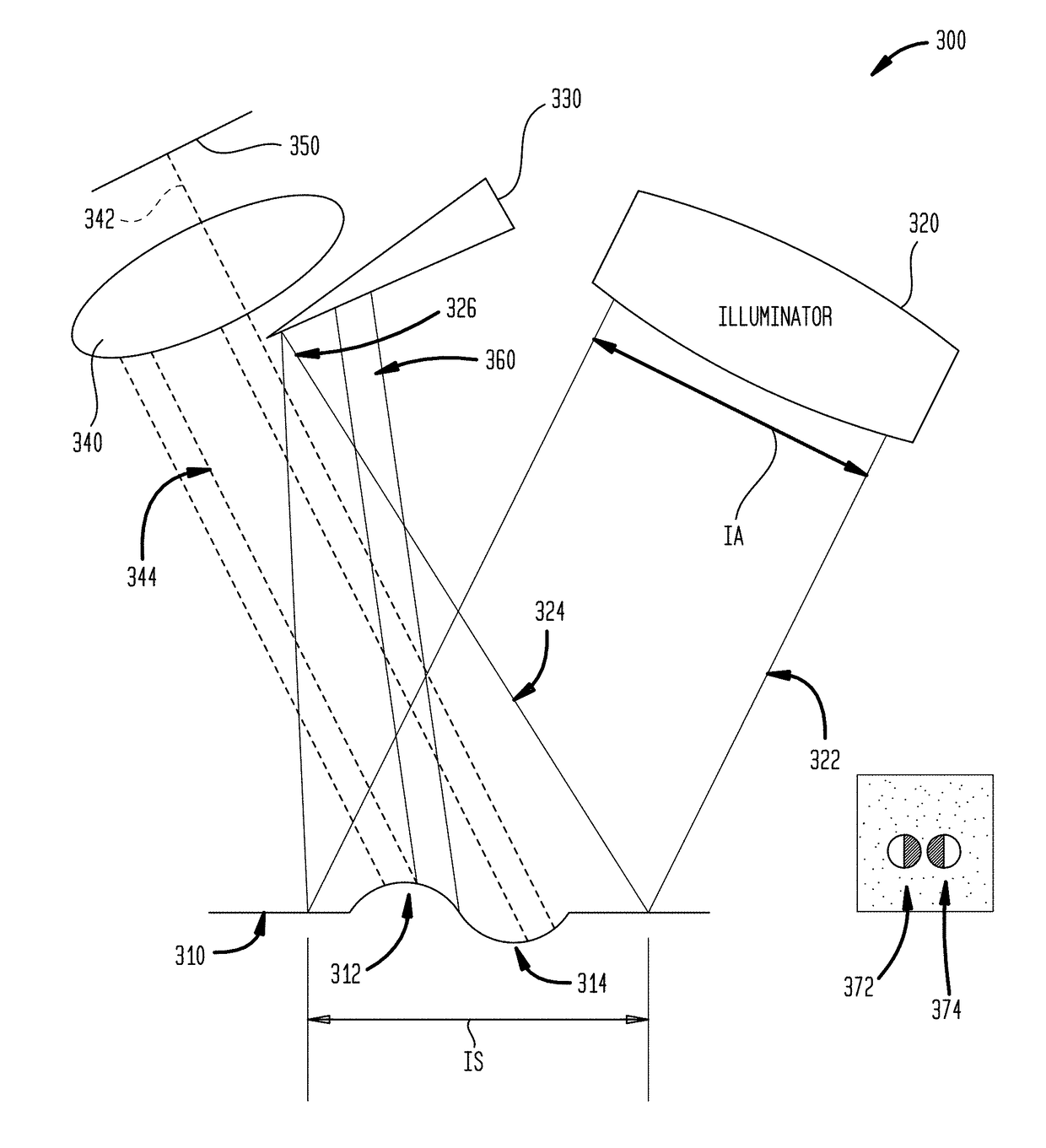
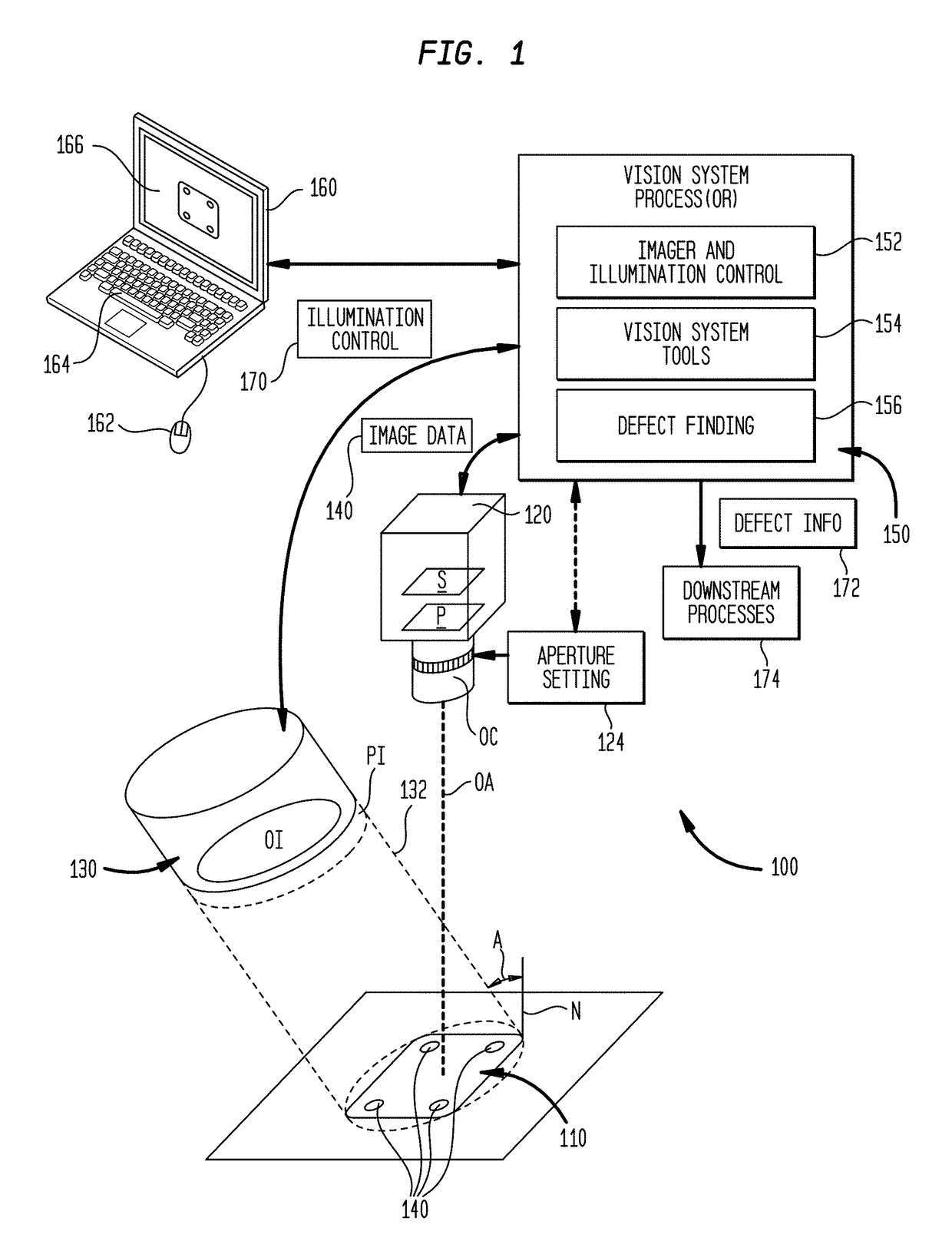
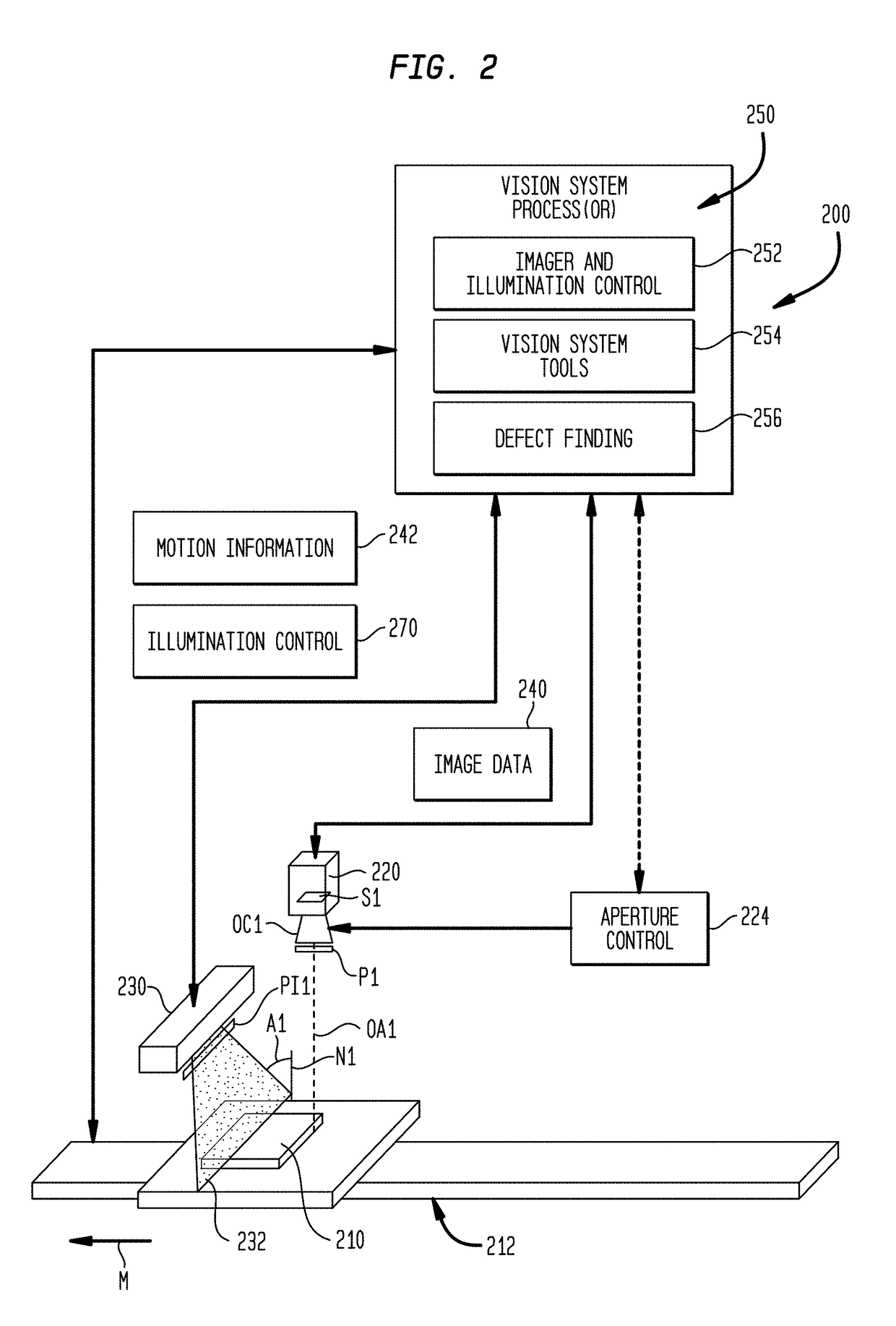
- A system and method using a knife-edge technique where the camera aperture or an external device forms a physical knife-edge structure to block reflected rays from flat surfaces, allowing deflected rays from sloped defects to reach the camera sensor, employing angled illumination and polarized light to enhance defect visibility.

Industry Standards for Automated Inspection Systems
The automated inspection industry has established comprehensive standards to ensure consistent performance and reliability across surface defect detection systems. These standards provide essential frameworks for implementing advanced machine vision techniques in manufacturing environments, addressing critical aspects from hardware specifications to software validation protocols.
ISO 9001 quality management principles form the foundation for automated inspection systems, establishing requirements for systematic quality control processes. The ISO 14406 standard specifically addresses automated optical inspection systems, defining performance metrics for defect detection accuracy, repeatability, and system reliability. These standards mandate minimum detection thresholds, false positive rates, and operational consistency parameters that machine vision systems must achieve.
SEMI standards, particularly SEMI E10 and SEMI E30, govern semiconductor manufacturing inspection equipment, establishing protocols for wafer surface defect detection and classification. These standards define specific requirements for lighting conditions, image resolution, and defect size detection capabilities. The standards also specify calibration procedures and maintenance protocols essential for maintaining system performance over extended operational periods.
IPC standards play crucial roles in electronics manufacturing inspection systems. IPC-A-610 establishes acceptability criteria for electronic assemblies, while IPC-6012 defines performance specifications for rigid printed circuit boards. These standards provide detailed visual criteria that automated systems must replicate, including specific defect classifications and severity levels that machine vision algorithms must accurately identify and categorize.
ASTM International has developed numerous standards relevant to surface inspection applications. ASTM E2339 addresses digital imaging and communication protocols, ensuring interoperability between different inspection systems and manufacturing execution systems. ASTM E1316 establishes terminology and definitions for nondestructive testing methods, providing standardized language for defect classification and reporting.
Industry-specific standards also govern specialized applications. The automotive industry follows IATF 16949 requirements, which mandate statistical process control and continuous improvement in inspection systems. Aerospace applications adhere to AS9100 standards, requiring enhanced traceability and documentation for all inspection processes and results.
Compliance with these standards ensures that advanced machine vision techniques deliver consistent, reliable performance across diverse manufacturing environments while maintaining compatibility with existing quality management systems and regulatory requirements.
ISO 9001 quality management principles form the foundation for automated inspection systems, establishing requirements for systematic quality control processes. The ISO 14406 standard specifically addresses automated optical inspection systems, defining performance metrics for defect detection accuracy, repeatability, and system reliability. These standards mandate minimum detection thresholds, false positive rates, and operational consistency parameters that machine vision systems must achieve.
SEMI standards, particularly SEMI E10 and SEMI E30, govern semiconductor manufacturing inspection equipment, establishing protocols for wafer surface defect detection and classification. These standards define specific requirements for lighting conditions, image resolution, and defect size detection capabilities. The standards also specify calibration procedures and maintenance protocols essential for maintaining system performance over extended operational periods.
IPC standards play crucial roles in electronics manufacturing inspection systems. IPC-A-610 establishes acceptability criteria for electronic assemblies, while IPC-6012 defines performance specifications for rigid printed circuit boards. These standards provide detailed visual criteria that automated systems must replicate, including specific defect classifications and severity levels that machine vision algorithms must accurately identify and categorize.
ASTM International has developed numerous standards relevant to surface inspection applications. ASTM E2339 addresses digital imaging and communication protocols, ensuring interoperability between different inspection systems and manufacturing execution systems. ASTM E1316 establishes terminology and definitions for nondestructive testing methods, providing standardized language for defect classification and reporting.
Industry-specific standards also govern specialized applications. The automotive industry follows IATF 16949 requirements, which mandate statistical process control and continuous improvement in inspection systems. Aerospace applications adhere to AS9100 standards, requiring enhanced traceability and documentation for all inspection processes and results.
Compliance with these standards ensures that advanced machine vision techniques deliver consistent, reliable performance across diverse manufacturing environments while maintaining compatibility with existing quality management systems and regulatory requirements.
Cost-Benefit Analysis of Machine Vision Implementation
The implementation of advanced machine vision systems for surface defect detection requires substantial upfront investment, but delivers significant long-term returns through improved quality control and operational efficiency. Initial capital expenditures typically range from $50,000 to $500,000 depending on system complexity, including high-resolution cameras, specialized lighting equipment, processing hardware, and software licenses. Additional costs encompass system integration, employee training, and ongoing maintenance contracts.
Operational benefits manifest through multiple channels, with defect detection accuracy improvements of 95-99% compared to manual inspection methods. This enhanced precision reduces false positive rates by 60-80%, minimizing unnecessary product rejections and associated material waste. Labor cost reductions represent another significant advantage, as automated systems can replace 2-4 quality control personnel per production line while operating continuously without fatigue-related performance degradation.
Production throughput gains typically increase by 200-400% compared to manual inspection processes, enabling manufacturers to meet higher demand without proportional increases in quality control staffing. Reduced warranty claims and customer returns, often decreasing by 40-70%, translate directly to improved profit margins and enhanced brand reputation. The prevention of defective products reaching end customers also eliminates costly recall scenarios and associated legal liabilities.
Return on investment calculations demonstrate payback periods ranging from 12-36 months across various manufacturing sectors. High-volume production environments with expensive materials or critical quality requirements achieve faster ROI realization. Automotive and electronics manufacturers report particularly strong financial returns, with some implementations generating cost savings exceeding 300% of initial investment within three years.
Long-term economic advantages include reduced insurance premiums due to improved quality metrics, enhanced competitiveness through faster time-to-market capabilities, and scalability benefits as production volumes increase. The technology's adaptability to multiple product lines further amplifies cost-effectiveness by distributing system investments across diverse manufacturing applications.
Operational benefits manifest through multiple channels, with defect detection accuracy improvements of 95-99% compared to manual inspection methods. This enhanced precision reduces false positive rates by 60-80%, minimizing unnecessary product rejections and associated material waste. Labor cost reductions represent another significant advantage, as automated systems can replace 2-4 quality control personnel per production line while operating continuously without fatigue-related performance degradation.
Production throughput gains typically increase by 200-400% compared to manual inspection processes, enabling manufacturers to meet higher demand without proportional increases in quality control staffing. Reduced warranty claims and customer returns, often decreasing by 40-70%, translate directly to improved profit margins and enhanced brand reputation. The prevention of defective products reaching end customers also eliminates costly recall scenarios and associated legal liabilities.
Return on investment calculations demonstrate payback periods ranging from 12-36 months across various manufacturing sectors. High-volume production environments with expensive materials or critical quality requirements achieve faster ROI realization. Automotive and electronics manufacturers report particularly strong financial returns, with some implementations generating cost savings exceeding 300% of initial investment within three years.
Long-term economic advantages include reduced insurance premiums due to improved quality metrics, enhanced competitiveness through faster time-to-market capabilities, and scalability benefits as production volumes increase. The technology's adaptability to multiple product lines further amplifies cost-effectiveness by distributing system investments across diverse manufacturing applications.
Unlock deeper insights with Patsnap Eureka Quick Research — get a full tech report to explore trends and direct your research. Try now!
Generate Your Research Report Instantly with AI Agent
Supercharge your innovation with Patsnap Eureka AI Agent Platform!