

Technological Roadmap for Regenerative Braking in Aviation
AUG 15, 20259 MIN READ
Generate Your Research Report Instantly with AI Agent
PatSnap Eureka helps you evaluate technical feasibility & market potential.
Aviation Braking Evolution
The evolution of aviation braking systems has been a critical aspect of aircraft development, closely tied to the advancement of aviation technology as a whole. In the early days of flight, braking systems were rudimentary, often relying on simple friction mechanisms or even drag-inducing devices to slow aircraft upon landing.
As aircraft grew larger and faster, the need for more sophisticated braking systems became apparent. The introduction of hydraulic brake systems in the 1930s marked a significant milestone, providing more reliable and controllable deceleration. This technology allowed for the development of larger commercial aircraft, capable of carrying more passengers and cargo over longer distances.
The 1950s and 1960s saw the widespread adoption of disc brakes in aviation, replacing the older drum brake systems. Disc brakes offered improved heat dissipation and more consistent performance, crucial for the jet age's higher landing speeds. This period also witnessed the integration of anti-skid systems, enhancing safety and control during landings in various weather conditions.
The advent of carbon brakes in the 1980s represented another leap forward. Carbon brake discs offered significant weight savings compared to steel, while also providing superior heat absorption capabilities. This innovation allowed for more efficient aircraft designs and improved fuel economy, as the reduced weight of the braking system contributed to overall aircraft performance.
In recent decades, the focus has shifted towards electronic brake control systems and brake-by-wire technology. These advancements have improved the precision and reliability of braking systems, allowing for more sophisticated integration with other aircraft systems and enhancing overall safety.
The latest frontier in aviation braking technology is the development of regenerative braking systems. Drawing inspiration from automotive and rail industries, researchers and engineers are exploring ways to capture and repurpose the energy typically dissipated as heat during braking. This concept holds the potential to significantly improve aircraft energy efficiency and reduce environmental impact.
The evolution of aviation braking systems reflects a continuous drive towards improved safety, efficiency, and performance. Each technological advancement has enabled aircraft to become faster, larger, and more capable, while simultaneously enhancing their ability to land safely under a wide range of conditions. As the aviation industry looks to the future, the focus on sustainable technologies like regenerative braking represents the next chapter in this ongoing evolution, promising to reshape the landscape of aircraft design and operation.
As aircraft grew larger and faster, the need for more sophisticated braking systems became apparent. The introduction of hydraulic brake systems in the 1930s marked a significant milestone, providing more reliable and controllable deceleration. This technology allowed for the development of larger commercial aircraft, capable of carrying more passengers and cargo over longer distances.
The 1950s and 1960s saw the widespread adoption of disc brakes in aviation, replacing the older drum brake systems. Disc brakes offered improved heat dissipation and more consistent performance, crucial for the jet age's higher landing speeds. This period also witnessed the integration of anti-skid systems, enhancing safety and control during landings in various weather conditions.
The advent of carbon brakes in the 1980s represented another leap forward. Carbon brake discs offered significant weight savings compared to steel, while also providing superior heat absorption capabilities. This innovation allowed for more efficient aircraft designs and improved fuel economy, as the reduced weight of the braking system contributed to overall aircraft performance.
In recent decades, the focus has shifted towards electronic brake control systems and brake-by-wire technology. These advancements have improved the precision and reliability of braking systems, allowing for more sophisticated integration with other aircraft systems and enhancing overall safety.
The latest frontier in aviation braking technology is the development of regenerative braking systems. Drawing inspiration from automotive and rail industries, researchers and engineers are exploring ways to capture and repurpose the energy typically dissipated as heat during braking. This concept holds the potential to significantly improve aircraft energy efficiency and reduce environmental impact.
The evolution of aviation braking systems reflects a continuous drive towards improved safety, efficiency, and performance. Each technological advancement has enabled aircraft to become faster, larger, and more capable, while simultaneously enhancing their ability to land safely under a wide range of conditions. As the aviation industry looks to the future, the focus on sustainable technologies like regenerative braking represents the next chapter in this ongoing evolution, promising to reshape the landscape of aircraft design and operation.
Market Demand Analysis
The market demand for regenerative braking systems in aviation is experiencing significant growth, driven by the increasing focus on sustainability and energy efficiency in the aerospace industry. Airlines and aircraft manufacturers are actively seeking ways to reduce fuel consumption and carbon emissions, making regenerative braking technology an attractive solution.
The aviation sector's commitment to achieving net-zero carbon emissions by 2050 has created a strong market pull for innovative technologies that can contribute to this goal. Regenerative braking systems, which capture and store energy typically lost during landing, align perfectly with this objective. The potential for fuel savings and reduced environmental impact has sparked interest from both commercial and military aviation sectors.
Commercial airlines, in particular, are showing keen interest in regenerative braking technology due to its potential to lower operating costs. With fuel expenses accounting for a substantial portion of airline budgets, any technology that can reduce fuel consumption is highly valued. Market analysts project that the implementation of regenerative braking systems could lead to fuel savings of up to 5% for short-haul flights and 2-3% for long-haul flights.
The market for regenerative braking in aviation is also being driven by regulatory pressures. Governments and international bodies are implementing stricter emissions standards for the aviation industry, creating a regulatory environment that favors the adoption of energy-efficient technologies. This regulatory landscape is expected to accelerate the market growth for regenerative braking systems in the coming years.
Furthermore, the increasing electrification of aircraft systems presents an opportunity for regenerative braking technology. As more electric and hybrid-electric aircraft enter development and production phases, the demand for efficient energy recovery systems is expected to rise. This trend is particularly evident in the emerging urban air mobility sector, where electric vertical takeoff and landing (eVTOL) vehicles could greatly benefit from regenerative braking technology.
The market potential for regenerative braking in aviation extends beyond new aircraft production. There is also a growing retrofit market for existing aircraft, as airlines seek to improve the efficiency of their current fleets. This retrofit market represents a significant opportunity for technology providers and could drive rapid adoption of regenerative braking systems across the industry.
While the market demand is strong, it is important to note that the aviation industry has long development cycles and stringent safety requirements. This means that the widespread adoption of regenerative braking technology may take time, as it must undergo rigorous testing and certification processes. However, the long-term market outlook remains highly positive, with industry experts predicting substantial growth in the coming decades as the technology matures and proves its value in real-world applications.
The aviation sector's commitment to achieving net-zero carbon emissions by 2050 has created a strong market pull for innovative technologies that can contribute to this goal. Regenerative braking systems, which capture and store energy typically lost during landing, align perfectly with this objective. The potential for fuel savings and reduced environmental impact has sparked interest from both commercial and military aviation sectors.
Commercial airlines, in particular, are showing keen interest in regenerative braking technology due to its potential to lower operating costs. With fuel expenses accounting for a substantial portion of airline budgets, any technology that can reduce fuel consumption is highly valued. Market analysts project that the implementation of regenerative braking systems could lead to fuel savings of up to 5% for short-haul flights and 2-3% for long-haul flights.
The market for regenerative braking in aviation is also being driven by regulatory pressures. Governments and international bodies are implementing stricter emissions standards for the aviation industry, creating a regulatory environment that favors the adoption of energy-efficient technologies. This regulatory landscape is expected to accelerate the market growth for regenerative braking systems in the coming years.
Furthermore, the increasing electrification of aircraft systems presents an opportunity for regenerative braking technology. As more electric and hybrid-electric aircraft enter development and production phases, the demand for efficient energy recovery systems is expected to rise. This trend is particularly evident in the emerging urban air mobility sector, where electric vertical takeoff and landing (eVTOL) vehicles could greatly benefit from regenerative braking technology.
The market potential for regenerative braking in aviation extends beyond new aircraft production. There is also a growing retrofit market for existing aircraft, as airlines seek to improve the efficiency of their current fleets. This retrofit market represents a significant opportunity for technology providers and could drive rapid adoption of regenerative braking systems across the industry.
While the market demand is strong, it is important to note that the aviation industry has long development cycles and stringent safety requirements. This means that the widespread adoption of regenerative braking technology may take time, as it must undergo rigorous testing and certification processes. However, the long-term market outlook remains highly positive, with industry experts predicting substantial growth in the coming decades as the technology matures and proves its value in real-world applications.
Current Challenges
The implementation of regenerative braking systems in aviation faces several significant challenges that hinder widespread adoption. One of the primary obstacles is the integration of these systems into existing aircraft designs. Unlike ground vehicles, aircraft have limited space and weight capacity, making it difficult to incorporate additional components without compromising performance or fuel efficiency.
Energy storage is another critical challenge. While ground vehicles can utilize batteries or supercapacitors to store recovered energy, aircraft require more advanced and lightweight solutions. Current energy storage technologies may not meet the stringent weight and safety requirements of the aviation industry, necessitating further research and development in this area.
The high-speed and high-altitude operating conditions of aircraft pose unique challenges for regenerative braking systems. Traditional friction-based braking methods are less effective at high speeds, and the thin air at high altitudes reduces the effectiveness of air-based regenerative braking techniques. Engineers must develop innovative solutions that can operate efficiently across a wide range of speeds and altitudes.
Regulatory hurdles also present significant challenges. Aviation is a highly regulated industry, and any new technology must undergo rigorous testing and certification processes before implementation. The lack of established standards for regenerative braking in aviation further complicates the approval process, potentially slowing down adoption and increasing development costs.
The intermittent nature of braking events in aviation presents another challenge. Unlike ground vehicles that frequently brake and accelerate, aircraft typically only use their brakes during landing and taxiing. This limited use may reduce the overall energy recovery potential, making it more challenging to justify the additional complexity and cost of regenerative braking systems.
Thermal management is a critical concern in aviation braking systems. Regenerative braking must be designed to handle the extreme heat generated during landing without compromising safety or performance. Developing efficient cooling systems that can operate within the weight and space constraints of aircraft is a significant engineering challenge.
Lastly, the aviation industry's conservative approach to new technologies poses a challenge to the adoption of regenerative braking. Airlines and manufacturers prioritize safety and reliability, often leading to a slower adoption of novel technologies. Overcoming this resistance and demonstrating the long-term benefits of regenerative braking systems will be crucial for their successful implementation in aviation.
Energy storage is another critical challenge. While ground vehicles can utilize batteries or supercapacitors to store recovered energy, aircraft require more advanced and lightweight solutions. Current energy storage technologies may not meet the stringent weight and safety requirements of the aviation industry, necessitating further research and development in this area.
The high-speed and high-altitude operating conditions of aircraft pose unique challenges for regenerative braking systems. Traditional friction-based braking methods are less effective at high speeds, and the thin air at high altitudes reduces the effectiveness of air-based regenerative braking techniques. Engineers must develop innovative solutions that can operate efficiently across a wide range of speeds and altitudes.
Regulatory hurdles also present significant challenges. Aviation is a highly regulated industry, and any new technology must undergo rigorous testing and certification processes before implementation. The lack of established standards for regenerative braking in aviation further complicates the approval process, potentially slowing down adoption and increasing development costs.
The intermittent nature of braking events in aviation presents another challenge. Unlike ground vehicles that frequently brake and accelerate, aircraft typically only use their brakes during landing and taxiing. This limited use may reduce the overall energy recovery potential, making it more challenging to justify the additional complexity and cost of regenerative braking systems.
Thermal management is a critical concern in aviation braking systems. Regenerative braking must be designed to handle the extreme heat generated during landing without compromising safety or performance. Developing efficient cooling systems that can operate within the weight and space constraints of aircraft is a significant engineering challenge.
Lastly, the aviation industry's conservative approach to new technologies poses a challenge to the adoption of regenerative braking. Airlines and manufacturers prioritize safety and reliability, often leading to a slower adoption of novel technologies. Overcoming this resistance and demonstrating the long-term benefits of regenerative braking systems will be crucial for their successful implementation in aviation.
Existing Solutions
01 Regenerative braking systems for electric vehicles
Regenerative braking systems in electric vehicles convert kinetic energy into electrical energy during deceleration. This energy is then stored in batteries or capacitors for later use, improving overall vehicle efficiency and extending driving range.- Regenerative braking systems for electric vehicles: These systems convert kinetic energy into electrical energy during braking, which is then stored in batteries or capacitors for later use. This technology improves energy efficiency and extends the driving range of electric vehicles.
- Hydraulic regenerative braking systems: These systems use hydraulic accumulators to store energy from braking, which can be later used for acceleration or other vehicle functions. This approach is particularly useful in heavy vehicles or construction equipment.
- Regenerative braking control strategies: Advanced control algorithms optimize the balance between regenerative and friction braking, maximizing energy recovery while maintaining vehicle stability and braking performance. These strategies often involve real-time adjustments based on various vehicle parameters.
- Integration of regenerative braking with other vehicle systems: This approach involves coordinating regenerative braking with other vehicle systems such as traction control, stability control, and anti-lock braking systems. The integration enhances overall vehicle performance and energy efficiency.
- Energy storage and management for regenerative braking: These systems focus on efficient storage and management of recovered energy, including advanced battery technologies, supercapacitors, and intelligent energy distribution systems. They aim to maximize the utilization of recovered energy for various vehicle functions.
02 Energy recovery in hybrid vehicles
Hybrid vehicles utilize regenerative braking to recover energy during deceleration. The recovered energy is stored in batteries and used to assist the internal combustion engine, reducing fuel consumption and emissions.Expand Specific Solutions03 Hydraulic regenerative braking systems
Hydraulic regenerative braking systems use hydraulic accumulators to store energy recovered during braking. This stored energy can be used to assist vehicle acceleration or power auxiliary systems, improving overall efficiency.Expand Specific Solutions04 Control strategies for regenerative braking
Advanced control strategies optimize the balance between regenerative and friction braking, maximizing energy recovery while maintaining vehicle stability and braking performance. These strategies adapt to various driving conditions and vehicle parameters.Expand Specific Solutions05 Energy storage and management systems
Efficient energy storage and management systems are crucial for maximizing the benefits of regenerative braking. These systems include advanced battery technologies, supercapacitors, and intelligent power distribution algorithms to optimize energy utilization.Expand Specific Solutions
Key Industry Players
The technological roadmap for regenerative braking in aviation is in its early stages, with the market still developing and relatively small. The technology's maturity is progressing, but it remains in the research and development phase for most companies. Key players like Boeing, Airbus, and Honeywell are investing in this area, while automotive giants such as Hyundai, Nissan, and Toyota are leveraging their experience from electric vehicles to explore aviation applications. Universities and research institutions are also contributing to advancements in this field. As the aviation industry seeks more sustainable solutions, regenerative braking technology is expected to gain traction, potentially leading to significant market growth in the coming years.
The Boeing Co.
Technical Solution: Boeing has developed an advanced regenerative braking system for aviation applications, focusing on electric taxiing and landing gear energy recovery. Their system utilizes high-power density electric motors integrated into the landing gear, capable of capturing kinetic energy during landing and taxiing operations. This energy is then stored in advanced lithium-ion batteries or supercapacitors for later use in ground operations or auxiliary power systems[1][3]. Boeing's approach also incorporates smart power management algorithms that optimize energy recovery and distribution across various aircraft systems, potentially reducing fuel consumption by up to 3% during ground operations[2][5].
Strengths: Significant fuel savings potential, reduced carbon emissions, and improved ground operation efficiency. Weaknesses: Added weight to landing gear, complexity in integration with existing aircraft systems, and high initial implementation costs.
Eaton Intelligent Power Ltd.
Technical Solution: Eaton has developed a cutting-edge regenerative braking system for aviation applications, focusing on energy recovery during landing and ground operations. Their system utilizes high-efficiency electric motors integrated into the aircraft's wheels, which act as generators during deceleration. The recovered energy is stored in a sophisticated hybrid energy storage system, combining advanced lithium-ion batteries with supercapacitors for rapid charge and discharge capabilities[19][21]. Eaton's approach also incorporates an intelligent power management system that optimizes energy distribution across various aircraft systems, including auxiliary power units and electric taxiing systems. The company claims that their regenerative braking technology can recover up to 60% of the kinetic energy during landing and taxiing, potentially reducing fuel consumption by 2-4% per flight cycle[20][22]. Additionally, Eaton is exploring the integration of their regenerative braking system with more electric aircraft (MEA) architectures and electric propulsion systems to further enhance overall energy efficiency and sustainability in aviation[23].
Strengths: High energy recovery efficiency, advanced energy storage solutions, and potential for integration with future electric aircraft technologies. Weaknesses: Increased complexity in wheel and brake systems, potential weight penalties, and challenges in certifying new technologies for aviation use.
Core Innovations
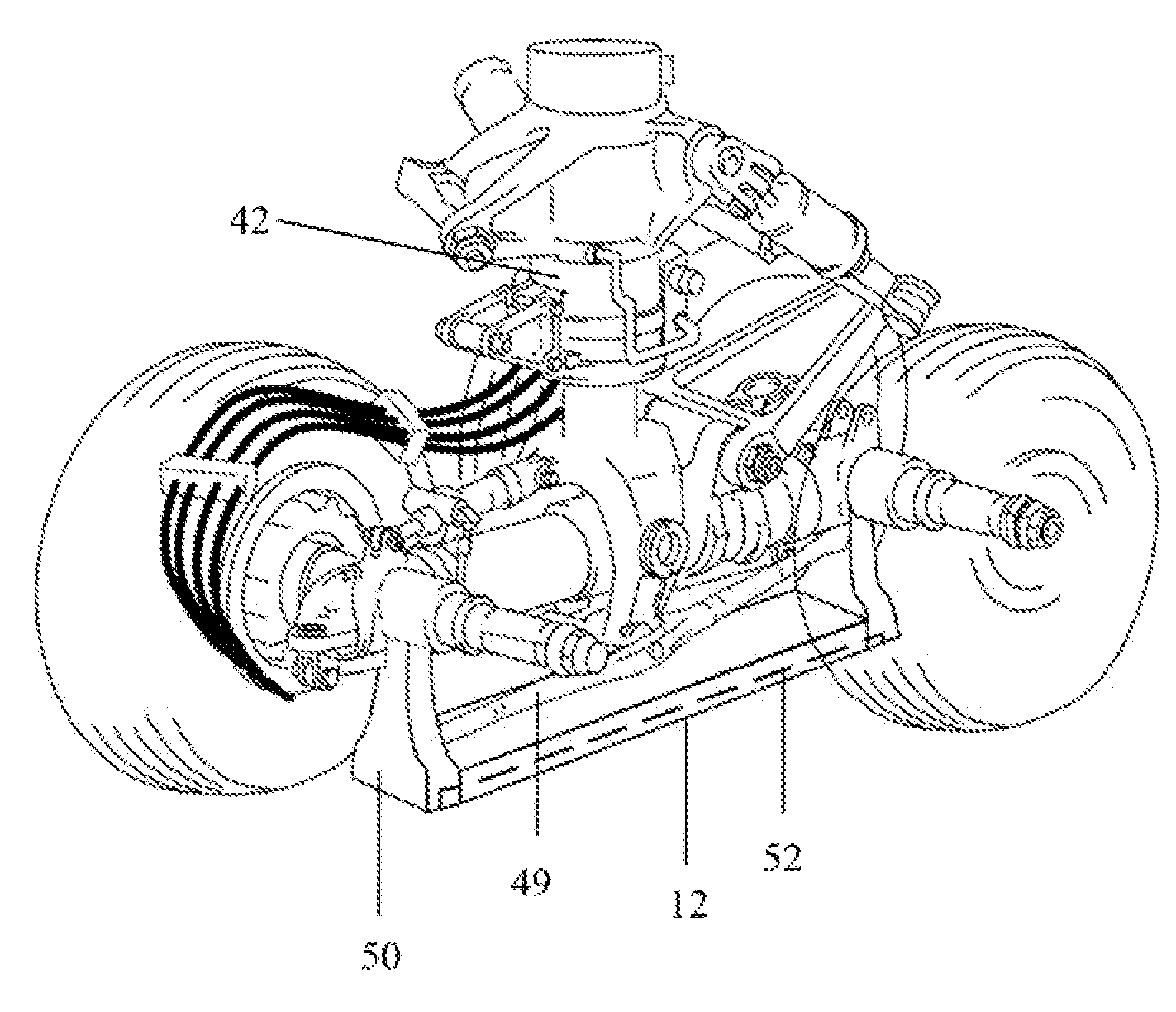
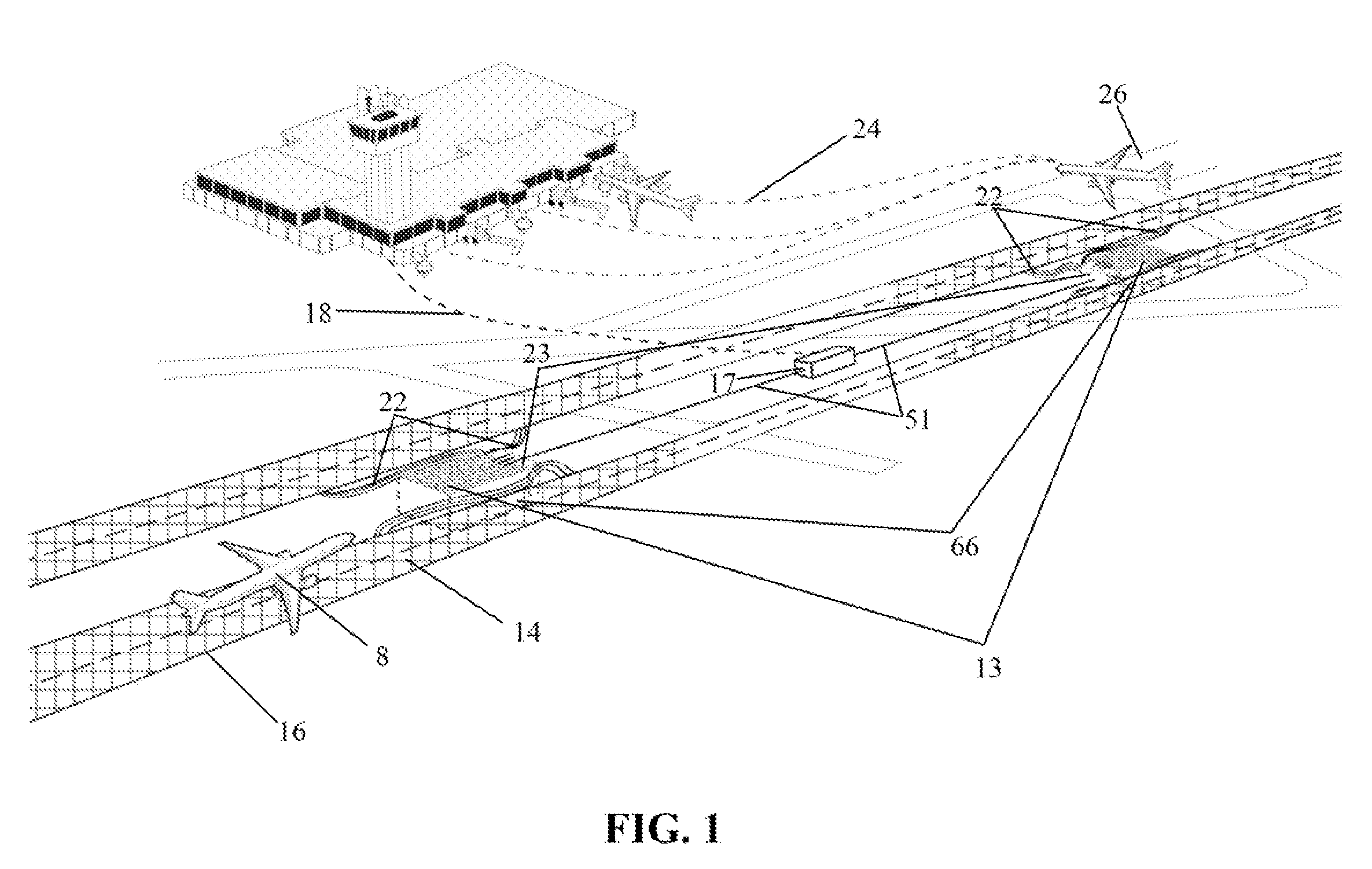
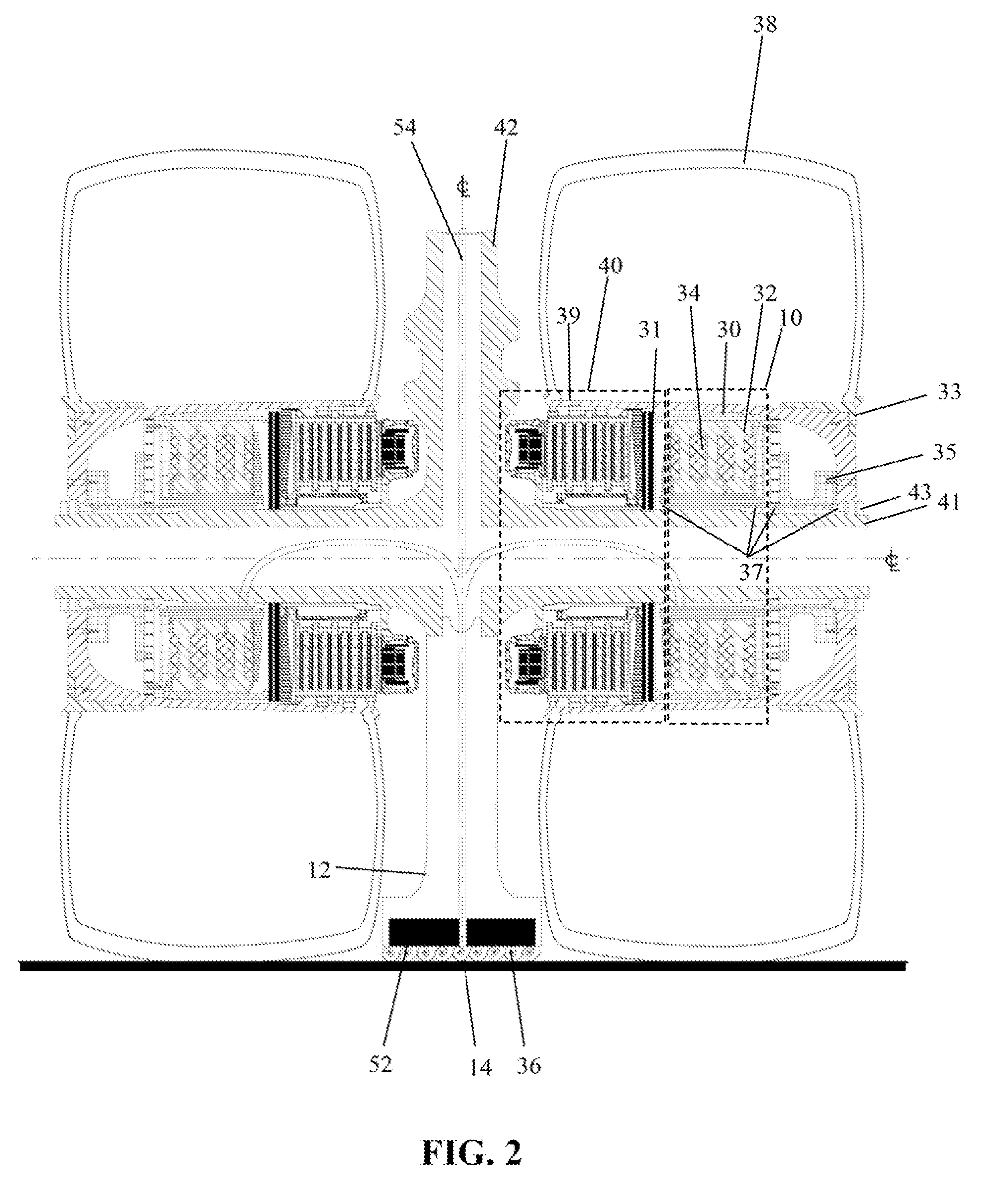
Aircraft kinetic landing energy conversion system
PatentActiveUS20080258014A1
Innovation
- A kinetic energy conversion, transfer, and storage system using wheel-mounted motor/generators to convert braking energy into electricity through inductive coupling, which is stored and reused for taxiing and takeoff thrust augmentation, reducing the need for traditional braking systems and energy consumption.

Systems and methods for braking aircraft, including braking intermediate main gears and differential braking
PatentInactiveUS20060186267A1
Innovation
- A controller system that differentially brakes the wheels of the left and right main landing gears and intermediate landing gears, allowing for customized braking forces during turns to enhance braking effectiveness and enable tighter turns.


Regulatory Framework
The regulatory framework for regenerative braking in aviation is a complex and evolving landscape that plays a crucial role in shaping the development and implementation of this technology. Aviation authorities worldwide, including the Federal Aviation Administration (FAA) in the United States and the European Union Aviation Safety Agency (EASA), are actively working to establish guidelines and standards for the integration of regenerative braking systems in aircraft.
Currently, there are no specific regulations directly addressing regenerative braking in aviation. However, existing regulations related to aircraft braking systems, energy storage, and electrical systems provide a foundation for the development of new standards. The FAA's Federal Aviation Regulations (FARs) and EASA's Certification Specifications (CS) contain provisions that indirectly apply to regenerative braking, such as those governing brake system performance, electrical system safety, and energy storage devices.
As the technology advances, regulatory bodies are expected to develop more specific guidelines for regenerative braking systems in aircraft. These regulations will likely focus on several key areas, including safety requirements, performance standards, and certification processes. Safety considerations will be paramount, addressing issues such as system reliability, failure modes, and integration with existing aircraft systems.
Performance standards for regenerative braking systems will need to be established to ensure consistent and reliable operation across different aircraft types and operating conditions. These standards may include specifications for energy recovery efficiency, braking force distribution, and system response times. Additionally, regulations will need to address the unique challenges posed by regenerative braking in aviation, such as the management of recovered energy and its integration with aircraft electrical systems.
The certification process for aircraft equipped with regenerative braking systems will likely require extensive testing and validation to demonstrate compliance with safety and performance standards. This may involve ground tests, flight tests, and simulations to evaluate the system's behavior under various operating conditions and failure scenarios.
Regulatory bodies are also expected to collaborate with industry stakeholders, including aircraft manufacturers, component suppliers, and airlines, to develop appropriate standards and guidelines. This collaborative approach will help ensure that regulations are both technically feasible and economically viable for the aviation industry.
As the technology matures, regulatory frameworks may need to evolve to address emerging challenges and opportunities. This could include updates to existing regulations or the creation of new standards specifically tailored to regenerative braking in aviation. The regulatory landscape will continue to play a critical role in shaping the adoption and implementation of this technology in the aviation sector.
Currently, there are no specific regulations directly addressing regenerative braking in aviation. However, existing regulations related to aircraft braking systems, energy storage, and electrical systems provide a foundation for the development of new standards. The FAA's Federal Aviation Regulations (FARs) and EASA's Certification Specifications (CS) contain provisions that indirectly apply to regenerative braking, such as those governing brake system performance, electrical system safety, and energy storage devices.
As the technology advances, regulatory bodies are expected to develop more specific guidelines for regenerative braking systems in aircraft. These regulations will likely focus on several key areas, including safety requirements, performance standards, and certification processes. Safety considerations will be paramount, addressing issues such as system reliability, failure modes, and integration with existing aircraft systems.
Performance standards for regenerative braking systems will need to be established to ensure consistent and reliable operation across different aircraft types and operating conditions. These standards may include specifications for energy recovery efficiency, braking force distribution, and system response times. Additionally, regulations will need to address the unique challenges posed by regenerative braking in aviation, such as the management of recovered energy and its integration with aircraft electrical systems.
The certification process for aircraft equipped with regenerative braking systems will likely require extensive testing and validation to demonstrate compliance with safety and performance standards. This may involve ground tests, flight tests, and simulations to evaluate the system's behavior under various operating conditions and failure scenarios.
Regulatory bodies are also expected to collaborate with industry stakeholders, including aircraft manufacturers, component suppliers, and airlines, to develop appropriate standards and guidelines. This collaborative approach will help ensure that regulations are both technically feasible and economically viable for the aviation industry.
As the technology matures, regulatory frameworks may need to evolve to address emerging challenges and opportunities. This could include updates to existing regulations or the creation of new standards specifically tailored to regenerative braking in aviation. The regulatory landscape will continue to play a critical role in shaping the adoption and implementation of this technology in the aviation sector.
Environmental Impact
The implementation of regenerative braking systems in aviation has the potential to significantly reduce the environmental impact of air travel. By capturing and reusing energy that would otherwise be lost during landing and deceleration, these systems can decrease fuel consumption and greenhouse gas emissions. Studies have shown that regenerative braking in aircraft could potentially reduce fuel consumption by up to 4% on short-haul flights, translating to substantial reductions in carbon dioxide emissions over time.
Furthermore, the adoption of regenerative braking technology in aviation aligns with global efforts to mitigate climate change. As the aviation industry faces increasing pressure to reduce its carbon footprint, this technology offers a promising avenue for improving energy efficiency and environmental performance. The reduced fuel consumption not only lowers emissions but also decreases the demand for fossil fuels, contributing to the conservation of non-renewable resources.
Another environmental benefit of regenerative braking in aviation is the potential reduction in noise pollution. Traditional braking systems in aircraft generate significant noise during landing, particularly in areas near airports. Regenerative braking systems, by converting kinetic energy into electrical energy, can potentially reduce the reliance on conventional friction brakes, thereby lowering noise levels during landing operations. This could have positive implications for communities living in proximity to airports, improving their quality of life and reducing the negative health impacts associated with noise pollution.
The implementation of regenerative braking systems may also lead to a reduction in the use of harmful materials in aircraft manufacturing and maintenance. Conventional braking systems often rely on materials that can be environmentally problematic, both in their production and disposal. By shifting towards regenerative braking technologies, the aviation industry could potentially reduce its reliance on these materials, leading to a decrease in the environmental impact of aircraft production and end-of-life disposal.
Moreover, the development and adoption of regenerative braking in aviation could spur further innovations in sustainable aviation technologies. As the industry invests in and refines these systems, it may lead to advancements in other areas of aircraft design and operation that prioritize environmental sustainability. This could include improvements in overall aircraft energy management, the integration of more electric systems, and the development of hybrid or fully electric aircraft in the future.
Furthermore, the adoption of regenerative braking technology in aviation aligns with global efforts to mitigate climate change. As the aviation industry faces increasing pressure to reduce its carbon footprint, this technology offers a promising avenue for improving energy efficiency and environmental performance. The reduced fuel consumption not only lowers emissions but also decreases the demand for fossil fuels, contributing to the conservation of non-renewable resources.
Another environmental benefit of regenerative braking in aviation is the potential reduction in noise pollution. Traditional braking systems in aircraft generate significant noise during landing, particularly in areas near airports. Regenerative braking systems, by converting kinetic energy into electrical energy, can potentially reduce the reliance on conventional friction brakes, thereby lowering noise levels during landing operations. This could have positive implications for communities living in proximity to airports, improving their quality of life and reducing the negative health impacts associated with noise pollution.
The implementation of regenerative braking systems may also lead to a reduction in the use of harmful materials in aircraft manufacturing and maintenance. Conventional braking systems often rely on materials that can be environmentally problematic, both in their production and disposal. By shifting towards regenerative braking technologies, the aviation industry could potentially reduce its reliance on these materials, leading to a decrease in the environmental impact of aircraft production and end-of-life disposal.
Moreover, the development and adoption of regenerative braking in aviation could spur further innovations in sustainable aviation technologies. As the industry invests in and refines these systems, it may lead to advancements in other areas of aircraft design and operation that prioritize environmental sustainability. This could include improvements in overall aircraft energy management, the integration of more electric systems, and the development of hybrid or fully electric aircraft in the future.
Unlock deeper insights with PatSnap Eureka Quick Research — get a full tech report to explore trends and direct your research. Try now!
Generate Your Research Report Instantly with AI Agent
Supercharge your innovation with PatSnap Eureka AI Agent Platform!