

The Future of Multiplexers in Quantum Computing
JUL 13, 20259 MIN READ
Generate Your Research Report Instantly with AI Agent
PatSnap Eureka helps you evaluate technical feasibility & market potential.
Quantum Multiplexer Evolution and Objectives
Quantum multiplexers have emerged as a critical component in the evolution of quantum computing, representing a significant leap forward in the manipulation and control of quantum information. The development of these devices traces back to the early days of quantum computing, when researchers first grappled with the challenge of efficiently routing and processing quantum bits (qubits) within complex quantum circuits.
As quantum computing has progressed, the role of multiplexers has become increasingly pivotal. These devices serve as the traffic controllers of quantum information, enabling the selective routing of quantum signals and facilitating the implementation of complex quantum algorithms. The evolution of quantum multiplexers has been closely tied to advancements in quantum gate operations, error correction techniques, and scalable qubit architectures.
The primary objective in the development of quantum multiplexers is to enhance the fidelity and efficiency of quantum information processing. This involves minimizing decoherence effects, reducing signal loss, and maintaining quantum coherence over extended periods. Researchers aim to create multiplexers capable of handling a growing number of qubits while preserving quantum states with high fidelity.
Another key goal is to improve the scalability of quantum systems. As quantum computers grow in complexity, the ability to efficiently route and manipulate quantum information becomes paramount. Advanced quantum multiplexers are expected to play a crucial role in realizing large-scale quantum processors, potentially enabling the implementation of quantum error correction codes and fault-tolerant quantum computation.
The integration of quantum multiplexers with classical control systems represents another significant objective. This hybrid approach aims to leverage the strengths of both quantum and classical computing paradigms, creating more robust and versatile quantum computing architectures. Researchers are exploring novel materials and fabrication techniques to enhance the performance and reliability of quantum multiplexers, with a focus on compatibility with existing semiconductor technologies.
Looking ahead, the future of quantum multiplexers is closely tied to the broader goals of quantum computing. This includes the development of quantum networks, where multiplexers will be essential for routing entangled quantum states across distributed quantum systems. Additionally, there is a growing interest in creating reconfigurable quantum circuits, where dynamic multiplexing capabilities could enable more flexible and adaptive quantum computations.
As quantum computing has progressed, the role of multiplexers has become increasingly pivotal. These devices serve as the traffic controllers of quantum information, enabling the selective routing of quantum signals and facilitating the implementation of complex quantum algorithms. The evolution of quantum multiplexers has been closely tied to advancements in quantum gate operations, error correction techniques, and scalable qubit architectures.
The primary objective in the development of quantum multiplexers is to enhance the fidelity and efficiency of quantum information processing. This involves minimizing decoherence effects, reducing signal loss, and maintaining quantum coherence over extended periods. Researchers aim to create multiplexers capable of handling a growing number of qubits while preserving quantum states with high fidelity.
Another key goal is to improve the scalability of quantum systems. As quantum computers grow in complexity, the ability to efficiently route and manipulate quantum information becomes paramount. Advanced quantum multiplexers are expected to play a crucial role in realizing large-scale quantum processors, potentially enabling the implementation of quantum error correction codes and fault-tolerant quantum computation.
The integration of quantum multiplexers with classical control systems represents another significant objective. This hybrid approach aims to leverage the strengths of both quantum and classical computing paradigms, creating more robust and versatile quantum computing architectures. Researchers are exploring novel materials and fabrication techniques to enhance the performance and reliability of quantum multiplexers, with a focus on compatibility with existing semiconductor technologies.
Looking ahead, the future of quantum multiplexers is closely tied to the broader goals of quantum computing. This includes the development of quantum networks, where multiplexers will be essential for routing entangled quantum states across distributed quantum systems. Additionally, there is a growing interest in creating reconfigurable quantum circuits, where dynamic multiplexing capabilities could enable more flexible and adaptive quantum computations.
Quantum Computing Market Demand Analysis
The quantum computing market is experiencing rapid growth and increasing demand, driven by the potential to revolutionize various industries through unprecedented computational power. As quantum systems become more sophisticated, the need for advanced multiplexing technologies in quantum computing is becoming increasingly critical.
The global quantum computing market is projected to expand significantly in the coming years, with estimates suggesting a compound annual growth rate (CAGR) of over 30% through 2030. This growth is fueled by substantial investments from both private and public sectors, as well as the increasing recognition of quantum computing's potential to solve complex problems in fields such as cryptography, drug discovery, financial modeling, and climate change research.
In the context of multiplexers for quantum computing, the market demand is closely tied to the overall growth of quantum systems. Multiplexers play a crucial role in managing and routing quantum information, enabling more efficient use of limited qubit resources and facilitating the scaling of quantum processors. As quantum computers move towards larger qubit counts and more complex architectures, the demand for advanced multiplexing solutions is expected to surge.
Several key factors are driving the market demand for multiplexers in quantum computing. Firstly, the push for quantum supremacy and practical quantum advantage is intensifying the need for more sophisticated control and readout systems, where multiplexers are essential components. Secondly, the growing interest in hybrid quantum-classical computing architectures requires efficient interfaces between quantum and classical systems, further emphasizing the importance of multiplexing technologies.
Industries such as finance, pharmaceuticals, and aerospace are showing particular interest in quantum computing applications, indirectly boosting the demand for enabling technologies like multiplexers. Financial institutions are exploring quantum algorithms for portfolio optimization and risk analysis, while pharmaceutical companies are leveraging quantum simulations for drug discovery processes. These applications require precise control and measurement of quantum states, driving the need for advanced multiplexing solutions.
The market for quantum computing multiplexers is also influenced by the increasing focus on error correction and fault-tolerant quantum computing. As researchers work towards building more reliable quantum systems, multiplexers play a crucial role in implementing error correction codes and managing the complex network of qubits and ancillary systems required for fault tolerance.
Furthermore, the development of cloud-based quantum computing services is creating new opportunities for multiplexer technologies. As quantum resources become accessible through cloud platforms, efficient multiplexing becomes essential for managing shared quantum hardware and optimizing resource allocation among multiple users.
In conclusion, the market demand for multiplexers in quantum computing is poised for significant growth, driven by the overall expansion of the quantum computing industry, the need for more sophisticated control and readout systems, and the push towards practical quantum applications across various sectors. As quantum technologies continue to advance, the role of multiplexers in enabling scalable and efficient quantum systems will become increasingly vital, presenting substantial opportunities for innovation and market growth in this specialized field.
The global quantum computing market is projected to expand significantly in the coming years, with estimates suggesting a compound annual growth rate (CAGR) of over 30% through 2030. This growth is fueled by substantial investments from both private and public sectors, as well as the increasing recognition of quantum computing's potential to solve complex problems in fields such as cryptography, drug discovery, financial modeling, and climate change research.
In the context of multiplexers for quantum computing, the market demand is closely tied to the overall growth of quantum systems. Multiplexers play a crucial role in managing and routing quantum information, enabling more efficient use of limited qubit resources and facilitating the scaling of quantum processors. As quantum computers move towards larger qubit counts and more complex architectures, the demand for advanced multiplexing solutions is expected to surge.
Several key factors are driving the market demand for multiplexers in quantum computing. Firstly, the push for quantum supremacy and practical quantum advantage is intensifying the need for more sophisticated control and readout systems, where multiplexers are essential components. Secondly, the growing interest in hybrid quantum-classical computing architectures requires efficient interfaces between quantum and classical systems, further emphasizing the importance of multiplexing technologies.
Industries such as finance, pharmaceuticals, and aerospace are showing particular interest in quantum computing applications, indirectly boosting the demand for enabling technologies like multiplexers. Financial institutions are exploring quantum algorithms for portfolio optimization and risk analysis, while pharmaceutical companies are leveraging quantum simulations for drug discovery processes. These applications require precise control and measurement of quantum states, driving the need for advanced multiplexing solutions.
The market for quantum computing multiplexers is also influenced by the increasing focus on error correction and fault-tolerant quantum computing. As researchers work towards building more reliable quantum systems, multiplexers play a crucial role in implementing error correction codes and managing the complex network of qubits and ancillary systems required for fault tolerance.
Furthermore, the development of cloud-based quantum computing services is creating new opportunities for multiplexer technologies. As quantum resources become accessible through cloud platforms, efficient multiplexing becomes essential for managing shared quantum hardware and optimizing resource allocation among multiple users.
In conclusion, the market demand for multiplexers in quantum computing is poised for significant growth, driven by the overall expansion of the quantum computing industry, the need for more sophisticated control and readout systems, and the push towards practical quantum applications across various sectors. As quantum technologies continue to advance, the role of multiplexers in enabling scalable and efficient quantum systems will become increasingly vital, presenting substantial opportunities for innovation and market growth in this specialized field.
Quantum Multiplexer Challenges and Limitations
Quantum multiplexers face significant challenges and limitations in their development and implementation within quantum computing systems. One of the primary obstacles is maintaining quantum coherence during the multiplexing process. As quantum states are inherently fragile, any interaction with the environment or external systems can lead to decoherence, causing the loss of quantum information. This issue becomes particularly acute when dealing with multiple qubits and complex quantum circuits.
Another major challenge lies in the scalability of quantum multiplexers. As quantum computers grow in size and complexity, the number of qubits that need to be multiplexed increases exponentially. This scaling problem puts immense pressure on the design and fabrication of quantum multiplexers, requiring innovative approaches to handle larger qubit arrays without compromising performance or introducing additional sources of error.
The precision and control required for quantum multiplexing operations present another significant hurdle. Quantum gates and operations must be executed with extremely high fidelity to maintain the integrity of quantum computations. Any imperfections or errors in the multiplexing process can propagate through the system, leading to unreliable results. Achieving the necessary level of precision in quantum multiplexer design and operation remains a formidable technical challenge.
Furthermore, the integration of quantum multiplexers with other quantum computing components poses substantial difficulties. Ensuring compatibility and seamless interaction between multiplexers and various quantum gates, readout systems, and control electronics requires careful engineering and novel interfacing techniques. This integration challenge is compounded by the diverse range of quantum computing architectures and implementations currently under development.
Thermal management and noise reduction represent additional limitations in quantum multiplexer design. Quantum systems typically operate at extremely low temperatures to minimize thermal noise and maintain qubit coherence. However, the introduction of multiplexing components can potentially introduce heat and electromagnetic interference, disrupting the delicate quantum states. Developing effective cooling and shielding strategies for quantum multiplexers without compromising their functionality is a critical area of ongoing research.
Lastly, the fabrication and manufacturing of quantum multiplexers present significant technological barriers. The production of these components requires extreme precision and advanced fabrication techniques, often pushing the limits of current semiconductor manufacturing capabilities. Achieving consistent and reliable production of quantum multiplexers at scale remains a major challenge for the industry, impacting the overall progress of quantum computing technology.
Another major challenge lies in the scalability of quantum multiplexers. As quantum computers grow in size and complexity, the number of qubits that need to be multiplexed increases exponentially. This scaling problem puts immense pressure on the design and fabrication of quantum multiplexers, requiring innovative approaches to handle larger qubit arrays without compromising performance or introducing additional sources of error.
The precision and control required for quantum multiplexing operations present another significant hurdle. Quantum gates and operations must be executed with extremely high fidelity to maintain the integrity of quantum computations. Any imperfections or errors in the multiplexing process can propagate through the system, leading to unreliable results. Achieving the necessary level of precision in quantum multiplexer design and operation remains a formidable technical challenge.
Furthermore, the integration of quantum multiplexers with other quantum computing components poses substantial difficulties. Ensuring compatibility and seamless interaction between multiplexers and various quantum gates, readout systems, and control electronics requires careful engineering and novel interfacing techniques. This integration challenge is compounded by the diverse range of quantum computing architectures and implementations currently under development.
Thermal management and noise reduction represent additional limitations in quantum multiplexer design. Quantum systems typically operate at extremely low temperatures to minimize thermal noise and maintain qubit coherence. However, the introduction of multiplexing components can potentially introduce heat and electromagnetic interference, disrupting the delicate quantum states. Developing effective cooling and shielding strategies for quantum multiplexers without compromising their functionality is a critical area of ongoing research.
Lastly, the fabrication and manufacturing of quantum multiplexers present significant technological barriers. The production of these components requires extreme precision and advanced fabrication techniques, often pushing the limits of current semiconductor manufacturing capabilities. Achieving consistent and reliable production of quantum multiplexers at scale remains a major challenge for the industry, impacting the overall progress of quantum computing technology.
Current Quantum Multiplexer Architectures
01 Design and implementation of multiplexers in integrated circuits
Multiplexers are essential components in integrated circuits for signal routing and data selection. They are designed to select one of several input signals and forward it to a single output. Various design techniques are employed to optimize multiplexer performance, including reducing power consumption, minimizing propagation delay, and improving signal integrity.- Design and implementation of multiplexers in integrated circuits: Multiplexers are essential components in integrated circuits for signal routing and data selection. They are designed to select one of several input signals and forward it to a single output. Various techniques are employed to optimize multiplexer performance, including reducing propagation delay, minimizing power consumption, and improving signal integrity.
- Multiplexers in optical communication systems: In optical communication systems, multiplexers play a crucial role in combining multiple optical signals onto a single fiber. These devices enable efficient use of bandwidth and allow for the transmission of multiple data streams simultaneously. Advanced multiplexing techniques are employed to increase data capacity and improve signal quality in fiber-optic networks.
- Multiplexers in digital signal processing: Digital signal processing applications utilize multiplexers for tasks such as data selection, routing, and combining multiple input streams. These multiplexers are often implemented in programmable logic devices or application-specific integrated circuits (ASICs) to achieve high-speed operation and flexibility in signal manipulation.
- Reconfigurable and programmable multiplexers: Reconfigurable and programmable multiplexers offer enhanced flexibility in system design. These devices can be dynamically configured to adapt to changing requirements, making them suitable for applications such as software-defined radio, adaptive signal processing, and reconfigurable computing platforms.
- Multiplexers in memory systems and data buses: Multiplexers are utilized in memory systems and data buses to manage data flow, select between multiple memory banks, and control access to shared resources. They play a crucial role in optimizing memory bandwidth, reducing latency, and improving overall system performance in computer architectures and data storage systems.
02 Multiplexers in optical communication systems
Multiplexers play a crucial role in optical communication systems by combining multiple optical signals onto a single fiber. These devices enable efficient use of bandwidth and allow for the transmission of multiple data streams simultaneously. Advanced multiplexing techniques are used to increase data capacity and improve signal quality in fiber-optic networks.Expand Specific Solutions03 Programmable logic devices incorporating multiplexers
Programmable logic devices, such as FPGAs, extensively use multiplexers to implement configurable logic functions. These multiplexers allow for dynamic routing of signals and enable the creation of complex logic circuits. The design of efficient multiplexer structures is crucial for optimizing the performance and resource utilization of programmable logic devices.Expand Specific Solutions04 Multiplexers in memory systems and data processing
Multiplexers are widely used in memory systems and data processing units to control data flow and address selection. They play a vital role in memory access operations, cache management, and data routing within processors. Efficient multiplexer designs contribute to improved memory bandwidth and reduced latency in computing systems.Expand Specific Solutions05 Multiplexing techniques in wireless communication
In wireless communication systems, multiplexing techniques are employed to efficiently utilize the available spectrum and increase system capacity. Various multiplexing schemes, such as time-division multiplexing (TDM) and frequency-division multiplexing (FDM), are used to combine multiple data streams for transmission over a shared medium. Advanced multiplexing techniques contribute to improved data rates and spectral efficiency in wireless networks.Expand Specific Solutions
Key Players in Quantum Multiplexer Development
The quantum computing multiplexer market is in its early growth stage, characterized by rapid technological advancements and increasing investments. The market size is expanding, driven by growing demand for quantum computing applications across various industries. While still relatively small, it is expected to grow significantly in the coming years. Technologically, multiplexers for quantum computing are evolving rapidly, with companies like IBM, Intel, and D-Wave Systems leading the way. These firms are developing increasingly sophisticated multiplexer designs to address the challenges of quantum information processing. Other players such as 1QB Information Technologies and IQM Finland are also making notable contributions, indicating a competitive and innovative landscape.
International Business Machines Corp.
Technical Solution: IBM is pioneering the development of quantum multiplexers for scalable quantum computing. Their approach involves using superconducting qubits and frequency-domain multiplexing to control multiple qubits with a single control line[1]. This technique allows for the manipulation of individual qubits without crosstalk, a crucial factor in maintaining quantum coherence. IBM's quantum multiplexers utilize resonant circuits to selectively address qubits, enabling precise control over quantum operations[2]. The company has demonstrated the ability to control up to 8 qubits with a single control line, significantly reducing the number of physical connections required in a quantum processor[3]. IBM is also exploring time-domain multiplexing techniques to further enhance the scalability of their quantum systems.
Strengths: Advanced superconducting qubit technology, proven scalability, and reduced hardware complexity. Weaknesses: Requires extremely low temperatures for operation, and potential limitations in qubit connectivity.
Intel Corp.
Technical Solution: Intel is developing silicon-based quantum multiplexers as part of their spin qubit technology. Their approach focuses on leveraging existing semiconductor manufacturing processes to create scalable quantum systems[4]. Intel's quantum multiplexers use electrical gates to control the coupling between qubits and readout resonators, allowing for selective qubit addressing and measurement[5]. The company has demonstrated the ability to multiplex control and readout signals for multiple qubits on a single chip, reducing the number of input/output lines required[6]. Intel is also exploring cryogenic control electronics to integrate multiplexing capabilities closer to the quantum processor, potentially improving system performance and scalability.
Strengths: Compatibility with existing semiconductor manufacturing, potential for room temperature operation, and scalability. Weaknesses: Lower qubit coherence times compared to superconducting qubits, and challenges in achieving high-fidelity qubit operations.
Breakthrough Quantum Multiplexer Innovations
Computer language and code for application development and electronic and optical communication
PatentActiveUS20240004617A1
Innovation
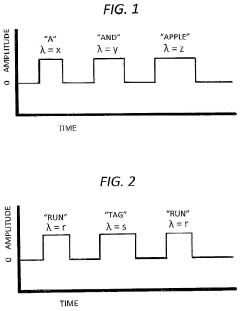
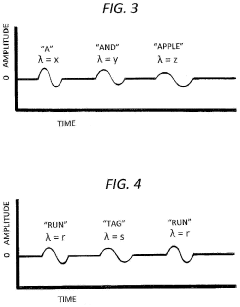
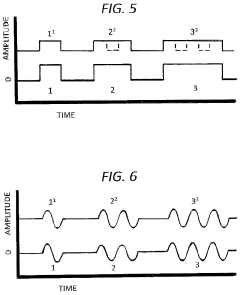
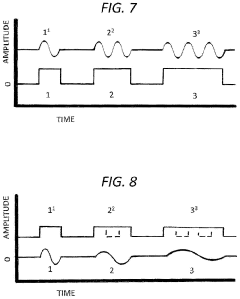
- A computer language and code that represents data using waveforms with specific frequencies and wavelengths in the electromagnetic spectrum, allowing for the representation of letters, words, and numbers using fewer bits, and enabling communication through optical and quantum computing by converting data into photonic or sine wave forms.
Demultiplexer using current sample/hold circuit, and display device using the same
PatentInactiveUS7342559B2
Innovation
- A demultiplexer unit with first and second circuit groups that sample and program data current in alternating orders between frames or sub-frames, ensuring consistent current distribution across data lines, thereby eliminating vertical stripes and maintaining data programming time without reducing the number of ICs in the data driver.


Quantum Error Correction in Multiplexers
Quantum error correction in multiplexers represents a critical frontier in the development of robust quantum computing systems. As quantum systems scale up, the need for efficient error correction mechanisms becomes paramount. Multiplexers, which allow for the selection and routing of multiple input signals to a single output, play a crucial role in this context.
The primary challenge in quantum error correction for multiplexers lies in maintaining quantum coherence while performing the necessary operations. Traditional error correction codes, such as the surface code, must be adapted to work effectively within the multiplexer architecture. This adaptation involves developing new protocols that can handle the unique constraints and opportunities presented by multiplexer-based quantum circuits.
One promising approach is the use of topological quantum error correction codes in multiplexer systems. These codes leverage the spatial arrangement of qubits to provide inherent protection against certain types of errors. By carefully designing the multiplexer layout to accommodate topological codes, researchers aim to achieve higher error thresholds and more efficient error correction.
Another area of focus is the development of dynamic error correction techniques specifically tailored for multiplexers. These methods involve real-time adjustment of error correction strategies based on the current state of the quantum system and the specific routing configuration of the multiplexer. This adaptive approach could significantly enhance the overall stability and reliability of quantum computations.
The integration of machine learning algorithms into quantum error correction for multiplexers is also gaining traction. These algorithms can be trained to recognize error patterns and optimize correction strategies on the fly, potentially leading to more efficient and effective error mitigation in complex multiplexer-based quantum circuits.
Researchers are also exploring the use of quantum feedback control in multiplexer error correction. This technique involves continuously monitoring the quantum state and applying corrective operations in real-time, which could be particularly beneficial in managing the dynamic nature of multiplexed quantum systems.
As quantum computing systems continue to grow in complexity, the role of multiplexers in error correction is likely to become increasingly important. Future developments may include the creation of specialized quantum multiplexers designed specifically for error correction tasks, potentially revolutionizing the field of quantum error mitigation and bringing us closer to the realization of large-scale, fault-tolerant quantum computers.
The primary challenge in quantum error correction for multiplexers lies in maintaining quantum coherence while performing the necessary operations. Traditional error correction codes, such as the surface code, must be adapted to work effectively within the multiplexer architecture. This adaptation involves developing new protocols that can handle the unique constraints and opportunities presented by multiplexer-based quantum circuits.
One promising approach is the use of topological quantum error correction codes in multiplexer systems. These codes leverage the spatial arrangement of qubits to provide inherent protection against certain types of errors. By carefully designing the multiplexer layout to accommodate topological codes, researchers aim to achieve higher error thresholds and more efficient error correction.
Another area of focus is the development of dynamic error correction techniques specifically tailored for multiplexers. These methods involve real-time adjustment of error correction strategies based on the current state of the quantum system and the specific routing configuration of the multiplexer. This adaptive approach could significantly enhance the overall stability and reliability of quantum computations.
The integration of machine learning algorithms into quantum error correction for multiplexers is also gaining traction. These algorithms can be trained to recognize error patterns and optimize correction strategies on the fly, potentially leading to more efficient and effective error mitigation in complex multiplexer-based quantum circuits.
Researchers are also exploring the use of quantum feedback control in multiplexer error correction. This technique involves continuously monitoring the quantum state and applying corrective operations in real-time, which could be particularly beneficial in managing the dynamic nature of multiplexed quantum systems.
As quantum computing systems continue to grow in complexity, the role of multiplexers in error correction is likely to become increasingly important. Future developments may include the creation of specialized quantum multiplexers designed specifically for error correction tasks, potentially revolutionizing the field of quantum error mitigation and bringing us closer to the realization of large-scale, fault-tolerant quantum computers.
Scalability of Quantum Multiplexer Systems
The scalability of quantum multiplexer systems is a critical factor in the advancement of quantum computing technology. As quantum computers grow in complexity and qubit count, the ability to efficiently route and control quantum information becomes increasingly challenging. Quantum multiplexers play a crucial role in addressing this challenge by enabling the selective routing of quantum signals and control pulses to specific qubits or groups of qubits within a quantum processor.
One of the primary scalability concerns for quantum multiplexer systems is the need to maintain coherence and minimize decoherence effects as the number of qubits increases. Traditional multiplexing techniques used in classical computing may not be directly applicable due to the delicate nature of quantum states. Researchers are exploring novel approaches to quantum multiplexing that can preserve quantum coherence while efficiently managing the routing of quantum information.
Frequency-domain multiplexing has shown promise in quantum systems, allowing for the simultaneous control of multiple qubits using different frequencies. This approach can potentially scale to larger qubit counts by utilizing a wider frequency spectrum. However, challenges remain in terms of crosstalk between adjacent frequency channels and the need for precise frequency control.
Time-domain multiplexing techniques are also being investigated for quantum systems, where control pulses are applied to different qubits at specific time intervals. This method can be effective for smaller-scale systems but may face limitations as the number of qubits grows, due to increased latency and potential timing conflicts.
Spatial multiplexing strategies, such as using multiple control lines or optical pathways, offer another avenue for scaling quantum multiplexer systems. These approaches can provide dedicated channels for different qubits or qubit groups, potentially reducing crosstalk and improving control fidelity. However, the physical implementation of such systems becomes more complex as the qubit count increases, presenting challenges in terms of fabrication and integration.
As quantum processors scale to hundreds or thousands of qubits, hierarchical multiplexing architectures are being explored. These designs combine different multiplexing techniques at various levels of the quantum system, potentially offering a more scalable solution for large-scale quantum computers. For example, a combination of frequency-domain multiplexing for global control and spatial multiplexing for local qubit addressing could provide a balance between scalability and control precision.
The development of advanced materials and fabrication techniques is crucial for improving the scalability of quantum multiplexer systems. Superconducting materials with higher coherence times and reduced losses can enhance the performance of multiplexing components. Additionally, advances in nanofabrication technologies may enable the creation of more compact and efficient quantum multiplexer designs, facilitating integration with larger-scale quantum processors.
One of the primary scalability concerns for quantum multiplexer systems is the need to maintain coherence and minimize decoherence effects as the number of qubits increases. Traditional multiplexing techniques used in classical computing may not be directly applicable due to the delicate nature of quantum states. Researchers are exploring novel approaches to quantum multiplexing that can preserve quantum coherence while efficiently managing the routing of quantum information.
Frequency-domain multiplexing has shown promise in quantum systems, allowing for the simultaneous control of multiple qubits using different frequencies. This approach can potentially scale to larger qubit counts by utilizing a wider frequency spectrum. However, challenges remain in terms of crosstalk between adjacent frequency channels and the need for precise frequency control.
Time-domain multiplexing techniques are also being investigated for quantum systems, where control pulses are applied to different qubits at specific time intervals. This method can be effective for smaller-scale systems but may face limitations as the number of qubits grows, due to increased latency and potential timing conflicts.
Spatial multiplexing strategies, such as using multiple control lines or optical pathways, offer another avenue for scaling quantum multiplexer systems. These approaches can provide dedicated channels for different qubits or qubit groups, potentially reducing crosstalk and improving control fidelity. However, the physical implementation of such systems becomes more complex as the qubit count increases, presenting challenges in terms of fabrication and integration.
As quantum processors scale to hundreds or thousands of qubits, hierarchical multiplexing architectures are being explored. These designs combine different multiplexing techniques at various levels of the quantum system, potentially offering a more scalable solution for large-scale quantum computers. For example, a combination of frequency-domain multiplexing for global control and spatial multiplexing for local qubit addressing could provide a balance between scalability and control precision.
The development of advanced materials and fabrication techniques is crucial for improving the scalability of quantum multiplexer systems. Superconducting materials with higher coherence times and reduced losses can enhance the performance of multiplexing components. Additionally, advances in nanofabrication technologies may enable the creation of more compact and efficient quantum multiplexer designs, facilitating integration with larger-scale quantum processors.
Unlock deeper insights with PatSnap Eureka Quick Research — get a full tech report to explore trends and direct your research. Try now!
Generate Your Research Report Instantly with AI Agent
Supercharge your innovation with PatSnap Eureka AI Agent Platform!