Thermal Runaway Containment: Testing Isolation Methods
FEB 26, 20269 MIN READ
Generate Your Research Report Instantly with AI Agent
PatSnap Eureka helps you evaluate technical feasibility & market potential.
Thermal Runaway Background and Safety Goals
Thermal runaway represents one of the most critical safety challenges in lithium-ion battery technology, characterized by an uncontrolled exothermic reaction that can lead to catastrophic failure. This phenomenon occurs when a battery cell experiences excessive heat generation, triggering a self-sustaining chain reaction where rising temperatures accelerate chemical decomposition, generating additional heat and potentially toxic gases. The process typically initiates from various triggers including mechanical abuse, electrical overcharge, manufacturing defects, or exposure to extreme temperatures.
The evolution of battery technology has significantly amplified thermal runaway concerns, particularly as energy density increases and applications expand into high-capacity systems such as electric vehicles, grid storage, and aerospace applications. Historical incidents, including notable electric vehicle fires and energy storage system failures, have underscored the urgent need for comprehensive thermal management and containment strategies. These events have catalyzed regulatory attention and industry-wide safety initiatives.
Current safety frameworks establish multiple protection layers, ranging from cell-level safety mechanisms to system-level thermal management. However, the fundamental challenge lies in preventing thermal runaway propagation between adjacent cells, which can transform a single-cell failure into a system-wide catastrophic event. Traditional approaches have focused primarily on prevention rather than containment, leaving significant gaps in safety architecture when initial prevention measures fail.
The primary safety objective centers on developing robust isolation methods that can effectively contain thermal runaway events within individual cells or small cell groups, preventing cascade failures across entire battery systems. This requires achieving thermal barriers capable of withstanding extreme temperatures exceeding 800°C while maintaining structural integrity under rapid thermal expansion and potential explosive forces.
Secondary goals include minimizing toxic gas emissions, maintaining system functionality in non-affected areas, and enabling safe evacuation or emergency response procedures. Advanced containment strategies must also consider weight and space constraints, particularly in automotive and aerospace applications where every gram and cubic centimeter impacts overall system performance.
The ultimate technical target involves creating predictable, testable isolation methods that can be validated through standardized testing protocols, ensuring consistent performance across different battery chemistries, form factors, and operating environments while maintaining cost-effectiveness for commercial deployment.
The evolution of battery technology has significantly amplified thermal runaway concerns, particularly as energy density increases and applications expand into high-capacity systems such as electric vehicles, grid storage, and aerospace applications. Historical incidents, including notable electric vehicle fires and energy storage system failures, have underscored the urgent need for comprehensive thermal management and containment strategies. These events have catalyzed regulatory attention and industry-wide safety initiatives.
Current safety frameworks establish multiple protection layers, ranging from cell-level safety mechanisms to system-level thermal management. However, the fundamental challenge lies in preventing thermal runaway propagation between adjacent cells, which can transform a single-cell failure into a system-wide catastrophic event. Traditional approaches have focused primarily on prevention rather than containment, leaving significant gaps in safety architecture when initial prevention measures fail.
The primary safety objective centers on developing robust isolation methods that can effectively contain thermal runaway events within individual cells or small cell groups, preventing cascade failures across entire battery systems. This requires achieving thermal barriers capable of withstanding extreme temperatures exceeding 800°C while maintaining structural integrity under rapid thermal expansion and potential explosive forces.
Secondary goals include minimizing toxic gas emissions, maintaining system functionality in non-affected areas, and enabling safe evacuation or emergency response procedures. Advanced containment strategies must also consider weight and space constraints, particularly in automotive and aerospace applications where every gram and cubic centimeter impacts overall system performance.
The ultimate technical target involves creating predictable, testable isolation methods that can be validated through standardized testing protocols, ensuring consistent performance across different battery chemistries, form factors, and operating environments while maintaining cost-effectiveness for commercial deployment.
Market Demand for Battery Safety Solutions
The global battery safety solutions market has experienced unprecedented growth driven by the rapid expansion of electric vehicles, energy storage systems, and portable electronics. This surge in battery-powered applications has intensified focus on thermal runaway prevention and containment technologies, creating substantial market opportunities for innovative safety solutions.
Electric vehicle manufacturers represent the largest demand segment for thermal runaway containment solutions. Automotive OEMs are increasingly implementing multi-layered safety approaches, including advanced battery management systems, thermal barriers, and isolation methods to prevent cascading failures. The stringent safety regulations in major automotive markets have made thermal runaway testing and validation mandatory components of vehicle certification processes.
Energy storage system operators constitute another critical market segment driving demand for isolation testing methodologies. Grid-scale battery installations require robust containment strategies to protect infrastructure investments and ensure operational continuity. The growing deployment of residential and commercial energy storage systems has further expanded the addressable market for thermal runaway containment technologies.
Consumer electronics manufacturers continue to seek miniaturized safety solutions that can be integrated into increasingly compact device designs. The demand for lightweight, space-efficient thermal barriers and isolation materials has created opportunities for advanced material science applications in thermal runaway prevention.
Regulatory frameworks across different regions are establishing more stringent safety testing requirements, creating mandatory market demand for thermal runaway containment validation services. Testing laboratories and certification bodies are expanding their capabilities to meet these evolving regulatory standards, driving demand for standardized testing methodologies and equipment.
The market demand extends beyond hardware solutions to encompass testing services, simulation software, and consulting expertise. Companies require comprehensive thermal runaway characterization studies to optimize their containment strategies and demonstrate compliance with safety standards. This has created a substantial services market supporting the broader thermal runaway containment ecosystem.
Insurance companies and financial institutions are increasingly requiring demonstrated thermal runaway containment capabilities as prerequisites for coverage and investment decisions. This risk management approach has transformed safety solutions from optional features into essential business requirements, further solidifying market demand across all battery-dependent industries.
Electric vehicle manufacturers represent the largest demand segment for thermal runaway containment solutions. Automotive OEMs are increasingly implementing multi-layered safety approaches, including advanced battery management systems, thermal barriers, and isolation methods to prevent cascading failures. The stringent safety regulations in major automotive markets have made thermal runaway testing and validation mandatory components of vehicle certification processes.
Energy storage system operators constitute another critical market segment driving demand for isolation testing methodologies. Grid-scale battery installations require robust containment strategies to protect infrastructure investments and ensure operational continuity. The growing deployment of residential and commercial energy storage systems has further expanded the addressable market for thermal runaway containment technologies.
Consumer electronics manufacturers continue to seek miniaturized safety solutions that can be integrated into increasingly compact device designs. The demand for lightweight, space-efficient thermal barriers and isolation materials has created opportunities for advanced material science applications in thermal runaway prevention.
Regulatory frameworks across different regions are establishing more stringent safety testing requirements, creating mandatory market demand for thermal runaway containment validation services. Testing laboratories and certification bodies are expanding their capabilities to meet these evolving regulatory standards, driving demand for standardized testing methodologies and equipment.
The market demand extends beyond hardware solutions to encompass testing services, simulation software, and consulting expertise. Companies require comprehensive thermal runaway characterization studies to optimize their containment strategies and demonstrate compliance with safety standards. This has created a substantial services market supporting the broader thermal runaway containment ecosystem.
Insurance companies and financial institutions are increasingly requiring demonstrated thermal runaway containment capabilities as prerequisites for coverage and investment decisions. This risk management approach has transformed safety solutions from optional features into essential business requirements, further solidifying market demand across all battery-dependent industries.
Current Thermal Runaway Challenges and Limitations
Current thermal runaway containment technologies face significant limitations in detection speed and response mechanisms. Traditional thermal sensors often exhibit delayed response times, typically requiring 30-60 seconds to detect temperature anomalies, which proves insufficient given that thermal runaway can propagate within milliseconds. This detection lag creates critical safety gaps where containment measures cannot be activated promptly enough to prevent cascading failures across battery systems.
Existing isolation methods demonstrate inconsistent performance across different battery chemistries and configurations. Conventional fire suppression systems, primarily designed for traditional fires, show reduced effectiveness against lithium-ion battery thermal events due to the unique combustion characteristics and gas emissions. Current suppression agents like CO2 and dry chemical powders often fail to adequately cool the battery cells or prevent re-ignition, particularly in high-energy density applications.
Structural containment solutions present substantial design constraints that limit their practical implementation. Current barrier materials, while offering some protection, add significant weight and volume to battery systems, directly impacting energy density and overall system efficiency. These materials often struggle to maintain integrity under extreme temperature conditions exceeding 800°C, which are commonly reached during severe thermal runaway events.
Testing methodologies for thermal runaway containment reveal critical standardization gaps across the industry. Current testing protocols lack consistency in simulating real-world failure scenarios, often relying on simplified heating methods that do not accurately replicate the complex thermal and chemical dynamics of actual battery failures. This limitation results in containment solutions that may perform well in laboratory conditions but fail under practical deployment scenarios.
Scalability challenges emerge when transitioning from single-cell protection to large-scale battery systems. Current isolation technologies demonstrate effectiveness at the individual cell level but face significant technical hurdles when applied to multi-module configurations typical in electric vehicles and energy storage systems. The complexity of managing thermal propagation across hundreds or thousands of cells requires sophisticated coordination mechanisms that current technologies cannot adequately address.
Integration limitations with existing battery management systems create additional operational constraints. Current thermal runaway detection and containment systems often operate independently from primary battery monitoring infrastructure, leading to delayed response coordination and potential system conflicts during emergency situations.
Existing isolation methods demonstrate inconsistent performance across different battery chemistries and configurations. Conventional fire suppression systems, primarily designed for traditional fires, show reduced effectiveness against lithium-ion battery thermal events due to the unique combustion characteristics and gas emissions. Current suppression agents like CO2 and dry chemical powders often fail to adequately cool the battery cells or prevent re-ignition, particularly in high-energy density applications.
Structural containment solutions present substantial design constraints that limit their practical implementation. Current barrier materials, while offering some protection, add significant weight and volume to battery systems, directly impacting energy density and overall system efficiency. These materials often struggle to maintain integrity under extreme temperature conditions exceeding 800°C, which are commonly reached during severe thermal runaway events.
Testing methodologies for thermal runaway containment reveal critical standardization gaps across the industry. Current testing protocols lack consistency in simulating real-world failure scenarios, often relying on simplified heating methods that do not accurately replicate the complex thermal and chemical dynamics of actual battery failures. This limitation results in containment solutions that may perform well in laboratory conditions but fail under practical deployment scenarios.
Scalability challenges emerge when transitioning from single-cell protection to large-scale battery systems. Current isolation technologies demonstrate effectiveness at the individual cell level but face significant technical hurdles when applied to multi-module configurations typical in electric vehicles and energy storage systems. The complexity of managing thermal propagation across hundreds or thousands of cells requires sophisticated coordination mechanisms that current technologies cannot adequately address.
Integration limitations with existing battery management systems create additional operational constraints. Current thermal runaway detection and containment systems often operate independently from primary battery monitoring infrastructure, leading to delayed response coordination and potential system conflicts during emergency situations.
Existing Thermal Isolation Testing Methods
01 Physical barrier structures for thermal runaway containment
Implementation of physical barriers and containment structures designed to isolate battery cells or modules experiencing thermal runaway. These structures include fire-resistant walls, compartmentalization designs, and isolation chambers that prevent the propagation of thermal events from one cell to adjacent cells. The barriers are typically made from heat-resistant materials that can withstand high temperatures and prevent flame spread.- Physical barrier structures for thermal runaway containment: Implementation of physical barriers and containment structures designed to isolate battery cells or modules experiencing thermal runaway. These structures include fire-resistant walls, compartmentalization designs, and isolation chambers that prevent the propagation of thermal events from one cell to adjacent cells. The barriers are typically made from heat-resistant materials that can withstand high temperatures and prevent flame spread.
- Thermal insulation materials and coatings: Use of specialized thermal insulation materials and protective coatings to create thermal barriers between battery components. These materials include aerogels, ceramic composites, intumescent coatings, and phase change materials that absorb heat and slow down thermal propagation. The insulation layers are strategically placed to contain heat within a localized area and prevent cascade failures.
- Active cooling and heat dissipation systems: Integration of active cooling mechanisms and heat dissipation systems to manage and contain thermal runaway events. These systems include liquid cooling channels, heat pipes, forced air circulation, and refrigerant-based cooling that actively remove heat from affected areas. The cooling systems are designed to activate upon detection of abnormal temperature rises to prevent thermal propagation.
- Venting and pressure relief mechanisms: Design of controlled venting systems and pressure relief mechanisms that safely release gases and heat generated during thermal runaway while containing the event. These mechanisms include rupture discs, pressure relief valves, directional venting channels, and flame arrestors that allow controlled release of thermal energy and combustible gases away from critical components while preventing external flame propagation.
- Detection and isolation control systems: Implementation of advanced detection and automated isolation control systems that identify thermal runaway initiation and trigger containment measures. These systems utilize temperature sensors, voltage monitoring, gas detection, and predictive algorithms to detect early signs of thermal runaway. Upon detection, the systems automatically activate isolation protocols including electrical disconnection, coolant deployment, and physical separation mechanisms to contain the affected cells.
02 Thermal insulation materials and coatings
Use of specialized thermal insulation materials and protective coatings to contain and isolate thermal runaway events. These materials include aerogels, ceramic composites, intumescent coatings, and phase change materials that absorb heat and create thermal barriers. The insulation layers are strategically placed between battery cells or modules to slow down heat transfer and provide time for safety systems to respond.Expand Specific Solutions03 Venting and pressure relief systems
Integration of controlled venting mechanisms and pressure relief systems that safely direct gases and heat away from critical areas during thermal runaway. These systems include directional vents, rupture discs, and exhaust channels that prevent pressure buildup while containing hazardous materials. The venting systems are designed to isolate the thermal event while safely releasing combustion products to designated safe zones.Expand Specific Solutions04 Active cooling and heat dissipation systems
Deployment of active cooling technologies and heat dissipation mechanisms to manage and contain thermal runaway propagation. These systems include liquid cooling circuits, heat pipes, forced air cooling, and refrigerant-based cooling that actively remove heat from affected areas. The cooling systems work in conjunction with thermal sensors to detect early signs of thermal runaway and initiate rapid cooling responses to isolate the thermal event.Expand Specific Solutions05 Monitoring and detection systems for early isolation
Implementation of advanced monitoring and detection systems that enable early identification and isolation of cells entering thermal runaway. These systems utilize temperature sensors, voltage monitoring, gas detection, and thermal imaging to detect anomalies. Upon detection, automated isolation mechanisms such as circuit breakers, disconnect switches, or containment protocols are activated to isolate the affected cell or module from the rest of the battery pack, preventing cascade failures.Expand Specific Solutions
Key Players in Battery Safety and Testing Industry
The thermal runaway containment technology sector is experiencing rapid growth driven by increasing electric vehicle adoption and energy storage deployment. The market encompasses diverse players from established battery manufacturers like Contemporary Amperex Technology and Samsung SDI to automotive giants Tesla and Mercedes-Benz Group, indicating strong cross-industry collaboration. Technology maturity varies significantly across the competitive landscape, with specialized companies like Cadenza Innovation and Favuseal developing advanced containment solutions, while traditional manufacturers such as Robert Bosch and Henkel integrate thermal management into broader product portfolios. Testing and certification providers including UL LLC and Japan Electrical Safety & Environment Technology Laboratories play crucial roles in standardization. The presence of research institutions like Nanjing Tech University alongside commercial entities suggests ongoing innovation, while the geographic distribution spanning China, Europe, and North America reflects the global nature of thermal safety challenges in battery applications.
Contemporary Amperex Technology Co., Ltd.
Technical Solution: CATL has developed comprehensive thermal runaway containment solutions including advanced thermal barrier materials and cell-level isolation systems. Their Qilin battery technology incorporates multi-layer thermal insulation materials and optimized cell spacing to prevent thermal propagation between cells. The company utilizes specialized fire-resistant separators and thermal interface materials that can withstand temperatures up to 800°C while maintaining structural integrity. Their testing protocols include accelerated abuse testing under various thermal runaway scenarios, with isolation effectiveness measured through temperature monitoring and gas emission analysis across battery modules.
Strengths: Leading market position with extensive R&D resources and proven large-scale manufacturing capabilities. Weaknesses: Heavy reliance on traditional lithium-ion chemistry may limit breakthrough innovations in thermal management.
Tesla, Inc.
Technical Solution: Tesla employs a multi-faceted approach to thermal runaway containment through their proprietary battery management system and structural design innovations. Their 4680 battery cells feature tabless design that reduces heat generation and incorporates flame-retardant electrolytes. The company implements advanced thermal modeling and real-time monitoring systems that can detect early signs of thermal runaway and activate containment protocols. Tesla's structural battery pack design includes fire-resistant barriers and venting systems that direct thermal events away from passenger compartments, with testing conducted under extreme abuse conditions including nail penetration and overcharge scenarios.
Strengths: Integrated approach combining hardware and software solutions with extensive real-world testing data. Weaknesses: Proprietary systems may limit compatibility with industry-standard testing protocols and third-party validation.
Core Innovations in Runaway Containment Systems
Battery barrier material testing apparatuses and methods of use thereof
PatentPendingUS20250079549A1
Innovation
- A method and apparatus for testing battery barrier materials involve placing the material around a plurality of battery cells, initiating thermal runaway in at least one cell, and measuring various characteristics of the barrier material, cells, and surrounding environment during the thermal runaway process.


Systems and methods for mitigating thermal propagation in battery-based energy storage systems
PatentWO2023279096A2
Innovation
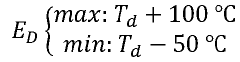
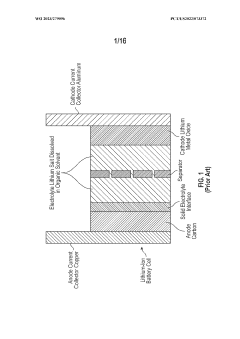
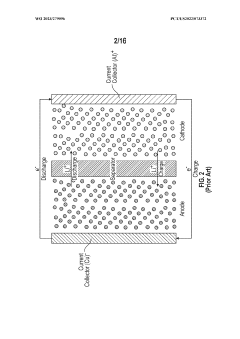
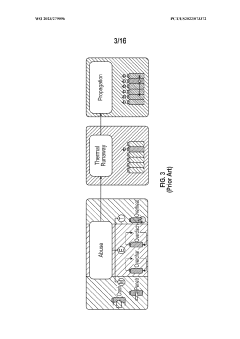
- A compressible thermal barrier material is introduced between battery cells, tailored to the areal energy density of individual cells, which prevents thermal propagation by absorbing mechanical energy and maintaining structural integrity during thermal events, using a multilayer material configuration with insulation and thermal conductive layers to manage heat dissipation.
Safety Standards and Regulatory Framework
The regulatory landscape for thermal runaway containment and isolation testing is primarily governed by international safety standards that establish comprehensive frameworks for battery system safety evaluation. The International Electrotechnical Commission (IEC) 62619 standard serves as a fundamental guideline for secondary lithium cells and batteries used in industrial applications, specifically addressing safety requirements for stationary applications. This standard mandates rigorous testing protocols for thermal runaway scenarios and defines acceptable containment methods.
The United Nations Manual of Tests and Criteria, particularly UN 38.3, provides essential testing requirements for lithium battery transportation safety, including thermal abuse testing that directly relates to runaway containment strategies. These regulations require manufacturers to demonstrate that battery systems can withstand thermal stress without propagating failure to adjacent cells or compromising overall system integrity.
Regional regulatory bodies have developed complementary frameworks that enhance global standards. The European Union's Battery Regulation (EU) 2023/1542 introduces stringent safety and sustainability requirements, mandating comprehensive risk assessments for thermal events and establishing clear performance criteria for isolation systems. Similarly, the U.S. National Fire Protection Association (NFPA) 855 standard specifically addresses energy storage system installations, providing detailed requirements for thermal runaway detection, suppression, and containment.
Testing methodologies are standardized through organizations such as Underwriters Laboratories (UL), which has developed UL 9540A - the Standard for Test Method for Evaluating Thermal Runaway Fire Propagation in Battery Energy Storage Systems. This standard establishes systematic approaches for evaluating isolation effectiveness and quantifying thermal runaway propagation risks under controlled conditions.
Certification processes require independent third-party validation of thermal runaway containment systems, ensuring compliance with established safety thresholds. Regulatory frameworks increasingly emphasize performance-based criteria rather than prescriptive solutions, allowing innovation in isolation technologies while maintaining stringent safety outcomes. These evolving standards continue to adapt to emerging battery chemistries and system architectures, reflecting the dynamic nature of energy storage technology development.
The United Nations Manual of Tests and Criteria, particularly UN 38.3, provides essential testing requirements for lithium battery transportation safety, including thermal abuse testing that directly relates to runaway containment strategies. These regulations require manufacturers to demonstrate that battery systems can withstand thermal stress without propagating failure to adjacent cells or compromising overall system integrity.
Regional regulatory bodies have developed complementary frameworks that enhance global standards. The European Union's Battery Regulation (EU) 2023/1542 introduces stringent safety and sustainability requirements, mandating comprehensive risk assessments for thermal events and establishing clear performance criteria for isolation systems. Similarly, the U.S. National Fire Protection Association (NFPA) 855 standard specifically addresses energy storage system installations, providing detailed requirements for thermal runaway detection, suppression, and containment.
Testing methodologies are standardized through organizations such as Underwriters Laboratories (UL), which has developed UL 9540A - the Standard for Test Method for Evaluating Thermal Runaway Fire Propagation in Battery Energy Storage Systems. This standard establishes systematic approaches for evaluating isolation effectiveness and quantifying thermal runaway propagation risks under controlled conditions.
Certification processes require independent third-party validation of thermal runaway containment systems, ensuring compliance with established safety thresholds. Regulatory frameworks increasingly emphasize performance-based criteria rather than prescriptive solutions, allowing innovation in isolation technologies while maintaining stringent safety outcomes. These evolving standards continue to adapt to emerging battery chemistries and system architectures, reflecting the dynamic nature of energy storage technology development.
Environmental Impact of Thermal Runaway Events
Thermal runaway events in lithium-ion batteries pose significant environmental risks that extend far beyond immediate safety concerns. These incidents release toxic gases, heavy metals, and corrosive substances into the atmosphere, soil, and water systems, creating both acute and long-term environmental contamination challenges.
The gaseous emissions from thermal runaway events contain hydrogen fluoride, carbon monoxide, and various organic compounds that contribute to air pollution and pose respiratory hazards to surrounding ecosystems. These toxic releases can persist in the environment for extended periods, affecting local air quality and potentially contributing to acid rain formation in concentrated industrial areas.
Soil contamination represents another critical environmental impact, particularly when battery fires occur in outdoor settings or when firefighting water carries dissolved contaminants into ground systems. Heavy metals such as lithium, cobalt, nickel, and manganese can leach into soil matrices, affecting plant growth and entering food chains through bioaccumulation processes.
Water system contamination occurs through multiple pathways during thermal runaway incidents. Firefighting efforts often generate contaminated runoff containing dissolved electrolytes and metal compounds that can infiltrate groundwater supplies or flow into surface water bodies. This contamination can persist for years, requiring extensive remediation efforts and potentially affecting aquatic ecosystems and drinking water sources.
The carbon footprint implications of thermal runaway events extend beyond immediate emissions to include the environmental cost of emergency response, cleanup operations, and premature battery replacement. Large-scale incidents may require specialized hazardous material handling, soil remediation, and water treatment processes that consume significant energy and resources.
Climate change considerations also emerge from the waste heat generated during thermal runaway propagation, particularly in large battery installations. While individual events may seem negligible, the cumulative effect of multiple incidents across global battery deployments contributes to localized temperature increases and energy inefficiencies that compound broader environmental challenges.
The gaseous emissions from thermal runaway events contain hydrogen fluoride, carbon monoxide, and various organic compounds that contribute to air pollution and pose respiratory hazards to surrounding ecosystems. These toxic releases can persist in the environment for extended periods, affecting local air quality and potentially contributing to acid rain formation in concentrated industrial areas.
Soil contamination represents another critical environmental impact, particularly when battery fires occur in outdoor settings or when firefighting water carries dissolved contaminants into ground systems. Heavy metals such as lithium, cobalt, nickel, and manganese can leach into soil matrices, affecting plant growth and entering food chains through bioaccumulation processes.
Water system contamination occurs through multiple pathways during thermal runaway incidents. Firefighting efforts often generate contaminated runoff containing dissolved electrolytes and metal compounds that can infiltrate groundwater supplies or flow into surface water bodies. This contamination can persist for years, requiring extensive remediation efforts and potentially affecting aquatic ecosystems and drinking water sources.
The carbon footprint implications of thermal runaway events extend beyond immediate emissions to include the environmental cost of emergency response, cleanup operations, and premature battery replacement. Large-scale incidents may require specialized hazardous material handling, soil remediation, and water treatment processes that consume significant energy and resources.
Climate change considerations also emerge from the waste heat generated during thermal runaway propagation, particularly in large battery installations. While individual events may seem negligible, the cumulative effect of multiple incidents across global battery deployments contributes to localized temperature increases and energy inefficiencies that compound broader environmental challenges.
Unlock deeper insights with PatSnap Eureka Quick Research — get a full tech report to explore trends and direct your research. Try now!
Generate Your Research Report Instantly with AI Agent
Supercharge your innovation with PatSnap Eureka AI Agent Platform!