

Understanding Voltage Influence on Thermal Runaway
FEB 26, 20269 MIN READ
Generate Your Research Report Instantly with AI Agent
PatSnap Eureka helps you evaluate technical feasibility & market potential.
Voltage-Thermal Runaway Background and Objectives
Thermal runaway represents one of the most critical safety challenges in modern battery technology, particularly affecting lithium-ion batteries used in electric vehicles, energy storage systems, and portable electronics. This phenomenon occurs when a battery cell experiences an uncontrolled temperature rise, leading to a cascade of exothermic reactions that can result in fire, explosion, or toxic gas release. The relationship between voltage conditions and thermal runaway initiation has emerged as a fundamental area requiring comprehensive investigation.
The evolution of battery technology has consistently pushed toward higher energy densities and faster charging capabilities, inherently increasing the risk of thermal instability. Historical incidents in consumer electronics, electric vehicles, and grid-scale storage facilities have demonstrated that voltage-related thermal runaway events can have catastrophic consequences, driving regulatory scrutiny and industry-wide safety initiatives. Understanding how different voltage conditions influence thermal runaway mechanisms has become essential for developing safer battery systems.
Current research indicates that voltage plays a multifaceted role in thermal runaway propagation. Overcharging conditions create excessive voltage stress, leading to lithium plating, electrolyte decomposition, and separator degradation. Conversely, deep discharge scenarios can cause copper dissolution and subsequent internal short circuits during recharge cycles. The complex interplay between voltage, temperature, and electrochemical reactions creates multiple pathways for thermal runaway initiation, each requiring distinct mitigation strategies.
The primary objective of investigating voltage influence on thermal runaway is to establish predictive models that can accurately forecast thermal instability under various operating conditions. This research aims to identify critical voltage thresholds that trigger different thermal runaway mechanisms, enabling the development of more sophisticated battery management systems with enhanced safety protocols.
Furthermore, this investigation seeks to optimize charging and discharging profiles to minimize thermal runaway risks while maintaining battery performance and longevity. By understanding voltage-temperature interdependencies, researchers can develop adaptive control algorithms that dynamically adjust operating parameters based on real-time thermal and electrical monitoring.
The ultimate goal encompasses creating comprehensive safety standards and testing protocols that account for voltage-induced thermal runaway scenarios. This includes establishing industry guidelines for voltage limits, thermal monitoring requirements, and emergency response procedures that can prevent minor thermal events from escalating into major safety incidents across diverse battery applications.
The evolution of battery technology has consistently pushed toward higher energy densities and faster charging capabilities, inherently increasing the risk of thermal instability. Historical incidents in consumer electronics, electric vehicles, and grid-scale storage facilities have demonstrated that voltage-related thermal runaway events can have catastrophic consequences, driving regulatory scrutiny and industry-wide safety initiatives. Understanding how different voltage conditions influence thermal runaway mechanisms has become essential for developing safer battery systems.
Current research indicates that voltage plays a multifaceted role in thermal runaway propagation. Overcharging conditions create excessive voltage stress, leading to lithium plating, electrolyte decomposition, and separator degradation. Conversely, deep discharge scenarios can cause copper dissolution and subsequent internal short circuits during recharge cycles. The complex interplay between voltage, temperature, and electrochemical reactions creates multiple pathways for thermal runaway initiation, each requiring distinct mitigation strategies.
The primary objective of investigating voltage influence on thermal runaway is to establish predictive models that can accurately forecast thermal instability under various operating conditions. This research aims to identify critical voltage thresholds that trigger different thermal runaway mechanisms, enabling the development of more sophisticated battery management systems with enhanced safety protocols.
Furthermore, this investigation seeks to optimize charging and discharging profiles to minimize thermal runaway risks while maintaining battery performance and longevity. By understanding voltage-temperature interdependencies, researchers can develop adaptive control algorithms that dynamically adjust operating parameters based on real-time thermal and electrical monitoring.
The ultimate goal encompasses creating comprehensive safety standards and testing protocols that account for voltage-induced thermal runaway scenarios. This includes establishing industry guidelines for voltage limits, thermal monitoring requirements, and emergency response procedures that can prevent minor thermal events from escalating into major safety incidents across diverse battery applications.
Market Demand for Voltage-Safe Battery Systems
The global battery market is experiencing unprecedented growth driven by the rapid expansion of electric vehicles, energy storage systems, and portable electronics. As battery systems become more prevalent across critical applications, the demand for voltage-safe battery technologies has intensified significantly. Industries are increasingly recognizing that thermal runaway incidents, often triggered by voltage-related factors, pose substantial risks to both safety and economic viability.
Electric vehicle manufacturers represent the largest segment driving demand for voltage-safe battery systems. Automotive companies are under mounting pressure from regulatory bodies and consumers to deliver vehicles with enhanced safety profiles. The correlation between voltage management and thermal runaway prevention has become a primary concern, as incidents can result in catastrophic failures, recalls, and significant brand damage. This has created a substantial market pull for advanced battery management systems that can effectively monitor and control voltage parameters.
Energy storage system operators constitute another critical market segment demanding voltage-safe solutions. Grid-scale storage installations require robust safety mechanisms to prevent thermal runaway events that could compromise entire facilities. The increasing deployment of renewable energy infrastructure has amplified the need for reliable, voltage-controlled battery systems capable of handling variable charging and discharging cycles without safety compromises.
Consumer electronics manufacturers are also driving market demand, particularly for high-performance devices requiring rapid charging capabilities. The miniaturization trend in electronics has created challenging thermal management scenarios where voltage-induced thermal runaway risks are heightened. Manufacturers seek battery solutions that maintain safety margins while delivering enhanced performance characteristics.
The aerospace and defense sectors represent specialized but high-value market segments with stringent safety requirements. These applications demand battery systems with exceptional voltage stability and thermal runaway prevention capabilities, often justifying premium pricing for advanced safety features.
Market demand is further amplified by evolving regulatory frameworks worldwide. Safety standards are becoming increasingly stringent, requiring manufacturers to demonstrate comprehensive voltage management capabilities. Insurance companies are also influencing market dynamics by offering preferential terms for systems with proven voltage-safe battery technologies, creating additional economic incentives for adoption across various industries.
Electric vehicle manufacturers represent the largest segment driving demand for voltage-safe battery systems. Automotive companies are under mounting pressure from regulatory bodies and consumers to deliver vehicles with enhanced safety profiles. The correlation between voltage management and thermal runaway prevention has become a primary concern, as incidents can result in catastrophic failures, recalls, and significant brand damage. This has created a substantial market pull for advanced battery management systems that can effectively monitor and control voltage parameters.
Energy storage system operators constitute another critical market segment demanding voltage-safe solutions. Grid-scale storage installations require robust safety mechanisms to prevent thermal runaway events that could compromise entire facilities. The increasing deployment of renewable energy infrastructure has amplified the need for reliable, voltage-controlled battery systems capable of handling variable charging and discharging cycles without safety compromises.
Consumer electronics manufacturers are also driving market demand, particularly for high-performance devices requiring rapid charging capabilities. The miniaturization trend in electronics has created challenging thermal management scenarios where voltage-induced thermal runaway risks are heightened. Manufacturers seek battery solutions that maintain safety margins while delivering enhanced performance characteristics.
The aerospace and defense sectors represent specialized but high-value market segments with stringent safety requirements. These applications demand battery systems with exceptional voltage stability and thermal runaway prevention capabilities, often justifying premium pricing for advanced safety features.
Market demand is further amplified by evolving regulatory frameworks worldwide. Safety standards are becoming increasingly stringent, requiring manufacturers to demonstrate comprehensive voltage management capabilities. Insurance companies are also influencing market dynamics by offering preferential terms for systems with proven voltage-safe battery technologies, creating additional economic incentives for adoption across various industries.
Current Voltage-Thermal Runaway Challenges
The relationship between voltage and thermal runaway in battery systems presents multifaceted challenges that significantly impact safety and performance across various applications. Current research reveals that voltage fluctuations can trigger cascading thermal events through multiple pathways, creating complex interdependencies that are difficult to predict and control.
One of the primary challenges lies in understanding how overvoltage conditions accelerate electrochemical reactions within battery cells. When cells operate beyond their designed voltage thresholds, increased current flow generates excessive heat through ohmic resistance, while simultaneously promoting unwanted side reactions that further elevate temperatures. This creates a positive feedback loop where rising temperatures reduce internal resistance, allowing even higher currents and accelerating the thermal runaway process.
Voltage imbalances across cell arrays introduce additional complexity, as individual cells may experience localized stress conditions that initiate thermal events. These imbalances can result from manufacturing variations, aging differences, or external factors, making it challenging to develop universal protection strategies. The heterogeneous nature of voltage distribution within battery packs complicates monitoring and early detection efforts.
Current measurement and monitoring technologies face significant limitations in capturing the rapid voltage dynamics that precede thermal runaway events. Traditional voltage sensing systems often lack the temporal resolution needed to detect critical voltage spikes or fluctuations that occur within milliseconds. This temporal gap creates blind spots in safety systems, potentially allowing dangerous conditions to develop undetected.
The interaction between voltage-induced thermal effects and battery chemistry variations presents another substantial challenge. Different battery chemistries exhibit unique voltage-temperature relationships, requiring tailored approaches for each technology. Lithium-ion batteries, for instance, demonstrate different thermal runaway characteristics under voltage stress compared to other battery types, necessitating chemistry-specific safety protocols.
Modeling and simulation of voltage-thermal interactions remain computationally intensive and often require simplifying assumptions that may not capture real-world complexity. Current models struggle to accurately predict the onset conditions and propagation patterns of thermal runaway events, particularly when multiple voltage-related stressors act simultaneously.
Integration challenges arise when implementing voltage-based thermal runaway prevention systems in existing battery management architectures. Legacy systems may lack the processing power or sensor integration capabilities needed for advanced voltage monitoring and control strategies, creating barriers to widespread adoption of improved safety measures.
One of the primary challenges lies in understanding how overvoltage conditions accelerate electrochemical reactions within battery cells. When cells operate beyond their designed voltage thresholds, increased current flow generates excessive heat through ohmic resistance, while simultaneously promoting unwanted side reactions that further elevate temperatures. This creates a positive feedback loop where rising temperatures reduce internal resistance, allowing even higher currents and accelerating the thermal runaway process.
Voltage imbalances across cell arrays introduce additional complexity, as individual cells may experience localized stress conditions that initiate thermal events. These imbalances can result from manufacturing variations, aging differences, or external factors, making it challenging to develop universal protection strategies. The heterogeneous nature of voltage distribution within battery packs complicates monitoring and early detection efforts.
Current measurement and monitoring technologies face significant limitations in capturing the rapid voltage dynamics that precede thermal runaway events. Traditional voltage sensing systems often lack the temporal resolution needed to detect critical voltage spikes or fluctuations that occur within milliseconds. This temporal gap creates blind spots in safety systems, potentially allowing dangerous conditions to develop undetected.
The interaction between voltage-induced thermal effects and battery chemistry variations presents another substantial challenge. Different battery chemistries exhibit unique voltage-temperature relationships, requiring tailored approaches for each technology. Lithium-ion batteries, for instance, demonstrate different thermal runaway characteristics under voltage stress compared to other battery types, necessitating chemistry-specific safety protocols.
Modeling and simulation of voltage-thermal interactions remain computationally intensive and often require simplifying assumptions that may not capture real-world complexity. Current models struggle to accurately predict the onset conditions and propagation patterns of thermal runaway events, particularly when multiple voltage-related stressors act simultaneously.
Integration challenges arise when implementing voltage-based thermal runaway prevention systems in existing battery management architectures. Legacy systems may lack the processing power or sensor integration capabilities needed for advanced voltage monitoring and control strategies, creating barriers to widespread adoption of improved safety measures.
Existing Voltage-Thermal Runaway Solutions
01 Voltage monitoring and detection systems for thermal runaway prevention
Advanced monitoring systems are employed to continuously track voltage parameters and detect anomalies that may indicate the onset of thermal runaway conditions. These systems utilize sophisticated algorithms and sensor networks to identify voltage fluctuations, abnormal charging patterns, and potential failure modes before they escalate into dangerous thermal events. Real-time data analysis enables early warning signals and preventive actions to be triggered automatically.- Voltage monitoring and detection systems for thermal runaway prevention: Advanced monitoring systems are employed to continuously track voltage parameters and detect abnormal voltage fluctuations that may indicate the onset of thermal runaway conditions. These systems utilize sophisticated sensors and algorithms to identify early warning signs by analyzing voltage patterns, rate of change, and threshold violations. Real-time voltage monitoring enables prompt intervention before critical thermal events occur, enhancing overall battery safety and reliability.
- Voltage threshold-based safety mechanisms and cutoff circuits: Safety circuits are designed to automatically disconnect or isolate battery cells when voltage levels exceed predetermined safe operating ranges. These protective mechanisms incorporate voltage-based triggers that activate shutdown procedures to prevent cascading failures. The systems include fail-safe designs with multiple redundancy layers to ensure reliable operation even under extreme conditions, effectively mitigating risks associated with overvoltage scenarios that could lead to thermal events.
- Battery management systems with voltage-based thermal runaway prediction: Integrated battery management systems utilize voltage data as a key parameter for predicting potential thermal runaway events. These systems employ machine learning algorithms and predictive models that correlate voltage behavior with temperature rise and chemical reactions within cells. By analyzing voltage signatures and historical data patterns, the systems can forecast dangerous conditions before they manifest, allowing for preemptive cooling measures or load adjustments to maintain safe operating conditions.
- Cell balancing and voltage equalization techniques for thermal stability: Voltage equalization methods are implemented to maintain uniform voltage distribution across battery cells, preventing localized overvoltage conditions that can trigger thermal instability. These techniques include active and passive balancing circuits that redistribute charge among cells to minimize voltage disparities. Proper voltage balancing reduces stress on individual cells, decreases the likelihood of hotspot formation, and extends overall battery life while significantly reducing thermal runaway risks.
- Voltage-controlled cooling and thermal management systems: Thermal management systems are designed to respond dynamically to voltage-related indicators of thermal stress. These systems activate cooling mechanisms based on voltage thresholds or abnormal voltage behavior patterns that correlate with temperature increases. The integration of voltage monitoring with active cooling solutions enables targeted thermal intervention, ensuring that heat generation is controlled before reaching critical levels. This approach provides an additional layer of protection by addressing thermal issues at their electrical origins.
02 Voltage threshold control mechanisms
Implementation of precise voltage threshold controls helps prevent conditions that lead to thermal runaway by establishing safe operating boundaries. These mechanisms incorporate cutoff circuits and protective devices that automatically disconnect or reduce power when voltage levels exceed predetermined safe limits. Multi-level threshold systems provide graduated responses to different severity levels of voltage anomalies, ensuring appropriate intervention at each stage.Expand Specific Solutions03 Battery management systems with thermal runaway voltage protection
Integrated battery management systems incorporate specialized voltage regulation features designed to mitigate thermal runaway risks in energy storage applications. These systems balance cell voltages, manage charging and discharging cycles, and implement safety protocols that respond to voltage-related thermal indicators. Advanced architectures include redundant protection layers and fail-safe mechanisms that ensure system integrity even under fault conditions.Expand Specific Solutions04 Thermal and electrical coupling analysis for runaway prediction
Comprehensive analysis of the relationship between electrical parameters and thermal behavior enables predictive modeling of thermal runaway scenarios. This approach examines how voltage variations correlate with temperature changes and identifies critical coupling points where electrical stress can trigger thermal instability. Simulation and testing methodologies validate the effectiveness of protective measures under various operating conditions.Expand Specific Solutions05 Safety circuit designs and voltage regulation architectures
Specialized circuit topologies and voltage regulation architectures are designed to inherently resist thermal runaway conditions through passive and active safety features. These designs incorporate current limiting elements, thermal fuses, and voltage clamping devices that provide multiple layers of protection. Novel architectures distribute thermal loads and implement isolation strategies to prevent cascading failures across interconnected cells or modules.Expand Specific Solutions
Key Players in Battery Thermal Safety Industry
The thermal runaway voltage influence technology represents a rapidly evolving sector within the broader battery safety and energy storage industry, currently in its growth phase with significant market expansion driven by electric vehicle adoption and grid-scale energy storage demands. The market demonstrates substantial scale, with key players spanning from established battery manufacturers like Samsung SDI, CATL, and EVE Energy to automotive giants including Tesla, Mercedes-Benz, and Renault integrating advanced thermal management solutions. Technology maturity varies significantly across the competitive landscape, with semiconductor specialists like Texas Instruments, STMicroelectronics, and Renesas Electronics providing sophisticated monitoring and control systems, while thermal management innovators such as Aspen Aerogels and Rondo Energy develop cutting-edge materials and solutions. Research institutions including CEA and CNRS contribute fundamental research, positioning this technology at a critical inflection point where academic breakthroughs are rapidly transitioning to commercial applications across automotive, aerospace, and industrial energy storage markets.
Samsung SDI Co., Ltd.
Technical Solution: Samsung SDI has developed comprehensive thermal runaway prevention systems that monitor voltage fluctuations and their correlation with temperature rise in lithium-ion batteries. Their technology incorporates multi-layered safety mechanisms including voltage-controlled thermal barriers, advanced electrolyte formulations that remain stable under varying voltage conditions, and intelligent battery management systems that can predict thermal runaway onset by analyzing voltage-temperature relationships. The company's research focuses on understanding how overvoltage conditions accelerate thermal decomposition reactions and implements real-time voltage regulation to maintain safe operating parameters.
Strengths: Leading market position in battery safety technology, extensive R&D capabilities, proven track record in consumer electronics and automotive applications. Weaknesses: High implementation costs, complex system integration requirements.
Contemporary Amperex Technology Co., Ltd.
Technical Solution: CATL has pioneered voltage-thermal coupling analysis methodologies to understand thermal runaway mechanisms in their battery cells. Their approach involves sophisticated voltage monitoring algorithms that detect early signs of thermal instability by identifying abnormal voltage patterns that precede temperature spikes. The company has developed proprietary cell designs with enhanced voltage tolerance and thermal dissipation capabilities, incorporating specialized separators and electrolyte additives that maintain stability under high voltage stress conditions. Their battery management systems feature predictive analytics that correlate voltage anomalies with thermal events.
Strengths: World's largest battery manufacturer, extensive real-world data collection, strong automotive partnerships. Weaknesses: Primarily focused on lithium-ion technology, limited diversification in alternative chemistries.
Core Innovations in Voltage-Thermal Coupling
Thermal runaway prognosis by detecting abnormal cell voltage and SOC degeneration
PatentActiveUS20220352737A1
Innovation
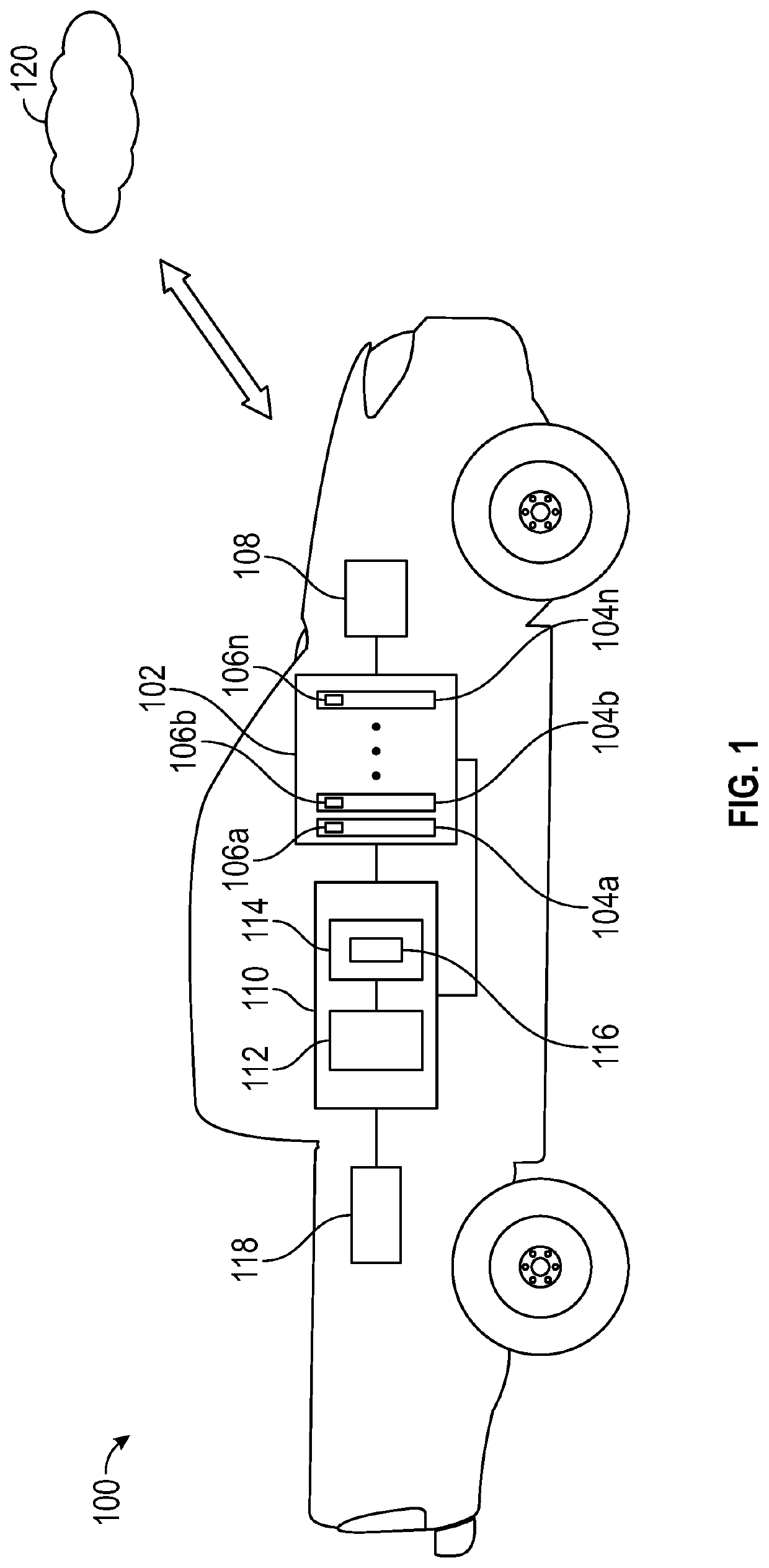
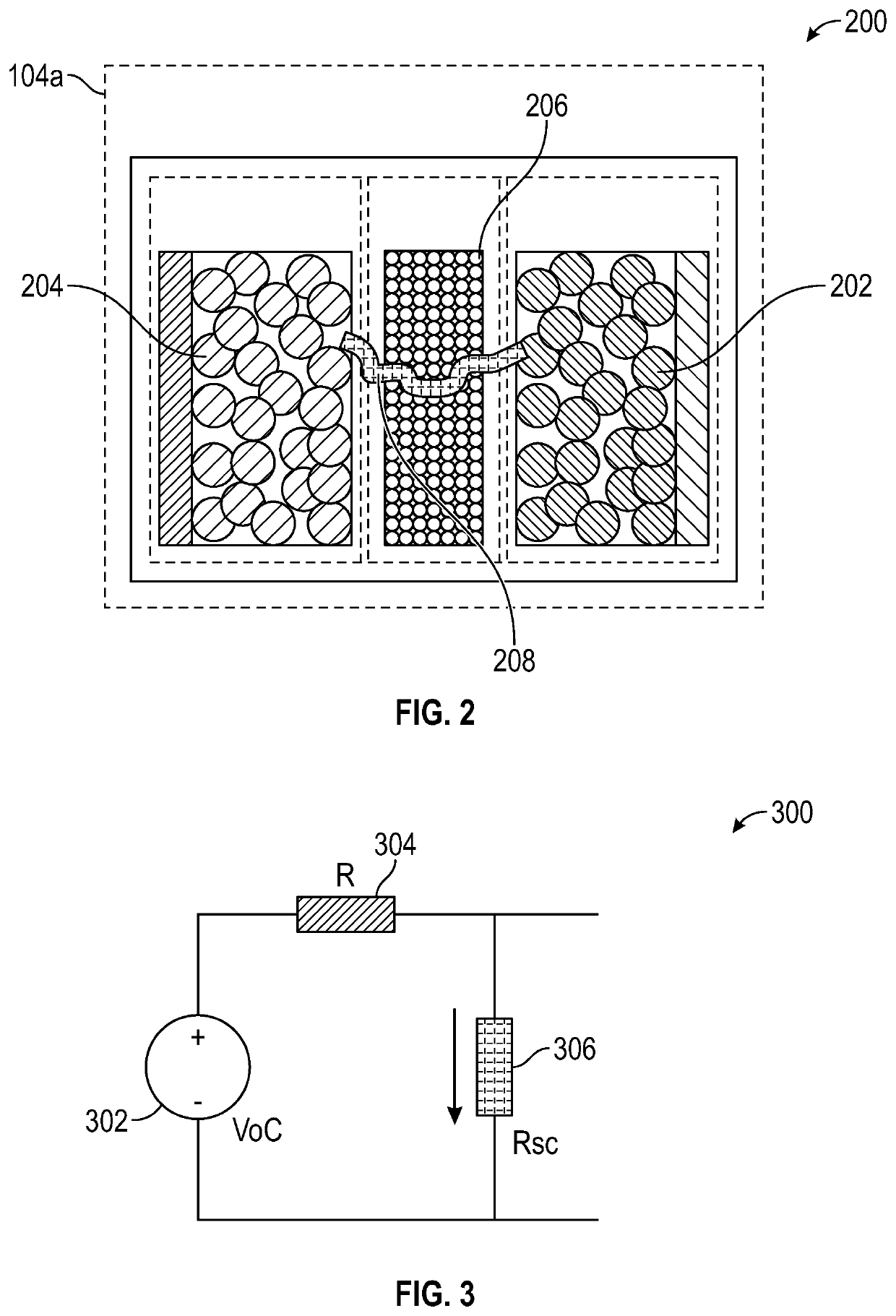
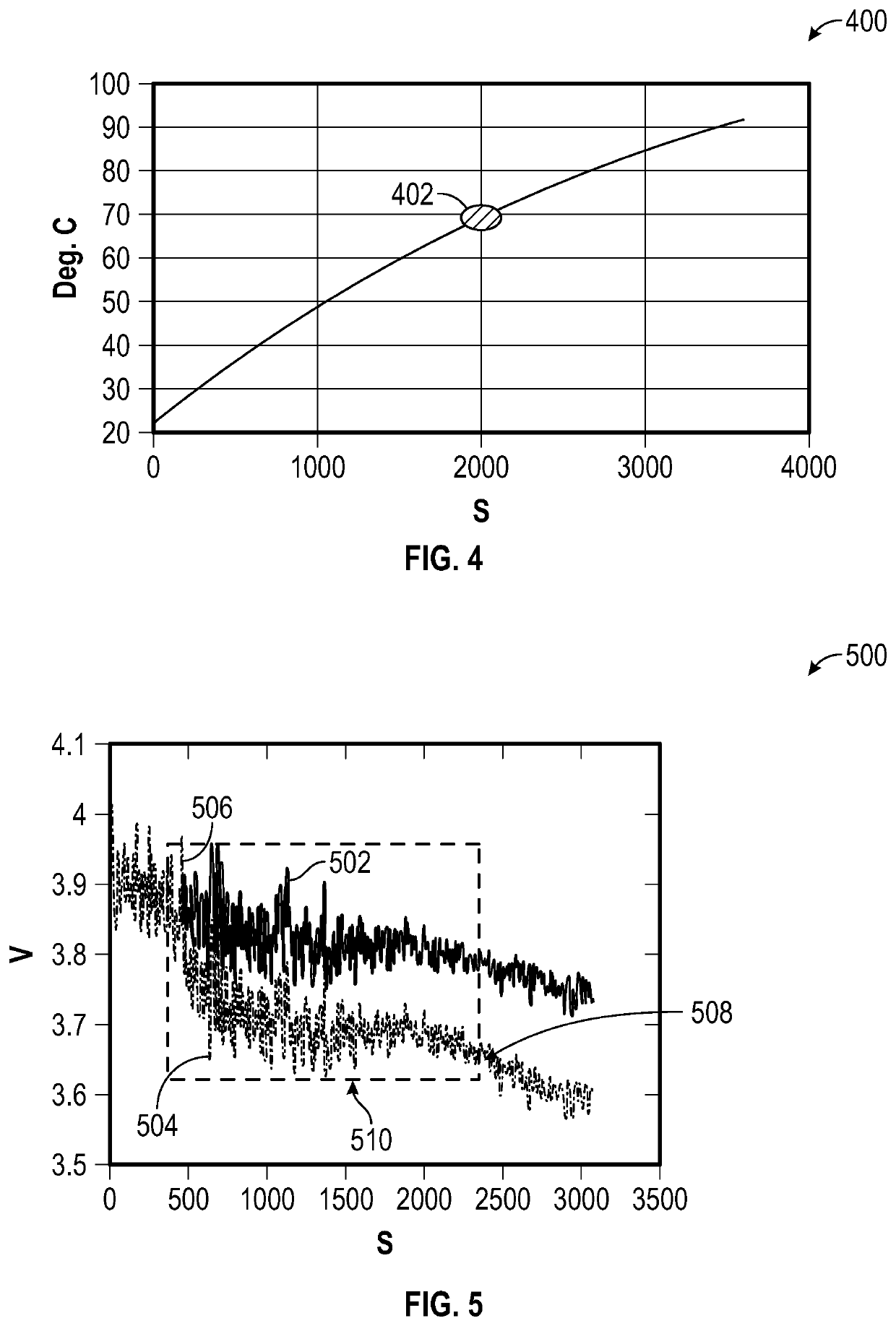
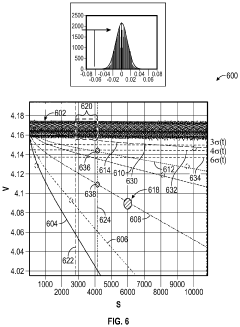
- A system and method that involve obtaining voltage measurements from multiple battery cells, calculating a mean value and standard deviation, and generating a notification signal when a selected cell's voltage exceeds a prognostic threshold, allowing for the detection of internal short circuits and potential thermal runaway, using voltage sensors and a processor to determine voltage parameters and resistance within the battery cells.
Vehicle thermal runaway warning method, device, electronic equipment, and readable storage medium
PatentActiveUS12479299B2
Innovation
- A method that involves obtaining cell voltage data, dividing it into time windows, extracting cell voltage characteristics, and determining thermal runaway risk based on preset voltage warning conditions, including deviation values and discrete degrees, to trigger timely warning alerts.


Safety Standards for Voltage-Thermal Systems
The development of comprehensive safety standards for voltage-thermal systems has become increasingly critical as electronic devices operate under higher power densities and more demanding thermal conditions. Current international standards such as IEC 62133, UL 2054, and UN 38.3 provide foundational frameworks for battery safety, but these standards require continuous evolution to address the complex interactions between voltage fluctuations and thermal runaway phenomena.
Existing safety protocols primarily focus on individual parameter monitoring rather than the integrated voltage-thermal relationship. The IEC 61508 functional safety standard establishes risk assessment methodologies, while IEC 60730 addresses automatic electrical controls for household applications. However, these standards lack specific provisions for dynamic voltage-thermal coupling effects that can precipitate thermal runaway events in modern high-energy systems.
The IEEE 1625 standard for rechargeable batteries addresses some thermal management aspects, but gaps remain in voltage-dependent thermal threshold definitions. Current standards typically establish fixed temperature limits without considering how voltage variations can alter these critical thresholds. This limitation becomes particularly problematic in applications where voltage fluctuations are inherent to system operation.
Emerging regulatory frameworks are beginning to incorporate multi-parameter safety assessments. The recently updated IEC 62619 standard for industrial lithium batteries introduces requirements for thermal propagation testing under various electrical stress conditions. Similarly, UL 9540A now mandates thermal runaway propagation testing that considers electrical system interactions.
Future safety standard development must integrate real-time voltage-thermal monitoring requirements with predictive failure analysis capabilities. Standards should mandate the implementation of adaptive protection systems that can respond to voltage-induced thermal acceleration. Additionally, certification processes need to evolve beyond static testing protocols to include dynamic voltage-thermal stress scenarios that better represent real-world operating conditions and potential failure modes.
Existing safety protocols primarily focus on individual parameter monitoring rather than the integrated voltage-thermal relationship. The IEC 61508 functional safety standard establishes risk assessment methodologies, while IEC 60730 addresses automatic electrical controls for household applications. However, these standards lack specific provisions for dynamic voltage-thermal coupling effects that can precipitate thermal runaway events in modern high-energy systems.
The IEEE 1625 standard for rechargeable batteries addresses some thermal management aspects, but gaps remain in voltage-dependent thermal threshold definitions. Current standards typically establish fixed temperature limits without considering how voltage variations can alter these critical thresholds. This limitation becomes particularly problematic in applications where voltage fluctuations are inherent to system operation.
Emerging regulatory frameworks are beginning to incorporate multi-parameter safety assessments. The recently updated IEC 62619 standard for industrial lithium batteries introduces requirements for thermal propagation testing under various electrical stress conditions. Similarly, UL 9540A now mandates thermal runaway propagation testing that considers electrical system interactions.
Future safety standard development must integrate real-time voltage-thermal monitoring requirements with predictive failure analysis capabilities. Standards should mandate the implementation of adaptive protection systems that can respond to voltage-induced thermal acceleration. Additionally, certification processes need to evolve beyond static testing protocols to include dynamic voltage-thermal stress scenarios that better represent real-world operating conditions and potential failure modes.
Risk Assessment for Voltage-Thermal Failures
Voltage-thermal failure risks in battery systems represent a critical safety concern that requires comprehensive assessment methodologies to prevent catastrophic incidents. The interaction between electrical stress and thermal conditions creates complex failure modes that can escalate rapidly, making risk evaluation essential for system design and operational safety protocols.
The primary risk assessment framework for voltage-thermal failures involves establishing threshold parameters where electrical overstress coincides with elevated temperatures. Critical voltage levels that trigger thermal instability vary significantly based on cell chemistry, with lithium-ion systems showing particular sensitivity to combined electrical and thermal stress. Risk matrices typically categorize failure probability based on voltage deviation magnitude and ambient temperature conditions, creating multi-dimensional assessment criteria.
Probabilistic risk models incorporate statistical analysis of failure rates under various voltage-temperature combinations. Monte Carlo simulations demonstrate that failure probability increases exponentially when voltage stress exceeds 110% of nominal values while operating temperatures surpass 60°C. These models account for manufacturing tolerances, aging effects, and environmental variations that influence the voltage-thermal relationship.
Early warning indicators play crucial roles in risk mitigation strategies. Voltage fluctuation patterns, impedance changes, and temperature gradients serve as precursors to thermal runaway events. Advanced monitoring systems integrate these parameters to calculate real-time risk scores, enabling proactive intervention before critical thresholds are reached.
Consequence analysis evaluates potential damage scenarios ranging from localized cell failure to system-wide propagation. Risk assessment protocols consider factors such as energy density, containment effectiveness, and suppression system response times. Quantitative risk analysis reveals that voltage-induced thermal failures typically result in 15-30% higher energy release rates compared to purely thermal events.
Mitigation strategies derived from risk assessments include voltage regulation improvements, thermal management enhancements, and fail-safe mechanisms. Risk-based design approaches prioritize protective measures based on failure mode severity and likelihood, optimizing safety investments while maintaining system performance requirements.
The primary risk assessment framework for voltage-thermal failures involves establishing threshold parameters where electrical overstress coincides with elevated temperatures. Critical voltage levels that trigger thermal instability vary significantly based on cell chemistry, with lithium-ion systems showing particular sensitivity to combined electrical and thermal stress. Risk matrices typically categorize failure probability based on voltage deviation magnitude and ambient temperature conditions, creating multi-dimensional assessment criteria.
Probabilistic risk models incorporate statistical analysis of failure rates under various voltage-temperature combinations. Monte Carlo simulations demonstrate that failure probability increases exponentially when voltage stress exceeds 110% of nominal values while operating temperatures surpass 60°C. These models account for manufacturing tolerances, aging effects, and environmental variations that influence the voltage-thermal relationship.
Early warning indicators play crucial roles in risk mitigation strategies. Voltage fluctuation patterns, impedance changes, and temperature gradients serve as precursors to thermal runaway events. Advanced monitoring systems integrate these parameters to calculate real-time risk scores, enabling proactive intervention before critical thresholds are reached.
Consequence analysis evaluates potential damage scenarios ranging from localized cell failure to system-wide propagation. Risk assessment protocols consider factors such as energy density, containment effectiveness, and suppression system response times. Quantitative risk analysis reveals that voltage-induced thermal failures typically result in 15-30% higher energy release rates compared to purely thermal events.
Mitigation strategies derived from risk assessments include voltage regulation improvements, thermal management enhancements, and fail-safe mechanisms. Risk-based design approaches prioritize protective measures based on failure mode severity and likelihood, optimizing safety investments while maintaining system performance requirements.
Unlock deeper insights with PatSnap Eureka Quick Research — get a full tech report to explore trends and direct your research. Try now!
Generate Your Research Report Instantly with AI Agent
Supercharge your innovation with PatSnap Eureka AI Agent Platform!