

Validate Lithium Mine Process Control Algorithms for Recovery Variability
OCT 8, 202510 MIN READ
Generate Your Research Report Instantly with AI Agent
PatSnap Eureka helps you evaluate technical feasibility & market potential.
Lithium Mining Process Control Evolution and Objectives
Lithium mining process control has evolved significantly over the past decades, transitioning from manual operations to increasingly automated systems. In the 1970s and 1980s, lithium extraction primarily relied on rudimentary evaporation techniques with minimal process control. Operations were largely dependent on operator experience and simple mechanical controls, resulting in inconsistent recovery rates and quality variations.
The 1990s marked the beginning of computerized monitoring systems in lithium mining, introducing basic sensor networks and programmable logic controllers (PLCs). These early digital systems enabled basic parameter monitoring but lacked sophisticated algorithmic control capabilities. Recovery rates during this period typically ranged from 40-50%, with significant variability depending on brine composition and environmental conditions.
By the early 2000s, the industry witnessed the integration of SCADA (Supervisory Control and Data Acquisition) systems, allowing for centralized monitoring and basic automated control of extraction processes. This period also saw the development of the first generation of process control algorithms, primarily focused on optimizing evaporation rates and precipitation timing. These advancements pushed typical recovery rates to 50-60%.
The 2010s brought significant technological leaps with the implementation of advanced process control (APC) systems incorporating model predictive control (MPC) algorithms. These systems began accounting for multiple variables simultaneously, including temperature fluctuations, brine chemistry variations, and weather patterns. Recovery rates improved to 60-70%, but variability remained a persistent challenge, particularly in operations with heterogeneous lithium sources.
Current technological objectives center on developing and validating robust algorithms capable of addressing recovery variability across diverse operational conditions. Key goals include achieving consistent recovery rates above 80%, reducing process variability to less than 5%, and minimizing reagent consumption while maintaining product quality. The industry is particularly focused on algorithms that can adapt to changing brine compositions and environmental conditions in real-time.
Future objectives include the integration of machine learning and artificial intelligence to create self-optimizing process control systems. These advanced algorithms aim to predict and preemptively adjust for variations in feed quality, environmental conditions, and equipment performance. The ultimate goal is to establish closed-loop systems capable of maintaining optimal recovery rates regardless of input variability, while simultaneously reducing energy consumption and environmental impact.
The 1990s marked the beginning of computerized monitoring systems in lithium mining, introducing basic sensor networks and programmable logic controllers (PLCs). These early digital systems enabled basic parameter monitoring but lacked sophisticated algorithmic control capabilities. Recovery rates during this period typically ranged from 40-50%, with significant variability depending on brine composition and environmental conditions.
By the early 2000s, the industry witnessed the integration of SCADA (Supervisory Control and Data Acquisition) systems, allowing for centralized monitoring and basic automated control of extraction processes. This period also saw the development of the first generation of process control algorithms, primarily focused on optimizing evaporation rates and precipitation timing. These advancements pushed typical recovery rates to 50-60%.
The 2010s brought significant technological leaps with the implementation of advanced process control (APC) systems incorporating model predictive control (MPC) algorithms. These systems began accounting for multiple variables simultaneously, including temperature fluctuations, brine chemistry variations, and weather patterns. Recovery rates improved to 60-70%, but variability remained a persistent challenge, particularly in operations with heterogeneous lithium sources.
Current technological objectives center on developing and validating robust algorithms capable of addressing recovery variability across diverse operational conditions. Key goals include achieving consistent recovery rates above 80%, reducing process variability to less than 5%, and minimizing reagent consumption while maintaining product quality. The industry is particularly focused on algorithms that can adapt to changing brine compositions and environmental conditions in real-time.
Future objectives include the integration of machine learning and artificial intelligence to create self-optimizing process control systems. These advanced algorithms aim to predict and preemptively adjust for variations in feed quality, environmental conditions, and equipment performance. The ultimate goal is to establish closed-loop systems capable of maintaining optimal recovery rates regardless of input variability, while simultaneously reducing energy consumption and environmental impact.
Market Analysis of Lithium Demand and Supply Chain
The global lithium market has experienced unprecedented growth in recent years, primarily driven by the rapid expansion of electric vehicle (EV) production and renewable energy storage systems. Annual demand for lithium has increased at a compound annual growth rate of approximately 20% since 2015, with projections indicating continued acceleration through 2030. This surge places significant pressure on mining operations to optimize extraction and processing efficiency, making process control algorithms increasingly critical for maintaining supply chain stability.
The lithium supply chain exhibits notable geographical concentration, with the "Lithium Triangle" of Argentina, Bolivia, and Chile holding over 50% of global reserves, while Australia leads in actual production volume. China dominates the processing segment, handling over 60% of global lithium chemical processing. This concentration creates inherent vulnerabilities in the supply chain, particularly when process variability at mining operations causes production fluctuations.
Market analysis reveals a persistent gap between lithium demand and production capacity, with supply shortages projected to continue through mid-decade. This supply-demand imbalance has contributed to price volatility, with lithium carbonate prices fluctuating by more than 400% between 2020 and 2023. Such volatility underscores the importance of developing robust process control algorithms that can adapt to variable recovery conditions and maintain consistent output.
The automotive sector represents the largest demand segment, accounting for approximately 75% of lithium consumption. Battery manufacturers require increasingly stringent quality specifications, with impurity tolerances measured in parts per million. This quality pressure cascades upstream to mining operations, where process control algorithms must not only maximize recovery rates but also ensure consistent purity levels despite variable ore compositions.
Emerging trends in the lithium market include the development of direct lithium extraction (DLE) technologies, recycling initiatives, and alternative battery chemistries. However, these developments are unlikely to significantly disrupt traditional lithium mining in the near term. Instead, they emphasize the need for conventional operations to improve efficiency through advanced process control systems that can adapt to recovery variability.
The market increasingly values supply chain resilience and environmental sustainability alongside raw material costs. Mining operations capable of demonstrating stable production through variable conditions command premium pricing, with some battery manufacturers willing to pay 5-10% above market rates for guaranteed supply stability. This premium directly incentivizes investment in advanced process control algorithms that can validate and optimize recovery despite variability in ore quality, processing conditions, and environmental factors.
The lithium supply chain exhibits notable geographical concentration, with the "Lithium Triangle" of Argentina, Bolivia, and Chile holding over 50% of global reserves, while Australia leads in actual production volume. China dominates the processing segment, handling over 60% of global lithium chemical processing. This concentration creates inherent vulnerabilities in the supply chain, particularly when process variability at mining operations causes production fluctuations.
Market analysis reveals a persistent gap between lithium demand and production capacity, with supply shortages projected to continue through mid-decade. This supply-demand imbalance has contributed to price volatility, with lithium carbonate prices fluctuating by more than 400% between 2020 and 2023. Such volatility underscores the importance of developing robust process control algorithms that can adapt to variable recovery conditions and maintain consistent output.
The automotive sector represents the largest demand segment, accounting for approximately 75% of lithium consumption. Battery manufacturers require increasingly stringent quality specifications, with impurity tolerances measured in parts per million. This quality pressure cascades upstream to mining operations, where process control algorithms must not only maximize recovery rates but also ensure consistent purity levels despite variable ore compositions.
Emerging trends in the lithium market include the development of direct lithium extraction (DLE) technologies, recycling initiatives, and alternative battery chemistries. However, these developments are unlikely to significantly disrupt traditional lithium mining in the near term. Instead, they emphasize the need for conventional operations to improve efficiency through advanced process control systems that can adapt to recovery variability.
The market increasingly values supply chain resilience and environmental sustainability alongside raw material costs. Mining operations capable of demonstrating stable production through variable conditions command premium pricing, with some battery manufacturers willing to pay 5-10% above market rates for guaranteed supply stability. This premium directly incentivizes investment in advanced process control algorithms that can validate and optimize recovery despite variability in ore quality, processing conditions, and environmental factors.
Current Challenges in Lithium Recovery Algorithms
The lithium mining industry currently faces significant algorithmic challenges in process control systems, particularly regarding recovery variability. Traditional control algorithms struggle to adapt to the inherent heterogeneity of lithium-bearing ores and brines, resulting in suboptimal extraction rates and inconsistent product quality. These algorithms typically rely on static parameters that fail to account for the dynamic nature of lithium deposits and changing environmental conditions.
One major challenge is the inability of current algorithms to effectively model the complex hydrogeological characteristics of lithium brine reservoirs. The concentration gradients, flow patterns, and chemical composition variations within these reservoirs create a multidimensional problem space that exceeds the capabilities of conventional control systems. This limitation leads to inefficient pumping schedules and suboptimal extraction strategies.
Real-time sensor integration presents another significant hurdle. While modern lithium operations deploy various sensors throughout the process chain, the algorithms struggle to meaningfully interpret and respond to this data stream. The latency between data acquisition, analysis, and control response often results in missed optimization opportunities and delayed reactions to process anomalies.
Weather and seasonal variations introduce additional complexity that current algorithms handle poorly. Evaporation rates, precipitation events, and temperature fluctuations significantly impact brine concentration and processing efficiency. Most existing control systems lack the predictive capabilities to anticipate these changes and adjust operations proactively.
The multi-stage nature of lithium recovery processes compounds these challenges. Each stage—from extraction to concentration, purification, and final product formation—requires specialized control parameters. Current algorithms typically optimize each stage independently rather than viewing the process holistically, resulting in local optimizations that may be globally suboptimal.
Machine learning approaches show promise but face implementation barriers. The data requirements for effective ML model training often exceed available historical process data, particularly for newer operations. Additionally, the interpretability of ML-based control decisions remains problematic for operators accustomed to rule-based systems with clear cause-effect relationships.
Energy optimization represents another algorithmic challenge. The substantial energy requirements for lithium processing, particularly in evaporation and crystallization stages, demand sophisticated control strategies to minimize consumption while maintaining yield. Current algorithms rarely incorporate energy efficiency as a primary optimization parameter, focusing instead on throughput and recovery rates.
Human Resources
I need to create a technical research report on "Validate Lithium Mine Process Control Algorithms for Recovery Variability" for the section "Current Challenges in Lithium Recovery Algorithms". Could you help me draft this section?
One major challenge is the inability of current algorithms to effectively model the complex hydrogeological characteristics of lithium brine reservoirs. The concentration gradients, flow patterns, and chemical composition variations within these reservoirs create a multidimensional problem space that exceeds the capabilities of conventional control systems. This limitation leads to inefficient pumping schedules and suboptimal extraction strategies.
Real-time sensor integration presents another significant hurdle. While modern lithium operations deploy various sensors throughout the process chain, the algorithms struggle to meaningfully interpret and respond to this data stream. The latency between data acquisition, analysis, and control response often results in missed optimization opportunities and delayed reactions to process anomalies.
Weather and seasonal variations introduce additional complexity that current algorithms handle poorly. Evaporation rates, precipitation events, and temperature fluctuations significantly impact brine concentration and processing efficiency. Most existing control systems lack the predictive capabilities to anticipate these changes and adjust operations proactively.
The multi-stage nature of lithium recovery processes compounds these challenges. Each stage—from extraction to concentration, purification, and final product formation—requires specialized control parameters. Current algorithms typically optimize each stage independently rather than viewing the process holistically, resulting in local optimizations that may be globally suboptimal.
Machine learning approaches show promise but face implementation barriers. The data requirements for effective ML model training often exceed available historical process data, particularly for newer operations. Additionally, the interpretability of ML-based control decisions remains problematic for operators accustomed to rule-based systems with clear cause-effect relationships.
Energy optimization represents another algorithmic challenge. The substantial energy requirements for lithium processing, particularly in evaporation and crystallization stages, demand sophisticated control strategies to minimize consumption while maintaining yield. Current algorithms rarely incorporate energy efficiency as a primary optimization parameter, focusing instead on throughput and recovery rates.
Human Resources
I need to create a technical research report on "Validate Lithium Mine Process Control Algorithms for Recovery Variability" for the section "Current Challenges in Lithium Recovery Algorithms". Could you help me draft this section?
Existing Algorithm Solutions for Recovery Variability
01 Adaptive process control algorithms for variability reduction
Adaptive process control algorithms can be implemented to automatically adjust parameters based on real-time feedback, effectively reducing process variability. These algorithms continuously monitor process outputs and make incremental adjustments to maintain optimal performance despite changing conditions. By incorporating machine learning techniques, these systems can improve over time, learning from historical data to better predict and compensate for process variations.- Adaptive Process Control Algorithms: Adaptive process control algorithms are designed to automatically adjust parameters based on real-time feedback, effectively reducing variability in manufacturing processes. These algorithms continuously monitor process outputs and make necessary adjustments to maintain optimal performance despite changing conditions. By implementing adaptive control strategies, systems can recover from disturbances more quickly and maintain consistent quality even when faced with unexpected variations in input materials or environmental conditions.
- Machine Learning for Process Variability Reduction: Machine learning techniques are increasingly applied to process control to identify patterns in variability and develop predictive models. These approaches analyze historical process data to identify key factors contributing to variability and automatically generate algorithms that can anticipate and compensate for these variations. By leveraging techniques such as neural networks and decision trees, these systems can continuously improve their performance over time, leading to progressively better recovery from process deviations and reduced overall variability.
- Statistical Process Control for Variability Detection: Statistical process control methodologies provide frameworks for monitoring process variability and detecting when a process is trending toward unacceptable performance. These approaches establish control limits based on statistical analysis of process capability and implement algorithms that can distinguish between normal process variation and special cause variation requiring intervention. By applying statistical techniques to process data, these systems can trigger appropriate recovery actions before product quality is compromised, effectively managing variability within acceptable ranges.
- Real-time Feedback Control Systems: Real-time feedback control systems continuously monitor process outputs and compare them against desired setpoints to calculate appropriate corrective actions. These systems implement specialized algorithms that can quickly respond to deviations, minimizing the impact of disturbances on process stability. By incorporating advanced control techniques such as model predictive control and PID optimization, these systems can effectively recover from process upsets while maintaining tight control over variability, even in complex manufacturing environments with multiple interacting variables.
- Fault Detection and Recovery Algorithms: Fault detection and recovery algorithms are specifically designed to identify abnormal process conditions and automatically implement recovery procedures. These systems use pattern recognition and diagnostic algorithms to detect the onset of process faults before they lead to significant variability or quality issues. Once a fault is detected, recovery algorithms execute predefined sequences of corrective actions or adaptive responses tailored to the specific fault condition, restoring normal operation while minimizing production disruptions and maintaining product consistency.
02 Statistical methods for process variability analysis and recovery
Statistical methods are employed to analyze process variability patterns and develop recovery strategies. These techniques include variance analysis, regression modeling, and statistical process control charts that help identify the root causes of variability. By applying statistical algorithms to production data, manufacturers can detect abnormal patterns, predict potential failures, and implement corrective actions before significant quality issues occur.Expand Specific Solutions03 Real-time monitoring and adjustment systems for process control
Real-time monitoring systems continuously track process parameters and automatically implement adjustments to maintain stability. These systems utilize sensors and data acquisition technologies to collect information about process conditions, which is then processed by control algorithms to determine appropriate responses. The immediate feedback loop allows for quick recovery from variability events, minimizing production disruptions and quality issues.Expand Specific Solutions04 Machine learning and AI-based process control optimization
Advanced machine learning and artificial intelligence techniques are being applied to process control systems to better handle variability. These approaches use neural networks, deep learning, and other AI methodologies to recognize complex patterns in process data that traditional algorithms might miss. By continuously learning from operational data, these systems can predict process deviations before they occur and recommend optimal control parameters to maintain process stability.Expand Specific Solutions05 Fault detection and recovery mechanisms in process control
Specialized algorithms for fault detection and recovery help manufacturing systems quickly identify abnormal conditions and implement appropriate recovery procedures. These mechanisms use pattern recognition and anomaly detection to distinguish between normal process variations and actual faults. When issues are detected, automated recovery protocols can be triggered to restore normal operation, reducing downtime and minimizing the impact of process disruptions.Expand Specific Solutions
Leading Companies in Lithium Process Automation
The lithium mine process control algorithm validation market is in a growth phase, driven by increasing demand for lithium in battery technologies. The global market size is expanding rapidly, projected to reach significant value as electric vehicle adoption accelerates. Technologically, the field is moderately mature but evolving, with companies at varying development stages. Industry leaders like Albemarle, POSCO Holdings, and Tianqi Lithium have established advanced control systems, while innovative players such as Green Li-Ion and RD Solution are developing specialized algorithms for recovery optimization. Traditional industrial automation companies including Hitachi and Schlumberger contribute cross-industry expertise. Academic-industry partnerships with institutions like Hirosaki University and Guangxi University are accelerating technological maturation, focusing on addressing recovery variability challenges in increasingly complex lithium extraction processes.
Schlumberger Technologies, Inc.
Technical Solution: Schlumberger has developed sophisticated process control algorithms for lithium extraction that leverage their extensive experience in oil field analytics and fluid management. Their system employs multivariable model predictive control (MPC) frameworks that simultaneously optimize multiple process parameters to maximize lithium recovery while minimizing reagent consumption and energy usage. The technology incorporates real-time rheological measurements and advanced fluid dynamics modeling to precisely control brine flow characteristics throughout the extraction process. Schlumberger's algorithms feature self-learning capabilities that continuously refine process models based on operational data, enabling adaptation to changing brine compositions and environmental conditions. Their system integrates with distributed control systems to provide comprehensive process visualization and decision support tools for operators, reportedly achieving recovery rate improvements of 8-12% while reducing process variability by up to 40%.
Strengths: Exceptional handling of complex fluid dynamics in extraction processes; robust integration with existing oilfield infrastructure; advanced visualization tools for operator decision support. Weaknesses: Higher complexity requiring specialized training; substantial initial calibration period; potentially excessive for smaller lithium operations.
CiDRA Corporate Services, Inc.
Technical Solution: CiDRA has developed specialized process control algorithms focused on flow measurement and slurry characterization for lithium mining operations. Their system employs non-invasive sonar-based flow measurement technology combined with advanced signal processing algorithms to provide accurate real-time monitoring of complex multiphase flows in lithium processing circuits. The technology incorporates entrained air measurement capabilities that compensate for a major source of process variability in flotation and separation processes. CiDRA's algorithms feature advanced pattern recognition that identifies flow regime transitions and process disturbances before they significantly impact recovery rates. Their system integrates with existing control infrastructure to provide enhanced visibility into previously unmeasurable process parameters, enabling tighter control loops and more responsive adjustments to changing conditions. The technology has demonstrated the ability to reduce recovery variability by up to 30% through improved process stability and more precise reagent dosing based on actual flow conditions rather than inferred measurements.
Strengths: Non-invasive measurement requiring minimal maintenance; exceptional performance with challenging multiphase flows; retrofit capability with existing process equipment. Weaknesses: More focused on measurement than comprehensive control; requires integration with other control systems; optimal performance may require additional sensor types.
Key Patents in Lithium Process Control Technology
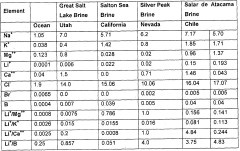
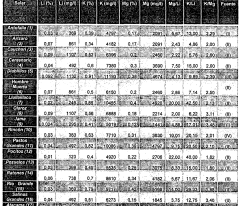
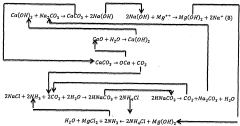
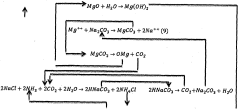
Process for recovering lithium from a brine with reagent regeneration and low cost process for purifying lithium
PatentWO2014078908A1
Innovation
- A process involving the use of sodium carbonate and sodium hydroxide to precipitate magnesium and calcium, followed by pH adjustment and reagent regeneration, allows for the separation of magnesium and calcium, enabling the concentration of lithium ions without solvent extraction, and subsequent purification of lithium carbonate through crystallization and ion exchange.
Method for recovering lithium with high efficiency from low-grade lithium minerals through process improvement, and lithium carbonate prepared thereby
PatentWO2024106897A1
Innovation
- The process involves acid-roasting, heat-treating, and water leaching of lithium-containing minerals, followed by alkaline solvent treatment to remove impurities and produce lithium phosphate, sulfate, or carbonate, optimizing conditions to suppress impurity incorporation and enhance lithium recovery.


Environmental Impact Assessment of Process Optimization
The optimization of lithium mining process control algorithms presents significant environmental implications that must be thoroughly assessed. Process optimization in lithium extraction operations directly impacts resource utilization efficiency, waste generation, and overall environmental footprint. When validating algorithms designed to address recovery variability, environmental considerations become particularly critical as they represent both constraints and opportunities for sustainable mining practices.
Current lithium extraction methods, particularly in brine operations, consume substantial water resources—approximately 500,000 gallons per ton of lithium produced. Algorithm optimization that improves recovery rates can potentially reduce this water intensity by 15-20%, according to recent field studies conducted at major lithium operations in South America. This water conservation aspect represents one of the most significant environmental benefits of advanced process control implementation.
Energy consumption patterns also shift considerably with algorithm optimization. Traditional lithium processing requires between 5,000-6,000 kWh of energy per ton of lithium carbonate equivalent (LCE). Preliminary data from pilot implementations of variability-focused algorithms indicates potential energy savings of 8-12%, translating to reduced carbon emissions and decreased dependency on local power infrastructure.
Chemical usage optimization presents another environmental dimension worth examining. Conventional extraction processes utilize significant quantities of reagents including sodium carbonate, calcium hydroxide, and various acids. Advanced control algorithms that account for feed variability can potentially reduce reagent consumption by 10-15%, minimizing the environmental impact associated with chemical manufacturing, transportation, and potential spills or releases.
Waste stream management benefits substantially from improved process control. The typical lithium operation generates 2-3 tons of solid waste per ton of product. Algorithm-driven optimization that accounts for variability can improve selectivity in separation processes, potentially reducing waste generation by 7-10% while simultaneously improving the quality of waste streams for potential valorization or safer disposal.
Land disturbance metrics also improve with enhanced process efficiency. More consistent recovery rates translate to more predictable land use requirements, allowing for more precise planning and potentially smaller operational footprints. This aspect becomes particularly relevant in environmentally sensitive regions where lithium operations increasingly face scrutiny regarding their geographical impact.
Biodiversity protection measures can be integrated into algorithm development by incorporating seasonal environmental variables that might affect local ecosystems. This proactive approach represents an emerging best practice that extends beyond compliance to position environmental stewardship as an integral component of operational excellence in lithium production.
Current lithium extraction methods, particularly in brine operations, consume substantial water resources—approximately 500,000 gallons per ton of lithium produced. Algorithm optimization that improves recovery rates can potentially reduce this water intensity by 15-20%, according to recent field studies conducted at major lithium operations in South America. This water conservation aspect represents one of the most significant environmental benefits of advanced process control implementation.
Energy consumption patterns also shift considerably with algorithm optimization. Traditional lithium processing requires between 5,000-6,000 kWh of energy per ton of lithium carbonate equivalent (LCE). Preliminary data from pilot implementations of variability-focused algorithms indicates potential energy savings of 8-12%, translating to reduced carbon emissions and decreased dependency on local power infrastructure.
Chemical usage optimization presents another environmental dimension worth examining. Conventional extraction processes utilize significant quantities of reagents including sodium carbonate, calcium hydroxide, and various acids. Advanced control algorithms that account for feed variability can potentially reduce reagent consumption by 10-15%, minimizing the environmental impact associated with chemical manufacturing, transportation, and potential spills or releases.
Waste stream management benefits substantially from improved process control. The typical lithium operation generates 2-3 tons of solid waste per ton of product. Algorithm-driven optimization that accounts for variability can improve selectivity in separation processes, potentially reducing waste generation by 7-10% while simultaneously improving the quality of waste streams for potential valorization or safer disposal.
Land disturbance metrics also improve with enhanced process efficiency. More consistent recovery rates translate to more predictable land use requirements, allowing for more precise planning and potentially smaller operational footprints. This aspect becomes particularly relevant in environmentally sensitive regions where lithium operations increasingly face scrutiny regarding their geographical impact.
Biodiversity protection measures can be integrated into algorithm development by incorporating seasonal environmental variables that might affect local ecosystems. This proactive approach represents an emerging best practice that extends beyond compliance to position environmental stewardship as an integral component of operational excellence in lithium production.
Regulatory Framework for Lithium Mining Operations
Lithium mining operations are subject to a complex web of regulations that vary significantly across jurisdictions, creating a challenging environment for implementing and validating process control algorithms. At the international level, frameworks such as the Initiative for Responsible Mining Assurance (IRMA) and the International Council on Mining and Metals (ICMM) principles establish baseline standards for sustainable mining practices, including specific provisions for water usage, chemical management, and waste disposal that directly impact lithium recovery processes.
National regulations present varying degrees of stringency, with countries like Chile, Australia, and Argentina—major lithium producers—implementing specific regulatory frameworks for brine extraction and processing. Chile's regulations, administered by CORFO (Chilean Economic Development Agency), mandate strict monitoring of brine extraction rates and water usage, requiring mining operations to demonstrate algorithmic controls that optimize lithium recovery while minimizing environmental impact. Similarly, Australia's Environmental Protection and Biodiversity Conservation Act imposes rigorous requirements for environmental impact assessments that must account for process variability.
The regulatory landscape also encompasses technical standards that directly influence algorithm validation requirements. ISO 14001 for environmental management systems and ISO 50001 for energy management systems establish frameworks within which process control algorithms must operate, requiring documented evidence of continuous improvement in resource efficiency and environmental performance.
Water management regulations are particularly significant for lithium mining operations, as both brine extraction and hard-rock processing methods are water-intensive. Regulatory bodies increasingly require sophisticated monitoring systems and predictive algorithms that can demonstrate compliance with water allocation limits while maintaining production targets. These regulations often mandate real-time monitoring capabilities and reporting mechanisms that must be integrated into process control systems.
Emerging regulatory trends indicate a move toward more stringent requirements for demonstrating recovery efficiency. The European Union's proposed Battery Regulation, for instance, will require battery manufacturers to document the carbon footprint and resource efficiency of their supply chains, creating downstream pressure on mining operations to implement and validate algorithms that can demonstrate optimal recovery rates with minimal environmental impact.
Compliance with these regulatory frameworks necessitates robust validation methodologies for process control algorithms. Mining companies must demonstrate that their algorithms can maintain consistent recovery rates while adapting to variability in ore composition, environmental conditions, and operational parameters—all while staying within regulatory boundaries. This validation process typically requires extensive documentation, third-party verification, and ongoing monitoring to satisfy regulatory requirements.
National regulations present varying degrees of stringency, with countries like Chile, Australia, and Argentina—major lithium producers—implementing specific regulatory frameworks for brine extraction and processing. Chile's regulations, administered by CORFO (Chilean Economic Development Agency), mandate strict monitoring of brine extraction rates and water usage, requiring mining operations to demonstrate algorithmic controls that optimize lithium recovery while minimizing environmental impact. Similarly, Australia's Environmental Protection and Biodiversity Conservation Act imposes rigorous requirements for environmental impact assessments that must account for process variability.
The regulatory landscape also encompasses technical standards that directly influence algorithm validation requirements. ISO 14001 for environmental management systems and ISO 50001 for energy management systems establish frameworks within which process control algorithms must operate, requiring documented evidence of continuous improvement in resource efficiency and environmental performance.
Water management regulations are particularly significant for lithium mining operations, as both brine extraction and hard-rock processing methods are water-intensive. Regulatory bodies increasingly require sophisticated monitoring systems and predictive algorithms that can demonstrate compliance with water allocation limits while maintaining production targets. These regulations often mandate real-time monitoring capabilities and reporting mechanisms that must be integrated into process control systems.
Emerging regulatory trends indicate a move toward more stringent requirements for demonstrating recovery efficiency. The European Union's proposed Battery Regulation, for instance, will require battery manufacturers to document the carbon footprint and resource efficiency of their supply chains, creating downstream pressure on mining operations to implement and validate algorithms that can demonstrate optimal recovery rates with minimal environmental impact.
Compliance with these regulatory frameworks necessitates robust validation methodologies for process control algorithms. Mining companies must demonstrate that their algorithms can maintain consistent recovery rates while adapting to variability in ore composition, environmental conditions, and operational parameters—all while staying within regulatory boundaries. This validation process typically requires extensive documentation, third-party verification, and ongoing monitoring to satisfy regulatory requirements.
Unlock deeper insights with PatSnap Eureka Quick Research — get a full tech report to explore trends and direct your research. Try now!
Generate Your Research Report Instantly with AI Agent
Supercharge your innovation with PatSnap Eureka AI Agent Platform!