Vanadium Battery Vs Lithium-Air: Efficiency Metrics
APR 27, 20269 MIN READ
Generate Your Research Report Instantly with AI Agent
PatSnap Eureka helps you evaluate technical feasibility & market potential.
Vanadium vs Lithium-Air Battery Technology Background and Goals
The evolution of energy storage technologies has been fundamentally driven by the increasing demand for efficient, sustainable, and scalable power solutions across multiple sectors. Vanadium redox flow batteries and lithium-air battery systems represent two distinct technological paradigms that have emerged from decades of electrochemical research, each addressing specific limitations of conventional energy storage approaches.
Vanadium redox flow battery technology originated in the 1980s through pioneering work at the University of New South Wales, building upon earlier flow battery concepts developed in the 1970s. The technology leverages the unique property of vanadium's ability to exist in multiple oxidation states, enabling both positive and negative electrolytes to utilize the same element. This breakthrough eliminated cross-contamination issues that plagued earlier flow battery designs using different active species.
Lithium-air battery development emerged from the pursuit of ultra-high energy density storage systems, theoretically capable of approaching gasoline-like energy densities. Initial research in the 1990s focused on exploiting the electrochemical reaction between lithium metal and atmospheric oxygen, promising energy densities exceeding 11,000 Wh/kg compared to conventional lithium-ion batteries' 150-250 Wh/kg range.
The primary technological objectives for vanadium flow batteries center on achieving enhanced power density, improved electrolyte stability, and cost reduction through manufacturing optimization. Current development efforts target increasing energy efficiency beyond 85%, extending operational lifespans to 20+ years, and reducing system costs below $300/kWh for grid-scale applications.
Lithium-air battery research focuses on overcoming fundamental challenges including oxygen electrode kinetics, electrolyte stability, and cycle life limitations. Key objectives include developing stable electrolyte systems that can withstand reactive oxygen species, creating efficient oxygen reduction and evolution catalysts, and achieving practical energy densities above 500 Wh/kg while maintaining acceptable cycle life.
Both technologies aim to address critical gaps in the energy storage landscape, with vanadium systems targeting long-duration grid storage applications and lithium-air batteries pursuing ultra-lightweight portable and transportation applications where energy density is paramount.
Vanadium redox flow battery technology originated in the 1980s through pioneering work at the University of New South Wales, building upon earlier flow battery concepts developed in the 1970s. The technology leverages the unique property of vanadium's ability to exist in multiple oxidation states, enabling both positive and negative electrolytes to utilize the same element. This breakthrough eliminated cross-contamination issues that plagued earlier flow battery designs using different active species.
Lithium-air battery development emerged from the pursuit of ultra-high energy density storage systems, theoretically capable of approaching gasoline-like energy densities. Initial research in the 1990s focused on exploiting the electrochemical reaction between lithium metal and atmospheric oxygen, promising energy densities exceeding 11,000 Wh/kg compared to conventional lithium-ion batteries' 150-250 Wh/kg range.
The primary technological objectives for vanadium flow batteries center on achieving enhanced power density, improved electrolyte stability, and cost reduction through manufacturing optimization. Current development efforts target increasing energy efficiency beyond 85%, extending operational lifespans to 20+ years, and reducing system costs below $300/kWh for grid-scale applications.
Lithium-air battery research focuses on overcoming fundamental challenges including oxygen electrode kinetics, electrolyte stability, and cycle life limitations. Key objectives include developing stable electrolyte systems that can withstand reactive oxygen species, creating efficient oxygen reduction and evolution catalysts, and achieving practical energy densities above 500 Wh/kg while maintaining acceptable cycle life.
Both technologies aim to address critical gaps in the energy storage landscape, with vanadium systems targeting long-duration grid storage applications and lithium-air batteries pursuing ultra-lightweight portable and transportation applications where energy density is paramount.
Market Demand Analysis for Advanced Energy Storage Systems
The global energy storage market is experiencing unprecedented growth driven by the accelerating transition toward renewable energy sources and the urgent need for grid stabilization solutions. Wind and solar power generation's inherent intermittency creates substantial demand for advanced storage technologies that can efficiently store excess energy during peak production periods and release it when renewable sources are unavailable. This fundamental challenge has positioned energy storage as a critical infrastructure component for achieving carbon neutrality goals worldwide.
Grid-scale energy storage applications represent the largest market segment for both vanadium redox flow batteries and lithium-air technologies. Utility companies increasingly require long-duration storage solutions capable of providing power for extended periods, ranging from several hours to multiple days. Traditional lithium-ion batteries face limitations in duration and cycle life for these applications, creating opportunities for alternative technologies that offer superior longevity and scalability characteristics.
The electric vehicle sector continues to drive substantial demand for high-energy-density storage solutions. While current lithium-ion technology dominates this market, the theoretical energy density advantages of lithium-air batteries could revolutionize transportation applications if technical challenges are overcome. The automotive industry's push toward longer driving ranges and faster charging capabilities creates strong market pull for breakthrough battery technologies.
Industrial and commercial energy storage markets are expanding rapidly as businesses seek to reduce electricity costs through peak shaving and demand response programs. Vanadium batteries' exceptional cycle life and safety characteristics make them particularly attractive for applications requiring frequent charge-discharge cycles over decades of operation. Manufacturing facilities, data centers, and large commercial buildings represent significant market opportunities for stationary storage systems.
Emerging markets in developing countries present substantial growth potential as these regions build new electrical infrastructure and seek to integrate distributed renewable energy sources. The modular nature of flow battery systems and their ability to operate in harsh environmental conditions position them favorably for deployment in regions with limited maintenance infrastructure.
The residential energy storage segment, while currently smaller, shows strong growth potential driven by increasing solar panel adoption and grid reliability concerns. Homeowners seek storage solutions that provide backup power during outages while maximizing self-consumption of rooftop solar generation, creating demand for cost-effective, long-lasting battery systems.
Grid-scale energy storage applications represent the largest market segment for both vanadium redox flow batteries and lithium-air technologies. Utility companies increasingly require long-duration storage solutions capable of providing power for extended periods, ranging from several hours to multiple days. Traditional lithium-ion batteries face limitations in duration and cycle life for these applications, creating opportunities for alternative technologies that offer superior longevity and scalability characteristics.
The electric vehicle sector continues to drive substantial demand for high-energy-density storage solutions. While current lithium-ion technology dominates this market, the theoretical energy density advantages of lithium-air batteries could revolutionize transportation applications if technical challenges are overcome. The automotive industry's push toward longer driving ranges and faster charging capabilities creates strong market pull for breakthrough battery technologies.
Industrial and commercial energy storage markets are expanding rapidly as businesses seek to reduce electricity costs through peak shaving and demand response programs. Vanadium batteries' exceptional cycle life and safety characteristics make them particularly attractive for applications requiring frequent charge-discharge cycles over decades of operation. Manufacturing facilities, data centers, and large commercial buildings represent significant market opportunities for stationary storage systems.
Emerging markets in developing countries present substantial growth potential as these regions build new electrical infrastructure and seek to integrate distributed renewable energy sources. The modular nature of flow battery systems and their ability to operate in harsh environmental conditions position them favorably for deployment in regions with limited maintenance infrastructure.
The residential energy storage segment, while currently smaller, shows strong growth potential driven by increasing solar panel adoption and grid reliability concerns. Homeowners seek storage solutions that provide backup power during outages while maximizing self-consumption of rooftop solar generation, creating demand for cost-effective, long-lasting battery systems.
Current Status and Challenges in Flow vs Metal-Air Technologies
Vanadium redox flow batteries (VRFBs) have achieved significant commercial maturity, with several manufacturers deploying grid-scale systems ranging from 200kWh to 800MWh capacity. Current VRFB systems demonstrate round-trip efficiencies of 75-85%, with energy densities reaching 25-35 Wh/L. The technology benefits from proven electrolyte chemistry, established manufacturing processes, and operational experience spanning over two decades. Major installations in China, Japan, and Europe have validated the technology's reliability for long-duration energy storage applications.
Lithium-air batteries remain predominantly in research and development phases, with most systems confined to laboratory environments. Current prototypes achieve theoretical energy densities exceeding 1000 Wh/kg, significantly surpassing conventional lithium-ion technologies. However, practical implementations struggle with cycle life limitations, typically demonstrating fewer than 100 charge-discharge cycles before significant capacity degradation. The technology shows promise in specialized applications requiring ultra-high energy density, but commercial viability remains years away.
The primary challenge facing VRFBs centers on cost optimization and energy density improvements. Vanadium electrolyte costs constitute 30-40% of total system expenses, creating economic barriers for widespread adoption. Additionally, the technology requires sophisticated pumping systems and precise temperature control, increasing operational complexity. Membrane degradation and vanadium crossover represent ongoing technical challenges affecting long-term performance stability.
Lithium-air systems confront more fundamental obstacles, including cathode material stability, electrolyte decomposition, and oxygen management complexity. The formation of lithium peroxide during discharge creates irreversible reactions that limit cycle life. Moisture sensitivity requires hermetic sealing systems, while oxygen supply mechanisms add significant engineering complexity. Current research focuses on developing stable catalysts and protective coatings to address these degradation mechanisms.
Manufacturing scalability presents contrasting challenges for both technologies. VRFB production leverages established chemical processing infrastructure, enabling relatively straightforward capacity expansion. However, vanadium supply chain constraints and price volatility create market risks. Lithium-air manufacturing faces more fundamental hurdles, requiring development of entirely new production processes for specialized cathode materials and protective systems.
Performance optimization efforts in VRFBs concentrate on advanced membrane materials, improved electrode designs, and enhanced electrolyte formulations. Recent developments in mixed-acid electrolytes and carbon-based electrodes show potential for efficiency improvements. Lithium-air research emphasizes catalyst development, solid-state electrolyte integration, and alternative oxygen reduction mechanisms to overcome current limitations and achieve practical cycle life targets.
Lithium-air batteries remain predominantly in research and development phases, with most systems confined to laboratory environments. Current prototypes achieve theoretical energy densities exceeding 1000 Wh/kg, significantly surpassing conventional lithium-ion technologies. However, practical implementations struggle with cycle life limitations, typically demonstrating fewer than 100 charge-discharge cycles before significant capacity degradation. The technology shows promise in specialized applications requiring ultra-high energy density, but commercial viability remains years away.
The primary challenge facing VRFBs centers on cost optimization and energy density improvements. Vanadium electrolyte costs constitute 30-40% of total system expenses, creating economic barriers for widespread adoption. Additionally, the technology requires sophisticated pumping systems and precise temperature control, increasing operational complexity. Membrane degradation and vanadium crossover represent ongoing technical challenges affecting long-term performance stability.
Lithium-air systems confront more fundamental obstacles, including cathode material stability, electrolyte decomposition, and oxygen management complexity. The formation of lithium peroxide during discharge creates irreversible reactions that limit cycle life. Moisture sensitivity requires hermetic sealing systems, while oxygen supply mechanisms add significant engineering complexity. Current research focuses on developing stable catalysts and protective coatings to address these degradation mechanisms.
Manufacturing scalability presents contrasting challenges for both technologies. VRFB production leverages established chemical processing infrastructure, enabling relatively straightforward capacity expansion. However, vanadium supply chain constraints and price volatility create market risks. Lithium-air manufacturing faces more fundamental hurdles, requiring development of entirely new production processes for specialized cathode materials and protective systems.
Performance optimization efforts in VRFBs concentrate on advanced membrane materials, improved electrode designs, and enhanced electrolyte formulations. Recent developments in mixed-acid electrolytes and carbon-based electrodes show potential for efficiency improvements. Lithium-air research emphasizes catalyst development, solid-state electrolyte integration, and alternative oxygen reduction mechanisms to overcome current limitations and achieve practical cycle life targets.
Current Efficiency Solutions in Both Battery Technologies
01 Energy density optimization in vanadium redox flow batteries
Methods for improving the energy density of vanadium redox flow batteries through electrolyte composition optimization, concentration enhancement, and advanced membrane technologies. These approaches focus on maximizing the amount of energy that can be stored per unit volume or weight of the battery system.- Energy density optimization in vanadium redox flow batteries: Methods for improving the energy density of vanadium redox flow batteries through electrolyte composition optimization, concentration enhancement, and advanced membrane technologies. These approaches focus on maximizing the amount of energy stored per unit volume or weight of the battery system.
- Coulombic efficiency enhancement techniques: Strategies to improve the coulombic efficiency of both vanadium and lithium-air batteries by minimizing side reactions, optimizing charge-discharge protocols, and implementing advanced electrode materials. These methods aim to maximize the ratio of discharge capacity to charge capacity.
- Lithium-air battery oxygen utilization efficiency: Approaches for enhancing oxygen electrode performance and oxygen utilization efficiency in lithium-air batteries through catalyst development, porous electrode design, and electrolyte optimization. These innovations target improved oxygen reduction and evolution reaction kinetics.
- Power density and rate capability improvements: Technologies focused on enhancing the power output and rate capability of vanadium and lithium-air batteries through electrode architecture optimization, electrolyte conductivity enhancement, and thermal management systems. These developments enable faster charging and discharging while maintaining efficiency.
- Cycle life and degradation mitigation strategies: Methods for extending battery cycle life and mitigating capacity degradation through advanced materials engineering, protective coatings, and operational parameter optimization. These approaches focus on maintaining high efficiency over extended operational periods.
02 Coulombic efficiency enhancement techniques
Strategies to improve the coulombic efficiency of both vanadium and lithium-air batteries by minimizing side reactions, optimizing charge-discharge protocols, and implementing advanced electrode materials. These techniques aim to maximize the ratio of discharge capacity to charge capacity.Expand Specific Solutions03 Lithium-air battery oxygen utilization efficiency
Methods for optimizing oxygen electrode performance and air cathode design to improve the efficiency of oxygen reduction and evolution reactions in lithium-air batteries. Focus on catalyst development and porous electrode structures to enhance mass transport and reaction kinetics.Expand Specific Solutions04 Power density and rate capability improvements
Techniques for enhancing the power output and rate performance of both battery types through electrode architecture optimization, electrolyte conductivity enhancement, and thermal management systems. These approaches target the ability to deliver high power while maintaining efficiency.Expand Specific Solutions05 Cycle life and degradation mitigation strategies
Approaches to extend battery lifespan and maintain efficiency over extended cycling by addressing capacity fade mechanisms, implementing protective coatings, and developing stable electrolyte formulations. These methods focus on preserving performance metrics throughout the battery's operational life.Expand Specific Solutions
Major Players in Vanadium Flow and Lithium-Air Battery Markets
The vanadium battery versus lithium-air technology comparison reveals a competitive landscape in early-to-mature development stages with significant market potential. The industry shows mixed technological maturity levels, where vanadium redox flow batteries demonstrate commercial viability through established players like Panasonic and Samsung SDI, while lithium-air technology remains largely experimental. Major automotive manufacturers including Toyota and energy companies like Électricité de France are actively investing in both technologies. Research institutions such as MIT, Shanghai Jiao Tong University, and Chinese Academy of Sciences are driving fundamental breakthroughs. Asian companies, particularly LG Chem and Chinese firms like Guangdong Bangpu, dominate manufacturing capabilities. The market exhibits strong growth potential in grid-scale energy storage, with vanadium batteries offering superior cycle life but lithium-air promising higher energy density once technical challenges are resolved.
Panasonic Intellectual Property Management Co. Ltd.
Technical Solution: Panasonic has developed advanced vanadium redox flow battery (VRFB) systems with enhanced electrolyte formulations that achieve over 85% round-trip efficiency. Their technology focuses on optimizing vanadium ion concentration and membrane materials to reduce energy losses. For lithium-air batteries, Panasonic has pioneered cathode designs using carbon nanotube structures that improve oxygen reduction reaction kinetics, achieving theoretical energy densities of 3,500 Wh/kg in laboratory conditions. Their hybrid approach combines solid-state electrolytes with advanced air electrode architectures to address cycle life limitations.
Strengths: Strong manufacturing capabilities and proven battery commercialization experience. Weaknesses: Limited breakthrough in lithium-air cycle stability compared to competitors.
LG Chem Ltd.
Technical Solution: LG Chem has developed proprietary vanadium battery electrolyte solutions with enhanced thermal stability, operating efficiently at temperatures ranging from -10°C to 65°C with minimal capacity degradation. Their VRFB systems demonstrate over 10,000 cycle life with 80% capacity retention. In lithium-air technology, LG Chem focuses on protected lithium metal anodes and hierarchical porous cathode structures that enable controlled oxygen transport. Their systems achieve energy densities exceeding 1,000 Wh/kg in prototype cells, with advanced electrolyte additives that mitigate parasitic reactions and extend cycle life to over 500 cycles.
Strengths: Excellent electrolyte chemistry expertise and scalable manufacturing processes. Weaknesses: Higher production costs compared to conventional lithium-ion technologies.
Core Efficiency Metrics and Performance Innovations
Vanadium solid-salt battery
PatentWO2015046124A1
Innovation
- Incorporating a specific carbon material with a low R value determined by Raman spectroscopy and a lattice spacing of 0.33 to 0.36 nm, along with vanadium ions or cations and an electrolytic solution containing sulfuric acid and phosphoric acid, into the electrodes to maintain a balance of redox states.


Nanofiber electrodes for energy storage devices
PatentInactiveUS20120276458A1
Innovation
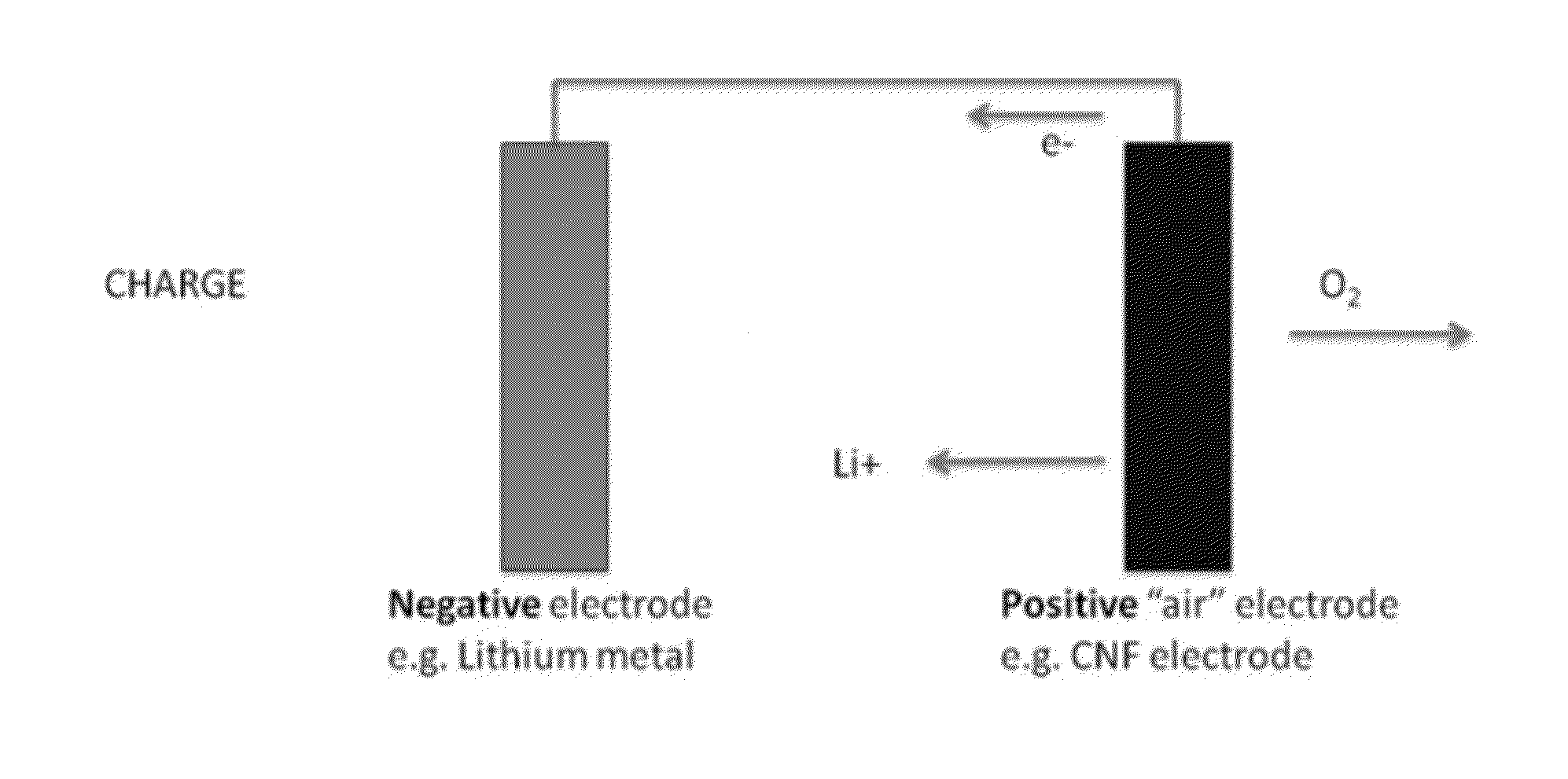
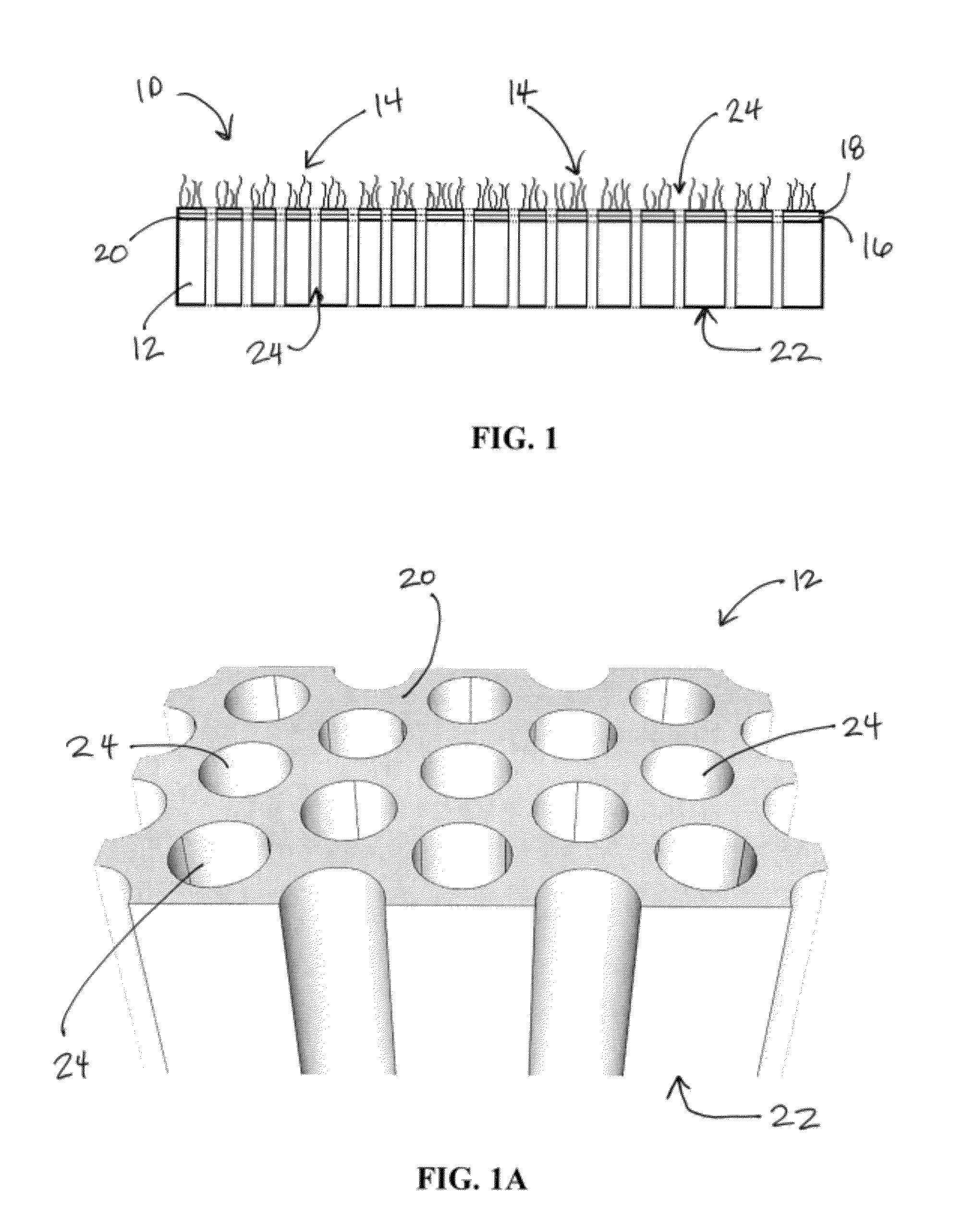
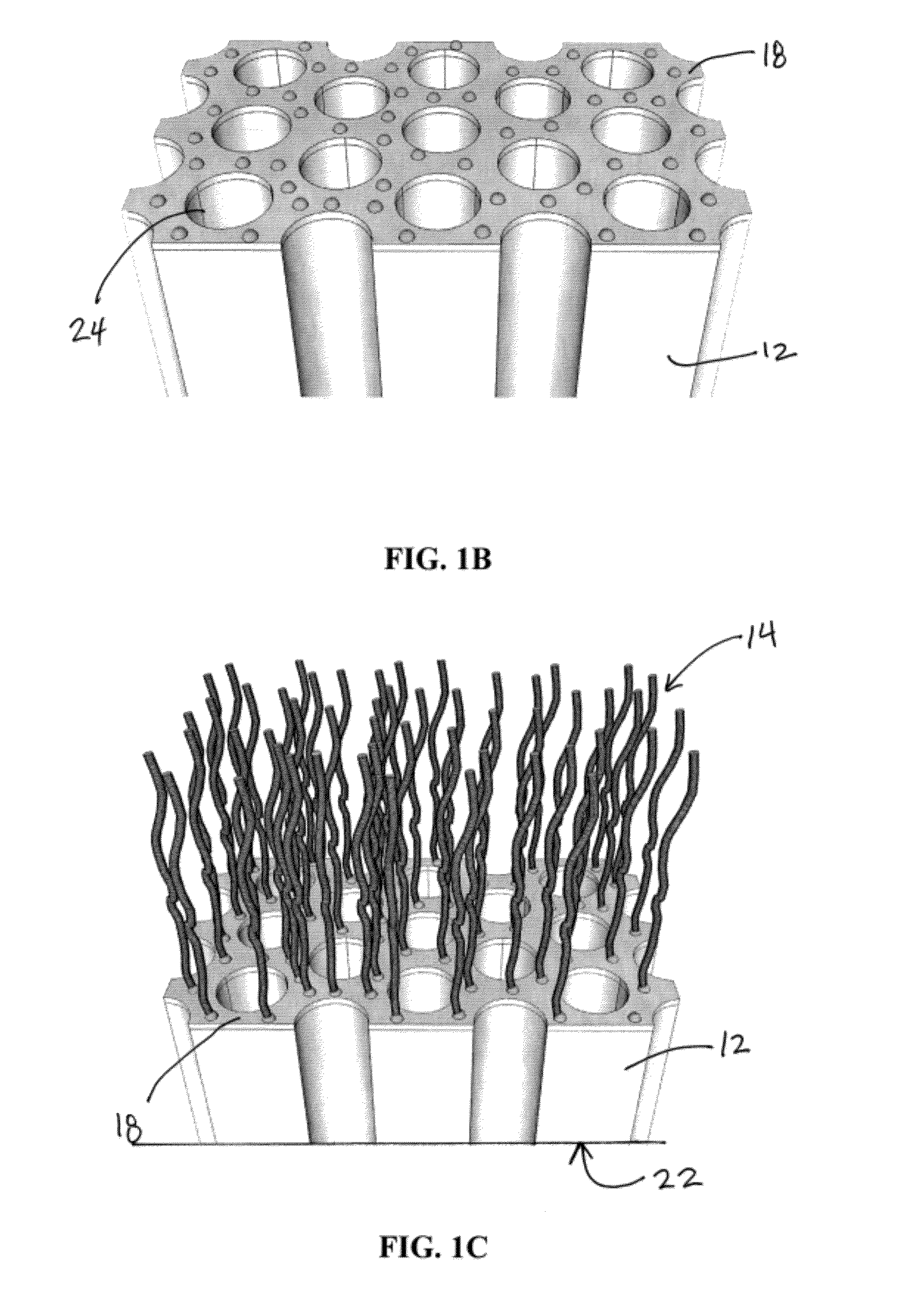
- The development of electrochemical cells with a positive electrode featuring a porous substrate and aligned carbon nanofibers, which provide a high void volume and include a conductive metal layer, enhancing gravimetric energy density and capacity by facilitating the flow of oxygen and electrolyte, thereby reducing blockages and improving electrode performance.

Safety Standards and Regulations for Advanced Battery Systems
The regulatory landscape for advanced battery systems, particularly vanadium redox flow batteries (VRFBs) and lithium-air batteries, presents a complex framework that directly impacts their efficiency metrics and commercial viability. Current safety standards are primarily derived from established lithium-ion battery regulations, creating gaps in addressing the unique characteristics of these emerging technologies.
For vanadium redox flow batteries, existing regulations focus heavily on electrolyte handling and containment systems. The International Electrotechnical Commission (IEC) 62932 series provides foundational guidelines for flow battery safety, emphasizing electrolyte toxicity management and system integrity requirements. These standards mandate specific containment protocols that can impact energy density calculations and overall system efficiency, as additional safety infrastructure reduces the effective energy-to-weight ratios.
Lithium-air battery systems face more stringent regulatory challenges due to their reactive nature with atmospheric components. Current safety frameworks under IEC 62133 and UN 38.3 transportation regulations require extensive modification to accommodate the unique failure modes of metal-air chemistries. The absence of specific standards for lithium-air systems creates regulatory uncertainty that affects efficiency benchmarking methodologies.
Regional regulatory variations significantly influence efficiency metric standardization. The European Union's Battery Regulation 2023/1542 introduces lifecycle assessment requirements that extend beyond traditional efficiency measurements, incorporating environmental impact factors. Meanwhile, the United States relies on Department of Transportation (DOT) and Occupational Safety and Health Administration (OSHA) guidelines that emphasize workplace safety over energy efficiency standards.
Emerging regulatory trends indicate a shift toward performance-based safety standards rather than prescriptive requirements. This evolution allows for more accurate efficiency comparisons between vanadium and lithium-air technologies by establishing common testing protocols and safety margins. However, the current regulatory fragmentation necessitates technology-specific efficiency adjustments to account for varying compliance costs and safety infrastructure requirements, ultimately affecting the true comparative efficiency metrics between these advanced battery systems.
For vanadium redox flow batteries, existing regulations focus heavily on electrolyte handling and containment systems. The International Electrotechnical Commission (IEC) 62932 series provides foundational guidelines for flow battery safety, emphasizing electrolyte toxicity management and system integrity requirements. These standards mandate specific containment protocols that can impact energy density calculations and overall system efficiency, as additional safety infrastructure reduces the effective energy-to-weight ratios.
Lithium-air battery systems face more stringent regulatory challenges due to their reactive nature with atmospheric components. Current safety frameworks under IEC 62133 and UN 38.3 transportation regulations require extensive modification to accommodate the unique failure modes of metal-air chemistries. The absence of specific standards for lithium-air systems creates regulatory uncertainty that affects efficiency benchmarking methodologies.
Regional regulatory variations significantly influence efficiency metric standardization. The European Union's Battery Regulation 2023/1542 introduces lifecycle assessment requirements that extend beyond traditional efficiency measurements, incorporating environmental impact factors. Meanwhile, the United States relies on Department of Transportation (DOT) and Occupational Safety and Health Administration (OSHA) guidelines that emphasize workplace safety over energy efficiency standards.
Emerging regulatory trends indicate a shift toward performance-based safety standards rather than prescriptive requirements. This evolution allows for more accurate efficiency comparisons between vanadium and lithium-air technologies by establishing common testing protocols and safety margins. However, the current regulatory fragmentation necessitates technology-specific efficiency adjustments to account for varying compliance costs and safety infrastructure requirements, ultimately affecting the true comparative efficiency metrics between these advanced battery systems.
Environmental Impact Assessment of Battery Manufacturing
The environmental implications of vanadium redox flow battery (VRFB) and lithium-air battery manufacturing present distinct challenges and opportunities across their respective production lifecycles. Manufacturing processes for these advanced energy storage technologies involve complex material extraction, processing, and assembly stages that generate varying degrees of environmental impact.
Vanadium battery production primarily centers on vanadium pentoxide extraction and electrolyte preparation. The mining and processing of vanadium ore typically occurs as a byproduct of steel production or dedicated vanadium mining operations. The environmental footprint includes moderate water consumption during electrolyte synthesis and relatively low toxic waste generation. The manufacturing process benefits from vanadium's recyclability, as the electrolyte can be reused across multiple battery lifecycles without significant degradation.
Lithium-air battery manufacturing faces more complex environmental challenges due to the sophisticated materials required for air cathodes and protective systems. The production involves lithium extraction through brine evaporation or hard rock mining, both of which consume substantial water resources and generate chemical waste. Additionally, the manufacturing of specialized cathode materials and protective membranes requires energy-intensive processes and generates hazardous byproducts.
Carbon footprint analysis reveals significant differences between the two technologies. VRFB manufacturing generates approximately 15-20% lower CO2 emissions per kWh of storage capacity compared to lithium-air systems. This advantage stems from simpler manufacturing processes and reduced material processing requirements. However, lithium-air batteries demonstrate superior energy density, potentially offsetting manufacturing emissions through reduced material volume requirements.
Water usage patterns differ substantially between the technologies. Vanadium battery production requires moderate water consumption primarily during electrolyte preparation, while lithium-air manufacturing demands extensive water resources for lithium extraction and cathode material processing. Waste stream management also varies significantly, with VRFB production generating primarily inorganic waste streams that are more easily managed and recycled.
The geographic distribution of manufacturing impacts reflects resource availability and processing capabilities. Vanadium production concentrates in regions with established steel industries, while lithium-air battery manufacturing clusters around specialized chemical processing facilities, creating different regional environmental pressure points.
Vanadium battery production primarily centers on vanadium pentoxide extraction and electrolyte preparation. The mining and processing of vanadium ore typically occurs as a byproduct of steel production or dedicated vanadium mining operations. The environmental footprint includes moderate water consumption during electrolyte synthesis and relatively low toxic waste generation. The manufacturing process benefits from vanadium's recyclability, as the electrolyte can be reused across multiple battery lifecycles without significant degradation.
Lithium-air battery manufacturing faces more complex environmental challenges due to the sophisticated materials required for air cathodes and protective systems. The production involves lithium extraction through brine evaporation or hard rock mining, both of which consume substantial water resources and generate chemical waste. Additionally, the manufacturing of specialized cathode materials and protective membranes requires energy-intensive processes and generates hazardous byproducts.
Carbon footprint analysis reveals significant differences between the two technologies. VRFB manufacturing generates approximately 15-20% lower CO2 emissions per kWh of storage capacity compared to lithium-air systems. This advantage stems from simpler manufacturing processes and reduced material processing requirements. However, lithium-air batteries demonstrate superior energy density, potentially offsetting manufacturing emissions through reduced material volume requirements.
Water usage patterns differ substantially between the technologies. Vanadium battery production requires moderate water consumption primarily during electrolyte preparation, while lithium-air manufacturing demands extensive water resources for lithium extraction and cathode material processing. Waste stream management also varies significantly, with VRFB production generating primarily inorganic waste streams that are more easily managed and recycled.
The geographic distribution of manufacturing impacts reflects resource availability and processing capabilities. Vanadium production concentrates in regions with established steel industries, while lithium-air battery manufacturing clusters around specialized chemical processing facilities, creating different regional environmental pressure points.
Unlock deeper insights with PatSnap Eureka Quick Research — get a full tech report to explore trends and direct your research. Try now!
Generate Your Research Report Instantly with AI Agent
Supercharge your innovation with PatSnap Eureka AI Agent Platform!