Wireless Controller vs Zigbee: Environmental Suitability
MAR 5, 20269 MIN READ
Generate Your Research Report Instantly with AI Agent
Patsnap Eureka helps you evaluate technical feasibility & market potential.
Wireless Controller and Zigbee Technology Background
Wireless communication technologies have undergone remarkable evolution since the early 20th century, transitioning from basic radio frequency transmissions to sophisticated digital protocols that enable seamless device interconnectivity. The development trajectory has been driven by increasing demands for reliable, low-power, and cost-effective solutions across industrial, commercial, and residential applications.
Wireless controllers represent a broad category of devices designed to manage and coordinate various electronic systems without physical cable connections. These controllers utilize different communication protocols and frequency bands, ranging from proprietary solutions to standardized protocols like Wi-Fi, Bluetooth, and cellular technologies. The fundamental objective is to provide flexible control mechanisms that can operate effectively across diverse environmental conditions while maintaining signal integrity and system reliability.
ZigBee technology emerged in the early 2000s as a specialized wireless communication standard built upon the IEEE 802.15.4 specification. Developed by the ZigBee Alliance, this protocol was specifically engineered to address the growing need for low-power, low-data-rate wireless networks in applications such as home automation, industrial monitoring, and sensor networks. ZigBee operates primarily in the 2.4 GHz ISM band globally, with additional frequency options in regional bands.
The core design philosophy of ZigBee emphasizes mesh networking capabilities, enabling devices to create self-healing networks where data can route through multiple pathways. This architecture provides enhanced reliability and extended range compared to traditional point-to-point wireless solutions. The protocol supports various network topologies including star, tree, and mesh configurations, allowing for flexible deployment strategies based on specific application requirements.
Environmental suitability has become a critical differentiating factor between wireless controller technologies and ZigBee implementations. Traditional wireless controllers often prioritize high-speed data transmission and broad compatibility, while ZigBee focuses on energy efficiency and robust operation in challenging environmental conditions. The protocol's low-power consumption characteristics enable battery-operated devices to function for years without replacement, making it particularly suitable for remote or hard-to-access installations.
The technical evolution continues to address emerging challenges in industrial IoT applications, smart city infrastructure, and environmental monitoring systems where devices must withstand extreme temperatures, humidity variations, and electromagnetic interference while maintaining consistent performance standards.
Wireless controllers represent a broad category of devices designed to manage and coordinate various electronic systems without physical cable connections. These controllers utilize different communication protocols and frequency bands, ranging from proprietary solutions to standardized protocols like Wi-Fi, Bluetooth, and cellular technologies. The fundamental objective is to provide flexible control mechanisms that can operate effectively across diverse environmental conditions while maintaining signal integrity and system reliability.
ZigBee technology emerged in the early 2000s as a specialized wireless communication standard built upon the IEEE 802.15.4 specification. Developed by the ZigBee Alliance, this protocol was specifically engineered to address the growing need for low-power, low-data-rate wireless networks in applications such as home automation, industrial monitoring, and sensor networks. ZigBee operates primarily in the 2.4 GHz ISM band globally, with additional frequency options in regional bands.
The core design philosophy of ZigBee emphasizes mesh networking capabilities, enabling devices to create self-healing networks where data can route through multiple pathways. This architecture provides enhanced reliability and extended range compared to traditional point-to-point wireless solutions. The protocol supports various network topologies including star, tree, and mesh configurations, allowing for flexible deployment strategies based on specific application requirements.
Environmental suitability has become a critical differentiating factor between wireless controller technologies and ZigBee implementations. Traditional wireless controllers often prioritize high-speed data transmission and broad compatibility, while ZigBee focuses on energy efficiency and robust operation in challenging environmental conditions. The protocol's low-power consumption characteristics enable battery-operated devices to function for years without replacement, making it particularly suitable for remote or hard-to-access installations.
The technical evolution continues to address emerging challenges in industrial IoT applications, smart city infrastructure, and environmental monitoring systems where devices must withstand extreme temperatures, humidity variations, and electromagnetic interference while maintaining consistent performance standards.
Environmental IoT Market Demand Analysis
The environmental IoT market has experienced unprecedented growth driven by increasing regulatory pressures, corporate sustainability initiatives, and the urgent need for real-time environmental monitoring across diverse sectors. Industrial facilities, smart cities, agricultural operations, and research institutions are actively seeking robust wireless communication solutions that can withstand harsh environmental conditions while maintaining reliable data transmission.
Traditional wireless controllers have established a strong foothold in industrial automation and process control applications where environmental monitoring is critical. These systems excel in manufacturing plants, chemical processing facilities, and power generation stations where electromagnetic interference, temperature extremes, and vibration are common challenges. The demand stems from industries requiring deterministic communication with guaranteed latency and high reliability standards.
Zigbee technology has captured significant market share in building automation, smart agriculture, and distributed sensor networks. The protocol's mesh networking capabilities and low power consumption make it particularly attractive for large-scale environmental monitoring deployments. Agricultural sectors increasingly adopt Zigbee-based solutions for soil moisture monitoring, weather stations, and greenhouse automation due to cost-effectiveness and ease of deployment.
Market segmentation reveals distinct preferences based on application requirements. Critical infrastructure and industrial process monitoring favor wireless controllers due to their superior performance in electromagnetically noisy environments and ability to maintain communication integrity under extreme conditions. Conversely, distributed monitoring applications such as air quality networks, wildlife tracking, and precision agriculture demonstrate strong preference for Zigbee solutions.
The growing emphasis on environmental compliance and sustainability reporting has created substantial demand for comprehensive monitoring systems. Organizations require solutions capable of collecting data from multiple environmental parameters including air quality, water contamination, noise levels, and meteorological conditions. This trend has intensified the need for wireless technologies that can operate reliably across varying environmental conditions while providing scalable network architectures.
Emerging market drivers include smart city initiatives, climate change monitoring requirements, and industrial IoT transformation. These applications demand wireless solutions that can function effectively in outdoor environments, withstand weather extremes, and provide long-term operational stability with minimal maintenance requirements.
Traditional wireless controllers have established a strong foothold in industrial automation and process control applications where environmental monitoring is critical. These systems excel in manufacturing plants, chemical processing facilities, and power generation stations where electromagnetic interference, temperature extremes, and vibration are common challenges. The demand stems from industries requiring deterministic communication with guaranteed latency and high reliability standards.
Zigbee technology has captured significant market share in building automation, smart agriculture, and distributed sensor networks. The protocol's mesh networking capabilities and low power consumption make it particularly attractive for large-scale environmental monitoring deployments. Agricultural sectors increasingly adopt Zigbee-based solutions for soil moisture monitoring, weather stations, and greenhouse automation due to cost-effectiveness and ease of deployment.
Market segmentation reveals distinct preferences based on application requirements. Critical infrastructure and industrial process monitoring favor wireless controllers due to their superior performance in electromagnetically noisy environments and ability to maintain communication integrity under extreme conditions. Conversely, distributed monitoring applications such as air quality networks, wildlife tracking, and precision agriculture demonstrate strong preference for Zigbee solutions.
The growing emphasis on environmental compliance and sustainability reporting has created substantial demand for comprehensive monitoring systems. Organizations require solutions capable of collecting data from multiple environmental parameters including air quality, water contamination, noise levels, and meteorological conditions. This trend has intensified the need for wireless technologies that can operate reliably across varying environmental conditions while providing scalable network architectures.
Emerging market drivers include smart city initiatives, climate change monitoring requirements, and industrial IoT transformation. These applications demand wireless solutions that can function effectively in outdoor environments, withstand weather extremes, and provide long-term operational stability with minimal maintenance requirements.
Current Wireless Protocol Environmental Challenges
Current wireless protocols face significant environmental challenges that directly impact their performance, reliability, and suitability for various applications. Temperature variations represent one of the most critical factors affecting wireless communication systems. Most wireless controllers and Zigbee devices operate within specified temperature ranges, typically -20°C to +70°C for commercial applications. Extreme temperatures can cause frequency drift, reduced battery life, and component degradation, leading to communication failures and shortened device lifespans.
Humidity and moisture exposure create substantial operational risks for wireless protocols. High humidity levels can cause corrosion of electronic components, signal attenuation, and interference patterns that degrade communication quality. Water ingress poses particular challenges for outdoor deployments, where devices must maintain reliable operation despite exposure to rain, snow, and condensation. The ingress protection ratings of wireless devices often determine their environmental suitability and deployment flexibility.
Electromagnetic interference represents another major environmental challenge affecting wireless protocol performance. Industrial environments with heavy machinery, power lines, and electronic equipment generate significant electromagnetic noise that can disrupt wireless communications. The 2.4 GHz ISM band, commonly used by many wireless protocols including Zigbee, experiences congestion from WiFi networks, Bluetooth devices, and microwave ovens, creating interference patterns that reduce communication reliability and range.
Physical obstructions and environmental structures significantly impact wireless signal propagation. Dense urban environments with concrete buildings, metal structures, and underground installations create multipath fading and signal blockage issues. Indoor environments present challenges with wall penetration, furniture interference, and varying construction materials that affect signal strength and coverage patterns.
Vibration and mechanical stress in industrial applications pose additional challenges for wireless devices. Continuous vibration can cause component loosening, connection failures, and premature device failure. Mining, manufacturing, and transportation environments subject wireless devices to mechanical stresses that standard consumer-grade equipment cannot withstand, requiring ruggedized designs and specialized mounting solutions.
Power supply stability and energy harvesting limitations create operational constraints in remote or harsh environments. Battery-powered wireless devices face reduced performance in extreme temperatures, while energy harvesting solutions may be insufficient in low-light or low-vibration environments. These power-related challenges directly impact network reliability and maintenance requirements, particularly in applications requiring long-term autonomous operation without regular maintenance access.
Humidity and moisture exposure create substantial operational risks for wireless protocols. High humidity levels can cause corrosion of electronic components, signal attenuation, and interference patterns that degrade communication quality. Water ingress poses particular challenges for outdoor deployments, where devices must maintain reliable operation despite exposure to rain, snow, and condensation. The ingress protection ratings of wireless devices often determine their environmental suitability and deployment flexibility.
Electromagnetic interference represents another major environmental challenge affecting wireless protocol performance. Industrial environments with heavy machinery, power lines, and electronic equipment generate significant electromagnetic noise that can disrupt wireless communications. The 2.4 GHz ISM band, commonly used by many wireless protocols including Zigbee, experiences congestion from WiFi networks, Bluetooth devices, and microwave ovens, creating interference patterns that reduce communication reliability and range.
Physical obstructions and environmental structures significantly impact wireless signal propagation. Dense urban environments with concrete buildings, metal structures, and underground installations create multipath fading and signal blockage issues. Indoor environments present challenges with wall penetration, furniture interference, and varying construction materials that affect signal strength and coverage patterns.
Vibration and mechanical stress in industrial applications pose additional challenges for wireless devices. Continuous vibration can cause component loosening, connection failures, and premature device failure. Mining, manufacturing, and transportation environments subject wireless devices to mechanical stresses that standard consumer-grade equipment cannot withstand, requiring ruggedized designs and specialized mounting solutions.
Power supply stability and energy harvesting limitations create operational constraints in remote or harsh environments. Battery-powered wireless devices face reduced performance in extreme temperatures, while energy harvesting solutions may be insufficient in low-light or low-vibration environments. These power-related challenges directly impact network reliability and maintenance requirements, particularly in applications requiring long-term autonomous operation without regular maintenance access.
Existing Environmental Wireless Protocol Solutions
01 ZigBee-based wireless environmental monitoring systems
Wireless controllers utilizing ZigBee technology can be implemented for environmental monitoring applications. These systems enable real-time data collection of environmental parameters such as temperature, humidity, and air quality through distributed sensor networks. The ZigBee protocol provides low-power consumption and reliable mesh networking capabilities, making it suitable for long-term environmental monitoring in various settings including industrial, agricultural, and smart building applications.- ZigBee-based wireless environmental monitoring systems: Wireless controllers utilizing ZigBee technology can be implemented for environmental monitoring applications. These systems enable real-time data collection of environmental parameters such as temperature, humidity, and air quality through distributed sensor networks. The ZigBee protocol provides low-power consumption and reliable mesh networking capabilities, making it suitable for long-term environmental monitoring in various settings including industrial, agricultural, and smart building applications.
- Wireless control systems with ZigBee communication modules: Integration of ZigBee communication modules into wireless controllers enables efficient device-to-device communication and remote control capabilities. These systems support bidirectional data transmission and can coordinate multiple devices within a network. The wireless architecture eliminates the need for complex wiring while maintaining stable connectivity and supporting various control protocols for different application scenarios.
- Environmental adaptation and interference resistance in ZigBee networks: ZigBee-based wireless controllers incorporate features to ensure reliable operation in diverse environmental conditions. These include adaptive frequency hopping to avoid interference, error correction mechanisms, and signal strength optimization. The systems are designed to maintain stable communication in challenging environments with electromagnetic interference, physical obstacles, or varying temperature and humidity conditions.
- Power management and energy efficiency in ZigBee controllers: Wireless controllers employing ZigBee technology feature advanced power management strategies to extend battery life and reduce energy consumption. These include sleep mode operations, duty cycle optimization, and efficient data transmission protocols. The low-power characteristics of ZigBee make these controllers particularly suitable for battery-operated devices and energy-constrained environments where long-term autonomous operation is required.
- Multi-node network topology and scalability: ZigBee wireless controllers support flexible network topologies including star, tree, and mesh configurations, enabling scalable deployment across different environmental settings. The mesh networking capability allows for self-healing networks where nodes can relay data through multiple paths, enhancing system reliability and coverage area. This architecture is particularly advantageous for large-scale environmental monitoring and control applications requiring extensive spatial coverage.
02 Wireless control systems with ZigBee communication modules
Integration of ZigBee communication modules into wireless controllers enables efficient device-to-device communication and remote control capabilities. These systems support bidirectional data transmission with low latency and high reliability, suitable for controlling various equipment and appliances. The wireless architecture eliminates the need for complex wiring while maintaining stable connectivity across multiple nodes in the network.Expand Specific Solutions03 Environmental adaptation and interference resistance in ZigBee networks
ZigBee wireless controllers incorporate features to ensure reliable operation in diverse environmental conditions. These include adaptive frequency hopping to avoid interference, enhanced signal processing for noisy environments, and robust error correction mechanisms. The systems are designed to maintain stable communication in the presence of electromagnetic interference and physical obstacles, ensuring consistent performance across different deployment scenarios.Expand Specific Solutions04 Power management and energy efficiency in ZigBee controllers
Wireless controllers employing ZigBee technology feature advanced power management strategies to extend battery life and reduce energy consumption. These include sleep mode operations, duty cycling, and optimized transmission protocols. The low-power characteristics of ZigBee make it particularly suitable for battery-operated devices in environmental monitoring applications where long-term autonomous operation is required.Expand Specific Solutions05 Multi-node network topology and scalability for environmental applications
ZigBee-based wireless control systems support flexible network topologies including star, tree, and mesh configurations, enabling scalable deployment for large-area environmental monitoring. The mesh networking capability allows for self-healing networks where nodes can relay data through multiple paths, enhancing system reliability and coverage. This architecture is particularly advantageous for distributed environmental sensing applications requiring extensive spatial coverage.Expand Specific Solutions
Key Players in Environmental Wireless Solutions
The wireless controller versus Zigbee environmental suitability landscape represents a mature market in the growth-to-consolidation phase, with significant differentiation emerging around environmental resilience and application-specific optimization. The market demonstrates substantial scale, driven by IoT expansion and smart infrastructure demands across industrial, residential, and commercial sectors. Technology maturity varies significantly among key players: established giants like Samsung Electronics, Huawei Technologies, and ZTE Corp. lead in comprehensive wireless solutions with proven environmental hardening, while specialized firms like NXP USA and LAPIS Semiconductor focus on robust semiconductor foundations for harsh conditions. Signify and Schneider Electric contribute domain expertise in lighting and industrial automation respectively, where environmental factors are critical. The competitive advantage increasingly centers on power efficiency, interference resistance, and temperature/humidity tolerance rather than basic connectivity functionality.
ZTE Corp.
Technical Solution: ZTE has developed wireless controller solutions that integrate multiple communication protocols including proprietary wireless and Zigbee for telecommunications and smart city applications. Their environmental suitability strategy focuses on carrier-grade reliability with controllers designed for outdoor base station deployments, smart grid applications, and urban IoT infrastructure. ZTE's controllers feature enhanced environmental protection with IP65+ ratings, wide temperature operation ranges, and advanced interference mitigation techniques. The company's solutions emphasize network resilience in challenging environmental conditions, including extreme weather, high-density RF environments, and remote locations with limited maintenance access. Their controllers support adaptive protocol selection based on environmental factors and network conditions.
Strengths: Telecommunications-grade environmental standards, strong network infrastructure experience, proven reliability in harsh conditions. Weaknesses: Limited presence in consumer markets, focus primarily on carrier and enterprise applications.
Signify Holding BV
Technical Solution: Signify (formerly Philips Lighting) has developed wireless lighting controllers that support both proprietary wireless protocols and Zigbee for professional and consumer lighting applications. Their environmental suitability approach focuses on outdoor lighting infrastructure, with controllers designed to withstand extreme weather conditions, UV exposure, and temperature variations. The company's wireless controllers feature IP66-rated enclosures, surge protection, and adaptive communication protocols that maintain connectivity in challenging RF environments. Signify's solutions include specialized controllers for street lighting, architectural lighting, and industrial facilities, with emphasis on long-term reliability and minimal maintenance requirements in harsh outdoor environments.
Strengths: Extensive experience in outdoor lighting applications, proven environmental durability, strong market presence in professional lighting. Weaknesses: Limited scope beyond lighting applications, less flexibility for general IoT deployments.
Core Innovations in Environmental Wireless Tech
Running control method of wireless networking equipment controller in environment control system
PatentActiveCN108758988A
Innovation
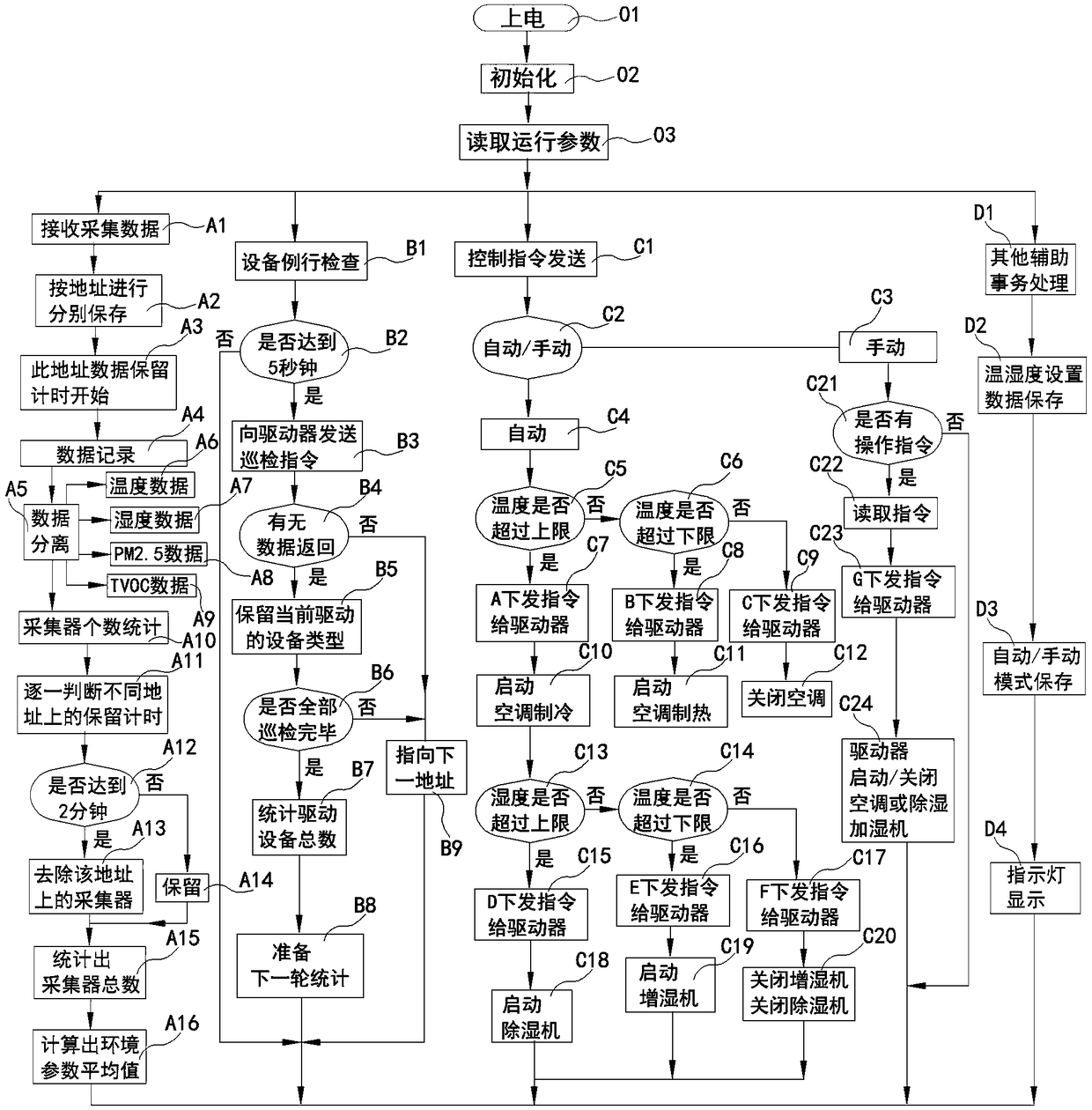
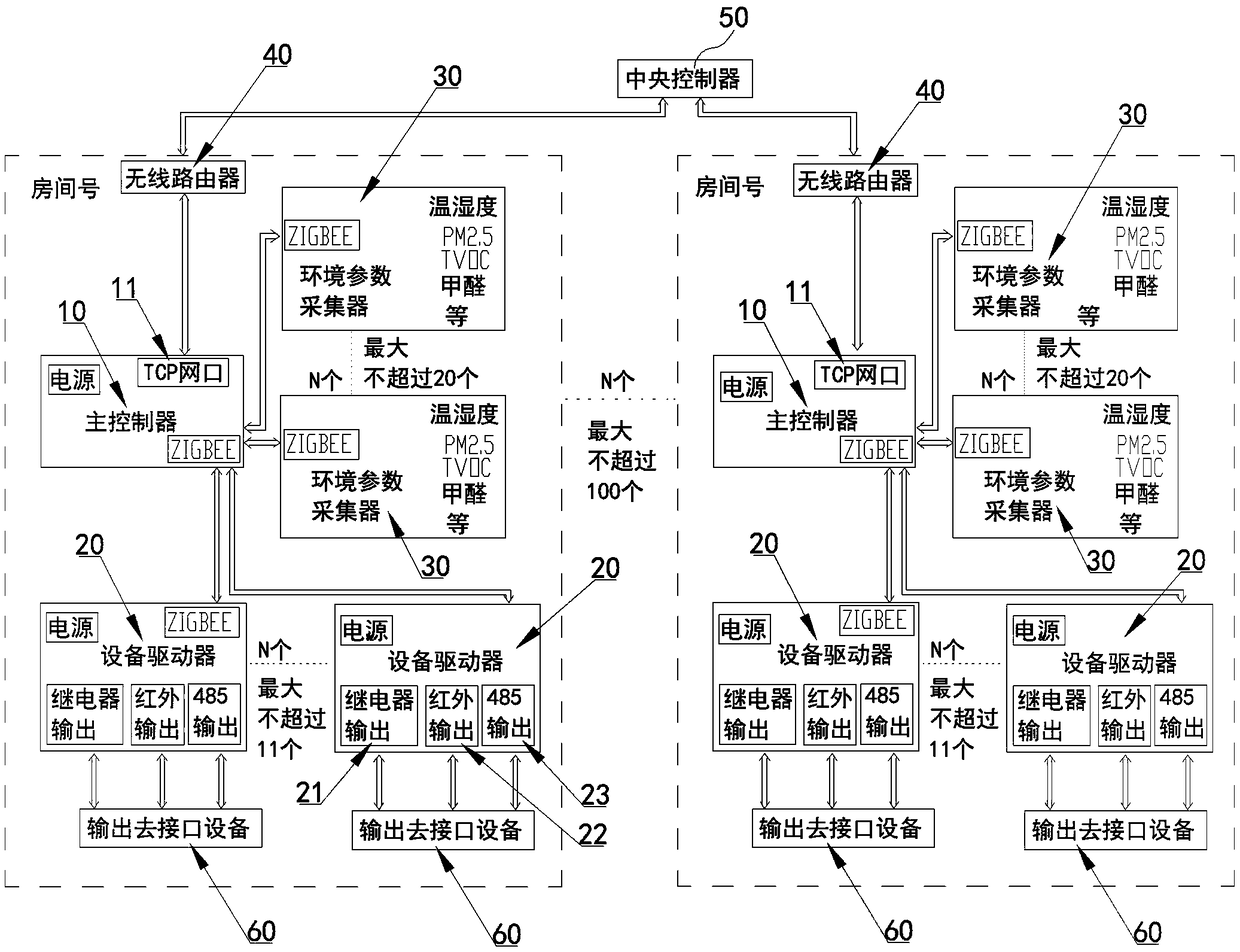
- Using a wireless networking equipment controller, the Zigbee wireless transceiver circuit module realizes automated control of the main controller and multi-channel environmental parameter collectors and equipment drivers, automatically driving air conditioners, humidification dehumidifiers and other equipment based on environmental parameter monitoring data, simplifying wiring and operate.
Device control via mixed radio systems
PatentWO2015024959A1
Innovation
- The solution employs a channel energy detect feature in ZigBee systems to verify the proximity of the controller by measuring energy patterns in overlapping radio channels, allowing secure and flexible control without the need for established network connections or additional hardware, using predetermined energy patterns and a secured API to authenticate trusted apps.


Environmental Compliance and Standards Framework
Environmental compliance frameworks for wireless controllers and Zigbee technologies encompass multiple regulatory domains that directly impact their deployment suitability across different operational environments. Both technologies must navigate complex certification landscapes including FCC Part 15 regulations in North America, CE marking requirements under the Radio Equipment Directive in Europe, and IC certification in Canada. These frameworks establish fundamental operational parameters including transmit power limitations, frequency band allocations, and electromagnetic compatibility requirements.
The IEEE 802.15.4 standard underlying Zigbee technology incorporates specific environmental compliance provisions that address industrial deployment scenarios. This standard mandates adherence to IEC 61000 series electromagnetic compatibility requirements, ensuring reliable operation in electrically noisy environments common in manufacturing facilities. Additionally, Zigbee Alliance certification processes include environmental stress testing protocols that validate device performance across extended temperature ranges and humidity conditions.
Wireless controller technologies face more diverse compliance challenges due to their broader application scope and varying communication protocols. Proprietary wireless controllers must demonstrate compliance with regional spectrum management regulations while meeting industry-specific standards such as IEC 61508 for functional safety in industrial automation applications. The compliance framework extends to cybersecurity standards including IEC 62443, which establishes security requirements for industrial communication networks.
Environmental testing standards play crucial roles in determining deployment suitability for both technologies. IEC 60068 series standards define environmental testing procedures including temperature cycling, vibration resistance, and humidity exposure tests. These standards ensure devices maintain operational integrity across diverse environmental conditions from arctic installations to tropical industrial facilities.
Regulatory harmonization efforts through international standards organizations facilitate global deployment strategies for both wireless controllers and Zigbee devices. The International Telecommunication Union coordinates spectrum allocation policies that enable consistent frequency usage across multiple jurisdictions. However, regional variations in power limitations and duty cycle restrictions create compliance complexities that influence technology selection decisions for multinational deployments.
Emerging environmental regulations addressing electronic waste management and energy efficiency increasingly impact compliance frameworks for wireless technologies. RoHS directives restricting hazardous substances and WEEE regulations governing electronic waste disposal create additional compliance obligations that affect long-term deployment strategies and lifecycle management considerations for both wireless controllers and Zigbee implementations.
The IEEE 802.15.4 standard underlying Zigbee technology incorporates specific environmental compliance provisions that address industrial deployment scenarios. This standard mandates adherence to IEC 61000 series electromagnetic compatibility requirements, ensuring reliable operation in electrically noisy environments common in manufacturing facilities. Additionally, Zigbee Alliance certification processes include environmental stress testing protocols that validate device performance across extended temperature ranges and humidity conditions.
Wireless controller technologies face more diverse compliance challenges due to their broader application scope and varying communication protocols. Proprietary wireless controllers must demonstrate compliance with regional spectrum management regulations while meeting industry-specific standards such as IEC 61508 for functional safety in industrial automation applications. The compliance framework extends to cybersecurity standards including IEC 62443, which establishes security requirements for industrial communication networks.
Environmental testing standards play crucial roles in determining deployment suitability for both technologies. IEC 60068 series standards define environmental testing procedures including temperature cycling, vibration resistance, and humidity exposure tests. These standards ensure devices maintain operational integrity across diverse environmental conditions from arctic installations to tropical industrial facilities.
Regulatory harmonization efforts through international standards organizations facilitate global deployment strategies for both wireless controllers and Zigbee devices. The International Telecommunication Union coordinates spectrum allocation policies that enable consistent frequency usage across multiple jurisdictions. However, regional variations in power limitations and duty cycle restrictions create compliance complexities that influence technology selection decisions for multinational deployments.
Emerging environmental regulations addressing electronic waste management and energy efficiency increasingly impact compliance frameworks for wireless technologies. RoHS directives restricting hazardous substances and WEEE regulations governing electronic waste disposal create additional compliance obligations that affect long-term deployment strategies and lifecycle management considerations for both wireless controllers and Zigbee implementations.
Energy Efficiency in Environmental Wireless Systems
Energy efficiency represents a critical performance metric when evaluating wireless communication technologies for environmental monitoring and control applications. The power consumption characteristics of wireless controllers and Zigbee systems directly impact deployment feasibility, operational costs, and system sustainability in diverse environmental conditions.
Traditional wireless controllers typically exhibit higher power consumption profiles due to their broader functionality and processing capabilities. These systems often require continuous power supply or frequent battery replacements, particularly when supporting real-time data processing and multi-protocol communication. The energy overhead associated with maintaining persistent connections and handling complex control algorithms can significantly impact long-term operational viability in remote environmental installations.
Zigbee technology demonstrates superior energy efficiency through its inherent design philosophy focused on low-power operation. The protocol's mesh networking capability enables devices to enter sleep modes while maintaining network connectivity through neighboring nodes. This distributed approach reduces individual device power consumption while ensuring system reliability. Zigbee's adaptive frequency hopping and optimized data transmission protocols further minimize energy waste during communication cycles.
Battery life considerations become paramount in environmental wireless systems where maintenance access may be limited. Zigbee-enabled devices can achieve operational lifespans of several years on single battery installations, making them particularly suitable for remote sensor networks and monitoring stations. The protocol's ability to dynamically adjust transmission power based on network topology and signal quality contributes to extended operational periods.
Power harvesting integration presents additional opportunities for energy optimization in environmental applications. Zigbee's low-power requirements make it compatible with solar panels, wind generators, and thermal energy harvesting systems. This compatibility enables self-sustaining wireless networks in challenging environmental conditions where traditional power infrastructure is unavailable or impractical.
Network scalability impacts overall system energy efficiency as deployment size increases. Zigbee's mesh architecture distributes communication loads across multiple nodes, preventing energy bottlenecks that commonly occur in centralized wireless controller systems. This distributed approach maintains consistent energy performance regardless of network expansion, supporting large-scale environmental monitoring initiatives without proportional increases in power infrastructure requirements.
Traditional wireless controllers typically exhibit higher power consumption profiles due to their broader functionality and processing capabilities. These systems often require continuous power supply or frequent battery replacements, particularly when supporting real-time data processing and multi-protocol communication. The energy overhead associated with maintaining persistent connections and handling complex control algorithms can significantly impact long-term operational viability in remote environmental installations.
Zigbee technology demonstrates superior energy efficiency through its inherent design philosophy focused on low-power operation. The protocol's mesh networking capability enables devices to enter sleep modes while maintaining network connectivity through neighboring nodes. This distributed approach reduces individual device power consumption while ensuring system reliability. Zigbee's adaptive frequency hopping and optimized data transmission protocols further minimize energy waste during communication cycles.
Battery life considerations become paramount in environmental wireless systems where maintenance access may be limited. Zigbee-enabled devices can achieve operational lifespans of several years on single battery installations, making them particularly suitable for remote sensor networks and monitoring stations. The protocol's ability to dynamically adjust transmission power based on network topology and signal quality contributes to extended operational periods.
Power harvesting integration presents additional opportunities for energy optimization in environmental applications. Zigbee's low-power requirements make it compatible with solar panels, wind generators, and thermal energy harvesting systems. This compatibility enables self-sustaining wireless networks in challenging environmental conditions where traditional power infrastructure is unavailable or impractical.
Network scalability impacts overall system energy efficiency as deployment size increases. Zigbee's mesh architecture distributes communication loads across multiple nodes, preventing energy bottlenecks that commonly occur in centralized wireless controller systems. This distributed approach maintains consistent energy performance regardless of network expansion, supporting large-scale environmental monitoring initiatives without proportional increases in power infrastructure requirements.
Unlock deeper insights with Patsnap Eureka Quick Research — get a full tech report to explore trends and direct your research. Try now!
Generate Your Research Report Instantly with AI Agent
Supercharge your innovation with Patsnap Eureka AI Agent Platform!