
A detection system for pesticide residues in fruits and vegetables
A technology for pesticide residues, fruits and vegetables, applied in the field of pesticide residue detection systems in fruits and vegetables, can solve the problems of complex detection process, physical health impact, and great harm to humans and animals, and achieves good sensitivity and linear range, high precision and repeatability Review the effect of viewing
Patent Information
- Authority / Receiving Office
- CN · China
- Patent Type
- Patents(China)
- Current Assignee / Owner
- Publication Date
- 2021-10-29
- Estimated Expiration
- Not applicable · inactive patent
Smart Images
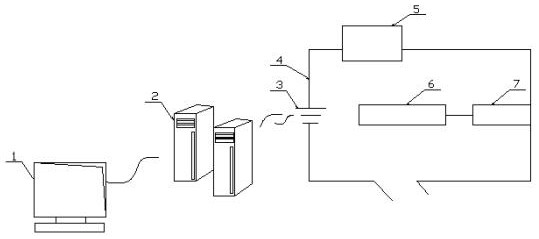
Figure 1 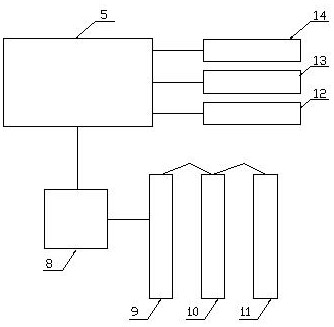
Figure 2 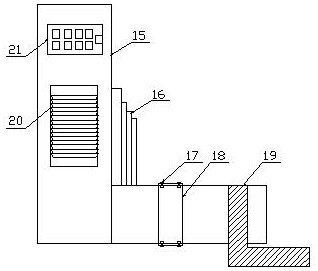
Figure 3
Abstract
Description
technical field
[0001] The invention relates to the application field of pesticide detection, in particular to a detection system for pesticide residues in fruits and vegetables. Background technique
[0002] Pesticides can be used to kill insects, fungi and other organisms that harm crop growth. The earliest pesticides used are DDT, HCH, etc. They can eliminate pests in large quantities, but they have good stability and can exist in the environment for a long time. The accumulation in animals, plants and human body was eliminated because of this, and then organophosphorus pesticides, such as dichlorvos, were used instead of the original pesticides, but their toxicity was too high, which was very harmful to humans and animals; in recent years, a batch of high-efficiency and low-toxicity pesticides However, no matter how advanced pesticides are, they belong to the category of chemicals after all, which will affect the environment and affect the health of the body. Therefore, ...
Examples
Embodiment 1
[0030] Such as Figure 1-Figure 4 As shown, a fruit and vegetable residue pesticide detection system includes a computer 1, and one side of the computer 1 is provided with a storage server 2, and the storage server 2 includes a limit switch 22, a positioning device 23 and a receiver 24, and the storage server 2, one side is provided with a wireless signal module 3, and one side of the wireless signal module 3 is provided with a wireless transmission module 4, and the upper end of the wireless transmission module 4 is provided with a detection mechanism 5, and the detection mechanism 5 includes a scanning unit 14, a recording unit 13. Analyzing unit 12, one side of the detection mechanism 5 is provided with a photosensitive measurement module 8, one side of the photosensitive measurement module 8 is provided with a sub-unit 9, and one side of the sub-unit 9 is provided with an upload unit 10 One side of the upload unit 10 is provided with an output unit 11, the lower end of the...
Embodiment 2
[0039] The general content of this embodiment is the same as that of Embodiment 1, the difference is that in this embodiment, the sub-unit 9 in this embodiment is classified by the index of light, medium and high, and repeats scanning at the bypass detection port 16 The instructions of unit 14, recording unit 13, and analysis unit 12 increase the secondary detection degree without damaging fruits and vegetables. This method has high precision and repeatability, and the sensitivity and linear range are good. By setting the positioning device 23. The positioning device 23 enables the photosensitive measurement module 8 to give a position prompt through the light-sensitive flickering, so as to attract the attention of the staff, explain where the residue is likely to occur, and the recovery rate test of adding samples all meets the detection requirements, and the measurement results are accurate and reliable. It can meet the needs of pesticide residue detection in fruits.