
Wagering method including a push bet
a push bet and wagering method technology, applied in the field of group of wagering games, can solve the problem that the current wagering methods used in these games cannot be used, and achieve the effect of increasing the wagering opportunity, increasing the revenue of the casino, and increasing the excitement of players
Patent Information
- Authority / Receiving Office
- US · United States
- Patent Type
- Applications(United States)
- Current Assignee / Owner
- Publication Date
- 2007-10-11
- Estimated Expiration
- Not applicable · inactive patent
Smart Images
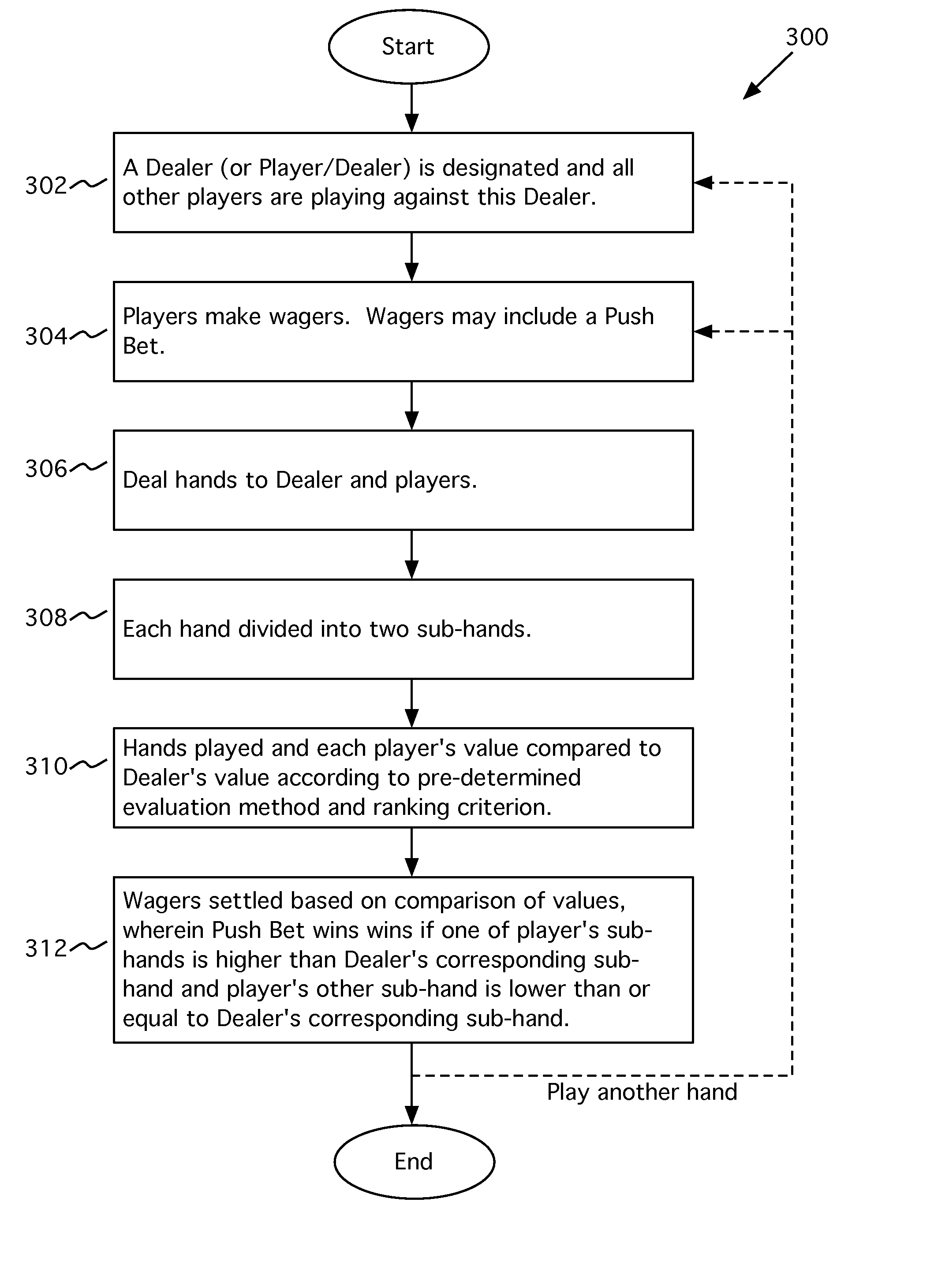
Figure 1 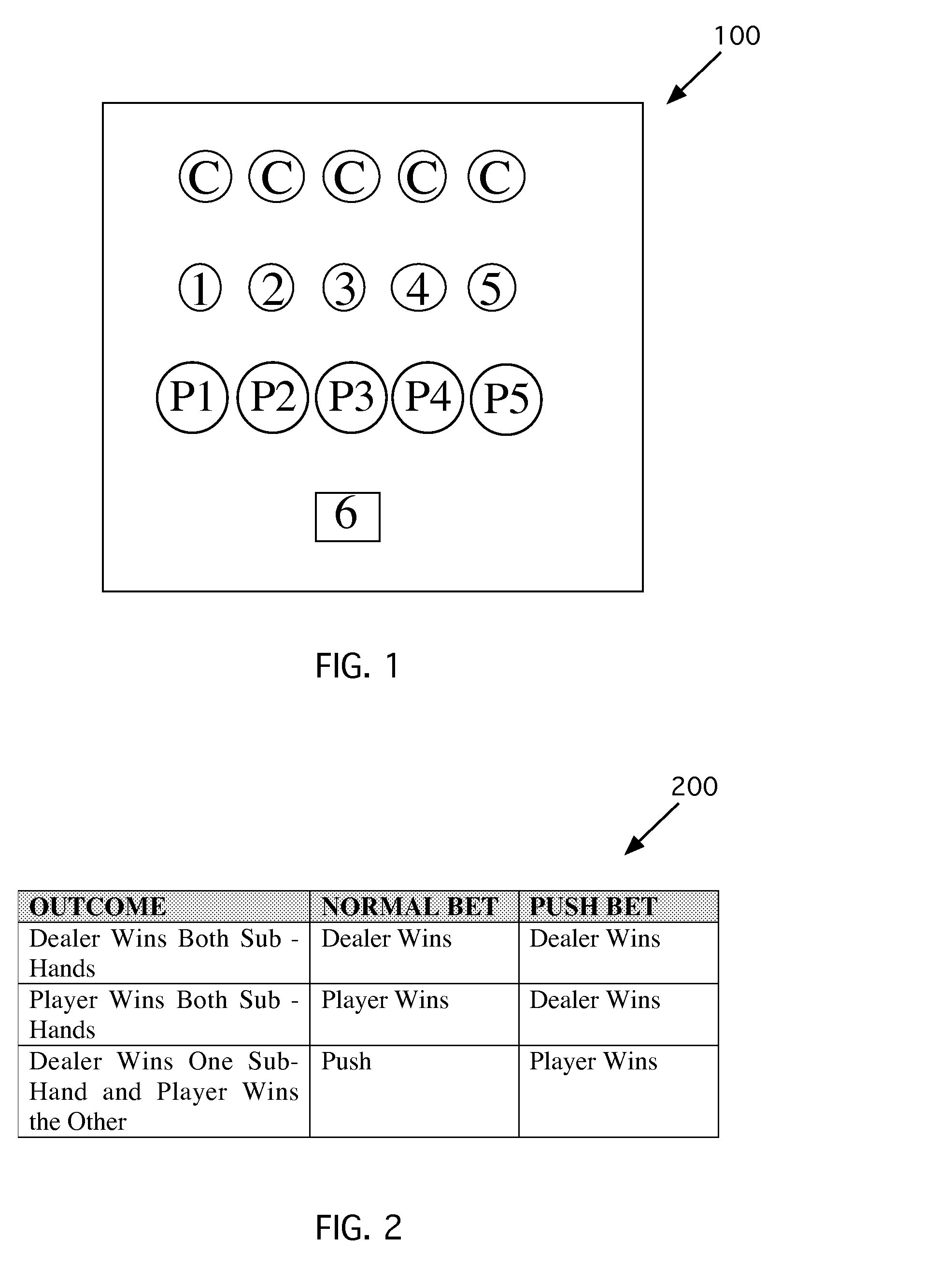
Figure 2 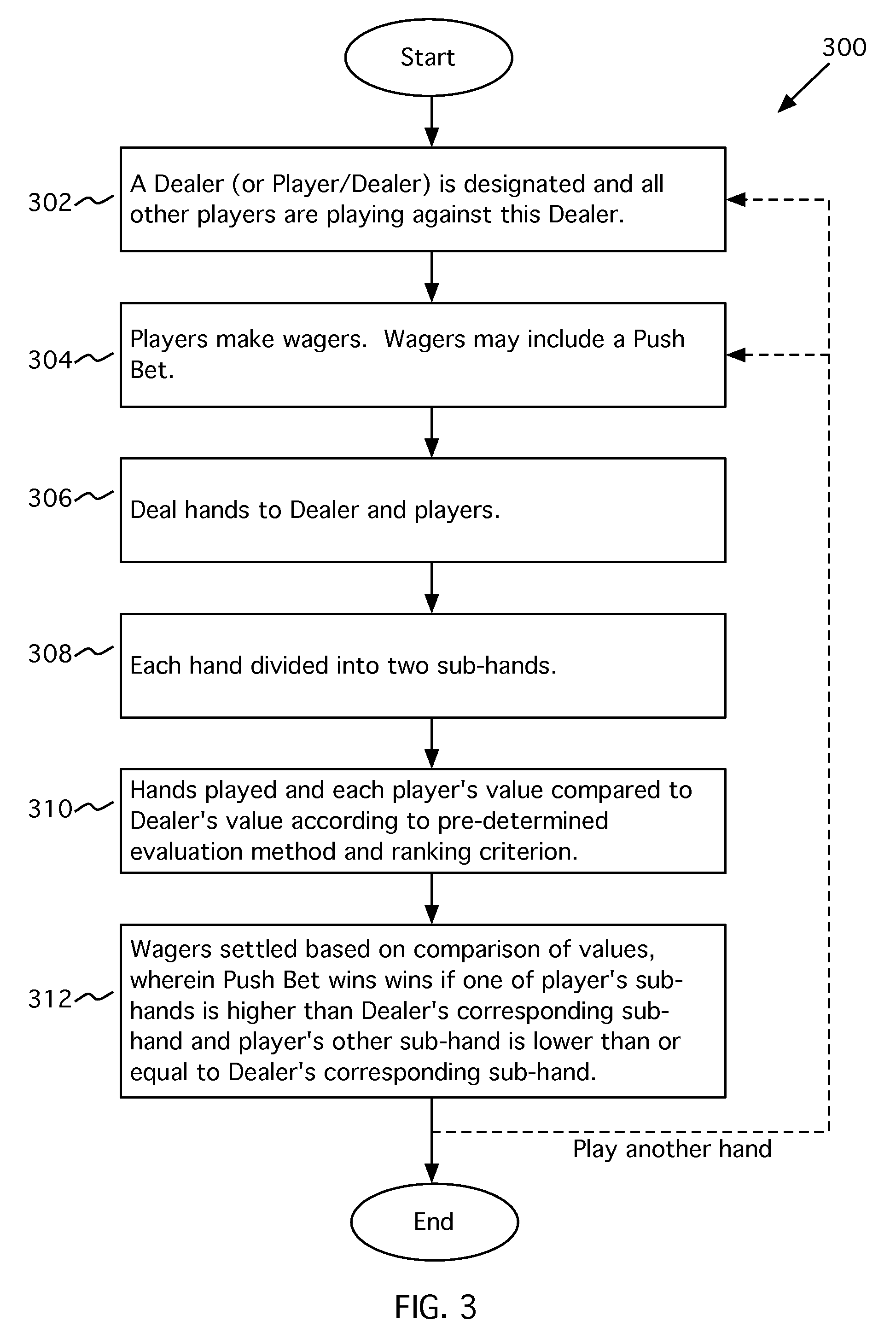
Figure 3
Abstract
Description
CROSS-REFERENCE TO RELATED APPLICATIONS
[0001] This application is a continuation-in-part of co-pending U.S. patent application Ser. No. 11 / 254,563, filed Oct. 19, 2005, which is a continuation-in-part of U.S. patent application Ser. No. 10 / 947,188, filed Sep. 21, 2004, both of which are hereby incorporated by reference as if set forth herein.BACKGROUND
[0002] 1. Field of the Invention
[0003] The present invention relates to a group of wagering games where there is one group of gaming pieces commonly called the “Dealer hand”, at least one, and possibly more than one, group of gaming pieces called the “player hand”, and each group of gaming pieces is divided up into two sub-groups. The wagering games include Pai Gow Poker and Pai Gow (or Pai Gow Tiles).
[0004] 2. The Prior Art
[0005] Numerous wagering games are known in the prior art. Many of them involve the parties each being given a hand, which consists of a group of cards, tiles, or other gaming pieces. This invention involves ga...
Examples
Embodiment Construction
[0035] Those of ordinary skill in the art will realize that the following description of the present invention is illustrative only and not in any way limiting. Other embodiments of the invention will readily suggest themselves to such a skilled person.
[0036] For the description of a preferred embodiment, Pai Gow Poker with a Player / Dealer will be used. The game is played on a standard gaming table, with wagering stations for each player. A layout similar to layout 100 in FIG. 1 may be used. In FIG. 1, the number “6” in the square indicates that this is wagering station number 6. If a player chooses to make any wagers on the hand dealt to this wagering station he would use the circles on that station.
[0037] If the player wishes to make a Normal Bet that this hand will beat the Dealer hand, he can place a wager in one of the circles numbered 1 to 5. If the player wishes to place a wager larger than the normal table limit, he can place additional Normal Bets in the other numbered ci...