
Intelligent medication tracker
a medication tracker and intelligent technology, applied in the direction of instruments, apparatus for dispensing discrete objects, de-stacking objects, etc., can solve the problems of accidental overdose, underdose, interactions that can have serious and sometimes fatal consequences to one's health, serious liver injury, illness, disability,
- Summary
- Abstract
- Description
- Claims
- Application Information
AI Technical Summary
Benefits of technology
Problems solved by technology
Method used
Image

Examples
Embodiment Construction
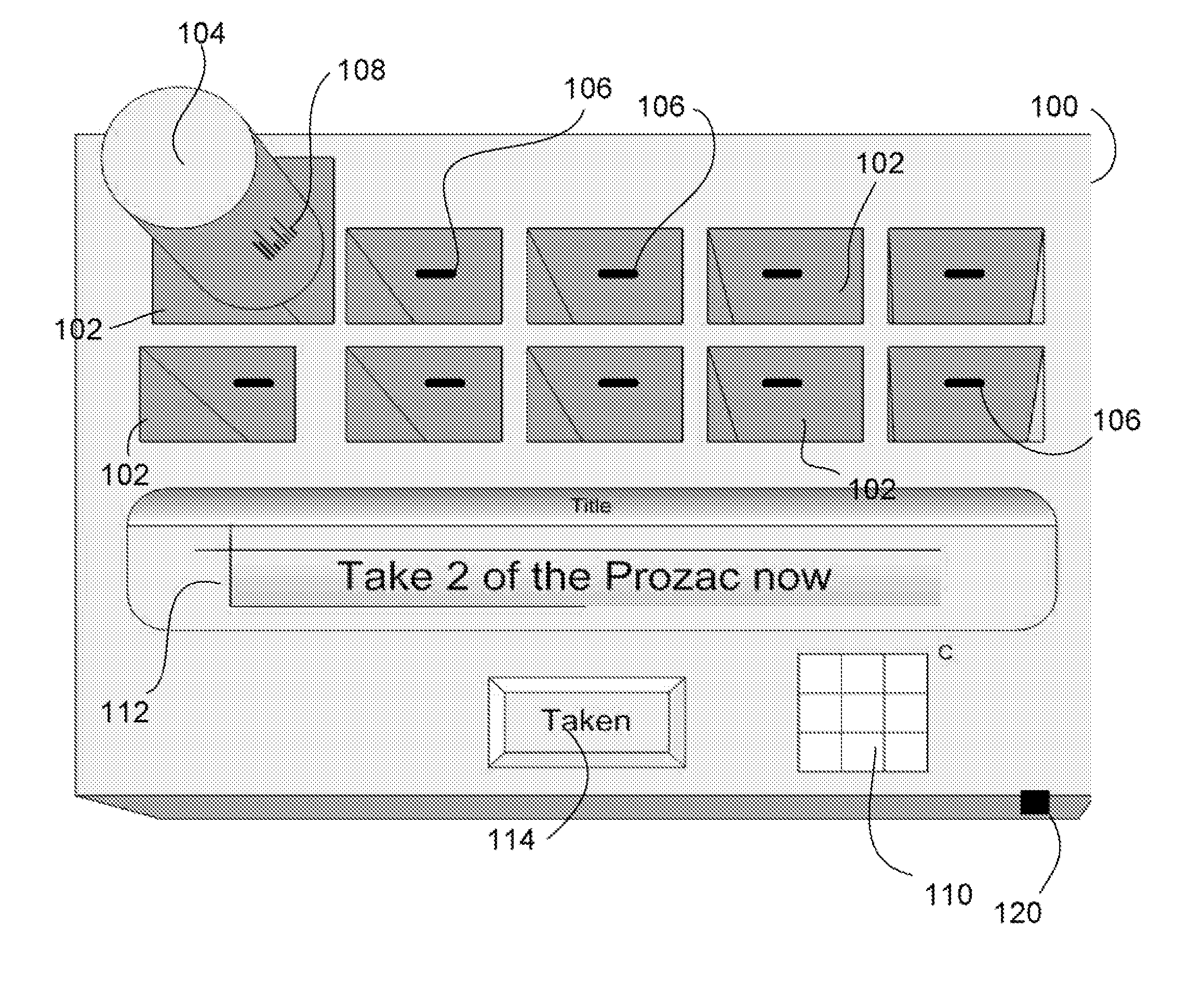
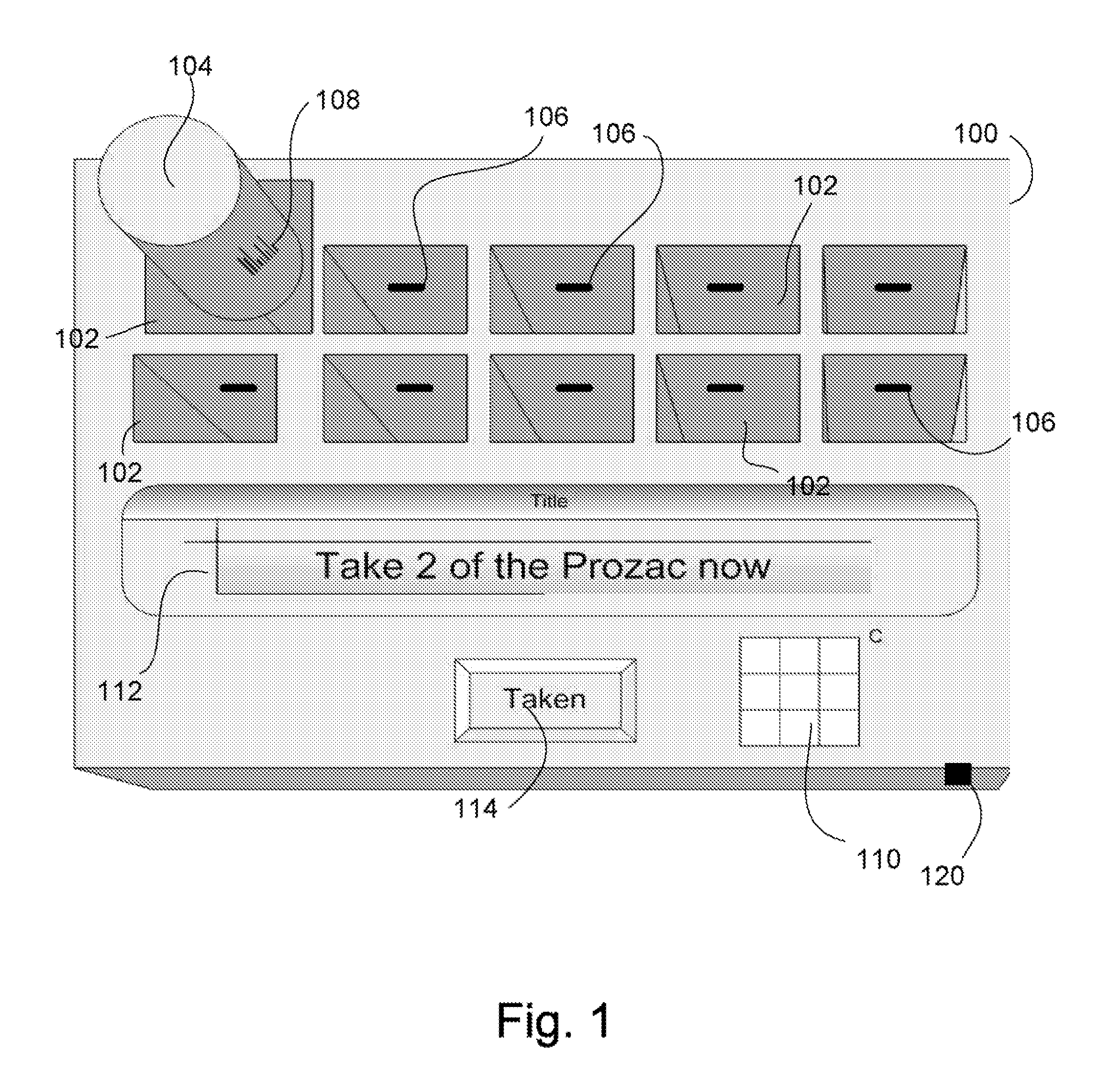
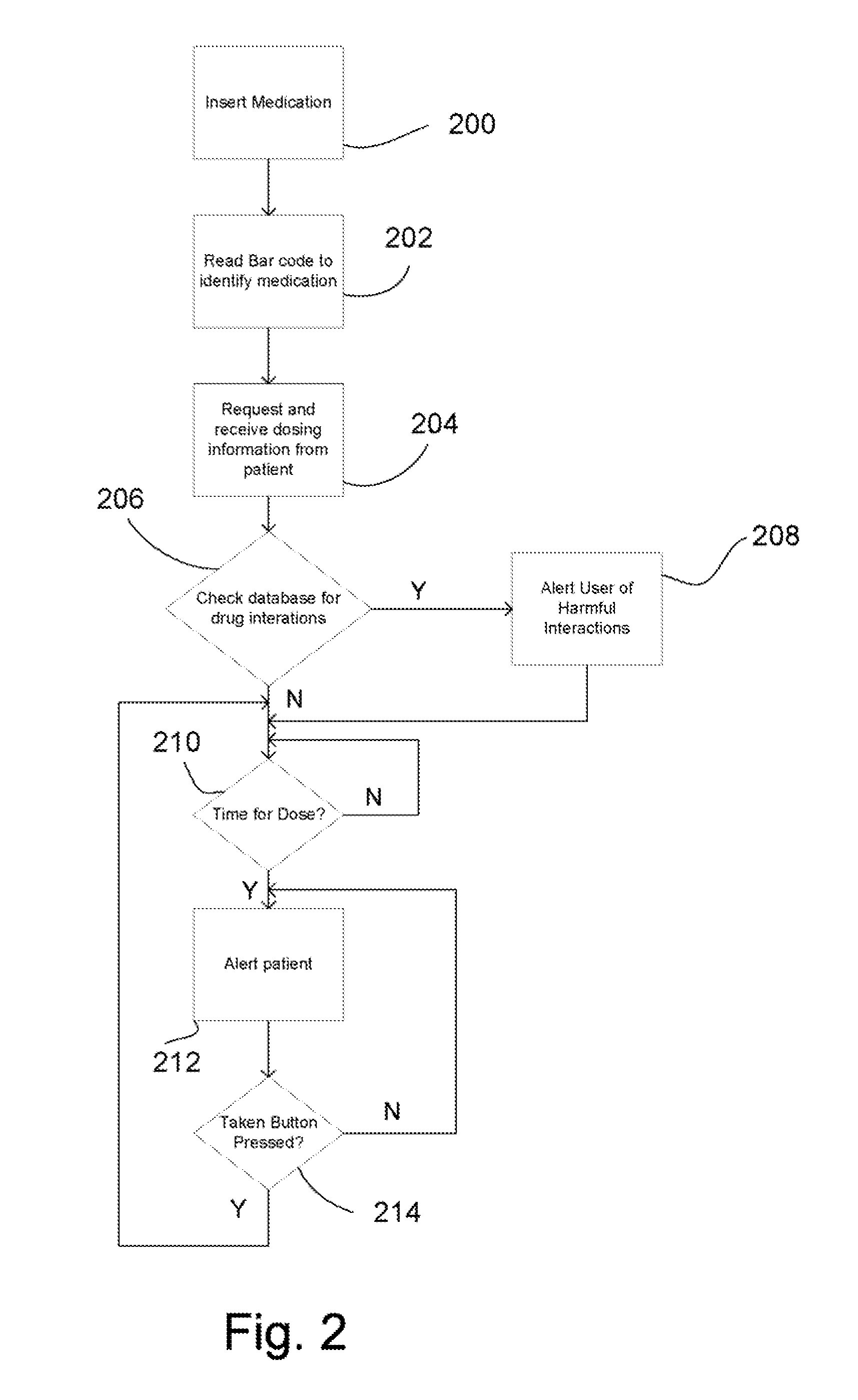
[0009]Described is a device and method which assists a user in managing their medications regimen by identifying which medications they are taking, when and how much of each medication should be taken, when refills are required and alerts them to dangerous interactions.
[0010]Reference throughout this specification to “one embodiment,” or “an embodiment” means that a particular feature, structure, or characteristic described in connection with the embodiment is included in at least one embodiment of the present invention. Thus, the appearances of the phrases “in one embodiment” or “in an embodiment” in various places throughout this specification are not necessarily all referring to the same embodiment. Furthermore, the particular features, structures, or characteristics may be combined in any suitable manner in one or more embodiments.
[0011]Recently, in an effort to improve patient safety in the hospital setting by reducing medication errors, the Food and Drug Administration (FDA) i...
PUM
 Login to View More
 Abstract
Description
Claims
Application Information
 Login to View More