
Transmission puncturing for co-existence on a shared communication medium
a technology of co-existence and transmission puncturing, applied in the field of telecommunications, can solve problems such as encroaching on operations
- Summary
- Abstract
- Description
- Claims
- Application Information
AI Technical Summary
Benefits of technology
Problems solved by technology
Method used
Image

Examples
Embodiment Construction
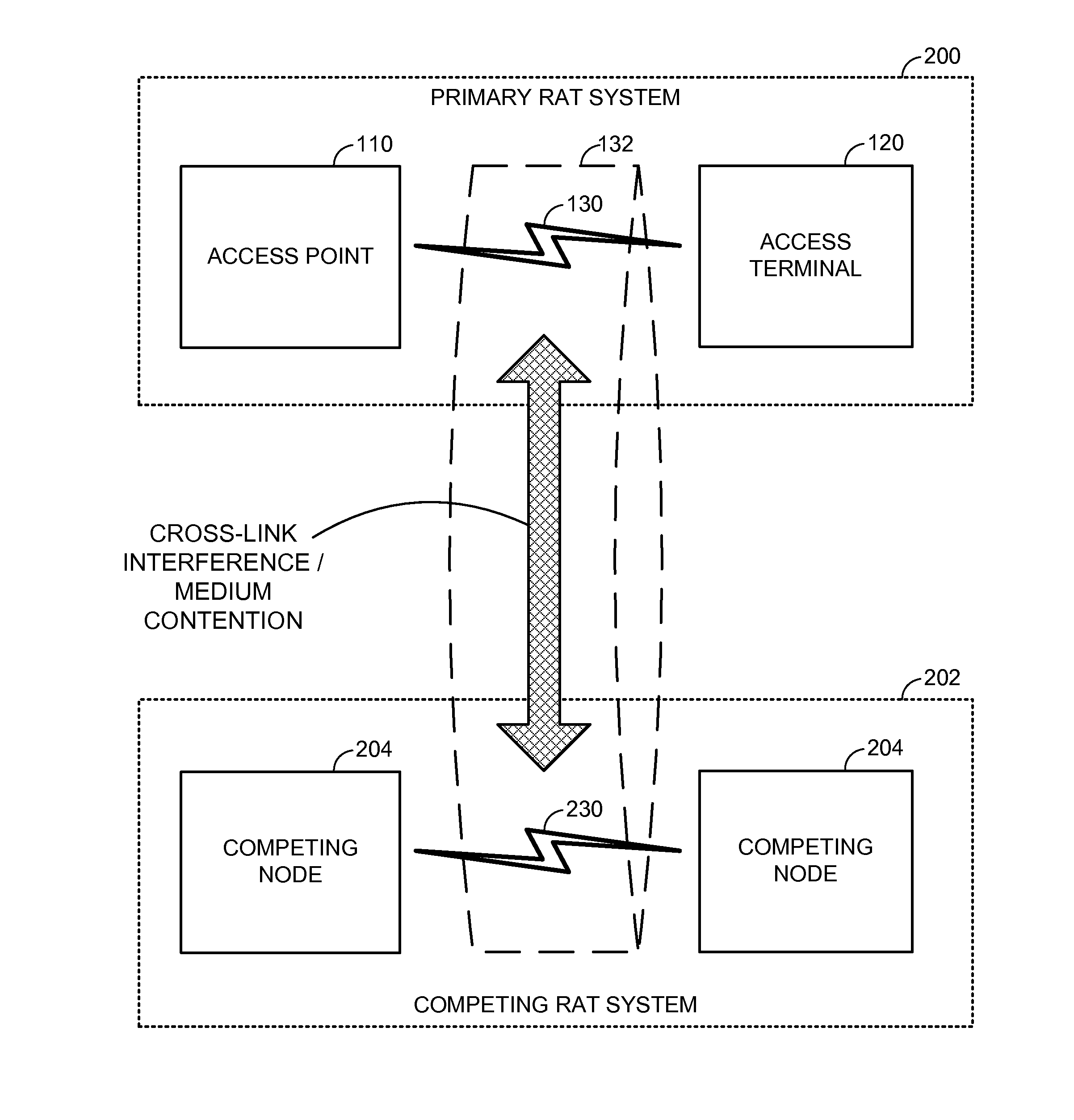
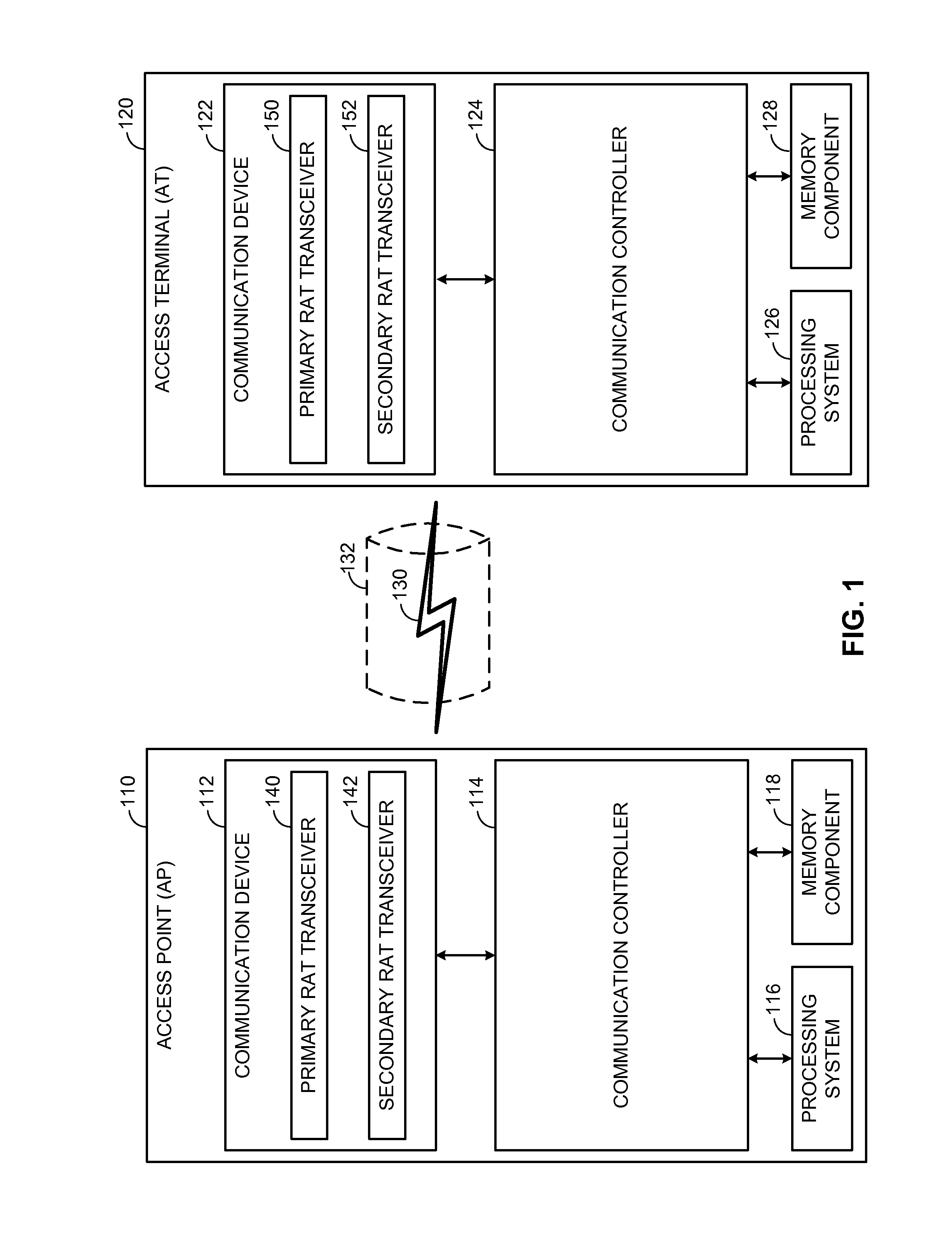
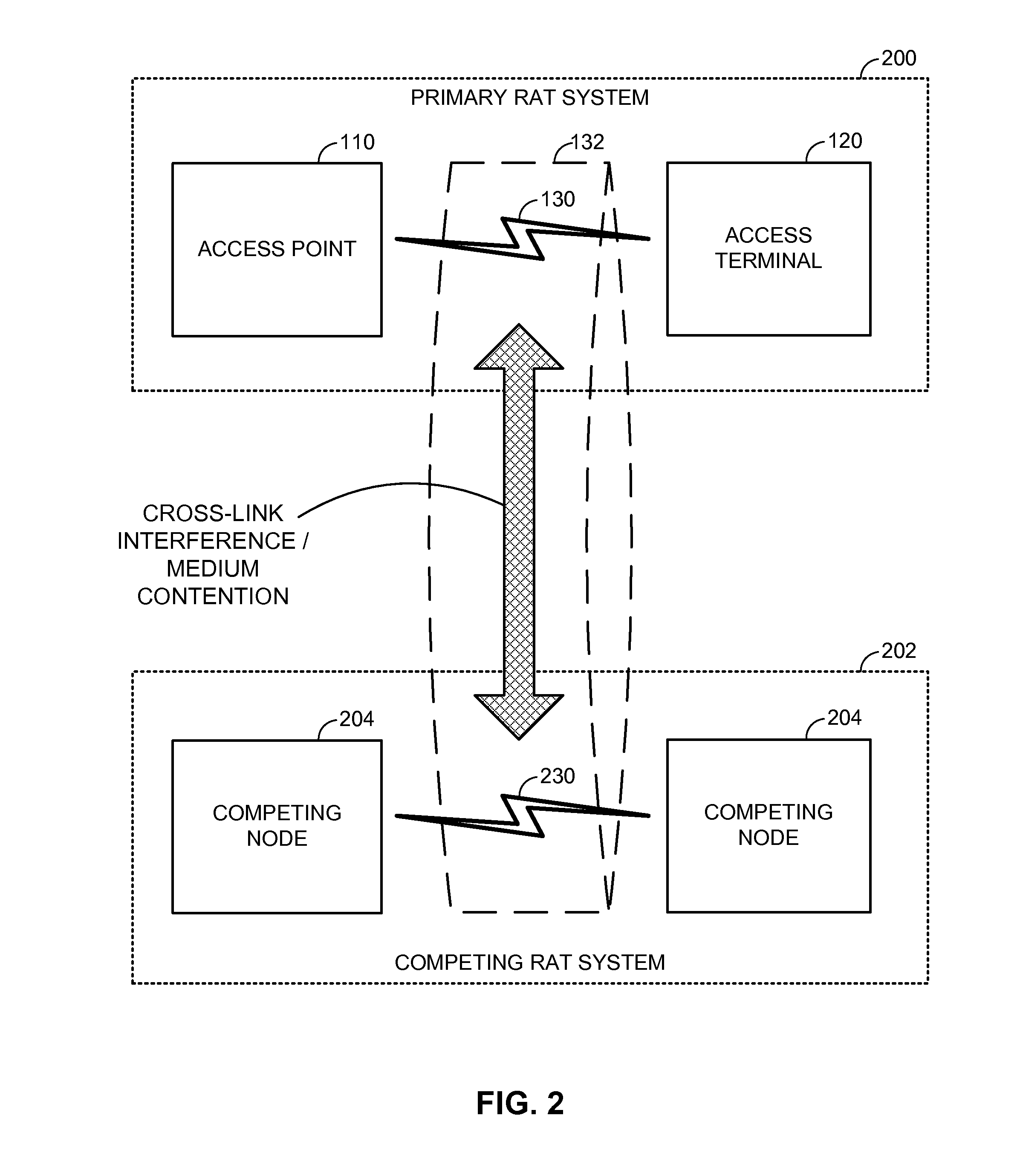
[0036]The present disclosure relates generally to co-existence techniques for operation on a shared communication medium. To better accommodate certain operations of other Radio Access Technologies (RATs) on the shared communication medium, an access point implementing a Discontinuous Transmission (DTX) communication scheme of active and inactive periods may puncture transmission on one or more of the active periods to introduce additional transmission gaps. The additional transmission gaps may provide more frequent opportunities for another RAT to access the shared communication medium for sending low-latency traffic, for when interference is relatively high (e.g., above a backoff threshold), and so on. In addition or as an alternative, the access point may also reduce its transmission power level based on various signal timing characteristics indicative of the signaling energy of its transmissions being perceived at above a backoff threshold defined by another RAT for controlling ...
PUM
 Login to View More
 Abstract
Description
Claims
Application Information
 Login to View More