
Device for preventing shoplifting
a technology for preventing shoplifting and trolleys, applied in the direction of shop counters, alarm indicators, instruments, etc., can solve the problems of difficult for staff to see, difficult for staff to completely check all trolleys from their work position, and sometimes taken out of shopping areas by unpaid goods. , to achieve the effect of preventing inadvertent or deliberate shoplifting
- Summary
- Abstract
- Description
- Claims
- Application Information
AI Technical Summary
Benefits of technology
Problems solved by technology
Method used
Image

Examples
Embodiment Construction
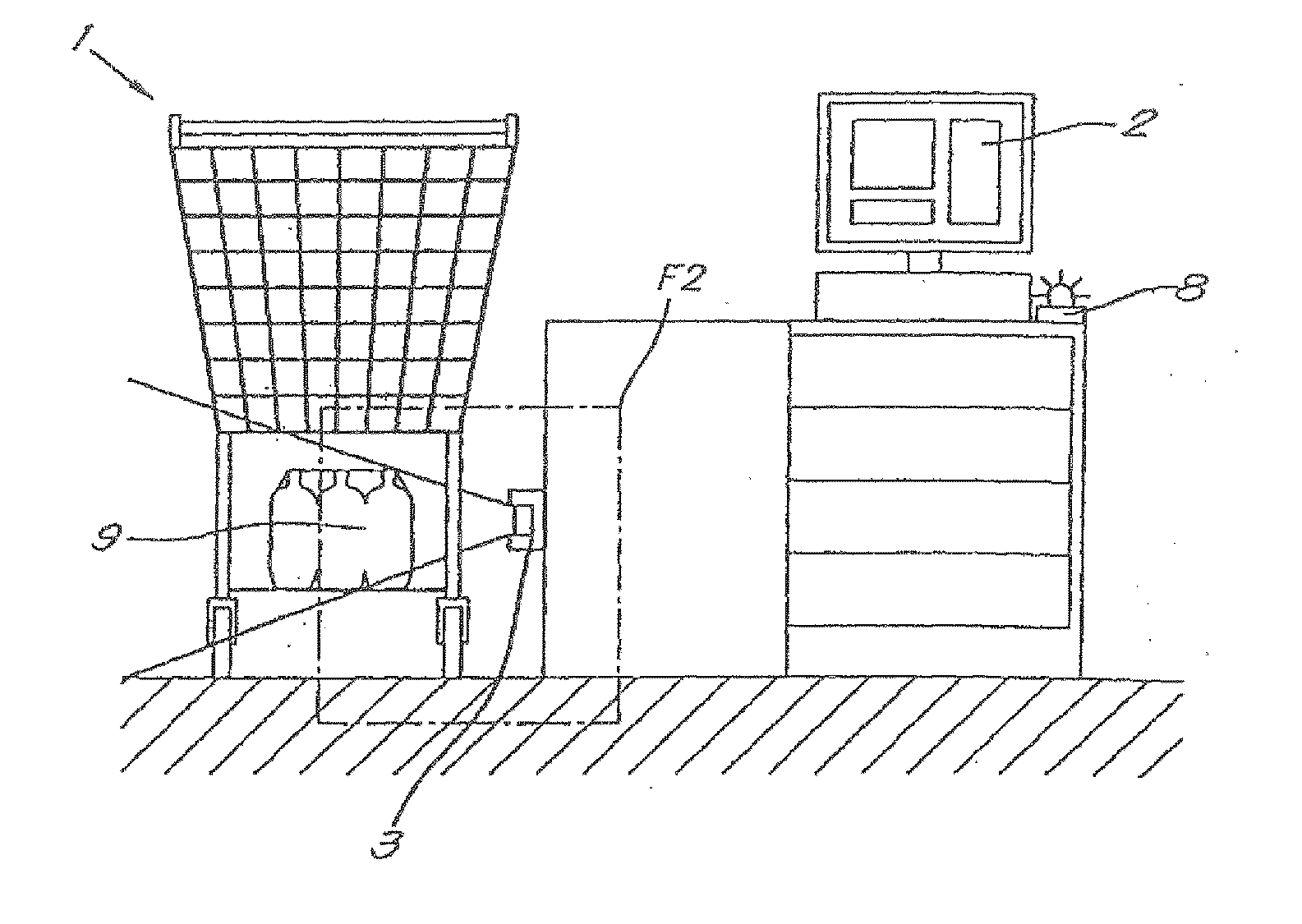
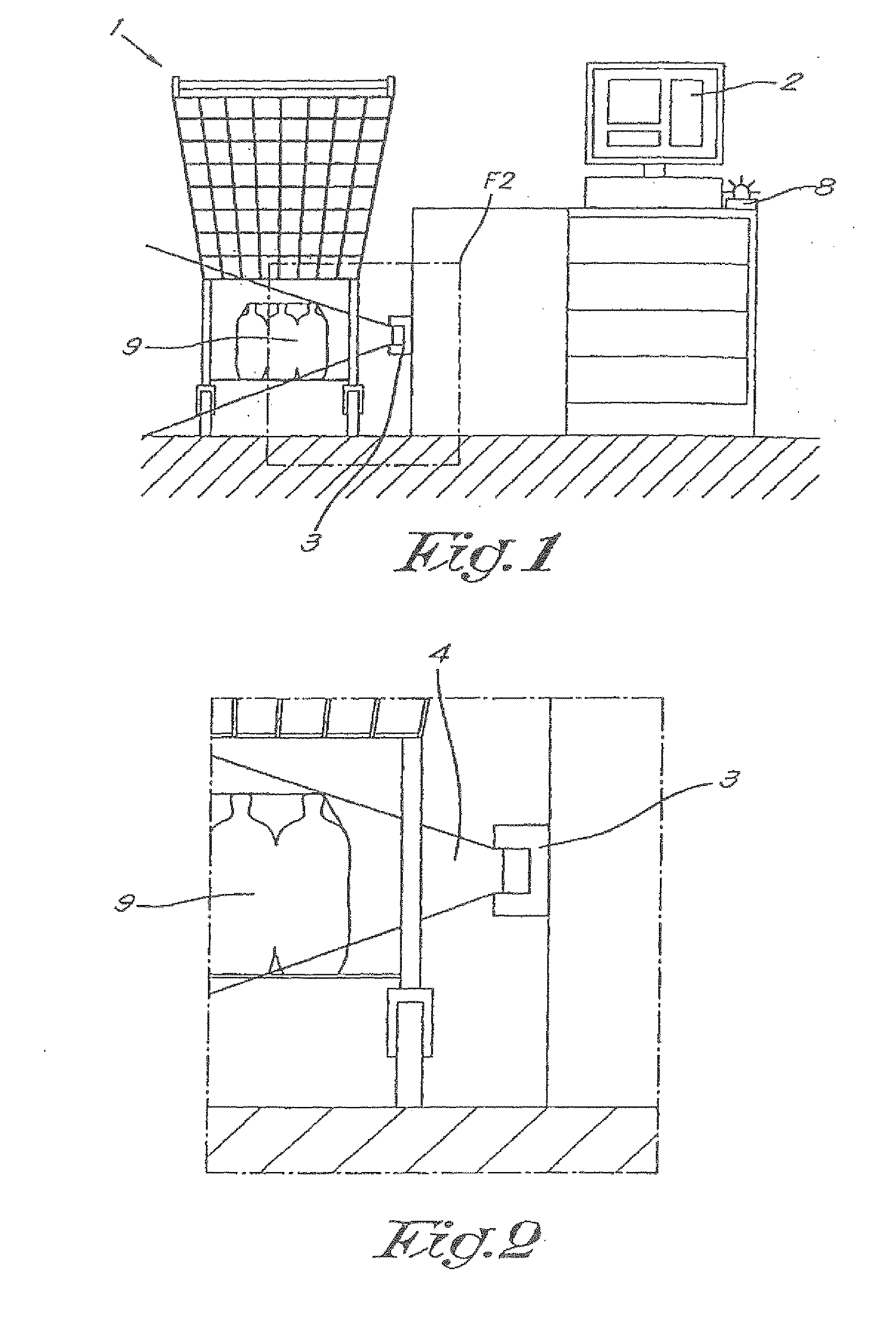
[0037]FIG. 1 shows a shopping trolley 1 that moves along a checkout 2 and of which a video recording is made by means of a camera 3, which in this case is on the side of the checkout 2.
[0038]FIG. 2 shows the digital camera 3 in more detail that makes the video recordings and which covers a specific field of view 4 from a certain angle to the shopping trolley 1 and also covers a part of the back of the shopping trolley 1.
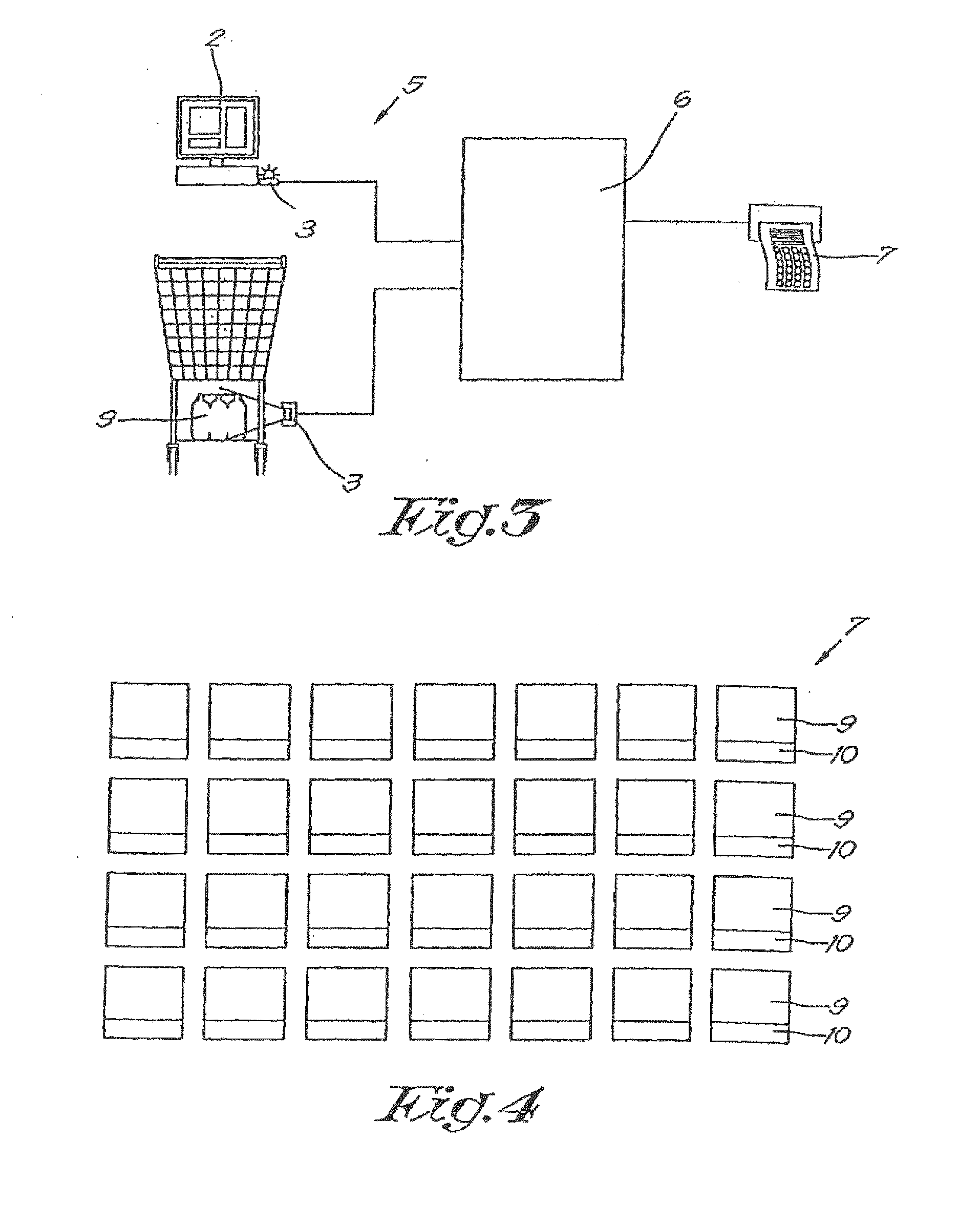
[0039]FIG. 3 shows the electronic diagram 5 by which the camera 3 is connected to a central server 6 that deals with the further analysis of the recordings and can provide reports 7 via a printer for example, or by e-mail in the form of a spreadsheet or another format. The server is also connected to a warning system 8 that alerts the checkout staff as soon as a suspect object is detected in the shopping trolley, or it can show a warning directly on the screen to the checkout staff or can pass on the warning to the checkout staff via the software of the point of sale...
PUM
 Login to View More
 Abstract
Description
Claims
Application Information
 Login to View More