
Implanted bioelectrode based on photoetching and other micro-nano manufacturing technologies and preparation method thereof
A micro-nano manufacturing and biological electrode technology, applied in electrodes, internal electrodes, metal material coating processes, etc., can solve the problems of complex manufacturing process and large electrode stimulation point size, avoiding winding and welding, small size, Improve the effect of corrosion resistance
Patent Information
- Authority / Receiving Office
- CN · China
- Patent Type
- Patents(China)
- Current Assignee / Owner
- Publication Date
- 2013-07-31
- Estimated Expiration
- Not applicable · inactive patent
Smart Images
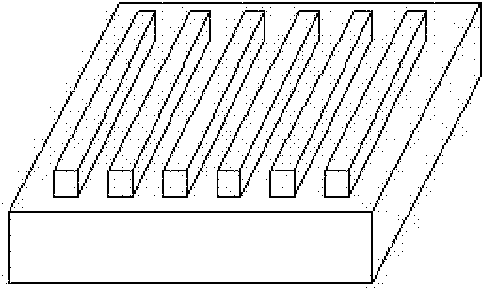
Figure 1 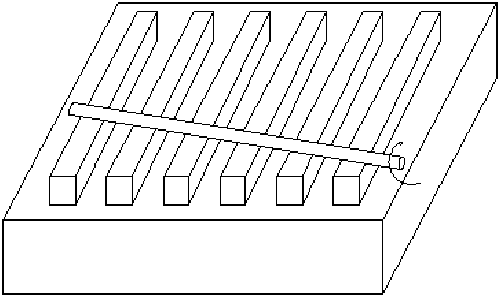
Figure 2 
Figure 3
Abstract
Description
technical field
[0001] The invention relates to an implantable bioelectrode, in particular to an implantable bioelectrode manufactured based on micro-nano manufacturing techniques such as photolithography. Background technique
[0002] Today's medicine treats serious neurological diseases such as Parkinson's disease and epilepsy by implanting electrodes in the patient's body. However, the commonly used implanted electrodes mainly use artificial or machine-wound spiral wires as connecting wires, and traditional mechanical processing The metal tube serves as the stimulating end. This kind of spiral wire usually leads to stress concentration and deformation inside the wire, and the material and size of the metal wire on the market are limited, resulting in restrictions on selection. In addition, its price is relatively high, which increases the difficulty and difficulty of electrode manufacturing. cost. The traditional mechanically processed metal tube has more disadvantages:...
Examples
Embodiment Construction
[0014] Take 2 stimulus points as an example. The electrode of the present invention is divided into a connecting end, a connecting line and a stimulating end. The connecting end includes two metal rings 3, and the stimulating end includes two stimulating points 1.
[0015] refer to figure 1 , 2 , 3, first, sputter a layer of titanium film with a thickness of 0.0025mm on the polyurethane sleeve, and then sputter a silver film (or gold, or platinum, or iridium) with a thickness of about 0.03mm on it, Titanium here is used as an adhesion promoter to enhance the adhesion strength of the silver film to the polyurethane tube, and then use the elastic mold made by the photolithography process (such as figure 1 Shown) on the surface of the capillary sputtered with silver layer embossed (such as figure 2 Shown) hexadecanethiol (hexadecanethiol) helical wire, the imprinted tube is immersed in ferricyanide solution to remove the silver film not protected by hexadecanethiol, and then...