
Method for splicing plates
A technology for plates and joints, applied in covering/lining, construction, building construction, etc., can solve problems such as easy loosening, insufficient connection at splicing joints, inconvenient disassembly, etc., to enhance hardness and strength, and improve production efficiency , the effect of increasing the service life
Patent Information
- Authority / Receiving Office
- CN · China
- Patent Type
- Applications(China)
- Current Assignee / Owner
- Publication Date
- 2012-04-18
- Estimated Expiration
- Not applicable · inactive patent
Smart Images
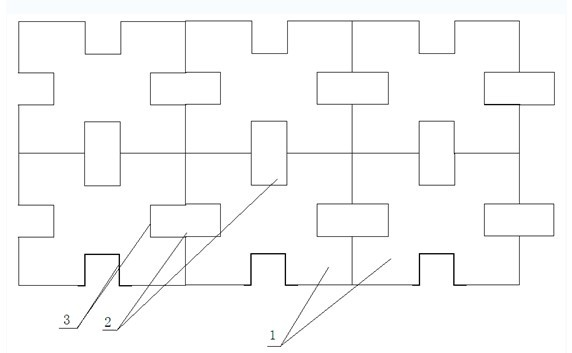
Figure 1 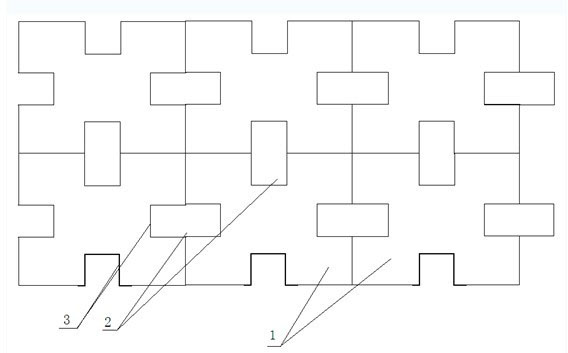
Figure 2
Abstract
Description
technical field
[0001] The invention relates to a splicing method of building decoration materials, in particular to a splicing method of plates. Background technique
[0002] The application range of the board is very wide. Such as home furnishing, flooring, wall decoration boards, insulation boards, etc. The types of boards include pure wood flooring and composite flooring. During the application process, various boards need to be flexibly cut according to needs, and then spliced. In the existing market, the boards are generally directly connected to each other, or consolidated with superglue and nails. But this connection method has many problems. For example, cracks appear when a sheet expands due to heat due to the different coefficients of thermal expansion of its constituent materials. On the other hand, when using connectors such as nails, raw materials are wasted, and the appearance of the board is also damaged. Or, some make the plates into letter buckles for...
Examples
Embodiment 1
[0014] see figure 1 , a splicing method for plates, comprising at least two plate blocks, 1 and at least one connecting piece 2, comprising the following steps: firstly, opening a concave connection opening 3 on each edge of the two plate blocks 1; secondly, forming a shape The two ends of the connector 2 whose size is suitable for the above-mentioned concave connection opening 3 are respectively inserted into the concave connection opening 3 until the edges of two adjacent plate blocks are in close contact. The edge of the concave connection port 3 or the edge of the plate block 1 can also be covered with a hard sheath to increase strength and prevent breakage. Comes in a hard sheath. The plate block 1 is rectangular. During application, according to the size of the demand, the number of plate blocks and connectors can be flexibly set to match the actual shape and size.
[0015] When the present invention is implemented, the in-line connector is just inserted into the conc...