
Liquid crystal aligning agent, liquid crystal alignment film, method for forming the liquid crystal alignment film, and liquid crystal display device
A liquid crystal aligning film and liquid crystal aligning agent technology, applied in the directions of liquid crystal materials, chemical instruments and methods, instruments, etc., can solve the problems of large cumulative exposure and insufficient sensitivity, achieve high radiation sensitivity, reduce manufacturing costs, production high sex effect
Patent Information
- Authority / Receiving Office
- CN · China
- Patent Type
- Patents(China)
- Current Assignee / Owner
- Publication Date
- 2015-02-25
- Estimated Expiration
- Not applicable · inactive patent
Smart Images
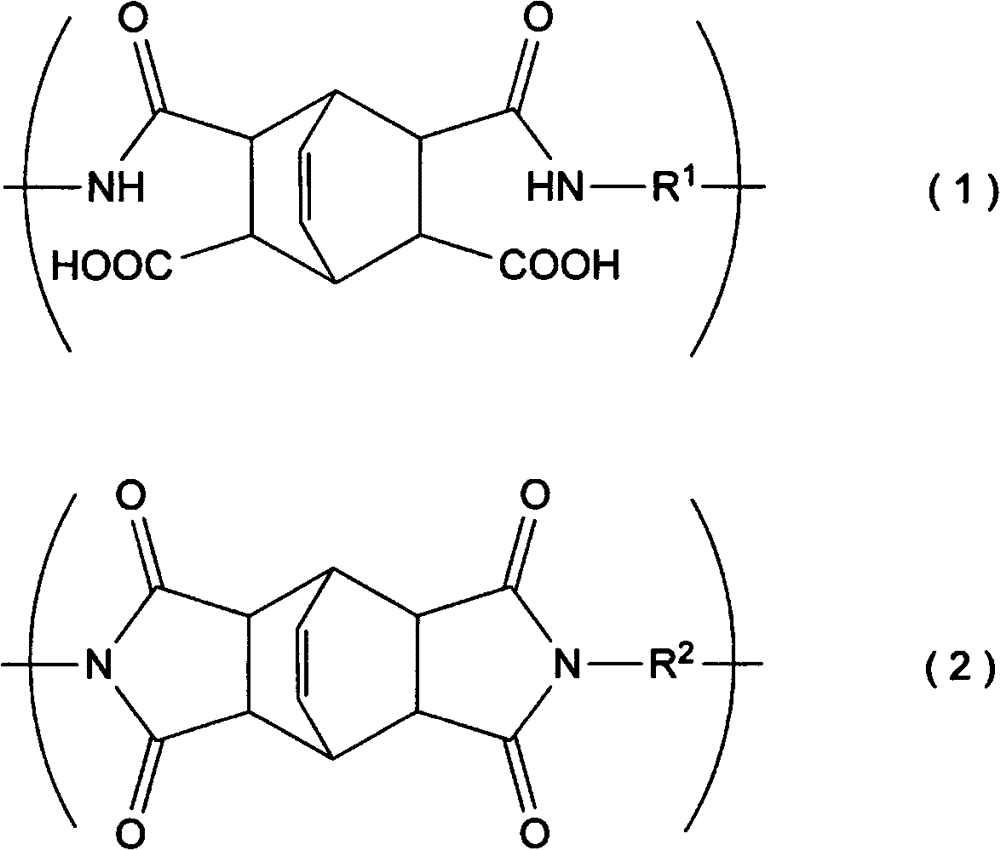
Figure 1 
Figure 2 
Figure 3
Abstract
Description
technical field
[0001] The present invention relates to a liquid crystal aligning agent suitable for photo-alignment, a liquid crystal aligning film, a method for forming a liquid crystal aligning film, and a liquid crystal display element. Background technique
[0002] Liquid crystal displays (LCDs) are widely used in televisions, various monitors, and the like. As the display element of LCD, it is known to have TN (twisted nematic) type; STN (super twisted nematic) type; IPS (in-plane switching) type; change the electrode structure of IPS type, improve the aperture ratio of the display element part, thereby A display element of a liquid crystal cell such as an FFS (Fringe Field Switching) type that improves luminance (see Patent Documents 1 and 2).
[0003] As a method for aligning the liquid crystal of the liquid crystal cell, it is known to form an organic film such as a liquid crystal alignment film on the surface of a substrate, and rub the surface of the organic film...
Examples
preparation example Construction
[0103]
[0104] It is preferable that the liquid crystal aligning agent of this invention melt|dissolves and contains the said polyamic acid or polyimide, and other components arbitrarily mixed as needed in an organic solvent, and is comprised.
[0105] As the organic solvent used in the liquid crystal aligning agent of the present invention, for example, N-methyl-2-pyrrolidone, γ-butyrolactone, γ-butyrolactam, N,N-dimethylformamide, N, N-Dimethylacetamide, 4-Hydroxy-4-methyl-2-pentanone, Ethylene Glycol Monomethyl Ether, Butyl Lactate, Butyl Acetate, Methyl Methoxypropionate, Ethoxypropionate Ethyl ether, ethylene glycol methyl ether, ethylene glycol ethyl ether, ethylene glycol n-propyl ether, ethylene glycol isopropyl ether, ethylene glycol n-butyl ether (butyl cellosolve), ethylene glycol dimethyl ether, ethylene glycol ethyl ether Ester, diethylene glycol dimethyl ether, diethylene glycol diethyl ether, diethylene glycol monomethyl ether, diethylene glycol monoethyl eth...
Embodiment
[0139] Hereafter, although an Example demonstrates this invention concretely, this invention is not limited by these Examples.
[0140]
Synthetic example 1
[0142]Dissolve 0.1mol (24.82g) bicyclo[2.2.2]oct-7-one-2,3,5,6-tetracarboxylic dianhydride and 0.1mol (41.05g) in 373.26g N-methyl-2-pyrrolidone 2,2-bis[4-(4-aminophenoxy)phenyl]propane, reacted at room temperature for 6 hours. Next, the reaction mixture was mixed with a very large excess of methanol to precipitate the reaction product. Then, it wash|cleaned with methanol, it dried at 40 degreeC of reduced pressure for 15 hours, and obtained 65 g of polyamic-acid A-1 (yield rate 98.7%).