
A Tungsten Trioxide Composite Titanium Dioxide Photocatalyst for Degrading Formaldehyde
A photocatalyst and photocatalytic technology, applied in the field of photocatalysis, can solve problems such as difficult to realize industrial production, complex process flow, and low efficiency of photogenerated carriers
Patent Information
- Authority / Receiving Office
- CN · China
- Patent Type
- Patents(China)
- Current Assignee / Owner
- Publication Date
- 2016-08-10
Smart Images
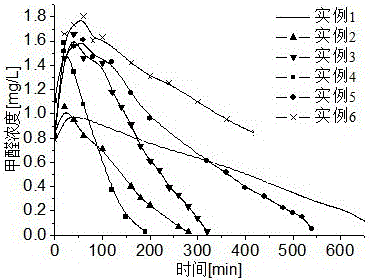
Figure 1 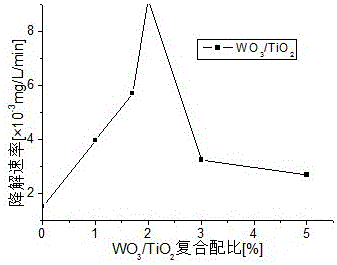
Figure 2 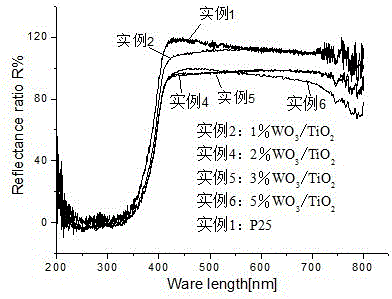
Figure 3
Abstract
Description
technical field The invention belongs to the field of photocatalysis, in particular to the use of foamed nickel as a supporting substrate, WO 3 The preparation method of composite P25 photocatalytic material, and the degradation ability to formaldehyde. Background technique Photocatalytic oxidation has become the most promising air purification technology due to its simple technical operation, mild conditions, low energy consumption, and no secondary pollution. 2 Semiconductors have become a research hotspot among many photocatalysts due to their good chemical stability, corrosion resistance, high activity, low cost, non-toxicity, and no secondary pollution. But TiO 2 The band gap is wide and can only absorb a small amount of ultraviolet light; at the same time, the photon efficiency is low, and it is not easy to recycle. Thus its application prospects are limited. In general, nano-TiO 2 The application of semiconductor photocatalytic degradation of organic pollutants ...
Examples
Embodiment Construction