
Network Selection Joint Bandwidth Allocation Method in Heterogeneous Networks
A bandwidth allocation method and network selection technology, which are applied in the field of joint bandwidth allocation for network selection, can solve problems such as failure to take measures to ensure user service quality, network resources are not fully utilized, and network selection diversity is reduced, so as to improve network utilization. efficiency, improve the effective utilization rate, and improve the effect of total utility
Patent Information
- Authority / Receiving Office
- CN · China
- Patent Type
- Patents(China)
- Current Assignee / Owner
- Publication Date
- 2019-08-09
Smart Images
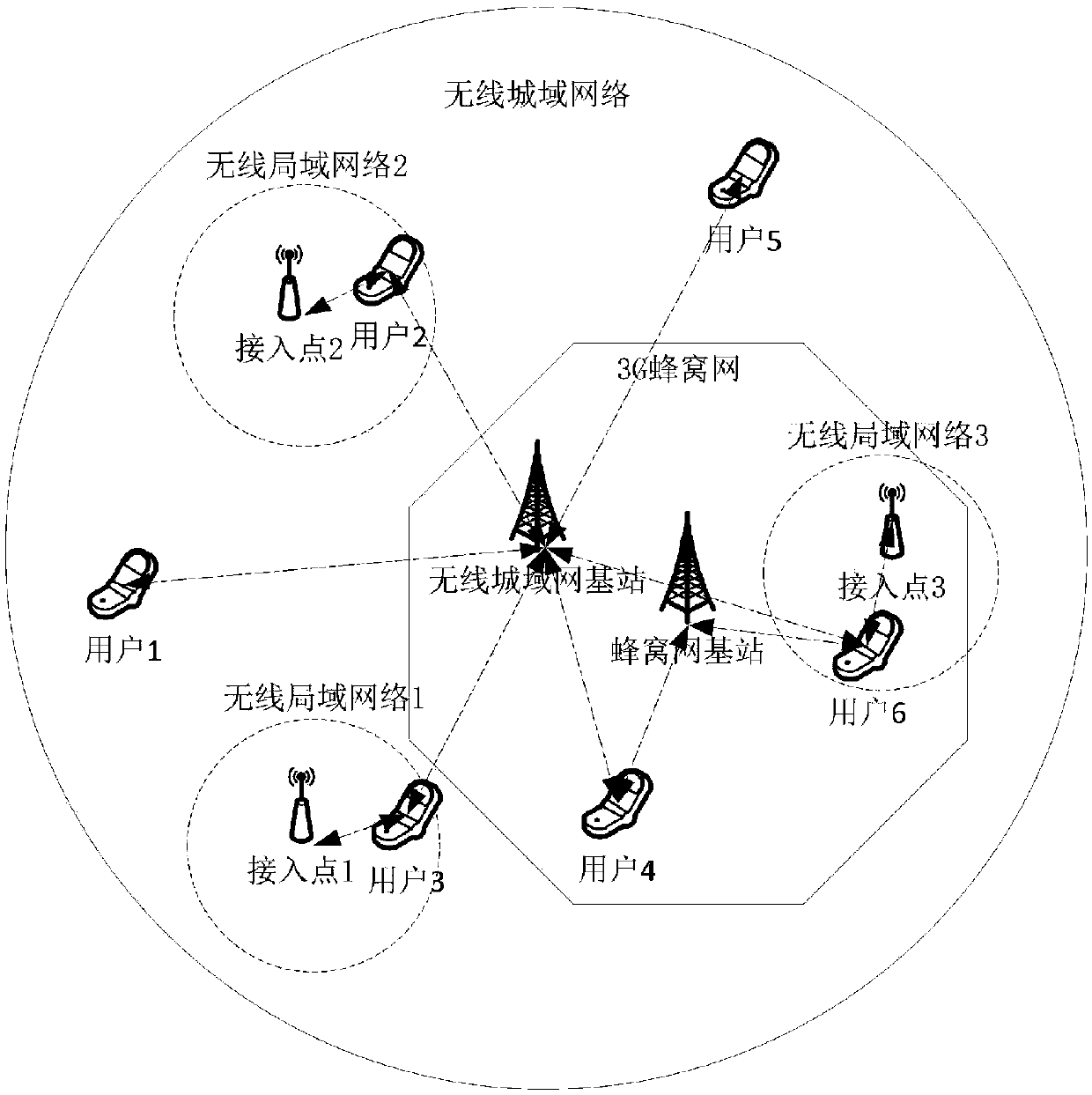
Figure 1 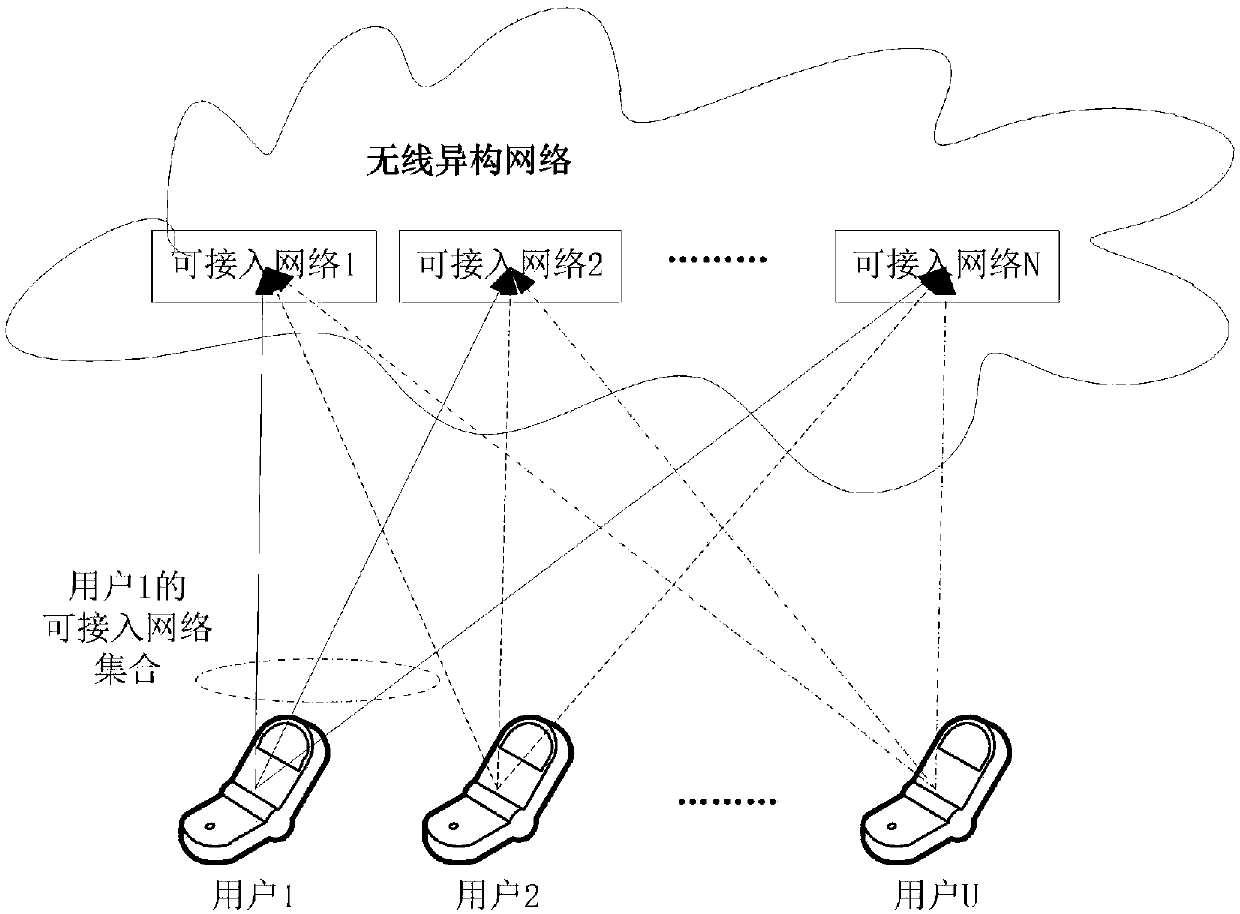
Figure 2 
Figure 3
Abstract
Description
technical field
[0001] The invention relates to the field of wireless communication, in particular to a network selection joint bandwidth allocation method in a heterogeneous network, which is used to solve the problem of network selection of multiple users in the wireless heterogeneous network and the access bandwidth of the selected network. Background technique
[0002] With the rapid development of mobile communication systems, wireless access networks are diversified, such as Universal Mobile Telecommunications System (UMTS), Long Term Evolution (LTE), Wireless Metropolitan Area Networks (WMANs), and Wireless Local Area Networks (WLANs). The coverage areas of these wireless access networks overlap each other to form a wireless heterogeneous network. On the other hand, in order to meet the ever-increasing business needs, users can use multiple wireless access technologies as multi-mode terminals to access different networks in parallel to make full use of these heterogen...
Examples
Embodiment Construction
[0054] The present invention will be further described below in conjunction with the accompanying drawings. It should be noted that this embodiment is based on the technical solution, and provides detailed implementation and specific operation process, but the protection scope of the present invention is not limited to the present invention. Example.
[0055] like figure 1 As shown, the wireless heterogeneous network used in the present invention is composed of several partially overlapping networks and several users, and these partially overlapping networks have their own base stations.
[0056] like figure 2 As shown, in the present invention, users can use different wireless access technologies to access multiple networks in parallel. Each user has its own set of accessible networks, and the user can select one or more of these networks for service transmission according to his needs. The present invention considers the uplink transmission, and assumes that the transmis...