
Performance evaluation method of pin tube reconfigurable antenna under high power electromagnetic pulse
A technology for reconfiguring antennas and electromagnetic pulses, applied in electrical digital data processing, special data processing applications, instruments, etc., can solve problems such as short rise time, and achieve consistent and effective analysis of the coupling between the PIN tube and the antenna
Patent Information
- Authority / Receiving Office
- CN · China
- Patent Type
- Patents(China)
- Current Assignee / Owner
- Publication Date
- 2019-01-18
Smart Images
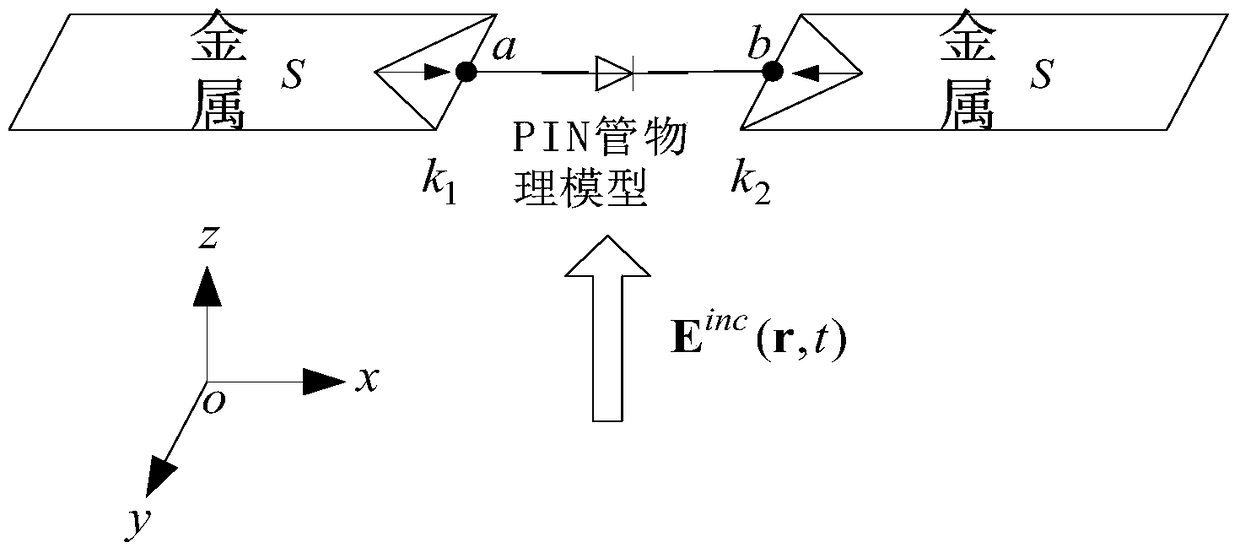
Figure 1 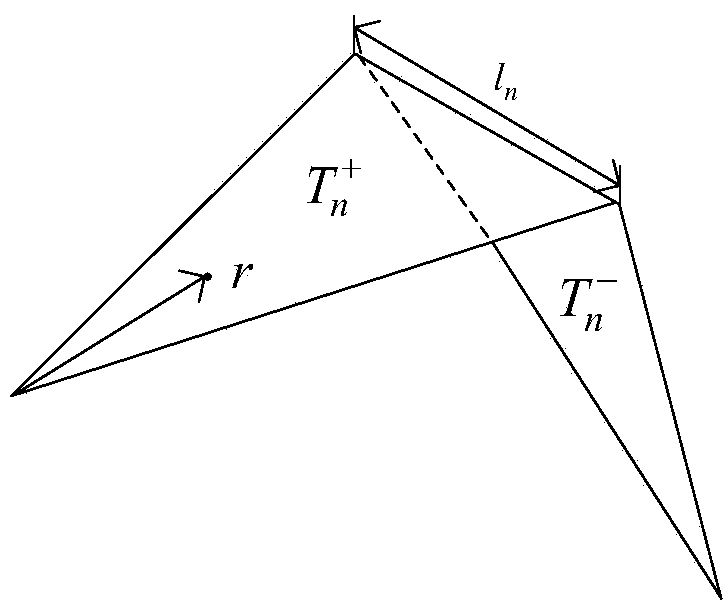
Figure 2 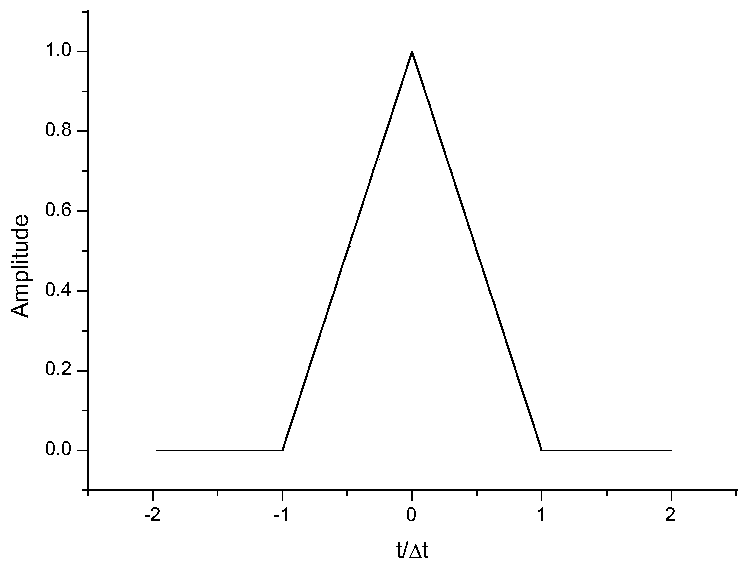
Figure 3
Abstract
Description
technical field
[0001] The invention relates to the technical field of electromagnetic simulation, in particular to a method for evaluating and analyzing the performance of a PIN tube reconfigurable antenna under the action of high-power electromagnetic pulses. Background technique
[0002] With the rapid development of modern large-capacity, multi-functional, ultra-broadband integrated information systems, the number of information subsystems carried on the same platform has increased. As the inevitable channel of information access in wireless systems, the number of antennas also increases accordingly. From the perspective of reducing the overall cost of the integrated information system, reducing the weight, reducing the radar cross-section of the system, and realizing good electromagnetic compatibility characteristics, this phenomenon is very harmful, and it has also become a constraint to the further development of the integrated information system with large capacity a...
Examples
Embodiment Construction
[0019] 1. A brief introduction to the time domain integration method
[0020] Consider that under the irradiation of the incident electromagnetic wave, the surface of the metal scatterer will generate an induced current, thereby generating a scattered field. According to the boundary condition of the tangential continuity of the metal surface, the time domain integral equation (TDIE) can be established as follows:
[0021]
[0022] where E inc (r 0 ,t) is at the observation point r 0 The incident electric field at E sca (r 0 ,t) is at the observation point r 0 The scattered electric field generated at is the metal surface S at r 0 The unit outer normal vector at , J is the induced current. After putting the expression of the scattered electric field into the above formula, we can get:
[0023]
[0024] where μ 0 and ε 0 respectively represent the permeability and permittivity of free space, c is the speed of light in free space, R=|r 0 -r s | is the observa...