
The synthetic method of triallyl phosphite
A technology of triallyl phosphite and synthesis method, which is applied in chemical instruments and methods, compounds of Group 5/15 elements of the periodic table, organic chemistry, etc. High, low yield, etc.
Patent Information
- Authority / Receiving Office
- CN · China
- Patent Type
- Patents(China)
- Current Assignee / Owner
- Publication Date
- 2019-06-18
Smart Images

Figure 1 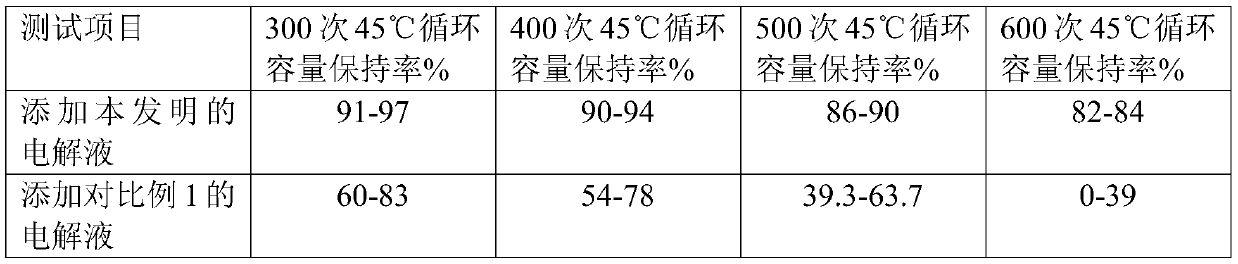
Figure 2 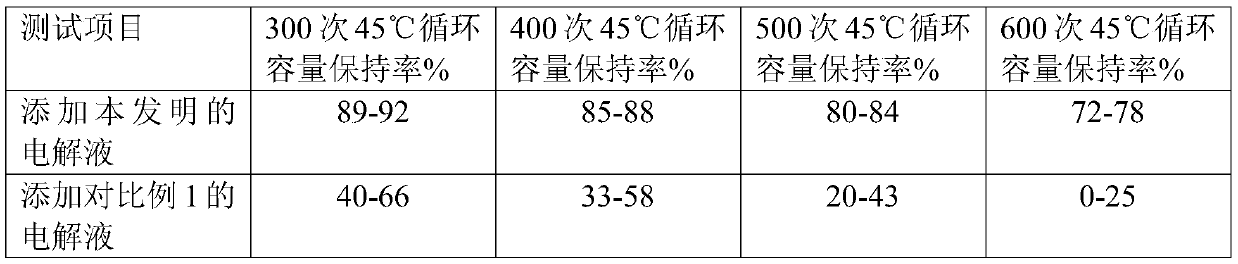
Figure 3
Abstract
Description
technical field
[0001] The invention belongs to the technical field of compound synthesis and relates to a synthesis method of triallyl phosphite. The synthesis method of the invention is simple, the reaction is sufficient, the reaction process is stable, and the obtained triallyl phosphite has high yield and high purity. Background technique
[0002] Triallyl phosphite is a new type of non-aqueous lithium-ion battery electrolyte additive, which helps to form a stable and dense passivation film on the electrode surface, prevents further decomposition of solvent molecules, and can effectively improve the high temperature of lithium-ion batteries Storage and high temperature cycle performance. At the same time, triallyl phosphite is also an important polymer monomer, which can be used in industry as a halogen-free flame retardant.
[0003] The synthesis of triallyl phosphite mainly contains the following methods at present:
[0004] 1. Under the protection of an inert gas, u...
Examples
Embodiment 1
[0021] Add 61g (1.05mol) allyl alcohol, 96g (0.96mol) triethylamine, and 500mL DCM to a 500mL four-neck bottle under nitrogen protection, stir for 5 minutes, remove the nitrogen protection from the reaction bottle, tightly seal the bottle mouth, and place it in a low temperature constant temperature reaction Bath (Gongyi DFY-5), set the temperature down.
[0022] The temperature was lowered to -8°C, and then 41.2 g (0.3 mol) of phosphorus trichloride was added dropwise, and the rate of addition was controlled so that the temperature of the reaction solution did not change significantly.
[0023] After dropping, it takes 3.3 hours, at -12°C, stop cooling, continue to stir, and raise the temperature naturally.
[0024] Raise the temperature to 0°C, heat-preserve for 1 hour, and stop the reaction.
[0025] The reaction solution was filtered to remove white solid triethylamine hydrochloride, and the filter cake was washed with a small amount of toluene. Discard the filter cake. ...
Embodiment 2
[0027] Add 61g (1.05mol) allyl alcohol, 96g (0.96mol) triethylamine, 500mL DCM, and 4.9g sodium ethoxide to a 500mL four-neck flask under nitrogen protection, remove the nitrogen protection from the reaction flask after stirring for 5 minutes, and tightly seal the bottle mouth. Put it into a low temperature and constant temperature reaction bath (Gongyi DFY-5), set the temperature down.
[0028] Cool down to -8°C, add 4.2g of sodium ethoxide, then start to dropwise add 41.2g (0.3mol) of phosphorus trichloride, and control the rate of addition so that the temperature of the reaction solution does not change significantly.
[0029] After dropping, it takes 3.3 hours, at -12°C, stop cooling, continue to stir, and raise the temperature naturally.
[0030] Raise the temperature to 0°C, heat-preserve for 1 hour, and stop the reaction.
[0031] The reaction solution was filtered to remove white solid triethylamine hydrochloride, and the filter cake was washed with a small amount of ...
Embodiment 3
[0033] Add 20.3g (0.35mol) of allyl alcohol, 25.28g (0.32mol) of pyridine, and 120mL of toluene into a 250mL four-neck flask under nitrogen protection. After stirring for 5 minutes, remove the nitrogen protection from the reaction flask, tightly seal the bottle mouth, and place it in a low temperature constant temperature Reaction bath (Gongyi DFY-5), set to cool down.
[0034] The temperature was lowered to -10°C, and 13.7 g (0.1 mol) of phosphorus trichloride was added dropwise, and the rate of addition was controlled so that the temperature of the reaction solution did not change significantly.
[0035] After dropping, it takes 3.5 hours, at -14°C, stop cooling, and let the temperature rise naturally.
[0036] Raise the temperature to 0°C, heat-preserve for 2 hours, and stop the reaction.
[0037] The reaction solution was filtered to remove white solid pyridine hydrochloride, and the filter cake was washed with a small amount of toluene. The filter cake pyridine hydrochl...