
A kind of polydopamine-based core-shell material and its preparation method and application
A dopamine, core-shell technology, applied in the field of nanomaterial synthesis, can solve problems such as high SERS activity, and achieve the effects of high SERS enhancement factor, stable Raman signal, and maintaining stability
Patent Information
- Authority / Receiving Office
- CN · China
- Patent Type
- Patents(China)
- Current Assignee / Owner
- Publication Date
- 2021-05-11
Smart Images
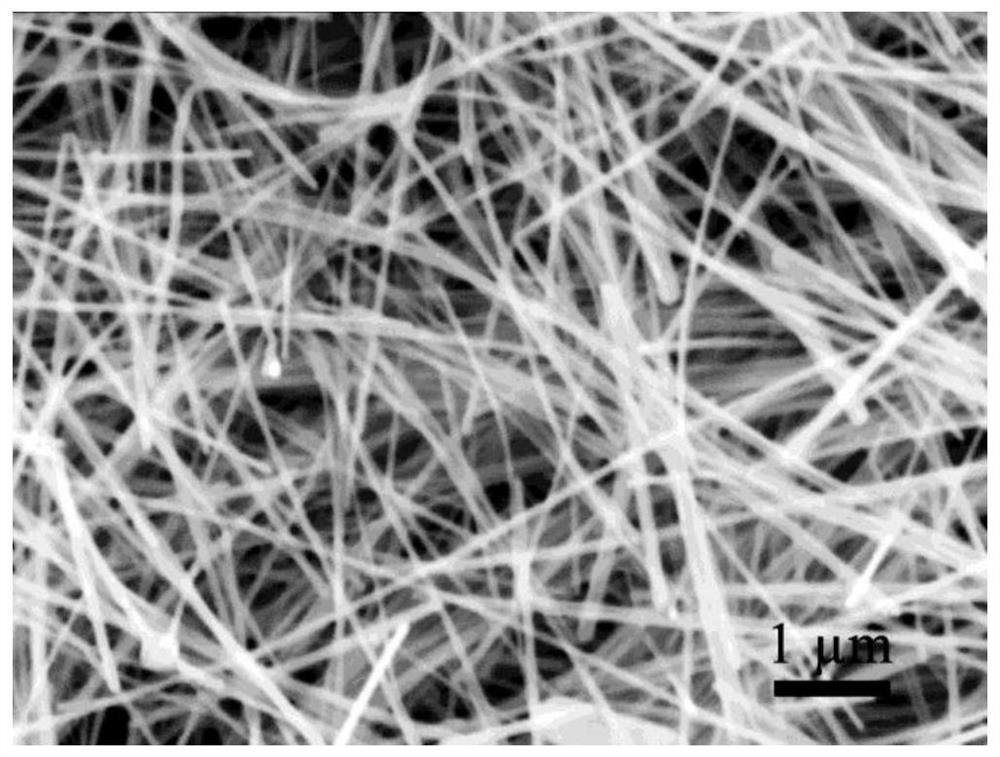
Figure 1 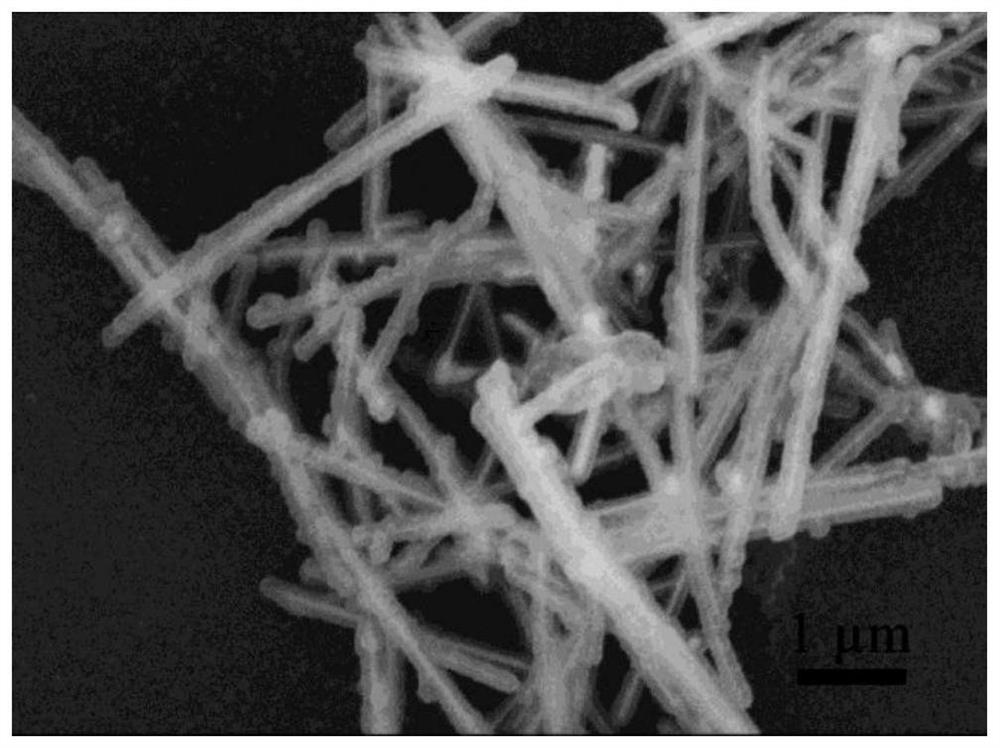
Figure 2 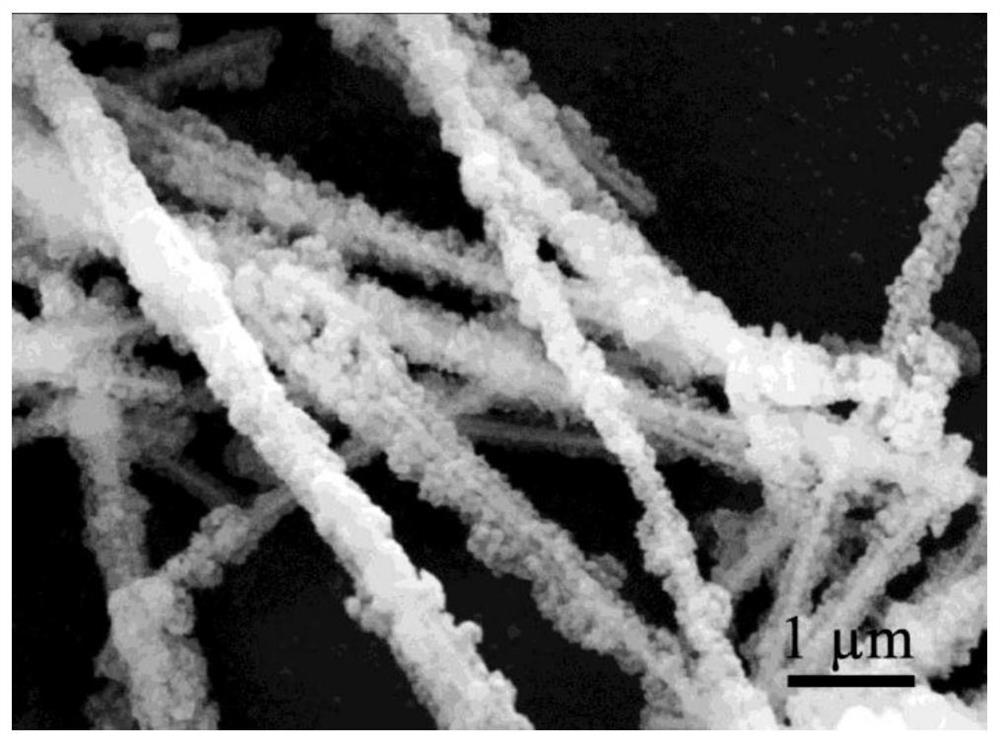
Figure 3
Abstract
Description
technical field
[0001] The invention relates to a preparation method of a silver nanowire / polydopamine / silver nanoparticle (AgNWs@PDA@AgNPs) core-shell material and its application to a highly sensitive surface-enhanced Raman substrate, belonging to the technical field of nanomaterial synthesis. Background technique
[0002] Surface-enhanced Raman scattering (SERS) can obtain a signal that is stronger than ordinary Raman scattering by adsorbing molecules on the surface of rough metal or metal sol particles, and its intensity can increase by several orders of magnitude. This advantage makes the surface enhanced Raman scattering has been widely used in physics, chemistry, biology, medicine, environment and other fields.
[0003] Under visible light excitation, nanomaterials based on noble metals gold, silver, and copper have high enhancement effects, and are currently commonly used SERS substrate materials, among which silver has the strongest enhancement ability. As a one-di...
Examples
Embodiment 1
[0046] Put 50mL EG into a three-necked flask, heat to 150°C in an oil bath and react for 1h. Prepare 4mM CuCl 2 +2H 2 EG solution of O; 1g PVP (Mw=30000) and 0.5g AgNO 3 Dissolve in 10mL of EG respectively, add 200μL of CuCl dissolved in EG dropwise after reacting for 1h 2 +2H 2 O solution; after continuing to react for 15 minutes, add the prepared PVP and AgNO respectively 3 solution, PVP and AgNO 3 The mass ratio is 2:1; after the final reaction for 1 h, cool down to room temperature and wash with acetone. The obtained precipitate is AgNWs. The diameter of the prepared AgNWs is about 100 nm and the length is about 10 μm. The obtained precipitate is dispersed in 10 mL of ethanol ready in solution.
[0047] Sonicate the above-mentioned ethanol solution of AgNWs until it is evenly mixed; prepare a 10mM Tris-HCl buffer solution with pH=8.5; take 100mL of the buffer solution to prepare 2g·L –1 Then take the above AgNWs solution and disperse it in the DA solution, wherein t...
Embodiment 2
[0050] Put 50mL EG into a three-necked flask, heat to 150°C in an oil bath and react for 1h. Prepare 4mM CuCl 2 +2H 2 EG solution of O; 1g PVP (Mw=30000) and 0.5g AgNO 3 Dissolve in 10mL of EG respectively, add 200μL of CuCl dissolved in EG dropwise after reacting for 1h 2 +2H 2 O solution; after continuing to react for 15 minutes, add the prepared PVP and AgNO respectively 3 solution, PVP and AgNO 3 The mass ratio is 2:1; after the final reaction for 1h, it is cooled to room temperature and washed with acetone. The obtained precipitate is AgNWs, and the morphology is as follows figure 1 As shown, the diameter of the prepared AgNWs is about 100 nm, and the length is about 10 μm, and the obtained precipitate is dispersed in 10 mL ethanol solution for later use.
[0051] Sonicate the above-mentioned ethanol solution of AgNWs until it is evenly mixed; prepare a 10mM Tris-HCl buffer solution with pH=8.5; take 100mL of the buffer solution to prepare 2g·L –1 DA solution, and ...
Embodiment 3
[0054] Put 50mL EG into a three-necked flask, heat to 150°C in an oil bath and react for 1h. Prepare 4mM CuCl 2 +2H 2 EG solution of O; 1g PVP (Mw=30000) and 0.5g AgNO 3 Dissolve in 10mL of EG respectively, add 200μL of CuCl dissolved in EG dropwise after reacting for 1h 2 +2H 2 O solution; after continuing to react for 15 minutes, add the prepared PVP and AgNO respectively 3 solution, PVP and AgNO 3 The mass ratio is 2:1; after the final reaction for 1 h, cool down to room temperature and wash with acetone. The obtained precipitate is AgNWs. The diameter of the prepared AgNWs is about 100 nm and the length is about 10 μm. The obtained precipitate is dispersed in 10 mL of ethanol ready in solution.
[0055] Sonicate the above-mentioned ethanol solution of AgNWs until it is evenly mixed; prepare a 10mM Tris-HCl buffer solution with pH=8.5; take 100mL of the buffer solution to prepare 2g·L –1 Then take the above AgNWs solution and disperse it in the DA solution, wherein t...