
Turning-plate type sorting system
A sorting system, flap-type technology, applied in sorting, conveyors, storage devices, etc., can solve the problems that the flap-type sorting robots cannot work at the same time, which is not conducive to meeting the requirements of large-scale sorting, and the cost of equipment is increased. Achieve the effect of improving sorting efficiency and sorting accuracy, realizing two-way selective sorting, and low equipment cost
Patent Information
- Authority / Receiving Office
- CN · China
- Patent Type
- Applications(China)
- Current Assignee / Owner
- Publication Date
- 2018-08-17
Smart Images
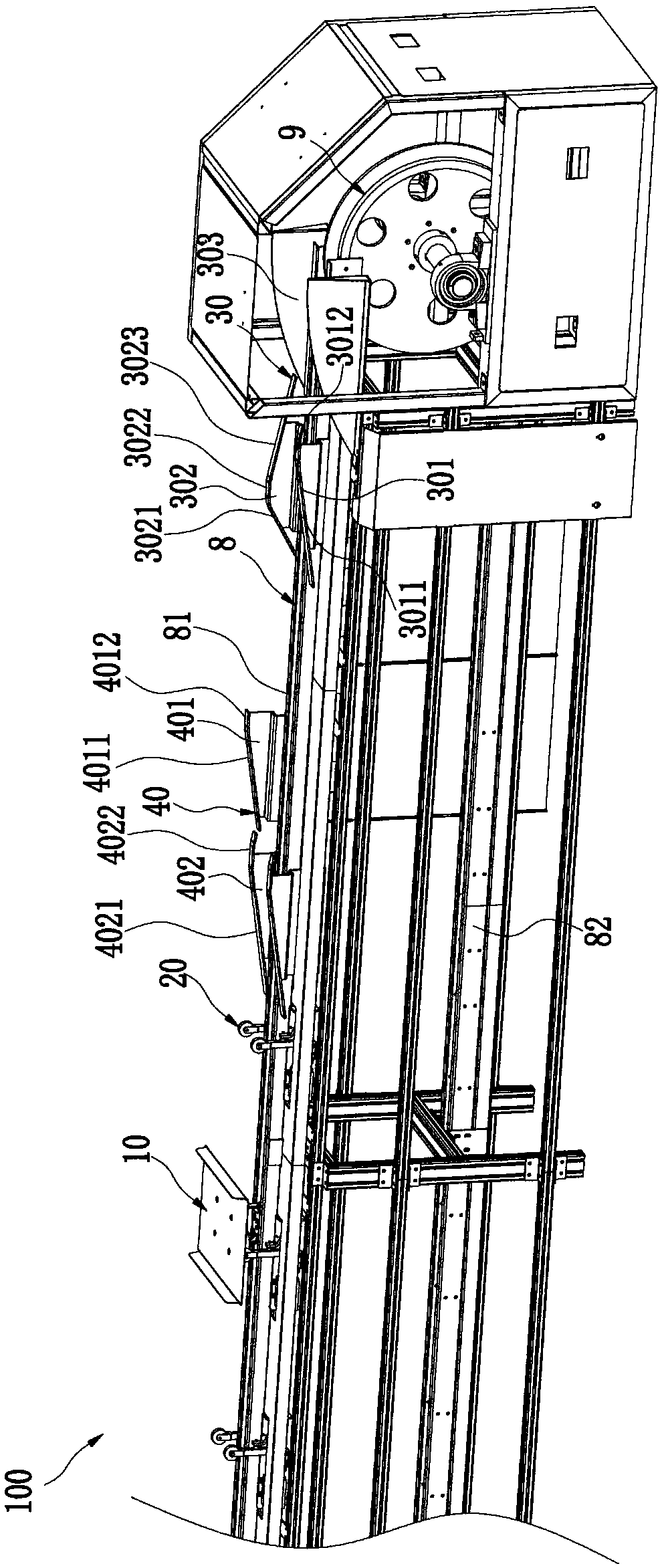
Figure 1 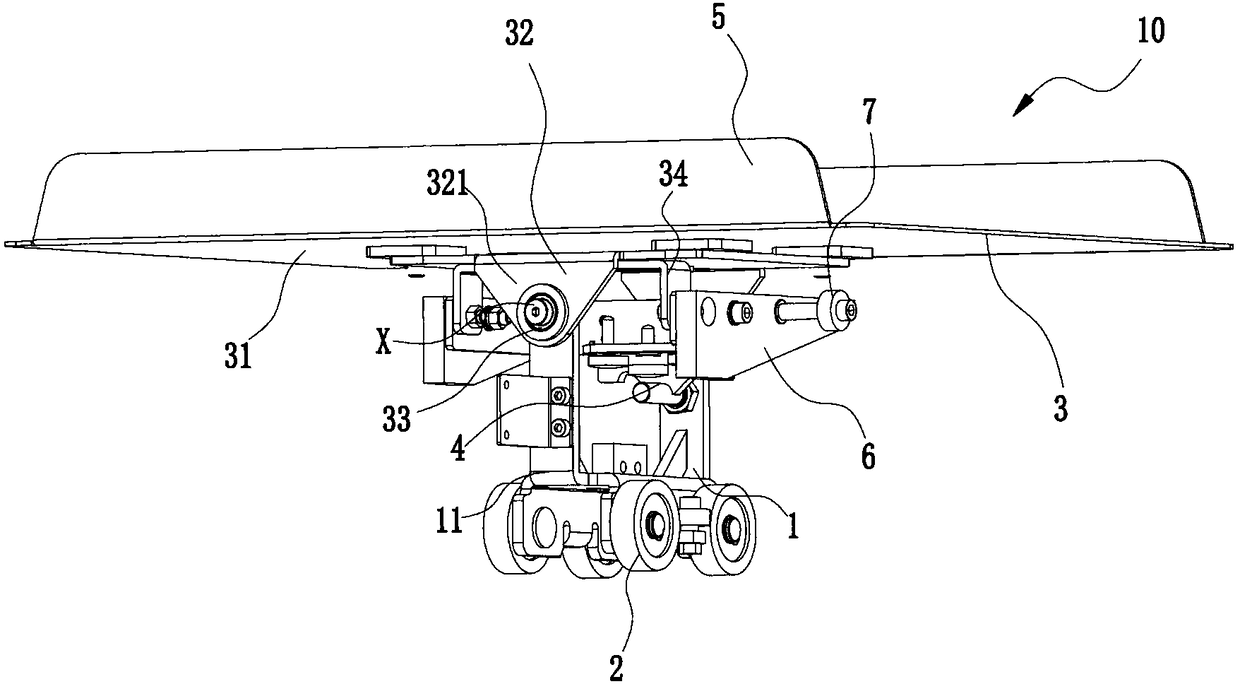
Figure 2 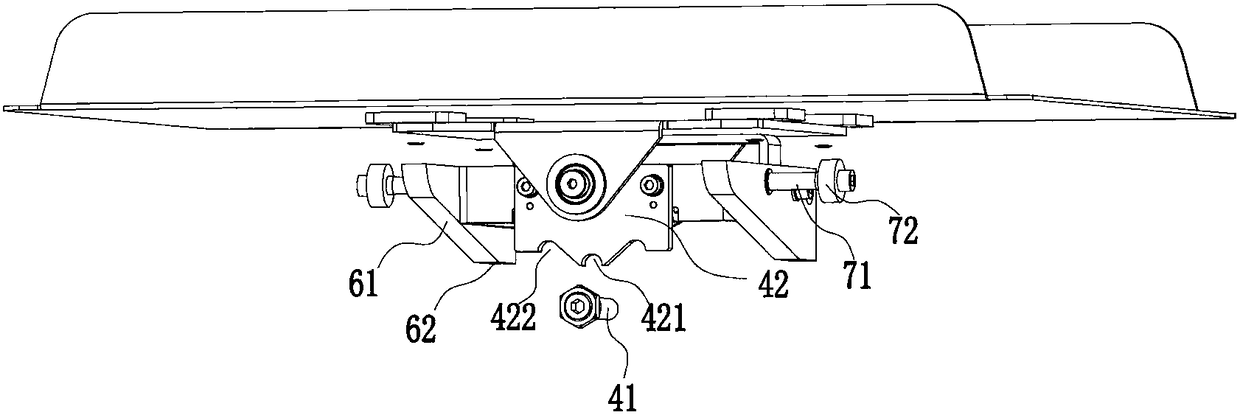
Figure 3
Abstract
Description
technical field
[0001] The invention relates to logistics sorting equipment, in particular to a flap type sorting system. Background technique
[0002] Sorting is the operation of stacking items in categories according to the variety and the order of entry and exit. Sorting is the preparatory work of improving delivery and supporting delivery, and it is an inevitable extension of different delivery companies to compete and improve their own economic benefits during delivery. Therefore, it can also be said that sorting is an inevitable requirement for the development of delivery to an advanced form .
[0003] The sorting and conveying system is a material handling system that classifies random and differently oriented items according to certain requirements. With the rapid development of e-commerce, the logistics industry is also developing rapidly. Various automatic and semi-automatic logistics sorting systems, The equipment has been developed and applied to the actual sor...
Examples
Embodiment Construction
[0056] Objects, advantages and features of the present invention will be illustrated and explained by the following non-limiting description of preferred embodiments. These embodiments are only typical examples of applying the technical solutions of the present invention, and all technical solutions formed by adopting equivalent replacements or equivalent transformations fall within the protection scope of the present invention.
[0057] In the description of the scheme, it should be noted that the terms "center", "upper", "lower", "left", "right", "front", "rear", "vertical", "horizontal", " The orientation or positional relationship indicated by "inner", "outer", etc. is based on the orientation or positional relationship shown in the drawings, and is only for the convenience of description and simplification of description, rather than indicating or implying that the device or element referred to must have a specific orientation , constructed and operated in a particular or...