
Application of pencolide in the preparation of plant growth regulator or inducer
A plant growth regulator and inducer technology, applied in the field of agriculture, can solve the problems of no compound pencolide plant growth regulator or inducer, and achieve the effects of improving plant resistance to chilling damage, promoting root growth, and improving bioavailability
Patent Information
- Authority / Receiving Office
- CN · China
- Patent Type
- Patents(China)
- Current Assignee / Owner
- Publication Date
- 2020-05-15
Smart Images
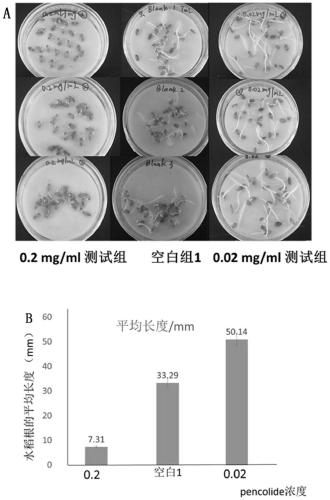
Figure 1 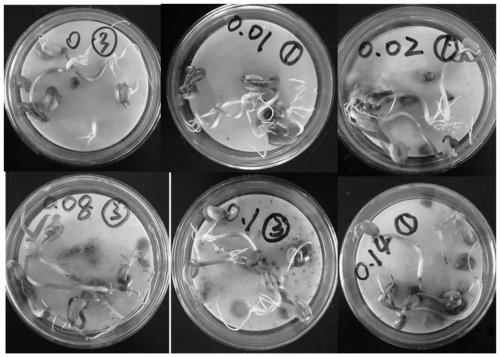
Figure 2 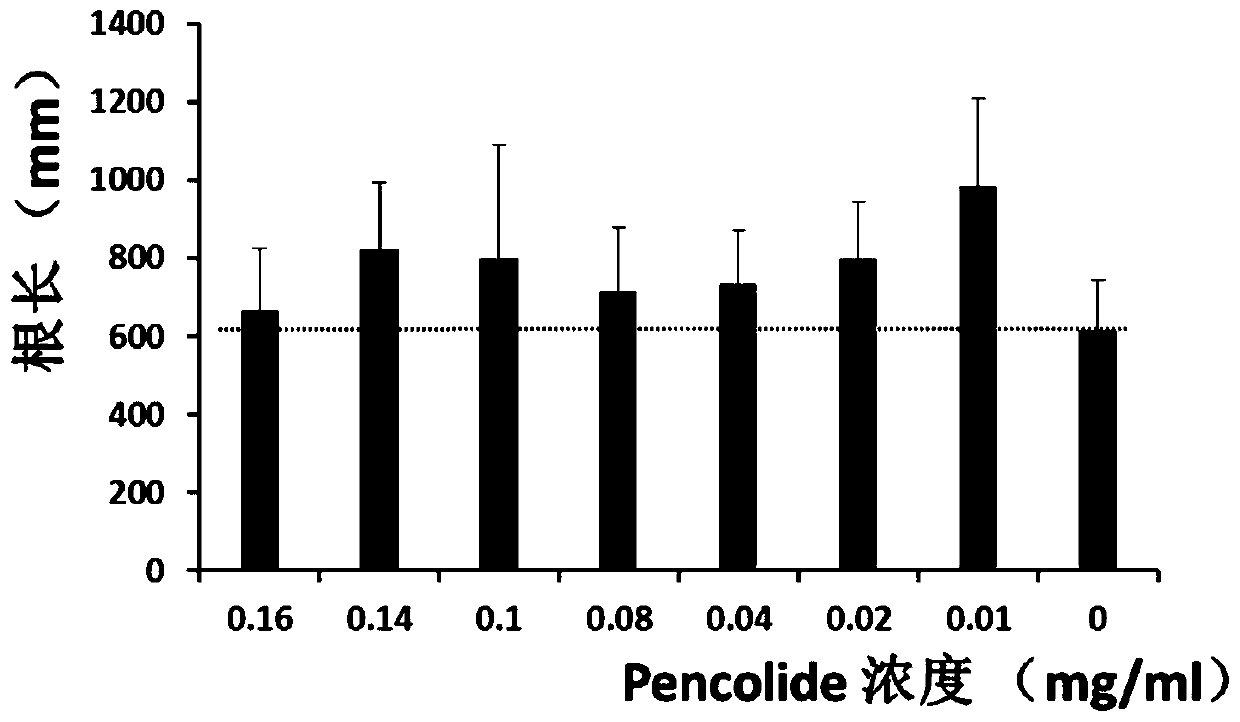
Figure 3
Abstract
Description
technical field
[0001] The invention belongs to the technical field of agriculture, and particularly relates to the application of pencolide in the preparation of plant growth regulators or inducers. Background technique
[0002] Plant growth regulator is the product of the comprehensive development of various science and technology such as organic synthesis, microanalysis, plant physiology and biochemistry, and modern agriculture, forestry and horticulture. For target plants, plant growth regulators are exogenous non-nutritive chemical substances, which can usually be transmitted to the site of action in plants, and promote or inhibit certain links of their life processes at low concentrations, making them conform to human requirements. Need to develop. Each plant growth regulator has a specific purpose, and the application technology requirements are quite strict, and only under specific application conditions (including external factors) can it produce specific effects o...
Examples
Embodiment 1
[0049] Embodiment 1pencolide can promote rice germination in advance and promote root growth
[0050] Put about 20 Nipponbare rice seeds (obtained from the rice variety Nipponbare reference: Yan J. et al. The Tyrosine Aminomutase TAM1Is Required for beta-Tyrosine Biosynthesis in Rice, Plant Cell, 2015, 27, 1265-1278) into the pencolide In the water culture solution, specifically: rice seeds are first soaked in 75% (v / v) ethanol for 30 seconds, washed with ultrapure water for more than 3 times, and then put into pencolide aqueous solutions with different concentrations (the concentration of pencolide is 0.02mg / ml and 0.2mg / ml), with no addition of pencolide as the blank control, the germination rate of the seeds was observed after 3 days.
[0051] The result of taking pictures is as follows figure 1 As shown, the culture solution of pencolide can significantly promote the growth of rice roots. After 5 days, it was obtained from the statistical results: 0.02mg / ml of pencolide ...
Embodiment 2
[0052] The growth-promoting effect of embodiment 2pencolide to mung bean seeds
[0053] Mung bean seeds (purchased from a supermarket in Guangzhou) were directly placed in 15ml of pencolide solutions with different concentrations (concentrations: 0mg / ml, 0.01mg / ml, 0.02mg / ml, 0.08mg / ml, 0.1mg / ml) without disinfection. ml, 0.14mg / ml) on a petri dish until germination and rooting, then the root length was measured for analysis, and each concentration was repeated three times.
[0054] The result of taking pictures is as follows figure 2 Shown, explain 0.08mg / ml 0.1mg / mlpencolide solution can reduce the brown stain of root, and can promote the growth of mung bean root.
Embodiment 3
[0055] Embodiment 3pencolide can promote the root growth of purslane and the increase of lateral roots
[0056] To explore the effect of Pencolide on the growth of purslane, the specific experimental process is as follows:
[0057] 1. Disinfection treatment of purslane seeds (Portulaca oleracea L.; purchased from Qingping Medicinal Materials Market, Guangzhou): Take an appropriate amount of purslane seeds in a 1.5ml centrifuge tube and gently shake and wash them with ultrapure water for 2 to 3 times, then pass through 75% (v / v) Soak in alcohol for 30-60s for disinfection, wash in sterile water for 3-4 times, soak in 30% (w / w) hydrogen peroxide for 8 minutes, wash in sterile water for 3-4 times, soak in appropriate amount of sterile water for later use or Store at 4°C.
[0058] 2. Sterilize MS medium (sterilization condition is 121°C for 20 minutes), after the medium is cooled to about 40°C, add pencolide to the culture, so that the final concentration of pencolide is 0mg / ml, ...