
Washing machine
A washing machine and body technology, applied in the field of washing machines, can solve the problems of insufficient wetting or soaking of clothes, insufficient and uneven mixing, and high cost, so as to enhance the spraying and wetting effects, increase the spray coverage area, The effect of reducing the amount of foam
Patent Information
- Authority / Receiving Office
- CN · China
- Patent Type
- Applications(China)
- Current Assignee / Owner
- Publication Date
- 2020-06-26
Smart Images
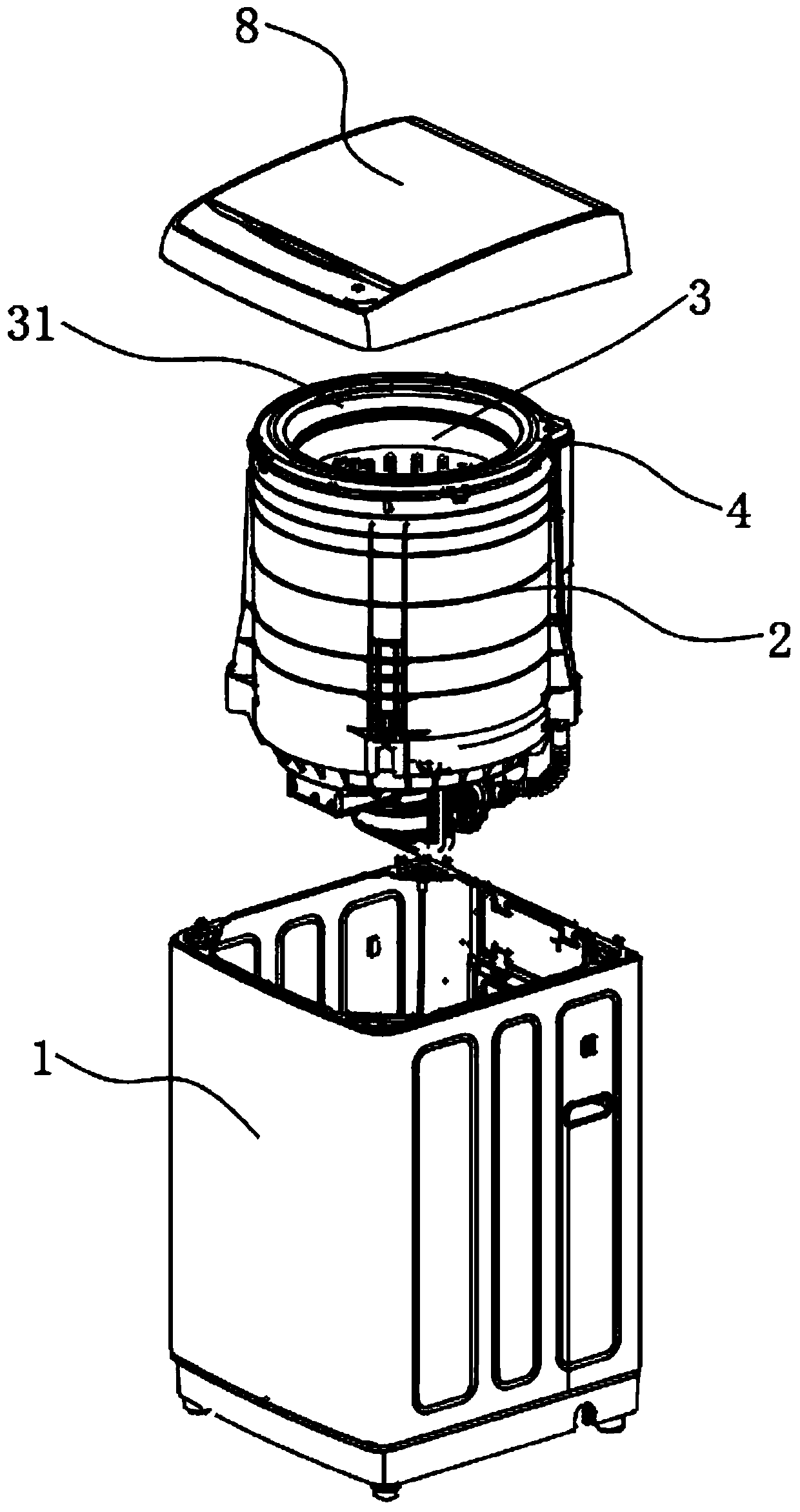
Figure 1 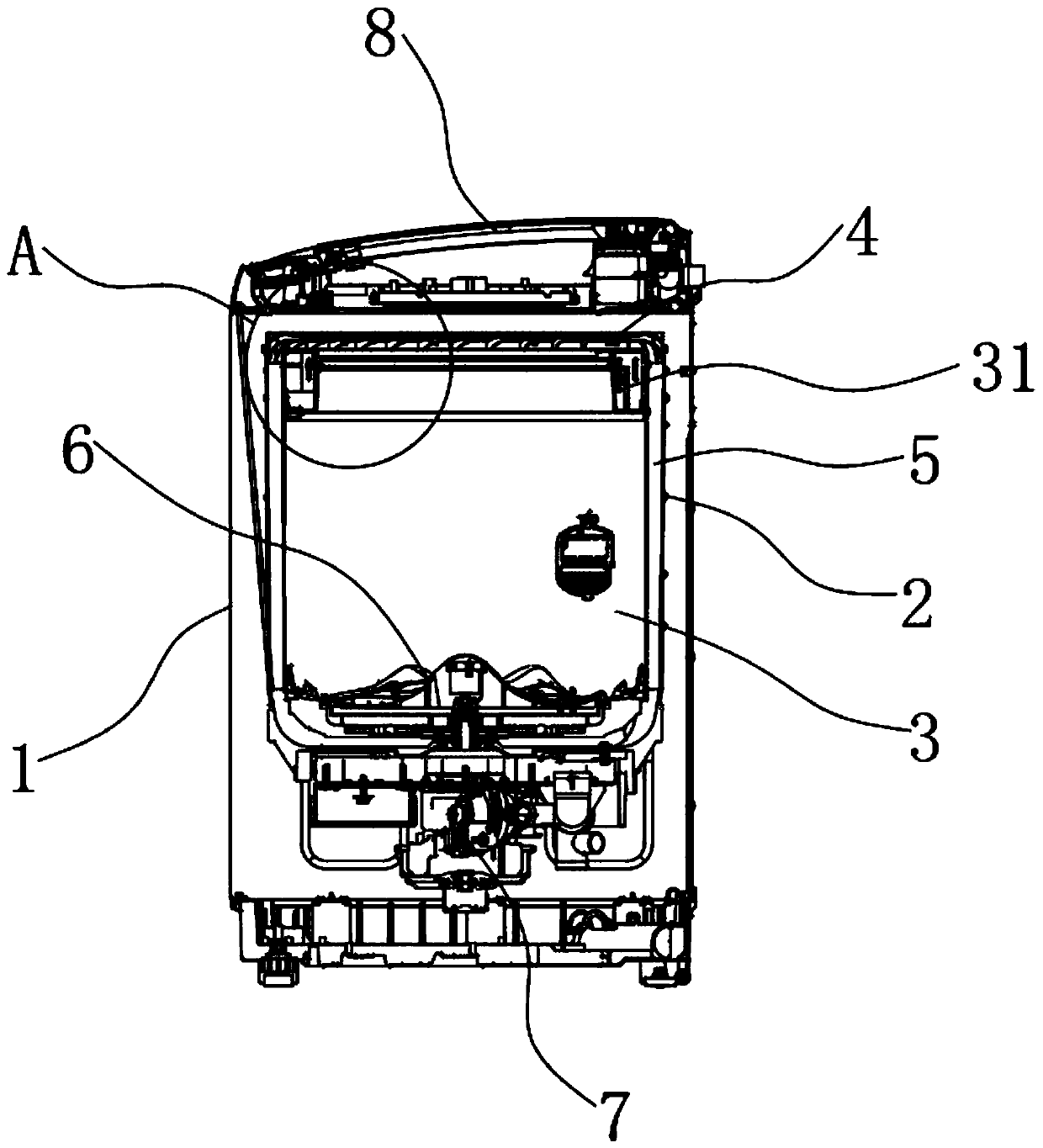
Figure 2 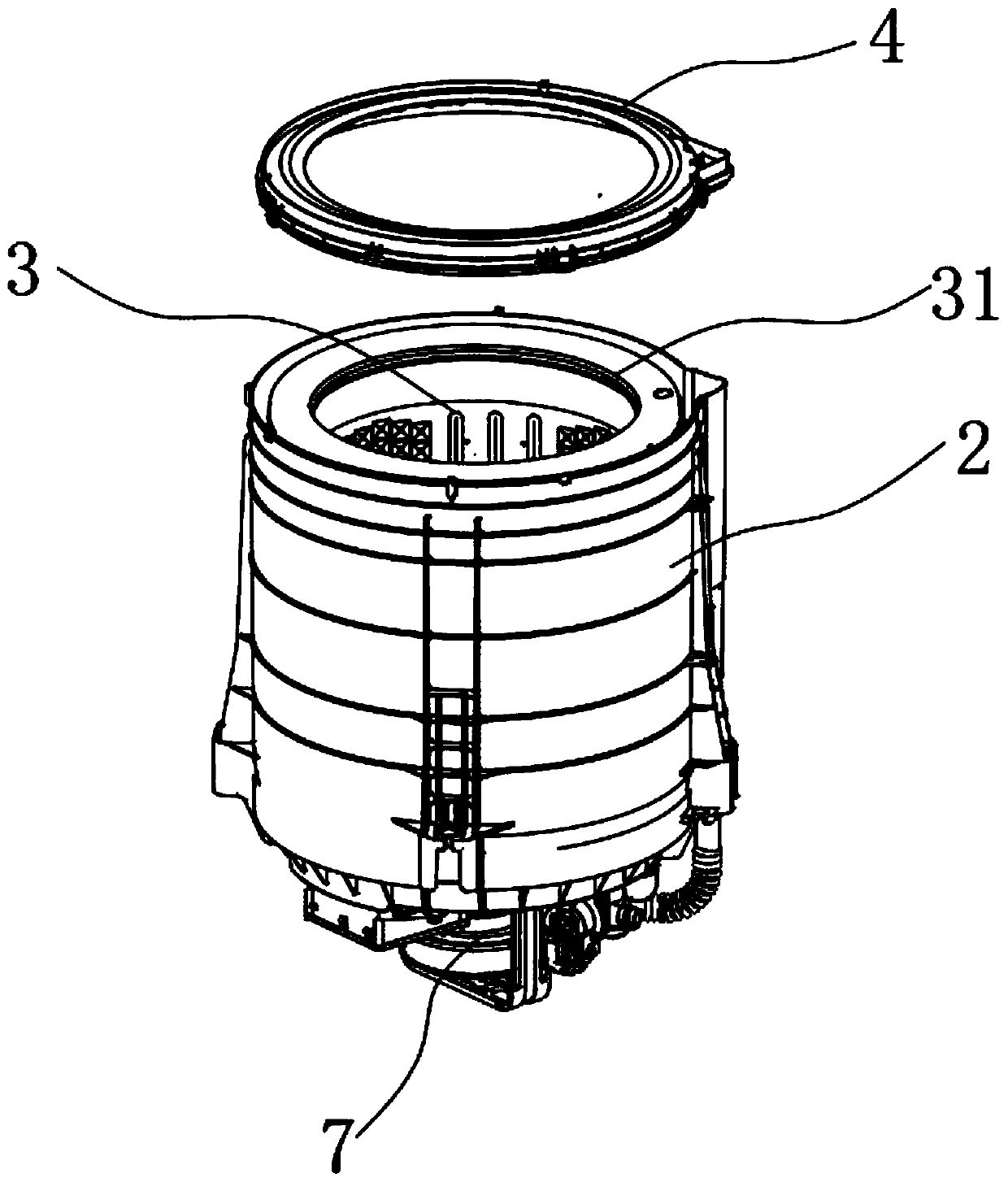
Figure 3
Abstract
Description
technical field
[0001] The invention belongs to the technical field of washing machines, in particular to a washing machine. Background technique
[0002] The bottom of the barrel of the pulsator washing machine is equipped with a disc pulsator with protruding ribs on it. Driven by the pulsator, the water flow in the barrel forms a vortex that sometimes rotates right-handed and sometimes left-handed, driving the fabric to rotate and roll. It can remove the dirt on the clothes.
[0003] At present, the existing pulsator washing machines have the following structural shortcomings and deficiencies: 1. A large amount of water is needed to fully soak the clothes. 2. In the washing stage, with the forward and reverse rotation of the pulsator, the clothes are gradually entangled, which affects the washing effect and may even damage the clothes. 3. When detergent and water are mixed, there will be insufficient and uneven mixing, which will affect the washing effect.
[0004] Howe...
Examples
Embodiment Construction
[0039] In the following, the present invention will be specifically described through exemplary embodiments. It should be understood, however, that elements, structures and characteristics of one embodiment may be beneficially incorporated in other embodiments without further recitation.
[0040] In describing the present invention, it is to be understood that the terms "center", "upper", "lower", "front", "rear", "left", "right", "vertical", "horizontal", The orientations or positional relationships indicated by "top", "bottom", "inner", "outer", etc. are based on the orientations or positional relationships shown in the drawings, and are only for the convenience of describing the present invention and simplifying the description, rather than indicating or implying References to devices or elements must have a particular orientation, be constructed, and operate in a particular orientation and therefore should not be construed as limiting the invention.
[0041] The terms "fi...