
A kind of preparation method and application of fluorescent molecularly imprinted silica nanoparticles
A fluorescent molecular imprinting and nanoparticle technology, applied in the field of analytical chemistry, can solve problems such as the negative impact of imprinting efficiency, complex preparation process, etc., and achieve the effects of good product stability, improved imprinting efficiency, and simple operation.
Patent Information
- Authority / Receiving Office
- CN · China
- Patent Type
- Patents(China)
- Current Assignee / Owner
- Publication Date
- 2022-03-11
Smart Images
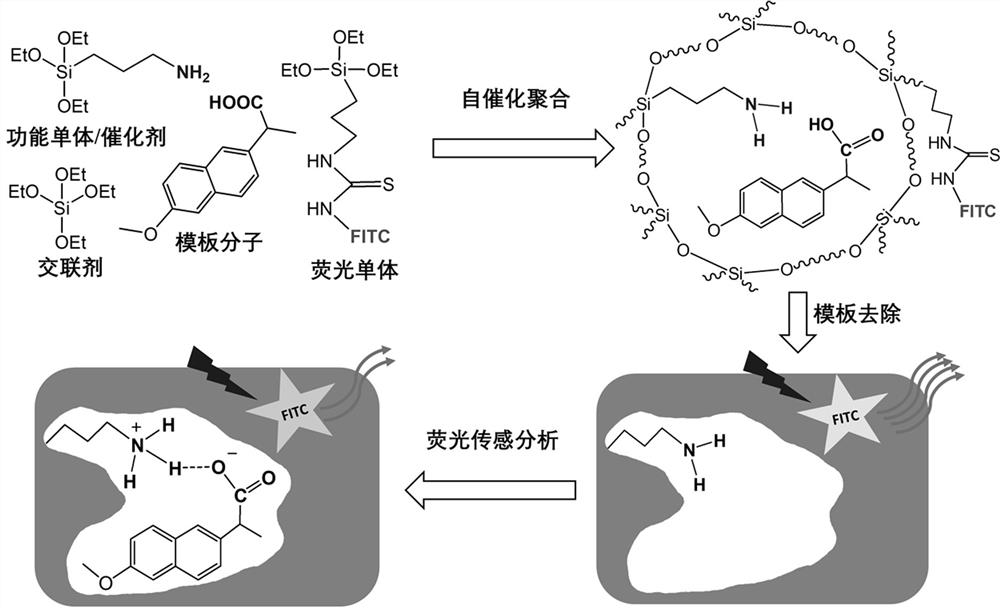
Figure 1 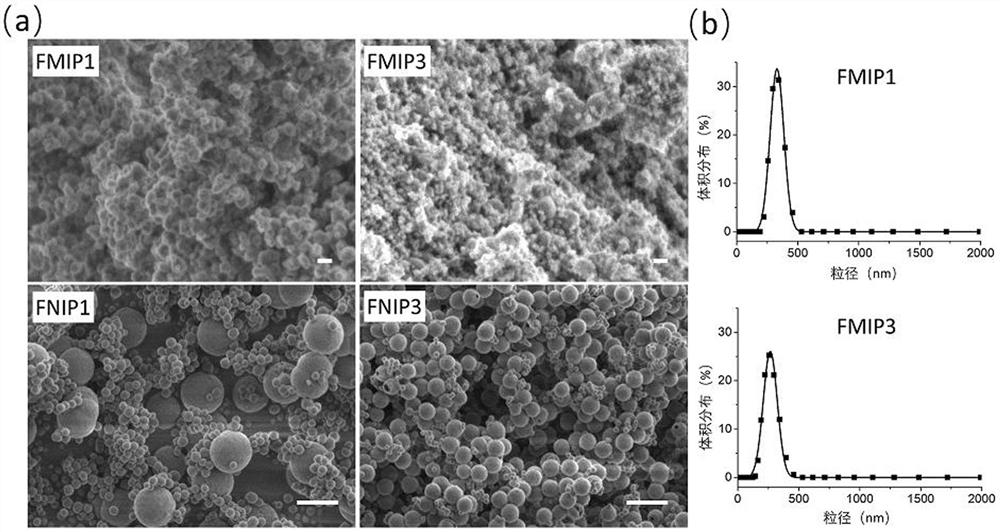
Figure 2 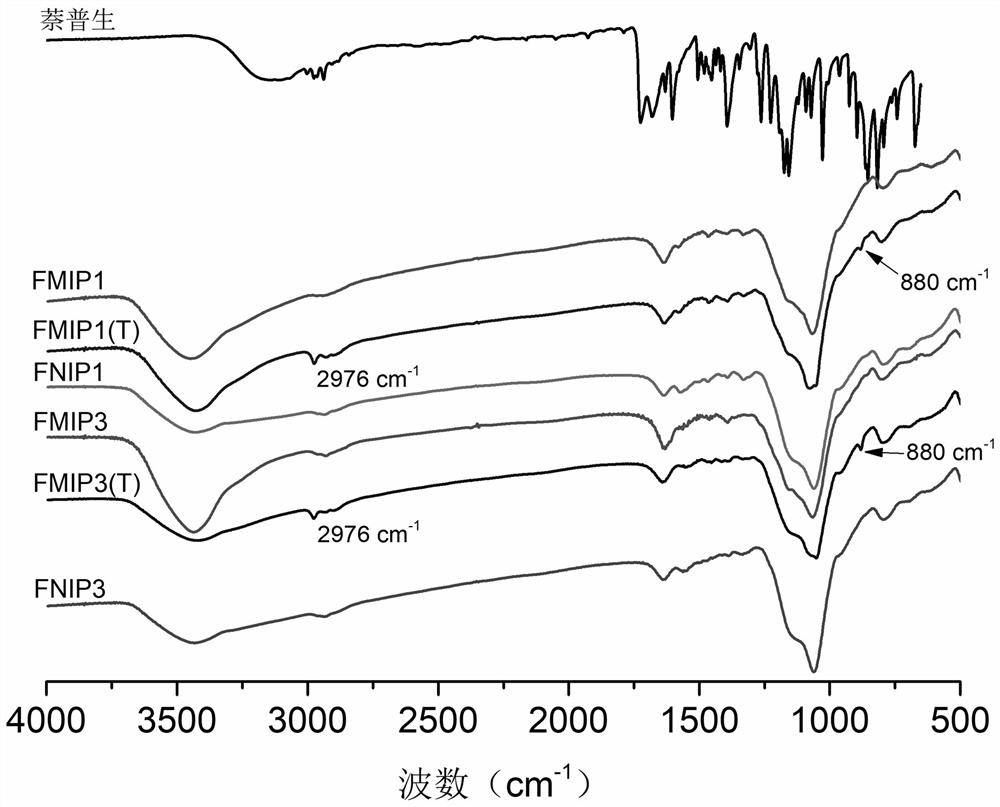
Figure 3
Abstract
Description
technical field
[0001] The invention belongs to the field of analytical chemistry and relates to the synthesis of molecularly imprinted silica gel polymers, in particular to a preparation method and application of fluorescent molecularly imprinted silica gel nanoparticles. Background technique
[0002] Molecularly Imprinted Polymer (MIP) is a high molecular polymer with special molecular recognition ability. The formation principle of its selective recognition ability is: firstly, the template molecule and the functional Covalently interact to form a complex, then add a cross-linking agent and an initiator to obtain a molecularly imprinted pre-polymerization solution; then, initiate a polymerization reaction to obtain a high molecular weight polymer containing template molecules; finally, remove the template molecules in the polymer, so that in An imprinted cavity complementary to the shape of the template molecule will be left in the polymer, and the functional group of the...
Examples
Embodiment 1
[0030]In this example, the fluorescent monomer is fluoresceinyl-n-propyltriethoxysilane-thiourea (FITC-APTES), and the functional monomer is 3-aminopropyl-triethoxysilane (APTES). The reagent is tetraethoxysilane (TEOS), the template molecule is naproxen, the solvent is a mixture of water and ethanol, and the elution solution is phosphate buffer (50 mM, pH 8.5). The preparation method of the fluorescent monomer is as follows: first, fluorescein FITC (16 mg, 0.04 mmol) containing isothiocyanate was dissolved in 8 mL ethanol by stirring at room temperature, and then APTES (9.3 μL, 0.04 mmol), kept stirring at room temperature for 24 h under dark conditions, and finally removed the solvent ethanol by a rotary evaporator under vacuum to obtain FITC-APTES, which can be used as a fluorescent monomer without purification to prepare fluorescent molecularly imprinted silica gel polymer.
[0031] For the preparation method of the fluorescent molecularly imprinted silica gel nanoparticl...
Embodiment 2
[0037] Same as Example 1, the difference is that the concentration of the fluorescent silylating reagent FITC-APTES in the first step is 0.05 mM.
[0038] The fluorescent molecularly imprinted silica gel nanoparticles prepared in this example are named FMIP2. The yield of prepared FMIP2 was 45%.
Embodiment 3
[0040] Same as Example 1, the difference is that the concentration of the fluorescent silylating reagent FITC-APTES in the first step is 0.01 mM.
[0041] The fluorescent molecularly imprinted silica gel nanoparticles prepared in this example are named FMIP3. The yield of prepared FMIP3 was 36%.