
Coal conveying vehicle sampling point selection method and system based on exclusive randomness
A sampling point and vehicle technology, applied in image analysis, data processing applications, instruments, etc., can solve the problems of unrepresentative sampling results, internal and external collusion, and collection of sampling points, so as to achieve objective sampling results and ensure randomness Sexual, representative effects
Patent Information
- Authority / Receiving Office
- CN · China
- Current Assignee / Owner
- Publication Date
- 2021-02-09
Smart Images
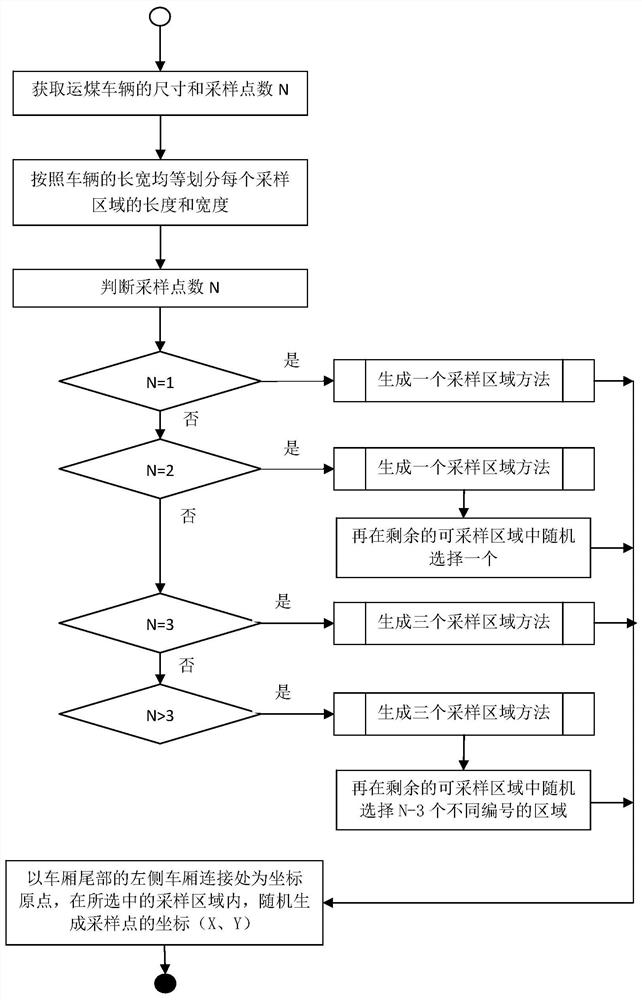
Figure 1 
Figure 2 
Figure 3
Abstract
Description
technical field
[0001] The invention relates to the field of sampling coal-carrying vehicles in thermal power plants, in particular to a method and system for selecting sampling points of coal-carrying vehicles based on exclusionary randomness. Background technique
[0002] At present, fuel accounts for about 70% of the cost of power generation in thermal power generation companies. Minimizing fuel cost and improving corporate profitability are the key issues for every power generation company. The settlement of fuel is based on the results of sampling and testing of coal samples. The process of coal sample sampling must not only comply with national standards and industry standards, but also meet the management requirements of power generation companies. The national standard requires that the top of the coal transport vehicle be divided into 18 areas for random area sampling. Many problems were found during the implementation. A lot of power generation companies still use...
Examples
Embodiment Construction
[0022] Embodiments of the present invention are described in detail below, examples of which are shown in the drawings, wherein the same or similar reference numerals designate the same or similar elements or elements having the same or similar functions throughout. The embodiments described below by referring to the figures are exemplary only for explaining the present invention and should not be construed as limiting the present invention.
[0023] In the description of the invention, it should be understood that the orientation descriptions, such as up, down, front, back, left, right, etc. indicated orientations or positional relationships are based on the orientations or positional relationships shown in the drawings, and are only for the purpose of It is convenient to describe the present invention and simplify the description, but does not indicate or imply that the device or element referred to must have a specific orientation, be constructed and operate in a specific or...