
Heating device of heater and integrated heating pump
A technology for heating devices and heaters, applied in washing devices, parts of pumping devices for elastic fluids, household cleaning devices, etc., can solve problems such as high cost, poor safety, and complex structures of heating devices
Patent Information
- Authority / Receiving Office
- CN · China
- Current Assignee / Owner
- Publication Date
- 2021-06-08
Smart Images
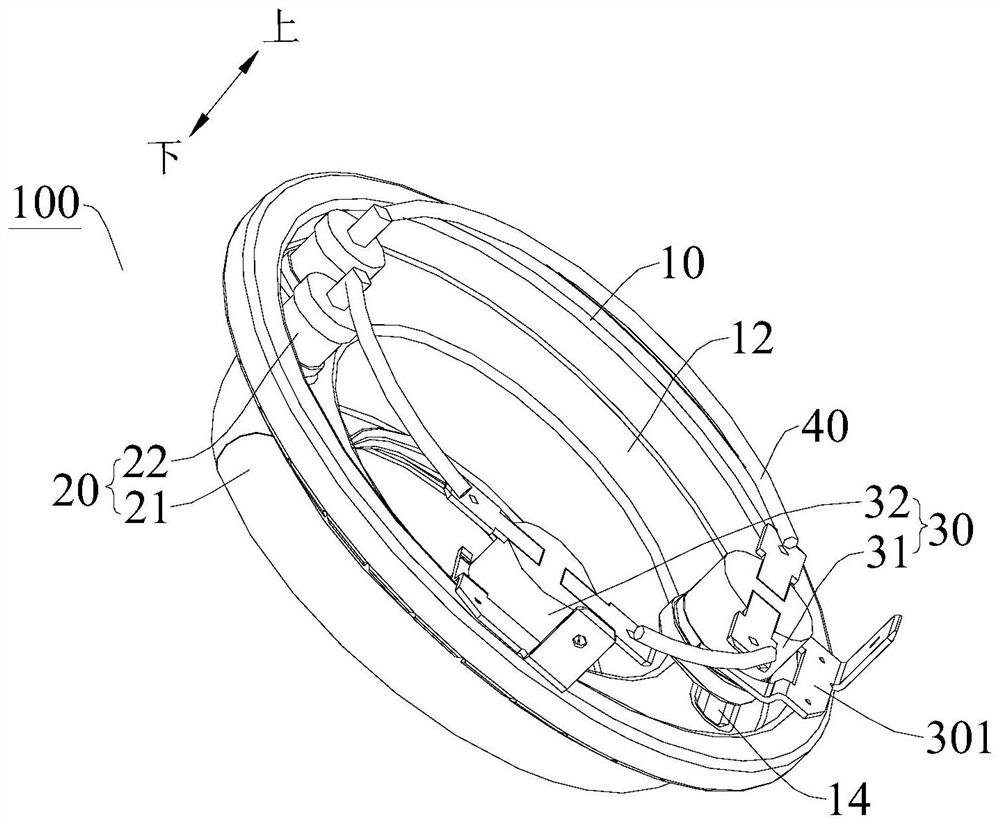
Figure 1 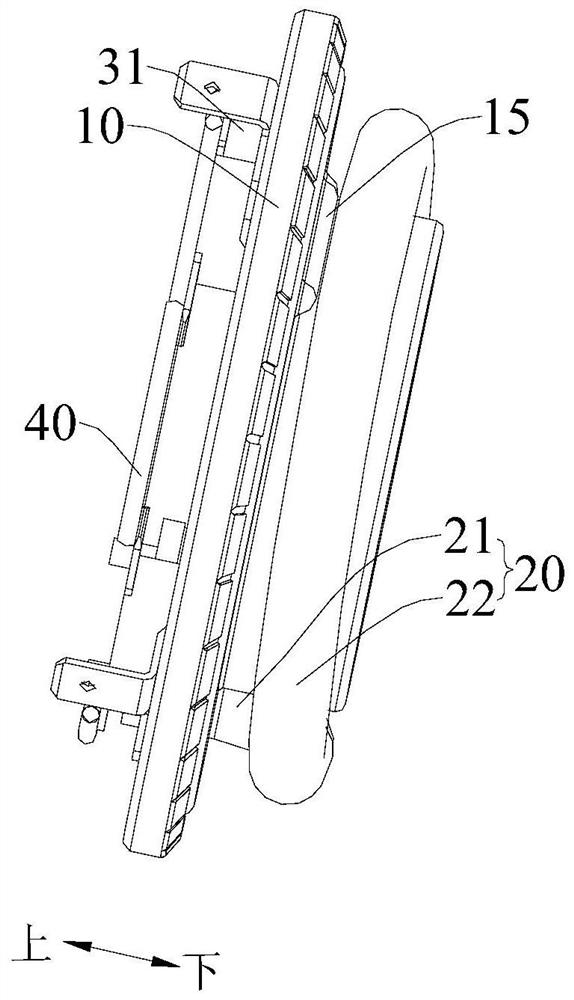
Figure 2 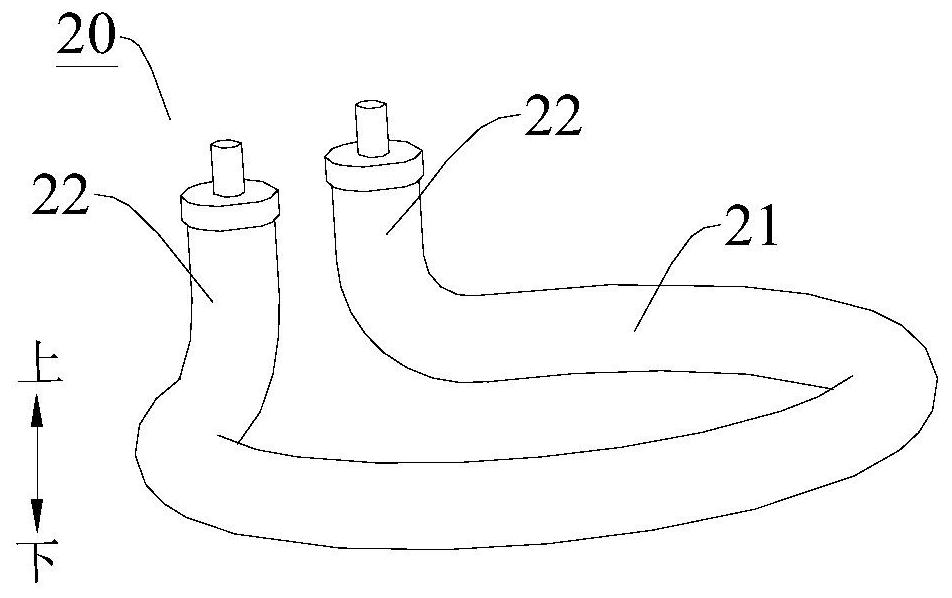
Figure 3
Abstract
Description
technical field
[0001] The invention relates to the technical field of household appliances, in particular to a heater heating device and an integrated heat pump. Background technique
[0002] During the washing process of dishwashers and washing machines, it is often necessary to heat the internal liquid to improve washing efficiency and cleanliness. Compared with split-type heaters and washing pumps, integrated heating pumps have the advantages of simple structure, small size, and high efficiency, and have gradually replaced split-type heaters and washing pumps.
[0003] At present, there are mainly two types of heaters in integrated heat pumps, including immersion type and external type. The immersion heater is used, the heater extends into the pump casing, and is installed and fixed on the plastic pump casing with a seal, the heater exchanges heat directly with the liquid, and the heating efficiency is high, but the seal, the plastic pump casing and the heater directly ...
Examples
Embodiment Construction
[0050] Embodiments of the present invention are described in detail below, examples of which are shown in the drawings, wherein the same or similar reference numerals designate the same or similar elements or elements having the same or similar functions throughout. The embodiments described below by referring to the figures are exemplary only for explaining the present invention and should not be construed as limiting the present invention.
[0051] In the description of the present invention, it should be understood that the orientation or positional relationship indicated by the terms "upper", "lower", "top", "bottom", "inner", "outer", etc. The orientation or positional relationship is only for the convenience of describing the present invention and simplifying the description, but does not indicate or imply that the device or element referred to must have a specific orientation, be constructed and operated in a specific orientation, and therefore cannot be construed as lim...